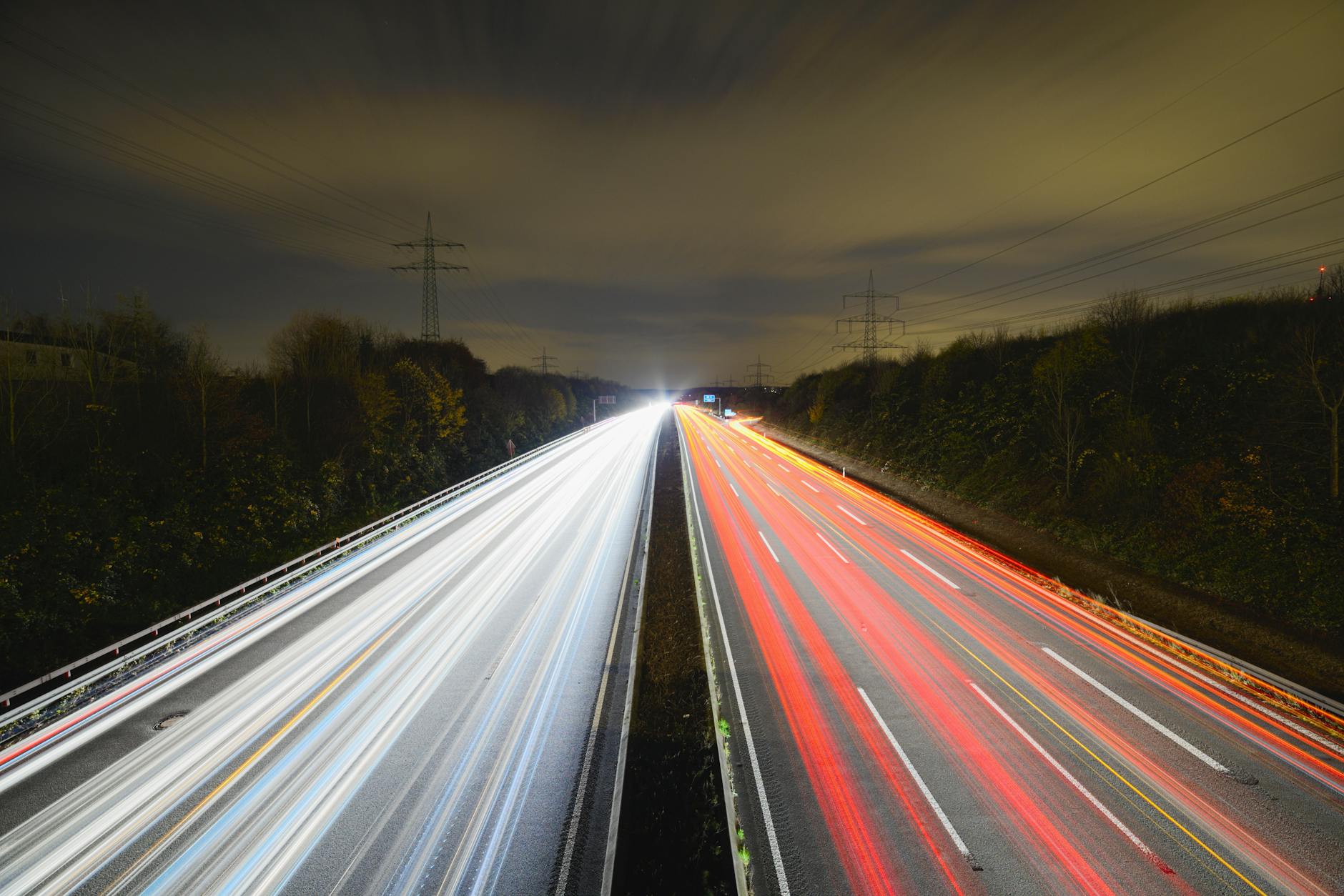
China leads the world in highway miles – and has 24 hour traffic jams

With a lot of highway miles comes the potential for large traffic jams?
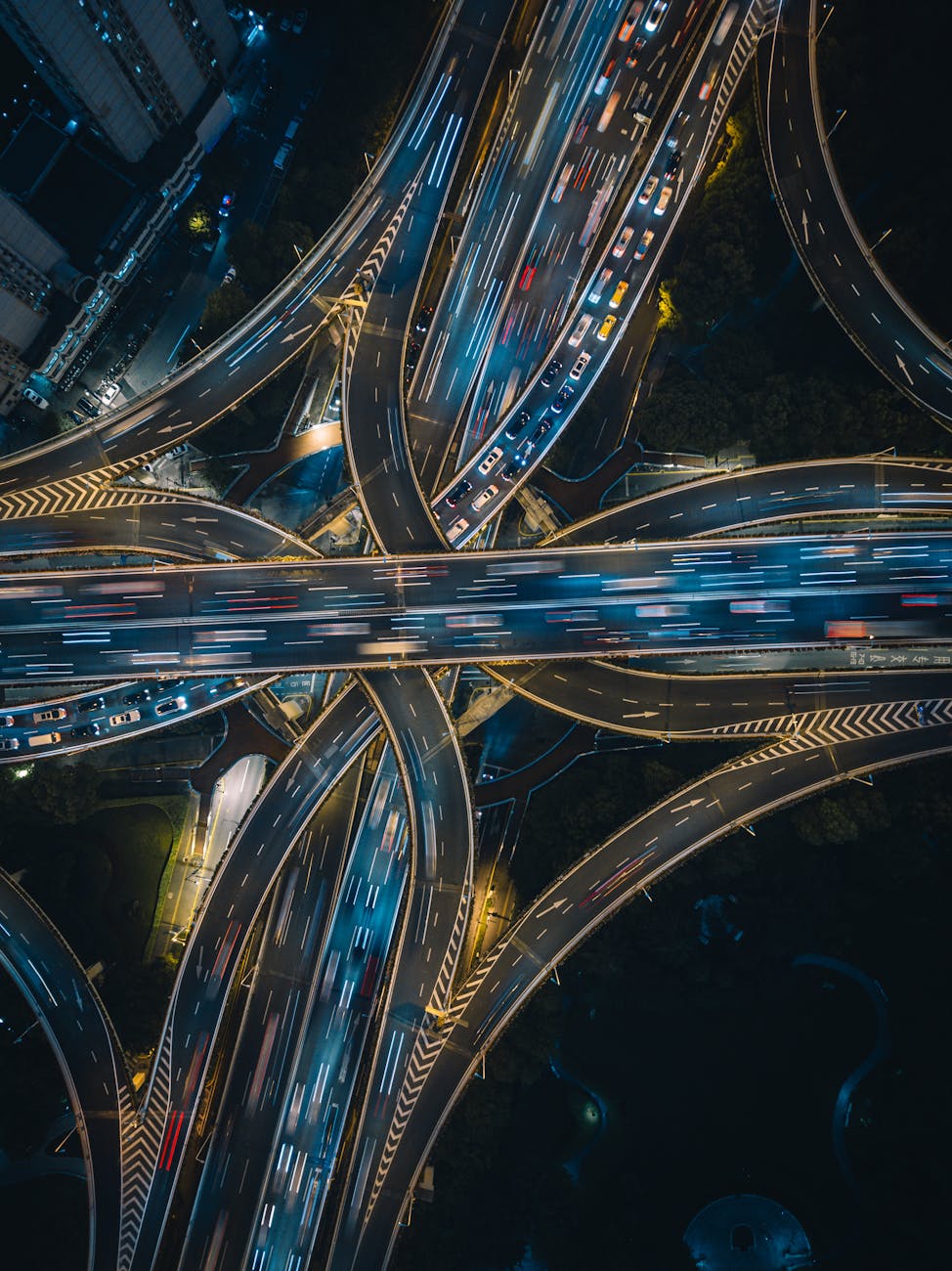
Photo by Barry Tan on Pexels.com

China boasts more than 100,000 miles of motorways – more than any other country in the world.

A staggering achievement, considering the country had no motorways at all in 1988.

And one city recently hosted a large traffic jam:

Footage shows the 24-hour traffic jam at Wuzhuang toll station, which left thousands stranded with “no way out”…

According to authorities, roughly 120,000 vehicles passed that day.

The unusually long queues were caused by millions of locals returning home after a national holiday, which spans across eight days from October 1 to October 8.

Do highways inevitable lead to traffic? Or would any amount of planning be able to avoid having traffic jams?

It would be interesting to consider how traffic jams are perceived around the world. I am familiar with the American experience and glad to not have to commute via highway every day.

And in today’s world of social media, is there a point where a traffic jam – typically regarded as an annoyance, an unhappy time – could become a chance to gain status and followers? The absurdity of being stuck for hours could lead to commentary and interaction.

Orlando planning to add flying car vertiport by 2028

Flying cars could soon come to Orlando:

Photo by Guilherme Rossi on Pexels.com

The Greater Orlando Aviation Authority on Wednesday took steps toward that future by seeking partners to develop and operate a flying car landing pad — called a vertiport — at the airport. The invitation is expected to publish in March with a 2028 target for a finished product.

The airport expects to put the vertiport on land in the East Airfield region on the northeast side or land on the south side near the train station, according to a news release…

Orlando Mayor Buddy Dyer, a member of the aviation authority, said the city is a global leader in Advanced Air Mobility (AAM) — the technology behind flying cars — and having the hub at the airport makes sense…

He said vertiports may help manage the city’s growth, but that’s much farther off. He envisions starting with a four- to six-passenger vehicle operating out of the airport and eventually corridors for flying cars will follow. The small aircraft are expected to use electric power, and take off and land vertically.

Three thoughts on these plans:

  1. It sounds like Orlando wants to pursue this to contribute to its economic growth. It could become a leader in flying cars. How big of an industry could this be? Americans like cars, Americans dislike traffic…could this be a big growth industry in the coming decades?
  2. The connections between this and the numerous theme parks in the area are intriguing. Would visitors be willing to try these because this is an exciting place to visit? Could the flying cars be linked to Disney or Universal or other partners?
  3. Flying car corridors will be interesting to see. How will they work and where will they be? How visible will they be from the ground? Will they also have gridlock?

Flying cars could be cool but if they lead to similar problems plaguing cars at the moment – traffic, expensive to buy a vehicle and maintain it, etc. – it may not get off the ground.

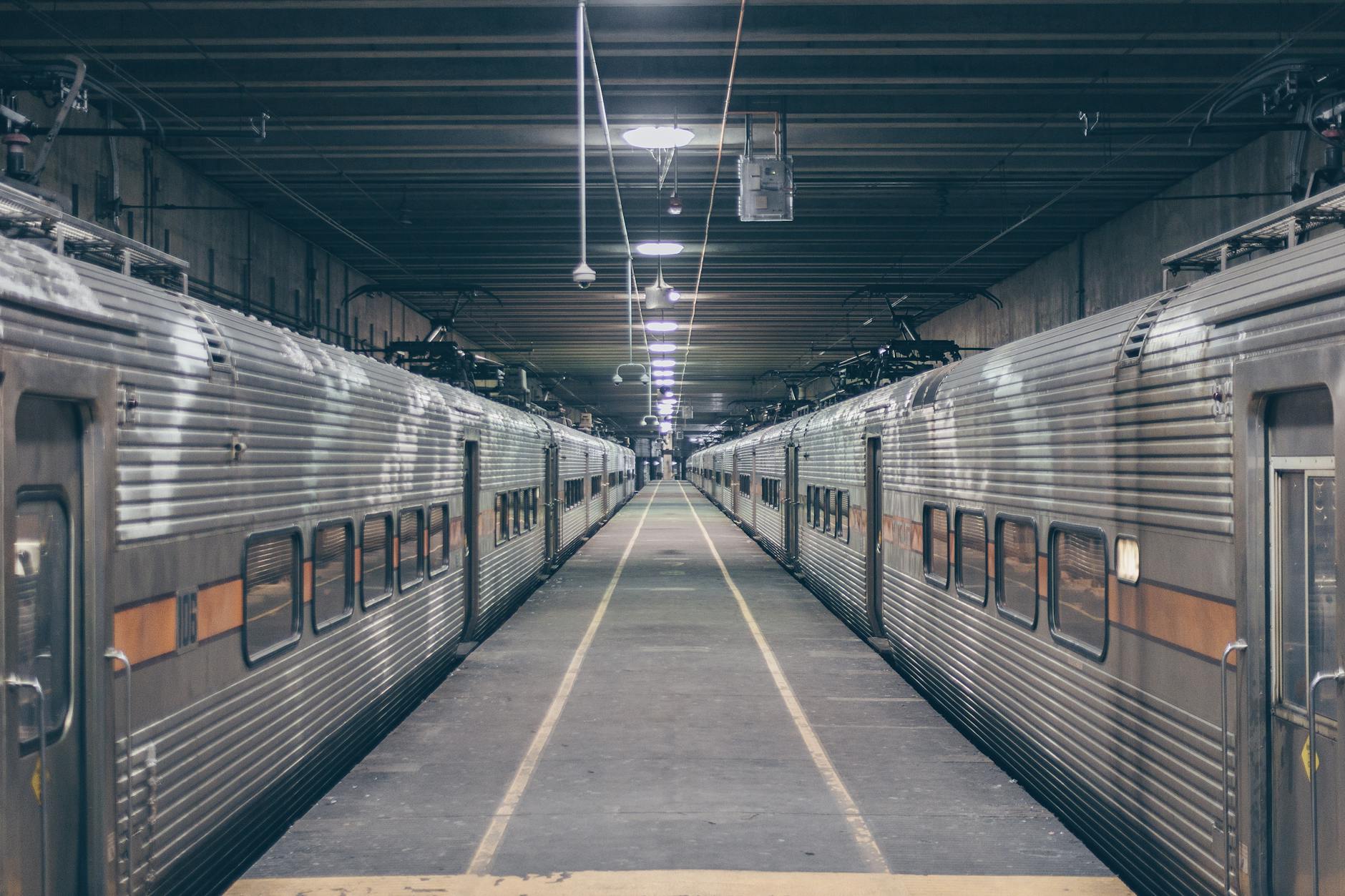
One thousand trains in and out of Chicago each day at the peak of train travel

The book Forgotten Chicago includes the claim that at Chicago’s railroad peak, 1,000 trains daily moved in or out of the city. One chapter of the book details the numerous train stations that are no longer standing that serviced these trains.

Photo by Josh Sorenson on Pexels.com

Chicago continues to be a railroad center in the United States even if the volume of trains is not close to the peak numbers.

And as train travel declined, the Chicago region became home to other transportation options. Two of these are worth considering after the golden age of railroads passed (and Chicago’s port activity also declined). As people used trains less to travel between cities and used trains less within the region as commuting between suburbs picked up,

First, O’Hare Airport is one of the world’s busiest. Today it has over 900 daily flights (mostly domestic, some international). By number of passengers, it is in the top ten among global airports. I do not know how many people moved through Chicago via train at the peak but the flight numbers are large.

Second, many people travel throughout the region and to other regions via highways. For example, one interchange of two interstates roughly 20 miles west of the city has about 300,000 vehicles daily. Numerous highways throughout the metropolitan area have daily traffic counts of over 100,000 vehicles. That is a lot of cars and trucks moving people and goods around.

The Chicago Tribune on the side of suburban commuters

An editorial in the Chicago Tribune details some of the issues commuters to Chicago face:

Photo by Cameron Casey on Pexels.com

But hope and optimism have their limits, even among the heartiest suburbanite, who likely saw the news about the Kennedy construction delay debacle and felt put upon and frustrated — but not surprised. After all, suburban commuters are just supposed to take it. Still, this one stings…

It’s not just the roads where suburban commuters get a rough deal — they’re constantly on guard against Metra fare hikes. Fares increased last year, and now Metra is threatening fare hikes again — plus service cuts — as the agency stares down the proverbial fiscal cliff. 

So the suburban commuter faces tortuous traffic on the highways, higher prices and worse service on the trains — yet the city wants them back downtown to buy their $20 lunches and restore the Loop’s economy. Businesses want the suburban commuter back downtown to occupy vast commercial office spaces to justify the rent. And everyone wants them to boost foot traffic, creating safety in numbers and making everyone feel a little safer walking to the office…

But the city often lacks warmth for the people trekking downtown. Not too long ago, the mayor of Chicago floated weaponizing taxes on suburbanites to extract more tax revenue via a Metra “city surcharge” and a “commuter tax” as a way to “make the suburbs … pay their fair share.” See above — they’re already paying a lot to get downtown. 

A hostile relationship between the city and the suburbs is no good. Suburban willingness to come to work downtown is a direct reflection on the city’s health. Is it safe? Is it clean? Is the restaurant scene thriving? If so, people will hop on the Metra and gladly make the trip. The more suburbanites, the better.

Four thoughts in response:

  1. What exactly would “warmth” for suburbanites look like?
  2. What about the many commuters in the region who go suburb to suburb? Are their trips easier?
  3. Do suburbanites need the city more or does the city need suburbanites more?
  4. Contrary to the zero-sum game assumption in #2 above, would it be better to think of suburban commuters and city residents as part of a larger metropolitan area? Better transportation options could be good for city and suburbs as could economic opportunities for both cities and suburbs.

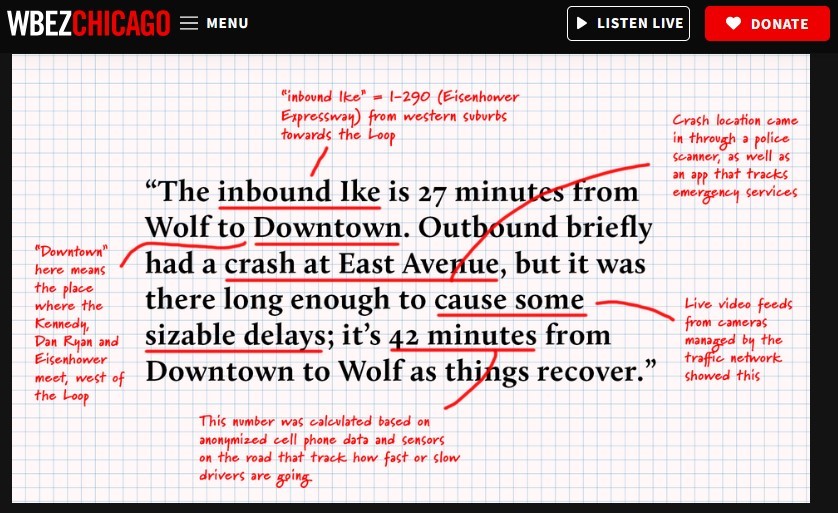
Where “downtown” is in Chicago traffic reports

Listen to or watch or read Chicago traffic reports and “downtown” is likely to come up. Here is what that refers to:

In Chicago, the downtown is like it is in the many big cities: it is the central business district, marked by skyscrapers and business activity. Downtown and the Loop – marked by mass transit lines – are pretty synonymous. The Loop is one of the city’s 77 community areas that have been defined for decades.

But the downtown referenced above is outside the Loop. It is across the Chicago River. It is marked not by financial matters but by the convergence of highways. It arose on top of existing neighborhoods. This is technically the Jane Byrne Interchange, a busy location where people are driving in and out of the city. Depending on traffic, it can take a while to get from this location to downtown.

While they are not the same place, this sounds very American: the center of the city is actually where the most vehicles meet. As so much day-to-day life involves driving, perhaps this is downtown for many.

Argument: construction and traffic on highways in Chicago leads to suburban growth

A Chicago Tribune editorial concerned with multiple years of construction on the Kennedy Expressway in Chicago ends with a claim that the traffic issues bolstered suburban businesses:

Photo by Trace Hudson on Pexels.com

Kennedy problems, or at least the perception thereof, certainly helped bolster a lot of the growth this past couple of years in suburban business districts like those in the likes of Naperville, Glencoe, Wheaton and Aurora, as suburbanites and exurbanites looked beyond Chicago to avoid the Kennedy at all costs.

Good for those suburbs for jumping on an opportunity. But Chicago got a “lanes closed, expect delays” warning for years — a handicap it most certainly did not need.

How might we know that this construction on a highway leading northwest out of Chicago boosted business in suburban areas (including several that are different directions from the Kennedy)? Some possibilities:

  1. A rise in the number of visitors or patrons in these suburban businesses and a decline in visitors or patrons in Chicago. These might not be causing each other but trends going different directions might be taken as evidence for this argument.
  2. Survey or interview data that suggests suburbanites factor in traffic in Chicago when making decisions about where to go. It might go something like this: “The drive into Chicago just takes too long…let’s go somewhere that is closer and easier to get to.” Anecdotal evidence might point in this direction but how often does this happen?
  3. Changes in commuter patterns and/or the presence of entertainment and business centers in the suburbs. As metropolitan areas have expanded, how many people find jobs, shopping, and cultural opportunities in other suburbs rather than in the big city? (This has happened already in American metropolitan regions but some Chicagoland specific data would be interesting.)
  4. Evidence of direct efforts from suburban communities or businesses to attract people by referencing the issues present in going to Chicago. For example, do any suburban downtowns tell people they do not need to go to Chicago to find X? Or do businesses make this argument? Or suburban shopping malls?

The diamond interchange advances in the Chicago region

A new diamond interchange, the fourth in Chicagoland, just opened in the southwest suburbs of Chicago:

Photo by ben neale on Pexels.com

Illinois Department of Transportation leaders unveiled a new diverging diamond design they predict will expedite travel for drivers on the interstate and local roads…

“The modern design is a proven solution to improve safety and traffic flow in a busy area like where we are today,” IDOT Secretary Omer Osman said…

The interchange dovetails with Rock Run Collection, a major Will County development that will include housing, retail, restaurants, offices, and the relocated Hollywood Casino Joliet…

A diverging diamond has a smaller footprint than conventional cloverleafs and is cheaper to build.

Innovation to keep all the vehicles moving smoothly between interstate and a local major road.

What other major roadway changes could help speed up traffic and increase safety? Adding lanes does not necessarily speed up traffic. The Chicago region has plenty of left-turn on green signal only lanes that help reduce certain crashes. Protected bike lanes are only found in a few denser places.

Is the answer in better vehicle technology? Vehicles that talk to each other and/or driverless cars? Smaller or lighter vehicles?

Another possible solution is to reduce the amount of driving. This could be hard in sprawling suburban areas, like where these diamond interchanges are located. Introducing more mass transit options in the region is possible but it is costly, is harder to implement in the suburbs, and it might not find favor among residents.

The drivers at this busy interchange may come to appreciate their new diamond among the asphalt. Others may want to wait for more innovation that improves travel through suburbia.

City residents and suburban residents going back and forth between those places

Hints regarding new driving patterns in metropolitan areas could be found in a Chicago Tribune editorial about downtown traffic during Mexican Independence Day weekend:

Photo by Chait Goli on Pexels.com

And they didn’t help you get from one neighborhood to another or back home from a night out to the suburbs…

Many businesses rely on suburbanites coming downtown for the weekend to eat or watch an artistic offering as the fall season kicks off.

Chicago is a big city so there are plenty of trips taking place solely within the city. Additionally, many big cities and people within are used to the idea that people from the suburbs travel into the city.

But these two short passages highlight a back and forth between both city and suburb. There are some traveling from city to suburbs, perhaps even for a night out (some suburbs are cool?). Others are traveling into the city to take advantage of particular opportunities offered in the city (or for work).

These newer patterns complicate efforts to address traffic. The predictable rush hours into the city in the morning and out of the city in the afternoon and evening have morphed into more traffic headed in all directions at more times. Traffic can be present around the clock, even without special events or celebrations.

The new 10-to-4 office hours and commuting patterns

When rush hour is continues to change:

Photo by Pixabay on Pexels.com

The traditional American 9-to-5 has shifted to 10-to-4, according to the 2023 Global Traffic Scorecard released in June by INRIX Inc., a traffic-data analysis firm.

“There is less of a morning commute, less of an evening commute and much more afternoon activity,” said Bob Pishue, a transportation analyst and author of the report. “This is more of the new normal.”

Now, there is a “midday rush hour,” the INRIX report found, with almost as many trips to and from the office being made at noon as there are at 9 a.m. and 5 p.m.

Also, commuters have all but given up on public transportation. Ridership sank during the pandemic, Federal Reserve Bank of St. Louis data shows, and never fully recovered.

The rush hour increasingly seems to be “traffic all the time!”

Since this has now been going on for a few years and also includes changes to truck use and ride sharing, what are cities and regions doing differently? What incentives do drivers and organizations have to choose other than drive by themselves when they want?

There does seem to be some possible good will to change traffic patterns when there are major issues, like significant highway repairs or the Olympics. When does regular traffic become a large enough issue that people start acting together?

Like I asked yesterday, are there cities and regions that do a better job at this than others?

What US metro areas do suburb to suburb mass transit well?

Public hearings about mass transit consolidation in the Chicago region highlight a persistent issue: where is the mass transit to serve all the people who commute suburb to suburb?

Photo by Jou00e3o Jesus on Pexels.com

“Right now, our transit system reflects an old design,” DuPage County Board Chair Deb Conroy testified in Naperville. “One that saw commuting as merely bedroom communities serving downtown workplaces.”

“All suburban residents deserve the same level and access to and from Naperville to Rosemont or from Oak Park to the Morton Arboretum in Lisle.”

College of DuPage student Rowan Julian experienced that disconnect trying to get from Wheaton to Batavia to see a friend, a 20-minute car trip. She wanted to use public transit but found it could take up to one hour and 40 minutes.

“For me I felt like I had no choice … so I chose to take my car,” she said.

Chicago, like many older metro areas, has a hub-and-spoke model where the train lines feed the center of the city. This fit a particular era when there was a mass of jobs and economic activity in the center of cities.

Today, metropolitan regions are sprawling and many commuters do not need to go to the big city for work: there are all sorts of jobs all throughout the region. This presents particular challenges for mass transit. Buses can use existing roadways but tend to be slower than cars. Trains can connect nodes but then there needs to be additional service from the train stations. Access via walking or biking might be theoretically possible in some suburban areas but it is often dangerous. Communities and the region can encourage more development around existing transit nodes. And Americans often seem to like driving because of the individual freedom it offers and go when they want and where they want.

What American regions do this well? Could be older regions or newer regions. Who has a model that other regions can emulate? How can regions build this capacity and pay for it? When much of the money is funneled to maintaining existing roads and building new ones, how can suburban places find resources for mass transit?