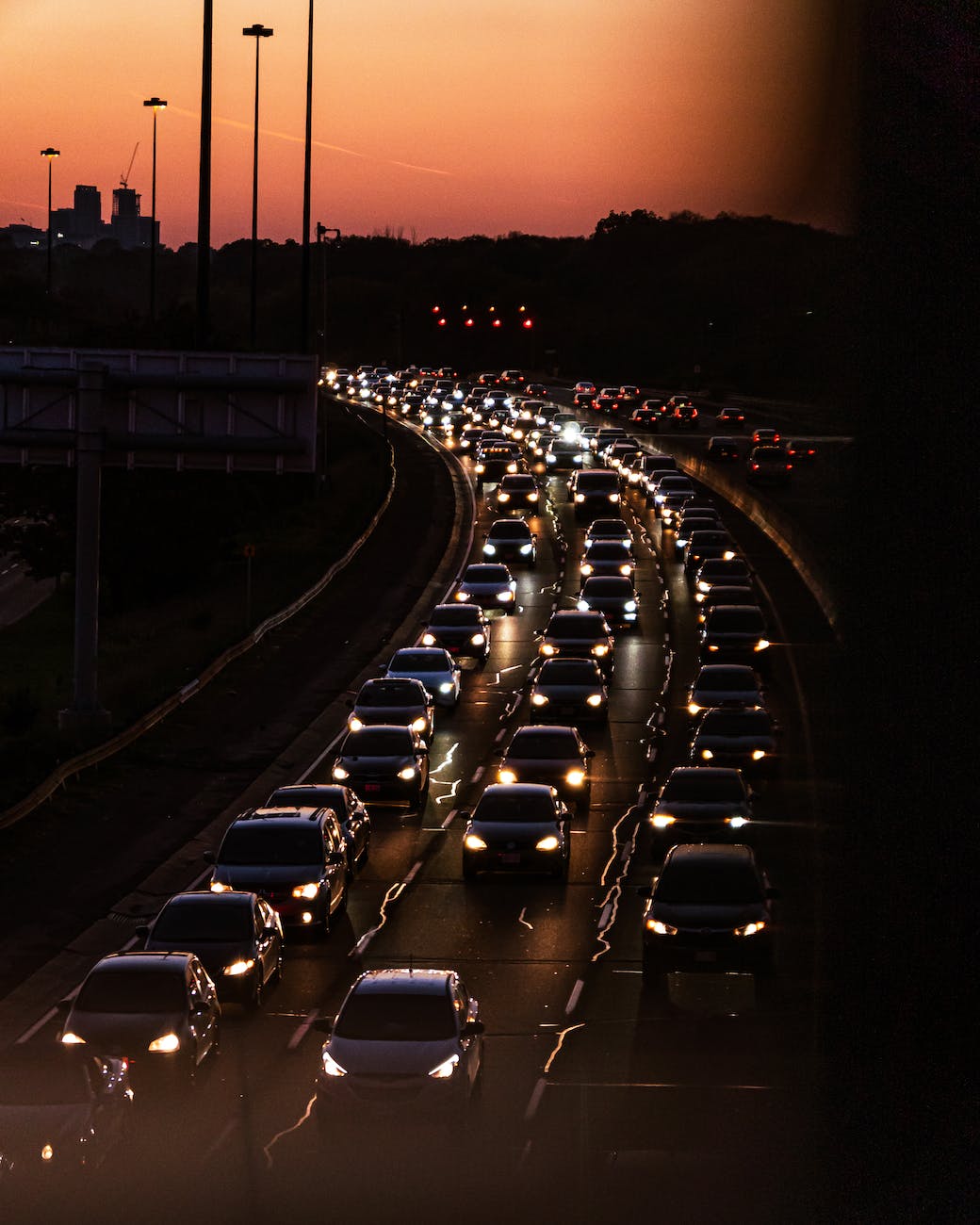
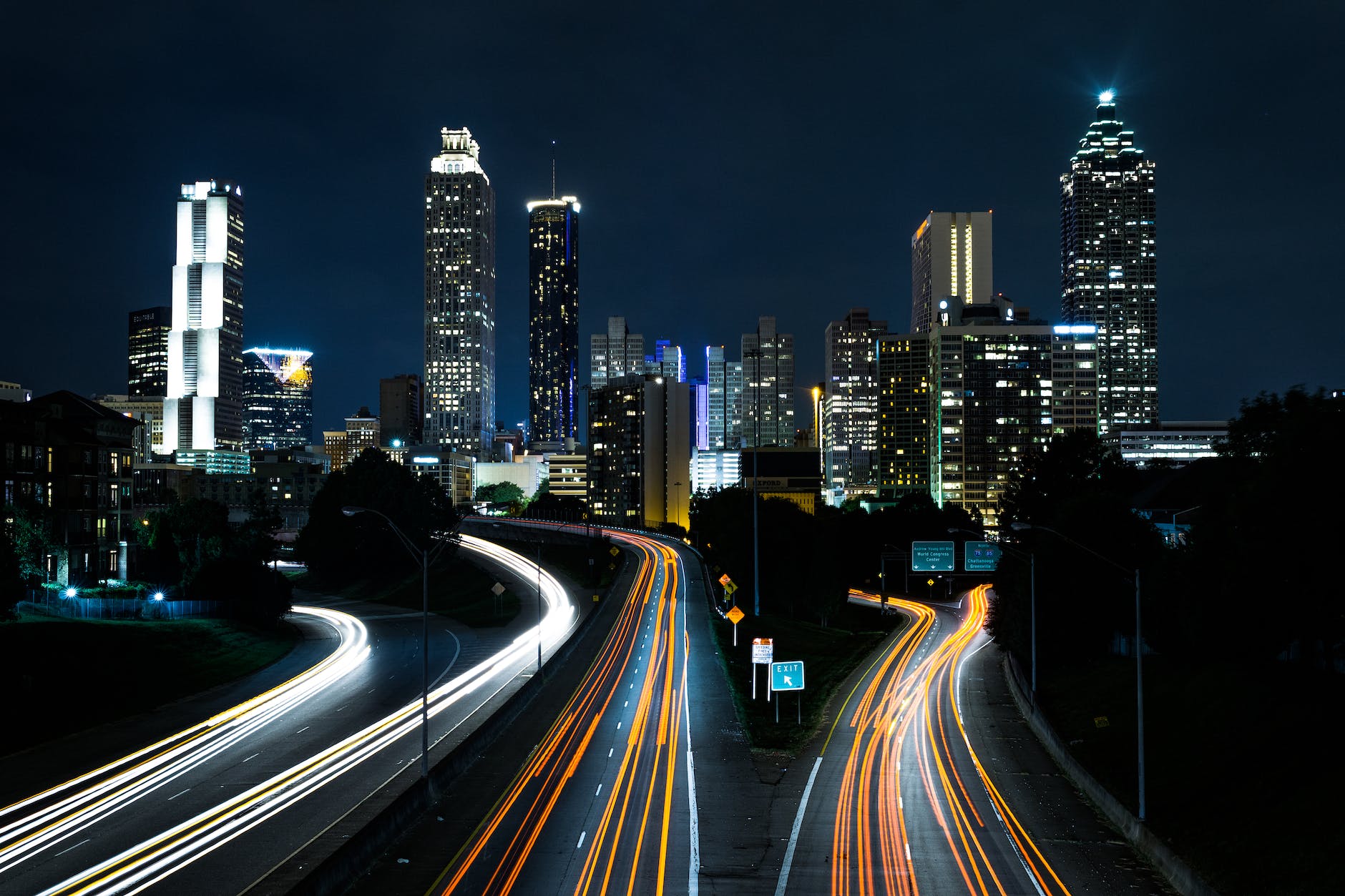
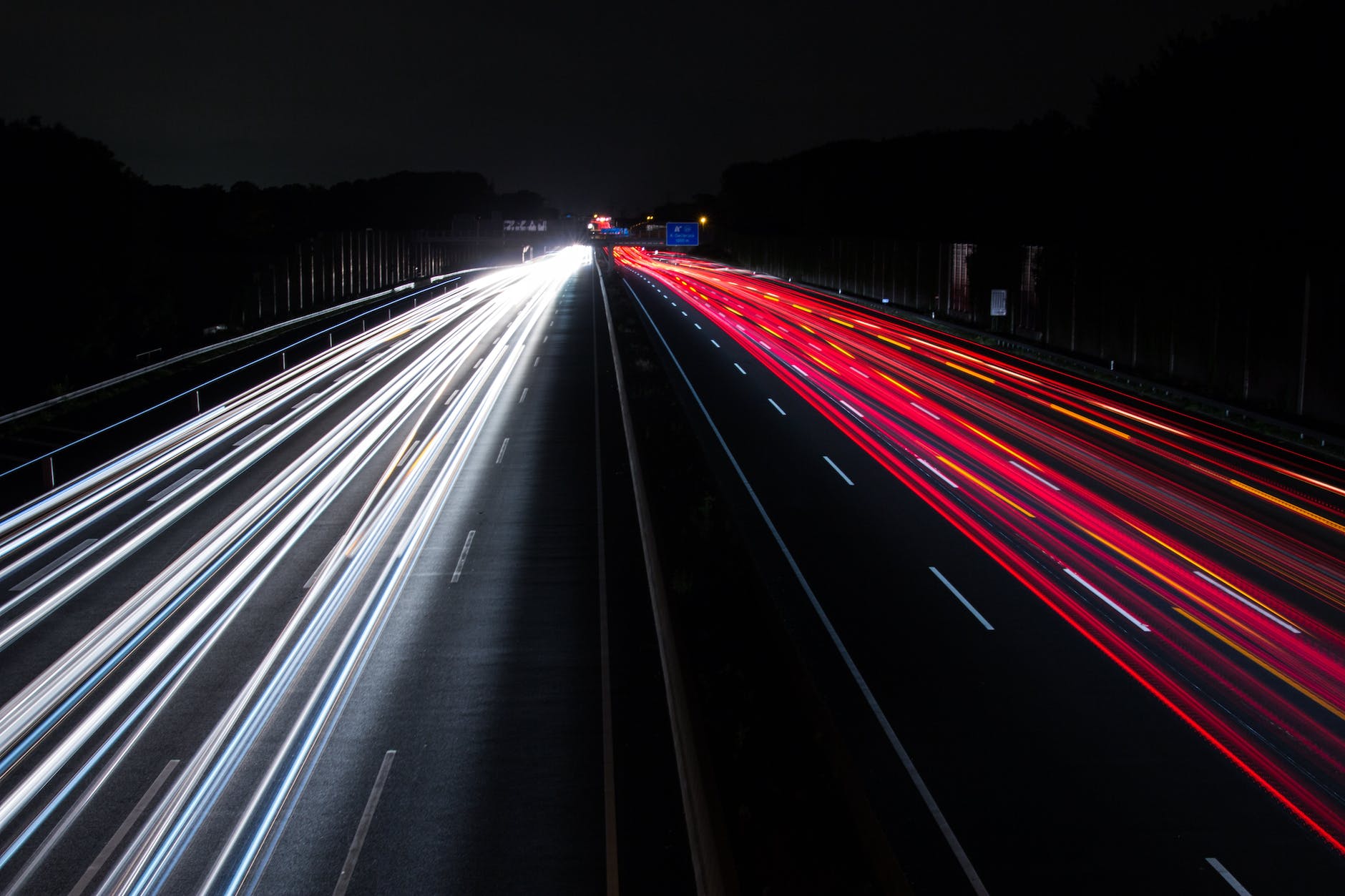
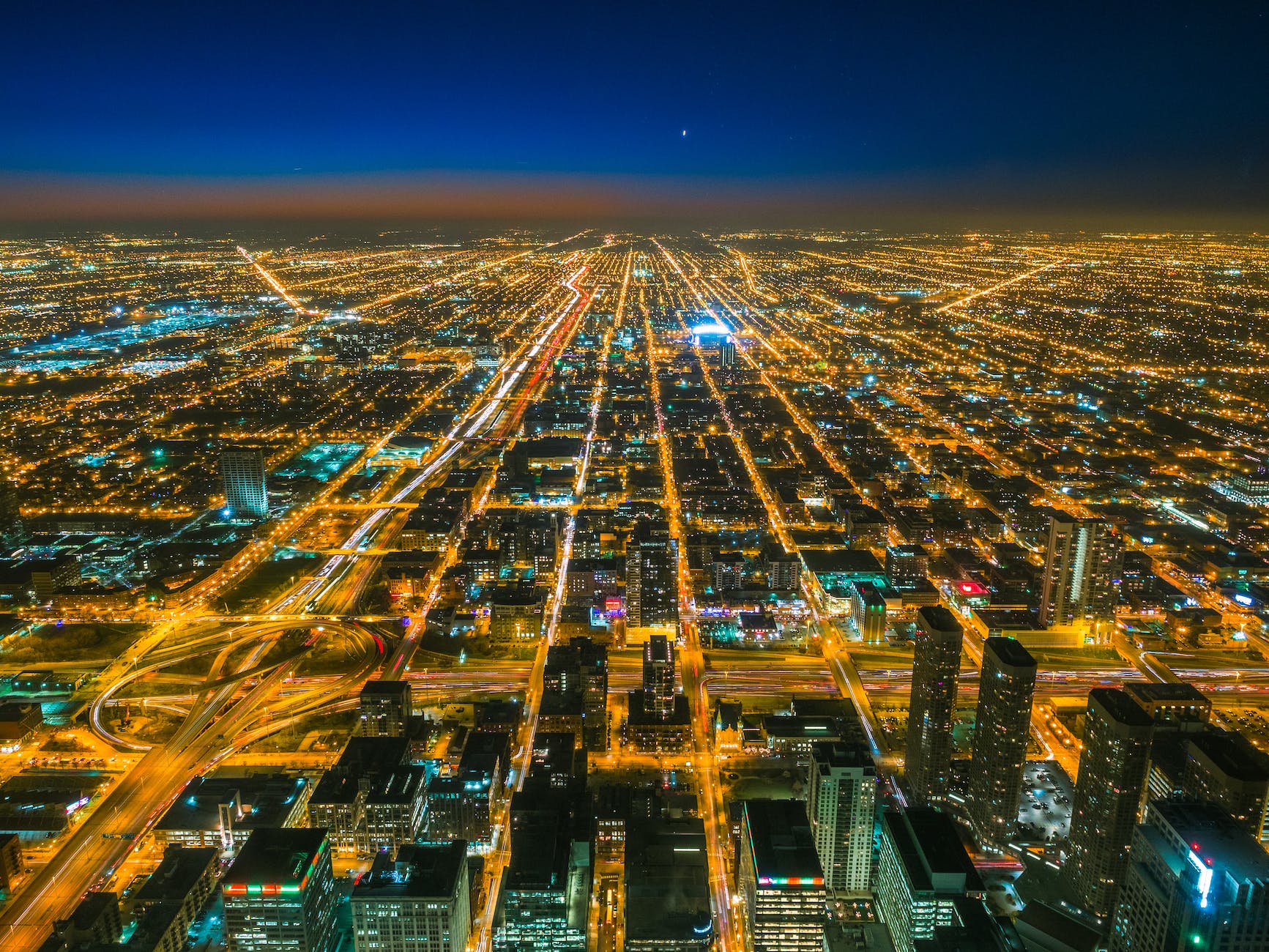
In recently driving in and around several big cities, I was struck by what I could (and could not) see. I certainly observed a lot of motor vehicles on highways and roads.
It is long evident that Americans prioritize cars and trucks on their roads. There might be room for some pedestrians (be safe!), mass transit, and bicyclists and scooter users but these are not as numerous as all of the cars and trucks.
The range of vehicles really does run the gamut. On the same major roads, one can find all sorts of trucks (delivery trucks, dump trucks, tankers, car carriers, etc.) and cars ranging from expensive luxury models to those who look pieced together to newer electric vehicles. If I wanted to see what Americans are driving for personal and business trips, I would recommend driving some of the highways that go right through urban centers and one can observe a wide variety.
Even with at least some people working from home, there are plenty of vehicles at many hours of the day. For many residents and companies, it is easiest to go via vehicle than other option. Driving is still a preferred method, even in cities with busy roadways.
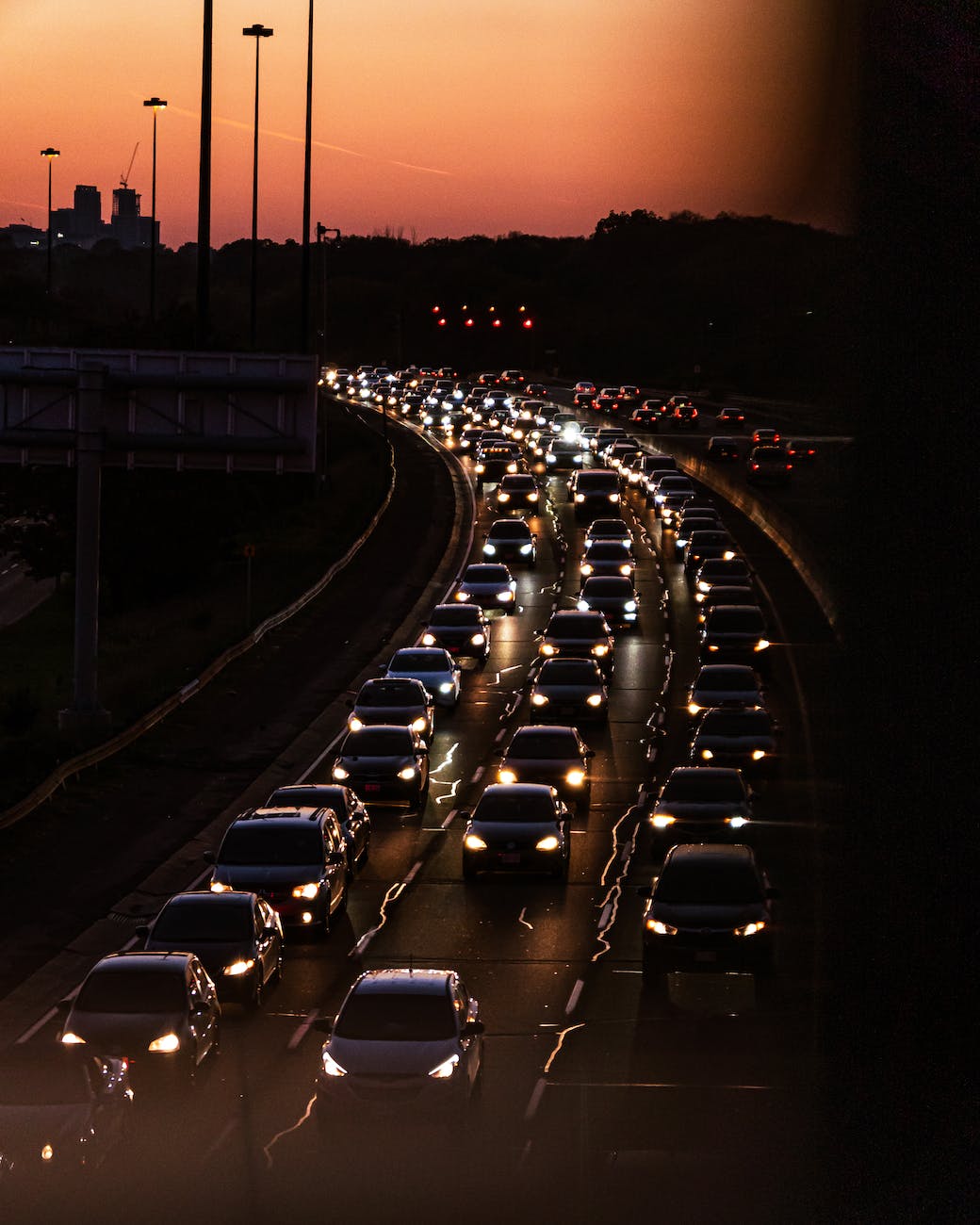
If a driver truly wanted to be safe and only focus on the road around them, there is plenty to see. On many of these busy roads, tens of thousands or even hundreds of thousands of vehicles might pass by each day.
In most U.S. cities, traffic is less congested than it was in 2019, as fewer people commute to offices, according to mobility data company Inrix. In some Sunbelt cities, such as Miami, Nashville and Las Vegas, where the population has surged in recent years, it has become worse.
These cities also attracted more companies and tourists during the pandemic. Local roads, built decades ago for a much smaller population, are struggling to accommodate the new reality.
“They way underestimated their growth,” said Robert Cervero, professor emeritus of city and regional planning at the University of California, Berkeley, College of Environmental Design…
Sunbelt cities are particularly vulnerable to congestion because of poor public transit. Driving in New York City’s rush hour can be bumper-to-bumper, but many people take the subway. Most southern cities offer no such alternative…
For now, Sunbelt states are hoping to fight congestion by adding more roads and express lanes. Tennessee lawmakers are considering a proposal to add toll lanes on state roads. Florida Republican Gov. Ron DeSantis recently proposed spending more than $5 billion on highway construction and more than $800 million on rail and transit throughout the state.
Growth is good in the United States – until it threatens some of the attractive features of places that brought people there in the first place.
At what point do residents and businesses not move to growing regions because of congestion? These Sunbelt cities continue to have numerous attractive features even if they have more traffic.
Adding lanes to roads may appear proactive but it can lead to more attractive as more drivers think there is capacity. Considering mass transit is necessary but complicated by suburbanites who do not necessarily want transit to reach them, high costs to get basic mass transit in place (though this could help save money down the road), and limited interest in denser development.
Do smaller cities offer advantages here? I have heard this argument before: you can have more rural property conditions within a ten to twenty minute drive of the main shopping areas or the downtown. Achieving this is more difficult in a more populous area where there is more competition for land.
Gen Zers point to many reasons they are turning their backs on cars: anxiety, finances, environmental concern.Many members of Gen Z say they haven’t gotten licensed because they’re afraid of getting into accidents — or of driving itself. Madison Morgan, a 23-year-old from Kennewick, Wash., had multiple high school classmates pass away in driving accidents. Those memories loomed over her whenever she was behind the wheel…
Others point to driving’s high cost. Car insurance has skyrocketed in price in recent years, increasing nearly 14 percent between 2022 and 2023. (The average American now spends around 3 percent of their yearly income on car insurance.) Used and new car prices have also soared in the last few years, thanks to a combination of supply chain disruptions and high inflation…
E-scooters, e-bikes and ride-sharing also provideGen Zers optionsthat weren’t available to earlier generations. (Half of ride-sharing users are between the ages of 18 and 29, according to a poll from 2019.) And Gen Zers have the ability to do things online — hang out with friends, take classes, play games — which used to be available only in person…
But, he added, data has shown that U.S. car culture isn’t as strong as it once was. “Up through the baby boom generation, every generation drove more than the last,” Dutzik said. Forecasters expected that trend to continue, with driving continuing to skyrocket well into the 2030s. “But what we saw with millennials, I think very clearly, is that trend stopped,” Dutzik said.
Is less need for driving causing this or is driving viewed as less enjoyable and even reprehensible (climate change concerns)?
While per capita driving has plateaued, have other driving activities increased driving and traffic? For example, the number of deliveries from Amazon and similar companies did not exist in the same way nor did ride-sharing. Younger adults are driving less than older Americans but the world today depends on driving more than ever?
The last paragraph of the article emphasizes how planning could change based on less interest for driving. It would be interesting to see how planners and others work with both populations – younger Americans who do not drive as much and older Americans who drive a lot – to reach possible solutions.
There’s a name for the principle behind that apparent paradox: induced demand. Economist Anthony Downs is often credited with first articulating this “iron law of congestion” in 1962, as construction crews were hacking interstates through American cities. Downs published a seminal paper with a stark warning: “On urban commuter expressways, peak-hour traffic congestion rises to meet maximum capacity.” In other words, adding lanes won’t cure snarled traffic; the additional car space inevitably invites more trips, until gridlock is as bad as ever.
Downs was not the first to sound an alarm about the futility of expanding urban roadways — not by a long shot. In 1932, an association representing streetcars warned that “as fast as improvements are made in existing arteries of travel … they are saturated by an increasing volume of traffic.” In 1955, urban observer Lewis Mumford wrote a series of essays in the New Yorker titled “The Roaring Traffic’s Boom,” in which he memorably compared a highway planner widening a congested highway to “the tailor’s remedy for obesity — letting out the seams of trousers and loosening the belt. [T]his does nothing to curb the greedy appetites that have caused the fat to accumulate.”
Downs’ iron law applies not only to U.S. cities, which have grown more traffic-jammed despite billions of dollars in fresh pavement, but also to those around the world. Highway expansions in Norway and Britain haven’t reduced congestion there, either. The principle now meets little opposition among economists and urban planners. “It’s widely accepted,” says John Caskey, who teaches induced demand as part of his urban economics course at Swarthmore College. “For economists interested in urban transportation, there isn’t really any debate.”…
But turning down a new highway lane remains politically challenging. “The highway construction system has vast momentum,” says Rose, the historian. “It has the authority of highway contractors, builders and labor unions. Here is something that labor and management really can agree on: a highway contract.” The auto industry, too, continues to benefit from ongoing investments that expand the “floor space” allotted to its products. In 2019, Tesla CEO Elon Musk tweeted that induced demand “is one of the most irrational theories I’ve ever heard.”
Build it and they will come.
As I read through the longer narrative in this article, it seems that the needs of the automobile were prioritized by drivers, businesses, those in the road industry, and politicians. This has been going on for roughly a century; would academic theories with evidence behind them be able to overcome these interests?
Perhaps at some point in the future, we will able to look back at “peak road” or “peak highway.” Is there a point where new roads and highways or lanes are no longer pursued in the United States? Even if population growth stagnated or slowed, would the United States continue to build roadways? Maybe the costs of maintaining all those roadways will help lead to this moment. It is hard to imagine other scenarios; even as fewer people drive to work compared to earlier years, traffic continues.
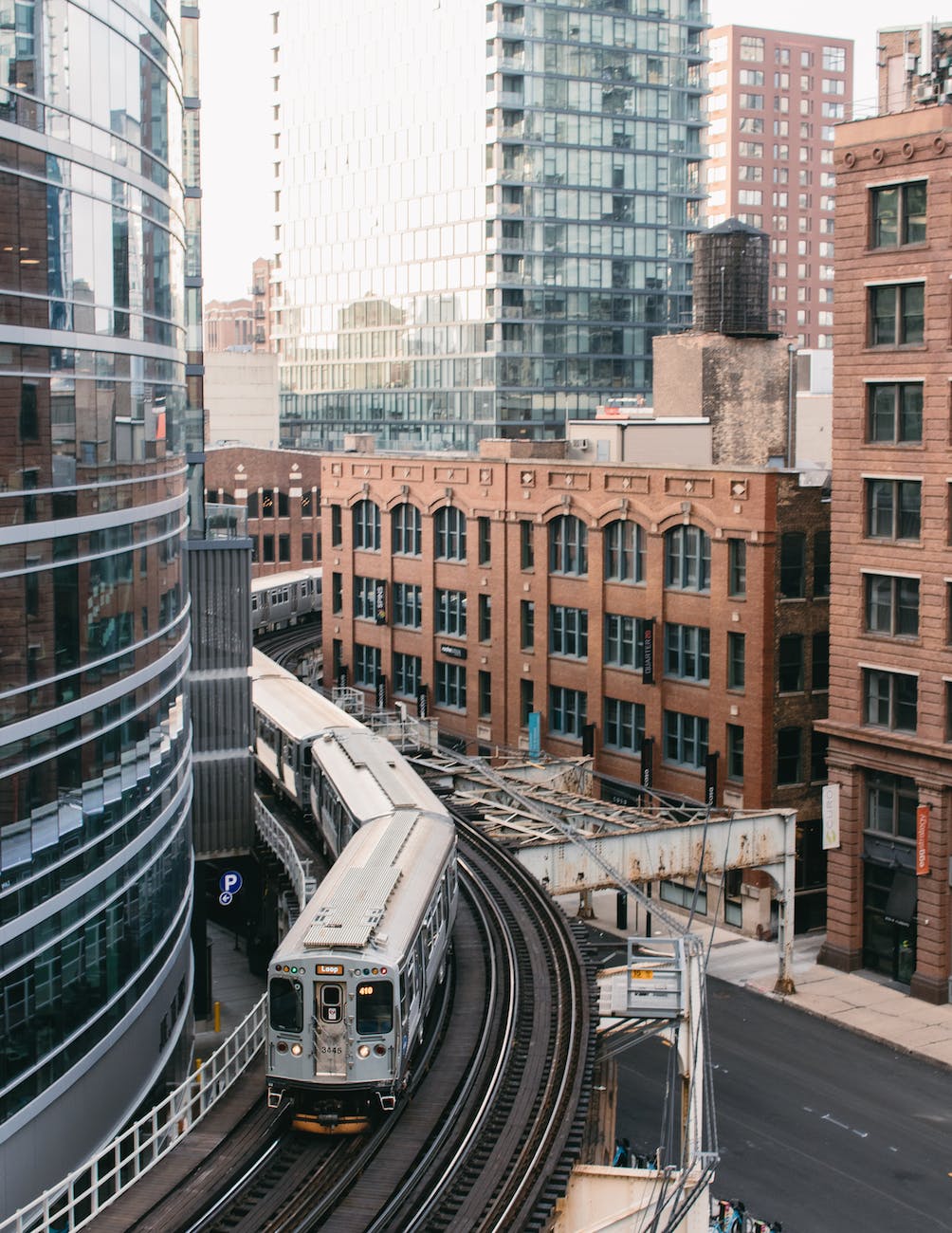
At one time, this system may have made sense. The Chicago region, as in multiple regions in the Northeast and Midwest, was organized with a dense commercial district at the core. Today, this makes less sense in many US metropolitan regions where the many trips and commutes are suburb to suburb. Throughout a region, suburbs are job centers, entertainment centers, and residential communities.
Reconfiguring infrastructure like highways, railroads, and mass transit to fit these new realities – perhaps now exacerbated by more employees working from home – is a long process with multiple avenues to pursue.
The Chicago Metropolitan Agency for Planning (CMAP), which tracks these patterns, has found that drivers are taking trips on different days, at different times, and sticking closer to home than they used to. An analysis done for WGN-TV shows fewer trips being made at the familiar times and locations of rush hours. “Instead, they are more spread-out, making travel and congestion unpredictable,” WGN reported.
Another big factor in this traffic roulette is the continued rise of e-commerce. Amazon, FedEx and UPS trucks are everywhere, it seems, stopping-and-going, and sometimes blocking streets as drivers deliver online orders. CMAP reports that single-unit truck traffic (including those delivery vans) has shot up 20% since early 2020.
The third variable is public transit. Ridership on CTA, Metra and Pace continues to lag pre-pandemic levels, thanks in no small part to the perception that they are either unsafe, inconvenient or both, meaning more commuters are driving. As a result, motoring to and from downtown can be as rough as ever, especially on Tuesdays, Wednesdays and Thursdays, when employers are more likely to require the physical presence of their office workers.
While these patterns will continue to evolve in the years ahead, working and shopping from home are here to stay, and public transit has a long journey to win back its customers. Planners need to adjust accordingly, and that probably means re-engineering traffic systems.
Summary: Tuesday through Thursday are now the worst “regular” rush hour days, trucks and traffic can be anywhere, and fewer people are using mass transit.
Does the Chicago area have an advantage because of its grid network? If drivers encounter a problem, it is not hard to find an alternative route. Compared to cities with longer histories and fewer major roads in the Northeast, Chicagoans have a plethora of options. On the other hand, the Chicago area is limited in terms of highways and sprawling roads compared to some places in the South and West.
Even with a grid and flat surface, one of the biggest problems seems to be that traffic – driving and rail – tends to end up in particular chokepoints that are more unpredictable in their use. Drivers still go through the Jane Byrne Interchange. Freight traffic needs to get through railyards and across at-grade crossings. Could this traffic be effectively lessened or rerouted in ways that help people and goods flow more quickly?
If there was an issue that the over 9 million people in the Chicago region could address together, this might be it. Yes, few people want to pay for solutions they do not directly benefit from. However, solutions to these issues across the region would benefit everyone.
Illinois Department of Transportation engineers are promising a 50% improvement in traffic delays as the interminable Jane Byrne Interchange rebuild wraps up…
It’s estimated the redo could save more than $180 million hours annually in lost productivity from workers in traffic jams and result in a one-third reduction in greenhouse gases.
Can we start tracking this immediately and see if the promise is true?
At the same time, why not use similar metrics for all sorts of infrastructure projects? Infrastructure is needed for many areas of modern life to go well. Yet, people may not want to endure construction or costs. Promises like this at least fix a number on what people might experience as a positive outcome. And if the modeling is so difficult, does this mean that it might be hard to justify a big project? (I could imagine a different number that is also accurate but less negative: without this project, there will be this % of a negative outcome.)
I regularly drive by a single-family home that is located on a busy four lane road. Decades ago, this was a two lane road and traffic was lighter. Now, it is a road with a 50 MPH speed limit and many cars zooming daily between suburbs. In the morning, the school bus stops on the busy road to pick up kids from one house. Most of the housing in this area is located on streets that branch off this main road; this is common in suburban areas as residential neighborhood traffic is routed to arterial roads.
When looking for housing years ago, I remember seeing homes located on such roads. What might be the advantages and disadvantages of such properties?
Advantages:
-Quick access to a major road. Suburban subdivisions can be big and the roads winding. It can take minutes just to leave the neighborhood.
-A reduced price. If the road is busy and noisy, this may mean the property is cheaper than comparable houses and lots.
-A location along a known road.
Disadvantages:
-Noise. The sound of cars and trucks is constant.
-Safety. Many suburbanites might wonder whether kids can safely play.
-Lower property values in comparison to similar properties.
-Less parking. If you have lots of people over, is the driveway big enough for everyone?
I would guess many suburbanites would choose not to live on or even near such a major road if they can help it. At the same time, plenty of suburbs have houses located along busy and fast roads.
Along with Chicago, highways in Atlanta, New York City and Los Angeles will be the busiest, according to data analytics firm INRIX. To avoid the worst congestion, INRIX recommends traveling early Wednesday, or before 11 a.m. Thanksgiving Day…
The report predicts almost double the typical traffic along a westbound stretch of Interstate 290 from Chicago’s Near West Side to suburban Hillside, peaking between 3 and 5 p.m. Wednesday. Significant additional congestion is expected Wednesday along the same stretch of eastbound I-290, with an anticipated 84% spike in traffic…
The outlook isn’t much brighter for travelers flying out of the city. Chicago-based United Airlines expects O’Hare to be its busiest airport, with more than 650,000 customers anticipated for the holiday. It reports Sunday, Nov. 27, will be its busiest travel day since before the pandemic, with 460,000 travelers taking to the skies. Nationwide, the airline awaits more than 5.5 million travelers during the Thanksgiving travel period, up 12% from last year and nearly twice as many as in a typical November week…
“Regardless of the transportation you have chosen, expect crowds during your trip and at your destination,” Twidale said. Travelers with flexible schedules should consider off-peak travel times to avoid the biggest rush.
The last paragraph quoted above might be key: given the predicted congestion, will people choose different times and days to travel? And, if enough people do this, will the model be wrong?
Transportation systems can only handle so many travelers. Highways attempt to accommodate rush hour peaks. Airports try to handle the busier days. Yet, the systems can become overwhelmed in unusual circumstances. Accidents. Pandemics. Holiday weekends where lots of people want to go certain places.
If enough people hear of this predicted model, will they change their plans? They may or may not be able to, given work hours, school hours, family plans, pricing, and more. These are the busiest times because they are convenient for a lot of people. If all or most workplaces and schools closed for the whole week, then road and air traffic might be distributed differently.
I would be interested in hearing how many people need to change their behavior to change these models. If more people decide they will leave earlier or later Wednesday, does that mean the bad traffic is spread out all day Wednesday or the predicted doomsday traffic does not happen? How many fliers need to change their flights to Saturday or Monday to make a difference?
If people do change their behavior, perhaps this report is really more of a public service announcement.
The recent traffic backups aren’t a mirage, say transportation officials. It’s really a perfect storm of ongoing construction projects occurring at nearly all points of the expressway system. This includes the Jane Byrne Interchange project, the behind schedule and over budget construction job that offers one of the worst choke points for congestion in the heart of downtown Chicago…
The last week in September saw some of the worst traffic in recent memory, thanks not only to the ongoing construction — including the start of three-weekend lane reductions on Interstate 57 to accommodate ramp patching and resurfacing — but also an emergency closure of the outbound Dan Ryan Expressway ramp to the outbound Stevenson Expressway that isn’t expected to completed until Sunday, according to IDOT…
Transit experts say that Chicago, which has some of the worst congestion of any American city, is also grappling with its return to normalcy following closures brought on by the pandemic. The added congestion comes at a time when many workers such as Cavanagh are returning to the office after two years of work-from-home protocols. Rider usage of transit systems such as the Chicago Transit Authority, Metra and Pace also haven’t yet returned to normal…
“In other words, drivers are making more trips, but they’re shorter trips on average,” Dan Ginsburg, TTWN’s director of operations said in an email.
So the old joke in Chicago, “there are two seasons: construction and winter,” rings true again?
But, this is a bigger issue than just construction. The infrastructure needs help. More people are driving. People live and work in different locations. Mass transit is not being used much. Mass transit does not necessarily reach where it needs to reach. People want to drive faster. There is a lot of freight and cargo moving through the region and so on.
This “perfect storm” could be an opportunity to ask how to address traffic and congestion throughout the city and region for the next few decades? How will this get any better?




 Legally Sociable