Could metropolitan areas have NIMBY-free zones for land uses residents do not want to live near but that are needed in the region?

After considering several recent NIMBY cases in the Chicago region (a football stadium, addiction treatment facility, waste transfer station), I had an idea: could a region develop a central zone where important but less desirable land uses could be placed and everyone in the region could benefit without having to live near them? Noisier, dirtier, and busier facilities could be separated from residences and a central location could mean more people in the region could access them.

Photo by Magda Ehlers on Pexels.com

I suppose this could happen now without the need for a NIMBY zone. Municipalities might put less desirable land uses on their edges or against certain barriers, like bodies of water or transportation corridors. Or some communities are willing to pursue industrial and commercial land uses rather than single-family homes.

But, one big advantage of a zone managed for the whole region is that the overseers could be freed from the concerns of residents. Balancing land uses in suburbs is often tricky as existing residents and leaders often have strong opinions about what and who they think might fit. And because local government officials often need to be elected or are appointed by elected officials, there are certain consequences for land use and development decisions.

Take the Chicago region as one example. Imagine creating a zone around O’Hare Airport where a number of less desirable land uses could be clustered. It would take time to develop this and address the concerns of people who live there. But, a location near highways and a busy airport means this could be a site where clustering certain facilities could benefit the entire region.

Who owns a neighborhood? Or, who can make decisions to alter it?

A discussion of recent housing changes in Arlington, Virginia, an increasingly whiter and wealthier community, included this summary:

Photo by Jonathan Meyer on Pexels.com

Perhaps the opponents are beginning to accept that their community is not, has never been, exclusively their own domain.

Who owns a neighborhood? In many American communities, the people who live there might feel this way. They expect to provide input and exercise some oversight of what happens in their neighborhood. They want to exercise control over their own properties and those around them.

But, they do not do this on their own. They interact with other property owners and also engage with local governments. These local governments typically represent a broader community and have regulations about what can and cannot be done in neighborhoods.

In this particular case, the residents are single-family home owners and they have money and status. Thus, they really expect to be able to control their surroundings and they have means to back up their interests. Zoning in the United States often privileges protecting single-family homes.

In the end, however, local government has the task of considering the broader interests of a community. These may or may not align with the interests of a neighborhood. The neighborhood residents can respond by not voting for these local government officials and it is relatively easy in a smaller community to express discontent with local officials. But, action may already be underway that cannot be changed.

Or, here is another way to address the same questions: if every neighborhood will change over time, who gets to street this change and/or benefit from this change? Those with means and vested interests will have their own perspective and goals while a broader community might have another point of view.

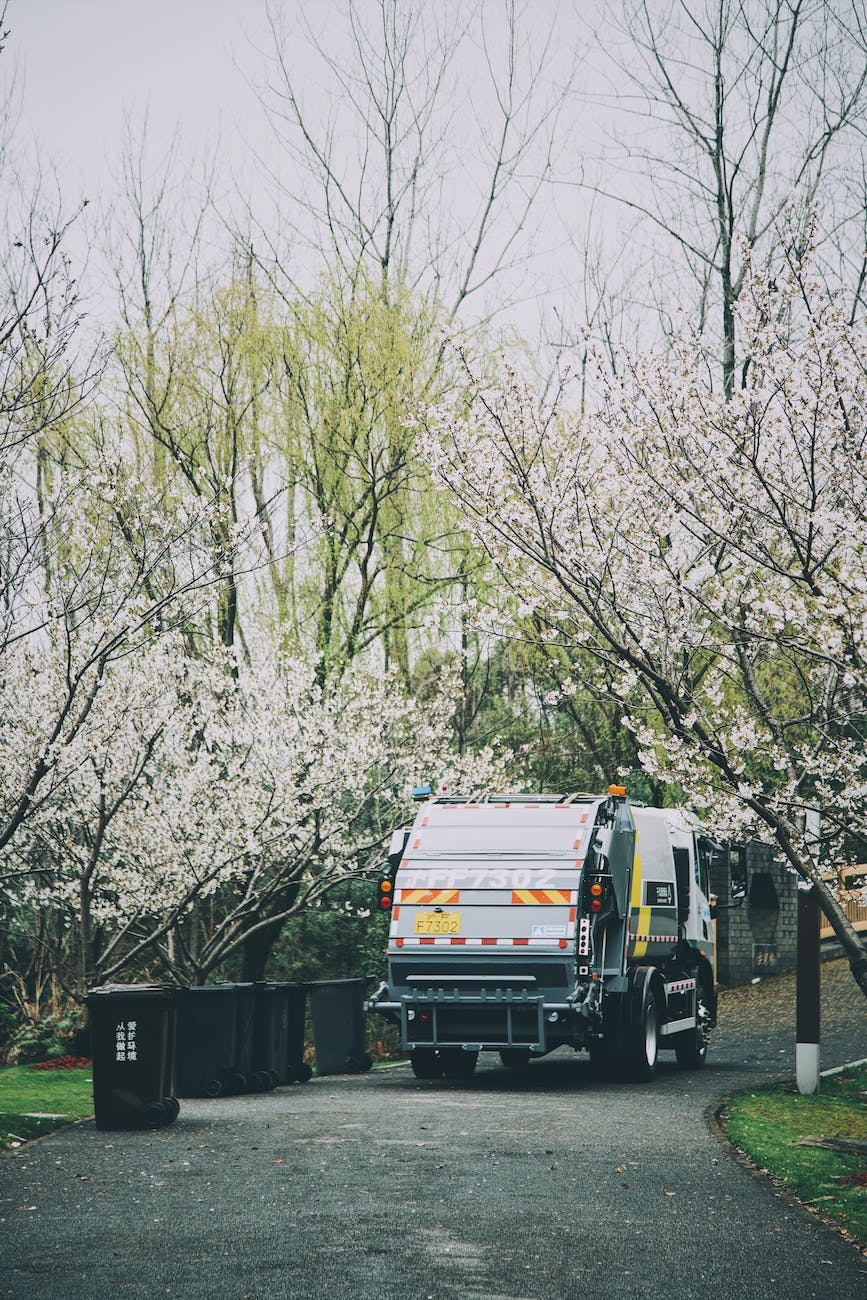
When a populous suburban county has no property available for a second waste transfer station

DuPage County has only one waste transfer station and residents of one its suburbs do not want a second one in their community:

Photo by Tom Fisk on Pexels.com

The idea has outraged many residents who believe the city is being unfairly targeted as the “garbage capital” of the Western suburbs. Citing a threat to their home values and quality of life, they say a second waste transfer station should be built elsewhere in the county or not at all because of a lack of need.

In comparison, there are more than 20 transfer stations spread throughout Cook County.

Representatives from LRS insist a second DuPage County facility — one that is state-of-the-art and environmentally sound — is necessary to maintain healthy competition with other major waste companies. Another transfer station, officials say, would reduce garbage bills for residents and bring hundreds of thousands of dollars in fees from LRS to West Chicago coffers…

West Chicago residents say they’ve already done their part with one facility in their city, and a second DuPage County station should be built elsewhere. LRS officials, however, say they’ve looked elsewhere and couldn’t find another parcel that meets zoning and setback regulations.

This is a common issue in metropolitan regions: there are certain land uses that relatively few people want to live near. Since individual communities can set their zoning guidelines and communities with money and influence can fight particular land uses, it can be difficult to find a home for these land uses.

One solution? Push the garbage transfer station outside of DuPage County to another community that might want it or will not fight it.

Another solution (unlikely in the short-term but perhaps doable in the long-run): the need for more metropolitan level planning. With all of the people and business in the Chicago region, how can garbage be dealt with on a regional level?

A third and unlikely solution: significantly reduce the amount of waste produced by residents so fewer waste transfer stations are needed.

If West Chicago residents band together enough, they can likely convince local officials to turn down this proposed waste transfer station. Where exactly the garbage will go is unclear but West Chicago residents could be happy that it will not take place in their community. However, it is going to happen somewhere…to be determined.

Toll Brothers and “the proliferation of McMansions”

An obituary for Robert I. Toll connects Toll Brothers and McMansions:

Photo by Max Vakhtbovych on Pexels.com

Robert I. Toll, L’66, a former University Trustee, an emeritus member of the Carey Law School Board of Advisors, and the co-founder of transformative home construction company Toll Brothers, died on October 7 at home in Manhattan. He was 81.

Mr. Toll was born in Philadelphia suburb Elkins Park, Pennsylvania, to a father who was involved in Philadelphia real estate and who had successfully rebuilt his career after the Great Depression. Mr. Toll graduated from Cornell University in 1963 with a bachelor’s degree in political science, then graduated from Penn’s Law School three years later. He briefly worked at the Philadelphia law firm Wolf, Block, Schorr, and Solis-Cohen, but then founded Toll Brothers with his younger brother Bruce in 1967. To start out, “we built two homes,” Mr. Toll recalled. “Instead of selling them, we used them as samples for the lots we owned down the street.” These sample homes landed the brothers contracts to build 20 more homes, which each sold for $17,500. Robert, Bruce, and Alan Toll were among the first postwar housing developers to recognize how trends in highway construction would allow access to swaths of farmland for housing and shopping developments. 

Over the next five decades, under Robert Toll’s leadership of the company as chair and CEO, Toll Brothers rapidly grew to become, as the company’s slogan boasts today, “America’s luxury home builder.” The company recognized shifting demographics in the U.S. during the 1970s and targeted baby boomers looking to trade upward. The Toll Brothers blueprint included targeted land purchases, appeals for quick zoning approval, and predesigned houses that allow room for personalized changes by buyers. Boosted by the proliferation of McMansions and the implementation by zoning boards of two-acre lot sizes in many American suburbs, Toll Brothers became a force in the American housing market. Today, over 150,000 American families in 24 states live in a Toll Brothers-built home. Toll Brothers appeared on the Fortune 500 list, and Robert Toll spearheaded several philanthropic initiatives, including Seeds of Peace, a summer camp in Maine for children from global conflict. His many professional honors included recognition as one of the world’s top 30 CEOs by Barron’s magazine in 2005 and as best CEO in the Homebuilders and Building Products Industry by Institutional Investor magazine in 2008 and 2009. The Wall Street Journal once called Mr. Toll “the best CEO in the housing business.” 

Did Toll Brothers take advantage of an opportunity to sell luxury homes to a growing market or help create and establish a growing market? Would they call their luxury homes McMansions or is that a term applied by others?

No matter how these questions are answered, it is clear Toll Brothers contributed to the trend of larger and more expensive homes in the United States. Over 150,000 homes is a sizable number of dwellings. The shift to large-scale builders in the mid-twentieth century is an important factor in suburbanization and housing more broadly.

Additionally, what will happen to all of these luxury homes? Will they be updated and renovated for decades? I assume a good number are situated in neighborhoods and communities where they will not be near any cheaper or denser housing. Will some become teardowns? Will at least a few be preserved? There is still more of the Toll Brothers story to tell.

Good for preserving suburban green space…but is it also contributing to inequality?

A group in the northwest suburbs of Chicago announced an agreement to buy and preserve nearly 250 acres of land:

Photo by Nashwan Guherzi on Pexels.com

In a watershed moment for suburban land preservation efforts, a Barrington-based conservation group announced Monday it is buying the Richard Duchossois family’s 246.5-acre Hill ‘N Dale Farm South, long considered one of the most important and desirable tracts of open space in northern Illinois.

Citizens for Conservation’s acquisition of the land near Barrington Hills will ensure it remains protected open space and provide a critical wildlife corridor with the 4,000-acre Spring Creek Forest Preserve next door…

All told, the acquisition and restoration carries an estimated $10 million price tag, according to the organization. Citizens for Conservation received nearly half that through a $4.9 million grant from the Illinois Clean Energy Community Foundation, the largest such grant awarded for a single-parcel purchase…

Although not within Barrington Hills’ corporate limits, the property is surrounded by the village. Village President Brian Cecola was enthused by Citizens for Conservation’s acquisition of the land.

“Citizens for Conservation’s dedication to land preservation aligns with our village’s objectives of preserving open spaces and maintaining our 5-acre zoning. It’s a win-win for everyone involved,” he said.

With all of the concerns about land use and environmental degradation due to suburban sprawl, isn’t preserving space for animals, plants, and nature a win?

Here is another possible way to read this: the purchase of this land continues patterns of uneven development and inequality in metropolitan regions. How this might happen:

-Who has this kind of money to purchase the land? In this particular case, a non-profit secured a sizable grant – not an easy task in itself – and found other money. This group purchased and maintains property on its own and has contributed to Forest Preserve acquisitions.

-This green space is in a wealthier suburban setting. According to 2020 Census data, Barrington Hills has a median household income of over $157,000.

-As described above, Barrington Hills has a guideline involving 5-acre zoning. Such zoning practices mean properties are larger and both the land and housing is more expensive. This limits who can live in the community.

Hopefully, there is some consideration given to who benefits from using this green space and how all people in metropolitan regions could benefit from proximity to and access to nature and green spaces.

Historic preservation, the ways cities and suburbs resist development projects, and property values

In a discussion of how historic preservation aligned with particular political interests in cities, a scholar describes how suburbanites resist development compared to those in cities:

Photo by PhotoMIX Company on Pexels.com

The peculiar yet profound way in which historic preservation bound together issues of aesthetics, finance, and urban change is key to understanding why its popularity grew so rapidly in the middle of the 20th century. It also explains why a culture of historic preservation took root in some places more than others. Most suburbs—like the one on Long Island where Geller I once stood—relied on a different set of tools to stop development, such as open-space requirements and zoning codes that limited the number of new homes. To this day, historic preservation remains a less potent force in such places, largely because these other rules ensure that homes like Geller I are unlikely to be replaced by anything but McMansions. In cities with significant numbers of old buildings, however, preservation became an essential part of the process by which communities fended off urban-redevelopment projects.

While historic preservation does take place in the suburbs (and will come for McMansions at some point), it does not occur at the same level as in cities. As noted above, suburbs are not likely to approve significant changes to local zoning or buildings. Neighbors and residents will complain about changes to traffic, noise, lighting, and the character of a neighborhood in a way that tends to limit what a redeveloped property will be.

Cities also have zoning regulations and NIMBY responses to new structures but the presence of more buildings and uses in denser areas can make this all more complicated. Particularly in areas where redevelopment is hot, a new building might be very different than what has stood there for a long time.

But, as the article notes, historic preservation can be a tool used in a lot of places to halt plans:

Historic preservation not only gave this process of hyper-gentrification an imprimatur of political and legal legitimacy it might otherwise have lacked, but also continues to enable it in the present day. The LPC’s own website still notes that one of the purposes of New York’s landmarks law is to “stabilize and improve property values.” While the commission’s press releases paint an image of a body focused on protecting a diverse new array of buildings, the historic districts that already exist are, right now, a significant intervention in the city’s real-estate markets, whose main beneficiaries are the people who own land within them. Nor is this dynamic unique to New York. In California, wealthy cities like Pasadena and Palo Alto have recently tried to expand their landmarking powers in order to circumvent a new state law encouraging the construction of sorely needed housing. Simsbury, Connecticut, which is 87 percent white, just finalized a sale of nearly 300 acres to a land trust—killing an affordable-housing project in the process—on the premise that the site is historically significant because Martin Luther King Jr. once worked there. In Washington, preservationists have long tried to block the redevelopment of a water-filtration plant that hasn’t been used in 35 years on the basis that it is historically significant.

And perhaps this gets at the heart of the matter: whether using zoning or historic preservation, one of the goals of American residents is to enhance property values. Sonia Hirt argues that protecting single-family homes and their values is a primary goal of zoning in the United States. In a system that prizes the growth of home values, perhaps historic preservation plays a similar role.

Many goods come via truck, few want to encounter those trucks on a suburban road

Trucking is essential to the American economy. However, it is not desirable to encounter many trucks on local roads. Here is how one Chicago area county wants to address the issue:

Photo by Craig Adderley on Pexels.com

“The key is really getting trucks onto the interstate as safely and efficiently as possible,” said Patricia Mangano, senior transportation planner with the Chicago Metropolitan Agency for Planning.

As the county grows and the region continues to be an important national transportation hub, the study recommends strategies to minimize the negative impact of freight traffic to residents and the environment…

The report says that high volumes of truck traffic have led to safety and congestion concerns, especially in sensitive areas such as historic districts, neighborhoods or environmentally protected areas. The study notes western Will County’s natural and cultural assets, such as Midewin National Tallgrass Prairie, Abraham Lincoln National Cemetery and the Kankakee River, could be negatively affected by new development and traffic…

“We are the proverbial crossroads of America,” he said, noting residents just want to ensure they can get from work to home to their children’s activities without being caught in traffic.

In recent decades, Will County has become home to an increasing number of warehouses and intermodal facilities. This could be viewed as a positive for economic activity and growth which then leads to more tax revenues, jobs, and prestige.

Yet, certain industries do not necessarily mesh well with the suburban single-family home ideal. Trucks are related to a number of concerns residents have about all sorts of land uses: noise, traffic, lights, threats to the residential ideal they hope for.

I see the point of routing truck traffic along particular roads. This also has the effect of altering those roads. I can think of several major thoroughfares near here that are full of truck traffic during the day. Driving on these roads can be quite different than driving on other main roads. And because the way many suburban communities are laid out, there are often not good alternative routes since traffic in general is funneled from smaller residential streets to larger volume roads.

An impractical suggestion that might please suburban residents: have truck only roads that lead from industrial and commercial properties straight to highways. In many locations, this might work as warehouses and distribution centers are clustered together as are big box stores and shopping malls. On suburban roads without big trucks, suburbanites might occasionally find the opportunity to drive like people do in car commercials: on the open road.

Violating suburban boundary agreements

One Chicago suburb is accusing another of violating a long-term boundary agreement in order to pursue a sizable property formerly occupied by a notable company:

Photo by Pixabay on Pexels.com

Glenview officials indicated the Allstate campus is described as Territory D within the Milwaukee Road and Sanders Road Corridor Agreement between the two communities, which specifies that Glenview alone has the right to its annexation and that Prospect Heights shall not object to Glenview’s annexation.

But David Just, community engagement manager for Glenview, said Prospect Heights notified his village in late March that it intends to seek annexation of the former Allstate campus itself…

“We are disappointed to learn that Prospect Heights is now attempting to annex the former Allstate campus,” Jenny said. “This violates our long-standing agreement and partnership with Prospect Heights, and our community intends to take any and all actions necessary to enforce the terms of the agreement that governs annexation and development of this property.”

The statement added that Glenview strongly encourages Prospect Heights to respect the communities’ long-standing partnership and continue to abide by the promises made when the agreement was negotiated and approved.

Based on what I read, this strikes me as having two dimensions. There could be a legal dimension involving boundary agreements and annexations. How might the law and courts look at land between communities that could be claimed by both community or either community?

The second area involves interactions between communities in the long-term. Will Glenview and Prospect Heights see each other differently for years because of this? Will one community do something in response?

Suburban land is valuable, particularly if developers have plans for a land use that will generate additional revenues. Suburban communities are in competition for business and revenues so an opportunity like this might be too good to pass up, even if it ruffles the feathers of other actors. Given a good chance to secure a new development, how many municipalities would abide by agreements?

Still a limited tiny house movement

What happened to tiny houses in recent years? Here is some discussion of the issues tiny houses face:

Photo by Adriaan Greyling on Pexels.com

“We’re still here,” says Kent Griswold, 63, who lives in Bend, Ore., and is the founder of the Tiny House Blog, which is believed to be one of the first blogs about tiny houses. “The movement hasn’t stopped growing, it’s just not in the public eye as much anymore.”…

Laubach says due to the pandemic, which has made people re-evaluate what is important, retirees, mature widows and single women are driving much of the demand today…

Griswold agrees, but says instead of just the novelty of people looking for tiny homes on wheels, which really drove the movement during the 2007-09 recession, people are looking at other ways to live small…

“Tiny homes on wheels or park models are thought of as RVs, but many jurisdictions are starting to think of them as Accessory Dwelling Units (ADUs). Still, the code problems can get frustrating for people,” says Laubach.

Arguably, the tiny house movement was not big to start with and the homes often appealed to particular people with resources.

COVID-19 and the housing affordability issues in many metropolitan regions would seem to be the conditions under which tiny houses would thrive. People want to get away from typical locations and they need cheaper spaces.

At the same time, more uncertain economic conditions might mean that people are less likely than ever to be lenient about zoning and codes. This limits where tiny houses are possible. This is, of course, a much broader issue: many communities want to protect single-family homes at all costs.

Does this mean something has to give in the future? Can people have really high property values, complain about the lack of affordable housing or housing options, and continue to restrict other housing options like tiny houses?

The tiny house movement might be small and it might work steadily but its ongoing presence is at least a reminder that other housing options are possible.

The legislative act that helped Disney build Disney World in Florida

Corporations, sports teams, and developers ask for or make use of tax breaks or monies or land opportunities provided by governments. Walt Disney benefited from a 1967 act by the Florida legislature:

Photo by Craig Adderley on Pexels.com

The Reedy Creek Development Act can be traced back to 1967.

It was a pivotal negotiating factor in convincing Disney to locate his company in Florida and allows the company to do just about whatever it wants on its land.

“The ability, the power to build a nuclear power plant, an airport manufacturer, distill and distribute alcoholic beverages and lots of other things,” said Dr. Richard Foglesong, author of “Married to the Mouse” in an interview with WFTV in 2021.

Many would love to have this kind of freedom to do what they want with a large property. In contrast to what was possible through this act, many property owners would have to apply to local governments for uses of the property beyond what is allowed through the local zoning.

If leaders in Florida follow through with revoking this act and Disney wants to go elsewhere, does this shape up to be a second Amazon HQ #2 situation? Or, does Disney have a lot fewer possible locations to go to given its need for a lot of land and good weather?