Both wanting to be and limit the effects of being the next popular city

The case of Spokane, Washington highlights how communities want to grow and be popular but they do not necessarily want what comes with the growth:

Photo by Clayton Bunn on Pexels.com

Whether it’s Boise, Idaho, or Reno, Nevada, or Portland, Oregon, or Austin, Texas, the American housing market is caught in a vicious cycle of broken expectations that operates like a food chain: The sharks flee New York and Los Angeles and gobble up the housing in Austin and Portland, whose priced-out homebuyers swim to the cheaper feeding grounds of places like Spokane. The cycle brings bitterness and “Don’t Move Here” bumper stickers — and in Spokane it has been supercharged during the pandemic and companies’ shift to remote work.

No matter how many times it happens, no matter how many cities and states try to blunt it with recommendations to build more housing and provide subsidies for those who can’t afford the new stuff, no matter how many zoning battles are fought or homeless camps lamented, no next city, as of yet, seems better prepared than the last one was…

All of this happened fairly recently. In the years after the Great Recession, when homebuilders were in bankruptcy or hibernation, migration to the Spokane area plunged. That pattern shifted in 2014 when, as if a switch had been flipped, waves of migrants started arriving as already high-cost cities like Seattle and San Francisco saw their housing markets go into a tech-fueled frenzy…

Five years ago, a little over half the homes in the Spokane area sold for less than $200,000, and about 70% of its employed population could afford to buy a home, according to a recent report commissioned by the Spokane Association of Realtors. Now fewer than 5% of homes — a few dozen a month — sell for less than $200,000, and less than 15% of the area’s employed population can afford a home. A recent survey by Redfin, the real estate brokerage, showed that homebuyers moving to Spokane in 2021 had a budget 23% higher than what locals had…

Last year, Woodward declared a housing emergency, and her administration has put in place initiatives that mirror those of housing-troubled cities on the West Coast. The city has built new shelters, is encouraging developers to repurpose commercial buildings into apartments, is making it easier for residents to build backyard units, and is rezoning the city to allow duplexes and other multiunit buildings in single-family neighborhoods.

The primary focus here is on housing and the increase in prices. From what is described above, a good number of long-time residents now struggle to find decent housing. This is indeed a problem to consider.

I would guess there are other changes as well: increased business activity, more traffic, newcomers operating in local civic organizations and institutions. Many of these changes are assumed to be good in most communities: growth means status, activity, and increased tax revenues. Sure, there are some externalities – sprawl and what comes with it, changes to how things have been – but these are often viewed as growing pains. Growth is good.

The implication in this story is that this could happen to any community: people from the outside discover an undiscovered location and their moves drive up housing costs. Yet, I wonder how true this is. Will people in overheated housing markets really go anywhere or only to certain locations? Spokane is within a particular region plus has its own features and its own history. Would people from the coasts end up in Youngstown, Ohio or Fargo, North Dakota, Jackson, Mississippi, or Detroit, Michigan where there is plenty of cheaper housing and distinct local character? The housing game may not just be an endless one where those with resources are always searching out the next cheaper market; there are limits to where people go and invest their resources.

Targeted incentive programs – described here – might help with this issue as communities seek out particular kinds of residents they would like. If those programs turned into floods of people, how many would really want to turn that down?

New phone, new laptop, and disoriented

I had the opportunity this past week to replace both my smartphone and my work laptop. One had to happen, the other was a scheduled replacement.

Photo by Life Of Pix on Pexels.com

Both experiences were disorienting in multiple ways. They required time that I did not necessarily have in my schedule to acquire the new device and set it up in ways consistent with the old devices. Because they are newer machines, they have some new options to consider. I was temporarily without access to each and what they provide access to in parts of the setup.

And the transition process went rather smoothly. Copying over contacts, apps, and files just took some time. I had to tweak a few settings but they now look and operate similarly (with some nice upgrades) to what I was used to before.

These are not just machines. For many daily tasks, they are extensions of my self. They enable my work and embody my work. They are distributed cognition devices – extending my ability to think, reason, and write – and portals to interactions with people and systems. For them to be altered or unavailable, even for a short time, shakes up my day.

Ultimately, I am glad to have the new devices. My daily activities are back on track. Almost all of the wrinkles of adjusting to new machines has happened. And I hope I do not have to do it again for a while.

Data on whether Americans are moving due to politics

NPR reports on Americans moving to new locations because of politics. Here is some of the evidence presented:

Photo by MART PRODUCTION on Pexels.com

Residents have been fleeing states like California with high taxes, expensive real estate and school mask mandates and heading to conservative strongholds like Idaho, Tennessee and Texas.

More than one of every 10 people moving to Texas during the pandemic was from California, according to the Texas Real Estate Research Center at Texas A&M University. Most came from Southern California. Florida was the second biggest contributor of new Texans…

Political scientist Larry Sabato posted an analysis on Thursday that shows how America’s “super landslide” counties have grown over time.

Of the nation’s total 3,143 counties, the number of super landslide counties — where a presidential candidate won at least 80% of the vote — has jumped from 6% in 2004 to 22% in 2020…

Bishop’s book explains how Americans sorted themselves by politics, geography, lifestyle and economics over the preceding three decades. Sitting in a Central Texas café, Bishop says that trend has only intensified in the 14 years since the book’s publication.

I have read a lot of similar stories in recent years. All of this data, at face value, seems to make some sense: population flows from one set of states to another, the concentration of politically similar people in certain locations, and an ongoing sorting by politics.

At the same time, I am not completely convinced that it is politics driving moves. How often does a person, family, or business move solely because of politics or politics is the clear #1 reason? Politics might factor in an ultimate decision but I suspect jobs, retirement, and the locations of family are more often prime movers and/or large factors. Plus, the organization or sorting or residents has been going on for decades due to race/ethnicity (see the example of the suburbs) and social class (again, the suburbs). And could we consider how political patterns are related to race and class?

We can always find at least a few people who will describe moves undertaken to be closer to their political allies. I am not sure we are at the point where many are moving primarily or solely because of politics.

Keep the suburban shopping mall alive by charging current shoppers an extra 1% tax

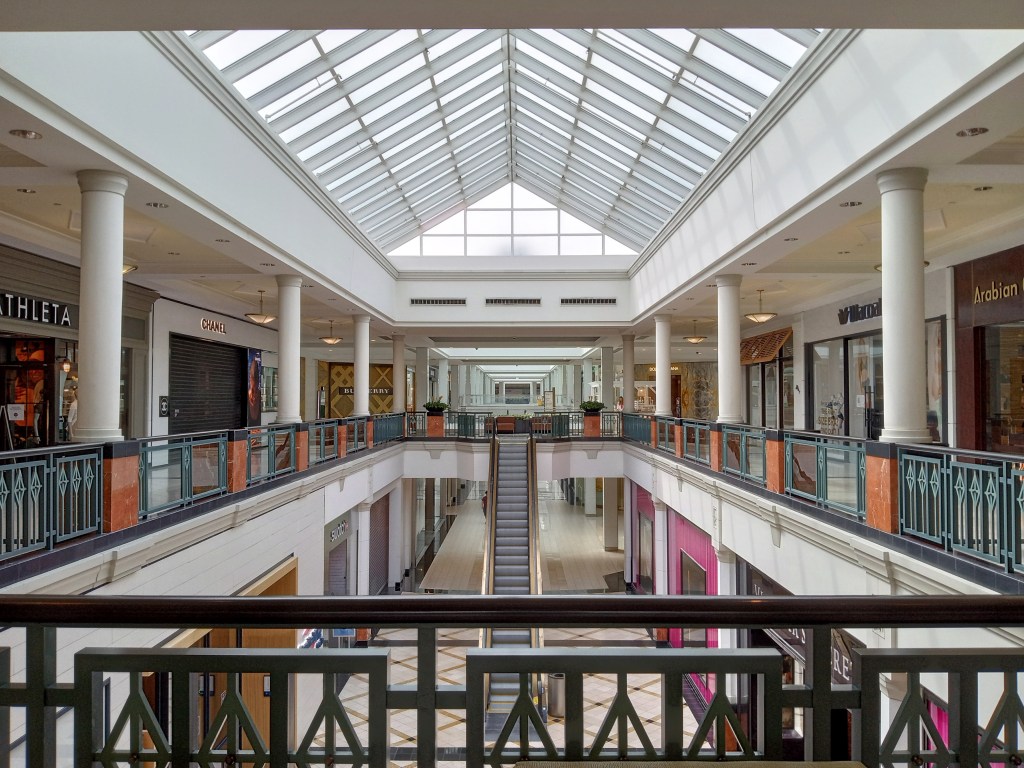
Leaders in Skokie, Illinois want to approve a new 1% tax for purchases at Old Orchard mall in order to help keep the shopping mall going:

Photo by Demian Smit on Pexels.com

Skokie lawmakers during their Feb. 7 village board meeting voted 7 to 1 to make the mall a “business district,” under Illinois’ Business District Development and Redevelopment Sales Tax provision, allowing businesses there to charge an extra 1% sales tax. The board will take a final vote on the proposal in March.

The $5 million generated annually by the additional 1% sales tax will be used by Westfield to do about $120 million in upgrades and rehabs in the mall, which is the largest tax generator in the village.

Mayor George Van Dusen said the new tax and upgrades are essential if the mall is going to remain viable…

Creating a “business district” includes designating the area as “blighted” to facilitate development and redevelopment by imposing an additional tax, Village Manager John Lockerby told the board.

“The viability of the mall is critical to the community, applicable school districts as well as other units of government,” he said, adding that the initiative will set the mall up for long-term success.

Shopping malls, in general, are struggling and not all will survive. This move is intended to help keep Old Orchard going amid tough conditions with COVID-19 and online retail.

But, this is an interesting choice. Here is a few reasons why:

  1. It takes money from private consumers to fund private development through and to ensure local tax monies. The profits go to the mall developers and the community benefits from ongoing tax revenues, jobs, and shopping opportunities. Would this be appropriately termed a “public-private partnership” or a “taxpayer subsidized” project?
  2. As the article notes elsewhere, other communities could use similar tactics to establish “business districts” and keep their own shopping centers alive. Does this just keep the competition going?
  3. The goal is to keep the mall going because it is already there. Is it a sunk cost? What other good might be done in the community with $5 million annually?

The popularity of the Beatles, informational cascades, and culture developed by champions and conditions

Explaining the rise and fame of the Beatles is complicated but there may still be new arguments to be made:

Photo by Mike on Pexels.com

So how did the Beatles make it? Obviously, they had talent that was going unrecognized. But they had something else: early champions. They had a fanatically committed manager in 27-year-old Brian Epstein. They had two enthusiastic admirers who worked in the music publishing arm of EMI who pushed until the company offered the Beatles a recording contract. When “Love Me Do” was released in late 1962 with little support and low expectations from their label, a different kind of champion — fans back in Liverpool — helped build up a wave of support for the song.

I take this example from a paper by Cass Sunstein that is awaiting publication with The Journal of Beatles Studies (you knew there had to be one, right?). Sunstein is a celebrated Harvard Law professor who studies, among many other things, how informational cascades work…

In his paper, Sunstein cites a study done by Matthew J. Salganik and others that illustrates the immense power of social influence. The researchers recruited about 14,000 people to a website where they could listen to and download 48 songs. Some of the people were divided into subgroups where they could see how often other people in their subgroup downloaded each song. Sunstein summarizes the results: “Almost any song could end up popular or not, depending on whether or not the first visitors liked it.” If people saw the early champions downloading a song, they were more likely to download it, too…

These findings support the work of René Girard, a French thinker who is enjoying a vogue these days. Girard exploded the view that we are atomistic individuals driven by our own intrinsic desires. He argued instead that we explore the world by imitating other people. If we see someone wanting something, then that can plant a desire in us to want it, too. “Man is the creature who does not know what to desire, and he turns to others in order to make up his mind,” Girard wrote…

If you are an artist, you probably have less control over whether you’ll become famous than you would like. Social conditions are the key. The better questions for the rest of us may be: Who am I an early champion for? Who are the obscure talents I can help lift up? How am I fulfilling my responsibility to shape the desires of the people around me?

This could be the start of a joke: “How many famous researchers does it take to explain the rise of a set of adolescent celebrities from Liverpool?”

Or, perhaps this simply illustrates Marx’s idea that (paraphrased) “people make choices in circumstances not of their choosing.” The Beatles did their thing but operated within a particular system and time.

More broadly, explaining significant cultural and social change can be complicated. Creativity often builds on the work of people that came before (as the Beatles did). Artists may be creative but not find an opening in the existing system or not be recognized in their time. Even “successful” change can take a long time to develop and be adopted. The Beatles has many things going for them including champions, changes in technology, the rise of teenagers, an ability to put together music and lyrics, etc…but, as noted above, they did not control the whole process nor survive the subsequent pressures.

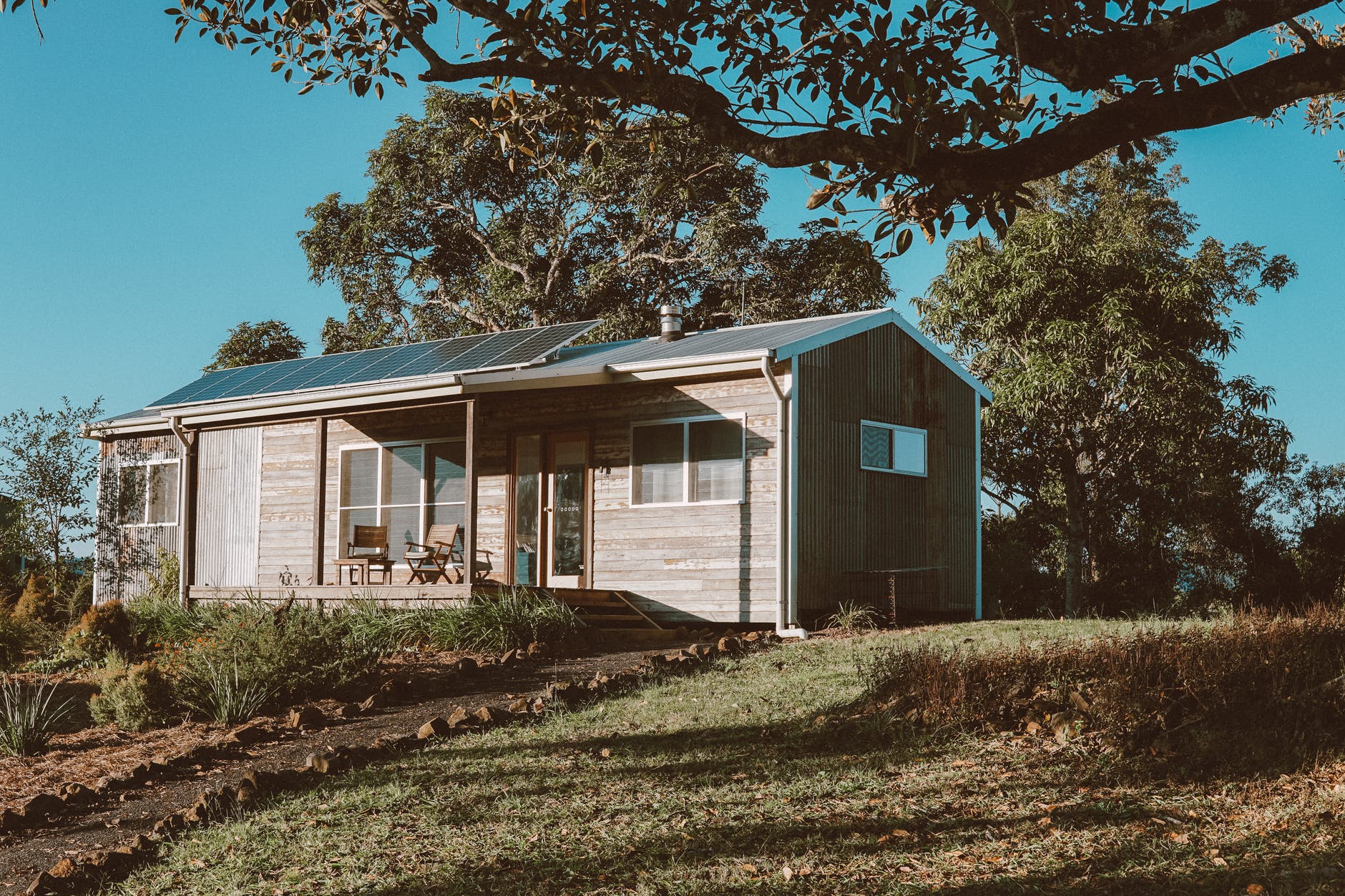
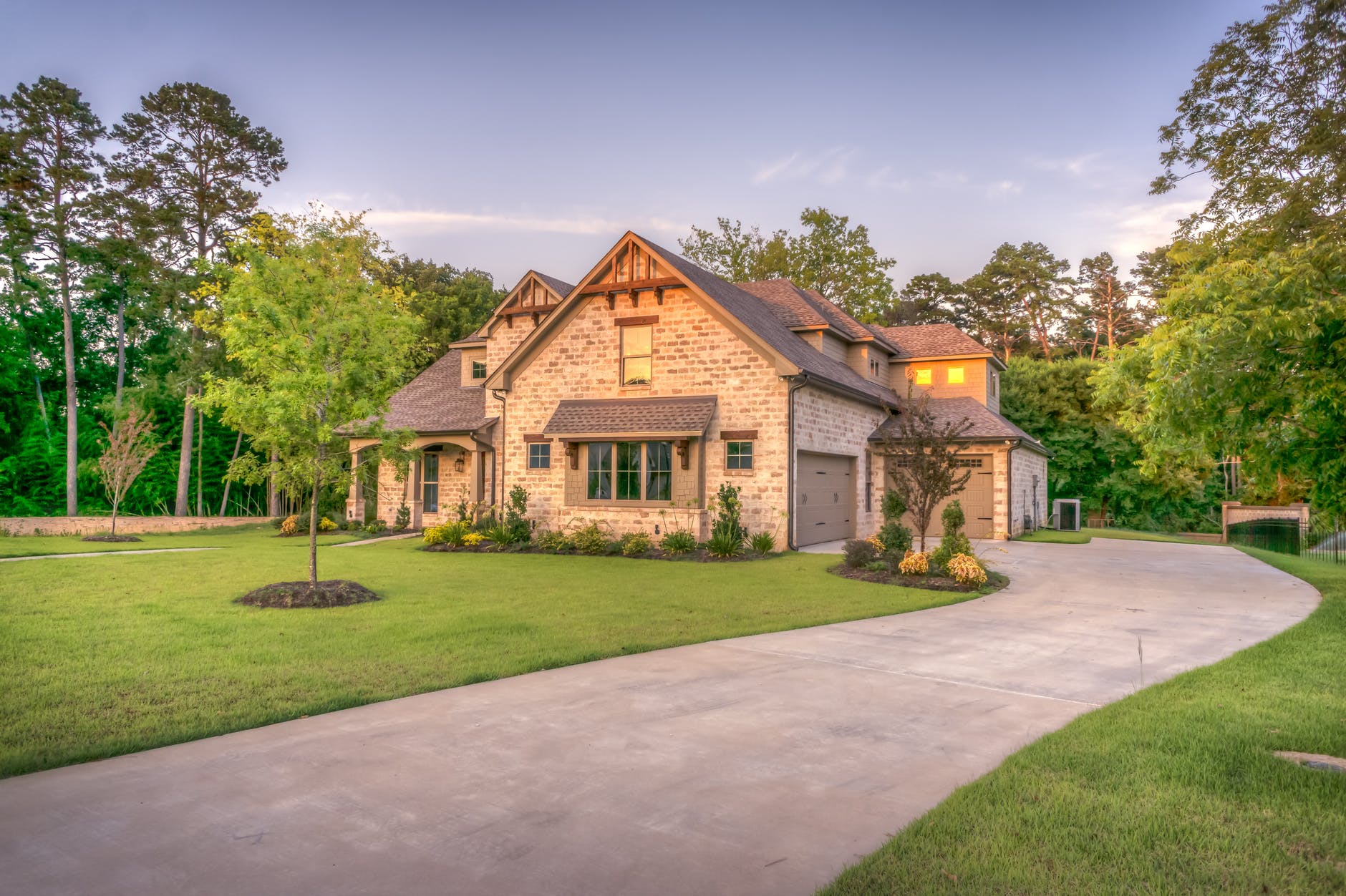
You can buy the newly constructed home – without a garage door

Supply chain issues have limited the availability of garage doors for new homes:

Photo by Castorly Stock on Pexels.com

In most parts of the country, a builder can’t pass final inspection for a home that is otherwise perfectly complete — but that is missing its garage door. That means builders don’t get paid and home buyers can’t move in…

These last two years, the garage has also become the answer to all kinds of pandemic problems. It’s the remote office, the home gym, the one-room schoolhouse and the makeshift bedroom for doubled-up family. The pandemic has effectively completed the decades-long evolution of the garage from a detached carriage house to a connected car annex to a space inseparable from the home itself.

Along the way, the garage door became, for many, the real front door. And so it can be surreal to see brand-new homes with their garages sealed in plywood, or to hear homebuilders talk of installing temporary ones. Welcome to your dream home! The real garage door will be coming later…

Amid all this variety, a few problems have been acute lately. Many doors contain spray-foam insulation, which has been in short supply since the plants in Texas that manufacture its chemical components were disrupted in last year’s winter freeze. (If you make garage doors, you’re also competing for polyurethane or polyvinyl chloride with window frames, vinyl siding, caulking — and the aerospace, cruise ship and automotive industries.)

Many other garage door components are made from steel, which has also been in short supply. And even companies that manufacture the finished doors domestically typically source parts from China that have been snarled in global shipping.

Having a garage is essential in many ways (hence the need for it in a final inspection): it protects whatever is in the garage from the elements, it seals up the opening for safety, it provides for entering and leaving, and it is part of the front that home presents to the world.

Indeed, with the development of the single-family home in the United States, the garage became a key, and sometimes, leading component. With homes in the suburbs dependent on cars plus the ownership of more and more vehicles, garages became larger and featured more prominently in the front facade. As the term “snout house” implies, some houses literally lead with the garage closest to the street. In other homes, the garage might be set further back or even discreetly turned or more hidden from the front. Regardless where the garage is placed and featured, it is very important to the American single-family home.

Perhaps this is an opportunity to rethink garages and how they might work. As noted above, many garages have been used in different ways during COVID-19. Is there a way to build them where they can be more quickly converted without the need for a traditional large door? In a possible future of electric car fleets, how would a home garage work?

Waiting for post COVID-19 flight traffic at the busiest airports

New data on the busiest airports in the United States suggests there is room for more flights in 2022:

Photo by Maria Tyutina on Pexels.com

O’Hare International Airport remained America’s second-busiest hub behind Hartsfield-Jackson Atlanta International Airport in 2021, but experts say the number to watch is a 27% rebound in flights compared to a dismal 2020…

At the same time, O’Hare continues to climb out of a pandemic slump of 538,211 arrivals and departures in 2020. To put that in context, operations totaled 919,704 in 2019 when O’Hare held the title for most U.S. flights…

What other airports are bustling? The third-most voluminous was Dallas Fort Worth International Airport, followed by Denver International Airport, Charlotte Douglas International Airport and Los Angeles International Airport in sixth place.

I have been to the Chicago airports one time for a flight in the last two years and that visit in October 2021 seemed fairly close to normal. Theoretically, the pandemic provided a little space to make improvements or tackle projects at airports. I saw some improvements underway. At least a few big projects are in process at O’Hare:

An expansion of Terminal 5 is in full swing, with more than $1 billion earmarked to modernize the global facility.

At the same time, plans for major airports like O’Hare likely take place on the scale of decades, not necessarily a year at a time. For example, discussions regarding adding a new western terminal and entrance to O’Hare have gone on for years with some progress toward that goal.

It will also be interesting to see how the role of airports changes as the United States shifts to more electric vehicles. If longer road trips are different, will more people want to fly to destinations more than a few hours away? Flights are not exactly green but the transportation landscape could change in the next few decades.

Declaring a mountain lion sanctuary and other NIMBY efforts

Wealthier communities have a variety of means by which to oppose or block cheaper housing or affordable housing. This can include emphasizing conservation in a Silicon Valley community:

Photo by Pixabay on Pexels.com

“Woodside declared its entire suburban town a mountain lion sanctuary in a deliberate and transparent attempt to avoid complying with SB 9,” California Attorney General Rob Bonta wrote in a letter to notify the town that the move violates state law and must be amended.

After receiving a letter from the attorney general this weekend that threatened further legal action, the town ended its short jaunt into the world of conservation the next day. In a statement on Monday, the council said that the Department of Fish and Wildlife “had advised that the entire Town of Woodside cannot be considered habitat” and that “as such, the Town Council has instructed staff to immediately begin accepting SB 9 applications.”

Woodside is not alone in recent efforts:

Woodside is far from the only town that has attempted to come up with creative ways to block the statewide rezoning law. Since its introduction last year, local governments and homeowner groups have opposed the plan, claiming that it crushes single-family zoning.

There have been at least 40 cases in which towns attempted to block or limit SB 9 housing, according to affordable housing advocacy group Yes in My Back Yard Law.

I would not expect wealthier communities to just go along with new guidelines. The combination of local government authority over zoning plus wealth means that certain communities can delay and/or fight affordable housing or more housing. Or, state legislation or federal guidelines are written in such a way that communities escape scrutiny or any penalties (see the example of Illinois). Is the situation different now in California such that communities will not be able to delay any longer?

More broadly, how much do efforts to conserve open space in suburban areas really take place to protect wildlife and land versus limiting the amount of development? From my research in the Chicago suburbs, I recall numerous efforts to protect open land and expand Forest Preserves. These often occurred during mass suburbanization in the postwar area as open space quickly disappeared among new subdivisions and roads. Open space can help limit the number of nearby residences, reduce noise and traffic, and boost property values by limiting housing supply.

From Taylorism to Fordism to Bezosism

I recently finished the book Arriving Today: From Factory to Front Door – Why Everything has Changed about How and What We Buy. One argument the author makes is that Amazon and others practice a new kind of process, dubbed Bezosism:

Much of the rest of the book after this point considers the costs of this new system for workers. Even as technology enables new options – robots working in warehouses and distribution centers – humans still play a critical role but they work in difficult circumstances.

How far can Bezosism go? Amazon facilities and similar operations from other companies are one important sphere to consider. But, what about other areas? As automation increases and demands for productivity and profit increase, where does this leave workers in all sorts of industries?

Data on how higher housing prices are pushing more people to purchase fixer-uppers

As housing prices rise, one potential option for homebuyers is to purchase a home needing repairs or renovation. Here are some numbers on this option:

Photo by Laurie Shaw on Pexels.com

“When everyone else is looking for a move-in ready home, there’s less competition for the fixer-uppers,” said Daryl Fairweather, chief economist at Redfin Corp. “I would not advise it for the faint of heart, but there are a lot of people who are willing to take on that risk because there is such a high reward.”

In 2021, homes in need of renovation sold at a faster pace than the two prior years, according to data from Realtor.com. Fixer-upper sales jumped 13.4% from 2020 to 2021, while the dollar volume of those deals surged 40.8% from 2019 to 2021, reflecting the high growth in sale prices across the broader market. Plus, listings described as “fixer-upper” or using other related terms by agents increased by 8% in December from the previous year…

In a survey by housing research firm Zonda, 33% of respondents said they would buy a fixer-upper for their first or next home but “only if I got a great deal.” Meanwhile, 27% said they would “if the repairs are minor.” Just 20% responded with a “no thanks.”…

On average, fixer-uppers cost 13% less than their move-in ready counterparts, or are about $40,000 less than the typical U.S. home value, according to Zillow. But if that home needs $80,000 to make it livable, that’s not such a great deal, Pendleton said. She recommends that those fixing up homes add an extra 20% onto their budget as a cushion for the unforeseen. 

As the article notes, not everyone has an appetite, resources, or the skills for renovation. But, if the housing options are limited, this appears to be an increasingly attractive option for some. The data cited above suggests a small bump in people selling and buying such homes.

This is also interesting to consider from the other side: the sellers. If someone had a home that needed significant repair, this might be the time to not do those repairs and still get a good price. All those homes needing “TLC” or sold “as-is” now might not linger on the market for months.

More broadly, this hints at how much housing in the United States is eligible for repairs and renovation. The postwar suburban boom started roughly 70 years ago now. Those homes have already likely experienced a lot of repair and change and will undergo more in the upcoming decades. The McMansions of the 1990s and early 2000s will be the fixer-uppers of the future. And since Americans tend to like DIY projects and homeownership, we could be in for more decades of renovations.