The Democrat presidential primary for 2020 contained occasional talk of housing on the campaign trail or in debates. But, leading up to Election Day 2020, there has been little attention paid to housing. A few notes on this:
Some broader campaign themes could be related to housing: talking about the middle-class, taxes, providing opportunities for more Americans. But, these typically do not directly address housing even if it may be implied (such as being middle-class includes the ability to own a home, often in the suburbs).
COVID-19 has had a direct effect on a number of areas. While there has been much said about jobs and the economy, the connection to housing is missing. For many, employment status directly affects housing status and there have been moratoriums regarding rent and evictions. Yet, the primary focus is on the direct means of making money (jobs, stock market, etc.) rather than what many hope their earnings translate into (a nice residence to own or rent in a good neighborhood). Additionally, the housing and real estate industry contribute to the broader economy but little has been said about activity here outside of some people are leaving cities.
According to StreetEasy, the median rent has fallen below $3,000. That is the lowest price since 2011.
The third quarter of 2020 also marked the first time since 2010 that Manhattan, Brooklyn and Queens all recorded year-over-year rent declines.
StreetEasy says renters are no longer willing to pay the so-called “commute premium” of living in Manhattan, because so many people are working from home.
Any rent drop in Manhattan or in New York could provide opportunities for people who even just a short time ago had little chance to live there.
At the same time, dropping below $3,000 for the median suggests that rent is still pretty high. Who can take advantage of this drop? Those with resources to do so, not necessarily people who need affordable or cheap housing. Indeed, if these lower rents quickly induce a number of people to take advantage, then rents could stabilize and head back up.
Perhaps there is little that could actually move rents and housing prices in certain housing markets to a point where many more residents could take advantage. A pandemic is unlikely to lead to the production of more housing and struggles with employment, among other factors, will limit who would move to big cities with temporarily lower prices. At the same time, COVID-19 could help nudge conversations about housing in a productive direction.
David Latimer of New Frontier Design is creating tiny homes that are more luxurious and more expensive than most you’d find on the market today. His most recent model, the Escher, starts at $180,000 and is designed to fit a family of six full time. Latimer calls this “the future family home.”…
The Escher is unlike most tiny homes, nearing $200,000 and including high-end features. But Latimer said that doesn’t make this model any less of a tiny house.
“Minimalism means different things for different people,” Latimer said. “The bottom line is that downsizing is a tremendous life adjustment and sacrifice for anybody. This tiny house is still a minimalistic lifestyle. It’s still a tiny home.”…
“I believe micro-housing is going to be a substantial part of the future of residential housing,” Latimer said. “Millenials and Gen Z are going to live this way. I would bet my life on this. Micro housing will allow people to live out the American dream.”
I am not surprised there is a perceived market for more expensive tiny houses. At a basic level, perhaps this is just selling the same products to different parts of the market: some people want to pay less for a tiny house, others will pay more. Indeed, from what I can gather about who moves into or at least talks publicly about moving into tiny houses, it looks like there are some educated people with some resources who want tiny houses with upgrades.
More broadly, I am not sure how a more expensive house fits into “the tiny house movement.” Downsizing and having a cheaper home are often connected to anti-consumerist motives and behavior. Some people make the choice to acquire a tiny house in order to move away from having too many items or fixating on a large home or being so financially committed. Does a luxury tiny house try to have it both ways?
If this kind of tiny house – small but still nearly $200,000 – is going to become part of the American Dream, the definition of the American Dream may need to change. For decades now, the American Dream involves owning a single-family home, probably in the suburbs. The Escher could indeed technically fulfill this – provide a single-family home in the suburbs – but it is very different in substance. If anything motivates people to make this the embodiment of the American Dream, it may be financial realities rather than aspirations for a simpler, downsized American Dream. In other words, expensive housing markets and debt may push people toward more luxurious tiny homes rather than a true desire to ditch the big showy house for a high-status small house.
Desirable suburban communities – those with wealthier residents, more white-collar and professional workers, higher quality of life, and stronger economic bases – will do better at attracting and following through on redevelopment.
The “easiest” answer in many suburbs might be to redevelop office or commercial properties for residential units. Given the needs for affordable housing or cheaper housing in many metropolitan areas, many suburbs could fill residential units. They may not want to for several reasons: residences do not bring in sales tax money and services are different for residences, including having more students in local schools. Plus, “affordable housing” implies certain things about the residents and the units that might not be palatable to some communities. But, if the primary goal is to put property to use, this might be the way to go.
Mixed-use redevelopment that combines residential and retail or office space will continue to be attractive. However, these opportunities might be limited to already-advantages suburbs or particular properties that have certain advantages (large enough to create a self-contained community, access to highways and other transportation options, etc.).
Certain properties may just present particular problems. Three come to mind quickly: shopping malls, empty big box stores, and sizable office parks or campuses. A number of communities have tried to tackle each of these (as one example among many, see this shopping mall post here) but the size of the property and their particular configuration present problems. There may a glut of new kinds of suburban properties that present their own issues: restaurants (both sit-down and fast food), strip malls, and movie theaters. Again, the ways the space was initially configured for these specific uses can make it difficult to pursue retrofitting.
Converting private spaces into more public spaces. Imagine the shopping mall to public skating rink or office campus to park. These may have very positive long-term benefits including spaces for civic engagement, leisure, and interaction with nature. Yet, given the state of municipal budgets with COVID-19, it might be very hard to find money to purchase or use what was once private property.
If there are numerous vacant properties in suburban areas post-COVID-19, this will present a challenge for communities. Are there enough uses for these properties? How willing are suburbs to convert land from one use to another as they consider the “best use” for the community?
In the last week, I have run into two potentially interesting news stories that cite studies. Yet, when I looked into what kind of studies these were, they were not what I expected.
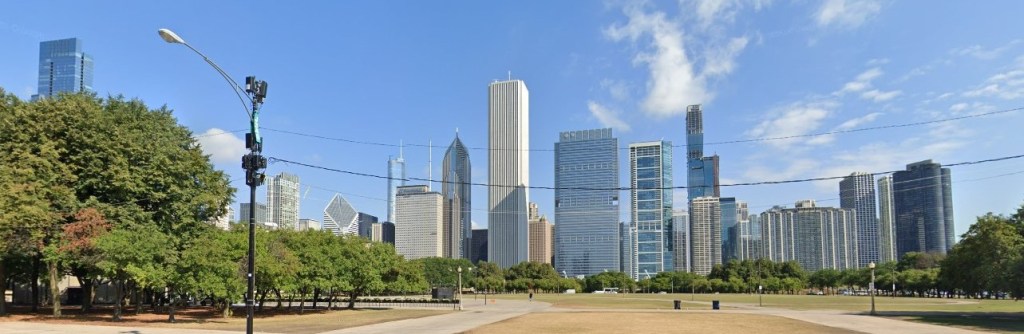
Chicago’s population has been on the decline for years, with the metropolitan area suffering some of the greatest losses of any major U.S. city. But new research suggests that the pandemic might be exacerbating the exodus.
For the first time in four years, moving concierge app Updater has helped more people move out of Chicago than to it, the company said. The catch-all moving service estimates that it takes part in one-third of all U.S. moves, providing unique, real-time insight into pandemic-driven trends, said Jenna Weinerman, Updater’s vice president of marketing.
“All these macro conditions — job insecurity, remote work, people wanting to gain more space — are coming together to create these patterns,” Weinerman said.
The Chicago figures are based on approximately 39,000 moves within city limits from March 1 to Sept. 30. Compared to 2019, this year saw more moving activity in general, with an 8% jump in moves into the city — but a 19% increase in the number of people leaving.
According to the latest available US Census data, the average size of single family homes built in the US was trending upwards from 2010 until 2017, when sizes hit a peak of 2,643 square feet. Since then, single family homes began decreasing in size, with homes built in 2019 averaging 2,611 square feet…
Location matters when it comes to average home size. Some urban hotspots follow the national trend, while others move in the opposite direction. Here’s how single family home and apartment sizes look in the country’s top 20 largest cities, based on Yardi Matrix, Property Shark and Point2Homes data.
As an academic, here is what I expect when I hear the word study:
Peer-reviewed work published in an academic outlet.
Rigorous methodology and trusted data sources.
These steps do not guarantee research free from error but it does impose standards and steps intended to reduce errors.
In both cases, this analysis does not meet those standards. Instead, they utilize more proprietary data and serve the companies or websites publicizing the findings. This does not necessarily mean the findings are untrue. It does, however, make it much more difficult for journalists or the public to know how the study was conducted, what the findings are, and what it all means.
Use of the term study is related to a larger phenomena: many organizations, businesses, and individuals have potentially interesting data to contribute to public discussions and policy making. For example, without official data about the number of people moving out of cities, we are left searching for other data sources. How reliable are they? What data is anecdotal and what can be trusted? Why don’t academics and journalists find better data?
If we use the word “study” to refer to any data analysis, we risk making it even harder for people to discern what is a trustworthy study and what is not. Call it an analysis, call it a set of findings. Make clear who conducted the research, how the analysis was conducted, and with what data. (These three steps would be good for any coverage of an academic study.) Help readers and interested parties put the findings in the context of other findings and ongoing conversations. Just do not suggest that this is a study in the same way that other analyses are studies.
In searching for housing data this week, I came across a small animated widget on the Census website:
I like this presentation for three reasons.
First, a static image does not do this graphic justice. The different bars, all four of them, moved in time with the passage of time. It is one thing to read that something happens every few seconds or minutes; it is another to see it count down or up next to other markers.
Second, while a larger presentation might help display the gravity of the population changes – imagine a map filling with new people – this is a pint-sized graphic with lots of information going into it. Population losses and gains can be complicated with lots of different inputs. This graphic boils it down to three major demographic factors: births, deaths, and immigration.
Third, this highlights the large American population and its growth. Given all the social, cultural, and political issues of recent years, I have wondered what role the size of the US population plays. Addressing any major issue might be more difficult given all of the people groups and experiences, regional differences, and more.
Of course, any graphic aims to simplify and this graphic does as well. At the same time, in a world awash in information, simple yet well-design presentations can go a long way to conveying helpful information.
The ways in which COVID-19 has pushed more real estate activity online – virtual tours, making offers without physically seeing a home – doubles down on the private dimensions of residences in the United States. Here is my argument:
Putting homes for sale on the Internet just further reduces the community or neighborhood element of a residence. If you look at enough real estate pictures, you see some patterns: lots of interior shots but limited images of how the residence interacts with surrounding spaces or what may be just down the street. For example, you may get a shot of a backyard but it is often facing the rear of the house, not out into the neighborhood. Or, you might get a pleasant image of the downtown of a community or a local park or a common room within an apartment building without much sense of how those spaces are used.
This is similar to how HGTV often shows homes. There may be sweeping shots of a neighborhood or location but the focus is always on the single housing unit. The interior and its features are the focus. The neighborhood or surroundings do not matter unless it has to do with proximity to work or family or to note the character of surrounding buildings (which is often connected to property values and the perceived niceness of the location).
There are some tools that could help potential homebuyers check out the neighborhood and community. A virtual house tour could be followed by a Google Street View drive through the nearby blocks. Instead of just relying on walkability and school scores on real estate websites, a potential buyer could go to local websites or message boards to try to get a sense of community life. Yet, any of these Internet attempts pale to talking to people in the community and experiencing the surrounding area. People should make some efforts to get to know their community before they consider moving there.
Seeing homes and residences as commodities that can be evaluated solely through the Internet downplays civic life or at least pushes it into the background. Divorcing a home from its surroundings can be done but it is impoverishing in the long run for property owners and communities. When we emerge from a COVID-19 pandemic, I hope the online aspect of real estate does not hamper efforts to rebuild community and social life when such work is sorely needed.
Increased opportunities to work remotely are pushing more Americans to rethink how and where they want to live. But even if there’s less of a need to live as close to urban job centers, traditional urban amenities — think restaurants, nightlife, museums and sports venues — remain a big draw and demand for city living remains high. As a result, many buyers may seek places that balance the space and affordability of the suburbs, while still maintaining that big-city feel.
A new “Cityness Index” created by Zillow and Yelp Inc. helps identify the U.S. suburbs that best strike that balance. Key metrics include housing affordability compared to the nearest big cities and to the country at large, housing availability, the mix and diversity of businesses — including restaurants, nightlife and the arts — and consumer reviews and check-ins…
There were four individual Yelp indicators evaluated for each suburb to determine its cityness.
1. A mix of businesses similar to major cities
2. A diversity of restaurant and nightlife businesses
3. A diversity of arts businesses
4. A high level of consumer activity
This is an interesting suburban niche to highlight: communities for those who do not want to live in a big city but want more affordable housing and want to have some urban amenities. Of course, people could find this in less affordable suburbs or suburbs near the big city or other suburbs that have these more urban amenities. Is there something inherently more appealing in being in one of these big suburbs?
Perhaps if you live in a large metropolitan area, it matters less if you live in a particular suburb and more if you live near your work and desirable amenities within a certain budget. If this is the case, perhaps living in a suburb of over 150,000 people does not matter much. It is still more suburban than the big city but you are not at the edges of sprawl and the price is right.
Right now, 46 percent of trips from predominantly single-family-home suburban neighborhoods are three miles or less. Which would be perfectly fine for a bike ride, a scooter ride, or a walk in many of those trips, if there was adequate infrastructure to make that a safe choice. That would have enormous impact.
This is a problem that New Urbanist designs hope to solve by placing necessary goods and services within a fifteen minute walk from residences. This means that housing is within slightly less than a mile from important destinations.
Even at this shorter distance, how many Americans would rather drive? Factor in different circumstances – weather, the purpose of the trip (buying groceries?), who is involved in the walk (a solitary pedestrian versus a family with small kids), and the American preference for driving in the suburbs – and this may just seem to be too far.
Stretching the radius from just less than a mile to three miles then is a significant change. A bicycle or scooter would certainly help. Local mass transit would help. But, this would require a lot of infrastructure. Helping pedestrians feel safe instead of unwanted guests alongside busy roads. Safer options for bicyclists. Denser land use. Planning that helps strategically place needed services and buildings where non-drivers can access them. A commitment to a slower-paced life where getting somewhere is part of the fun rather than an impediment to consumption.
It is maybe that last piece that I think may be the hardest to address. Retrofitting will be attractive in some places due to particular needs and dissatisfaction with sprawl. Indeed, “surban” settings will help some suburbs stand out from others. But, if it only happens in pieces across suburbia, it will be hard to address the bigger question: do Americans object to having their lives are designed around cars? They may not be happy with it but this is different than explicitly making individual or collective choices to try a different way of life. As of now, the American Dream still typically involves cars and vehicles and it may take a long time before alternative modes of transportation are viewed as desirable.
We just started being puzzled about it. We did things like code the amount of traffic on a given street, and we thought maybe people on a street with high traffic would be more likely to put up signs. But you find out that those people wanted to let other people know where they stand- that it wasn’t just about catching the eye of passing traffic [to try to get out the vote for a candidate]. We found out that there’s a combination of expressive and communicative motives…
One of the things that was really clear from our studies is that signs are really important to people who display them. They’re emotionally invested in these dynamics and are more likely than people who don’t put up signs to say that it’s a good thing, or a reasonable thing, for neighborhoods to be doing.
I also think this is why we hear about these stories of theft and vandalism-people going to extremes around signs. At least seemingly, in news reports, it can accelerate fast, from people putting up signs to some kind of an altercation, a police report, a fight on the street. I think it’s because people view it as a real affront when someone messes with their expression of self…
You really notice, when you’re walking around, those places where signs are battling one another. But when we did spatial analysis to look at the clustering of signs systematically, in a way that would cut through those strong anecdotal impressions, we found that, really, there wasn’t much evidence of the intermingling of signs-the famous Sign Wars, where there’s a Biden sign at one house and a Trump sign next to it. Really, it was more about like-minded clustering: pockets of Biden supporters signaling to one another, pockets of Trump supporters signaling to one another. More solidarity than outright conflict.
I appreciate the systematic approach for a phenomenon that lends itself to anecdotes. This is how social science can be really helpful: many people have experiences with or have seen yard signs but unless researchers approach the issue in a rigorous way, it is hard to know what exactly is going on.
For example, I regularly walk in two different places in my suburb and I have been keeping an eye on yard signs. At least in the areas I walk, the signs are primarily in favor of one party in the national election while local election signs are more varied. Furthermore, the number of people who have signs is still pretty limited even in a heated political climate. But, just based on my walks, I do not know if what I am seeing match my suburb as a whole let alone communities across the United States. And unless I interact in some way with the people with (and without) yard signs, I have little idea of what is motivating them.
I wonder how the behavior of putting out political yard signs relates to other political behavior. If a political yard sign is expressive, how much does this carry over to other parts of life? Are these the people who are most active in local political activity? Are they the most partisan? Are they the ones always bringing up politics at family gatherings or among friends?
I would also be curious to how this relates to social class and particular neighborhoods. Lawns, in some places, are sacred: they should be green, free of weeds and leaves. Property values are important in many places. Political signs might mess up particular aesthetics or introduce the idea of conflict when suburbanites just want to leave each other alone.