How many data centers does the United States have, want, and need?

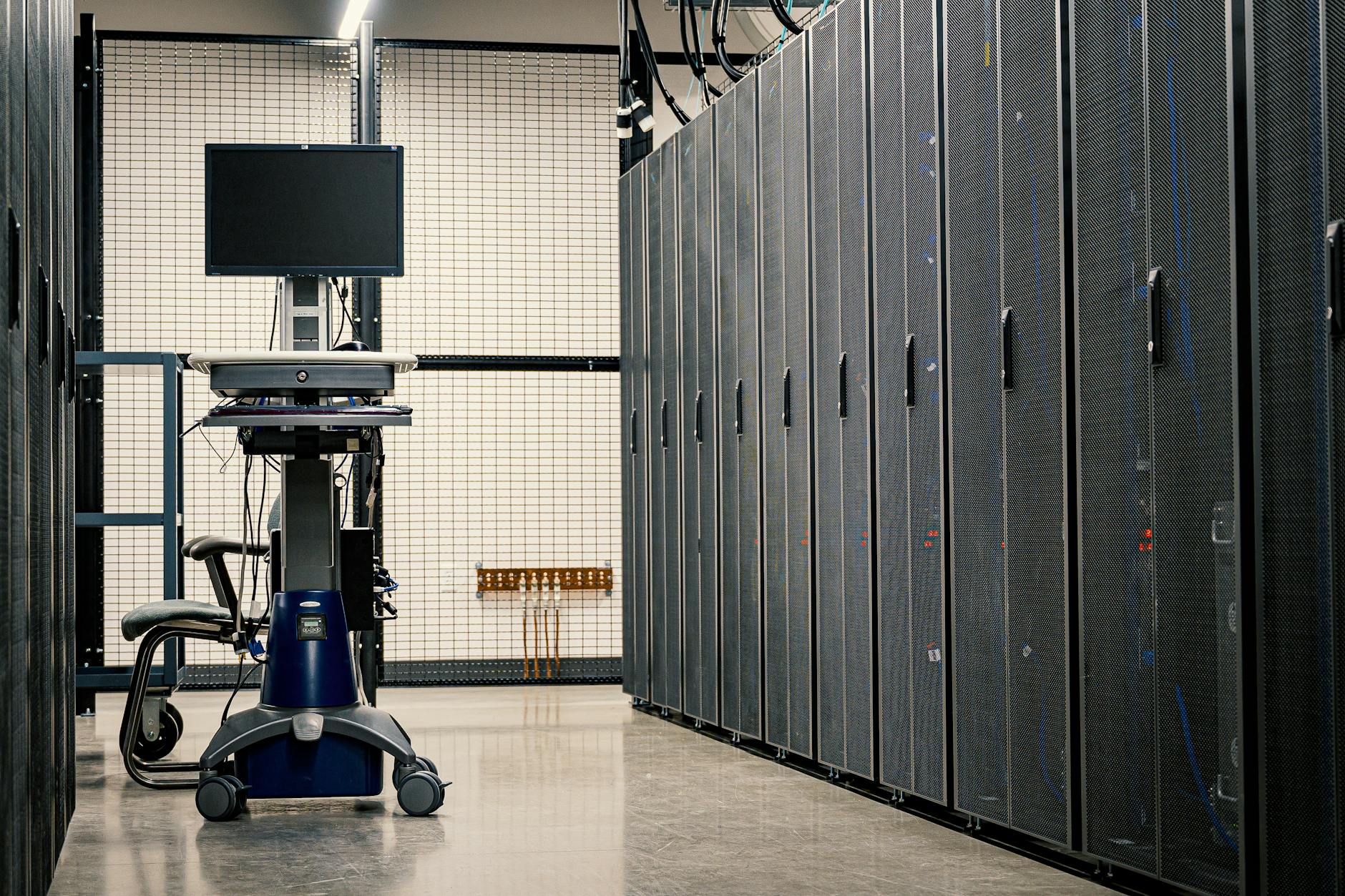
Datacentermap.com says there are 4,287 data centers in the United States.

Photo by Brett Sayles on Pexels.com

How do they know how many data centers are in the country? Their explanation:

Our data originates from multiple sources, primarily:

  • Operators: Data center operators and service providers use Data Center Map as a marketing tool, to promote their data centers, networks and services to potential clients. They have direct access to add and update listings.
  • External sources: We monitor multiple external databases, to identify missing or changed listings. They are automatically queued for manual review.
  • Manual sourcing: We manually identify operators that we are missing and manually add them to our database.
  • End-users: End-users send us tips and requests, about missing or outdated listings, that we manually handle…

As there are no regulatory requirements to register data centers in a central database, there are no complete resources available. All databases are based on voluntary data submissions and/or collecting data from providers or other sources.

How many data centers are needed for the United States? From what I have read, data centers are under construction in order to meet the current and future needs of AI technology. The future needs might be hard to forecast. Within a few years, what newer tech and AI products will be considered essential?

How many data centers are wanted? I am thinking of two possible scenarios. First, tech companies might want a certain number of data centers to meet needs and have extra capacity. But, they can only build so many and they can meet needs and maybe only a little more.. Second, communities and residents may not want some of these data centers. While this opposition often occurs community by community, this could add up to limit the number of data centers throughout the country.

It will be interesting to see where this number ends up. And if the number keeps going up, how many people living around them or driving by them will know and/or care they are there?

Local histories online and thrown into the AI training process

Arcadia Publishing is presenting its authors of local histories the opportunity to join or opt out of their texts being part of AI processes:

Photo by Olena Bohovyk on Pexels.com

Such hyperlocal histories are a crucial resource, a way for particular communities to preserve and chronicle their cultures, as well as a means for marketing their regions to tourists and chance visitors. But their audiences are consequentially limited, so Arcadia does not usually approach its authors with hundreds of dollars on offer. In its email to Brown, the publishing house even pointed out that these opportunities for author compensation “could be very limited in the future,” pointing to summertime court verdicts that recognized the A.I. training process as fair use—even with copyright material. Arcadia was offering its authors a favor, while making clear it didn’t have to, and pointing out that this could be their only chance…

Arcadia is hardly the only book publisher to ink such opaque contracts with the A.I. overlords, despite the spirited objections and lawsuits brought by various authors. University and scholarly presses—which have been confronting the fallout from the Trump administration’s mass grant cancellations, higher printing and shipping costs from tariffs, and industry headwinds—are providing the model. Taylor & Francis, an academic publisher based in the United Kingdom, signed a $10 million deal with Microsoft last year to share a portion of its catalog for A.I. training, in exchange for annual payments from the tech giant through 2027. Authors were reportedly given no notice and their royalties were measly in turn; Bloomberg quoted one anonymous Taylor & Francis author who claimed to earn only $97 for ceding their book to the training maw. (A T&F spokesman told Bloomberg that the payments were “in accordance with the licensing terms and royalty statement periods in their contracts,” while parent company Informa declared in a press release that “the agreement protects intellectual property rights.”) Wiley, an over-200-year-old academic publishing house, has already struck multiple A.I. deals for licensing and product integration, offering up its works to inform the output of Perplexity’s LLM and Amazon Web Services’ chatbot.

For the publishers, the arrangements were lucrative. For the authors, the payouts were much less so. In July, Johns Hopkins University Press gave the authors of its 3,000-title catalog an Aug. 31 deadline to opt out of having their works become A.I. training fodder in a new tech partnership. If they opted in, they would receive a little under $100 per work. Like Arcadia, Hopkins Press did not disclose the A.I. company involved or the money it was hoping to earn. It did press the urgency of signing now while writers still had some agency, and reminded them who here really has the power. “In your contract, you provide us with the rights to go ahead with this kind of licensing,” Barbara Kline Pope, executive director of Hopkins Press, wrote to her writers. “However, we would like you to have the ability to opt out if you so choose.” The press was not suffering businesswise, she clarified, but it was “exploring how our financial model may need to evolve.” One author who went for the opt-out contract addendum with Johns Hopkins Press shared the resultant language with Inside Higher Ed; it warned that “sales and reach” of their work might suffer due to the A.I. opt-out…

A lot is still unclear, but a few things are apparent: A.I. companies are aggressively reaching out to book publishers to strike deals that will allow them to sidestep the litigation that led to the Anthropic settlement and avoid the heftier payouts. Whichever unnamed firm approached Arcadia, it took a particular interest in the wordier History Press, indicating that generative text remains the lodestar. And if the Theodore/Franklin Roosevelt mix-up is representative of other chatbot hallucinations, that perhaps indicates the need not just for these bots to brush up on history and text, but to ramp up the representation of local history in the mix in order to make the LLMs more universal.

It sounds like AI companies want large bodies of texts and academic publishing provides that.

It might just be about the words and texts but I wonder if any of the AI services actually wants the research information. Imagine one of them builds and advertises a specialty in local history. To look for local history online right now might require some digging (see steps for investigating suburbs here and here). What sources to trust? Where can I find specific information about people and places?

For example, I was recently looking at the different presentations about suburban communities between Wikipedia and Grokipedia. In some ways, the pages were similar in terms of their headings and the kinds of information presented. However, they drew on some different sources. Does a community’s website provide the best overview of a community? Where might published histories fit? Who can incorporate “official” overviews and the lived experiences of residents and those studying the history?

Perhaps there would be a market for accurate local history AI. Would it help people doing genealogies or interested in local development or looking to move to a new place?

The amount of building going on in the US to support AI

Perhaps contrary to those who argue the United States struggles to build, an AI construction boom is underway:

Photo by Victor Moragriega on Pexels.com

Many people believe that growth will only continue. “We’re gonna need stadiums full of electricians, heavy equipment operators, ironworkers, HVAC technicians,” Dwarkesh Patel and Romeo Dean, AI-industry analysts, wrote recently. Large-scale data-center build-outs may already be reshaping America’s energy systems. OpenAI has announced that it intends to build at least 30 gigawatts’ worth of data centers—more power than all of New England requires on even the hottest day—and CEO Sam Altman has said he’d eventually like to build a gigawatt of AI infrastructure every week. Other major tech firms have similar ambitions.

Listen to the AI crowd talk enough, and you’ll get a sense that we may be on the cusp of an infrastructure boom.

Throughout American history, growth is good. Construction is a sign of growth and provides jobs. A new industry is underway. Society is progressing. Data centers are all over the place (and will end up somewhere even if some communities do not all them). Americans are used to booming construction as this happened across housing and numerous industries throughout the country’s history.

What that growth might lead to is another matter. How do these data centers contribute to communities and landscapes? Do all the data centers in suburbs transform suburban life? When the growth slows, what happens then? Will the data centers still be there in 50 or 100 years or will they be vacant properties?

All this is a reminder that while many Americans will encounter AI through devices and data going through the air, it has a significant physical footprint. To power real-time AI responses to whatever we as users need requires buildings, land, resources.

Several ways AI could transform suburban life

How might AI transform suburban life? A few thoughts that came to mind:

Photo by Tara Winstead on Pexels.com
  1. If AI disrupts works and jobs in significant ways, this will affect suburbs. Many jobs are in the suburbs and people in the suburbs need certain jobs and income to be homeowners and residents. For example, if AI eliminates a lot of white collar office jobs, this will hit residents and communities who depend on corporate offices. Or if work from home becomes more prevalent, this changes people’s mobility and interactions with people and places around them.
  2. Can AI take over driving or render a lot of driving unnecessary? Driverless vehicles have been in the works for a while now but if AI helps accelerate these innovations, it could change a fundamental aspect of suburban life. People could get more time back. Perhaps communities do not need to be designed around cars.
  3. Is there any chance that AI makes suburban community life better – more interaction, deeper relationships – or would it contribute to individualism and atomization? Say AI takes over certain work duties; does this give people more time to socialize? Or do suburbanites rely even more on AI to handle their interactions with others – why wave to that neighbor you don’t really talk to when AI can generate a text to send to them?
  4. Would widely-adopted AI make suburban houses bigger, smaller, or just different? Perhaps it changes the layout. Would suburbanites want less space if AI can do more for them?
  5. This might be the biggest question of all: does widespread AI help suburbs grow or shrink in population?

I do not know the outcomes of these questions. I do know that the ideology and patterns of suburban living in the United States are well-established and establishing other patterns would require substantial forces.

Why so little resistance to license plate cameras across suburbia? Two possible theories

In the last few years, license plate cameras have popped up across suburbs near where I live. It took me a while to recognize what they were, but now that I know what they look like, I see they are in many locations. Why has there been little resistance to the presence of these cameras? I find it hard to imagine suburbanites would have liked this happening several decades ago. Why so little discussion or opposition today?

Photo by Andreas Ebner on Pexels.com

Two conjectures (with no evidence for either outside of my own knowledge of suburbs):

  1. Fear of crime. They see and hear many stories about crime and the role of cars in those crimes. If license plate cameras can track people who commit crimes and do so quickly, that may be a small price to pay to keep their suburban community safe. (See also use of doorbell cameras in efforts to combat suburban crime.)
  2. The surveillance state is already here, whether there are license plate cameras or not. People can be tracked by their phones, their credit card activity, their social media use, through cameras mounted inside and outside buildings. Why fight a system that is already in place and to which we already assented (by using smartphones, social media, etc.)? (See the term “surveillance capitalism” first used in 2014.)

There could be other factors at play. Companies and organizations have pushed these cameras as opportunities and solutions? People haven’t noticed them or don’t know what they are? This is just part of technological and social change?

I will be looking to see if there is more public discussion of their presence and how much information is available about how often they are used.

How much social information can we handle?

Humans are social. People need connections to others. This is how they learn, grow, and accomplish things both as individuals and groups. We understand ourselves in part by knowing about people and the world around us. Is there a limit to how much social activity and information people can take in and still live a good life?

Photo by Negative Space on Pexels.com

Much of the debate over social media seems to focus on either the content of the information or the time spent with it that could be better used elsewhere. Both are concerns but they only hint at this question: can we handle all the information and social interactions?

For much of human history, people lived in relatively small communities. They lived in close proximity to family, often extended family and people of similar people groups. Traditions were important and technological progress was slower. There are examples in history of large urban centers but these are rare; small villages and towns were the more common social space.

The modern era and all that came with it – rationalism, industrialism, growing populations, urbanization, liberal democracies, pushing back against tradition, new technologies – expanded the number of social connections people could have. Big cities – 1 million-plus people – became common. People had more mobility. Access to other people and information expanded rapidly.

The Internet and social media is layered on top of these processes already underway and ongoing. Through these technologies, humans can connect with many more people and can access much more information. Something happens far away and we can know about it in minutes or seconds. Rather than relying on proximity for many of our social connections, we can interact with people and groups all over the place.

Perhaps humans can figure out how to deal with this all. How many would say they would want to go back to times where people primarily relied on people around them for relationships and information? People might figure out ways to shift their focus to all the options in front of them or better compartmentalize the big picture options and the world immediately around them. Or maybe not. We have options now that most humans never had – we can find out a lot and we can interact with or find out about almost anyone we would like – and we will see how we come to grips with them.

The reasons Americans give for fighting against data centers in their communities

As the number of data centers in the United States is growing, some residents are fighting back:

Photo by Brett Sayles on Pexels.com

Meanwhile, grassroots resistance to unchecked growth is on the rise. In Memphis, locals are trying to shut down an xAI facility powered by turbines they say are polluting the air in a historically black community that already suffers high rates of respiratory illness. A couple in Georgia told reporters their water taps went dry after Meta broke ground on a $750 million development in Newton County. In suburban northern Virginia, where the massive warehouses have become a fixture of everyday life, citizens complain that the developments are encroaching on neighbourhoods and homes at an alarming rate. In Prince William County, locals have even coalesced to try to change local ordinances and put an end to the incessant low-grade roar produced by data centre cooling systems.

In Alabama, residents in McCalla and in the City of Bessemer are united against Project Marvel. “We might be fighting an uphill battle,” David says, “but we’re going to fight it to the very end.” Locals have spent months pouring over academic reports and technical documents, trying to understand how data centres have been received in other communities and what risks might attend the development. They’ve also built a substantial coalition of allies in opposition to the project location, if not to the project itself, including Jefferson County Commission President Jimmie Stephens, State Representative Leigh Hulsey, and a wide range of environmental and other public advocacy organisations.

Generally, American communities think growth is good but they do reserve the right to try to have growth on their terms.

Reading this article and seeing online conversation opposed to data centers near me, I wonder which if these factors is more influential in the concerns people have:

  1. The environmental costs of data centers including high water and electricity usage plus possible pollution and noise.
  2. The sense that a community could find or approve better uses for the land rather than for a data center. How many jobs will actually be generated? Will the community actually see some benefits?
  3. A sense that tech and/or certain companies are dangerous or they could corrupt communities.
  4. Resistance to a potential change in local character that having a data center might represent.

Some of these are common responses in American communities to proposals for land use and others are more specific to data centers.

According to this article, there are already over 5,000 data centers in the United States. How many communities will say no to data centers and which ones will say yes?

More data centers and AI, higher utility bills

With more AI and cloud-based activity in daily life, it may have one clear effect for people: higher prices for electricity.

Photo by Pok Rie on Pexels.com

As the Sun-Times reported in November, the demand for power from big data centers and a delay connecting new power sources, such as solar and wind, to the electric grid is resulting in ComEd customers seeing their monthly bills go up $10.60 a month on average…

Power demand across the country has skyrocketed as big data centers and artificial intelligence operations have created huge demand. Meanwhile, new sources of “renewable” energy, including wind and solar power, have been slow to get connected to an electric grid that spans from Northern Illinois to the East Coast, said Jim Chilsen, a spokesman for the consumer watchdog Citizens Utility Board.

How much will this register with Illinois customers – will they have no problem paying roughly $10 more a month to help support what they expect on their smartphone and online activity? Technology tends to have costs, even if people tend to think the benefits outweigh the downsides, but it can be hard to pin down. While all of the increased rates may not be due to computing activity, at least some is.

Considering indirect costs may just be difficult to do. Having direct feedback with technology probably elicits different reactions than these more indirect costs. Imagine the new AI feature on your phone comes with a $5 a month surcharge on your phone bill to cover its costs. Or each time you do an AI search you incur a charge. Contrast that with the costs of driving. Automobiles opened up all kinds of new opportunities but driving comes with numerous costs, some direct (like paying for gas, insurance, and maintenance) and some more indirect (taxes for infrastructure, changes in land use, pollution).

If asked how much they would be willing to directly pay for AI, what would Americans say?

Data centers as public utilities

As one company looks for approval to build a data center in an Illinois town, they made this argument:

Photo by Brett Sayles on Pexels.com

“When you use your phone to order an Uber or make a doctor’s appointment, it’s likely going through one of our data centers,” Baumann told a Minooka Village Board meeting in January.

“We consider ourselves a utility, like water or sewer or electricity. It has that kind of importance to everyday life,” he said.

But Equinix is not a regulated utility like ComEd or Peoples Gas. Equinix is a publicly traded company whose top shareholders are Wall Street titans such as BlackRock, State Street and Vanguard. 

It’s a supplier that’s kept on a tight leash by the big dogs of artificial intelligence, namely, its partners, including Microsoft and Google.

Contrasting opinions here from the corporation’s real estate director and the Chicago Tribune. On one hand, it is hard to imagine life today without the Internet, social media, and smartphones. All that data transmitted through the air requires infrastructure including cables, towers, and data centers.

On the other hand, all of this is not considered a utility in the same way by the federal and state government. Gas, electricity, and water have all sorts of regulations so that everyone can access them. They are considered essential to housing. The right to the Internet does not exist yet. And the nod above to the private market may or may make sense; other utility companies are publicly traded and seek profits.

Is this a convincing argument in the long run? Would local officials and residents be more inclined to approve a data center if they think of like a utility or more like a company?

Finding the weather screen that shows everything I want

I have tried numerous weather apps and websites over the years searching for an interface that provides all the information I want in a helpful format.

Photo by Pixabay on Pexels.com

Many platforms seem to want to emphasize the current temperature and conditions and make it harder to see other details. And they want you to view ads.

I eventually found Weather Underground’s ten day forecast. It works best on a bigger screen through their website. Here is what it looked like last night:

This does tell me current conditions – I can see them on the left. And there is a temperature high/low and a graphic at the top. But it also does several other things:

-provides info on upcoming days

-graph lines for temperature, wind chill, dew point, cloud cover, precipitation and wind

-the user can move along those graph lines to see the exact prediction conditions at that time so it can operate like an hourly forecast

Perhaps this is too much information for many. But I don’t need to scroll down and down or click to another screen. I can have a current condition graphic and can see current conditions plus can see trends for the future. This is the weather site I am sticking with (though would be open to trying other options).