Religion in the American suburbs: a diverse religious landscape

In the postwar era, Will Herberg described American religion as primarily involving Protestants, Catholics, and Jews. The same was assumed to be true in the suburbs. With suburban populations growing, Protestants, Catholics, and Jews moved in and added to existing congregations and founded many new ones.

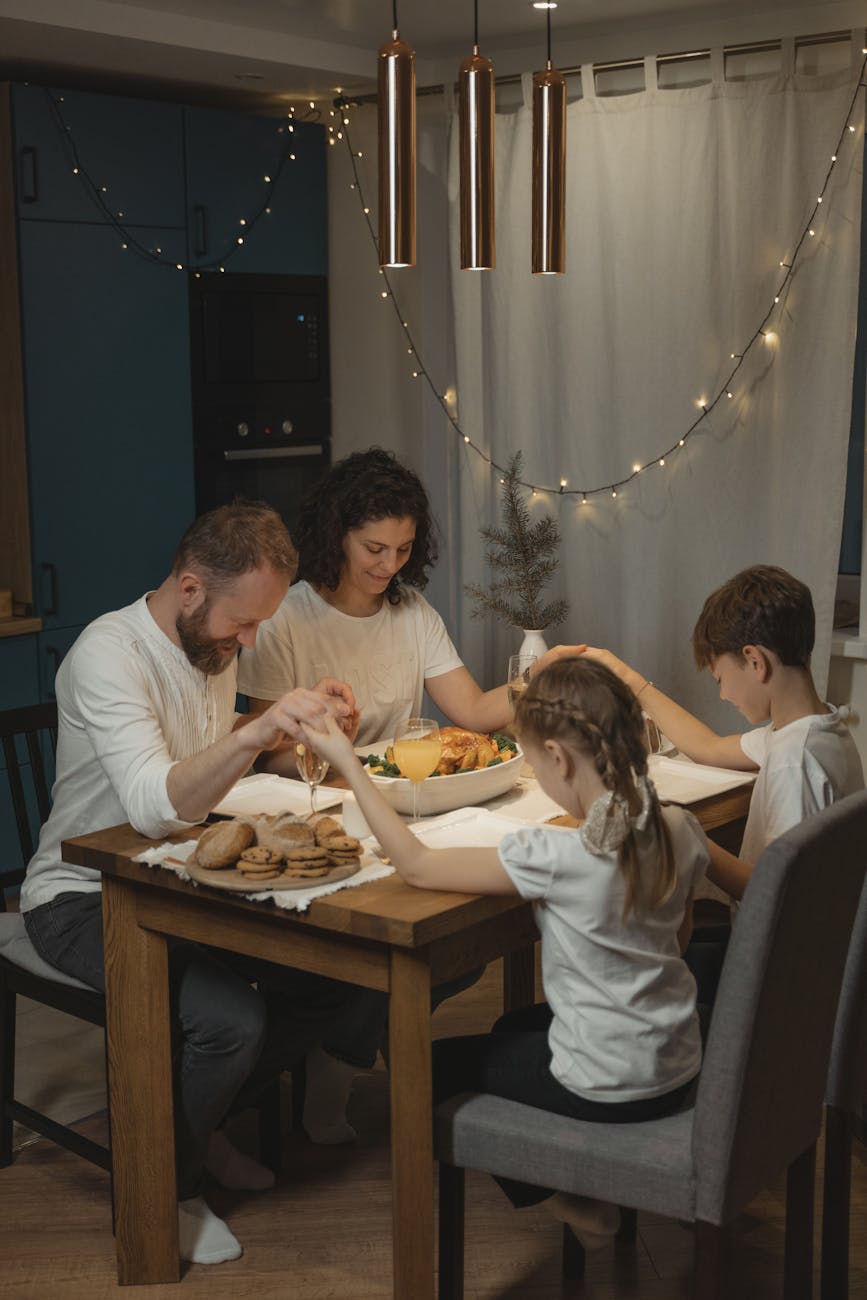
Photo by Zac Frith on Pexels.com

These groups also had to adjust to suburban life. Practicing faith in the suburban context looked different than in urban neighborhoods or rural areas. Critics within these traditions suggested the suburban version of their faith had serious deficiencies. Supporters of the suburban faith highlighted new possibilities and energy.

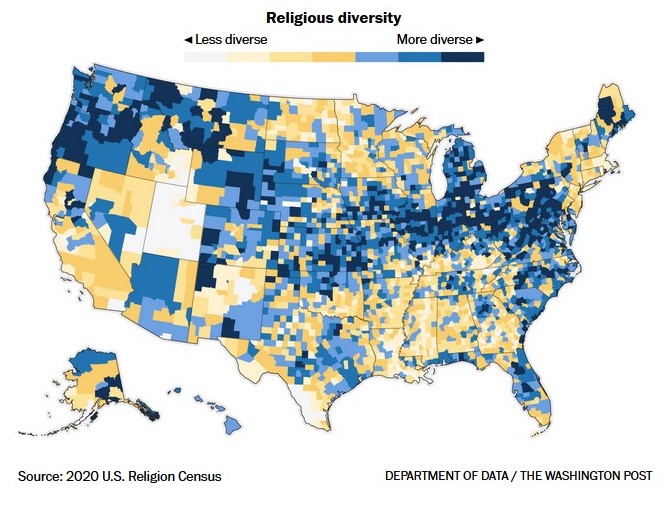
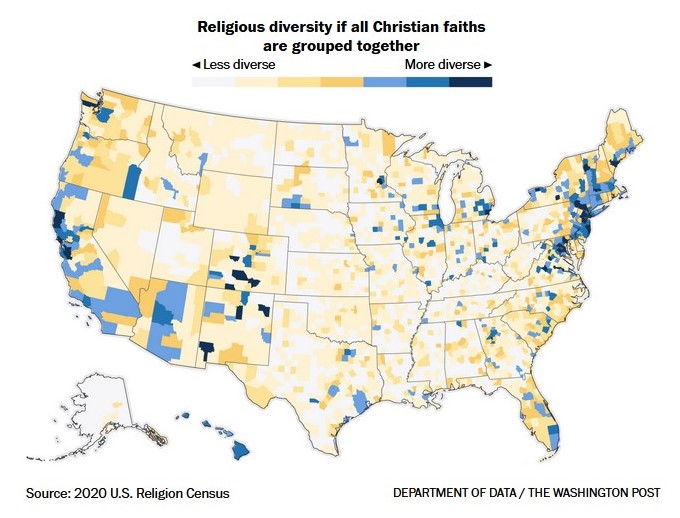
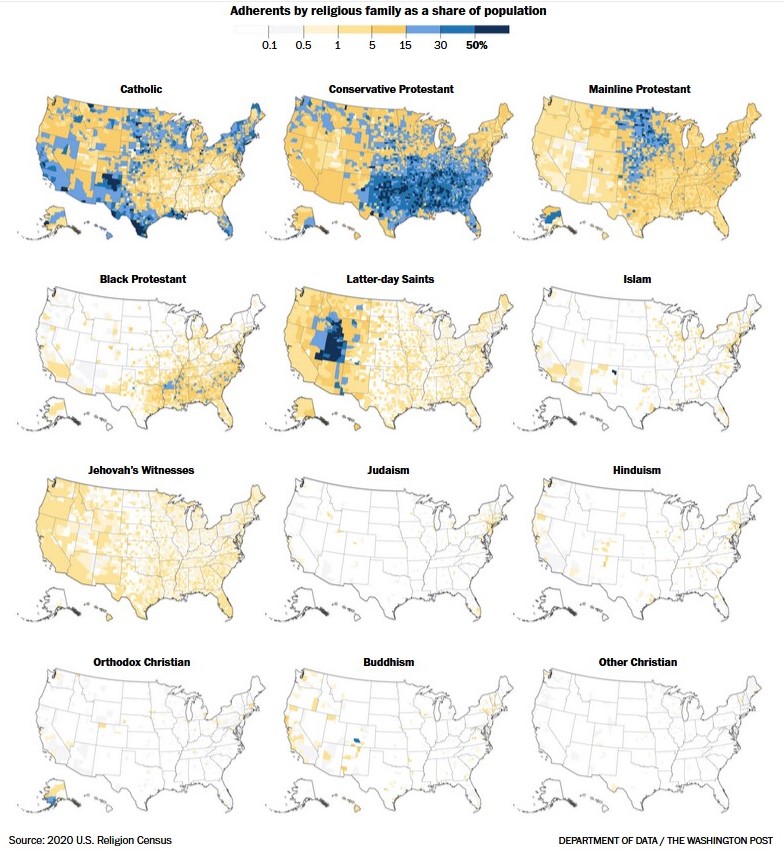
With changes to the population in the United States, including changes prompted by the Immigration and Nationality Act of 1965, the suburban religious landscape changed. Today, there are still plenty of Protestant, Catholic, and Jewish congregations in the suburbs but they are located near the congregations of Muslim, Buddhist, Hindu, Orthodox, Sikh, and other religious traditions. Increasing racial, ethnic, and class diversity in the suburbs goes alongside religious change. The complex suburbia of today includes a complex religious landscape.

Add to that the growing number of residents of the United States who do not identify with a religious tradition or faith. The suburban landscape may include religious activity throughout the week but it also is full of residents with no religious affiliation or other understandings of religion and spirituality.

This is easy to see in many suburban areas. Pick a populous county outside a major city – whether Washington, D.C. or New York City or Chicago or Los Angeles – and you can find religious and non-religious activity all over the place. The suburban landscape may be dominated by single-family homes and roads but there are plenty of congregations in a variety of traditions. It is visible when driving down major roads. You can see it in county-level counts of religious congregations.

This means any quick description of suburban religion is hard to do given the number of practices, beliefs, and belonging present in American communities. One way to see this diverse religious landscape is in the religious buildings of the suburbs – this is the subject of the next post.

Religion in the American suburbs: a unique context with a particular history

Both religion in the United States and the American suburbs are unique phenomena. Put them together over multiple time periods and you have a particular combination with varied expressions across contexts.

Photo by Chris F on Pexels.com

From the beginning of the American suburbs, congregations gathered and individuals practiced religious faith. By the decades after World War Two, when postwar suburban life centered on single-family homes and driving took off, American religious activity may have peaked. The growing number of suburbanites worshiped in suburban congregations old and new as suburban communities expanded.

The American suburbs continued to grow even as religious activity subsided. The 1960s were the first time more Americans lived in suburbs than either in cities or rural areas. By 2000, a majority of Americans lived in suburbs. The changes in American religion at the end of the twentieth century and the start of the next century, such as a emergence of evangelicalism and the increase in those claiming no religious affiliation, interacted with suburban life.

The following posts will detail some of the specific features of suburban religion. Before getting to those traits, I want to highlight three broader patterns in these intertwined phenomena:

  1. The rise of suburbs and their populations paired with the relatively decline in urban populations contributed to a perception that suburbs are more religious and cities are more secular. Reality is more complex than this as American cities and urban neighborhood can contain lots of religious activity and diversity while suburban areas might not be.
  2. Both religion and suburbia influenced each other. It is not just a one-way street where growing sprawl changed religious patterns. Did changing religious patterns also legitimate and support sprawl? Could the American suburbs have occurred as they did without support of religious groups and adherents?
  3. The religious landscape in the suburbs is not flat or always trending in one direction. It is varied and dynamic with forces internal and external to religion and place shaping patterns.

The next post will detail the diverse religious landscape now found in the American suburbs.

Using community wayfinding signs for religious congregations

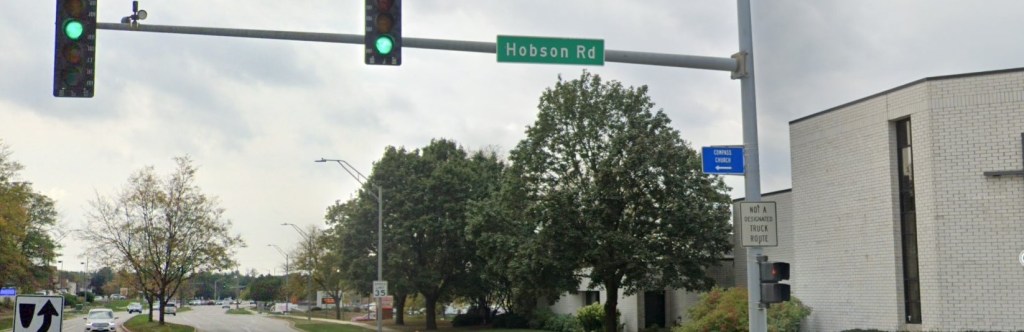
Drive through a community in the Chicago area and you see a lot of signs. One small set of these direct travelers toward religious congregations. Here is one example from Google Street View:

Image from Google Street View

See the small blue sign on the traffic light pole? It directs people to a church a half a mile down the road.

A few observations in seeing such signs:

  1. Not all congregations have a sign. Could all congregations request one and then have at least one pointing toward them?
  2. The signs are pretty small. How many drivers see them.
  3. The signs tend to be posted at busier intersections. Some drives from those intersections are shorter and easier to navigate than others. For example, a driver might see a sign pointing in a direction but it may take a little while before finding the congregation roughly in that direction.

Given that these signs are likely provided as a community good, can their use be improved in significant ways?

Making the sacred profane and the profane sacred at the Super Bowl

The Super Bowl itself may qualify as a religious event given all of its pageantry and symbolism. But, yesterday’s game included at least a few more explicit mentions of religion beyond the patriotism, American consumerism, and big audience already there.

Photo by Shelagh Murphy on Pexels.com

The Super Bowl advertisements from “He Gets Us.”

The ad for prayer app Hallow.

The ad from the Church of Scientology. And see their past ads here.

From Super Bowl MVP Patrick Mahomes: “I give God the glory. He challenged us to make us better. I am proud of my guys. They did awesome. Legendary.”

In early sociological work, theorists discussed the boundaries between sacred and profane. In the Super Bowl, these lines can get very blurry. Is this just an athletic event or is it about our collective lives together and supernatural forces? Can advertising for religious groups and beliefs break through the noise of food and football? Should all of these forces be mixed or is there a time and place for each?

This is not new but it does highlight the ongoing interactions in American society between religion and other spheres. Similar things can and have been said about politics. A football game is not just a football game; it is an opportunity for numerous actors to put their own stamp on what we are doing together.

More faith-based organizations using their property for housing

Congregations and faith-based organizations have a lot of land. Many areas of the United States need more housing. Might this be a good match?

Photo by Pixabay on Pexels.com

Seeking to grow revenue and do good, faith-based organizations are increasingly turning to their unused land and underused buildings as a solution to affordable housing. By the time Ms. Goff arrived at Arlington Presbyterian Church in 2018, Gilliam Place was already under construction.

“Our congregation had begun to ask itself, ‘What’s the point of us?’” Ms. Goff said. “It’s a big, existential question, and they had the sense that affordable housing was an issue they could do something about.”…

State and local governments are also recognizing the potential to increase housing stock. Andrew Gounardes, a New York State senator who represents southern Brooklyn, introduced a bill in December that, he said, would “streamline the process and the way in which religious institutions that want to help contribute to solving the state’s housing crisis will be able to develop affordable housing on their property.”…

Regardless of state laws, projects often face make-or-break decisions at the local level. Neighborhood buy-in is one small step in the journey, said the Rev. David Bowers, vice president of faith-based development initiative for Enterprise Community Partners, a national nonprofit developer. “There is NIMBYism, zoning approvals,” he said. “It’s the nature of the beast.”

Then there’s the financing question. Banks are “hesitant to do business with churches for fear of default,” said Bishop R.C. Hugh Nelson, lead pastor at Ebenezer Urban Ministry Center in Brooklyn, who worked with Brisa Builders Corporation on Ebenezer Plaza, a project that includes 523 affordable apartments, 43,000 square feet of sanctuary and ministry space, and 21,000 square feet of commercial space in Brownsville.

Two thoughts come to mind:

  1. The combination of doing good for the community and generating revenue are interesting to consider together. Are there congregations where one of these is more of the driving force? What if more congregations from their beginnings saw housing as one of the ways they lived our and/or shared their religious faith?
  2. How might congregations not just build housing but develop larger communities around faith, rituals, and community life? Housing is good but so is community and the possibilities of developing a local life involving the congregation.

Famous NYC church sells air rights to help keep building going

This is not an unknown story in New York City: a congregation sells part of its property or air rights to help fund its operations. This time it is St. Patrick’s Cathedral:

Photo by Vlada Karpovich on Pexels.com

Citadel’s Ken Griffin and Steve Roth’s Vornado Realty Trust agreed to buy up to 525,000 square feet of air rights from the Roman Catholic Archdiocese of New York to facilitate the development of 350 Park Avenue, PincusCo reported

The per square foot basis of the deal is arguably more important than the total purchase price, because that hasn’t been determined. Under the agreement, the developers can buy up to 525,000 square feet of air rights, but could also buy as little as 315,000 square feet. That means the purchase price ranges from $98.4 million all the way up to $164 million…

Representatives of Griffin, Vornado and Rudin did not respond to a request for comment from The Real Deal. A spokesperson for the Archdiocese of New York said that it is the church’s “hope that the money will go to the continued upkeep of the Cathedral.”…

Griffin’s Citadel is working to develop a 51-story tower at 350 Park Avenue, designed by Norman Foster. Griffin’s firm is redeveloping properties master leased from Vornado and Rudin. Citadel would occupy roughly 54 percent of the 1.7-million-square-foot property, which would stand 1,350 feet tall.

I remember at least a few of these stories while examining zoning conflict in the New York City. For a congregation with an older building and perhaps an aging congregation, allowing others to make use of their property in different ways could help pay the bills. Here, one of the wealthiest people in the United States wants to build a skyscraper, the church has the air rights, and the money paid to the church can help the Cathedral into the future.

This reminds me of some of the reasons many churches left Chicago’s Loop by the early twentieth century. Land prices were high, people had moved out of the central business district, and they could relocate to quieter, more residential streets. That left very few congregations in the downtown.

And even though this point was passed long ago, the contrast of a 51-story skyscraper near a landmark church is interesting to consider. No longer is religious activity at the center of big cities. Is this a physical manifestation that shows America’s leading religion is business?

An example of running into an academic argument that causes one to pause

I like to read and I see a lot of texts and information. But, sometimes a sentence or paragraph or idea sticks out and makes me stop. Here is one such recent example:

Photo by NIC LAW on Pexels.com

Adam Smith wrote the Wealth of Nations (1776) in a mercantilist era, when the only free market was the slave trade, about which he wrote nothing (Appleby 2010). He was thus not describing existing conditions. Instead, he was proposing an answer to the most important question to thinkers of his time: how to sustain a social order outside of a theological framework in which God served as both keystone and source of legitimation (Dumont 1977; Rosanvallon 1979; Carrier 1997). Early industrialization and the rise of the bourgeoisie had threatened the theological foundations of monarchical and noble rule. In response, Enlightenment political philosophy produced two conceptual pillars for the new society. One was the State, founded on popular sovereignty and the social contract. The other was the Market, based on a supposed natural right to property and the freedom to exchange (Donegani and Sadoun 2007; Audard 2009). The Classical economists’ ideal, self-regulating market, in other words, was a mechanism to replace God. (Gauthier, Francois and James Spickard. 2023. “”Pay No Attention to That Man Behind the Curtain”: a Critique of the Rational Choice Approach to Religion.” Method and Theory in the Study of Religion 35:151)

I do not have the expertise to weigh these claims. But, the final sentence caught my attention: in the shift away from religion, the market could be a substitute. Appealing to the workings of the market could fit where previously people and institutions might have appealed to religion. Where might this fit with Weber’s argument that the intertwining of religion and capitalism faded away as economic and rational logic took over? How does this fit with certain religious traditions and institutions that embrace a free market logic that might have attempted to replace them?

Because it is the end of the semester, I have limited time to follow up on this. Yet, I will explore more later. And I can clearly remember other books and articles that produced “aha” moments or unlocked a series of thoughts and other ideas that proved interesting. Maybe someday I will compile a list of such sources; they do not necessarily come along often and they are worth noting.

NJ suburb home to the second largest Hindu temple in the world

Here is a sign of increasing diversity in the increasingly complex American suburbs: the world’s second largest Hindu temple just opened in suburban New Jersey:

The official inauguration for BAPS Akshardham, the massive 87,975 square-foot, 191-feet tall temple in Robbinsville, New Jersey, is scheduled for Sunday…

Spanning 185 acres, the grand temple is dedicated to Bhagwan Swaminarayan, a revered Hindu spiritual leader from the 19th century. 

The temple is made of stoned of Marble, granite, and limestones – sourced from various places in Europe and shipped to India, where artisans carved intricately.  

Stone pieces were then shipped to the U.S. and assembled by volunteers from all over the world under guidance of artisans from India…

The New York tri-state area is known for its large Hindu American population and community of Hindu devotees.

According to Wikipedia, this suburban location is part of the New York City region but it also right next to the Philadelphia region:

Robbinsville Township is a township in Mercer County, in the U.S. state of New Jersey. Located at the cross-roads between the Delaware Valley region to the southwest and the Raritan Valley region to the northeast, the township is considered part of the New York Metropolitan area as defined by the United States Census Bureau,[21] but directly borders the Philadelphia metropolitan area and is part of the Federal Communications Commission‘s Philadelphia Designated Market Area.[22]

Recent research helps explain the increasing amount of religious diversity within metropolitan regions. For example, Religion & Community in the New Urban America details this in the Chicago region and I detail patterns in debates about zoning and land throughout the New York region and involving multiple religious traditions.

Yet, I suspect such a building would surprise many who do not think of suburbs in the United States this way. With new populations in the suburbs and new religious groups, many suburban communities have changed in recent decades. Suburbs do not only consist of white bedroom communities; suburbs are more racially, ethnically, and religiously diverse.

America’s religious nones: “They. Really. Don’t. Like. Organized. Religion.”

New data on the growing number of “religious nones” in the United States, those who do not identify with any religion , shows they do not like organized religion:

Photo by Francesco Ungaro on Pexels.com

While the nones’ diversity splinters them into myriad subgroups, most of them have this in common:

They. Really. Don’t. Like. Organized. Religion.

Nor its leaders. Nor its politics and social stances. That’s according to a large majority of nones in the AP-NORC survey.

From a related article with some numbers on this:

Among the nones who say they are also not personally religious, 68% cited their dislike of organized religion as a very or extremely important reason. For 63%, a top reason is their dislike of the stances religious faiths take on social and political issues, while 54% say the same about reports of abuse or misconduct by religious leaders. Forty-six percent cite disbelieving in God as a top reason. That was true of 81% of atheists, but just 40% of agnostics and 32% of nothings in particular.

The last paragraph suggests there are multiple influential reasons the nones cite, with a dislike for organized religion leading the way.

It is interesting to see this alongside recent figures showing declines in trust in all sorts of institutions in American life.

This also makes me think about how religious or spiritual ideas can begin or start and then there are processes that transform them into institutionalized religion. Beyond just leaving religion and spirituality solely up to individuals, how do different religious groups push against institutionalization and rationalization?