What will 2025 bring in the American suburbs? A third thing I will be watching for is the search for municipal revenue.
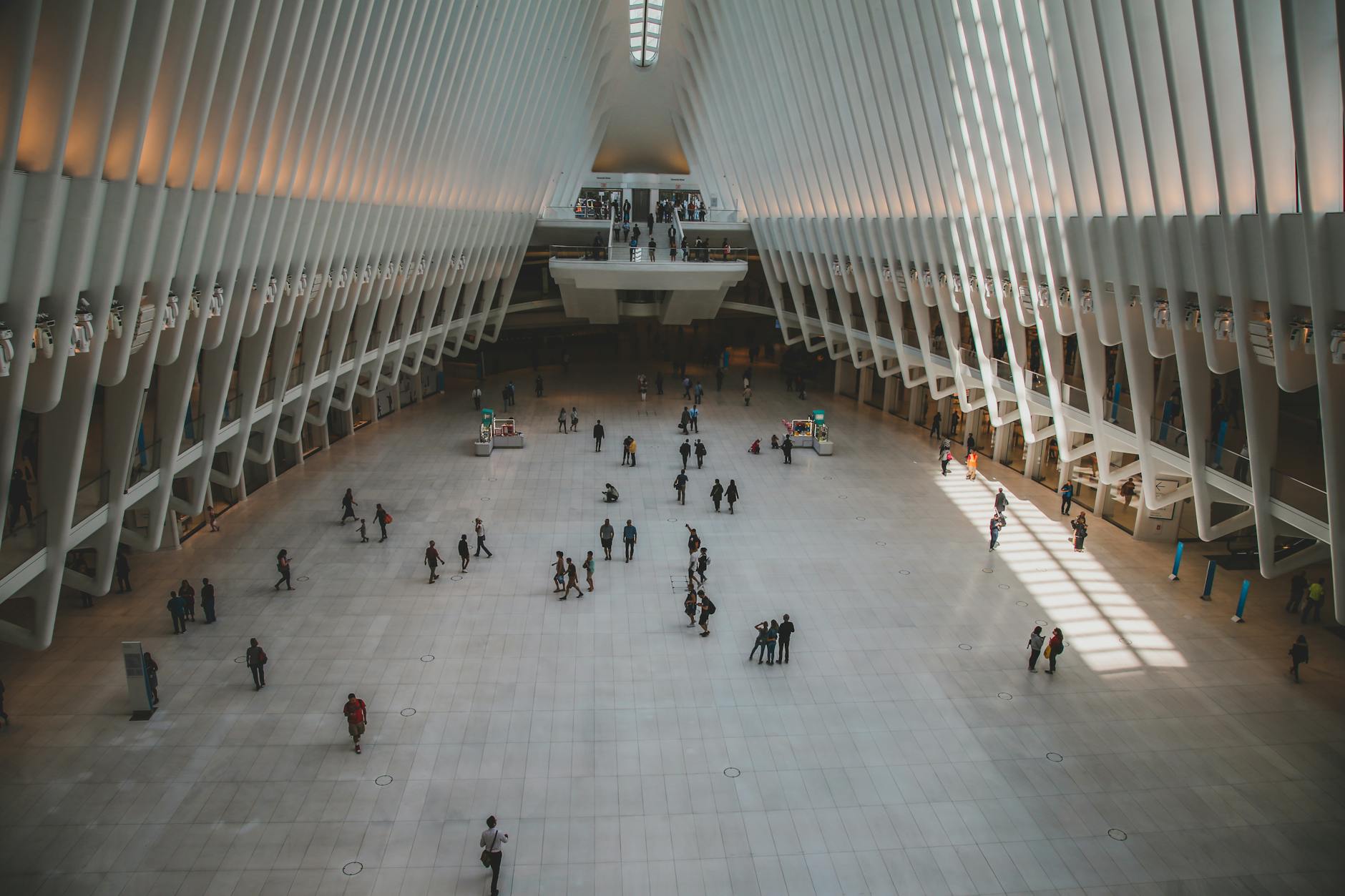
Photo by Miguel u00c1. Padriu00f1u00e1n on Pexels.com
Every government body has a budget and sources of revenue. This includes suburban communities. They may receive money from taxes, fees, state government, the federal government, and other sources.
What will happen to suburban revenues in 2025? There are multiple threats:
Slowing population growth or no population growth.
Reduced funding from the federal and/or state governments.
And it is difficult to reduce municipal costs. As suburbs develop and mature, there are certain costs to maintain infrastructure and provide the services residents expect.
One way to boost revenues is to boost local taxes and fees. This may be unpopular among locals, particularly if they already perceive their local tax burden to be high. But more of this money can go directly to local operations and small increases can be sold as small burdens for individual taxpayers.
To some degree, municipal budgets are always tight. How many suburban communities have surpluses that enable them to keep spending and expanding services and amenities?
In 2025, some suburbs may face tough financial situations. What will they do in these situations? Where might they find extra money? How much goodwill will there be among leaders, residents, and other actors to find solutions?
While the suburbs are known first for their emphasis on single-family homes, they are also full of commercial activity. Specifically, shopping malls, retailers, and strip malls dot the suburban landscape. Drive down major roadways through the American suburbs and you are likely to see retail activity all over the place.
With the ongoing shift toward online shopping and shopping by delivery, what happens to all of these locations? The shopping mall has been suffering for years. A quintessential suburban feature with acres of free parking, numerous retailers in one location, and a place for teenagers and others to hang out, many malls will not survive. Similarly, big box stores and smaller retailers are also closing.
Suburban communities have been working on this for years. Can the shopping mall become more of an entertainment and restaurant center? Can it survive with apartments and housing added on site? Can they be demolished, rezoned, and be home to thriving new developments? For the big box store, what can fill that space?
In all of these plans and activity, there are some common patterns at work:
Suburbs want to replace the revenue malls and retailers produced. This can mean they hold on to ideas of retail or revenue producing uses for a long time.
What replaces the retail locations should not significantly drain local services.
Redevelopment, even if local actors generally agree on what should be done, can take a while. Some of these malls and retail locations have been there for decades. Their particular location and context may vary but changes can affect local character and experiences.
At the same time, some suburban communities will continue to have thriving malls and retail locations. Will this only be in wealthier communities or in ones with advantageous locations within a region or among ones that provide certain desirable amenities? Even if the number of shopping malls, strip malls, and big box stores declines this year, they are not going away completely anytime soon. But the patterns of where there are may continue to fuel differences between suburbs in regions.
Why this particular concern? We could start with a broad statement: there is a need for cheaper housing in many American metropolitan areas. The rise in housing prices in recent years has priced out many residents from quality housing or living near where they work or residing in places they want to. This is not just true in the most expensive urban areas like Manhattan or San Francisco; there is a need for housing in numerous suburban areas.
At the same time, affordable housing can mean different things in different communities and among different actors. Is affordable housing about providing broad housing opportunities to most people who could live in a region? Or is it for lower-income residents? Or is it for seniors? When suburbs discuss affordable housing, I think they have different populations in mind depending on the local history and context.
The last few decades demonstrated that affordable housing is not a concept many suburban communities welcome. It has particular connotations. It may be perceived as a threat to existing property values. It is for particular residents. Few American suburbanites seem to want to live adjacent to affordable housing, even if they are for the concept in general.
So what might happen in 2025? There surely will be discussions at the federal, state, and local levels about affordable housing. Different levels of government and different actors may want to use different levers to encourage affordable housing. What kind of carrots or sticks might be offered? The 2024 presidential campaigns had different thoughts. Could there be significant shifts either way in the next year? If Americans continue to be concerned about their own economic standing, the issue of housing prices will not go away. But who will act and what might they do?
I am looking forward to the release of my book Sanctifying Suburbia: How the Suburbs Became the Promised Land for American Evangelicals on January 14, 2025. Preorder at Oxford University Press and Amazon. Throughout the early part of this year I will be publishing posts about the argument of the book and its implications, surprising things I found while researching, and ongoing possibilities for analyzing religion and the suburbs.
Here is the description of the book:
The suburbs are home to the majority of Americans, including millions of evangelical Christians and thousands of evangelical congregations and organizations. And while American evangelicals are a potent force in society and politics, their connection to and embrace of the suburbs are rarely examined. How did white evangelicals come to see the suburbs as a promised land, home to the evangelical good life and to dense concentrations and networks of evangelical residents, churches big and small, and nonprofit organizations? This book systematically assesses how evangelicals became intertwined with the suburbs and what this means for evangelical life.
Brian Miller shows how evangelical views of race and ethnicity, social class, and gender led to anti-urban sentiment, white flight, and the pursuit of racial exclusivity-all of which has led evangelicals to make the suburbs their physical and spiritual home. At the same time, clusters of evangelical organizations were planting themselves in the suburbs, drawing evangelicals out of the cities. Through sociological analysis, case studies of multiple communities with clusters of evangelical residents, and examinations of evangelical culture, Miller shows that in order to fully understand American evangelicals we must take a deeper look at how evangelicals embraced suburbs and how the suburbs shaped them.
All said, it is a relatively small segment of the population that is “very online” with respect to social media, or that regularly consumes jouranalistic media in virtually any format (TV, online, print, podcasts) – let alone engaging with research by think tanks, nonprofits, activists, or academics. Mostly, it’s people like us. Virtually the entire political and cultural melodrama carried out in academia, policymaking spaces, media outlets, and social networking sites it carried out among symbolic capitalists. The views and priorities of most others are simply unrepresented in these spaces. And for their part, most of those who are not symbolic capitalists are not particularly interested in the highly idiosyncratic struggles we invest so much of ourselves into. (195)
This seems consistent with earlier reports I’ve seen. Social media activity is driven by a small set of users who are not representative of the American population at large.
This could be helpful to keep in mind when wondering if social media is fragmented or how widespread a trend is or whether algorithms could be driving people to different corners of the Internet. These features might be true AND social media as a whole might be driven by a small set of people who share particular positions and practices.
(Read more about the definition of symbolic capitalists here.)
But in a very real sense, salesmen built the American economy and, by extension, America itself. In his book, Friedman notes that in the mid-19th century, more than half the U.S. population lived on a farm. Consumer markets were nonexistent. Salesmen went out and made them from scratch, a sale at a time, and not simply by bringing quality goods to eager buyers; they took them by their lapels and didn’t let go until they signed on the dotted line. Fortune magazine observed, in the mid-20th century, “Mass production would be a shadow of what it is today if it had waited for the consumer to make up his mind.” But because of what scholars call “supply-side bias,” we regard 19th-century tycoons like Rockefeller, Carnegie, and Vanderbilt as Übermensch, while erasing the accomplishments of the legions of lowly salesmen. Why? Economists, generally insulated from the dirty realities of turning a buck by tenure and/or wealth, think of demand as a vast natural force to be harnessed, like wind or oil—a conception that fits hand in glove with the equally simplistic “great man” theory, which posits that some people (men) are just born great. Sounds nice, but things look a little less elegant to the salesmen in the trenches. They know: Demand is more like blood, and it has to be mercilessly extracted, drop by drop, by an army of sweaty little goblins who don’t eat unless they hit their quotas. Suddenly, the economy looks more like an infinite series of tiny frauds than a harmonious ecosystem. And if the Greatest Economy in the World is little more than a shill mill, the implications for the Greatest Country in the World are dismaying, to say the least.
For this argument to work, what social conditions were present?
The United States is more rural, or at least non-urban. A lot more people are engaged in farming or agricultural work.
Brands, mass production, and access to information do not exist in the same way as today.
Might there have been a different response to interacting with strangers or visitors or sales people? Today, people might be nervous about opening their doors but in the 1800s would a visitor prompt hospitality and/or interest in hearing about the broader world?
Another way to put this: how does the role of sale person shift as social conditions change? If telemarketers of the 1990s used phones and machines to rapidly call people in the United States and those in the mid-1800s traveled to farms and small towns, what do sales people look like in the 2030s? Or are there ebbs and flows in the activity and influence of sales people?
But perhaps the broader picture is this: o Americans – as individuals, communities, a country – embody the spirit an activity of sales people more than other countries? Are we always selling something, even when we are not?
Numerous independent stores operate within American suburbs. What might it mean if they pitch themselves as a “hyperlocal” store (heard on a recent advertisement)? A few possibilities come to mind:
The business is trying to emphasize that they are super local. If some brands or stores are global or national (think multinational corporations or national or regional chains), then other brands or stores are local or hyperlocal. This is not just local; it is really local or super local to emphasize that it is not national or global.
The store offers goods or experiences only available in this one particular community. Perhaps the business connects with local themes, history, or spirit in ways that someone could not do if the store was in a different community. The store is hyperlocal because the stuff that can only be found there is connected closely to the suburb.
Could this be a nod to hyperlinks? What if hyperlocal means that the store makes connections between local goods and themes? Or, going a different direction,
The dictionary definition of hyperlocal is “limited to a very small geographical area.” This goes further than #1 above: the store serves not the suburb; it serves a smaller area within the suburb. The goods or experiences found therein serve a very particular place.
I am not sure what the store meant by describing themselves as “hyperlocal” but I find #1, #2, and #4 plausible. (The hyperlink/hyperlocal connection seems like a stretch.) If the goal was to stand out from other businesses that might say they are part of the community or serving the local community, hyperlocal might help.
Just how accurate are those numbers, though? Until the house actually trades hands, it’s impossible to say. Zillow’s own explanation of the methodology, and its outcomes, can be misleading. The model, the company says, is based on thousands of data points from public sources like county records, tax documents, and multiple listing services — local databases used by real-estate agents where most homes are advertised for sale. Zillow’s formula also incorporates user-submitted info: If you get a fancy new kitchen, for example, your Zestimate might see a nice bump if you let the company know. Zillow makes sure to note that the Zestimate can’t replace an actual appraisal, but articles on its website also hail the tool as a “powerful starting point in determining a home’s value” and “generally quite accurate.” The median error rate for on-market homes is just 2.4%, per the company’s website, while the median error rate for off-market homes is 7.49%. Not bad, you might think.
But that’s where things get sticky. By definition, half of homes sell within the median error rate, e.g., within 2.4% of the Zestimate in either direction for on-market homes. But the other half don’t, and Zillow doesn’t offer many details on how bad those misses are. And while the Zestimate is appealing because it attempts to measure what a house is worth even when it’s not for sale, it becomes much more accurate when a house actually hits the market. That’s because it’s leaning on actual humans, not computers, to do a lot of the grunt work. When somebody lists their house for sale, the Zestimate will adjust to include all the new seller-provided info: new photos, details on recent renovations, and, most importantly, the list price. The Zestimate keeps adjusting until the house actually sells. At that point, the difference between the sale price and the latest Zestimate is used to calculate the on-market error rate, which, again, is pretty good: In Austin, for instance, a little more than 94% of on-market homes end up selling for within 10% of the last Zestimate before the deal goes through. But Zillow also keeps a second Zestimate humming in the background, one that never sees the light of day. This version doesn’t factor in the list price — it’s carrying on as if the house never went up for sale at all. Instead, it’s used to calculate the “off-market” error rate. When the house sells, the difference between the final price and this shadow algorithm reveals an error rate that’s much less satisfactory: In Austin, only about 66% of these “off-market Zestimates” come within 10% of the actual sale price. In Atlanta, it’s 65%; Chicago, 58%; Nashville, 63%; Seattle, 69%. At today’s median home price of $420,000, a 10% error would mean a difference of more than $40,000.
Without sellers spoonfeeding Zillow the most crucial piece of information — the list price — the Zestimate is hamstrung. It’s a lot easier to estimate what a home will sell for once the sellers broadcast, “Hey, this is the price we’re trying to sell for.” Because the vast majority of sellers work with an agent, the list price is also usually based on that agent’s knowledge of the local market, the finer details of the house, and comparable sales in the area. This September, per Zillow’s own data, the typical home sold for 99.8% of the list price — almost exactly spot on. That may not always be the case, but the list price is generally a good indicator of the sale figure down the line. For a computer model of home prices, it’s basically the prized data point. In the world of AVMs, models that achieve success by fitting their results to list prices are deemed “springy” or “bouncy” — like a ball tethered to a string, they won’t stray too far. Several people I talked to for this story say they’ve seen this in action with Zillow’s model: A seller lists a home and asks for a number significantly different from the Zestimate, and then watches as the Zestimate moves within a respectable distance of that list price anyway. Zillow itself makes no secret of the fact that it leans on the list price to arrive at its own estimate…
So the Zestimate isn’t exactly unique, and it’s far from the best. But to the average internet surfer, no AVM carries the weight, or swagger, of the original. To someone like Jonathan Miller, the president and CEO of the appraisal and consulting company Miller Samuel, the enduring appeal of the Zestimate is maddening. “When you think of the Zestimate, for many, it gives a false anchor for what the value actually is,” Miller says.
Multiple factors are at play here. Who has what information about housing and housing values? How is the value calculated? And what is the distribution of the comparison of the estimated value to the actual sales value? Some of this involves data, some involves algorithms.
It also sounds like part of the story is that Zillow has built one of the more effective brands in this space. Even if the estimates are not exactly right, people are drawn to Zillow. What would happen if competitors advertised that they are more accurate? Would this be enough to move people from using Zillow?
Given all of this, who can build the most accurate number might not be the “winner.” Is the goal to best model the housing market or is the goal to attract users? These two goals might go together but they might not.
Kennedy problems, or at least the perception thereof, certainly helped bolster a lot of the growth this past couple of years in suburban business districts like those in the likes of Naperville, Glencoe, Wheaton and Aurora, as suburbanites and exurbanites looked beyond Chicago to avoid the Kennedy at all costs.
Good for those suburbs for jumping on an opportunity. But Chicago got a “lanes closed, expect delays” warning for years — a handicap it most certainly did not need.
How might we know that this construction on a highway leading northwest out of Chicago boosted business in suburban areas (including several that are different directions from the Kennedy)? Some possibilities:
A rise in the number of visitors or patrons in these suburban businesses and a decline in visitors or patrons in Chicago. These might not be causing each other but trends going different directions might be taken as evidence for this argument.
Survey or interview data that suggests suburbanites factor in traffic in Chicago when making decisions about where to go. It might go something like this: “The drive into Chicago just takes too long…let’s go somewhere that is closer and easier to get to.” Anecdotal evidence might point in this direction but how often does this happen?
Changes in commuter patterns and/or the presence of entertainment and business centers in the suburbs. As metropolitan areas have expanded, how many people find jobs, shopping, and cultural opportunities in other suburbs rather than in the big city? (This has happened already in American metropolitan regions but some Chicagoland specific data would be interesting.)
Evidence of direct efforts from suburban communities or businesses to attract people by referencing the issues present in going to Chicago. For example, do any suburban downtowns tell people they do not need to go to Chicago to find X? Or do businesses make this argument? Or suburban shopping malls?
Elon Musk‘s company SpaceX is looking to make Starbase, Texas, the home of its starship development and production facility, an official town.
Starbase is currently an unincorporated community within Cameron County, in the Rio Grande Valley…
“To continue growing the workforce necessary to rapidly develop and manufacture Starship, we need the ability to grow Starbase as a community. That is why we are requesting that Cameron County call an election to enable the incorporation of Starbase as the newest city in the Rio Grande Valley,” Starbase general manager Kathryn Lueders said in a letter to Cameron County Judge Eddie Trevino.
To make Starbase official, Trevino must order a special election to incorporate the community as a Type-C Municipality. Registered voters in the area must approve the change.
According to Lueders, incorporating Starbase will streamline the process to make Starbase a “world-class place to live” and enable the Starship program to “fundamentally alter humanity’s access to space.”
A few thoughts about what sounds like an interesting community:
What will make it different from other American or Texas communities? Will it have a unique physical layout? Will day-to-day life be different than other communities? Beyond the launch facilities, what might set this apart?
Is Starbase a company town or just a community dominated by one industry? These sorts of communities can have interesting histories given their reliance on the rises and falls of the local industry.
Think of the branding and merchandise potential of the community. Shirts, hats, shot glasses, and more carrying a Starbase, Texas script or logo.