Numerous independent stores operate within American suburbs. What might it mean if they pitch themselves as a “hyperlocal” store (heard on a recent advertisement)? A few possibilities come to mind:
The business is trying to emphasize that they are super local. If some brands or stores are global or national (think multinational corporations or national or regional chains), then other brands or stores are local or hyperlocal. This is not just local; it is really local or super local to emphasize that it is not national or global.
The store offers goods or experiences only available in this one particular community. Perhaps the business connects with local themes, history, or spirit in ways that someone could not do if the store was in a different community. The store is hyperlocal because the stuff that can only be found there is connected closely to the suburb.
Could this be a nod to hyperlinks? What if hyperlocal means that the store makes connections between local goods and themes? Or, going a different direction,
The dictionary definition of hyperlocal is “limited to a very small geographical area.” This goes further than #1 above: the store serves not the suburb; it serves a smaller area within the suburb. The goods or experiences found therein serve a very particular place.
I am not sure what the store meant by describing themselves as “hyperlocal” but I find #1, #2, and #4 plausible. (The hyperlink/hyperlocal connection seems like a stretch.) If the goal was to stand out from other businesses that might say they are part of the community or serving the local community, hyperlocal might help.
Just how accurate are those numbers, though? Until the house actually trades hands, it’s impossible to say. Zillow’s own explanation of the methodology, and its outcomes, can be misleading. The model, the company says, is based on thousands of data points from public sources like county records, tax documents, and multiple listing services — local databases used by real-estate agents where most homes are advertised for sale. Zillow’s formula also incorporates user-submitted info: If you get a fancy new kitchen, for example, your Zestimate might see a nice bump if you let the company know. Zillow makes sure to note that the Zestimate can’t replace an actual appraisal, but articles on its website also hail the tool as a “powerful starting point in determining a home’s value” and “generally quite accurate.” The median error rate for on-market homes is just 2.4%, per the company’s website, while the median error rate for off-market homes is 7.49%. Not bad, you might think.
But that’s where things get sticky. By definition, half of homes sell within the median error rate, e.g., within 2.4% of the Zestimate in either direction for on-market homes. But the other half don’t, and Zillow doesn’t offer many details on how bad those misses are. And while the Zestimate is appealing because it attempts to measure what a house is worth even when it’s not for sale, it becomes much more accurate when a house actually hits the market. That’s because it’s leaning on actual humans, not computers, to do a lot of the grunt work. When somebody lists their house for sale, the Zestimate will adjust to include all the new seller-provided info: new photos, details on recent renovations, and, most importantly, the list price. The Zestimate keeps adjusting until the house actually sells. At that point, the difference between the sale price and the latest Zestimate is used to calculate the on-market error rate, which, again, is pretty good: In Austin, for instance, a little more than 94% of on-market homes end up selling for within 10% of the last Zestimate before the deal goes through. But Zillow also keeps a second Zestimate humming in the background, one that never sees the light of day. This version doesn’t factor in the list price — it’s carrying on as if the house never went up for sale at all. Instead, it’s used to calculate the “off-market” error rate. When the house sells, the difference between the final price and this shadow algorithm reveals an error rate that’s much less satisfactory: In Austin, only about 66% of these “off-market Zestimates” come within 10% of the actual sale price. In Atlanta, it’s 65%; Chicago, 58%; Nashville, 63%; Seattle, 69%. At today’s median home price of $420,000, a 10% error would mean a difference of more than $40,000.
Without sellers spoonfeeding Zillow the most crucial piece of information — the list price — the Zestimate is hamstrung. It’s a lot easier to estimate what a home will sell for once the sellers broadcast, “Hey, this is the price we’re trying to sell for.” Because the vast majority of sellers work with an agent, the list price is also usually based on that agent’s knowledge of the local market, the finer details of the house, and comparable sales in the area. This September, per Zillow’s own data, the typical home sold for 99.8% of the list price — almost exactly spot on. That may not always be the case, but the list price is generally a good indicator of the sale figure down the line. For a computer model of home prices, it’s basically the prized data point. In the world of AVMs, models that achieve success by fitting their results to list prices are deemed “springy” or “bouncy” — like a ball tethered to a string, they won’t stray too far. Several people I talked to for this story say they’ve seen this in action with Zillow’s model: A seller lists a home and asks for a number significantly different from the Zestimate, and then watches as the Zestimate moves within a respectable distance of that list price anyway. Zillow itself makes no secret of the fact that it leans on the list price to arrive at its own estimate…
So the Zestimate isn’t exactly unique, and it’s far from the best. But to the average internet surfer, no AVM carries the weight, or swagger, of the original. To someone like Jonathan Miller, the president and CEO of the appraisal and consulting company Miller Samuel, the enduring appeal of the Zestimate is maddening. “When you think of the Zestimate, for many, it gives a false anchor for what the value actually is,” Miller says.
Multiple factors are at play here. Who has what information about housing and housing values? How is the value calculated? And what is the distribution of the comparison of the estimated value to the actual sales value? Some of this involves data, some involves algorithms.
It also sounds like part of the story is that Zillow has built one of the more effective brands in this space. Even if the estimates are not exactly right, people are drawn to Zillow. What would happen if competitors advertised that they are more accurate? Would this be enough to move people from using Zillow?
Given all of this, who can build the most accurate number might not be the “winner.” Is the goal to best model the housing market or is the goal to attract users? These two goals might go together but they might not.
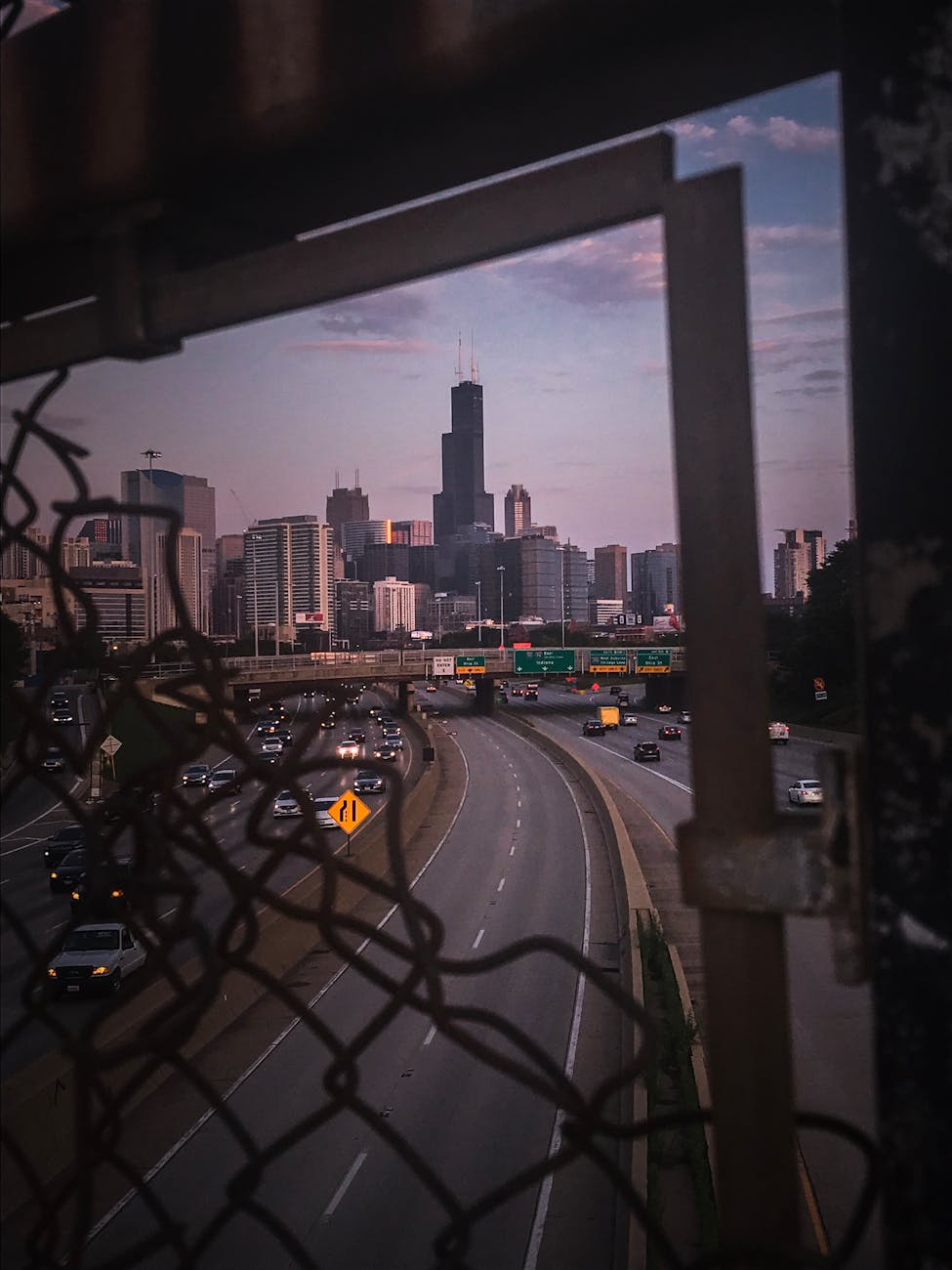
Kennedy problems, or at least the perception thereof, certainly helped bolster a lot of the growth this past couple of years in suburban business districts like those in the likes of Naperville, Glencoe, Wheaton and Aurora, as suburbanites and exurbanites looked beyond Chicago to avoid the Kennedy at all costs.
Good for those suburbs for jumping on an opportunity. But Chicago got a “lanes closed, expect delays” warning for years — a handicap it most certainly did not need.
How might we know that this construction on a highway leading northwest out of Chicago boosted business in suburban areas (including several that are different directions from the Kennedy)? Some possibilities:
A rise in the number of visitors or patrons in these suburban businesses and a decline in visitors or patrons in Chicago. These might not be causing each other but trends going different directions might be taken as evidence for this argument.
Survey or interview data that suggests suburbanites factor in traffic in Chicago when making decisions about where to go. It might go something like this: “The drive into Chicago just takes too long…let’s go somewhere that is closer and easier to get to.” Anecdotal evidence might point in this direction but how often does this happen?
Changes in commuter patterns and/or the presence of entertainment and business centers in the suburbs. As metropolitan areas have expanded, how many people find jobs, shopping, and cultural opportunities in other suburbs rather than in the big city? (This has happened already in American metropolitan regions but some Chicagoland specific data would be interesting.)
Evidence of direct efforts from suburban communities or businesses to attract people by referencing the issues present in going to Chicago. For example, do any suburban downtowns tell people they do not need to go to Chicago to find X? Or do businesses make this argument? Or suburban shopping malls?
Elon Musk‘s company SpaceX is looking to make Starbase, Texas, the home of its starship development and production facility, an official town.
Starbase is currently an unincorporated community within Cameron County, in the Rio Grande Valley…
“To continue growing the workforce necessary to rapidly develop and manufacture Starship, we need the ability to grow Starbase as a community. That is why we are requesting that Cameron County call an election to enable the incorporation of Starbase as the newest city in the Rio Grande Valley,” Starbase general manager Kathryn Lueders said in a letter to Cameron County Judge Eddie Trevino.
To make Starbase official, Trevino must order a special election to incorporate the community as a Type-C Municipality. Registered voters in the area must approve the change.
According to Lueders, incorporating Starbase will streamline the process to make Starbase a “world-class place to live” and enable the Starship program to “fundamentally alter humanity’s access to space.”
A few thoughts about what sounds like an interesting community:
What will make it different from other American or Texas communities? Will it have a unique physical layout? Will day-to-day life be different than other communities? Beyond the launch facilities, what might set this apart?
Is Starbase a company town or just a community dominated by one industry? These sorts of communities can have interesting histories given their reliance on the rises and falls of the local industry.
Think of the branding and merchandise potential of the community. Shirts, hats, shot glasses, and more carrying a Starbase, Texas script or logo.
Part of the fixation on cultural algorithms is a product of the insecure position in which cultural gatekeepers find themselves. Traditionally, critics have played the dual role of doorman and amplifier, deciding which literature or music or film (to name just a few media) is worthwhile, then augmenting the experience by giving audiences more context. But to a certain extent, they’ve been marginalized by user-driven communities such as BookTok and by AI-generated music playlists that provide recommendations without the complications of critical thinking. Not all that long ago, you might have paged through a music magazine’s reviews or asked a record-store owner for their suggestions; now you just press “Play” on your Spotify daylist, and let the algorithm take the wheel.
If many culture industries struggle to know what will become popular – which single, film, book, show, or product will become wildly successful and make a lot of money? – critics can be one way to try to figure this out. What will the influential critics like? Will they champion particular works (and dislike others)?
Might we get to some point where we see algorithms as critics or acting with judgment and discernment? Right now the recommendation algorithms are a “black box” that users blindly follow. But what if the algorithms “explained” their next step: “You like this song and based on this plus your past choices, I now recommend this.” Or what if you could have a “conversation” back and forth with the algorithm as you explain your interests and it leads in particular directions. Or if the algorithm mimics the idiosyncrasies a human critic would have.
I wonder about the role of friends and social contacts in what they recommend or introduce people to. At their height, could cultural critics move people away from the choices of family and friends around them? In today’s world of recommending algorithms, how often does the patterns of friends and acquaintances move people in different directions?
The more that I think about it, the more that I come to believe that this invention is responsible for the suburbs as we know it. This unassuming little piece of metal, it’s called a gang nail plate or a truss plate, and its job is to affix pieces of wood together at their joints.
What’s really unique about it though is that it can securely connect wood members positioned at almost any angle. With the aid of these plates houses made of standard 2×4 studs can have open floor plans, cathedral ceilings, and complicated roof shapes all constructed with ease. You might recognize all those three traits as the common features of modern suburban homes, especially the so-called McMansions. Yeah, these things make McMansions possible.
The argument of this video is that this is made possible by the gang nail plate. Without it, the roof is more expensive and not as strong. The big spaces that Americans expect in their single-family homes are more difficult to construct.
This reminds me of the importance of other construction techniques that enabled suburban housing. Balloon framing. The systems developed in mass suburbs, such as Levittown, to build homes in stages and with a set number of floor plans.
I do not spend a lot of time watching Christmas movies but I know at least a few of the Christmas movies said to involve Chicago are more about the Chicago suburbs. Some evidence…
“Home Alone” is set in a fictionalized version of Winnetka, Illinois. “National Lampoon’s Christmas Vacation” takes place in an unnamed suburb outside of Chicago. “The Santa Clause” is set in Lakeside, Illinois. “Christmas With the Kranks” happens in Riverside, Illinois. “Fred Claus,” “The Christmas Chronicles,” “Office Christmas Party,” “While You Were Sleeping,” “A Bad Moms Christmas,” and the early scenes of “A Christmas Story Christmas” take place in downtown Chicago.
“The Polar Express” is initially set in Grand Rapids, Michigan (based on the inclusion of several historic local buildings familiar to the original book’s author). Still, its North Pole sequences are modeled after the Pullman Factory in Chicago.
Many additional films also connect to the greater Midwest. “A Christmas Story” takes place in Northwestern Indiana. “Jingle All The Way” is set in Minneapolis. The Barbara Stanwyck and Fred MacMurray classic “Remember The Night” starts in New York City and moves to Indiana for the holidays.
In real life, the home of the fictional South Bend Shovel Slayer — aka OId Man Marley — from the 1990 John Hughes-written holiday classic “Home Alone” is located at 681 Lincoln Avenue in north-shore Winnetka…
It’s right next door to the more famous “Home Alone” house at 671 Lincoln Ave. in Winnetka, which was shown extensively in the film as the home of the McAllisters. That home was listed for sale in May at $5.25 million and, according to its Zillow listing, has a sale pending…
As it turns out, Old Man Marley — played by the late character actor Roberts Blossom — is a kindly neighbor who helps Kevin overcome his fears of going into the basement. Kevin, in turn, helps Old Man Marley reconnect with his estranged son…
According to the Zillow listing, the home was built in 1898 and was a creation of Benjamin Marshall, a major influence on the architecture of modern Chicago. The home sits on two-thirds of an acre in Winnetka and features six bedrooms, six full bathrooms, one half-bathroom, a balcony, a library, a putting green, a large in-ground pool, a half basketball court, and plenty more.
Popular movie + expensive suburban house = story people will click on? Americans like single-family homes and may even like looking at interesting single-family homes more than they like their own.
If you’re nodding, you’ve seen Very Merry Entertainment’s three holiday films shot on location in the Lake County village: “Christmas with Felicity,” “Reporting for Christmas” and “Christmas on the Ranch.” The latter debuted on Hulu in November.
“Once Upon a Christmas Wish,” a Long Grove production starring Mario Lopez, premieres Saturday on the Great American Family network. And two other Illinois-based movies, “Christmas at the Zoo” and “Christmas in Chicago,” will be released in the future.
In recent years, Illinois has emerged as the site of a holiday movie cottage industry. While old big-screen classics like “Home Alone” and “National Lampoon’s Christmas Vacation” are associated with the Chicago area, a crop of newer projects were also shot in the city and surrounding villages and suburbs. Of the Christmas movies released between 2018 and 2023, 12 were at least partially filmed in the Chicago area, including the 2021 Disney+ movie “Christmas Again,” according to the Illinois Film Office…
“The villages that surround Chicago are very bucolic, and have this period architecture and a setting that mimics the ideal that the storytelling for a Christmas film encompasses,” said Louis Ferrara, assistant deputy director at the Illinois Film Office. “If you go to Libertyville or Long Grove, you’ll see the Christmas decorations going up [in early November] and through the holidays. So, these villages exist in this manner every year. And I think producers and filmmakers are really now discovering that aspect of our region.”
In other words, the financial situation in the Chicago suburbs has to be good – aka tax breaks – and the communities fit the aesthetic for a Christmas film. If the goal is to have charming downtowns in small suburbs, the Chicago area has plenty of those. Take the Wikipedia description of Long Grove, mentioned above:
The village now has very strict building ordinances to preserve its “pristine rural charm”,[5] including prohibitions on sidewalks,[6] fences,[7] and residential street lights.[8] The Long Grove area is now known for its historic downtown, its exclusive million dollar homes and the annual events including the chocolate, strawberry and apple festivals that take place in May, June and September, respectively.[9] The Robert Parker Coffin Bridge, on the edge of the city’s downtown, is a historic 1906 bridge that is featured on the Long Grove’s logo and welcome signs.[10] Due to the 8-foot-6-inch (2.59 m) clearance height of its covering, it has been struck by vehicles dozens of times in recent years.[11]
Libertyville’s downtown area was largely destroyed by fire in 1895,[11] and the village board mandated brick to be used for reconstruction, resulting in a village center whose architecture is substantially unified by both period and building material.[11] The National Trust for Historic Preservation, which gave Libertyville a Great American Main Street Award, called the downtown “a place with its own sense of self, where people still stroll the streets on a Saturday night, and where the tailor, the hometown bakery, and the vacuum cleaner repair shop are shoulder to shoulder with gourmet coffee vendors and a microbrewery. If it’s Thursday between 7 a.m. and 1 p.m., it’s Farmer’s Market time (June–October) on Church Street across from Cook Park — a tradition for more than three decades.”[17]
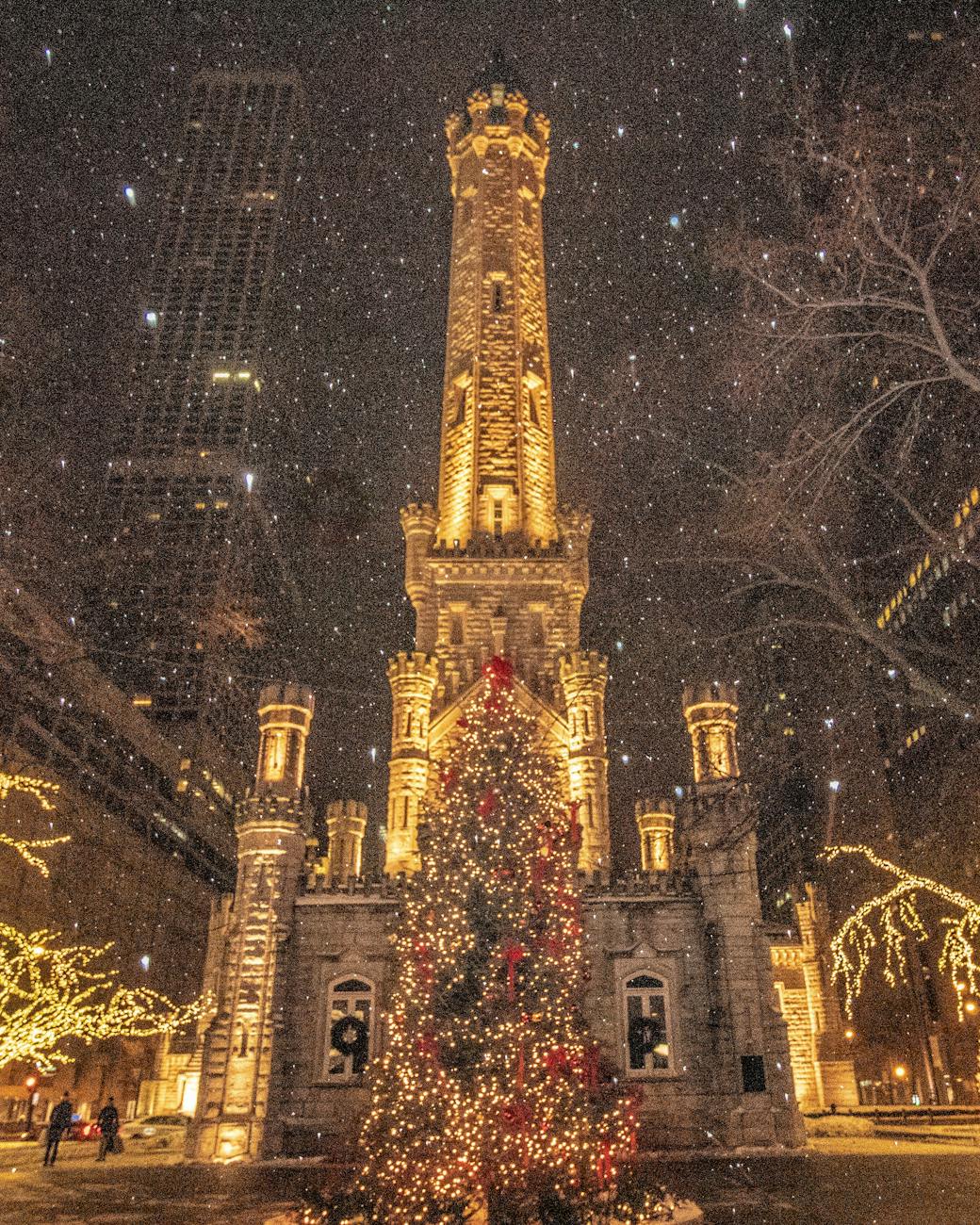
I could imagine some additional Chicagoland suburbs would want to get in on selling themselves as having a charming, Christmas aesthetic that lasts all year long.
Which is why this may need to start by just looking for opportunities for people to once again become a part of a society of joiners. Create more organizations from elementary school all the way through adulthood, that bring people together to do something. I’ll give you an example: at a time when organized religion all over America is struggling and in some denominations collapsing, mega churches are actually growing in leaps and bounds. In some cases, really quickly. And while I’m sure there are many reasons for this, one of the reasons is that mega churches understand that belonging precedes belief. If you show up at one of these churches, they don’t start off peppering you with questions about whether you’ve accepted Jesus Christ as your Lord and Savior. They don’t quiz you on the Bible. They invite you in, introduce you around, give you something to eat, tell you all about the activities and groups you can be a part of from the young adult social club to the ballroom dance group to the men’s choir which for those of you not familiar that’s where they put folks whose voices aren’t quite good enough to be in the main choir. But who are allowed to perform maybe once every fourth Sunday. The point is,
Megachurches — I’m sorry, brother? Are you in — you know what I’m saying is true. (Laughter).
The point is megachurches are built around ‘let’s get you if here, doing stuff, meeting people, and showing you how you can participate and be active.’ It is about agency and relationships, it is not about theology or handouts. And they’re trying to create a big tent where lots of different people can feel comfortable. Once that happens, then they can have a deeper conversation about faith in a way that folks aren’t spooked by. What megachurches are doing is also a good argument for localism. Lots of us obsess about our press, social media, obsesses with what’s happening in Washington and I understand that because it can be crazy.
A lot of our best work will happen from the bottom up instead of the top-down. If we’re going to get better at pluralism, it’s going to happen in the neighborhoods, in the communities where we spend our time, and in the schools where our kids develop the skills and learn how to negotiate and work together across differences. Now, at this point you may be thinking, “All that sounds pretty good, but pluralism depends on everyone following a certain set of rules, that’s what you say, Obama.
Megachurches as we often think of them today emerged in an era when civic engagement declined. Even as Bowling Alone provided a persuasive argument about less involvement in civic groups, megachurches grew across the United States. But, there are all sorts of questions one might pose to the argument made above:
Are megachurches effective in getting attendees to participate in programs or activities? Does the low barrier of entry to visit lead to increased or deeper participation?
Is there something uniquely religious about megachurches or are they just another kind of organization that others could mimic? In other words, what other models of moving people toward civic action exist alongside megachurches?
Do megachurches bring people together? It is one thing to attend a congregation; it is another to go beyond what people might be willing to do outside church or cross particular boundaries? Are megachurches effective at doing this compared to other kinds of congregations or kinds of organizations?
Or perhaps megachurches work well as an example here because (1) they are known and (2) they are successful (i.e., they are growing).








 Legally Sociable