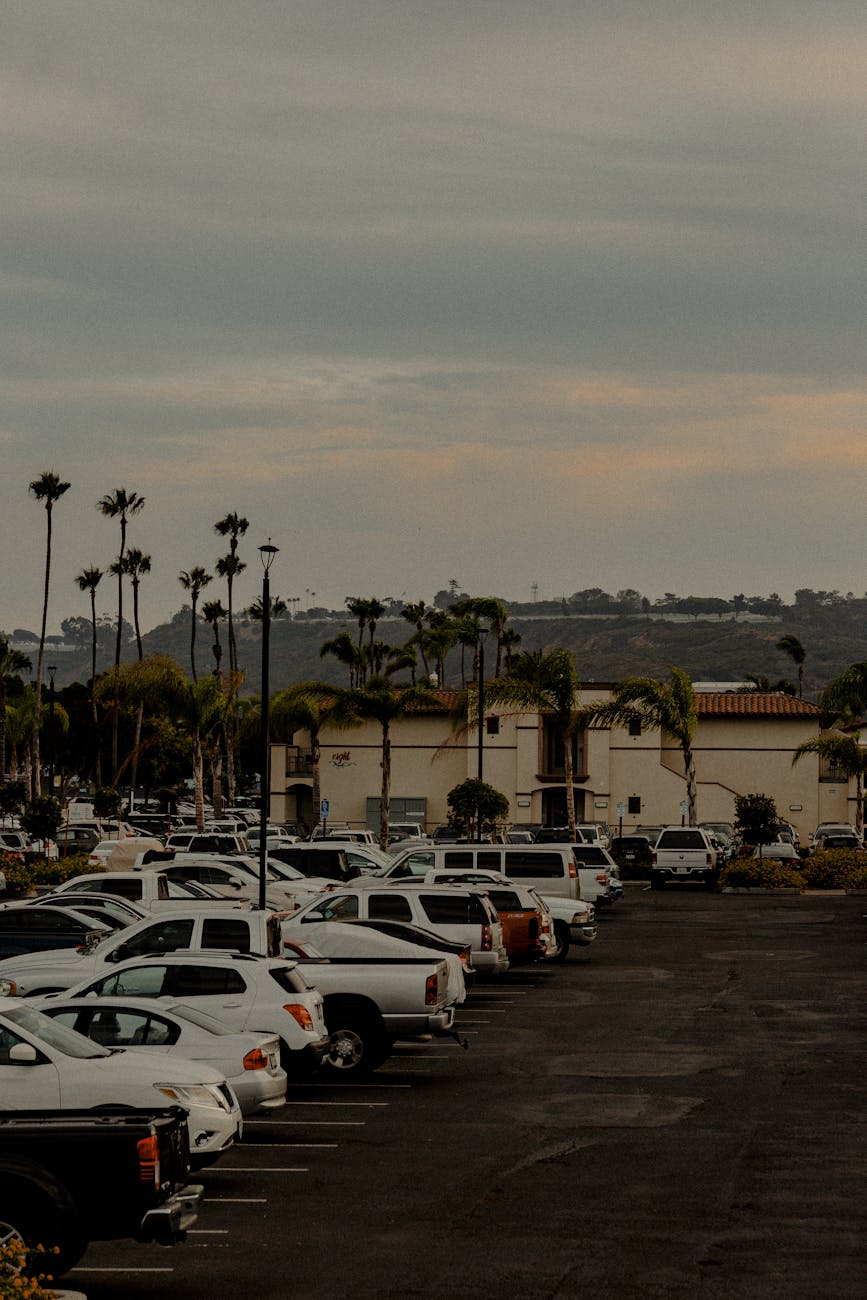
Keep driving – just do so on a green highway

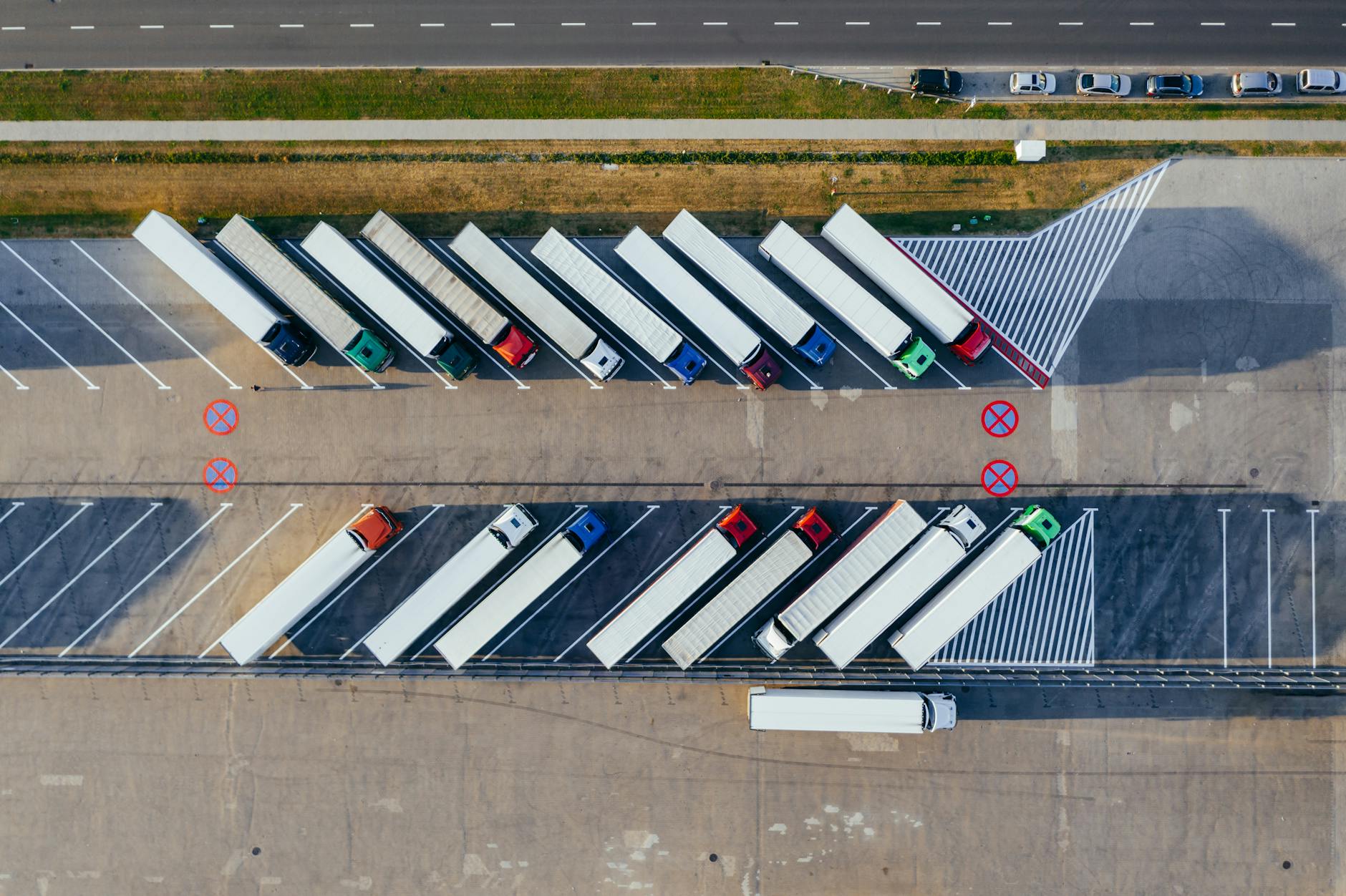
Will it be even easier to justify driving in the future if it done so on roadways that emphasize sustainability and community life?

Photo by Lina Mamone on Pexels.com

URB has released conceptual designs for a 64-kilometer-long highway that would see Sheikh Mohammed Bin Zayed Road, one of the city’s main traffic belts, transformed into a “Green Spine,” complete with autonomous, solar-powered trams and smart traffic management…

The autonomous solar-powered tram is just one aspect of the proposed highway’s transport system: above the tram line, a network of green areas, parks and overpasses would increase connectivity and walkability of the city, which is currently tough to navigate on foot.

The highway would also integrate smart technology, such as “internet of things” (IoT) sensors, to manage traffic and optimize energy use.

Bagherian’s designs allow for 300-megawatt solar panels and a storage system to be embedded in the tracks, that would power the tram line, as well as generate clean energy for an estimated 130,000 homes.

And the green spaces — including parks and community gardens — would provide space for one million trees, which would also help cool the city and improve air quality.

Does making driving greener and roads less invasive in communities make driving more palatable to critics? A number of critics want to reduce driving all together for a variety of reasons including reliance on fossil fuels and changing the scale of communities from human oriented to moving heavy boxes quickly and efficiently.

Perhaps this sort of approach is pragmatic. It might be very difficult to get rid of cars and vehicles. Transitioning to alternative fuels will take time. Cars have some advantages compared to other transportation options. Reducing the impact of vehicles could be the way to go: the vehicles keep moving but they are less visible and less disruptive.

I would not be surprised if driving continues at similar volumes in the future and roadways are transformed in ways that mean they do not just serve the vehicles traveling on them.

Are speed limits about safety, traffic control, fuel efficiency, or local norms?

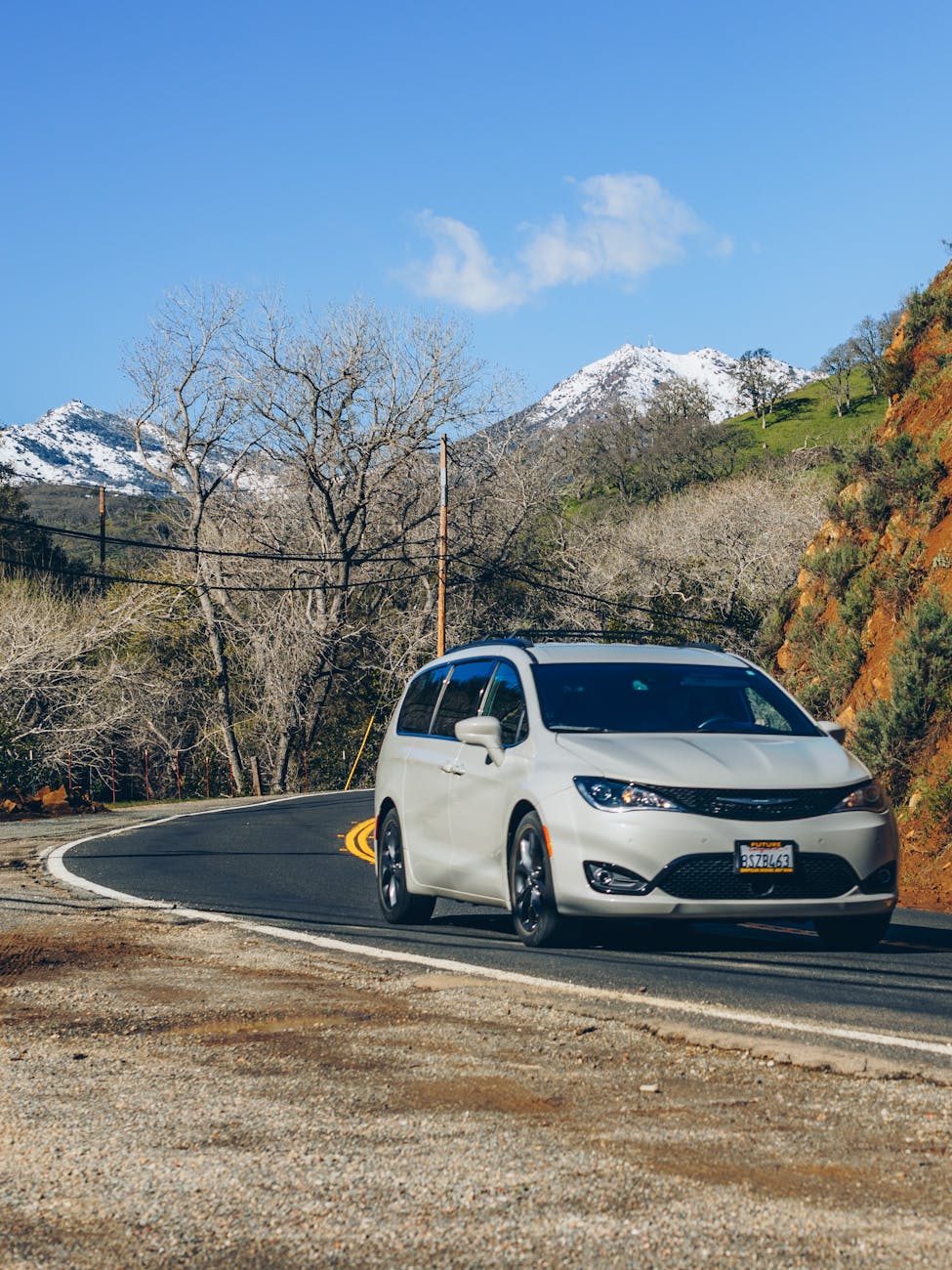
The National Highway Traffic Safety Administration is running radio ads that tell people to follow the speed limit in order to increase safety on roads. From their website:

Photo by Tom Fournier on Pexels.com

For more than two decades, speeding has been involved in approximately one-third of all motor vehicle fatalities. In 2022, speeding was a contributing factor in 29% of all traffic fatalities.

Speed also affects your safety even when you are driving at the speed limit but too fast for road conditions, such as during bad weather, when a road is under repair, or in an area at night that isn’t well lit.

Speeding endangers not only the life of the speeder, but all of the people on the road around them, including law enforcement officers. It is a problem we all need to help solve.

Traveling at higher speeds mean it is harder to control a vehicle and those vehicles that do hit other things sustain more damage.

But speed limits can also serve other goals. Perhaps they are also about traffic and the number of vehicles on the roads. Having fewer vehicles means it is possible to go faster, having more vehicles means going at a slower speed makes more sense. Hence, more variable speed limits on highways as speed limits adjust to traffic and conditions.

Speed limits can also be about fuel efficiency. With limited gas supplies in the 1970s, officials reduced speed limits in the United States in 1974:

The National Maximum Speed Limit (NMSL) was a provision of the federal government of the United States 1974 Emergency Highway Energy Conservation Act that effectively prohibited speed limits higher than 55 miles per hour (89 km/h). The limit was increased to 65 miles per hour (105 km/h) in 1987…

The law was widely disregarded by motorists nationwide, and some states opposed the law,[3][4] but many jurisdictions discovered it to be a major source of revenue. Actions ranged from proposing deals for an exemption to de-emphasizing speed limit enforcement. The NMSL was modified in 1987 and 1988 to allow up to 65 mph (105 km/h) limits on certain limited-access rural roads. Congress repealed the NMSL in 1995, fully returning speed limit-setting authority to the individual states.

Driving too fast on the highway lowers fuel efficiency – see this table from the Department of Energy.

And speed limits can vary by place and local norms. For example, see this discussion about changing highway speed limits in Montana:

Montana, once known for its wild, limitless roads, did not want to be left behind as other Western states increase their speed limits. Idaho, Nevada, South Dakota, Utah and others have set 80 mile per hour speed limits on at least some sections of road.

With speed limits now set by states and lower forms of local government, there can be a lot of variation for a variety of reasons.

Cat Kid Comic Club and “I blame society!”

The baby frogs in the Cat Kid Comic Club series interact with society in this one moment:

How many children have tried such a line throughout time? And how effective is this blame?

And yet is there some societal or social influence in how kids act? If socialization is an important process in growing up, could society often factor into choices?

How many kids can define society and/or describe it?

This is also a reminder that books for kids offer plenty of social commentary – and are part of the socialization process themselves.

Many years can pass – at least 17 for one suburban development – between proposing and completing a project

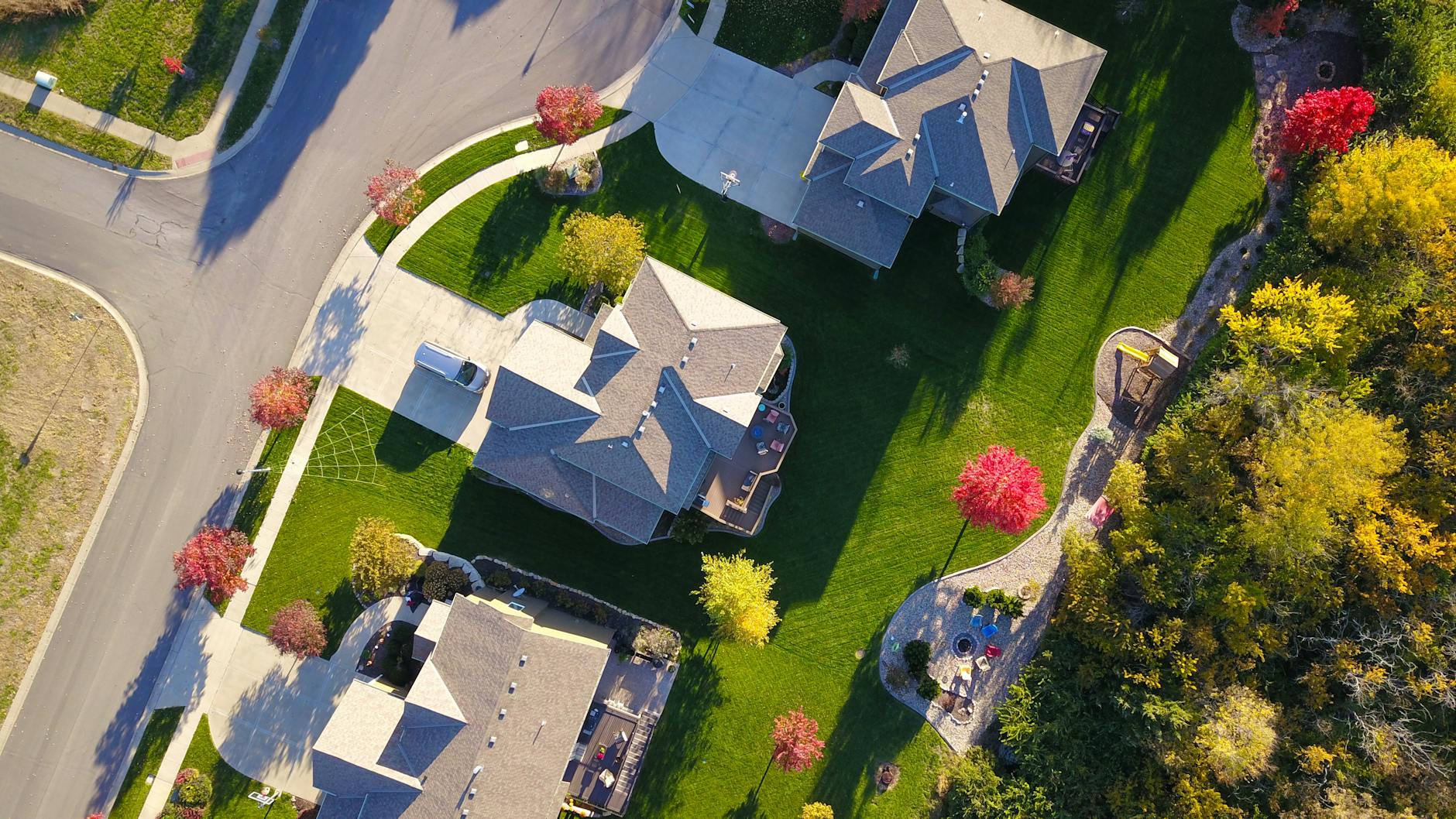
Some development projects take a long time from beginning to end. Here is a recent example from the Chicago suburbs:

Photo by Markus Spiske on Pexels.com

The Glen, a large residential development that was to be built in Elgin 17 years ago, has come back to life with the help of a new builder.

Moda Homes is partnering with Lennar Homes to build the first phase of a project that calls for 83 single-family homes, 54 age-restricted homes, a 150-unit senior assisted living facility and a neighborhood park on 73 acres off Nolan Road, according to plans presented to the Elgin Planning and Zoning Commission.

The unincorporated property was zoned in the early 2000s for a subdivision. Moda Homes is requesting the site be annexed into the city and a preliminary plat for the project be approved, both of which are now headed to the Elgin City Council for approval…

Elgin council members must approve the annexation agreement and the preliminary plans before construction can begin. A meeting date at which the project will reviewed has not been set.

If this is approved, this development may take about 20 years to complete.

This may seem like a long time. But lots of factors can slow down the process. This story does not say but I wonder if the 2007 proposal was shelved by the housing bubble of that era. Developers can face money issues or there can be a decrease in demand. With the current proposal, local officials might have concerns about annexation and the plans. Questions about or changes to the plan might slow or stop the process. And numerous other issues could pop up.

Perhaps a different question to ask is how long a development proposal “normally” takes. Then could such a prediction factor in local conditions (municipalities can vary), economic conditions, and particular developers or builders? If twenty years seems long, is 4-5 years “normal” from start to finish?

Of course, some developments are proposed – some seriously, some not so much – and never get built. In the Chicago area, think of the Burnham Plan or Frank Lloyd Wright’s idea for a one mile high skyscraper. For any development to be completed, lots of things have to go right.

Planning for cities with fewer offices

If more employees work from home and AI reduces the number of workers in certain sectors, cities may need to plan for a world with fewer corporate offices:

Photo by SevenStorm JUHASZIMRUS on Pexels.com

Ever since the pandemic, many landlords, mayors, and bosses have been going through what one might call “the five stages of office grief.” First, in 2020, there was denial that working from home would have any lasting impact. Then, in 2021, there was anger at employees who wouldn’t return, followed by bargaining on the exact number of days people would spend at the office. By 2022, depression had set in, and cities seemed ready to accept the need for radical change. Now, however, the country’s economic rebound provides new ammunition for those who wish to slide back into denial.

Our cities will be better served by embracing the transition to a world that is less centered around offices. That will require diversifying their economic base, streamlining the construction and conversion of new housing and mixed-use neighborhoods, enhancing public services, and doubling down on what makes urban life attractive in its own right—not just as an employment destination. And the effort must start with the recognition that, in good times and bad, the relationship between economic activity and office demand has changed forever.

Even as there are good reasons to have districts of business offices, having fewer offices overall means offices might be better served being more spread out throughout a city and region or having more mixed-use neighborhoods. Americans have long separated land uses but fewer offices presents an opportunity to bring other land use into what once were separate business areas.

This might be a more radical idea but what could be possible if some of those office buildings were not there in the future? Could there be other land uses – not just renovated buildings – that future city residents and property owners would desire?

And could fewer offices mean fewer roads or less emphasis on vehicle traffic? If commuting is not happening at the same rate, what could be possible?

“Small-time landlords still dominate the single-family-rental landscape” and have new tools

One reporter argues the small landlords of today operate differently:

Photo by Ivan Samkov on Pexels.com

Institutional investors — those with more than 1,000 homes in their portfolios — own about 426,000 of the 14.2 million rental homes today, John Burns Research and Consulting found. Most of those properties are in sunny Southern places like Atlanta or Raleigh. Small-time landlords still dominate the single-family-rental landscape, but these aren’t your mom and pop’s “mom-and-pops.” For one, the industry is vastly more transparent than it was in the early 2000s. If you want to see what comparable homes in your neighborhood are renting for, you can scroll through Zillow or visit the website of one of the institutional investors, such as Tricon Residential, Pretium, or Invitation Homes, all of which publicly list their properties and their asking rents. If even that sounds like too much work, companies including Buildium and Roofstock, known mostly for servicing the largest investors in the space, stand at the ready to offer property management and pricing advice — for a fee, of course…

Data on small landlords’ behavior is notoriously scarce, but the latest John Burns figures show that in cities with little to no institutional presence, the smaller landlords are the ones cranking up the pressure. Chattanooga, Tennessee, for instance, has practically zero homes owned by institutional landlords but one of the country’s highest rates of rent growth for single-family homes, with the typical asking rent for new leases up 10% in April from a year prior. Institutional investors own less than 1% of single-family rentals in Grand Rapids, Michigan, but asking rents there were up 8% year over year. In a similar vein, corporate owners may face the most scrutiny over evictions, but mom-and-pop rental owners are more likely to illegally evict their tenants, advocates for both landlords and tenants told Business Insider as part of a wide-ranging investigation into so-called “lockouts.”

Mom-and-pop landlords may not be required to detail their operations in quarterly calls with stock analysts, but most experts I spoke with agreed that even those who own just a handful of properties are getting more with the times…

There will always be some landlords who seek nothing more than a tenant who pays rent on time, doesn’t leave, and doesn’t pick up the phone to complain when something breaks down. For this subset, the onslaught of proptech companies and landlord software may seem like unnecessary money sucks. But others will recognize the need to compete with the more professionalized newcomers — the landlords, both large and small, who fix things on time, let you pay online, and, yes, raise rents accordingly.

If this argument is correct, then it sounds like the information now available to potential landlords and property investors – including for a fee – puts the potential resident at a disadvantage regarding price. Are there tools and information now available on the Internet and social media that help potential renters level the playing field? The potential democratization of information in this sphere may not have benefited everyone in the same way.

I also wonder at the role of expectations about returns on investment among smaller landlords. How much profit should they get? Are they providing a community good or are they hoping to cash out big and/or finance a particular lifestyle? As Americans as a whole expect more money from their houses, how have small-time landlords responded to this?

Look out hallways! You may be on the chopping block

One recent report suggested getting rid of hallways in new homes could reduce square footage and costs:

As homes shrink in size, hallways could be one of the first casualties. Eliminating these liminal spaces would decrease the number of interior walls and allow for more condensed homes, the survey found.

“Essentially, we’re Tetris-ing the functional rooms together, avoiding wasted square footage on non-functional areas like hallways,” the report said.

Other tactics Arroyo has noticed designers employing to save on space include eliminating a formal dining room, adding storage in unused spaces (under the staircase, for example), three-story homes with the living space on the second floor, and tandem garages.

I am trying to imagine a house without hallways. Does this mean that it has one large room – open floor plan great room combining kitchen, dining, and family? – with all the other rooms off of that one?

Could a hallway be expanded a bit and instead be claimed as another room? (I am thinking of the rooms sometimes found on the second floor at the top of stairs where you might fit a small desk or one chair and it is called an “open space” even though it is really a wider hallway.)

If there are not hallways, where will children run back and forth between walls or family members learn to walk past each other in a confined space? Or wonder which room is which when seeing several doorways at the end of the hall?

A championship football game played in a suburban shopping mall = peak American Dream?

The Arena Football League recently played their championship in a New Jersey shopping mall:

As shopping malls seek to add more entertainment options, why not add sports? It could be at the professional level or amateur level. Imagine a high school basketball tournament hosted inside a mall with space for sports. Or a kids baseball tournament. Or a tour pickleball tournament. Sports could help bring in more visitors. It puts more people in proximity to the shops and restaurants.

Even though malls are big, many may not be big enough to do this. The American Dream Meadowlands in East Rutherford Mall, New Jersey is the second-largest mall in the United States and has plenty of entertainment options – a ski slope, a hockey rink, an amusement park, an aquarium, and more – in addition to 450 stores and lots of food options. This complex has sports already in mind. Many malls would need to reconfigure space or add facilities.

Given how much Americans like football and shopping malls (even with their decline), how many events can get more American than this? And held at a place named American Dream?

How many American communities want super big houses?

Americans have large houses. But not every community wants a lot of really big houses:

Photo by Chris Goodwin on Pexels.com

“How big is a house?” mused Jeremy Samuelson, planning director for East Hampton, N.Y., where a working group recently proposed slashing the town’s maximum-allowed house size in half, from 20,000 square feet to 10,000 square feet…

Towns from Aspen to Martha’s Vineyard are in a big-house brouhaha. Critics say mushrooming mansions cramp scenic vistas and local charm, consume excessive energy and inflate prices…

Truro capped new homes at 3,600 square feet in 2017, but then, Shedd says, officials stuck in an amendment allowing bigger builds with special permits. “I’m not saying it was done on the sly,” says Shedd. “Our town meetings drag on. I was probably glazed over.”…

Routt County, Colo.—home to Steamboat Ski Resort—adopted a proposal capping house sizes at 7,500 square feet in June. Debated for months, the hot-button issue packed public meetings…

In Pitkin County—home to Aspen—officials slashed the maximum new home from 15,000 to 9,250 square feet last November, noting that a big house raises “greenhouse gas emissions and increases environmental havoc.”

What strikes me about these discussions is something I first discovered when researching the use of the term McMansion: the size of a big house is relative in terms of size and quantity. In the case of McMansions, a 3,000 square foot new house might be normal in newer neighborhoods but it can be considered a monstrosity next to a 1,100 square foot postwar ranch house. Or is an 8,000 square foot home a McMansion or a mansion? Depends on who is considering the home and where it is located. Or one teardown McMansion might not be a big deal but dozens or hundreds over a decade or two might be considered going too far.

In the cases of these even larger homes, how big is too big or how many is too many? The discussions here do not appear to be taking place within communities where they are contemplating going from no big houses to some. They are considering whether to have no more big houses. Apparently there is some limit to be reached soon or no more might be allowed.

Will such moves push those who desire giant houses to other communities? Will they end up in municipalities just outside these jurisdictions? Are there other communities who would see this as an opportunity rather than a problem?

Starbucks moved away from being a third place, emphasized drive thru and mobile orders

Is Starbucks no longer a gathering place?

Photo by Josh Sorenson on Pexels.com

The idea of Starbucks as a third place became part of its corporate mythology. Starbucks aimed to create a welcoming environment for coffee drinkers and employees with comfortable seating, jazz music and the aroma of freshly-brewed coffee. Employees who brewed and served Starbucks coffee, whom Starbucks called baristas, handwrote customers’ names on their drink orders…

Mobile app and drive-thru orders make up more than 70% of Starbucks’ sales at its approximately 9,500 company-operated stores in the United States. In some stores, customers complained online that Starbucks pulled out comfortable chairs and replaced them with hard wooden stools. Starbucks has also built pickup-only stores without seating. Machines that print customers’ names have replaced baristas’ handwriting on cups.

“Third place is a broader definition,” current Starbucks CEO Laxman Narasimhan said last year. The “classic definition of third place — it’s a box where I go to meet someone — it’s frankly not relevant anymore in this context.”…

Starbucks’ changes to its sit-down business model came in response to several trends — demand from customers for ordering coffee from their cars in drive-thru lanes or on their smartphones. The shift from a business serving hot coffee to one in which cold coffees, teas and lemonades make up more than half of sales. The Covid-19 pandemic, which forced cafes to shut indoor seating.

Starbucks shifted to meet Wall Street’s demands, too. Starbucks found it could reduce labor costs and increase order volume by running a mostly drive-thru and take-away coffee business. Starbucks also found difficulties with being America’s third place and did not want to become the public space and bathroom for everyone, including people coming into stores who were homeless or struggling with mental health challenges on city streets. Starbucks has closed some stores and restricted bathroom access over safety concerns.

The shifts make sense: more consumers want quick service and coffee to go, the company and shareholders want to make more money, and serving the public can be difficult.

But this is a different approach to coffee, food, and places more generally. Getting coffee to consumers as cheaply and quickly as possible and when and where they desire it treats place differently. Arguably, you might not even need a location any longer. Can we get Starbucks via drones or by drivers within ten minutes of an order? Why bother going to a location at all? Why not have a huge centralized Starbucks that sends out drinks at light speed in all directions?

The purpose of third places is less about consumption and more about social interaction and conversation. Yes, third places like cafes and pubs have food. But the food helps people talk and relax. All humans need to eat – and they also need social connections. Having a refresher in the car while driving – often a solo experience – is a different experience than sitting with friends for half an hour near other people.

Starbucks is not alone in this. McDonald’s is a gathering place for some. But if coffee and fast food places limit seating and primarily want to serve people who do not stay, where can or will people go? Maybe nowhere else. Perhaps this helps give momentum to sociologist Eric Klinenberg’s argument that public schools and libraries should be designed in ways that encourage social interaction.