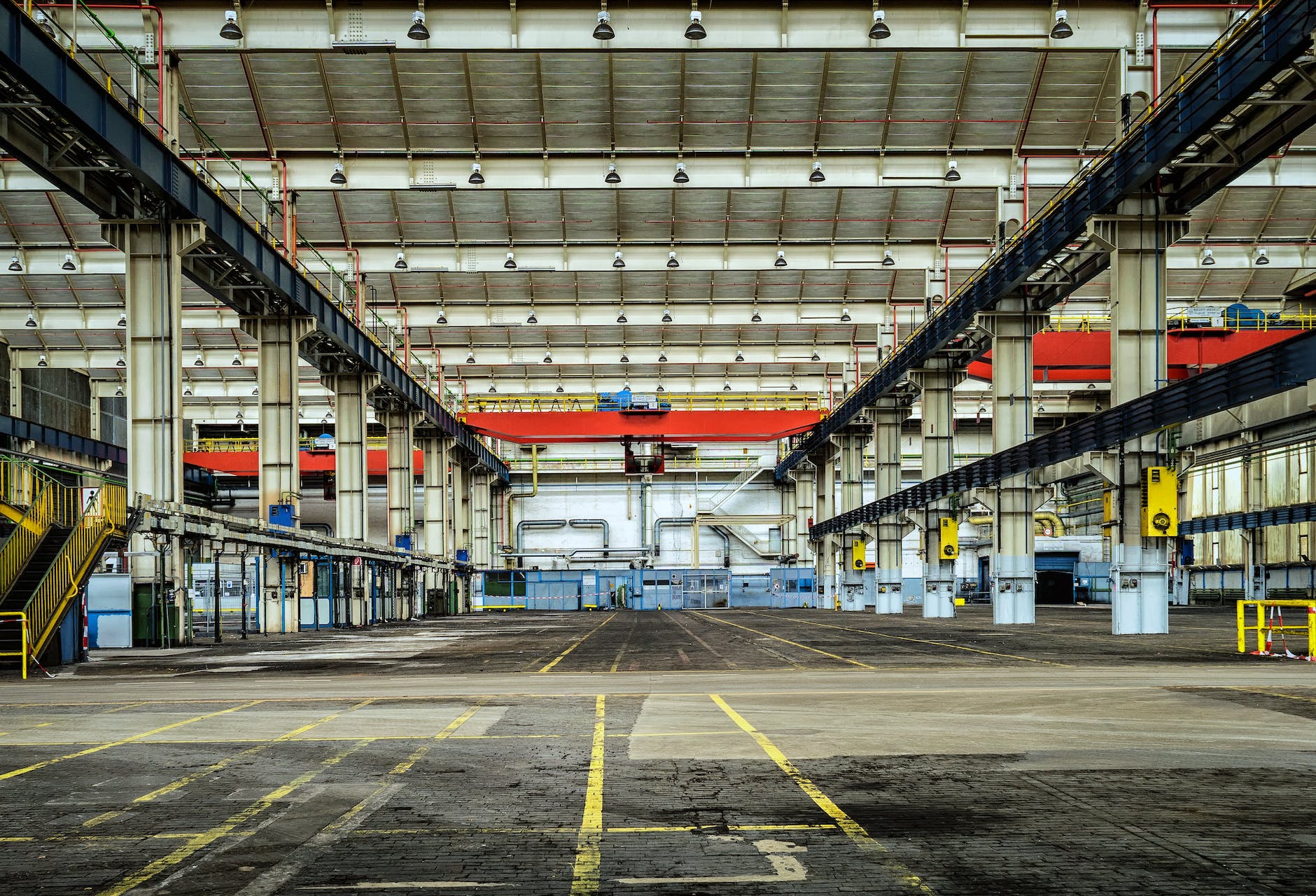
The old Allstate campus was a traditional suburban office environment with lush landscaping, reflecting ponds and thousands of workers. That property now is called the Logistics Campus, a massive industrial development underway in Glenview…
“The ability to put modern industrial in the middle of an established community — it’s unique in the sense that there will be very few other sites of this size that can replicate what we’re doing,” said Neal Driscoll, Dermody’s Midwest region partner.
Development of big-box industrial space in the Chicago region set a record in 2023 with construction of 70 buildings totaling nearly 33 million square feet, according to a recent report by commercial real estate company Colliers International.
The shift to warehouses in the suburbs has been going on for a while. What I noticed in this story was this thought: the unique opportunity to put warehouses (“modern industrial”) in “an established community.” Translation: many upscale suburbs would not chose to put in warehouses. They might generate noise and traffic. They do not provide many white-collar jobs. They are not attractive buildings.
But, empty office parks are also not desirable. Suburban offices or headquarters for Fortune 500 companies are attractive: quality jobs, status, most likely a glass building. No one working in these buildings and companies leaving these spaces leads to issues.
Thus, warehouses might now be found in communities that would not necessarily select them if they had such options. A set of warehouses might be preferable to vacant office buildings or unwanted office buildings. Figuring out the best land use or zoning in a suburb can be less about the most ideal use of land but rather about the possible alternatives at that moment.
The biggest of these latter-day Xanadus, a colossal 41,000-square-footer, is about midway through construction in a far less plum location in the southwest suburbs: an out-of-the-way cul-de-sac outside Burr Ridge. Its only neighbor is a modest ranch house; a pizzeria, a gas station, and the entrance ramp to Illinois Highway 83 are just around a bend in the road…
What’s more, that whopper of a house will be home to only three people. Nick Memeti, the 30-year-old owner of Freedom Mortgage Team, is building it for himself and his parents-and the hundreds of guests he plans to have at the frequent parties he expects to throw in the cavernous basement. Down there, he will have an indoor pool (he is also planning an outdoor pool), slot machines, a dance floor, a 30-seat movie theatre, and a full gym. “It’s really built for entertaining,” Memeti says. “I have about 200 employees, and this will be the place for them to come and break bread with the boss and hang out.”
This is another burg that’s not cheap, but you get “a lot more for your money in terms of space inside and out,” notes Jack Brennan of Second City Agents. A six-bed, five-bath home that was listed for $860,000 this spring, for instance, boasts 4,553 square feet, a four-car garage, and a full acre lot. The $189-per-square-foot price is good value compared with the $213 you’d pay for a comparable listing five miles north in Hinsdale. Burr Ridge offers the kind of quiet living you’d expect 19 miles southwest of the Loop. Yet the days when residents had to drive to Hinsdale or La Grange for dinner are gone: The Burr Ridge Village Center, built in 2007, features familiar names from the city, like the restaurant and bar Hampton Social and the breakfast joint Yolk.
Nestled 19 miles west of the Chicago loop, Burr Ridge is home to distinguished houses on large lots in quiet neighborhoods, fine dining, upscale shopping, quality hotels, excellent recreational opportunities, highly rated schools, open land for new business and a progressive business environment. The thriving business community ensures that Burr Ridge, year after year, maintains one of the lowest tax rates in DuPage County.
Worth magazine named the community one of the top 250 wealthiest communities in the country. In 2011, The Business Journals exclusive ‘On Numbers’ report ranked the quality of life in Burr Ridge second out of 955 Midwestern communities.
Straddling the border of DuPage and Cook Counties, Burr Ridge is conveniently located at the intersection of I-294 and I-55, just minutes from I-355 and 290. These expressways provide direct access to O’Hare and Midway airports. Three train stations in neighboring communities, hotel shuttles, and a Pace Bus facility in downtown Burr Ridge provide easy access to regional transportation and downtown Chicago without all the congestion.
Home to over 500 large and small local and national businesses, occupying more than 6 million square feet of floor area and employing over 10,000 people, Burr Ridge has a carefully planned mix of office and industrial parks and two well-designed retail areas in a natural setting. The two retail centers, County Line Square and Burr Ridge Village Center, are conveniently located at the southeast corner of County Line Road and host exciting community events each year. From an annual 5k race and Car Show to a weekly outdoor summer concert series, thousands of residents and visitors come from the region to enjoy the amenities in Burr Ridge.
The biggest houses tend to be located in certain communities with resources (Burr Ridge has a median household income over $174,000), desirable locations, and zoning that allows large homes.
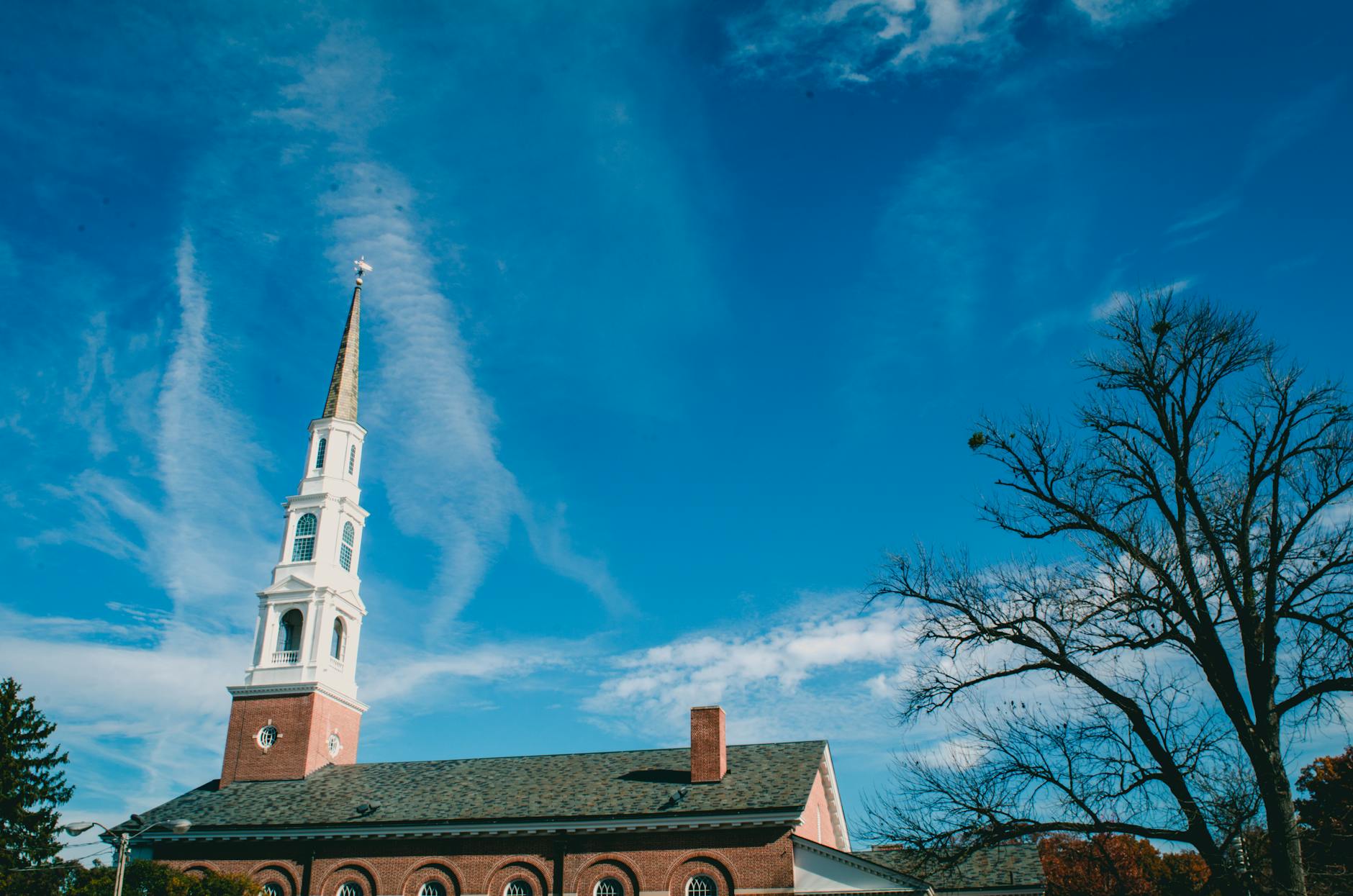
Researchers interviewed by The Times said rising costs, rampant crime and changing racial demographics have made it harder to sustain worship spaces in large cities…
As more urban neighborhoods become secularized, demographers say religious families increasingly prefer to settle in suburban enclaves up to 20 miles outside of city centers…
“Over the last 10 years, the 100 fastest-growing churches in America are primarily in the growing inner and outer ring suburbs of major cities,” said Ryan Burge, an Eastern Illinois University political scientist and religious demographer. “They’re almost always non-denominational Christian churches near cities like Charlotte, Charleston and Atlanta. They are the fastest because that’s where people are moving.”…
In New Orleans and several Midwest and Northeast cities, gentrification has pushed more Black Christians into the suburbs than other groups…
Rather than start in the city and expand to the suburbs, most new churches now move in the opposite direction. For example, Elevation Church in Matthews, North Carolina, started 12 miles southeast of downtown Charlotte. It later planted a satellite church in the city center.
On the other hand, these could include new and different patterns:
-Which churches are closing and which religious groups are moving to the suburbs. If it was largely white congregations in the postwar era, it now includes more groups.
-The number of congregations closing. Are there now more closing than decades before?
-The relative power and influence of suburban megachurches compared to the past. If congregational influence decades ago tended to reside in older, urban congregations, this may have shifted today.
-Are cities more secular than they were in the past? Significant percentages of urban residents are religious and cities contain numerous religious congregations and organizations. Or, has the perception of cities and religion changed?
I suspect there is more to say on the connection between religion and suburbs.
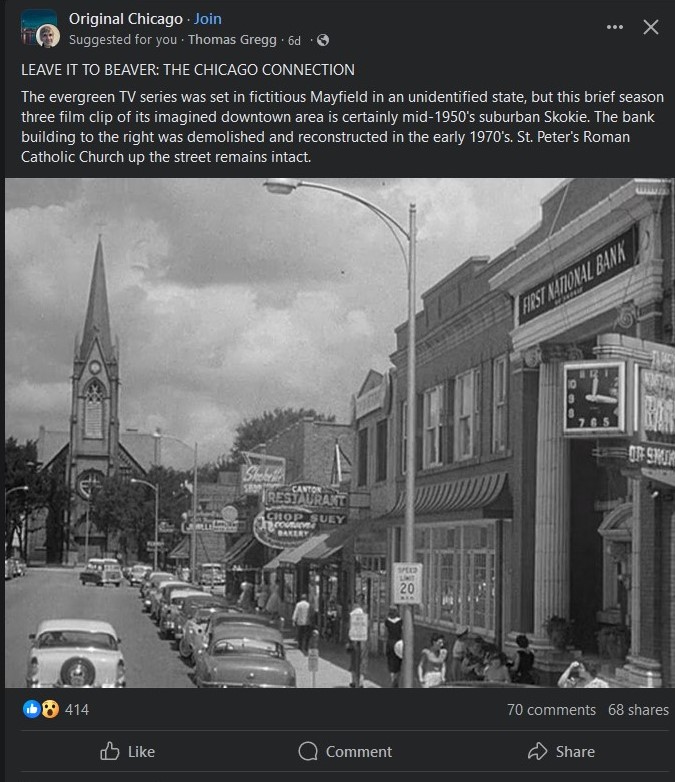
Television shows may use a variety of settings to film scenes. Given my research on suburbs depicted on television, this example struck me as it combines a famous suburban show and a Chicago suburb:
A variety of websites back up this claim (IMDB, blog). The first home in the show, what I describe as having “two stories, a one-car garage, three bedrooms, and at least two bathrooms (Bennett 1996),” was on a Universal Studios backlot. The show is often held up as an exemplar of suburban-set TV shows in the postwar era yet I noted that it “ran six seasons but never cracked the top 30” most popular TV shows.
As a fictitious show set in an unnamed community, it is interesting to consider why Skokie might have been chosen. Was there existing footage that could be used? Did someone connected to the show or studio have a personal connection to Skokie? Did Skokie represent the experiences of American suburbs at this time? Would someone watching the show then or now see this scene and connect to particular places?
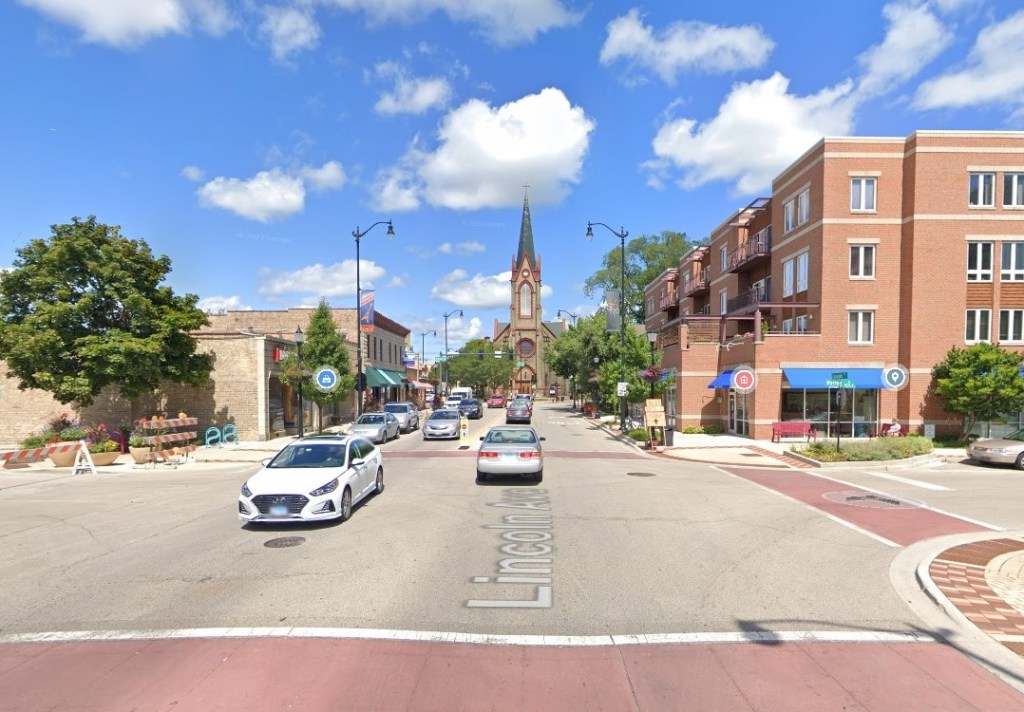
Here is a similar view from Google Street View in August 2019:
The sort of construction on the right – what looks like mixed-use four-story buildings – is common in suburban downtowns where they hope that increased numbers of downtown residents will patronize local businesses and restaurants in addition to those who want to visit such locations. These streetscapes have often replaced one- to two-story structures such as those in the top image.
American presidents for at least 90 years have supported homeownership. See these thoughts from Herbert Hoover in 1931. So why not tie President’s Day in February to selling and buying homes?
February might seem a bit early to promote buying and selling homes. It is still cold in parts of the country. The school year still has months to go.
However, I have heard that the housing market tends to pick up after the Super Bowl. Warmer weather is on the way. Families might be more willing to move with less time left in the school year.
Americans like sales and shopping. Why leave President’s Day to mattresses and furniture? Why not kick off the home real estate market every year? Pepper the weekend with quotes from Presidents Obama and Bush. Find some quotes from Lincoln, Washington, and other famous presidents that seem to support the modern idea of homeownership. Match patriotism, capitalism, and holidays.
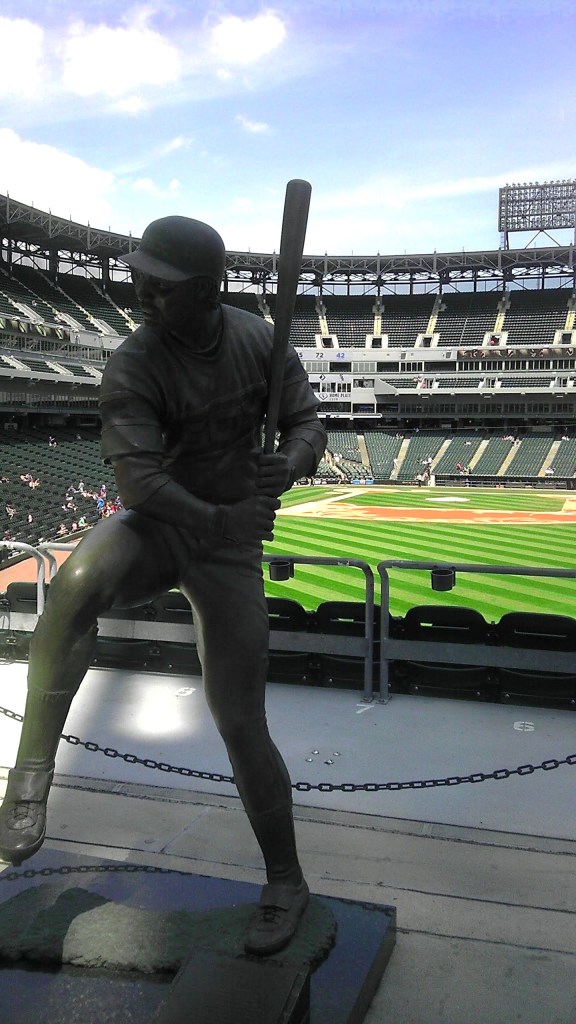
The White Sox stadium plan was resurrected seconds before midnight Friday, thanks to House Speaker Michael Madigan`s watch and an animated display of political arm-twisting by legislative leaders and Gov. James Thompson…
Minutes before House and Senate members walked into their chambers late Thursday, leaders from both parties predicted that the $150 million Sox stadium bill would fail, leaving the Sox no choice but to leave the South Side for St. Petersburg, Fla.
House Republicans left their caucuses, saying they had only five votes for the package. Their Democratic counterparts said only 50 votes could be mustered. And Senate Democrats said they had only 10 votes in favor of the deal.
But a few minutes before midnight, Senate Democrats ratified the measure by gathering 30 votes. In the House, after many observers saw their watches read past midnight, the constitutionally mandated adjournment time, the House passed the measure by a 60-55 vote. The published roll call read 12:03 a.m. Friday, which normally would mandate any bill passing by a three-fifths majority, or 71 votes…
”By my watch, it was 11:59,” Madigan said. ”I didnt know this would pass. The Republicans told me they had seven votes when we went in, but the governor and I and all the members took risks and passed this bill to keep the White Sox in Chicago. Now its up to them. We took them at their word.”
Clocks stopped, votes changing, foregoing other legislative priorities all to get a sports stadium paid for. As I have argued before, few political leaders want to be the ones who let the local major team get away. What this tends to mean is that local residents end up paying for the stadium while the team owners become even wealthier.
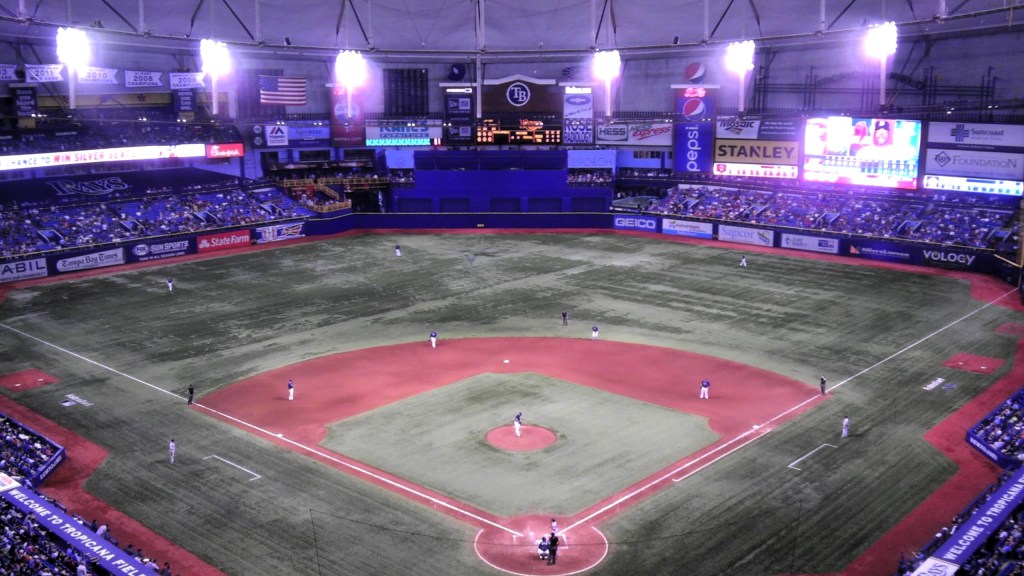
Another reminder: this threatened move of the White Sox to St. Petersburg, Florida led to the construction of another stadium where the Tampa Rays now play:
Who wins in these deals? The owners. For their tax monies, the fans may get to watch games in person or pay attention through local media.
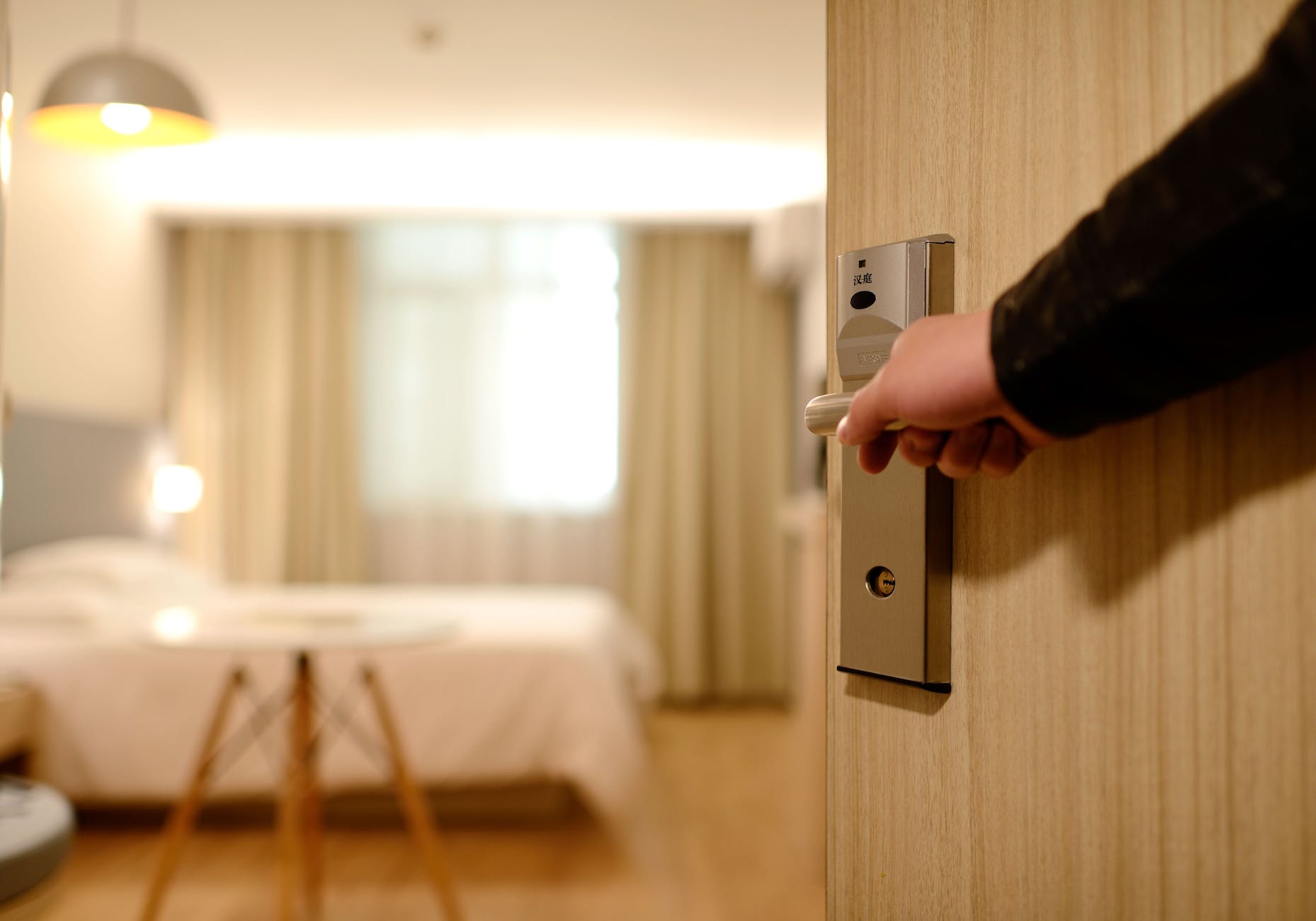
Hotel rooms in the United States can look different across brands and locations. However, one feature I have noticed through recent years is consistent: there is a large television mounted in a prominent location in the room.
The primary purpose of a hotel room is sleep. It is a place to stay when away from home. It is a bedroom. The bed or beds are usually the biggest pieces of furniture of the room and take up the most square footage.
Yet, it is hard to miss how big the TV often is in hotel rooms. There is a lot of entertainment available through this TV. When I was a kid, I remember lots of hotels advertising that they had cable or particular cable channels or particular premium movie channels. This is not the case now and you can often log into your own streaming accounts through these TVs.
The design of hotel rooms suggest Americans want to continue to do what they do plenty of at home: watch TV. Perhaps this reflects what Americans have done for decades: watch hours of TV a day. Even with ubiquitous smartphones, tablets, and laptops, Americans keep watching TV whether home or away.
(Other ways to get at this topic: what percent of Americans have a television in their bedroom and how many TVs, particularly big ones, are in Airbnbs.)
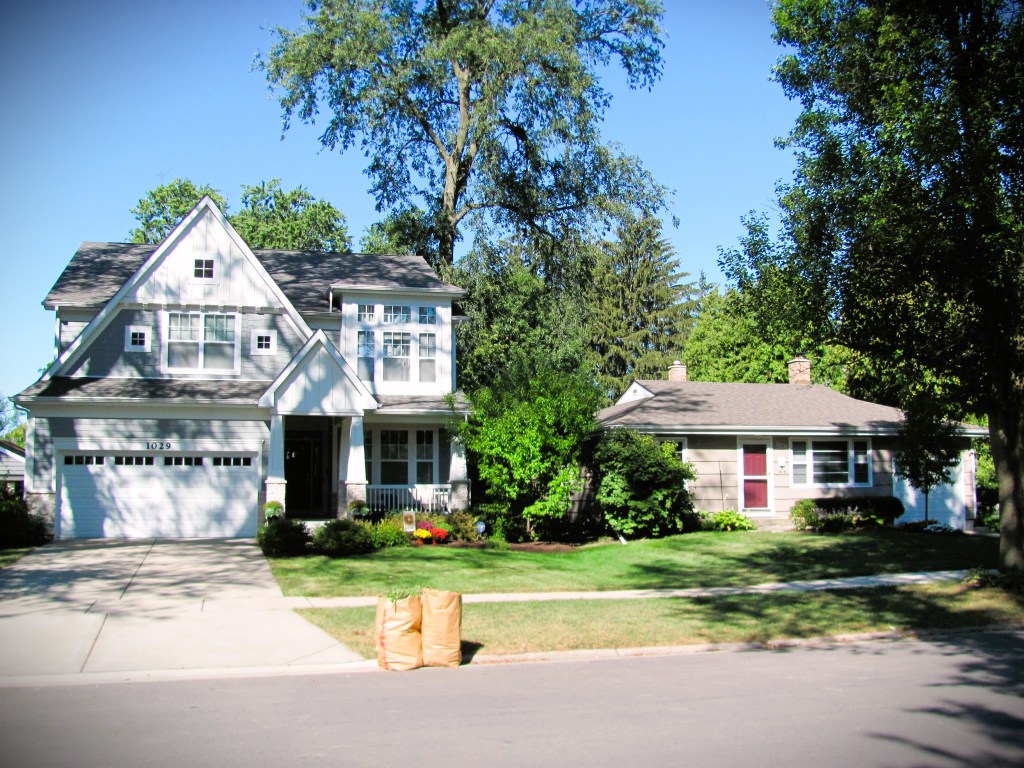
While working on a project, I noticed something while driving through a number of DuPage County communities: there are teardown homes everywhere. They are not just limited to desirable downtowns; they are spread throughout numerous residential neighborhoods. They are often easy to spot: much larger than adjacent homes and with a particular architectural style with stone or fake stone bases, lots of roof peaks, and plentiful garage space. Some could be categorized as teardown McMansions. (Some of these homes might be infill homes where homes were constructed on empty land.)
These teardowns follow some of the patterns I found in over 300 teardowns in Naperville. The architecture and design is similar. The homes are often located next to older homes, often from the postwar era, from the twentieth century.
One difference is that these teardowns are spread throughout communities. In Naperville, teardowns tended to cluster near the desirable downtown area. In some of the communities I drove through, teardowns and/or infill homes are all over the place. Some of these communities do not have downtowns like Naperville and have housing stocks of different ages. It was not unusual to see a teardown suddenly in a neighborhood on the edge of a community when in Naperville the teardowns tend to cluster in particular neighborhoods.
In a county that is largely built out and with suburbs now 50-170+ years old, there will be more opportunities for property owners, builders, and developers to tear down old homes and construct new ones. My sense is that while communities may have regulations about what can be rebuilt, the general atmosphere is in favor of these new homes as long as there is interest and resources to make it happen.
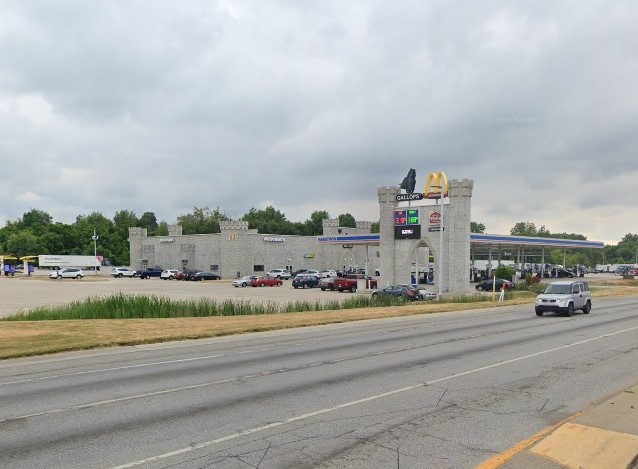
Put these together and you have a McDonald’s in a castle in northern Indiana:
Image from Google Street View
Only in America might someone build a gas station castle (it looks like a castle but in a McMansiony way) that contains a McDonald’s. I wonder if it attracts any more customers just because it is a castle.
(This building has apparently been around a while but I recently saw a story about it that caught my eye because I have seen other castle gas stations in other northern Indiana trips.)
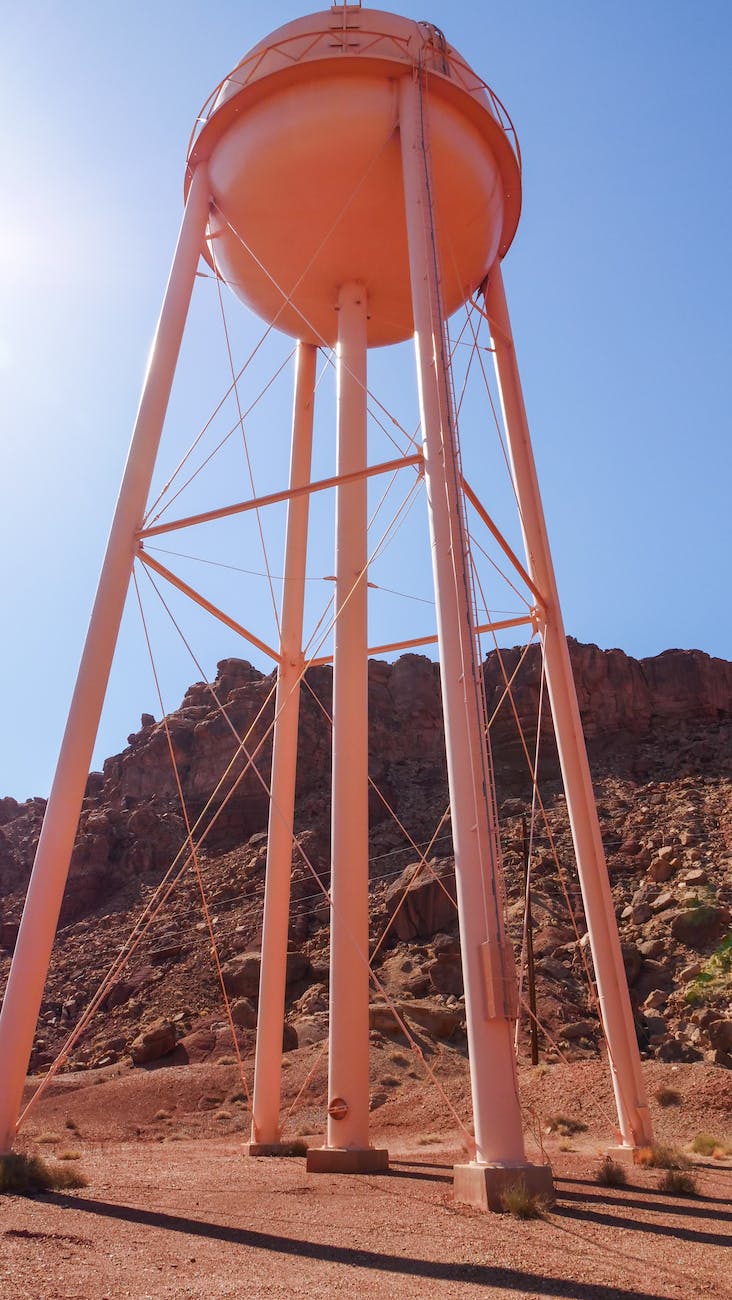
The project will include sandblasting the exterior and interior of the tower and applying new coatings inside and out. There also will be some landscaping work with new perimeter fencing.
The assessment also recommended foundation repairs, replacing the original valves, and installing new hatches, gaskets and a submersible mixer.
In addition to removing the tower’s outdated ladder system, workers will install new safety railing and fall protection equipment.
“We’re kind of excited for the face-lift that’s coming to the tower,” Patel said. “It does its job, but the paint job will make it more appealing for pedestrians downtown.”
By the way, this doesn’t help. Nobody’s having a better day down here because of that.
We have at least a few water towers in the area that include the logo or motto of a suburban community. Why not use them as advertising? This is a different approach than painting a smiley face to presumably attempt to improve people’s days or help them feel better about infrastructure.




 Legally Sociable