About 1,166 people died in motor vehicle crashes in Illinois in 2020, a nearly 16% increase over 2019, according to the Illinois Department of Transportation. That’s a provisional number, said IDOT spokesperson Guy Tridgell, since it takes the state agency 12-18 months to finalize annual data…
Speeding and traffic fatalities typically go down during recessions, according to an October study published by the National Highway Traffic Safety Administration. In Illinois, for example, deaths dipped sharply in 2008 and 2009 according to state data, though they’ve been up slightly since…
About 28,190 people died in crashes from January to September 2020, more than a thousand more fatalities than in the same period in 2019, the federal agency estimated. A full annual report is expected to be released in the late fall…
What’s more, traffic deaths nationally were down from March to May, but jumped back up after states began reopening in June, according to the agency’s estimates.
This suggests safety is not solely a function of the number of miles driven or trips taken. How people drive and the conditions matter quite a bit. In this case, the article hints at multiple possible reasons for this jump. This includes speeding, more impaired drivers, and less seat belt use among those hurt.
I wonder if there are several other factors at play. With many public and private locations shut down, did driving become an even more important escape for some Americans? With limited places to go, driving and doing so dangerously could be a kind of release not available elsewhere.
Second, is there a safety feature to a certain level of traffic? With fewer people out, does this encourage riskier driving compared to having to navigate more vehicles on the road? Too many cars likely leads to more accidents but what about too few compared to typical conditions?
Synchronizing traffic lights. Los Angeles did this a few years ago to help traffic flow. As a kid, I recall sitting in the car in Chicago and hearing tell of how Clark Street on Chicago’s North Side was set up this way: follow the speed limit and a driver should hit multiple greens in a row. This could be harder to accomplish across a range of municipalities and the various traffic volumes intersecting with the main road. Additionally, this might not help much if there is just too much traffic on the road.
Providing more lanes, more driving options. Americans tend to like this strategy: more lanes, more roads equals more space for vehicles, right? Research suggests otherwise: if you add road capacity, drivers will tend to fill that up. Americans like driving in the suburbs and this is not a long-term solution. In fact, road diets may be more helpful: reduce capacity and it pushes drivers toward other options. Furthermore, expanding roads in an already developed suburban area can get quite expensive and may be controversial.
Encouraging more mass transit use, more walking and bicycling, and less driving. If there are simply too many cars, limiting trips would help ensure smoother driving experiences. All of these options are tough sells in the suburbs. It is hard to provide mass transit in a decentralized landscape and wealthier residents are unlikely to use it. Residential neighborhoods might be set up for biking and walking but connecting to other uses – grocery stores, schools, businesses – is often not possible or is dangerous.
This suggests that there may be some short-term solutions but the bigger issue would take more time and effort: American suburbs are built around driving.
I occasionally drive on major local suburban roadways. Think four lanes, direct north/south or east/west routes, speed limits of 35-45 mph, and lined with strip malls, fast food restaurants, gas stations, big box stores, and various other uses. Because of all of the traffic that wants to get on and off the road and because there are regulations about how to do this safely, such roads have regular traffic lights.
In the suburban road logic, these motorways are necessary to move larger volumes of traffic. Off these major roads are endless residential streets lined with single-family homes or small multi-family housing units. Traffic could cut through some of these neighborhoods but they have lower speed limits, narrower streets, and plenty of stop signs.
Occasionally, by finding the right time of day or the right position within the flow of traffic or finding the communities that have timed their traffic lights well, you can drive down such roads for ten-plus minutes without hitting a red light. It is smooth sailing. It is a slower but local highway. You can improve your gas mileage.
But, this is rare. During busier times, there may be too much traffic to get through each light. Late at night, the side streets might have sensors that turn their direction to green when just one car arrives. The drive becomes a series of stops and starts. Up to 40 mph, stop again, back up to 35 mpg, stop again.
Thus, when in the middle of a magical moment without stoplights impeding your path, enjoy it. Hear a few songs in a row while moving. Look at the communities as you go by. Marvel at the ground that can be covered when moving at the speed limit for more than a few minutes. Soon you will be back at a traffic light, waiting to get started again.
The arrival of 2021 means we’ll soon be in Construction Season Nine of a notorious project that the Illinois Department of Transportation initially said would take four and a half years to complete.
We refer of course to the glacially paced reconstruction of The Jane Byrne Construction Museum. We use that respectful moniker — always capitalize The, like The Ohio State University — for what old-time Chicagoans used to call the Jane Byrne Interchange…
Whatever the reason, drivers who didn’t abandon the interchange years ago have, in recent days, found the final four rebuilt ramps open. Museum work has shifted to the mainline Dan Ryan and Kennedy expressways — although we trust that, somewhere, IDOT also is building a museum wing to house its excuses for the years of delays and cost overruns: poor soil conditions, unhelpful rules from Chicago’s City Hall, mistakes by engineering firms, utility rerouting, the diversion of resources to emergency repair projects elsewhere, and on and on…
Surely you aren’t surprised that the cost has grown by some 48%, from $535.5 million to $794 million. Most museums recruit donors to cover their big projects. The Jane Byrne Construction Museum instead gets public dollars. Which has us wondering how many gazillion gallons of amply taxed gasoline burned into the atmosphere as all those mummified motorists sat and sat.
Highways often get greenlit for expensive work because they require engineering upgrades or significant maintenance. The projects in PIRG’s least-wanted list go beyond those basic needs. Like the group’s previous boondoggle roundups, this one calls attention to taxpayer-funded projects set to consume environmental resources, cut through existing communities, and lock in decades of new carbon emissions, for what PIRG argues is little payoff in congestion relief or economic growth. The 2020 report arrives as the ongoing pandemic clobbers state and local budgets and dramatically reshuffles travel patterns.
The largest on the list is Florida’s M-CORES project, a $10 billion, 330-mile plan to build three toll roads through rural southwest and central Florida. Dubbed the “Billionaire Boulevard” by critics who characterize the project as a handout to developers, a state task force recently found a lack of “specific need” for any of the roads, which would run through environmentally sensitive areas.
There’s also the Cincinnati Eastern Bypass, a $7.3 billion highway set to loop around the eastern side of Cincinnati. Originally proposed by a local homebuilder as a replacement (and then some) for the aging bridge that leads into downtown Cincinnati, the 75-mile, four-lane bypass is designed to divert trucks passing through the region on Interstate 75, easing congestion for local drivers, boosters claim. But the report’s authors state that the highway is projected to add thousands of new vehicle trips per day, encouraging sprawl and contradicting Cincinnati’s goals to increase “population density and transit-oriented development” and decrease fossil fuel use by 20%.
No highway policy critique would be complete without a contribution from Texas. The $1.36 billion Loop 1604 Expansion in San Antonio would add four to six additional lanes on 23 miles of an existing four-lane highway, as well as new frontage roads and a five-tier interchange with Interstate 10. Texas DOT says that the new lanes are needed to keep up with population growth, but transportation planners say that the principle of induced demand would cancel out the benefits while adding pollution. The PIRG report puts it this way: “Additional capacity causes more driving and congestion.”
These summaries of major highway projects provide good reminders of several features of such undertakings:
They often require years of planning and years to complete. From start to finish, this could cover a decade-plus. They take a lot of effort to get going across numerous agencies, governments, and actors and have their own kind of inertia as they move toward completion.
These projects are often intended to make driving easier. Adding lanes and capacity can also attract more drivers. In a country devoted to driving, these contradictory ideas can go together. And the roads and systems for driving keep expanding and evolving.
The costs are huge and the efforts required massive. Yet, the average driver may think about nothing but the congestion caused by the construction.
When completed, such roads (and other significant infrastructure projects) can be impressive in their scale. (Whether this is the best use of the land or moving people around leads to other arguments.)
While these articles do not address this, are there significant infrastructure projects that drivers and residents would be pleasantly surprised to find that had been completed during COVID-19?
The city conducted a survey in the fall to gather data on commuting habits and gauge when people expect to return to work. The information will be used as the city reevaluates the Commuter Parking and Access Work Plan instituted in 2019…
A survey shows 81% of respondents are not commuting, but 75% indicated they expect to return to their “pre-pandemic schedule for commuting by Metra” by the end of 2021…
The survey shows 1,642 respondents, or 76%, said they commuted on Metra four or more days per week before the pandemic. But 37%, or 797, said they expect to continue commuting four or more days when life gets back to normal…
When people do return to a regular commute, Naperville’s parking survey showed 69% of responders would like the city to consider other payment options beyond quarterly and daily fees.
Trying to forecast commuting via multiple means – train, car, bus, subway, etc. – is going to be difficult for a while. As the article notes, a work from home option from many employers could continue. The willingness of commuters to return to mass transit and regularly proximity to others also might matter (and more of those who return to the office might choose driving which leads to other problems).
Yet, even if ridership or commuting stays low, systems still need to run and be maintained. With less revenue, how do transportation systems and municipalities keep up with costs?
This can contribute to an ongoing chicken-and-egg problem often posed in the United States. If there was better mass transit, would this lead to increased use? Or, do you have to have increased ridership or interest before building out transit systems?
The effects could be broader than just infrastructure and local budgets. Populations might shift if people change their commuting patterns for the long-term. Workplaces and offices could be very different. Suburbs, already built around private homes and lots of driving, could change in character and land use.
Nearing the ninth month of COVID-19 restrictions in our area, I remembered again this weekend that I have done one regular activity a lot less than normal in that time: driving. While this may be true for many Americans, this is particularly unusual in the suburbs. When a whole space where more than 50% of Americans live is organized around cars, driving significantly less makes for noticeable change.
Americans like suburbs, in part, because they are organized around cars and driving. Single-family homes often features garages and driveways. Private lots are often located beyond walking distance of key destinations including schools, grocery stores, parks, and jobs. Commuting by car is required in the absence of other transportation options and the suburb-to-suburb trip is common.
To start, making fewer car trips during COVID-19 means I have more time in life. I do not have a long commute but with an average commute time of just under twenty-seven minutes, less driving and/or working from home means many suburbanites have more time during the week. Those who have had to continue to drive to work regularly encounter less traffic on the road and can arrive more quickly. And I have driven less to other locations as well. (Of course, others might have driven more during COVID-19, particularly delivery drivers of all sorts.)
Second, I have had to do less maintenance on my car and pay for less gas. Cars are expensive to own and maintain. It is not only about the frequency of trips; we have put off longer trips to visit family or take vacations. Suburbanites may be used to driving trips to the city or vacation spots but tourist activity is down during COVID-19. The time between oil changes and regular maintenance has increased, likely lengthening the life of our vehicles. (At the same time, COVID-19 might make owning a car more necessary when public transportation is not as attractive.)
Finally, driving less means more suburbanites are spending more time at home. The private single-family home in suburbia may look more attractive during COVID-19 as it often offers space and distance from others. Particularly in wealthier suburbs, residents can work from home, have plenty of entertainment and leisure options, and have things delivered to them.
While COVID-19 has affected driving and time use in suburbs, it is less clear how attractive this is to suburbanites. Americans in general like to combine driving and homes but during COVID-19 they may have seen more of their homes and less of the road. Since driving is connected to many social and economic activities in suburbs, this is not just about accessing opportunities; it is about living out a particular style of life. Will suburban COVID-19 experiences help push residents and leaders toward a new kind of suburbs or will people be overjoyed to return to typical driving patterns?
And yet, there was something else that struck me about that scene in New York. For all its feeling of novelty, just about every one of those ways that people were getting around were technologies that dated back to the 19th century. The subway? It officially opened in 1904, but its basic technology was first demonstrated in 1869—the year Jesse James robbed his first bank. The car? Karl Benz sold his first in 1885. The bicycle? 1860. Ferries have gotten a revival in New York City in the past decade, but they have been around since the Dutch. Even e-scooters, which could be read as some Millennials-led plot on boomer NIMBYs, were piloting New York City streets—albeit powered by gas—more than a century ago…
It raises the question: Why hasn’t there been more innovation in transportation? Why is the 21st-century street still being trod by 19th-century vehicles? The pandemic gave the world a pause, the sort capable of disrupting entrenched habits—Zoom changed our notions of social connectivity almost overnight. Had a similar glitch in the matrix allowed us the temporary means to envision better—safer, cleaner, quieter, more efficient—ways to move around?
Transportation tends to resist rapid innovation. There’s the simple physical bounds of being human; as of yet, we can’t be zapped through the ether. The form of cities, built up over centuries, also makes wholesale change difficult. Transportation, too, must account for the way people actually want to move around: It needs to go to where people want to go and get them there reasonably quickly; it needs to be stored and then be available when you want it. Proposed innovations like Personal Rapid Transit (little pods that run on elevated rails), or the “Travelator” (moving sidewalks) have largely failed, outside of places like airports, either because there’s no room (or money) to build them or because they don’t carry enough passengers to where they actually want to go. The Hyperloop, for all its promise, can’t get around the idea it might take longer to get to a terminal in either San Francisco or Los Angeles than it would to travel between them…
But, he argues, we don’t challenge the image’s key assumption: “Why, in this coming world of wonder, are we still getting around in cars?” The passenger car so dominates our thinking that we find it neither desirable, nor possible, to easily imagine alternatives. “Even in our wildest dreams,” Townsend writes, “we can’t free ourselves from the status quo.”
Three quick thoughts:
One way to look at this would be that the cities of today are still addressing the problems of the past few centuries. With the rapid urbanization of many major cities within the last century or two, how could any city coherently address transportation? The growth – often celebrated –
Transportation is not community destiny. And yet, changes in transportation technologies shaped numerous communities at key moments. The stretch from roughly the 1820s to the 1950s brought trains, streetcars, subways, bicycles, and automobiles/trucks (and not including airplanes and changes in ships that enabled more and faster travel between cities). This brought unprecedented speed to humans. It enabled commuting. As prices dropped, the modes became accessible to millions.
I wonder if the true innovation with transportation technology in the future would involve new communities or cities developing around new technologies. Retrofitting the cities of today to new technologies limits options, is costly, and will require lots of time. If we are locked into streets and transportation grids once designed for cars, we can only do so much. But, if whole new places can arise, more opportunities might emerge.
Right now, 46 percent of trips from predominantly single-family-home suburban neighborhoods are three miles or less. Which would be perfectly fine for a bike ride, a scooter ride, or a walk in many of those trips, if there was adequate infrastructure to make that a safe choice. That would have enormous impact.
This is a problem that New Urbanist designs hope to solve by placing necessary goods and services within a fifteen minute walk from residences. This means that housing is within slightly less than a mile from important destinations.
Even at this shorter distance, how many Americans would rather drive? Factor in different circumstances – weather, the purpose of the trip (buying groceries?), who is involved in the walk (a solitary pedestrian versus a family with small kids), and the American preference for driving in the suburbs – and this may just seem to be too far.
Stretching the radius from just less than a mile to three miles then is a significant change. A bicycle or scooter would certainly help. Local mass transit would help. But, this would require a lot of infrastructure. Helping pedestrians feel safe instead of unwanted guests alongside busy roads. Safer options for bicyclists. Denser land use. Planning that helps strategically place needed services and buildings where non-drivers can access them. A commitment to a slower-paced life where getting somewhere is part of the fun rather than an impediment to consumption.
It is maybe that last piece that I think may be the hardest to address. Retrofitting will be attractive in some places due to particular needs and dissatisfaction with sprawl. Indeed, “surban” settings will help some suburbs stand out from others. But, if it only happens in pieces across suburbia, it will be hard to address the bigger question: do Americans object to having their lives are designed around cars? They may not be happy with it but this is different than explicitly making individual or collective choices to try a different way of life. As of now, the American Dream still typically involves cars and vehicles and it may take a long time before alternative modes of transportation are viewed as desirable.
On Tuesday, Musk announced on Twitter that, after a full year in the making, The Boring Company’s first operational “loop tunnel” in Las Vegas is “almost done.”…
The Boring Company built a test tunnel in 2018 near its headquarters in Hawthorne, California. A year later, it landed a commercial contract in Las Vegas to build a loop tunnel system for public use. According to The Boring Company’s proposal, the final system will be able to shuttle passengers in self-driving Tesla cars between any two destinations in Sin City within minutes.
Construction of the initial twin tunnels near the Las Vegas Convention Center (LVCC) was complete in May. The system is expected to be ready for public use for the Consumer Electronics Show (CES) in January 2021. But the event has been moved online due to the coronavirus pandemic.
Last month, The Boring Company won a county approval to expand its LVCC transportation Loop to include an underground station at the new Resorts World hotel located at the north end of the Vegas Strip. Ultimately, the company aims to connect all major tourist destinations along the Strip, as well as two terminals of the nearby McCarran International Airport and downtown Vegas.
This location makes sense when tourism is in full swing in Las Vegas. While the airport is relatively close to the strip, it is not necessarily close time-wise and a quick, automated car ride could please a lot of visitors. It is also fun to imagine this in other cities. The tunnels bring to mind memories of playing the Lower Wacker track on Cruis’n USA. Chicago has some of this infrastructure already in place while other cities might be able to convert or expand existing tunnels.
How this could positively affect streetscapes is fascinating. Imagine major American cities with less traffic in their denser areas, more room for pedestrians, more space for properties to extend past the building. Cars would still be in use – just moved to a different plane – but the emphasis on vehicles would be reduced. More streets could be closed, the scale of social life could change (though the towering buildings in some districts would still loom), and the streets would be safer. (I imagine taxis and others might not be pleased to have the business moved underground.)
This is likely a long project to pursue in any city; making big changes underground in many locations is very difficult. It does keep cars around (just more out of sight) and both the money spent to put the system in place and the ongoing commitment to the system could continue to inhibit other options such as promoting mass transit.
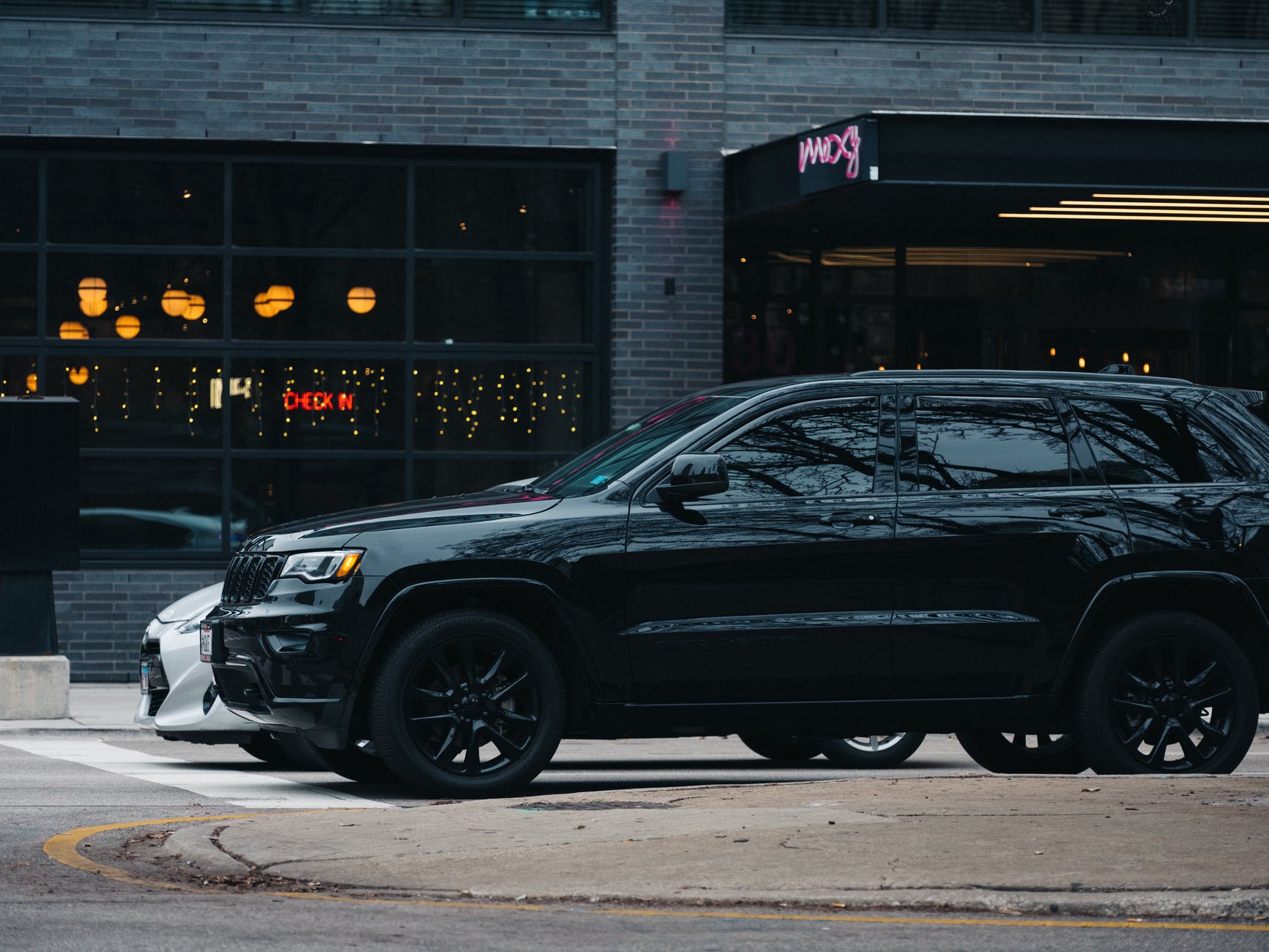
SUVs raced to a new milestone in 2019, surpassing 40 percent of all car sales worldwide for the first time. The world’s roads, parking lots, and garages now contain more than 200 million SUVs, eight times the number from a decade ago. SUVs’ share of car sales in the U.K. has tripled over the past 10 years; in Germany last year, 1 in 3 cars sold was an SUV…
This global phenomenon has its roots and impetus in the U.S., where in the 1980s the car industry carved out a new category called the “sport-utility vehicle”, a sort of mashup between a truck, a minivan, and the traditional American family car. After successfully lobbying lawmakers to class these vehicles as light trucks rather than cars, binding SUVs to less stringent fuel efficiency standards, the industry set aboutslotting them into almost every arena of American life…
The industry found that American drivers enjoy the lofty seating position of SUVs as well as the capacity and the comforting feel of security their bulk provides, even if half of all journeys taken in the U.S. are mundane trips of under 3 miles to run errands rather than high-octane adventures in the Rocky Mountains. For many Americans, SUVs invoke alluring qualities of fortitude and independence…
As Bloomberg’s Nat Bullard noted in a recent tweet: “We don’t buy cars here. We buy big cars built on truck bodies, and we buy trucks and drive them like cars.” The U.S. is now indisputably an SUV nation, a transformation that has had profound consequences for American cities as well as the global climate.
A few thoughts:
This timeline roughly lines up with connection I have found in my years of studying McMansions: SUVs and McMansions can be viewed as related phenomena. They are both large and represent increases in size from typical earlier versions. The 1980s appears to be a key decade with a bigger economy, plenty of spending, and a growing emphasis on larger consumer goods. And those SUVs may need a three car McMansion garage to fit.
There are hints here but there are also links to a suburban lifestyle that is largely structured around driving and short trips. Granted, just because Americans live in a sprawling landscape does not necessarily mean they need large vehicles to get around; they could use smaller cars. Yet, all that driving – even for relatively short distances – means Americans get lots of time to think about vehicles and what they want to have (and need to have to access many places).
It is interesting to note that SUV sales and use are up in other countries as well. SUVs are often tied to American interests in driving and size; what explains increased sales in Germany and the UK? Car makers could be pushing these vehicles more and why are drivers more itnerested now than earlier?






 Legally Sociable