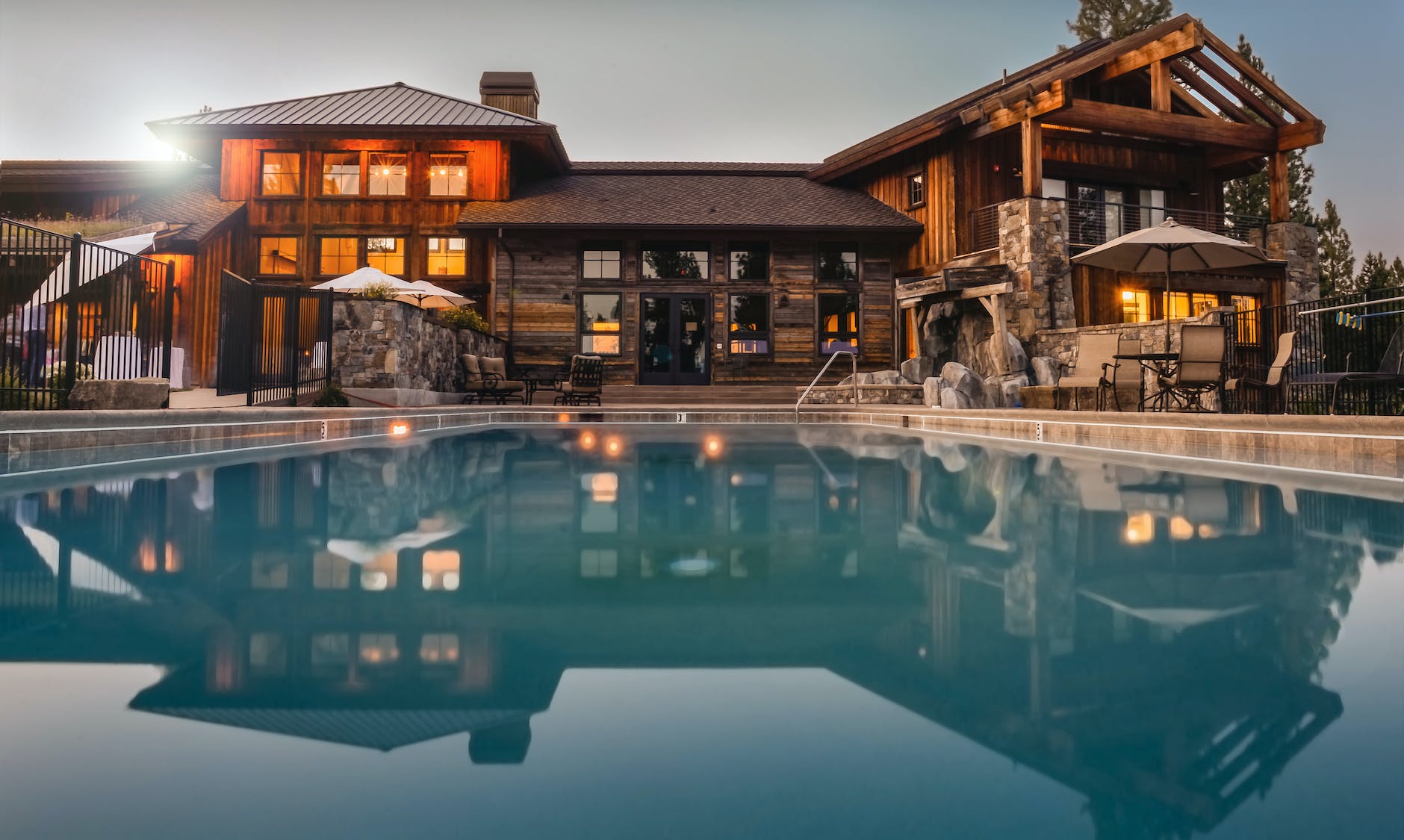
Multiple factors behind the decline in starter homes in the United States

The starter home has disappeared from many housing markets:

Photo by Scott Webb on Pexels.com

The affordable end of the market has been squeezed from every side. Land costs have risen steeply in booming parts of the country. Construction materials and government fees have become more expensive. And communities nationwide are far more prescriptive today than decades ago about what housing should look like and how big it must be. Some ban vinyl siding. Others require two-car garages. Nearly all make it difficult to build the kind of home that could sell for $200,000 today…

Nationwide, the small detached house has all but vanished from new construction. Only about 8 percent of new single-family homes today are 1,400 square feet or less. In the 1940s, according to CoreLogic, nearly 70 percent of new houses were that small…

But the economics of the housing market — and the local rules that shape it — have dictated today that many small homes are replaced by McMansions, or that their moderate-income residents are replaced by wealthier ones. (A little 1948 Levittown house on Long Island, the prototypical postwar suburban starter home, now goes with a few updates for $550,000.)…

The simplest way to put entry-level housing on increasingly expensive land is to build a lot of it — to put two, three, four or more units on lots that for decades have been reserved for one home.

The costs – financial, regulatory – are too high for the construction of lots of starter homes. The proposed solution is to try to reduce those costs by placing multiple residents on one lot and/or increasing density in communities and developments.

How to change all of this is difficult given the difficulties of addressing housing in the United States. The need is great, particularly when affordable housing is not aimed at a larger percentage of the population who would benefit from a cheaper residence.

I wonder if the best path forward is for certain communities to pursue starter homes successfully and show that it is possible. Of course, one danger is that even if it works well in some communities, other communities might leave the burden of such housing to a small number of communities. However, if starter homes can be constructed in such a way that they are perceived as an asset to the community and not a threat to property values, they might catch on. Are there several communities that would fit the bill?


“The strength of weak ties” applies to LinkedIn

A recent study suggests that weak ties on Linkedin are better in helping people find jobs:

Photo by Pixabay on Pexels.com

If you have a LinkedIn account, your connections probably consist of a core group of people you know well, and a larger set of people you know less well. The latter are what experts call “weak ties.” Now a unique, large-scale experiment co-directed by an MIT scholar shows that on LinkedIn, those weak ties are more likely to land you new employment, compared to your ties with people you know better…

The notion that there is something especially useful about the more tenuous connections in your social network dates to a highly influential 1973 paper by Stanford sociologist Mark Granovetter, “The Strength of Weak Ties,” from The American Journal of Sociology. In it, Granovetter identified weak ties as a key source of “diffusion of influence and information, mobility opportunity, and community organization.”…

All told, the experiment involved around 20 million LinkedIn users, who over the five years ended up creating about 2 billion new connections on the site, recorded over 70 million job applications, and wound up accepting 600,000 new jobs identified through the site…

“Moderately weak ties are the best,” Aral says. “Not the weakest, but slightly stronger than the weakest.” The inflection point is around 10 mutual connections between people; if you share more than that with someone on LinkedIn, the usefulness of your connection to the other person, in job-hunting terms, diminishes.

The general idea is the people more removed to you but still in your network can access opportunities that close connections do not have access to. Reach out to the edges of your network and there are more options.

Now it would be interesting to see how LinkedIn and other similar platforms take advantage of this knowledge. Many social media platforms want to connect people. But, what if having more ties and increased interaction with other users is actually a negative feature for jobs?

Or, I imagine there are strategies for social media users to create an excellent set of weak ties rather than connect with people they know better. Why connect with people close to you when you could amass weak ties that could come through big later?

The heady rush prompted by a stimulating book

I recently finished a book that I found very interesting and left an impression on me. As I sort through how to write about the text and its content, the aftermath of reading the book reminded me that there is a particular experience with finishing such a book. Here are parts of that experience after the book is done:

Photo by Shawn Reza on Pexels.com

-Wanting to tell people about the book and/or recommending they read it.

-The text prompts all kinds of connections and links to other works and ideas.

-There is time devoted to thinking more about the book and dwelling on the text and its implications.

-Taking the new lens or perspective the book provides and employing it.

-Savoring the reading and thinking experience.

I read a good number of books each year and know that only a few prompt set of reactions. The ones that do make such a mark tend to make it into this blog, the classroom, and my conversations. They are the ones that I tend to purchase and keep on my shelves for a long time. I look forward to finding more of them, both old and new, that open up possibilities and provide deep experiences.

Decline in luxury home sales – but few have to buy or sell

Reading this overview of the decline of sales in the luxury housing market, a few quotes stood out to me about a particular aspect of this segment of housing:

Photo by Chris Goodwin on Pexels.com

As for purchasing real estate in all cash, Treasurys seem like a better bet than real estate right now, Ms. Fairweather said. “No investor wants to put their money into an asset that is going down in value,” she said.

Mr. Chan said he believes the slowdown in activity is more severe in the luxury market because high-end homeowners have a greater degree of discretion about when to sell and at what price. Often, sellers face no financial pressure to move, he said; they can just wait it out…

Many sellers, however, haven’t adjusted to the new realities of the market, Mr. Chan said. Some of his buyers have made lowball offers on homes, only to be met with significant resistance. “It’s a stalemate,” he said. “Sellers are living in the past, the buyers are living in the future.”…

One of her listings, a $14.95 million oceanfront mansion in Carlsbad, Calif., has been on the market since June. While the seller received one verbal offer, a sale never materialized. Still, she said, her client is wealthy and isn’t desperate to sell. “They don’t have to ever sell—they can carry these properties in perpetuity,” she said.

If housing has become more of an investment among all Americans, this segment of the market might exemplify this the most. Housing is a commodity that needs to be at the right price to buy or sell. Even as these homes signify status and a certain lifestyle, they are also a commodity with perceptions about what is a “good price.” When wealthy people have money – the economy is good, corporate profits are up, interest rates are relatively low – they want to purchase expensive and exclusive properties. When economic times are not as good – interest rates are higher, there is more uncertainty – luxury housing might be just that: a luxury.

If everyone is trying to get ahead with the best deal, how many people end up profiting compared to the other actors in this market? There are other motivations for moving beyond making money or getting a good return on investment; this helps guarantee there is some real estate activity in more troubled economic times.

Who is affordable housing in Naperville for? September 2022 edition

Two recent proposals aim to bring affordable housing to Naperville. The first project had 401 housing units and the affordable housing units within the development would be for this group:

Photo by Michael Tuszynski on Pexels.com

While the council has not adopted any measure requiring affordable housing, Pulte designed Naperville Polo Club in response to the city’s stated priorities, Whitaker said. They are committing to sell 20% of the town homes at an affordable level based on area median income, or AMI.

“Pulte will target buyers at 80-100% Naperville AMI consistent with household income targets set forth in SB Friedman’s Affordable Housing Program,” Whitaker said in the letter. “This target demographic for for-sale housing represents household incomes of approximately $100,000 to $125,000 and translates to a home purchase price below $440,000.”

With the median household income of DuPage County at over $94,000 and Will County at over $90,000 – Naperville spans both counties – this affordable housing is only accessible to people above the lower 50% of household incomes in the counties.

The second project involves affordable units set aside for two groups who need them:

It’s not often the Naperville City Council receives a standing ovation.

But it happened Tuesday after a 9-0 vote authorizing pursuit of an affordable housing project on city land southeast of the corner of 103rd Street and Route 59 on Tower Court. As part of the potential agreement for development, a minimum of 60 units would be built for seniors and for adults with intellectual or developmental disabilities.

When the vote finished, more than a dozen audience members clad in red shirts with “I (heart) affordable housing” written on them stood and cheered the decision — more than a year in the making — that paves the way for young adults with special needs to live independently.

In both cases, housing is needed.

But, what is “affordable housing” about? Is it about keeping Napreville residents in Naperville like seniors and young college graduates? Is it about providing housing that provides no threat to larger homes and higher property values? Is it about providing units to those who live and work in wealthier suburbs but cannot easily afford to live there? Is it about providing units within a region where tens of thousands need affordable housing? Is it about providing housing for those who could not otherwise live in a wealthier suburb?

Is this the path to “small-town democracy still works as intended”?

The village board of suburban Round Lake recently voted against a proposal to annex property and create a year-round ski hill. One representative of local opponents described the outcome this way:

Photo by cottonbro on Pexels.com

“It is heartening that small-town democracy still works as intended,” Ashman added.

What happened in this process of “small-town democracy?

Opponents who had coalesced into a large, multifaceted grass-roots force were uncertain of the outcome until Trustee Mark Amann, who was appointed earlier in the meeting to fill a vacancy, ended the speculation…

The opposition group started with about a dozen residents a few months ago but grew with a united goal and different areas of expertise.

A Facebook group ballooned to 779 members, 120 yard signs were posted, hundreds of fliers were passed out in town and a website was created. Nearly 2,000 signatures in opposition were gathered on an online petition, and a blog chronicled the issue…

“I had to go with my conscience and my gut,” he said after the meeting. “The bottom line was he (applicant Dan Powell) didn’t have any skin in the game. We were at more risk than he was.”

This exemplifies why suburban Americans like local control and local government. In a smaller community (Round Lake has over 18,000 residents), the closer connection residents have to the local board or council. If residents do not like something, it is easier for them to make their voice heard. Here, residents took advantage of social media and websites plus utilized yard signs and fliers. Those opposed felt this was not in the best interest of their community. If elected officials do not do what residents want, it can be easier to remove them at the next election.

Whether such a process leads to the “right” outcomes is another question all together. Such a process also makes it easy for communities to resist affordable housing, development or changes that might be good for an entire region, or protect a particular character or set of resources.

Set up the millennials in a McMansion for a horror film

The recently released film Bodies Bodies Bodies takes place in a McMansion:

Photo by Elu012bna Aru0101ja on Pexels.com

What happens to a group of vapid, bored, rich gen Z-ers/millennials holed up in a McMansion during hurricane season when the wi-fi goes out?

If the film Bodies Bodies Bodies is anything to go by, they’ll probably end up killing each other — unless someone else does it first.

While some might say the McMansion itself is a horror, McMansions are no stranger to horror stories. How exactly might a horror film involve a McMansion? A few ideas:

-This particular film follows 7 friends. This means plenty of space for people to sleep, live, and interact. A McMansion provides plenty of space.

-The tackiness or gaudiness or lack of authenticity of a McMansion can provide a creepy or unsettling backdrop.

-The McMansion falls apart at a key moment or the limited architectural quality lets the characters down.

-The extra interior square footage a McMansion offers provides more space for nefarious actors to operate.

-The McMansion could be set in a neighborhood of McMansions, perhaps unfinished, that are all creepy and ominous.

A horror film set in suburbia can play off a common idea that suburban life is not as happy or successful as it seems. How much more so could this be true in a McMansion, a home that tries to broadcast its success in obvious ways.

Combine a horror film with the negative traits of a McMansion and there are plenty of options!

Updated figures on Chicago as “the country’s largest freight hub”

Freight and cargo continue to be important for Chicago and the region:

Photo by Pixabay on Pexels.com

Chicago is still the country’s largest freight hub, handling half of all U.S. intermodal trains and a total of $3 trillion worth of cargo each year, according to the Chicago Metropolitan Agency for Planning.

That is a lot of money and traffic.

Whether the Chicago region is acting as a good steward of all of this is another matter. The figures come from an article about pollution from idling trains and truck plus increased freight traffic. Additionally, is the Chicago area prepared to be a freight leader in the future? If so much traffic passes through the region, there is a lot riding on facilities and infrastructure making sure everything gets to its destination.

Adjustments in suburbs to changing water and flooding conditions

As some sprawling areas of the country deal with drought and limited water, others will be adjusting to changing rainfall and flooding patterns and considering a new Illinois State Water Plan.

Photo by eberhard grossgasteiger on Pexels.com

Cattoor said the plan will not impose regulations on local municipalities but will instead provide programs and data that communities could benefit from…

The recommendation for this issue is to provide localized information to the public on anticipated changes in storm intensity and frequency. According to the document, this is particularly important in communities with combined storm sewer drainage systems, which carry sewage and stormwater runoff in the same piping system.

In Des Plaines, planning is critical to mitigate and reduce floods from large rainstorms that result in the Des Plaines River overflowing its banks.

Floods in 2008 and 2013 caused widespread damage to the city’s Big Bend Drive neighborhood, prompting the demolition of nearly 90 structures to permanently remove them from the floodplain. Most recently, a heavy rainstorm in 2020 left many of the city’s streets underwater…

Duddles said the Metropolitan Water Reclamation District requires that municipalities use an Illinois State Water Survey document referred to as “Bulletin 75” as a source of precipitation frequency data for stormwater infrastructure projects such as detention ponds.

It sounds like this can be helpful for future planning. For those pursuing new development, updated guidance on water and flooding could help limit future issues.

At the same time, work will be needed to adjust existing infrastructure. This is a harder task. In the example cited above, floods led to removing homes. In many suburbs, old systems may not work well as conditions change. Or, new conditions mean that systems that were already taxed or not working well may need severe overhauls.

Where will the resources come from to undertake such projects? Significant pipe, sewer, and water projects are not cheap. Aging infrastructure is a problem in numerous suburbs where the spurt of rapid development decades before leads to routine and unexpected maintenance and replacement.

This all means it could be decades before significant changes occur in suburbs regarding water and flooding. Yet, starting now in communities is better than waiting to address issues.

Geotagging music to specific places

How much is the experience of music connected to specific locations? One band’s efforts offer a way to link music and places:

Photo by John-Mark Smith on Pexels.com

When it came time to launch “Rand McNally,” the band decided to celebrate its long live history by launching Death Cab for Cutie Map, which directed people to go on a scavenger hunt to find the track. All they had to do was go to one of more than 800 places Death Cab has played, whether the venues were still standing or not. Once there, fans could use their phones to access a geotag that would unlock the track, making the launch a little more fun and experiential than your typical song drop…

Speaking of history, Harmer dreams of a world where this kind of geotagging is available for all of his favorite bands. “It would be cool to be able to go on Apple Maps and search for the old tour routes and histories of The Who or The Beatles,” he says. “Just from a historical perspective, I’d love to be able to see where and when they played. I learned only recently that Led Zeppelin played a concert at Green Lake Park in Seattle. There used to be this little outside amphitheater, and I’d never heard of a show being played there ever, much less a Zeppelin concert. As we start to really explore all the data that’s available to us, that kind of map would be a cool thing to have access to.”

A concert experience is a unique one. It is affected by the venue, the sound system, the audience, and the band or musical act. It is certainly different than listening to music through a radio or a phone or stereo speakers or headphones. Being in a crowd focused on live music can lead to collective effervescence.

My guess is that such geotagging will be most enjoyable for those who attended specific concerts in the past. Going back to the venue and getting a new song combines both reliving the concert experience and building on that with new music. It helps add music and sounds to our full-sensory understanding of places.

I could also imagine a future where playing a specific track could pull up a virtual reality experience of being in the crowd where the artist is performing the particular piece.