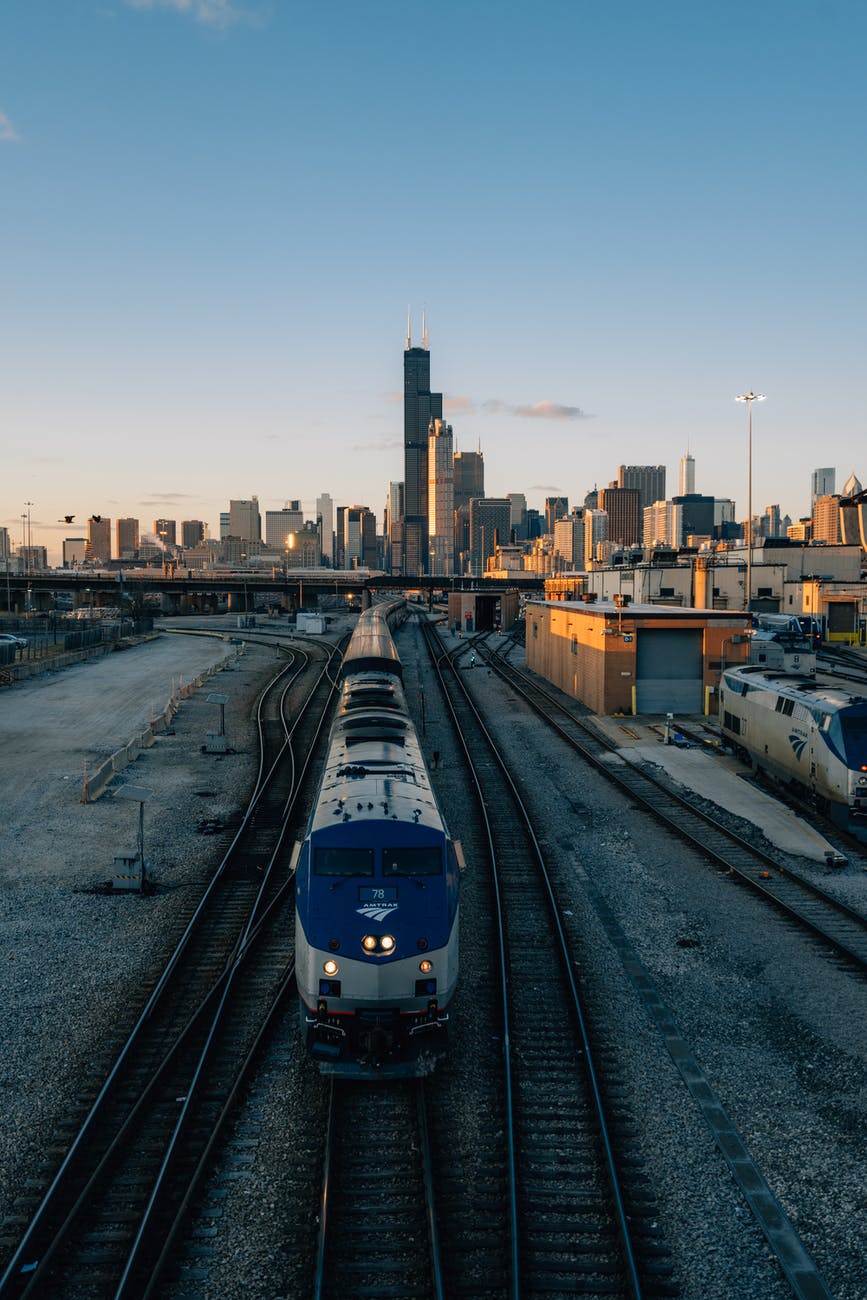
Turnout for local Chicago area elections low again: under 20% in counties

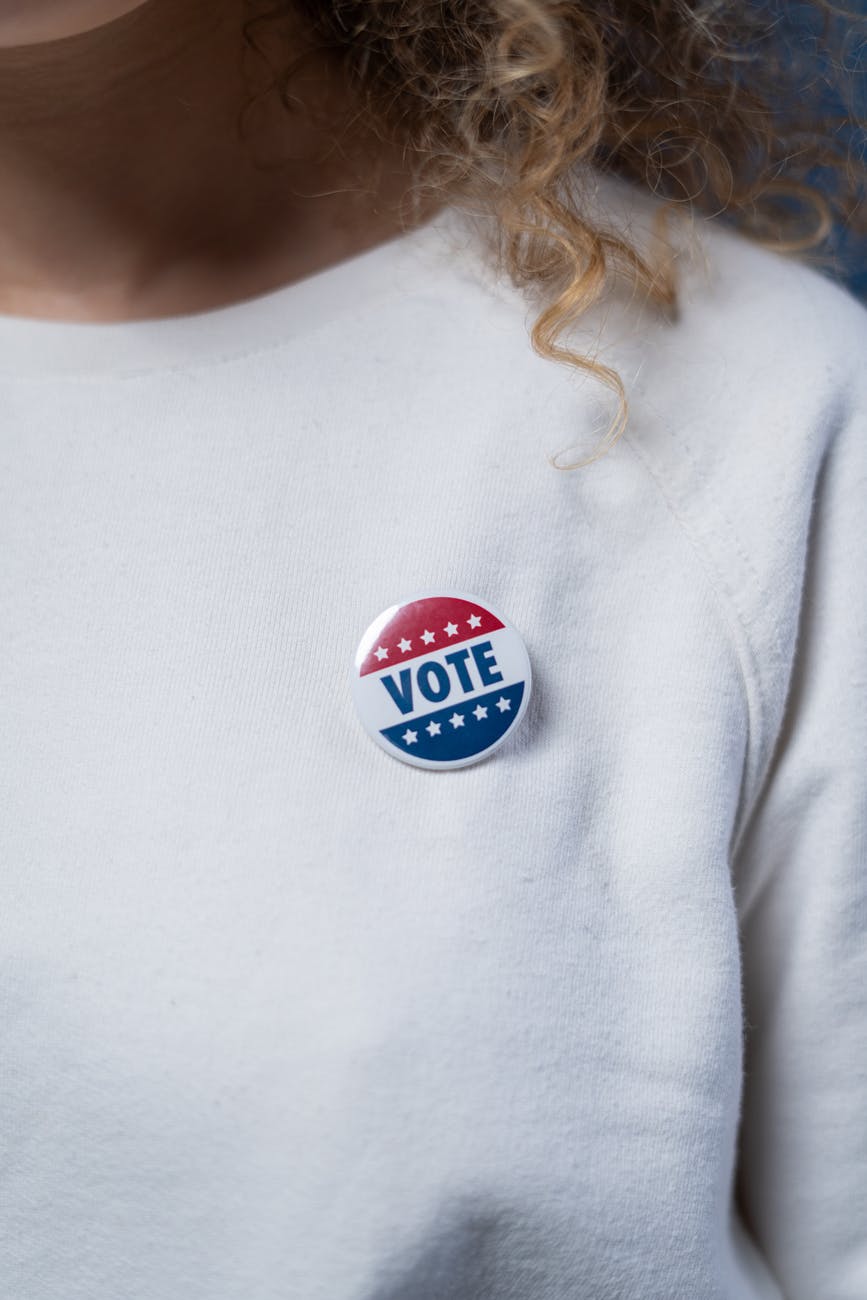
Americans have regular opportunities to vote in local elections and Chicago area voters did not turn out in large numbers in this week’s election:

Photo by Polina Kovaleva on Pexels.com

At the county level, voter turnout mostly hovered in the low to midteens, typical for many counties in consolidated elections. On the lower end, McHenry County reported a voter turnout of 9.5%, and Kankakee County topped voter turnouts across the counties at 18.6%. The pandemic didn’t have a significant effect on voter turnout, according to county clerks’ offices, with sufficient alternative options for people to vote early or by mail instead of in person.

In Cook, DuPage and Lake counties, turnout was 14.7%, 15.6% and 13.7%, respectively.

In Will County, southwest of Chicago, 15.8% of voters cast a ballot Tuesday. That’s nearly 3 percentage points higher than the previous consolidated election in 2019, which had a voter turnout of 13.2%, said Charles Pelkie, chief of staff for the Will County clerk’s office…

Finding information on local candidates presents a challenge for voters, Pelkie said, confined mostly to mailed flyers and local radio or television ads. In general elections, Will County voter turnout can reach about 80%, Pelkie said, but local races don’t “inspire” voters in the same way as presidential or gubernatorial races.

I think this explanation is correct in that residents have to do a lot of work to find out about all the candidates and races. See my post on this yesterday.

But, there are other factors at work as well. As noted in the article, national races drive up turnout. I wonder if national politics has now completely overshadowed local and state politics through the last few presidential cycles. Americans often say they like local government but many eyes are now only turned to Washington.

Big issues in communities can drive up turnout. County level data can obscure higher levels of turnout for intriguing races. Yet, even interesting or important local issues might be drowned out by larger politics or the overwhelming number of choices.

A little thought experiment. Imagine a local government unit decided elections are no longer necessary or will not take place as frequently. They could cite the amount of money that is needed to run elections. Lots of energy is expended from both winning and losing candidates. I would guess there would be local protest; how can you have local government without regular elections? Would it prompt people to vote more often in local elections?

Or, could eliminating government bodies or consolidating such bodies in Illinois help? Reduce the number of candidates to choose from. Limit the number of taxing bodies that local funds go to. Focus some of the positions on broader issues rather than details of particular institutions. Again, this could be viewed as being anti-democratic but the current system does not seem to interest many voters.
The difficulty of keeping up with all the choices in local elections

I voted in the local elections held yesterday. I study suburbs and am aware of the fondness many Americans have for smaller and/or local governments. And I find it difficult to know who or what I am voting for in local elections.

In class yesterday, I started by talking about the importance of local elections. If residents care about their community, they can run for local offices or serve on volunteer committees. Without all of this important work that can require high levels of commitment for limited compensation, things would not get done. Because turnout can be low in local elections, candidates can be elected with relatively few votes.

Photo by cottonbro on Pexels.com

In certain elections, certain parts of the ballots stand out. Perhaps it is a development issue. Perhaps it is a referendum on a local tax increase to fund local schools. Perhaps it is a particular race, like a heated mayoral election or a pandemic facing members of the school board.

Beyond those more noteworthy circumstances, there are many choices. Forest Preserve commissioners. County Board members. Local judges. Township leaders. And so on. Sometimes, I know something that helps me make a choice. I read local news that helpfully presents local candidates. I watch some local forums where candidates talk. I am aware of some of the local concerns. I may know someone or know of someone. But, I cannot keep track of everything. Hence, the popularity of just voting a slate or a party for particular positions. Or, a set of endorsements from local media. This is all on top of what might be happening at the state of federal level.

This problem might be exacerbated by the number of units of local government Illinois has. However, I suspect this is a larger issue among Americans. Having many choices for many offices may help lead to lower turnout. Only some people have the motivation and wherewithal to find all of the information needed on local issues and candidates. People are disconnected from local groups and institutions through which they might hear about candidates and issues.

Americans like the idea of local elections but it is hard to keep up with all of the local government activity.

Looking to “produce, preserve, and retrofit” American homes for the future

What will happen to American homes in the coming homes, particularly all the suburban tract homes and McMansions? One path forward is to provide resources to fix up and improve existing homes. According to plans from the White House:

Photo by Rodolfo Quiru00f3s on Pexels.com

Build, preserve, and retrofit more than two million homes and commercial buildings, modernize our nation’s schools and child care facilities, and upgrade veterans’ hospitals and federal buildings. President Biden’s plan will create good jobs building, rehabilitating, and retrofitting affordable, accessible, energy efficient, and resilient housing, commercial buildings, schools, and child care facilities all over the country, while also vastly improving our nation’s federal facilities, especially those that serve veterans.

As housing ages, issues pop up. They need maintenance. Standards change regarding efficiency, local codes, and what residents desire. The community around houses and housing can change in terms of demographics and development, affecting the reputation of the neighborhood.

This plan emphasizes retrofitting homes, among other options. Energy efficiency is one reason as features like new windows, better furnaces and air conditioners, insulation, and more can cut down on energy use and utility bills. Retrofitting can also help maintain the appeal of homes; instead of falling into disrepair or failing to keep up with the times, retrofitting can spruce up houses that have been around for a while.

Some of this has been available through various means for a while. The concept does stand in contrast to another approach Americans have taken: just build new homes in sprawling suburbs or as teardowns and leave the older homes and their issues to others. Retrofitting single-family homes could be quite a project in the long-term with the emphasis on the United States on single-family homes in the suburbs. Does every suburban home require or deserve retrofitting at some point?

How a fictional psychiatrist turned radio host lives in a swanky Seattle condo

Television residents do not always match reality. One writer set out to find how Frasier Crane lived in such a large and well-appointed residence in Seattle:

Photo by Chait Goli on Pexels.com

While characters living in unrealistically spacious apartments is a sitcom mainstay, the extravagance of Frasier’s apartment is central to the show, rather than an incidental. Frasier, ever class-conscious, takes great pride in furnishing his condo in the Elliott Bay Towers because it’s how he expresses his refined sensibilities. What better way to show off his yuppie bona fides than an Eames chair and a Wassily, a Le Corbusier lamp, a Chihuly vase, many questionable global artifacts, and, as he brags in the pilot, a couch that is “an exact replica of the one Coco Chanel had in her Paris atelier”? As a 1994 Chicago Tribune article points out, the decor choices were extremely deliberate—and extremely pricey…

From the available numbers, I learned that in 1989, the average salary for a psychiatrist was $117,700. Though Frasier likely would have made less starting out and more by the end of his tenure, for the sake of simplifying things, let’s say he worked that job at that salary from 1983 through 1993. If he saved the recommended 20% of his income during this period, he would have $235,400 stashed away at the end of that 10-year period—of course, this is before taxes…

“We talked about, ‘If anybody wonders how he can afford this it’s because Frasier has an investment income,’” Keenan told me. “He made a fair amount of money in Boston as a private therapist and he lectured and he wrote articles and he just invested very well. And at one point somebody said, ‘He’s from Seattle, maybe he got in on the ground floor of Microsoft.’ Little dividends arrived to augment what he was making in the station.”…

Keenan also pointed out that Frasier wouldn’t have seemed as wealthy compared to Niles, who lived in a “preposterously baronial house” thanks to Maris’s money. Plus, to an unfamiliar audience, “radio host” would have probably seemed like a pretty impressive and well-paying job.

In other words, the viewer should not ask so many questions. Just enjoy the show.

Seriously though, I could imagine a few additional points of explanation:

  1. Perhaps there was some unusual circumstance around the acquisition of the condo. Given the strange circumstances Frasier could get himself into, this is not hard to imagine. A short sale. Some gift or reduced price from a thankful client. He used his dad’s pension money from working as a cop. There could be lots of ways to explain this given the hijinks of the show.
  2. Frasier might have saved some money from good investments or had some extra earnings. At the same time, his character is not exactly one who makes wise long-term decisions. Was he smart enough to employ a good investment fund manager? Did he fall into some money (such as Microsoft stock as hinted above)?
  3. Frasier needs this condo as part of who he is. The expensive items, the preening tastes, the haughtiness are all tied to a pattern of conspicuous consumption. He likes to show off and does so with what he owns, including his residence. And the running gag with his father’s old chair does not work without everything attesting to Frasier’s acquisition habits.
  4. What other residence would suit Frasier? A single-family home in the suburbs? A tacky show of impressiveness like the home of his brother? A smaller city bachelor pad?

Cities that rise from the dead

With Easter today and Atlanta in the news, I was thinking of American cities that claim to have risen from the dead. The phoenix has been the symbol for Atlanta for over a century:

Photo by Josh Sorenson on Pexels.com

Like the Phoenix, Atlanta had risen from its own ashes following its destruction in 1864. Many times during the city’s history, Atlanta has redefined and reinvented itself, rising again as the city slogan, Resurgens, suggests. The “Atlanta Spirit” is another oft-referenced slogan describing an entrepreneurial and ambitious attitude that has shaped the city’s historical identity.

After the Great Chicago Fire of 1871, boosters and others were eager to rebuild:

On October 11, 1871, three days after the fire started that devastated the city, Bross’s Tribune proclaimed, “CHEER UP. In the midst of a calamity without parallel in the world’s history, looking upon the ashes of thirty years’ accumulations, the people of this once beautiful city have resolved that CHICAGO SHALL RISE AGAIN.”

Bross, who was an avid promoter of the city, predicted that Chicago would be rebuilt in five years and would reach a population of 1 million by the turn of the century, as Donald Miller reports in City of the Century.

There is an accepted narrative that the fire created a blank slate upon which Chicago was quickly rebuilt. That blank slate allowed it to become a dynamic city of innovative architecture with a fresh skyline dotted with a brand-new building called the skyscraper.

“The great legend of Chicago is that it’s a ‘phoenix city’ – it almost instantly rebuilt itself bigger and better from the ashes. And to a certain and significant extent, that’s true,” said Carl Smith, professor emeritus of English at Northwestern University and author of Chicago’s Great Fire: The Destruction and Resurrection of an Iconic American City.

And the city of Phoenix draws on the presence of people hundreds of years before:

Those former residents were industrious, enterprising and imaginative. They built an irrigation system, consisting mostly of some 135 miles of canals, and the land became fertile. The ultimate fate of this ancient society, however, is a mystery. The accepted belief is that it was destroyed by a prolonged drought. Roving Indians, observing the Pueblo Grande ruins and the vast canal system these people left behind, gave them the name “Ho Ho Kam” — the people who have gone…

By 1868, a small colony had formed approximately four miles east of the present city. Swilling’s Mill became the new name of the area. It was then changed to Helling Mill, after which it became Mill City, and years later, East Phoenix. Swilling, having been a confederate soldier, wanted to name the new settlement Stonewall after Stonewall Jackson. Others suggested the name Salina, but neither name suited the inhabitants. It was Darrell Duppa who suggested the name Phoenix, inasmuch as the new town would spring from the ruins of a former civilization. That is the accepted derivation of our name.

Many cities have faced crises, disasters, or unusual starts. Local histories and narratives can also emphasize positive moments (and downplay negative moments). The rising from the ashes, overcoming great obstacles, coming back to life, these are all powerful narratives for big cities. They imply success, progress, and hopefully growth.

What these narratives mean now may be harder to ascertain. What does the aftermath of the Chicago Fire mean for Chicago today? Is Phoenix still rebuilding a great civilization? More than 150 years after the Civil War, is Atlanta continuing to reinvent itself? A city rising from the dead once is impressive but it may be harder to pull off over decades of change.

Searching for the perfect name for a slate of candidates in local elections

Keeping in mind regulations, non-partisan traditions, and what might appeal to voters, candidates running for local elections in the Chicago area come up with some clever names for their slate:

Photo by Element5 Digital on Pexels.com

A court ruled in 2017 that candidates in Illinois don’t need to be part of a slate to run under the banner of a political party. So Dubiel decided to create a party of which he would be the only member — LZ Thrive…

When the calendar turns to the spring municipal elections, political passions are no longer contained to Republicans and Democrats. In suburb after suburb, you’ll find parties with monikers like People Before Politics, We’re in This Together, You Are the Village’s Heart, the Common Sense Again Party, the United Party for Progress or, most expansive of all, the Party of the Past, Present and Future…

One way to avoid such complications is to change the party’s name for every election, thereby making it a brand-new entity that can control its slate. That has been a routine practice in Bolingbrook, which for more than three decades was run by former Mayor Roger Claar under a variety of party names…

Those included Citizens for Bolingbrook First, the Bolingbrook First Party, Bolingbrook First and, in its most recent iteration following Claar’s 2020 retirement, the First Party for Bolingbrook.

I imagine there is an art to this. What exactly can capture a particular local spirit? Many of the names quoted above emphasize a bright future or emphasize a collective community spirit. There is a sense of optimism or forward momentum. (There could be the occasional anti-growth or preserve the community slate names in there as well – just not quoted above.)

If many of these are in the suburbs, other names might fit with the broad themes of suburbia: Making the Best Suburb for Your Children! Boosting Your Property Values! Keeping Certain Land Uses (and People) Out! Maintaining Our Lead Over Other Nearby Suburbs! And so on.

What if this was possible at the national level? What could Democrats and Republicans come up with every two and/or four years to really emphasize their particular focus in that election? Since each party does reconfigure their platform each election to fit current priorities, perhaps this would make some sense. It could also help eliminate the confusion over long-term shifts where one party used to support something but now it is the other party that pushes it.

Do Americans actually like to drive or do they say this because much of American life requires driving?

Do Americans actually like driving? Or, do they just do it a lot?

Photo by Element5 Digital on Pexels.com

Many Americans must drive on a regular basis. They need vehicles in order to get to work, obtain groceries and other goods, take advantage of recreation opportunities, and get to school. Many communities are designed around roads and emphasize moving large numbers of cars through areas at fast speeds. Americans have a system that privileges driving.

Americans might cite numerous aspects of driving and cars that they like. Driving is its own unique challenge requiring skill and attention. The driver is responsible for maneuvering a several ton vehicle. There are rules to be followed and ways to make driving more interesting. The average person does not have many other means to match the feeling of speed that a car can offer. Vehicles themselves can spark interest, ranging from their styling to their upkeep to their different features.

Additionally, driving has cultural meanings attached to it. From the beginning of cars, Americans loved the mobility and freedom they offered. Cars are more individualistic than mass transit. Vehicles represent progress with people behind the wheel. Cars and driving skills say something about their owners.

With an infrastructure that emphasizes driving and features of driving that Americans like, perhaps these two are simply intertwined today. Cars and driving are just part of the American way of life. Perhaps American drivers do not need to even like driving; they just have to tacitly support the structure that keeps driving as the primary mode of transport. Liking driving could then a resignation to the status quo or finding joy in what they are going to do anyway. Or, it could genuine joy at sitting behind the wheel. Changing this love of even or even acceptance of driving would take significant time and/or effort given how Americans feel about driving.

Looking at creepy abandoned McMansions on TikTok

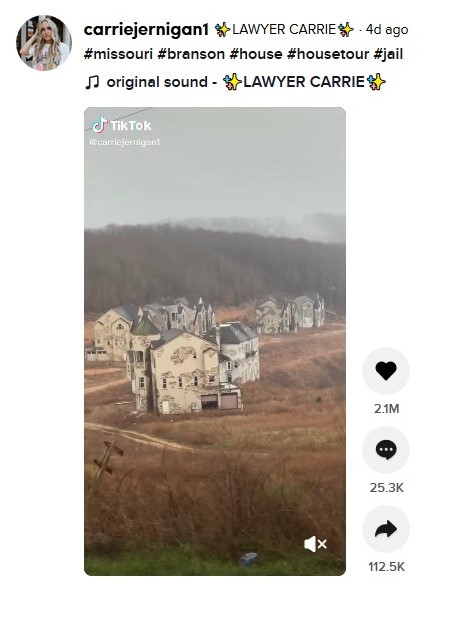
Empty McMansions that were intended to be part of a resort in Missouri have caught the attention of TikTok users:

As @carriejernigan1 explains in her video, the Indian Ridge Resort was meant to be a $1.6 billion development, complete with a wild amount of luxurious amenities. According to Missouri’s KYTV-TV, developers wanted Indian Ridge Resort to feature a shopping mall, a marina, a golf course, a 390-room hotel, a museum and the world’s second-largest indoor water park.

Many of those projects never got off the ground, as @carriejernigan1’s video shows. TikTok users were naturally creeped out by her clip, which shows decaying McMansions amid a sea of overgrown plants. Some called the ghost town “scary” or “nightmare-inducing.”…

This is not the first time I have run across creepy McMansions in Missouri. I recall the presence of McMansions in Gone Girl. Perhaps McMansions make some sense here: it is a conservative state in the middle of the country where people might be more willing to purchase such homes.

At the same time, the connection to a resort near Branson is an interesting twist. This is not just a normal suburban neighborhood of McMansions occupied by crass suburbanites in the Midwest. These homes were part of a larger luxurious project. From the TikTok video, the homes themselves seem to be larger than a typical suburban McMansion. The McMansions themselves are not meant to on their own impress people visiting or driving by; the whole resort community would help do that.

This also offers intriguing possibilities for how these McMansions might be reused. It may not be worth it for another developer to come in and finish off these homes. Could the materials be repurposed? Could the homes be completed but subdivided to create smaller units? Could this be some sort of weird theme park involving these homes (think Halloween where abandoned McMansions become haunted houses)?

Declining Mexican immigrant population in Chicagoland

The population stagnation or loss in the Chicago region extends across groups of residents, including the Mexican immigrant population.

Photo by Luis Leon on Pexels.com

The Mexican immigrant population in the Chicago metropolitan area has decreased by 15% over the last decade, shows a new report published this week.

That’s a 104,000-person loss, roughly the equivalent of the entire population of Chicago’s Lake View neighborhood disappearing, according to a report by the Metropolitan Planning Council (MPC). The tri-state Chicago metro area includes the city, suburban Cook County and eight surrounding counties in northeast Illinois, four in northwest Indiana and one in southeast Wisconsin…

Cooper said most of the narratives about the population loss have focused on middle-class and upper-middle-class white residents leaving Illinois because of high taxes and the state’s pension woes…

The net loss of Mexican immigrants since 2010 is the continuation of a larger trend that has seen immigrant growth slow to a near halt over the past 30 years. In the ‘90s, Illinois had a net gain of 576,786 immigrants, according to the MPC report. From 2000 to 2010, the state witnessed a net gain of 230,801 immigrants. But from 2010 to 2019, the state’s immigrant population slowed to a net growth rate of just 0.4% — a net addition of only 6,622 immigrants. That trend helps explain why Illinois is near the bottom in population growth since 2010. Immigrant population growth had largely buoyed the state’s population growth in previous decades.

See this earlier post about how immigration to Chicago helped hold off population loss and this earlier post about the exit of Black residents from Chicago.

The point of this research makes sense: many locations in the United States talk about what might happen if wealthier residents leave. Would the 1% move elsewhere if taxes were raised? Will white flight continue? This emphasizes the structural conditions and decisions affecting just part of the population even as immigration has been important for many areas of the United States in recent decades. And then the next question to ask is why immigrants are not staying in this location or coming to this location in the first place; where are they going instead? Growth is good in many American communities but highlighting only certain kinds of growth provides an incomplete picture.

Another question based on these numbers: is Chicago welcoming to immigrants in 2021? Chicago has long been a traditional gateway city but it this now not the case for certain groups or immigrants overall?

Materialism and religion in the clothes pastors wear

An Instagram account highlights the expensive wear of ministers:

On his feed, Kirby has showcased Seattle pastor Judah Smith’s $3,600 Gucci jacket, Dallas pastor T.D. Jakes’s $1,250 Louboutin fanny pack and Miami pastor Guillermo Maldonado’s $2,541 Ricci crocodile belt. And he considers Paula White, former president Donald Trump’s most trusted pastoral adviser who is often photographed in designer items, a PreachersNSneakers “content goldmine,” posting a photo of her wearing $785 Stella McCartney sneakers.

As the Instagram account grew, Kirby started asking more serious questions about wealth, class and consumerism, including whether it’s appropriate to generate massive revenue from selling the gospel of Jesus.

“I began asking, how much is too much?” Kirby said. “Is it okay to get rich off of preaching about Jesus? Is it okay to be making twice as much as the median income of your congregation?”

This is a long-standing issue within Christianity, let alone in American Christianity where money and status have existed alongside religious fervor and practices for a long time. In a society that emphasizes consumption, even conspicuous consumption, plus celebrity, is it a surprise that ministers would want to wear expensive items?

Counterfactuals to these observations might help. Two come to mind:

  1. Are there mainstream religious groups or leaders who actively shun or downplay status? I can think of famous pastors who are not as well dressed. But, are they necessarily poorly dressed? How much does presentation of self matter compared to other noteworthy factors like particular religious doctrines or practices? I assume there is some limit where a pastoral presentation has to fit some parameter or the lack of style or flashiness will be a negative. Is the nature of American religion with its religious economy of competition inextricably tied to status and presentation?
  2. Some evangelicals have raised questions about materialism and consumption for decades. Historian David Swartz’s book Moral Minority highlights how evangelicals in the early 1970s questioned the consumption patterns of Americans. If you want to go back further, Max Weber argued in The Protestant Ethic and the Spirit of Capitalism that a particular ascetic approach to spending wealth on oneself helped spur on capitalism. How far did this critique go? By the 1980s, evangelicals largely became associated with conservative economic policies and reside in suburbs where appearances and keeping up with the Joneses matter to some degree. At the same time, evangelicals often claim they do not want to be too flashy or that they are middle-class even if they have the resources to be above that.