Seeing into the megamansions of celebrities

The wealthy often live in large and lavish houses. Today, we have more access to some of these houses and the lives lived inside because the homes are part of what it means to be a celebrity:
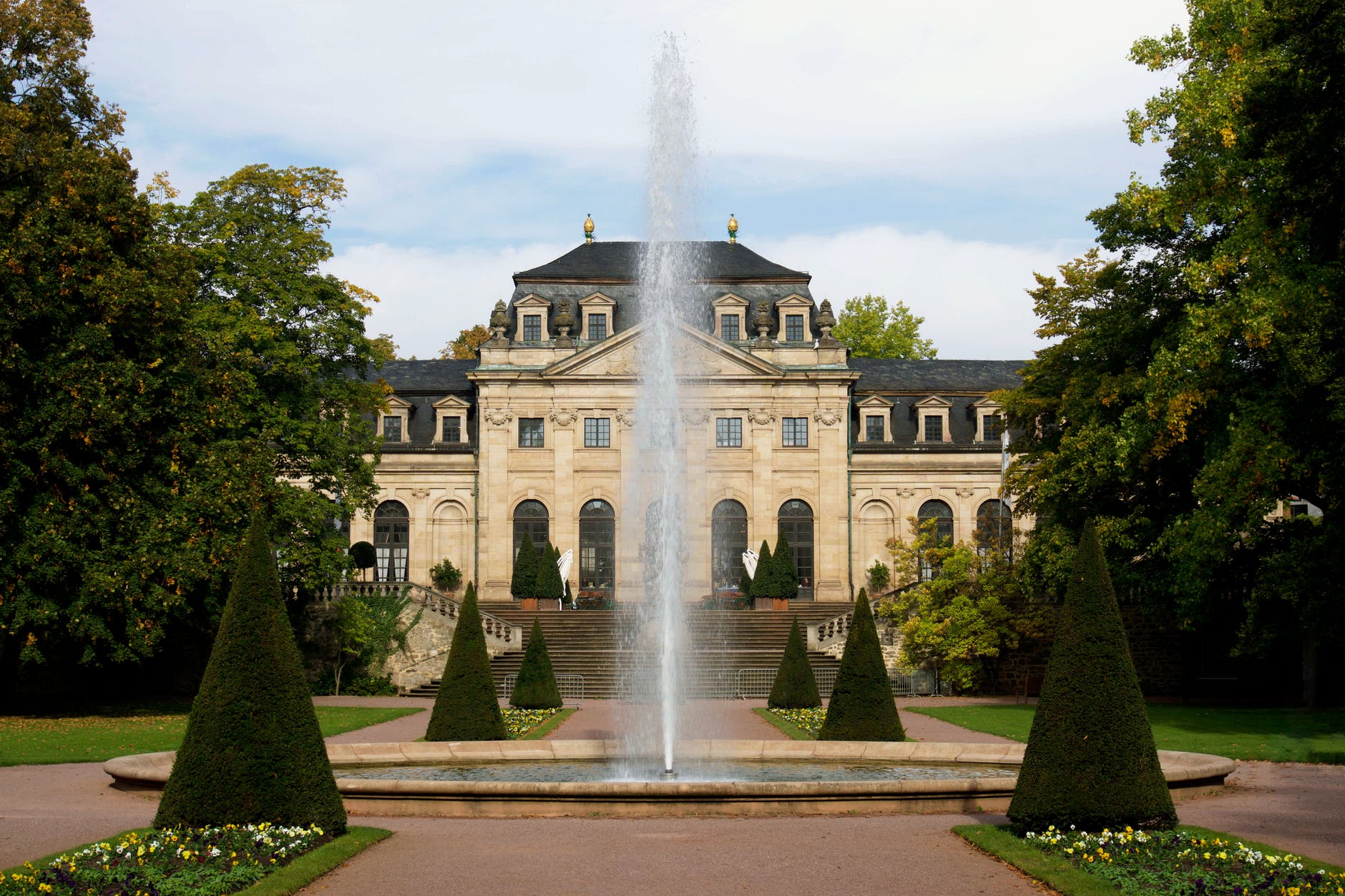
Photo by Ingo Joseph on Pexels.com

Sprawling celebrity homes exist across North America – like Drake’s 50,000 square foot Toronto mansion that’s large enough to house a regulation NBA basketball court (and does); John Travolta’s Ocala, Florida, property that makes up for its modest 6,500 square footage with two private airplane runways that lead straight to his front door; or Taylor Swift’s 11,000 square foot beachfront Rhode Island estate, which she immortalized in song-but the epicenter of celebrity real estate has always been Los Angeles. And homes there are only getting larger and more extravagant…

“American culture, to begin with, is unusually spacious, in the sense that people think of space as part of American culture,” Sonia A. Hirt, a professor of landscape architecture and planning, told The Atlantic in 2019. “This is partially part of the American promise-that you can have more room.”

But in the age of COVID-19, witnessing celebrities cloister inside their obscenely large houses and pander with “Imagine” sing-alongs can provide new reasons to scoff at their out-of-touch lifestyles. “Seeing celebrity homes [in 2020] took on new meaning in a potentially negative way,” said Andreas McDonnell, co-author of Celebrity: A History of Fame. “The pleasure of voyeurism was overshadowed by those feelings of resentment by regular people who are going through a really difficult time and are also confined to the home a lot more”…

As Instagram Lives and Zoom interviews allowed a more unfiltered look inside celebrities’ daily activities at home, the New York Times speculated that 2020 would bring about “the swift dismantling of celebrity culture.” But it’s unlikely they’ll stop buying insanely large homes any time soon. Luxury home sales surged nationwide in 2020, and Oppenheim noted that L.A. buyers have been eager to shed properties in cluttered, central neighborhoods like West Hollywood and seek more space and privacy further afield.

Homes are part of a package of conspicuous consumption: people with means can buy and do things in ways that others cannot and they can also display that to the world. A celebrity living a modest life may not get as much attention as someone flouting their purchases and lifestyle.A big house in a particular location denotes money, status, an interest in living near other elites. With social media and reality TV, part of being a celebrity today is inviting people into your life in more intimate ways. Through different mediums, observers can see the home and household. Yet, this leads to different expectations from viewers who have the opportunity to comment and critique.

Along similar lines, inviting people to see your home is a different kind of celebrity or status than an ability to stay out of the public view and not be observed. Some powerful or famous actors prefer to stay out of the limelight and physical residences are part of this. Perhaps it involves never allowing cameras inside their large home. Perhaps it means finding a home that is secluded and away from public attention, whether the house has gates and security or the residence is a unit in a high-rise that very few people can enter. Celebrity can bring the option of keeping the world out to a certain degree or inviting the world in, including into their home, in a way that very few people could.

Is there a connection then between seeing a celebrity megamansion and wanting something similar? It is one thing to observe the homes of celebrities. It is another then to act on acquiring a larger home and the life that goes with it. If Americans do see celebrities and others in media as reference groups, people with whom they compare their lives, then the megamansions might not just be fun; it may be part of a larger system that Hirt references where people expect that a higher status equals a bigger house.

Asking in San Francisco why a McMansion is allowed but a fourplex is not

McMansions may not just be undesirable on their own. If a McMansion is built, another kind of dwelling is not. One proposal in San Francisco aims to address this:

Photo by picjumbo.com on Pexels.com

He will introduce an ordinance making it much harder to build giant homes — the ones increasingly dotting the hillsides above Glen Park that many San Franciscans deride as monster homes or McMansions, but which are perfectly legal to build.

He will also ask the city attorney to draft legislation making it legal for any corner lot in the city that’s currently slated for one home to allow up to four units. And, most significantly, the legislation will allow any parcel within a half mile of a major transit stop like the Glen Park BART Station to be converted into a fourplex — corner property or not. The extra units could be rented or sold.

Yes, in large swaths of San Francisco — this supposedly progressive bastion — it’s currently legal to build an enormous, over-the-top house for one family, but illegal to build a small apartment building of the same size for four families.

This question plagues many desirable neighborhoods in big cities and suburbs: should anything that disturbs the existing character and/or property values be allowed? If this is the driving question, a McMansion might be a threat because it is a different kind of home – derided by critics as too big, architecturally incoherent – compared to what is already there. At the same time, the McMansion is still a single-family home. If that single-family home was replaced by a multi-family unit, residents then express concerns about increasing densities. They might also have concerns about renters moving into what was a neighborhood of homeowners as many Americans assume renters are less committed to their community.

And, as the article notes, making changes like this often means neighborhood by neighborhood conversations to consider the implications. Will a change have different impacts in different communities? What might be some of the unintended consequences? What will neighborhoods look like in a few decades with changes?

San Francisco may have a particular need for solutions but so do many other locations. The answers might come slowly on a case-by-case basis.

An on-trend Amazon HQ2

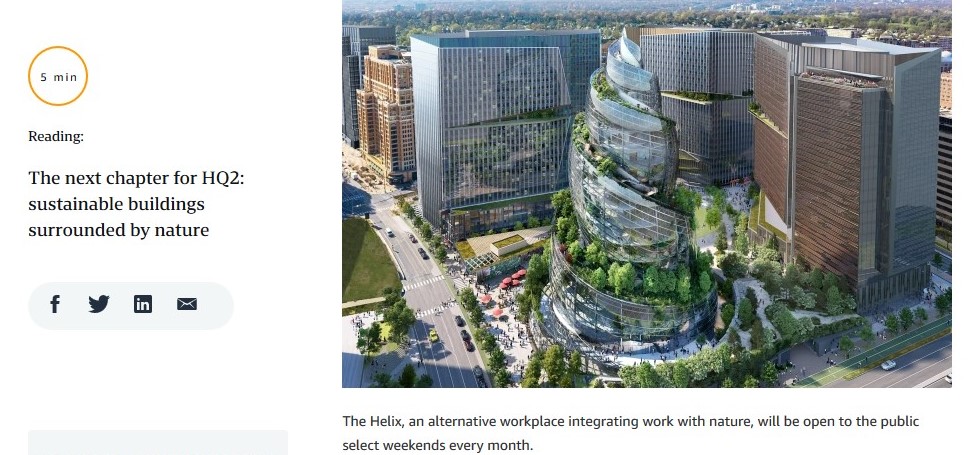
Many plans are made for large buildings in cities and metropolitan regions. Not all of them are built. But, when Amazon releases plans for their HQ2 in Arlington, Virginia, people take notice because of the company and the design.

AboutAmazon.com

The centerpiece will be the site’s fourth and tallest tower, a 350-foot structure dubbed the Helix because it will feature two spiraling outdoor walkways with trees and plants from Virginia that twist to the building’s top…

Amazon’s new campus is the latest in a growing line of outdoorsy office projects, as companies try harder to offer a pleasant work environment and appeal to eco-conscious employees.

The Helix “will be an opportunity for people to literally go on a hike in the city,” said Dale Alberda, a principal at architecture firm NBBJ, which is designing the development across the river from Washington, D.C.

Plans for inside of the building also call for plenty of greenery, along with meeting space, offices and studios for artist residency programs. “You feel like you’re in a lush garden in the middle of winter in D.C.,” Mr. Alberda said of the interior design.

As someone who teaches Urban Sociology, this is right on trend in multiple ways.

  1. It is just outside the central city of the region but within a business district. (The Washington D.C. region has some unique features due to the government buildings at the center but the multinode region is found throughout the United States.)
  2. The building has numerous green features, both visible (such as lots of trees) and invisible (planning for efficiency).
  3. The design is more whimsical and playful compared to the more common glass and steel box. The structure will certainly stand out and attract visitors just to see it.
  4. The architects and the company say it is designed with people and well-being in mind, not just efficiency or costs.

Perhaps the only trend missing is a mixed-use component where the office space is combined with residential and commercial space.

All of this is for a tech company – perhaps the tech company right now – within an industry that hundreds of American communities would love to attract. Does this building work in the same way if it is built by an insurance company or as a municipal structure?

It will also be interesting to see how this interacts with surrounding buildings – including the other planned Amazon towers – and the broader community. Amazon says the grounds will be open to the public yet how many community members will be able to take advantage.

Homeownership up roughly 3% in 2020

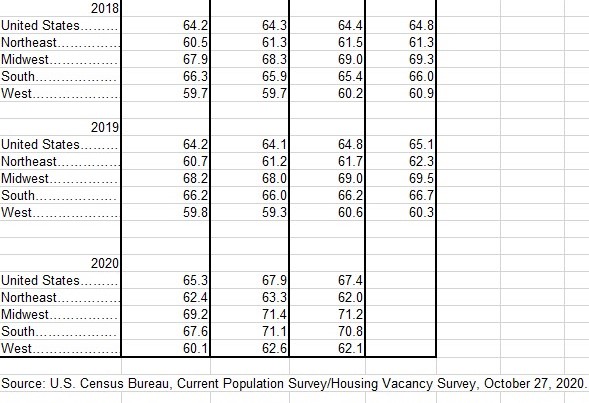
After the housing crisis of the late 2000s, the homeownership rate in the United States declined to 62.9% in 2016 and then slowly inched up. But, it jumped quite a bit from 2019 to 2020:

During 2020, the homeownership rate jumped to roughly 67%, up nearly 3% from a year earlier after remaining largely flat for a decade, according to the Census Bureau.

The article attributes this jump to COVID-19 and the shift of people from cities to suburbs.

This may be true. I have chronicled this here on this blog. However, there is limited overall data compared to reports from various cities (like New York and San Francisco) or population figures for states and communities.

If indeed homeownership jumped nearly three percentage points in one year, this is a big shift. In the historical data table from the Census (Table 14), it is rare to find huge jumps year to year. The fallout from the late 2000s happened in relatively small decreases.

A big jump in 2020 has implications for multiple actors: communities with new residents and others losing residents; those involved in the housing industry from develoeprs to realtors to investors to landlords; residents as those with resources took advantage of purchasing opportunities while others struggled to hold on and payments are looming.

How will these dueling pressures – buying homes amid COVID-19 and low mortgage rates at the same time as economic uncertainty – play out?

The current holy grail of sports: cheaper labor with stars, MVPs on rookie contracts

Sports leagues have always had a few teams with a lot of money and a willingness to pay players. See the leaked details of Lionel Messi’s contract. These teams with resources tend to do well as their resources allow them to regularly compete for titles and pay to rectify mistakes.

Photo by Fabricio Trujillo on Pexels.com

But, for the majority of teams, there is a regular pattern now: look for players on the cheap. Keep labor costs down. Do not pay too much for past performance. Sometimes this is due to limited resources, sometimes it is about ensuring profits, sometimes it has to do with salary caps or structures that try to ensure competitiveness.

This can occasionally lead to magical runs. The Leicester City title in 2015-2016 defied all odds. In baseball, teams like Tampa and Oakland regularly compete on the cheap and ship away players when they become too expensive. The Detroit Pistons could win an NBA title in 2004 without a major star. Tom Brady can be found in the sixth round.

But, these are rare. Without stars – who often are paid a lot of money – it is hard to compete year after year. Everyone hopes to strike gold now with a top pick, to find good fortune with home-grown talent, or to find diamonds in the rough missed by others. Hence, we see tanking and massive rebuilds as teams tear it all down and trust they can put together the right combination. This is the holy grail: have young players at a reasonable price and then hope it happens.

If it does not, teams often follow patterns. The Rockies pay to send the best third baseman of his generation to the Cardinals. The Lions and Rams paid big contracts to #1 overall drafted quarterbacks and now they swap them amid disappointment. The Blackhawks won multiple championships but now are burdened by big contracts paid to aging stars. Once these players command big money, it limits what else the franchise can do.

In each league, only one team can win it all each year. This would be true even if everyone spent all they could. But, when that does not happen, it is easy to see the interest in keeping labor and operational costs low as an impediment to winning. Even as the public debates inequality, the inequality in sports is real and affects outcomes and wages.

Chicago slowly losing population and a few suburban counties barely gaining people

The population of Chicago has declined slightly in recent years. New figures suggest that the population in four surrounding counties have increased slightly.

Photo by sergio souza on Pexels.com

The study showed the Chicago region as a whole was estimated to have lost 4,279 people between 2010 and 2019, a 0.05% decrease. The region, with a population of nearly 8.5 million, includes Cook and the five collar counties plus Kendall County.

Over the same time period, DuPage County grew by 2,575 people, or 0.28%. Will County grew by 7,207, or 1.06%, and Kane County grew by 9,502 people, or 1.82%.

Kendall County saw the highest rate of increase of any Illinois county, growing by 6.65%, or 7,860 people…

Growth in Kane, DuPage, Kendall and Will is likely tied to people already in the region moving farther into the suburbs, he said, and to better job growth in the Chicago area than elsewhere in the state.

If one was just reading headlines, this sounds like a big contrast: Chicago is losing residents and suburban counties are gaining them.

The actual estimates present a more complicated story about recent years. Chicago has barely lost any residents. The suburban counties have barely gained any residents. The region as a whole is relatively stagnant regarding population. The state of Illinois has lost a lot of residents but not necessarily from the Chicago region.

Even though this is not a story of massive population loss in recent years in the Chicago region, stagnant populations are usually not regarded as positive. For American communities, growth is good. And populations are not stagnant or declining everywhere; people in Illinois and other locations with population issues can see that other parts of the country are booming. In particular, Sunbelt metropolitan areas are growing at rapid rates.

This is not a new position for the Chicago region. For decades, the city and suburbs have considered the effects of a decline in Chicago’s population (and a rebound for a while) and a growing metropolitan region. Yet, other places are growing faster. Chicagoland is not in the same category as some other Rust Belt metropolitan areas but it is not exactly the attractive location that some other places are.

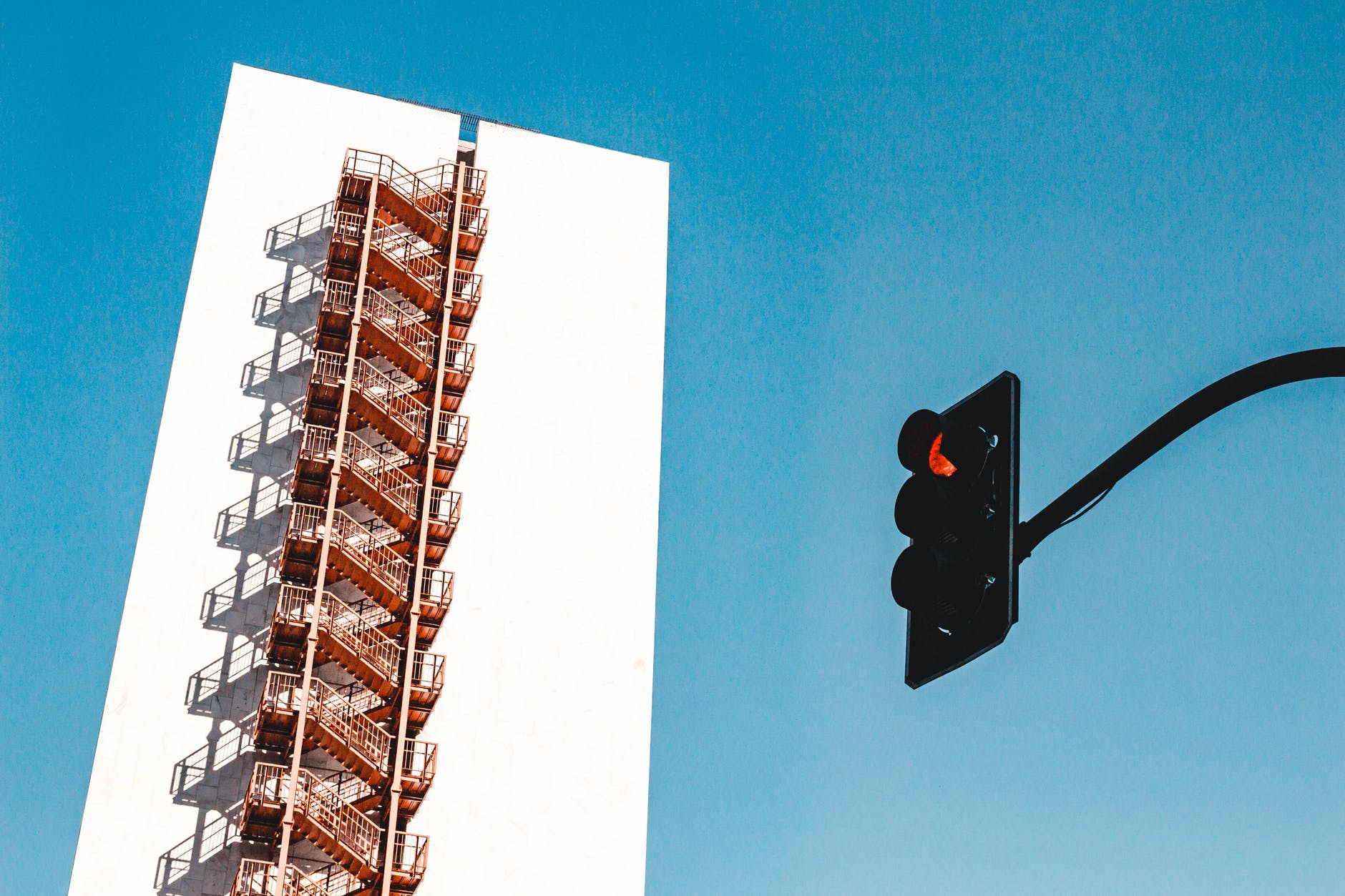
Limited solutions to ensuring more long green light stretches of suburban driving

After occasionally finding stretches of hitting all green lights on major suburban roadways, I wanted to consider how these experiences might become more common. Is it possible? Here are some strategies alongside my sense of whether these would help.

Photo by C. Cagnin on Pexels.com
  1. Synchronizing traffic lights. Los Angeles did this a few years ago to help traffic flow. As a kid, I recall sitting in the car in Chicago and hearing tell of how Clark Street on Chicago’s North Side was set up this way: follow the speed limit and a driver should hit multiple greens in a row. This could be harder to accomplish across a range of municipalities and the various traffic volumes intersecting with the main road. Additionally, this might not help much if there is just too much traffic on the road.
  2. Providing more lanes, more driving options. Americans tend to like this strategy: more lanes, more roads equals more space for vehicles, right? Research suggests otherwise: if you add road capacity, drivers will tend to fill that up. Americans like driving in the suburbs and this is not a long-term solution. In fact, road diets may be more helpful: reduce capacity and it pushes drivers toward other options. Furthermore, expanding roads in an already developed suburban area can get quite expensive and may be controversial.
  3. Encouraging more mass transit use, more walking and bicycling, and less driving. If there are simply too many cars, limiting trips would help ensure smoother driving experiences. All of these options are tough sells in the suburbs. It is hard to provide mass transit in a decentralized landscape and wealthier residents are unlikely to use it. Residential neighborhoods might be set up for biking and walking but connecting to other uses – grocery stores, schools, businesses – is often not possible or is dangerous.
  4. Having more employees work from home. This may be temporary due to COVID-19 but could be a long-term solution for traffic and congestion issues. Of course, there may be more people living in the suburbs due to COVID-19.

This suggests that there may be some short-term solutions but the bigger issue would take more time and effort: American suburbs are built around driving.

The magic of 10+ minutes of green lights on a major suburban road

I occasionally drive on major local suburban roadways. Think four lanes, direct north/south or east/west routes, speed limits of 35-45 mph, and lined with strip malls, fast food restaurants, gas stations, big box stores, and various other uses. Because of all of the traffic that wants to get on and off the road and because there are regulations about how to do this safely, such roads have regular traffic lights.

In the suburban road logic, these motorways are necessary to move larger volumes of traffic. Off these major roads are endless residential streets lined with single-family homes or small multi-family housing units. Traffic could cut through some of these neighborhoods but they have lower speed limits, narrower streets, and plenty of stop signs.

Occasionally, by finding the right time of day or the right position within the flow of traffic or finding the communities that have timed their traffic lights well, you can drive down such roads for ten-plus minutes without hitting a red light. It is smooth sailing. It is a slower but local highway. You can improve your gas mileage.

But, this is rare. During busier times, there may be too much traffic to get through each light. Late at night, the side streets might have sensors that turn their direction to green when just one car arrives. The drive becomes a series of stops and starts. Up to 40 mph, stop again, back up to 35 mpg, stop again.

Thus, when in the middle of a magical moment without stoplights impeding your path, enjoy it. Hear a few songs in a row while moving. Look at the communities as you go by. Marvel at the ground that can be covered when moving at the speed limit for more than a few minutes. Soon you will be back at a traffic light, waiting to get started again.

Homes as investments in continually increasing national median home values

The national median house value kept going up through November 2020:

Photo by Karolina Grabowska on Pexels.com

Despite a global pandemic and an economic downturn, U.S. home prices pushed new boundaries last year: The national median sale price for existing homes hit $310,800 in November, marking 105 straight months of year-over-year gains, according to data from the National Association of Realtors.

This could reinforce the now common viewpoint that homes are investments. Increasing median values for over eight suggests reinforces the idea that homes generally go up in value. Except for big economic crises – think the burst housing bubble of the late 2000s – houses accrue value over time. Even COVID-19 could not derail this.

This is often viewed as a good thing. Homeowners like that their homes are increasing in value because they can make more money when they sell. Communities take this as a marker of status. Realtors and others in the housing industry benefit. No one wants a drop in housing values across the board. (Of course, this is the median so the values can differ a lot by location.)

The commodification changes how owners, developers, and communities think about houses. They are not just the private spaces to escape the outside world – an established idea in the American Dream – but goods to profit from. An increasing value must be good and steps in other areas should be taken to protect home values.

This has numerous effects. It encourages Americans to invest resources in buying housing when that money could be put to use elsewhere. It contributes to single-use zoning where homes are protected from any other possible uses. It can exacerbate the inequality gap between those who can buy homes and those who cannot or between those with homes in places where the values keep going up versus those with homes in places with stagnant values.

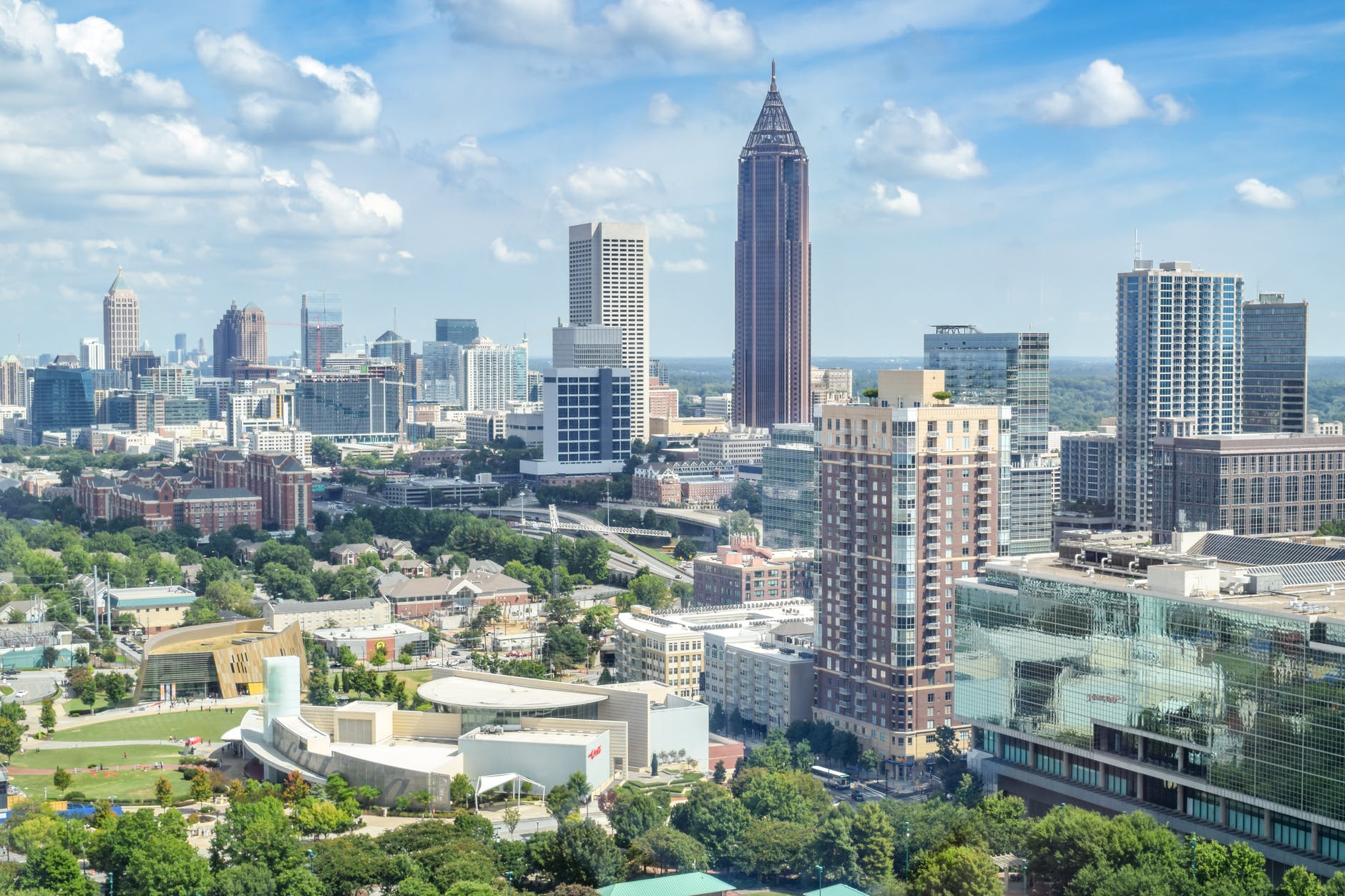
Atlanta McMansions in the early 2000s

Atlanta highlights their work in the 2000s and includes an excerpt about McMansions:

Photo by Nate Hovee on Pexels.com

“When suburbanites come intown, they want to bring the suburbs with them. The day of the urban pioneer is gone,” says attorney Lee Meadows. The heart-pine floors, plaster walls, and black-and-white tile bathrooms of compact 1920s Craftsman bungalows can’t compete with the wired-for-plasma-TV mantel and Carrera marble–accented master bath of that “Neo-Craftsman” on Oakdale. (August 2007)

This is a short description but this seems to capture the McMansion era well:

-Bringing particular expectations about homes to cities and suburbs, whether they fit or not.

-Preferring new larger homes with features over historic homes.

-Particular features of these new homes included flat screens mounted over the mantel, marble in the bathrooms, and aping established architectural styles.

All that might be missing is the spread of McMansions in Sunbelt regions and the size of these homes, especially on certain smaller lots.

Of course, this comes before the housing bubble burst and more hardened opposition to McMansions. These homes are still constructed today in cities and suburbs but the thrill of McMansions has diminished. In other words, the “irrational exuberance” of McMansions is gone except perhaps in particular locations and for certain builders and buyers. For this reason, and perhaps many others, 2007 seems very far away.