A brief history of the Sunday drive

With Illinois residents asked to shelter in place, architecture critic Blair Kamin suggests the Sunday drive could be revived – and provides a brief history of the practice:

Building on the precedent of the high society horse-drawn carriages that rolled down elegant boulevards in the late 19th century, the Sunday Drive is thought to have originated in the 1920s — just a few years after the great influenza epidemic of 1918 that killed at least 50 million people worldwide…

Henry Ford, whose mass production methods made cars available to millions, is said to have supported the Sunday Drive because it helped to sell cars…

The popularity of the Sunday Drive reached its apex in the 1950s and 1960s, when cars were still associated with personal freedom, not air pollution or suburban sprawl.

But something changed in the 1970s. Perhaps it was rising gas prices or a heightened environmental consciousness. Or maybe, some urban planners think, suburban sprawl was blurring the once-clear boundary between town and country. Where once there were farm fields and expanses of nature, now there were strip malls and traffic-jammed arterial roads. That made the Sunday Drive a lot less alluring.

This impulse is not foreign to Americans today. Driving is romanticized in many ways, from the celebration of road trips to marketing for cars which shows happy drivers moving through alluring landscapes to ordering social life in the suburbs around the need to drive. At the same time, as Kamin notes, driving is a humdrum activity much of the time. The car commercials that show people cruising down empty roads in the middle of the day do not match everyday experiences.

I also wonder about the connections between Sunday drives and other activities. For example, take organized religion. The classic sociological study Middletown describes the changes in a small city with the introduction of cars, including some residents who shifted from going to church on Sundays to taking recreational drives with family. The car offered an escape from the typical way of life. As a more recent example, data suggests younger people are less interested in getting their driver’s licenses. Why would you want to go for a leisurely drive when a smartphone or tablet or laptop offers access to what information and destinations you want?

The largest business park in the United States is over 160 square miles

Reading through a 2019 article in Wired about new fault line research on the West Coast, I noticed this paragraph about the biggest business park in America:

Eriksen’s offices are located in the Tahoe-Reno Industrial Center, the country’s largest business park. TRIC covers more than 160 square miles—three San Franciscos’ worth—of sculpted valleys and rocky hills. Its tenants include Google, Switch, and Tesla, along with 2,000 protected wild horses. TRIC is as sure a sign as any that the Reno area is reinventing itself, aiming to attract younger residents who come not for strippers and slot machines but for lucrative jobs and easy access to the great outdoors. Lance Gilman, the bolo-tie-wearing, larger-than-life businessman behind the development, told me that on his first tour of the land he saw a bird’s nest just sitting there on the ground, catching the light. He took it as a good omen, a sign of Reno’s impending transition from has-been gambling den in the mountains to tech-centric boomtown. (Still, this is Nevada: At one point during the planning phase, Gilman had to assume management of the nearby Mustang Ranch brothel—the first ever licensed in the state—to stop a biker gang from moving in and marring his glorious vision.)

One of Gilman’s employees, a project manager named Kris Thompson, agreed to take me on a tour of the site. We started at Tesla’s Gigafactory, which the company claims will be the largest building on the planet when completed. (“It put us on the world stage overnight,” Gilman told me.) Although still under construction, the Gigafactory was already so colossal that I could not make out its scale against the mountains beyond. As we drove on, Thompson directed my attention to the huge stone pads on which TRIC’s industrial structures are being erected. “We do not cut corners,” he said. “These pads have no subsidence. We have granite-basalt bedrock. For tech companies, that’s great.” (Eriksen seems to agree with this assessment: He and his colleagues have done nothing further to insulate their offices against quakes.) “The lack of a seismic threat in this area is one of our strengths,” Thompson continued.

But, of course, there is a seismic threat. According to Faulds, it’s about the same as what I already live with in California. The San Andreas may be closer to the breaking point, but the Walker Lane could see a major earthquake at any time.

Thompson and I returned to TRIC’s central office, where Gilman, now walled in by paperwork, was gearing himself up for several hours of new business calls. Last year, a company called Blockchains scooped up 67,000 acres of TRIC land to build a libertarian “smart city.” With that sale, the development had all but sold out. It was time, Gilman told me, to pursue new opportunities. “We’re in the path of growth,” he said, as heavy trucks boomed by on the highway, shaking the earth.

This four paragraph section is an interesting aside in the larger discussion of the Walker Lane Fault. But, it is a fascinating aside as office parks and industrial parks are not unique in the United States. Thousands of communities, ranging suburbs to exurban areas to more rural areas, have blocks of land set aside for commercial and industrial use. But, how many places have anything near 160 square miles set aside?

What makes this business park unique alongside the size is the relative location to other place, the particular setting, and the time the land became available. First, a location outside Reno puts the business park within roughly 4 hours of Silicon Valley and the Bay Area. That is not an easy commute but it can be done in a day or for a short trip. Second, the city of Reno and the state of Nevada have some features that are attractive to some companies. Third, having all of this land available now and in recent years means that some momentum can build regarding who is interested in the space (such as Tesla and libertarian-oriented firms). Take away one of these factors and the particular success of a business park of this size might be different or there might be a very different mix of interested companies. More broadly, numerous business facilities and stores sit vacant at desirable locations throughout the United States yet this business park attracts attention.

Recommended read: A Field Guide to American Houses

I was sad to read about the recent passing of Virginia Savage McAlester. I highly recommend the book A Field Guide to American Houses that occupied much of her attention.

There are many ways to describe McAlester. She was an author, a preservationist, an architectural historian, an activist, the founder and leader of multiple non-profits, and a loyal and dedicated daughter, sister, and mother. McAlester is perhaps best known for her monumental A Field Guide to American Houses, which, after it first appeared in 1984, did nothing less than anoint McAlester as the “Queen of Historic Preservation.” The book has topped architectural best seller lists for so long that, in 2019, Curbed called her the “most popular architecture writer in America.”…

McAlester’s book appeared at a time when, as architectural historian William Seale told the New York Times, developers charged like “wild bulls” over the city’s old neighborhoods…

McAlester set about creating such a survey. The book that emerged from her efforts is a hefty tome that has been referred to as “The Bible,” by preservationists. The Field Guide is more than a catalog of home styles and types. To write it, McAlester said she had to learn a whole new architectural vocabulary, in part because the common features of so many American homes didn’t rise into the architecture lexicon at Harvard…

For example, in a 2014 update to the Field Guide, she coined two new phrases to describe two emerging architectural styles: “21st century modern” for the sleek, angular, uncluttered structures that dominate the pages of contemporary shelter magazines; and “millennium mansions” for the thrown-up ex-urban behemoths more commonly derided as “McMansions.” For McAlester, it was important to understand the highs and lows of design because both architectural visions shape our experience and conception of American communities.

I have used this book both in scholarly projects and read it for enjoyment. I have it on the shelf in my office and occasionally will pull it down to reference some feature of homes or to look through the numerous examples McAlester provided.

A few additional thoughts on the text:

  1. The book highlights both the broad categories of homes as well as the numerous variations within each type. Based on the distinctive features of each style which the book clearly points out, you can usually easily find the broad category a home fits into. At the same time, you can also revel in the many types within each category.
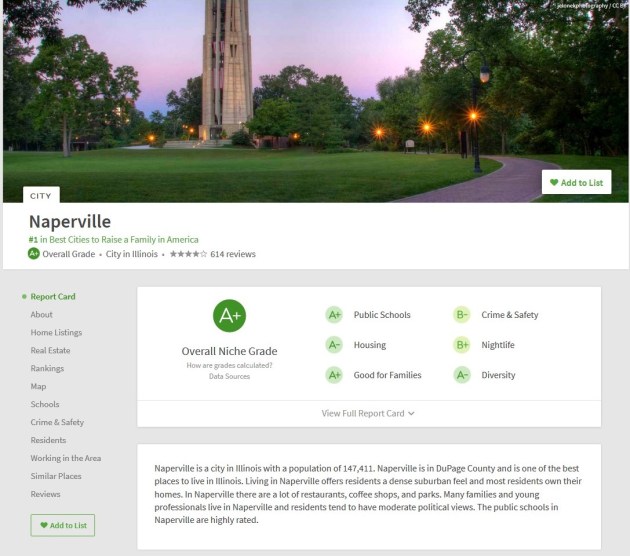
  2. The numerous photographs in each style are very helpful. McAlester collected photographs from numerous locations throughout the United States. For example, the section on “millennium mansions” includes multiple photographs from Naperville, Illinois.
  3. I also appreciate the sections of the book about particular features of homes, ranging from roofs to windows to how homes are structurally supported. This book is not just about the external appearance; there are things to be learned about houses are put together.

Less traffic, faster driving

Reports suggest more drivers are going fast on emptier roads:

Despite there being far fewer vehicles on the road due to COVID-19 stay-at-home orders, state highway safety officials across the country are seeing a severe spike in speeding. Many states have reported alarming speed increases, with some noting a significant surge in vehicles clocked at 100 mph or more.

Being a safe driver should always be a priority, but during the coronavirus pandemic, traffic safety experts at the Governors Highway Safety Association (GHSA) say it is more important than ever. “While COVID-19 is clearly our national priority, our traffic safety laws cannot be ignored,” said GHSA Executive Director Jonathan Adkins. “Law enforcement officials have the same mission as health care providers — to save lives. If you must drive, buckle up, follow the posted speed limit and look out for pedestrians and bicyclists. Emergency rooms in many areas of the country are at capacity, and the last thing they need is additional strain from traffic crash victims.”

During the past month, pedestrian and bicycle traffic are reported to have increased exponentially, while motor vehicle traffic is down. Adkins noted that GHSA is encouraged to see so many communities across the country making roadways more accessible to pedestrians and bicyclists. To keep roads safe for everyone, traffic safety officials nationwide are pleading with motorists to slow down and respect traffic safety laws…

A 2019 report on speeding by GHSA, “Speeding Away from Zero: Rethinking a Forgotten Traffic Safety Challenge,” highlights excessive vehicle speed as a persistent factor in nearly one-third of all motor vehicle-related fatalities, while a 2020 GHSA report on pedestrian fatalities, published in February, finds that pedestrians now account for 17% of all traffic-related fatalities.

In many metropolitan regions, traffic is pretty constant throughout the day. COVID-19 has reduced the number of daily work trips plus some of the other reasons for cars and trucks on the road.

With more open road, perhaps it is “natural” for drivers to feel they can go faster. I am reminded of the argument by New Urbanists that narrower roads lined with parked cars and trees close to the street push drivers to slow down. The illusion is that with fewer potential obstacles on the road, a driver can be safe even while going faster. Of course, going faster reduces the time drivers have to correct and avoid things in their path.

It would be interesting to note how much local police forces are responding to speeders now. Is it worth stopping them if there is a risk of transmitting COVID-19? Are police resources needed more elsewhere? At this point, what other options do officials have in reducing speeds on less crowded roads?

Mapping daily life amidst COVID-19

I like the Citylab project of asking readers to submit their maps life during COVID-19. A few thoughts:

1. COVID-19 affects multiple dimensions of social life, including the distance people must keep from each other (and social interactions). The maps help highlight the spatial dimensions of COVID-19, reminding us of the relatively free mobility many people have during normal times (think regular commutes, a sprawling country often based on driving a car to different locations). The maps also highlight the difficulties or significant changes because of reduced mobility. On one hand, we have more technology than ever that lets us access people and places wherever all the time. On the other hand, not being able to move as we typically do is worth acknowledging.

2. It can be both fun and informative to ask people to draw their daily activities or their community. It pushes people to think spatially (which they may or may not do on a regular basis) and can quickly show what places they find more meaningful. Asking about someone’s day often leads to a list of activities or tasks; the map can include this information but add a valuable spatial dimension.

3. As a bonus, such maps not only provide information but they also allow people to display their creativity. This is clear in the Citylab maps: the contrasts of color, styles, and interpretations is engaging. Compared to more common methods of data collection like surveys or interviews, drawing a map provides a worthwhile contrast.

4. Perhaps reduced mobility will push more Americans to know their immediate surroundings in and around their residences. Instead of passing many places while driving, current circumstances may push more people to pass places at walking or bicycling speed. I know I see my neighborhood differently through regular walks; perhaps other will have similar experiences.


.

Another fear regarding outside basketball courts: spreading COVID-19

The closing of parks and recreation spaces has come as part of restrictions put in place to limit the spread of COVID-19. In reading online discussions regarding these closings and observations that some people continue to engage in group activity, multiple sports have come up. One stuck out to me: playing basketball.

I have argued in previous posts (see here, here, here, and here) that there is a lack of basketball courts in parks and community areas in many places. Even though basketball is a popular sport, there are not as many courts as there could be. Why? The people who often use such facilities are young men, not a demographic many communities are looking to see congregate regularly.

Now, there is a new reason to conspire against building basketball courts: they are public health risks when diseases like COVID-19 are present. If social distancing helps stop the spread, basketball as a sport does not lend itself to this with its close contact and relatively small playing surface. Shooting hoops in the driveway with family members is one thing; courts in parks could attract up to ten players at a time (more if halfcourt games are in process) plus whoever else might be waiting. Add in that schools are in remote learning mode and the crowds that might end up at basketball courts could prove worrisome.

Other sports regularly played in parks or other recreational activities could face the same issue. Baseball and softball games generally provide some space yet the batter, catcher, and umpire are regularly close, runner and fielders end up near other, and then there is the matter of dugouts. Soccer games take place on large fields yet chasing the ball presents problems in getting near other players. Tennis is often played at a distance but players have to occasionally come to the net. People walking, running, and biking can adjust to put more distance between them and others (unless the sidewalks or paths do not allow this).

Yet, these other sports and the spaces needed to carry them out do not always receive the same negative attention as basketball courts. In a post-COVID-19 world, will outdoor basketball courts become even more scarce in favor of recreation activities that give participants more space?

Subways and individual cars during COVID-19

A new study suggests New York City’s subway system helped spread COVID-19:

The paper, by MIT economics professor and physician Jeffrey Harris, points to a parallel between high ridership “and the rapid, exponential surge in infections” in the first two weeks of March — when the subways were still packed with up to 5 million riders per day — as well as between turnstile entries and virus hotspots.

“New York City’s multitentacled subway system was a major disseminator — if not the principal transmission vehicle — of coronavirus infection during the initial takeoff of the massive epidemic,” argues Harris, who works as a physician in Massachusetts.

While the study concedes that the data “cannot by itself answer question of causation,” Harris says the conditions of a typical subway car or bus match up with the current understanding of how the virus spreads…

“Social density … was a result of many factors — business, restaurants, bars, Madison Square Garden, sports arenas, concerts, and the things that make New York happen,” Foye said.

New York City is already unique with its level of mass transit use. The large subway system helps people move around in a crowded city where both parking and driving a car can prove difficult.

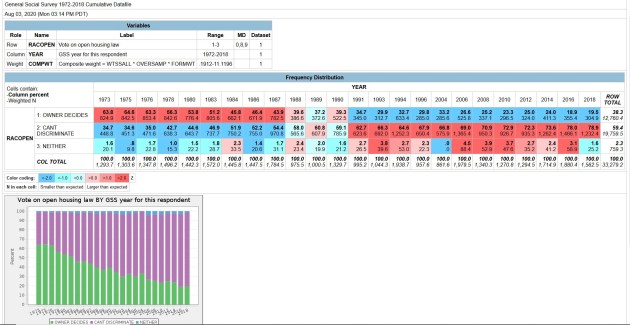
The contrast to New York City is sprawling suburbia (including within the New York City region – see Levittown). Americans love to drive and the suburbs are built around cars, driving, and covering relatively large distances on a daily basis within a private vehicle.

With Americans already predisposed toward driving if they can, will COVID-19 increase their reluctance to take mass transit? Is driving safer in these times? (Of course, one could look at the number of deaths related to cars – accidents, pedestrians – and argue otherwise.)

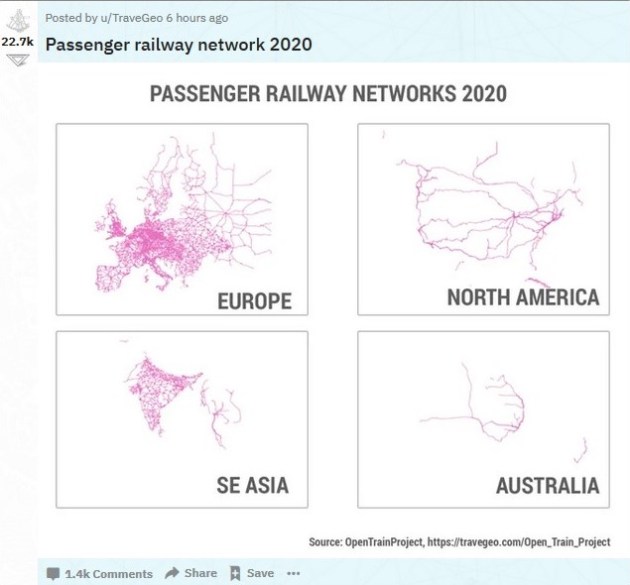
New York City is not the only city dependent on subways; numerous large cities around the world need subways to move large numbers of people. Perhaps there will be new health measures in subways and other forms of mass transit moving forward. But, without fundamentally altering such cities and the benefits that come with density, subways cannot be removed or limited on a long-term basis – can they?

Wealthier Americans looking for homes away from urban COVID-19 cases

With the spread of COVID-19 within major metropolitan areas, particularly New York City, some residents might be looking for new homes outside the big city:

At the same time, well-off suburbs in areas like Greenwich, Connecticut, and Westchester County in New York, which had been relatively sluggish in recent years, quietly recorded strong performances in the first quarter, with few signs of slowing down…

For prospective buyers reacting specifically to the threat of coronavirus in New York City, suburban infrastructure may also hold a stronger appeal than what’s available in a typical vacation town.

“The general consensus is once this is over, you’re going to see a big surge in sales,” Mr. Pruner said. “But a lot of the traditional vacation spots may not necessarily see that. One of the issues is that they don’t necessarily have good medical facilities—even if you own a big house there, they don’t have the hospital or the resources”to go with it.

Though tastes have been trending toward smaller homes in recent years, buyers coming off the experience of their home suddenly becoming their entire family’s office, gym, school and recreation area are unsurprisingly now coming to their searches with a heightened appreciation for space, a fact that could bode well for suburban markets.

A few thoughts in response:

  1. This likely applies to a small segment of the real estate market: people with the resources and jobs to move during the COVID-19 crisis. Plus, the analysis here seems mostly geared toward higher-end homes. Could be worth keeping an eye on for the near future: how many well-off Americans make real estate decisions within the next few months?
  2. Conventional wisdom suggests potential homebuyers care about high quality school districts (for their kids’ education and the effect on property values). How many buyers going forward will also consider medical facilities? And what is the correlation between high-performing suburban school districts and nearby high-quality medical facilities?
  3. Given the moves in vacation spots – like the Hamptons or in the state of Michigan – to try to limit travel to second homes, might there be any long-lasting consequences? The influx of vacationers can already cause tensions but they can also be a very important source of business and income.
  4. The flip side of this analysis is the development of urban residences that emphasize health in different ways. It is not about providing a gym or a pool (which are not helpful during social distancing guidelines); it is about having buildings and residences with lower likelihoods of contracting illnesses. Imagine all antimicrobial resistant surfaces, units on their own air systems, separate entrances and hallways that limit contact with others, particular cleaning protocols, and other possibilities.

Publication in Soc of Religion: “Religious Freedom and Local Conflict: Religious Buildings and Zoning Issues in the New York City Region,1992-2017”

Sociology of Religion today published online my article referenced in the title to the post:

ReligiousFreedomandLocalConflictWeb

I came to this article through wanting to analyze the connection between religion and place. Having seen at least a few stories of religious zoning conflict in the Chicago area (see an earlier study here), I wondered whether these patterns held across different metropolitan regions (and all the variations that could exist there), a longer time period, and within different communities within metropolitan regions. As the abstract suggests, there are some similarities – for example, locations near residences or requests from Muslim groups receive more attention – and differences – including what religious groups are in each region (with a larger population of Orthodox Jewish residents in the New York City region).
More broadly, zoning is a powerful tool communities have. As they set their land use guidelines, they are making decisions about what they envision their community looking like. This applies both to the physical structure or spaces as well as who might reside or work in the community. Americans tend to like local government, in part because it exercises control over what might locate near their homes or residences. But, this impulse to protect homes and property values can come up against other interests a community might have, such as affordable housing or medical facilities.

Home all day, hear the noise of daily work around your residence

With more people at home during the day, they can hear more of what goes on during a typical day. And they may not like it:

Cities, towns and villages in New York, New Jersey and elsewhere in the country have created bans or sought voluntary cuts in the use of leaf blowers in suburban neighborhoods. Town leaders noted that with everyone sheltering in home, the constant din was an added nuisance…

The municipal actions are a departure in the ongoing saga of leaf blowers, one marked, in many towns, by equal parts irritation and inaction. Everyone hates hearing them down the block, but no one complains about the swift and eye-pleasing work they accomplish on their own lawns. And so a silent majority has carried on, under the whine of the motor.

Some residents have apparently questioned whether the machines could be spreading the coronavirus. The village of Croton-on-Hudson, N.Y. raised the same worry on Twitter this week…

In Westfield, N.J., Mayor Shelley Brindle, in a statement, asked homeowners and landscapers to keep the blowers locked away until at least noon ever day.

This comes amid broader discussions about banning gas leaf blowers and other gas-powered outdoor equipment. Compared to electric or battery-powered equipment, they produce more noise and exhaust. This could be an interesting time to nudge people toward different equipment – in the name of noise, environmental concerns – though asking them to do so in the midst of a crisis will make it more difficult.

I wonder how much the perception of the noise problem is also due to the time of year. I wrote two years ago about common summer noises that can interrupt tranquility: air conditioners, lawnmowers, construction, etc. Once the weather starts warming up, more people are outside and more people are doing work outside. The person in one house who wants to sit on their deck and enjoy some peace and quiet competes with the person next door who enjoys keeping their yard neat and green. And both of them may dislike the municipal road project that reconstructs the next street over and produces noise for weeks. If the COVID-19 induced lockdown started in November, would people have the same noises to complain about?

At the same time, dealing with noise is tricky among neighbors and within a community. People generally know that certain locations are noisier than others and adjust accordingly. Some people even live right under runway paths. Businesses also have a stake in this; as is noted at the end of the article cited above, not using certain yard equipment is possible but raking and pruning by hand will take more time and cost more money. Keeping everyone happy regarding noise is likely to be difficult.