This was the sight I saw a few days ago while driving away from my house: two Canadian geese sitting on my roof. It is not a surprise to see geese in the area. They fly overhead. They walk in the field in the park around the corner. They sit on the pond behind us and walk up into our yard. They occasionally try to cross local roads and tie up traffic.
But I have never seen geese on top of a house. Why would they want to go up there? There hopefully is a not good food up there. If they need a better view, they can fly. Is it safer from predators? Is it somewhere different?
I do not usually look up at my roofline while in front my house. Maybe I should. Perhaps there is more wildlife up there. How about the coyotes that have moved into suburban spaces? The hawk that sometimes sits in the big tree in our backyard? The many squirrels running? Or maybe the one-time appearance of the geese will keep others away.
Multiple intertwined social forces created the American suburbs as we know them today. One factor involves raising children in the suburbs. The suburbs are perceived by many to be the best places to raise children due to their houses, yards, quieter environments compared to the city, good schools, and other amenities. And since Americans often want or expect their children to do better than themselves, the suburbs are the place in which they believe this happens.
What happens if fewer children are born in the United States? This will not necessarily stop people from living in or wanting to live in the suburbs. But it could change their calculations about where to live or how to live in the suburbs. Some quick examples of how this might play out:
Suburbs are built on the idea of growth: new subdivisions, new activity. If growth slows, communities have a different identity and have to draw on different revenue sources. With less growth, communities shift to maintenance or building in different ways (see #2).
Suburbs have historically prioritized single-family homes as they provide space for nuclear families. But if fewer people need the space and yards of single-family homes (plus the issue of current prices), communities and developers will go for more townhouses and condos.
There is a reduced need for schools. Education is often viewed in the United States as the tool for social advancement. Many suburbs take pride in their schools. Growing suburbs equaled more schools. But fewer kids in the community means fewer enrolled students.
A suburban lifestyle built around kids’ activities and driving them around. The suburbs often require driving kids to school, sports, religious congregations, and more. The driving will not necessarily cease but the era of “Walmart moms” and “soccer moms” might diminish.
Many have complained that the streets of the suburbs are quieter than they used to be because kids are now inside or in organized activities. What if the suburban streets of the future (and schools and playgrounds and park districts and so on) are quiet because there are no kids living in suburbia?
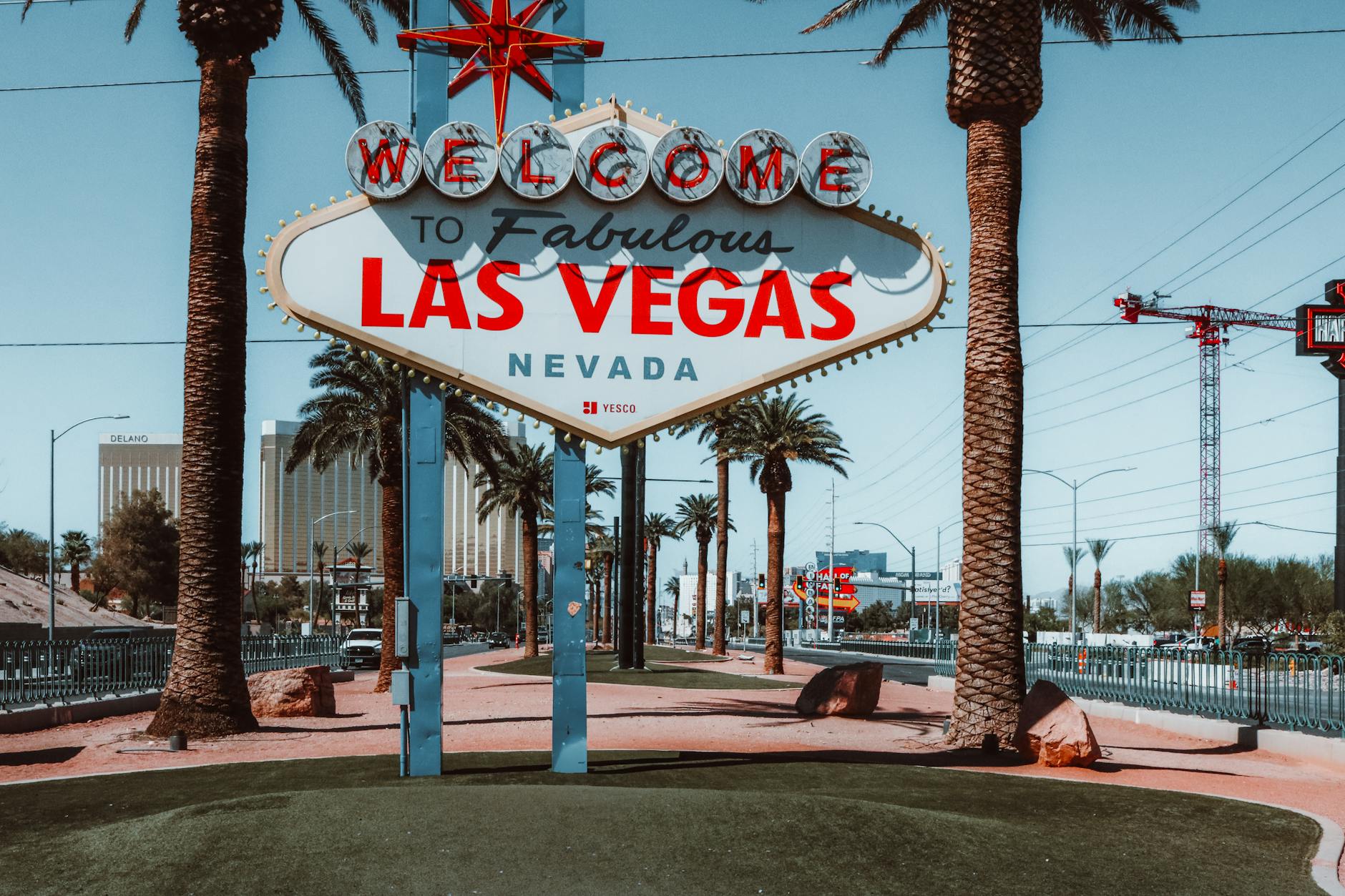
With the potential for a city to add an NBA franchise in time for 2028, Vegas could go from no Big Four teams to become the 13th city with an MLB, NBA, NFL and NHL team in the span of 11 years.
Several things may have happened in a relatively short amount of time:
The city has grown rapidly in recent decades. The city had 125,787 people in 1970 (too small to have 4 sports franchises), 258,295 in 1990 (still on the smaller side), and 583,756 people in 2010 (a big city).
It is a new market. This presents a chance to have new fans.
Gambling is now okay with every major sport because of the revenue generated. That obstacle is gone.
The city and other governments are willing to provide public money for stadiums. Owners and teams really like this.
At some point, Las Vegas will not grow like it has in the past (it already slowed between 2010 to 2020 to 10%). At some point, a team might want to leave Las Vegas for greener pastures. But for now, Las Vegas is a shiny new sports city. If the NBA does indeed start a franchise there in the next few years, the teams in the four major sports help give the city and region a certain status.
The district is one among many in the United States that have closed schools and are considering closing more. One of the primary reasons is that many adults in the US are simply not having kids, or having fewer of them. And an increasing number of those who do are instead sending their kids to private schools or homeschooling them.
That trend, experts say, means that more US schools are becoming underenrolled, which places school districts in a difficult financial situation because that decline in students means they get less public funding. They must then decide between uprooting students from familiar surroundings and friends or keeping those institutions open even if it doesn’t make fiscal sense…
While districts had planned for fewer students in the coming years, the Covid-19 pandemic and the associated virtual learning accelerated that downturn, Dee said. In fall of 2020, enrollment in US public schools decreased by 1.1 million, according to a study co-authored by Dee.
This trend could have lots of different effects. What happens in communities where schools brought people together and also served like community centers? There might be other settings that could serve this purpose but schools have a way of bringing parents, students, and community members together. What happens to the school properties; how will they be used in the future? A school may have been there for decades and the neighbors might not like what is proposed next for the land. Or they may not like a vacant building if the property is not sold or there is limited interested in redevelopment.
Since Americans tend to think growth is good, do these changes also lead people to think schools are failing or doing worse? If the cause of closing schools is primarily having fewer schools, will people perceive schools are not doing what they should? Even more complicated: local populations could be growing or not declining and schools could still close if fewer people are having children.
Finally, what are good ways to memorialize or celebrate a school and what it meant when it closes? Even if the building is no longer there or it is no longer home to students, there are ways to keep its memory alive.
Indianapolis – the state’s largest city – has been particularly hard hit. The metro recorded one foreclosure filing for every 1,249 homes in February, giving it the third-highest foreclosure rate in the nation.
Only Lakeland and Punta Gorda in Florida reported worse figures for metros. Both of which have faced persistently high foreclosure levels…
Experts say a combination of rising property taxes, higher insurance premiums and the cost of maintaining aging homes is putting pressure on many Indiana homeowners…
In February, foreclosure activity across the country reached 38,840 properties – a 20 percent increase compared with the same month last year.
After the housing crisis of the late 2000s, keeping track of foreclosures is an interesting business. Is the United States on the verge of sharp rise in foreclosures? Did the country address the issues that contributed to the crisis nearly two decades ago?
One way to look at foreclosures is to consider them from the role of borrowers. How do people and households make hard choices about their budgets when resources are lacking? What is the role of personal responsibility? If more individual households are not able to pay their mortgage, this can lead to large effects.
But this article considers foreclosures by states and metro areas. What if foreclosures are the result of systems and local conditions? (I do not find states as a particularly helpful geography; housing situations can vary across a state even though state policies or conditions could exert similar effects across a state.) What is it about these metro areas that they have higher rates of foreclosures? What are the factors influencing this across owners, lenders, officials, and local conditions in a region? And what could be done on a regional level to lower the number of foreclosures as compared to tackling this at a state and national level? What might help in Lakeland might not be what helps in Indianapolis.
Photo by Miguel u00c1. Padriu00f1u00e1n on Pexels.com
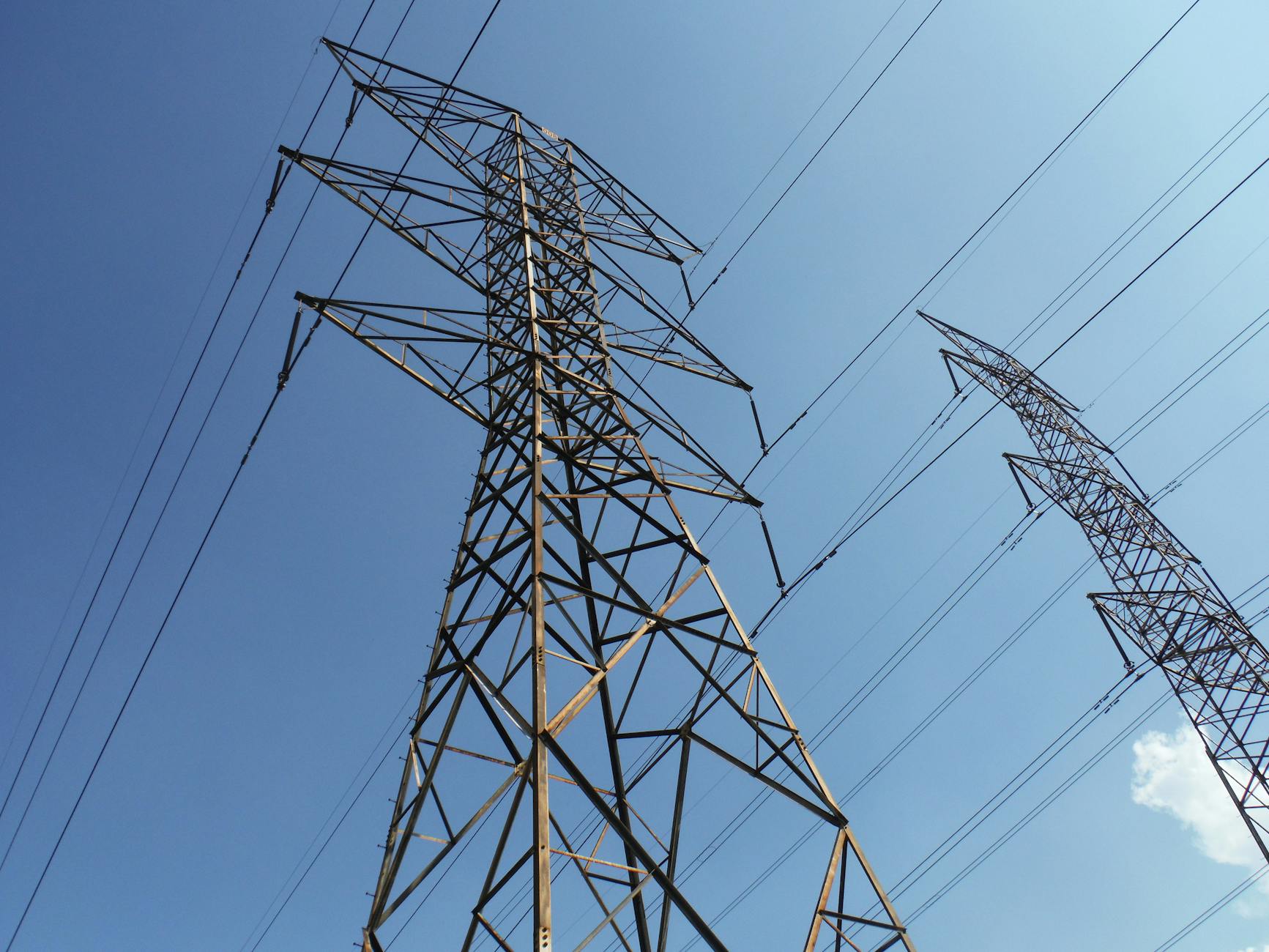
xAI’s rivals are all building similarly large data centers to develop their most powerful generative-AI models; a metropolis’s worth of electricity will surge through facilities that occupy a few city blocks. These companies have primarily made their chatbots “smarter” not by writing niftier code but by making them bigger: ramming more data through more powerful computer chips that use more electricity. OpenAI has announced plans for facilities requiring more than 30 gigawatts of power in total—more than the largest recorded demand for all of New England. Since ChatGPT’s launch, in November 2022, the capital expenditures of Amazon, Microsoft, Meta, and Google have exceeded $600 billion, and much of that spending has gone toward data centers—more, even after adjusting for inflation, than the government spent to build the entire interstate-highway system. “These are the largest single points of consumption of electricity in history,” Jesse Jenkins, a climate modeler at Princeton, told me.
Even conservative analyses forecast that the tech industry will drop the equivalent of roughly 40 Seattles onto America’s grid within a decade; aggressive scenarios predict more than 60 in half that time. According to Siddharth Singh, an energy-investment analyst at the International Energy Agency, by 2030, U.S. data centers will consume more electricity than all of the country’s heavy industries—more than the cement, steel, chemical, car, and other industrial facilities put together. Roughly half of that demand will come from data centers equipped for the particular needs of generative AI—programs, such as ChatGPT, that can produce text and images, solve complex math problems, and perhaps one day inform scientific discoveries…
The optimist’s case is that, by then, advanced nuclear reactors will have obviated many of the new fossil-fuel plants, and AI tools will have invented technologies that can solve the climate crisis. That may well happen. But today, “the market has converged on Add gas now, and then add nuclear later,” Jenkins said. In other words, if natural-gas turbines seem to offer the most expedient path to an AI-enhanced future, then clean air may have to wait…
Northern Virginia offers a glimpse into what the AI rush may bring to the rest of the nation. Loudoun is running out of space, but new data-center hubs are popping up in Phoenix, Atlanta, and Dallas. Amazon and Meta are building AI data centers in Indiana and Louisiana, respectively, that will each require more than two gigawatts of electricity, dozens of times more than standard facilities. OpenAI has proposed that the U.S. establish “AI Economic Zones”: little Loudouns everywhere.
Infrastructure is necessary to keep the modern world going but does not always get much attention until there are big changes (good or bad). We expect, electricity, water, the Internet, roads, and more to just be there and work just fine. Each of these required large-scale efforts to build and require a lot to maintain. AI may appear through the air but it is based by a massive infrastructure that includes land, servers, water, and electricity. Putting this all together is no easy task as it takes years, if not longer, to plan, find funding, get building approval, and complete construction.
Not noted as much in this article is how opposition to data centers has often focused on these infrastructure aspects. Who will pay for the water and electricity needed? What happens if there is air and noise pollution? Residents tend not to want to live near power plants, waste transfer facilities, and sewage treatment plants. How many people want to live near data centers?
Given the resources needed for data centers, how much are utility companies supporting these plans? Development, particularly intensive development, can generate new business. Growth machines, coalitions of local leaders and organizations, benefit from new development.
The concern centers on the Local Government Distributive Fund, the long-standing revenue-sharing mechanism that sends a portion of state income tax collections to cities and towns across Illinois.
Illinois mayors are warning that Pritzker’s proposed fiscal year 2027 budget plan reduces the share of state income-tax revenue distributed to local governments, a shift that would force many municipalities to make tough choices.
The proposal would lower the municipal share of income tax revenue distributed through the fund from 6.47% to 6.23%, meaning cities and villages would receive about $60 million less than they would under the current formula. Lawmakers have reduced that share significantly over the years, starting with a substantial cut from the 10% level that persisted prior to 2011 when lawmakers significantly increased the income tax.
While the change would send more money to the state, it would squeeze local governments that rely heavily on property taxes to fund services. Pulling additional dollars from the LGDF risks shifting the burden onto Illinois homeowners, who already face some of the highest property tax bills in the country. Property taxes are set locally, but state decisions about revenue sharing inevitably shape how much local governments must rely on them.
Who should be making “tough choices”? Let’s say the formula is reconfigured; what local services are at risk for Illinois communities? Or where is that extra money the state is keeping then being spent? Would that money be spent in ways that helps lot of people?
Property taxes are a hot button issue in many places. People like their property values going up but they do not like their property taxes going up along with that. And property taxes pay for the local services that help support their property values (schools, local amenities, etc.). If people don’t want property taxes to keep going up, what would local communities actually cut or scale back?
Percentage-wise, the formula change seems small but this gets at a fundamental issue in the American political and social system: there are multiple layers of government that provide for residents. Americans tend to like local control but townships, counties, states, and the federal government also provide services. The optimal distribution of funding and services is up for negotiation and the debate grows stronger when there is less money to go around.
A south suburban man was sentenced to 10 years in federal prison Tuesday in a massive, $14 million fraud scheme where he collected kickbacks for filing more than 1,500 bogus loan applications at the height of the COVID-19 pandemic…
According to Assistant U.S. Attorney Elie Zenner, Shrieteh submitted more than 1,500 false PPP loan applications on behalf of at least 1,025 clients beginning in 2020, causing some $14 million of funds to be dispersed, most of which was forgiven by the U.S. government…
As the fraud associated with the PPP loans began making national news, Shrieteh acknowledged to an associate that he was being paid big money, saying in one text message, “Mother(expletive) it’s not coffee,” according to prosecutors.
“You gonna put my ass in jail soon,” Shrieteh wrote, according to the prosecution memo. “Most stupid fraud in history.”
I remember first really thinking about white collar crime in an undergraduate criminology course. Among all the things we did that semester, we spent about four weeks considering white collar crime and its consequences. It often draws less punishment than violent crime. It may be more common than violent crime but tends to get less attention. It can affect a lot of people.
In this particular case, a suburban tax preparer collected money as he used his clients to defraud the federal government. The total PPP loan program in the COVID-19 pandemic involved a lot of money. This was certainly just a drop in the bucket, even as the absolute value of fraud would be a large amount of money for most people.
Is this the “most stupid fraud in history” because this tax preparer was caught? Would lots of people try to defraud the government or take money from a large corporation because they might barely know the money as gone?
Such monies could have gone to helping other people. Taxpayer dollars could have been spent more wisely. And this happens in corporations and other organizations as well; employees can embezzle, cheat, pollute, skirt regulations in ways hurt people.
I bet there might be other examples of white collar crime that people think qualifies as the “most stupid fraud in history.”
Organizations may have some obvious or well-known procedures while other practices are more hidden. Some of the formal policies of radio stations might be obvious. You have to air a station ID around the top of the hour. You have to air emergency alert tests every so often. Not following through with these policies comes with consequences.
Here is one example of a less well-known policy. According to the FCC, certain information had to be kept in a file. Radio is a federally regulated industry with licenses coming with requirements. I always wondered who might stop by and look at such files. Do most people even know were radio stations are located?
Some practices are less formal or more open to interpretation across stations. Two examples stand out. One was the way we organized music during a typical hour. We had certain categories for songs, such as heavy rotation, medium rotation, and power gold. How many slots each hour had for these categories plus the number of songs in that category determined how often those songs would play. With some other rules for songs (such as there had to be a certain amount of time between two songs from the same artist playing), this meant the heavy rotation songs would play about 40 times a week. And the heavy rotation category led off every hour. Why do people listen to music on the radio? They want to hear the popular songs. With our system the would not hear them every hour but every few hours. And those songs would tend to play at the beginning of the 15 minute increments that make up radio hours (and that are tied to ratings). As a college radio station, we did not always follow this format – we had other parts of the day that were structured in the same ways.
A second example involved how we referred to ourselves. Radio stations have options, that typically include their FM or AM frequency number or their call letters (typically 4). We were WETN on FM 88.1. We would often call ourselves “WETN – Wheaton College Radio.” Sometimes we would refer to our frequency: “FM88, Wheaton College Radio.” Or “WETN, FM88.” WETN is a good shorthand for “Wheaton,” a name both our college and community shared (traced back to the same Wheaton brothers who were early settlers). And not a lot of stations can boast that they are in the 88s.
Once I knew these practices, they seemed obvious. The station ID was built into our on-air scheduling software. How many ways are there to refer to our call letters and frequency? Perhaps this is true in all settings but with no previous experience in radio, it took time to learn these official and informal policies.
Down Payment Resource, a company that compiles information on more than 2,700 home-buying programs, shared data with The Washington Post that showed more than 115 programs have raised their income threshold requirements since 2023. In most of those cases, the programs now offer aid to would-be home buyers whose income is above their local median, sometimes well above.
Memphis, for instance, now offers down-payment assistance to households with twice the local median income that purchase in designated areas of the city. San Francisco offers loans of up to half a million dollars for first-time home buyers; a single person with income up to $218,200 can apply…
Adam Grubbs, who runs a municipal down-payment-assistance program in Aurora, Illinois, said local leaders there decided to use municipal funds (about $300,000) to give middle-income households support similar to a federally subsidized program for low-income buyers.
“It’s those police officers, your fire department staff, nurses, teachers: those people that, they do have good jobs, but with this housing market it’s still unaffordable for them. Even they need help trying to buy their first house,” Grubbs said.
These changes get at some key questions underlying how Americans view housing and housing policy:
Who needs help regarding housing?
Who deserves help regarding housing?
More broadly, is housing a human right, a privilege, available to those with the right resources, for those who work hard as individuals, or something else?
These changes in programs also remind me of a quote from a former Bank of England official: “Most countries have socialized health care and a free market for mortgages. You in the United States do exactly the opposite.” Providing homebuying assistance helps people achieve homeownership, a goal viewed as desirable in the United States.
Conversations in local communities can often help answer these questions. Local residents and leaders often have a sense of who they would like to see live in their community. Take the quote above involving Aurora as an example; municipal housing funds are designated for civil servants, potential residents that serve and who are seen as contributing to the community.







 Legally Sociable