The importance and consequences of separating single-family homes from other land uses in the United States

A foundational idea in American life is that single-family homes should be located near other single-family homes and away from other land uses, including denser residential units. While this might sometimes be sidelined to the more areas of planning and zoning, I would argue this is much bigger than just allocating physical space: it interacts with significant social, political, and cultural forces and has sizable effects on daily life. I will first describe how we got here before highlighting two examples I saw this week and then noting several important outcomes.

Photo by David McBee on Pexels.com

From at least the mid-1800s, Americans developed ideas about having separate single-family homes among nature. Scholar John Archer examines the idea of “the cottage in the woods” from its roots in English villa houses and into a rapidly urbanizing American landscape. As cities and then suburbs developed, the single-family home became a hallmark of suburban communities where residents had escaped hectic and dangerous urban life. As zoning developed in the early 1900s, it evolved to protect single-family homes from other nearby land uses that might threaten it. Many American leaders and organizations promoted homeownership. Suburban communities and residential neighborhoods became refuges for whiter and wealthier residents who then worked to keep others out. This all helped contribute to residential pockets separate from other land uses and protected by local zoning and land use policies.

This historical legacy and ongoing reality plays out consistently in certain areas. Two examples I ran across in just the last few days:

  1. Affordable housing in the suburbs. Can denser housing that is cheaper be anywhere near single-family homes? This particular project in the Chicago suburbs drew typical complains from nearby homeowners; noise, traffic, change in character for the neighborhood. The developer came back with changes to try to fit in better with the nearby homes but there are still concerns. This makes sense given the American logic of homes and space but this logic is not organic or inherent to the housing itself; it is created.
  2. Why do apartments have to be located on busier streets in American communities? This may have negative effects on the apartment residents and serves to maintain the distance between denser housing and single-family homes. Again, this makes sense given the established American logic but it is possible – and indeed done elsewhere – that you can have quieter residential streets lined with apartments.

Why does this all matter? This separation of housing serves to continue race/ethnicity and class divides, contributing to residential segregation. This changes social patterns as people in different neighborhoods may be less likely to interact, utilize the same civic (such as schools) and private services, and engage politically. Ultimately, it can both shape and be shaped cleavages in society. Location helps determine life chances and Americans start with the premise that homes should be separate.

Chicago aldermen and affordable housing, public housing

HUD is examining the connection between the power of Chicago aldermen over zoning and development in their wards and affordable housing in the city:

Photo by Chait Goli on Pexels.com

Housing activists and lawyers filed a complaint over aldermanic prerogative with HUD in 2018, alleging that allowing aldermen de facto veto power over most development proposals in their wards promotes housing discrimination by keeping low-income minorities from moving into affluent white neighborhoods.

The complaint against the city alleges that “aldermanic prerogative” helps residents who fear racial change pressure aldermen to block affordable housing projects by publicly raising concerns over school overcrowding, declining property values and other “camouflaged racial expressions.”

HUD officials continue investigating the matter and sent a letter to aldermen Dec. 1 asking them a series of questions about aldermanic prerogative, including how they define the term.

This reminded me of how aldermen helped shape the locations of public housing projects after World War Two. From the Encyclopedia of Chicago:

When Congress passed the Housing Act of 1949, which provided substantial funding for public housing, CHA was ready with a map of proposed sites for projects to be built on open land throughout the city, but the city council rejected this map altogether. White aldermen rejected plans for public housing in their wards. CHA’s policy thereafter was to build family housing only in black residential areas or adjacent to existing projects. This rejection explains the concentration of public housing in the city center on the South and West Sides.

In a city marked by residential segregation, numerous methods for keeping Black residents out of white neighborhoods, and white flight away from the city, the protection of certain areas has been a major emphasis. Affordable housing and public housing are typically viewed as unattractive land uses in whiter and wealthier communities with residents and leaders expressing concerns about property values, safety, and other matters with a sometimes stated and sometimes not underlying factor of race and ethnicity.

The need for affordable housing is great in Chicago, as it is in a number of major cities. But, who will compel neighborhoods or communities to accept that affordable housing should something everyone should bear responsibility for? Outside of some court cases and occasional legislative (Illinois and California as examples) or executive branch rumblings, the deck is stacked against affordable housing for multiple reasons. This includes an American emphasis on local government, particularly concerning local zoning and land use which is often set up to protect single-family homes. Americans often elect local representatives with the idea that they will protect the voter’s neighborhood and way of life.

Less clear from this article is what exactly HUD or others would if they find aldermen restricted affordable housing in the city.

Rising real estate values in affordable markets make it harder to enter that market

Whether reading about rising real estate values in Elkhart, Indiana or Chicago area locations, this has an effect on who can enter the market as homeowners:

Photo by Markus Winkler on Pexels.com

But after prices soared during the COVID-19 pandemic, even the lower-priced homes became out of reach for many low-income households, according to a recent report from the Joint Center for Housing Studies of Harvard University…

In June 2020, a home slightly below the median price was comfortably in that range, selling for $196,450, Hanifa found.

But one year later, a home that was 80% of the median price would sell for $220,562, meaning even lower-priced homes were no longer affordable for low-income buyers.

The loss of affordability was not limited to Chicago. Hanifa found low-income families could afford a home in just 20 of the country’s 100 largest metro areas in 2021, down from 39 the year before…

The hot housing market has had a trickle-down effect on neighborhoods such as Garfield Park, Humboldt Park and Belmont Cragin, he said. As buyers have been priced out of more expensive neighborhoods, they begin looking at a lower or middle-income neighborhoods where they can make offers over asking. Then residents of those neighborhoods can’t afford the homes for sale.

Rising home values are often viewed very positively. Those who own homes can benefit from the increase in prices without much work of their own. Over time, homeowners hope prices go up and they can get a strong return of investment at a sale.

But, this data is a reminder of the flip side of those same rising prices. If prices go up faster than other factors including accessing mortgages and rising incomes, those who want to enter the housing market – and reap the benefits of increasing real estate values – have a harder time doing so.

This dynamic is recognized in particularly expensive real estate markets. When people discuss Manhattan, San Francisco, Seattle, Los Angeles, and a few other locations, people know there is a limited or nonexistent cheaper market for homeownership. This does not come up as often in cheaper markets, often in the Midwest or South, where prices are not as high and there are more options. If prices increase there as well to beyond what lower-income residents could afford, then what happens?

My quick takeaway: the need for affordable housing is great all over the place. If Americans continue to think that homeownership is a laudable goal, there is a lot to do to help make that possible for all.

Who is affordable housing for? Biden Build Back Better edition

The Biden administration includes affordable housing as an important part of the Build Back Better initiative. Under the heading “The most significant effort to bring down costs and strengthen the middle class in generations,” here is how whitehouse.gov describes the affordable housing plans:

Photo by Kayley Dlugos on Pexels.com

Makes the single largest and most comprehensive investment in affordable housing in history.

The framework will enable the construction, rehabilitation, and improvement of more than 1 million affordable homes, boosting housing supply and reducing price pressures for renters and homeowners. It will address the capital needs of the public housing stock in big cities and rural communities all across America and ensure it is not only safe and habitable but healthier and more energy efficient as well. It will make a historic investment in rental assistance, expanding vouchers to hundreds of thousands of additional families. And, it includes one of the largest investments in down payment assistance in history, enabling hundreds of thousands of first-generation homebuyers to purchase their first home and build wealth. This legislation will create more equitable communities, through investing in community-led redevelopments projects in historically under-resourced neighborhoods and removing lead paint from hundreds of thousands of homes, as well as by incentivizing state and local zoning reforms that enable more families to reside in higher opportunity neighborhoods.

There is certainly a need for affordable housing throughout the United States as well as in specific places. What interests me at the moment here is the references to how this investment in affordable housing will benefit the middle class. The whole package is aimed at the middle class. The introduction states, “President Biden promised to rebuild the backbone of the country – the middle class – so that this time everyone comes along.”

On one hand, affordable housing is important to the middle class. For decades, homeownership has been a marker of being in the middle-class. The postwar suburban housing boom was driven in part by attainable mortgages. This middle-class homeownership is then often related to a number of middle-class goals. Since housing is such a big expense in many household budgets, having cheaper housing enables spending in other areas.

On the other hand, many people need housing assistance, not just the middle class. Middle class is a broad category and some in that group have plenty of resources (this is a little different in high housing cost areas). Housing is foundational need as good stable shelter is connected to a number of other positive outcomes. If this money is aimed at the middle class, will it go to educated young professionals or older downsizers (as it sometimes discussed in suburban communities)? Or, would it be more needed for those who work lower-wage wages or have fewer family and community resources to draw on?

Perhaps the devil is in the details and where exactly this money goes. Or, middle-class here is intentionally broad as many Americans like to think of themselves even if their circumstances suggest they are not and some Americans are averse to resources directed to narrower groups. Regardless, if the plan comes to fruition, it will be worth seeing whether these efforts can make a significant dent in the affordable housing needs in the United States.

A growing number of US suburbs contain a majority of renters

A new analysis suggests the number of suburbs with a majority of renters is increasing:

Photo by Marlene Leppu00e4nen on Pexels.com

Renters now make up the majority of residents in more than 100 suburbs around the U.S., according to a new analysis of Census Bureau data from Rent Cafe. Another 57 suburbs are on their way to becoming predominately renter territory over the next five years, the apartment search website also found…

Overall, roughly a quarter of the more than 1,100 suburbs near the nation’s 50 largest metro areas are renter-dominated, according to Rent Cafe. Some 21 million people rented their homes in the suburbs as of 2019, up from 17 million a decade ago.

Millennials and members of Generation Z account for most suburban renters, Census data show. Rent Cafe notes that 55% of suburban renters are younger than 45, with median household earnings of around $50,000.

Meanwhile, the pandemic is expected to further fuel the shift away from suburban homeownership in favor of renting. Remote work opportunities have generated more interest in suburban areas within striking distance of cities.

If this is indeed the case, it would be interesting to know if these suburbs share characteristics. Do they tend to be close to the city or further out? Do they have particular hosing stocks compared to other suburbs? Are middle-class and up suburbs still devoted to residents owning single-family homes as a status marker?

My guess is that a majority of suburban residents would still say that they desire to home at some point. But, if more suburbanites are now renters, is the pathway to homeownership in their own community or other suburbs much more restrictive? This is part of the larger affordable housing conversation; people need any decent housing to live in but because many Americans aspire to own a home, having affordable ownership options is important as well.

An interesting middle path in some communities could be having significant numbers of single-family homes with long-term renters. The appearance and status of homes is maintained while renting adjusting for current conditions. On the other hand, many have argued that renters do not care for their properties or communities in the same way and communities may not like this trend.

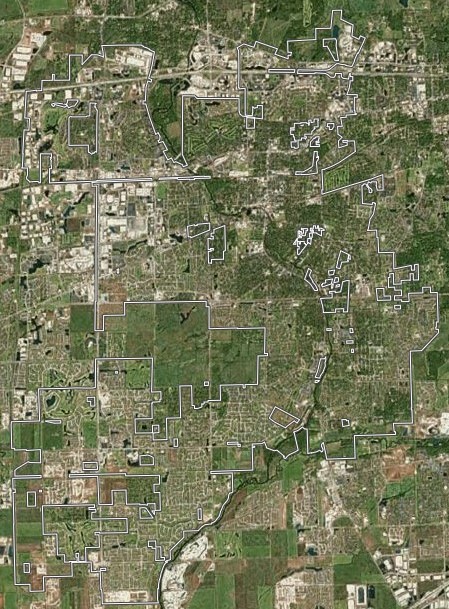
Naperville: large suburb built through decades of suburban sprawl now wants to be a leader in sustainability

The Naperville City Council recently approved several plans from the report from a sustainability task force that made a number of recommendations:

Aerial view of Naperville, Illinois

Highlights include transitioning to clean and renewable energy, incentivizing energy efficiency, developing a plan for electric vehicle infrastructure, increasing public transportation use and recycling efforts, and focusing on the maintenance of natural resources.

Other objectives include a 4% annual reduction in waste, energy use and vehicle miles driven in conjunction with an increase in tree planting to help decrease greenhouse gases by 4% each year.

One of the recent steps taken by the city was hiring Ben Mjolsness as Naperville’s first sustainability coordinator. Mjolsness on Tuesday talked about the many options and incentives residents have with energy efficiency and recycling.

Councilman Patrick Kelly said he looked forward to showcasing Naperville as a front-runner in sustainability.

Many communities will be pursuing such plans in coming years. But, the particular context of Naperville is interesting to consider for multiple reasons:

  1. It is a large and wealthy suburb. It has the resources to pursue this.
  2. Naperville likes to be a leader among suburbs and this may help further this status in coming years.
  3. Sixty years ago or even forty years ago, Naperville was much smaller in population and had a smaller footprint in land use. Today, it has nearly 150,000 people and roughly 39 square miles of land with much of this involving single-family homes.

In one sense, the growth patterns that helped make the Naperville of today possible – explosive growth in the postwar era built around homes and driving – also make pursuing sustainability more difficult. Take the reducing the miles driven goal from above. Some residents of Naperville could do this but many are in subdivisions whose roads then feed to large arterial roads. This does not work as well for biking (and the weather in the area may not help). Additionally, the sprawl makes mass transit more difficult. In the past, Naperville has tried buses in the community but they do not get much use (even as the train stations are some of the busiest with commuters going toward Chicago). The best way for Naperville to achieve this goal may be to encourage local businesses to allow employees to work from home, thus limiting commuting needs.

Not mentioned in the news article above (it could be in the report) is the density of the community. One way to improve sustainability in the long run is to have denser housing, particularly near locations where other forms of transportation other than driving are possible. This could be in and around the downtown. It could be in different nodes around the community where there are jobs or where it would be possible to pursue transit-oriented development. As a bonus, denser housing might also provide more opportunities for affordable housing. Naperville has thought about these options in the past but they are not always popular given the single-family home character of the community.

As Naperville pursues sustainability, some actions will be relatively painless given what the community can do. Other conversations about long-term changes or how to address sprawl might take much longer for a consensus to emerge.

Slow housing construction in Chicago area, matching slow population growth

The release of data showing a small population increase in Chicago and the region also included data on housing construction in the Chicago region:

Photo by Pixabay on Pexels.com

The number of homes in the Chicago metro area grew by 3.9% between 2010 and 2020, census data made public Thursday shows. That was a slower growth rate than the nation overall, where the number of homes grew by 6.7%.

The slow housing growth was not surprising, as the region recovered from the 2008 housing and financial crisis…

Among Cook and the collar counties, only Kendall County added homes at a higher rate than the nation: 11.6%. It added more homes than any county in the state, likely reflecting the county’s explosive growth in population over the past decade…

The Chicago area’s population growth could be good news for the housing market, inspiring investors and developers to take a deeper interest in the city, Smith said.

Presumably, builders and developers are going to be a bit hesitant to build a lot of units when the population is not growing as quickly. If new demand is limited, why build too many units and risk having lower selling prices? Add this corollary to the growth is good idea in American communities: higher rates of housing construction is a sign of a bright future and a higher status.

I do wonder what percent of homes or residential units need to be replaced each decade. Populations in metropolitan regions expand out – as noted above in Kendall County with double-digit growth – and occupy existing homes and units that may or may not meet their needs. Teardowns are one option, usually limited to wealthier communities where a new home in place of an older one can get a hefty price, but so are denser housing developments, in-fill development, or a change of use for properties (think vacant shopping malls or office parks converted to housing).

Additionally, does this small increase in homes also help address the need for affordable housing? At what price points are these new homes going for? I would guess that at least a sizable percentage of the new homes are out of reach of many in the region.

Getting more suburban churches to develop affordable housing

As churches in cities develop affordable housing, how about more suburban churches doing the same? First, what some Atlanta churches are doing:

Photo by Pixabay on Pexels.com

The project is one of several in Atlanta where faith leaders are investing in affordable housing for the sake of their communities. Across the country, churches with property in prime locations are turning over one block, one building, one lot at a time through movements like “Yes in God’s Backyard” in California. Atlanta-area pastor Rev. David Lewicki discusses the calling of affordable housing as a ministry.

“We are increasingly convinced that affordable housing is the foundation of beloved community,” the Presbyterian minister wrote at Faith & Leadership. “Housing is a profound and even holy good.”…

Lewicki’s church got involved in lobbying for more inclusionary zoning policies to allow for lower-priced options in their area and began to create a land trust so they could get involved in addressing the legacy of racial and economic segregation in the city…

Affordable housing and community development can seem like just business ventures—which they are—but pastors know how much these issues directly affect their congregants and stem from biblical calls for community.

Here are a few compelling reasons why suburban churches should follow this course:

  1. Affordable housing is needed throughout metropolitan regions. For example, in the Chicago region, experts suggests there is a need for tens of thousands of units. And the need is not limited to Chicago or just specific communities; it is needed in many locations.
  2. Welcoming people goes beyond Sunday morning and indicating to people that they are wanted in the community all week round. It is one thing to be part of a church community; it is another to be fully welcomed into all of the community.
  3. Housing is critical in a suburban environment as it helps in access to jobs, schools, parks, and other amenities that lead to a higher quality of life. Plus, homeownership is highly valued in suburbs so if there are opportunities for congregations to provide affordable single-family homes, this helps attendees match suburban aspirations with reality.
  4. Suburban churches have funds and local power to make this happen. It takes money to buy, develop, and maintain properties. It takes expertise and influence to work with municipalities and concerned neighbors. Congregations are often viewed as assets in communities and they often have built up goodwill over the years.

While this may not be an easy task in many suburban locations as neighbors and communities resist providing housing for residents with fewer resources, religious congregations could help lead the way.

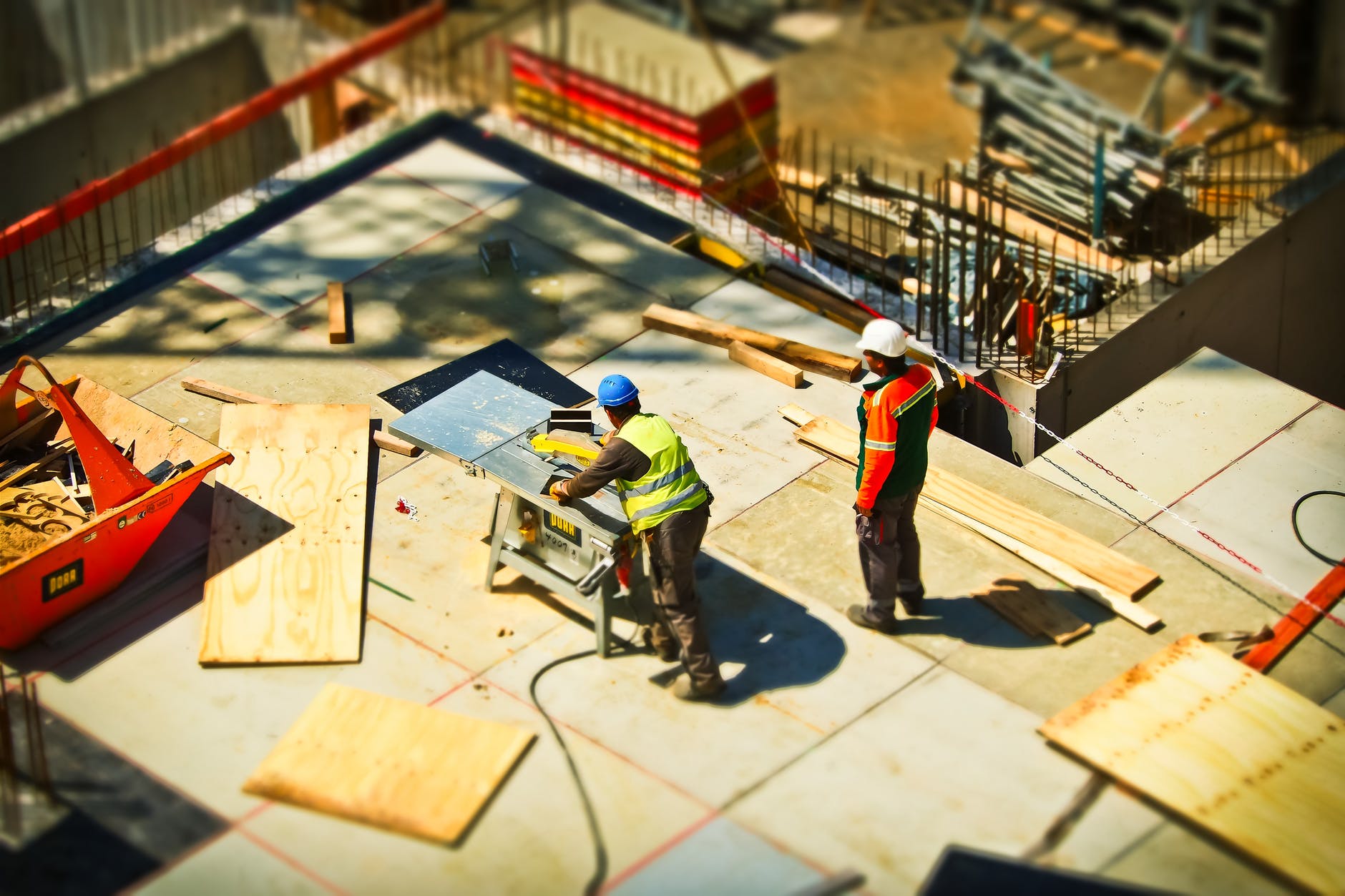
3D printed houses under construction

To address affordable housing in Florida, one company is trying 3D printed homes:

Photo by Fernando Arcos on Pexels.com

After purchasing a plot of land in the Griffin Heights neighborhood, the couple reached out to Printed Farms, a Florida startup that has access to the Danish manufacturer COBOD’s construction 3D printer, to head the innovative project.

Work began Thursday on a plot of land in northwest Tallahassee area and is expected to finish by Friday. The automated printer can lay up to two feet of wall a day.

Once initial construction on the three-bedroom, two-bathroom house wraps up, it still won’t be ready for its first owner until it has furnishings installed, which may take an additional eight to 10 weeks.

The house will cost between $175,000 and $200,000 depending on its appraisal and area median income affordability, Light said. 

Once there are some completed homes, this will provide opportunities for builders and possible homeowners to consider them. I wonder how much of the devil is in the details. What is the materials and labor cost compared to traditional methods? How long will these homes last? Will the appearance and experience of the home be similar to traditional construction? How much faster could such homes be constructed? How many people would want to be among the first to try them out?

Of course, if this can help address affordable housing needs, it could be a big deal. Alongside tiny homes, ADUs, and other innovations, many communities in the United States need more quality and cheaper units.

One way suburbs fight affordable housing: concerns about density

This example of how the conversation about a proposed affordable housing project with 58 units in the Chicago suburbs is illustrative:

Photo by Pixabay on Pexels.com

The developers propose to build a three-story building on approximately 2.5 acres at 874-920 N. Quentin Road, on the southwest corner with Poplar Street. All of the apartments — one-, two- and three-bedrooms — would be set aside for tenants whose income is between 30% and 80% of the area’s median income.

Village staff members recommended denying the plan, and the plan commission did the same after a public hearing Tuesday night. The village council will have final say and is expected to discuss the matter Aug. 9.

Plan commissioners praised the developer’s successful record of affordable housing developments, but they didn’t like the plan for the Palatine site, saying it’s too dense. The area consists of single-family homes and townhouses, with an apartment complex further north…

Several residents spoke Tuesday against the plan, saying they are worried about traffic, noise and light pollution, and changing the character of the neighborhood.

The final word will come in a few weeks. In the meantime, this set of arguments is a common one when suburbs consider apartments or even townhomes and condos. A key issue is the density of the project. What this often means is the community prefers to have single-family homes. Denser housing is often thought of as smaller housing or cheaper housing. Here, that is clear in that it is affordable housing where, through a sizable tax credit ($15 million) from an Illinois agency, residents will not need to pay full market rate.

Additionally, people often have concerns about the aesthetics and daily experiences around apartments. Apartment buildings are taller and are bulkier compared to homes on grassy lots. Because of more residents on less land, there will be more traffic on local roads. This particular proposal is close to a busier intersection but it also would be adjacent to single-family homes. It just looks different than single-family homes. If there are too many denser developments, the impression may be that single-family homes are not valued.

In sum, this density and kind of housing is perceived as a threat to the character of single-family home communities. Municipalities will sometimes respond to such proposals by asking the developer to reduce the number of units. Or, they might reject it all together by saying that it is not a good fit. And the search for land for affordable housing continues.