Birkenstock is continuing its U.S. retail expansion with its first Midwestern store in the Chicago suburb of Naperville, Ill.
According to the German footwear brand, the new store is located at 20 W. Jefferson Avenue and offers Birkenstock’s full footwear collection for men, woman and kids, along with the Care Essentials line of premium, all-natural foot care products.
David Kahan, president of Birkenstock Americas, told FN that the company decided to open this location after hosting a pop-up at local retailer Naperville Running Company a few years ago.
“[The pop-up] gave us our first glimpse into just how special the local community is,” Kahan said. “The passion and dedication of our fans, particularly around the post-run sport world was truly inspiring. It highlighted the opportunity to connect in a bigger way throughout the year, and we’re excited to return with a dedicated space to share the full Birkenstock collection with Naperville.”
According to the Birkenstock store locator, they have many resellers: nearly 4,700 locations. But they operate only 9 of their own stores. Here are these locations and their urban/suburban status:
From this list, six of the nine locations are suburban. Birkenstock stores are in the suburbs of the country’s three largest metropolitan areas – New York, LA, Chicago – and are also outside several other sizable cities – Phoenix, San Francisco, and Phoenix. Can we expect new locations outside Dallas, Miami, Washington, D.C., Atlanta, and Philadelphia soon (the remaining top 10 metropolitan areas by population)?
Additionally, Birkenstock has stores in two cities: two locations in New York City and one in Nashville.
Residents from all over the United States can access Birkenstock products online or through thousands of retailers. But the company has picked these largely suburban locations to put a company store and that tells us something about their intended market and their brand.
People who live and work near the canal want to see more uses of it, said Margaret Frisbie, executive director for Friends of the Chicago River. A new name, she said, could reflect the canal’s importance beyond shipping and sanitary needs…
The canal, a 28-mile stretch from Chicago’s Lower West Side to just north of Joliet where it joins the Des Plaines River, has a rich history. At the time it opened in 1900 to provide the only way for ships to navigate between the Great Lakes Waterway and the Mississippi River, it was regarded as a win for public health and sanitation and earned the applause of civil engineers…
The coalition has released a survey where people can pitch ideas for names and voice their opinions on how the canal should be cared for and used. The public will later be able to vote on favorite names, Frisbie said, before the group submits a name-change application to the U.S. Board on Geographic Names. The goal is to submit the application by the end of the year, she said…
“Modernizing the canal’s name will better reflect its role as an economic driver for the region and its potential for recreational development,” a spokesperson for Foster said in a statement.
Is it too direct to call it the “Economic Driver Canal? The “Economic and Recreational Canal”? The “Canal of Success”?
This is a branding issue. The groups behind this suggest the name is not helpful for people today who do not think much about sanitation or may not know much about shipping. A new name could revitalize interest. Perhaps it leads to increased funding, more tax revenues, a new age for the canal.
Yet it is hard to imagine a new name that might capture these new ideas. I would not be surprised if the canal adopts a name related to a historical figure or group that might connect to some of that forward-looking energy.
In the span of a few minutes the other day, I heard radio commercials for two suburbs. One was aimed more at businesses and residents moving to the community, the second was about visiting and enjoying the amenities there. Do these advertisements work?
There are multiple ways organizations could measure this. The most common one I have seen in today’s age is the online or email survey question: “how did you hear about us/this?” Then the respondent can select among many options, including radio ads.
But if someone were moving to a suburb, starting a business in a suburb, or visiting a suburb, how likely would it be that they would receive such a survey? What would trigger this survey?
There are, of course, other techniques. We could rely on anecdotes and the occasional story people tell. Perhaps focus groups of recent movers or visitors could explore this. Maybe someone contacts the community directly and describes hearing the advertisement. Maybe seeing an uptick in population or visitors or business activity in the community after airing the ad could lead to people saying the ad worked.
None of these are likely great options. Getting people to participate in research studies is hard. The commercial is one out of many people will hear or encounter each day.
It is hard to brand a suburb when there are many – over 300 – in the Chicago area and in a media saturated landscape. What can reflect the community well and stand out to people (and then hopefully prompt them to act)?
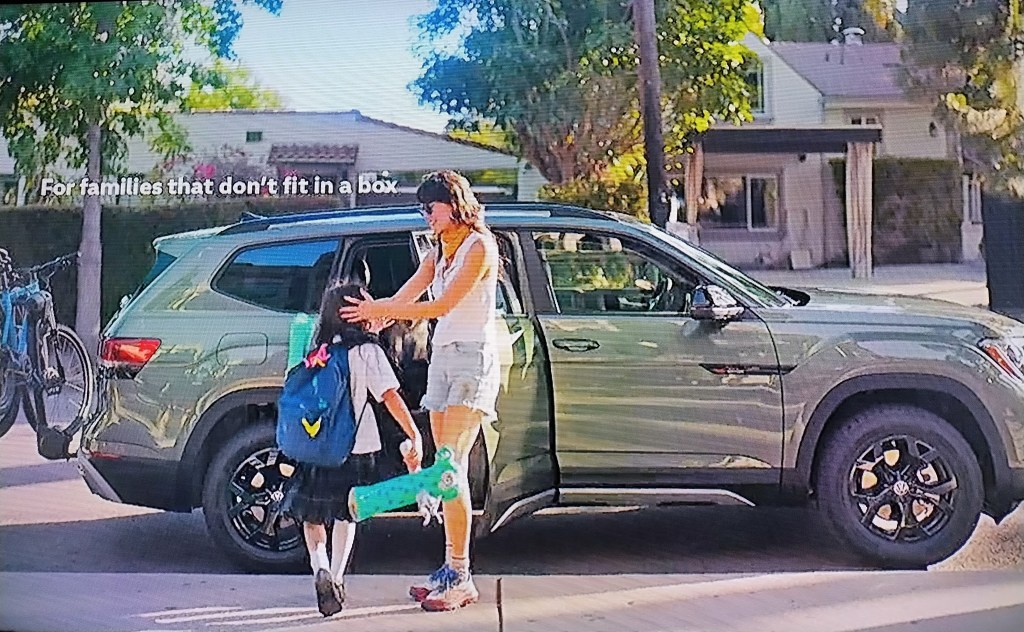
A new Volkswagen TV commercial features the song “Little Boxes” sung by Malvina Reynolds. This song originally critiqued the sprawling mass suburbs of the postwar United States but now is used – and in a remixed version! – to sell an SUV:
Four thoughts related to this advertising campaign:
The song was protesting conformity in sprawl. Does buying a particular SUV counter conformity and sprawl?
The tagline above – “For families that don’t fit in a box” – seems to suggest that people who own this vehicle are doing things outside the box. This vehicle allows you to escape the normal suburban life. Can this happen when almost everyone has an SUV already?
The song said houses were boxes; are SUVs boxes? This particular model might be less boxy than some others but it still looks like a box. Are SUVs cool boxes where as suburban ranches houses were considered by some to be uncool boxes?
If the primary target of this campaign is suburbanites, then a song critiquing suburbia is being used to sell products suburbanites. We have come full circle: do what you can to sell SUVs to suburbanites!
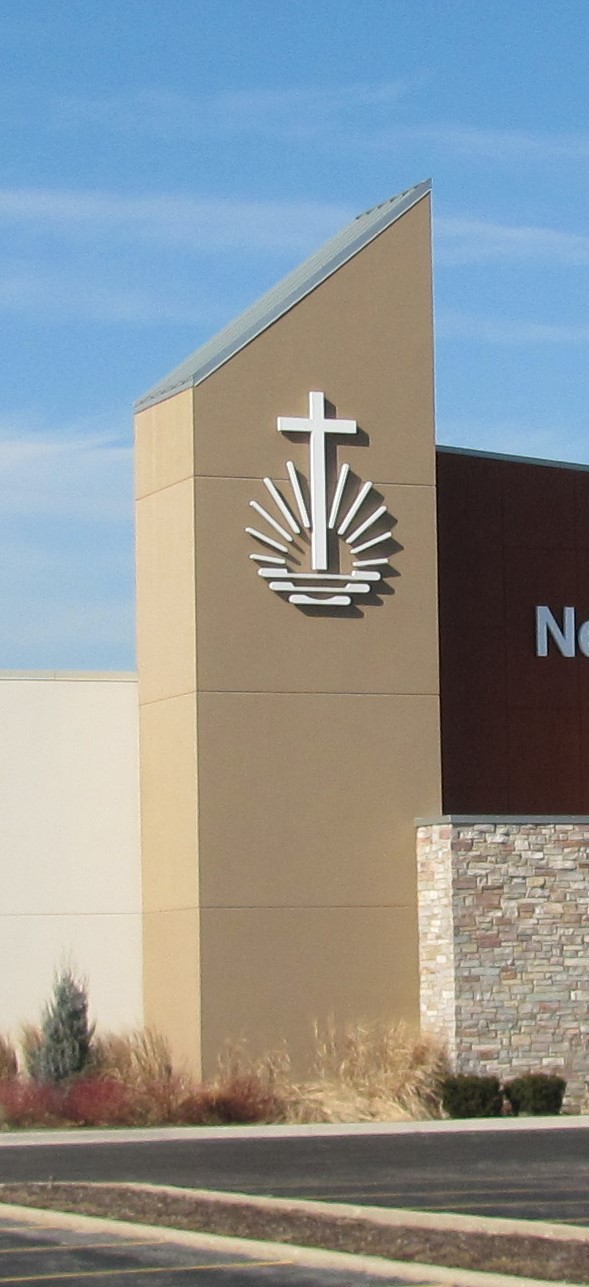
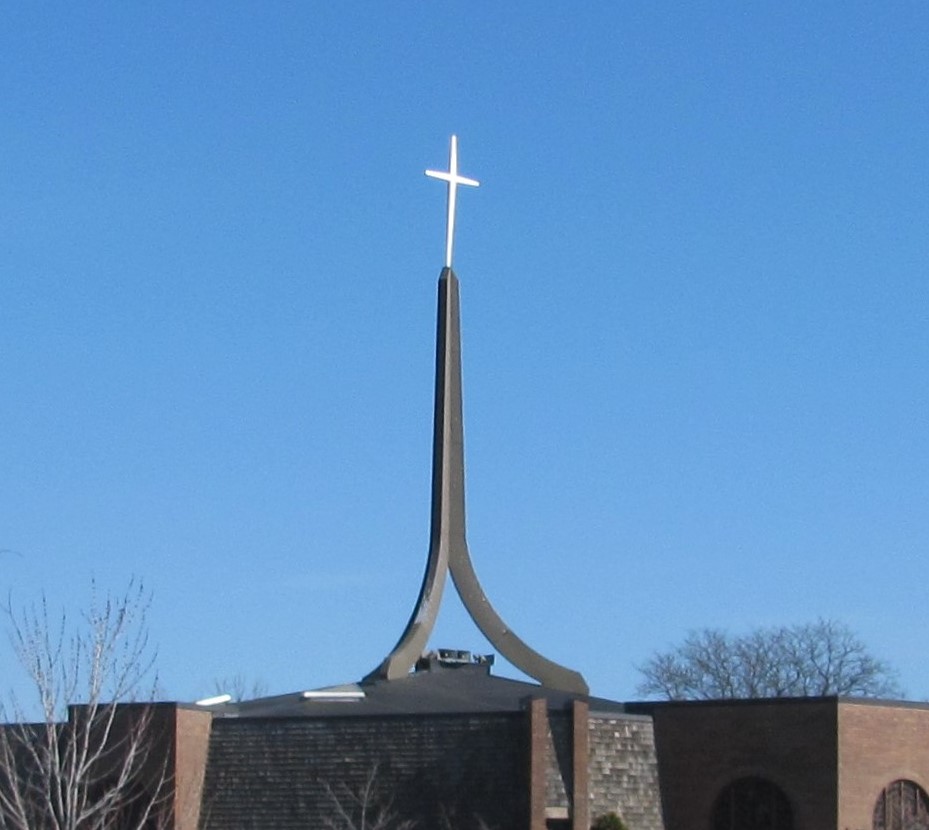
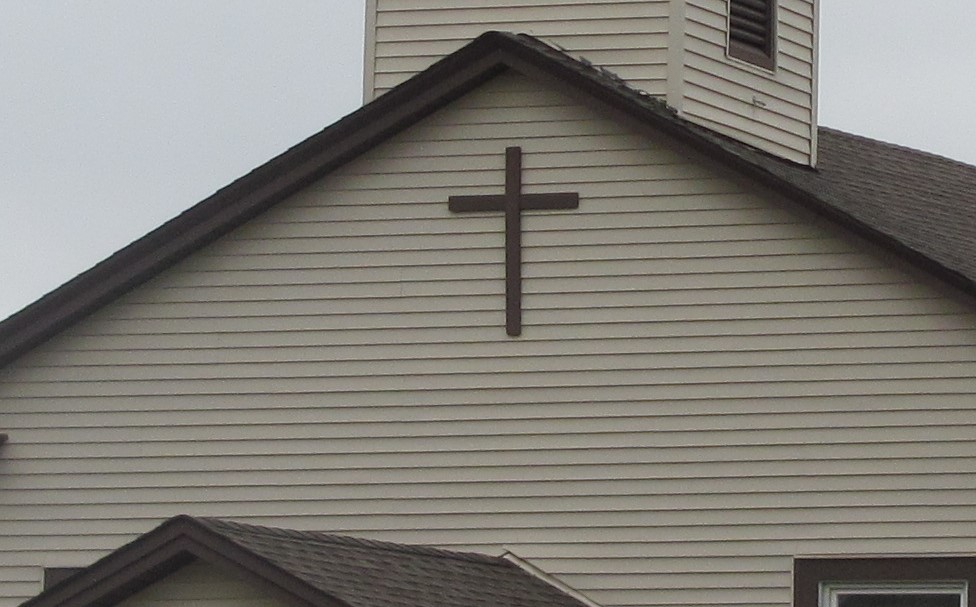
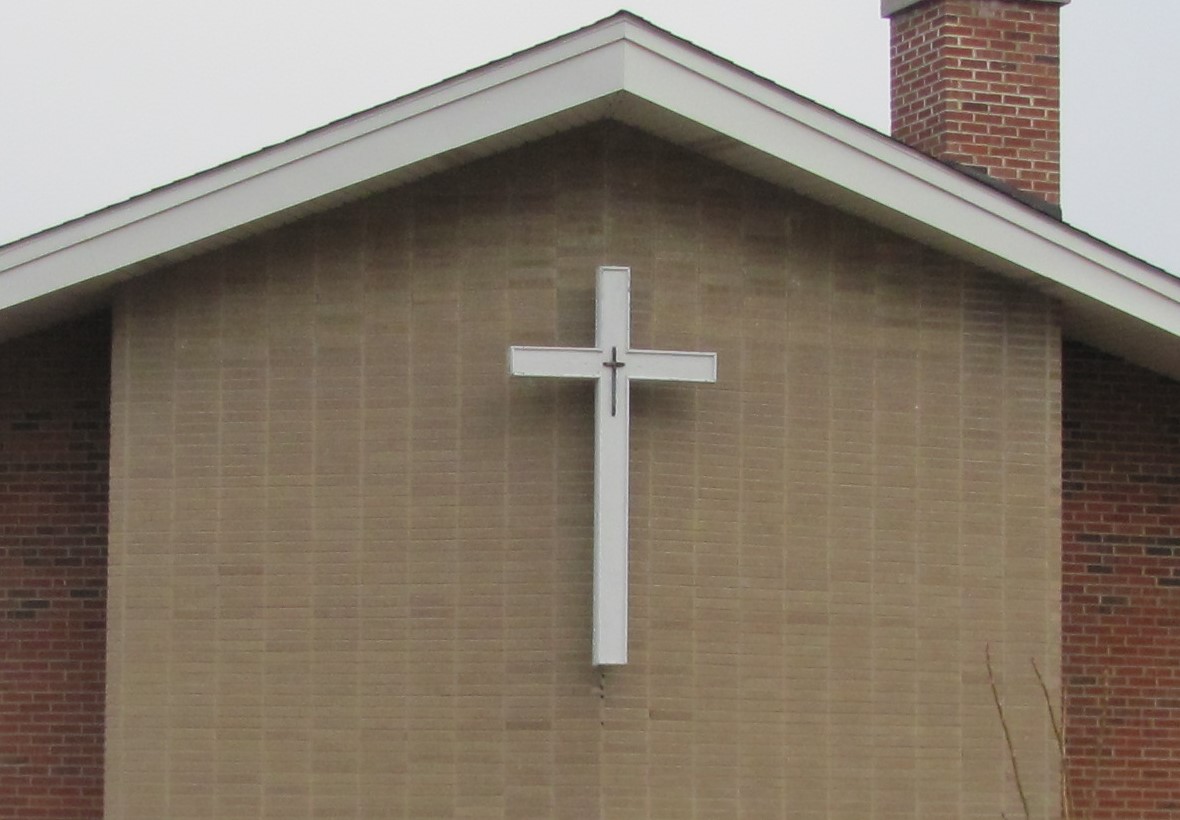
Working on some recent research involving religious buildings and also celebrating Easter yesterday, I was reminded of how many Christian churches feature crosses. Here are several local examples of church exteriors:
Not all churches have crosses on the outside. Some congregations want to avoid looking like a church and this could include eschewing traditional features like crosses or steeples. But many do feature crosses on the sides of buildings, on roofs, and on signs.
Similarly, if one were to walk into Christian churches, crosses are often present. They may be behind an altar or hanging on a side wall or incorporated in art or a bulletin.
And in looking for religious congregations online, I found many also feature crosses in the images they use. For example, in Facebook profile pictures and cover images, many Christian congregations feature a cross somewhere. In searching for congregations, a cross is a very common image one will find on social media and websites.
For these congregations that feature crosses, they likely see it as part of their theological foundations and part of their message of who they are. Christians are people of the cross and they share that image with the world. Whether one finds a congregation in a storefront, a school, an older religious building, or an online space, they are likely to find a cross somewhere and often prominently displayed.
Choose Chicago has been laying the groundwork to create a so-called Tourism Improvement District that would more than double the marketing agency’s annual budget by increasing the tax on rooms in Chicago hotels with 100 or more rooms by 1.5 percentage points — to 18.9%.
The Las Vegas Convention and Visitors Authority has an annual operating budget of $457 million, according to a comparison prepared by Choose Chicago. That’s followed by Visit Orlando ($116 million); Discover Los Angeles ($62 million); the San Diego Tourism Authority ($57 million); and New York’s NYC & Company ($45 million).
Choose Chicago is dead last among major convention cities, with a projected budget of $33 million for 2024…
Choose Chicago, which has yet to release data for 2024, said Chicago had 52 million domestic and international visitors in 2023. The number has increased steadily in recent years, but Chicago has struggled to match the 61 million visitors of 2019, the last full year before the pandemic. Worries about high taxes and crime hurt perceptions about Chicago as a place to visit or do business.
All cities have to brand themselves to compete in the competitive market. But, apparently, they do that with different amounts of money. Does spending more money necessarily net more visitors? Not necessarily. But the budgets do look quite different. So some additional information might be helpful:
How much money is spent per visitor?
How much of that money is spent directly targeting certain visitors or groups – think like conventions that then come with a certain number of attendees – versus mass media appeals?
And then how much money do those visitors put back into the local economy?
How do these different cities fund these marketing arms? Is it primarily about taxes visitors pay or are there other significant money streams?
Let’s see what Choose Chicago does with its increased revenue.
Walmart is excited to announce a comprehensive brand refresh that reflects its evolution as a people-led, tech-powered omnichannel retailer. From its humble beginnings in Bentonville, Arkansas, in 1951, Walmart has grown into a global leader dedicated to helping people save money and live better.
This is the opening paragraph of a press release that has more details. But this first section has a lot of ideas. Walmart is:
people-led
tech-powered
omnichannel
from humble beginnings
global leader
helps people save money
helps people live better
There is a lot here. Probably too much for a slogan or advertising campaign. And how many line up with how the public sees Walmart?
When I think of Walmart throughout most of my life, I think of #6 above. It has pitched as the place for low prices. When they first arrived in the Chicago suburbs, I found that their CDs were much cheaper than the music stores in the area. Compared to other big box stores or grocery stores selling the same or similar items, Walmart often has lower prices.
What does it mean to be “people-led”? As opposed to AI led or driven by numbers? Is “global leader” referring to revenues or practices or name recognition?
The last one might be most interesting. Is the American good life partly dependent on Walmart? If Walmart was not around, would American lives be better or worse? Would this alternate universe just remove Walmart locations or all Walmart is connected to (supply chains, approach to retail, the growth of Bentonville, etc.)? If lots of Americans think Walmart does help them save money and given the role of money and wealth in American life, many might answer “yes” to this.
Just how accurate are those numbers, though? Until the house actually trades hands, it’s impossible to say. Zillow’s own explanation of the methodology, and its outcomes, can be misleading. The model, the company says, is based on thousands of data points from public sources like county records, tax documents, and multiple listing services — local databases used by real-estate agents where most homes are advertised for sale. Zillow’s formula also incorporates user-submitted info: If you get a fancy new kitchen, for example, your Zestimate might see a nice bump if you let the company know. Zillow makes sure to note that the Zestimate can’t replace an actual appraisal, but articles on its website also hail the tool as a “powerful starting point in determining a home’s value” and “generally quite accurate.” The median error rate for on-market homes is just 2.4%, per the company’s website, while the median error rate for off-market homes is 7.49%. Not bad, you might think.
But that’s where things get sticky. By definition, half of homes sell within the median error rate, e.g., within 2.4% of the Zestimate in either direction for on-market homes. But the other half don’t, and Zillow doesn’t offer many details on how bad those misses are. And while the Zestimate is appealing because it attempts to measure what a house is worth even when it’s not for sale, it becomes much more accurate when a house actually hits the market. That’s because it’s leaning on actual humans, not computers, to do a lot of the grunt work. When somebody lists their house for sale, the Zestimate will adjust to include all the new seller-provided info: new photos, details on recent renovations, and, most importantly, the list price. The Zestimate keeps adjusting until the house actually sells. At that point, the difference between the sale price and the latest Zestimate is used to calculate the on-market error rate, which, again, is pretty good: In Austin, for instance, a little more than 94% of on-market homes end up selling for within 10% of the last Zestimate before the deal goes through. But Zillow also keeps a second Zestimate humming in the background, one that never sees the light of day. This version doesn’t factor in the list price — it’s carrying on as if the house never went up for sale at all. Instead, it’s used to calculate the “off-market” error rate. When the house sells, the difference between the final price and this shadow algorithm reveals an error rate that’s much less satisfactory: In Austin, only about 66% of these “off-market Zestimates” come within 10% of the actual sale price. In Atlanta, it’s 65%; Chicago, 58%; Nashville, 63%; Seattle, 69%. At today’s median home price of $420,000, a 10% error would mean a difference of more than $40,000.
Without sellers spoonfeeding Zillow the most crucial piece of information — the list price — the Zestimate is hamstrung. It’s a lot easier to estimate what a home will sell for once the sellers broadcast, “Hey, this is the price we’re trying to sell for.” Because the vast majority of sellers work with an agent, the list price is also usually based on that agent’s knowledge of the local market, the finer details of the house, and comparable sales in the area. This September, per Zillow’s own data, the typical home sold for 99.8% of the list price — almost exactly spot on. That may not always be the case, but the list price is generally a good indicator of the sale figure down the line. For a computer model of home prices, it’s basically the prized data point. In the world of AVMs, models that achieve success by fitting their results to list prices are deemed “springy” or “bouncy” — like a ball tethered to a string, they won’t stray too far. Several people I talked to for this story say they’ve seen this in action with Zillow’s model: A seller lists a home and asks for a number significantly different from the Zestimate, and then watches as the Zestimate moves within a respectable distance of that list price anyway. Zillow itself makes no secret of the fact that it leans on the list price to arrive at its own estimate…
So the Zestimate isn’t exactly unique, and it’s far from the best. But to the average internet surfer, no AVM carries the weight, or swagger, of the original. To someone like Jonathan Miller, the president and CEO of the appraisal and consulting company Miller Samuel, the enduring appeal of the Zestimate is maddening. “When you think of the Zestimate, for many, it gives a false anchor for what the value actually is,” Miller says.
Multiple factors are at play here. Who has what information about housing and housing values? How is the value calculated? And what is the distribution of the comparison of the estimated value to the actual sales value? Some of this involves data, some involves algorithms.
It also sounds like part of the story is that Zillow has built one of the more effective brands in this space. Even if the estimates are not exactly right, people are drawn to Zillow. What would happen if competitors advertised that they are more accurate? Would this be enough to move people from using Zillow?
Given all of this, who can build the most accurate number might not be the “winner.” Is the goal to best model the housing market or is the goal to attract users? These two goals might go together but they might not.
A crop of new restaurants and a Dave & Buster’s have been added to the mix. A grocery store is slated to open next year. In the clearest sign of the mall’s resurgence, a developer has kicked off the first phase of a luxury apartment project called “Yorktown Reserve.”
The old Carson’s department store will be dismantled to pave the way for public green space between the mall and the apartments. Inward-facing mall spaces will be turned outward. Facing the park will be a new, two-story entrance directly into the center of the mall.
What does “Reserve” refer to? The first thought that came to mind: wine. Quoting a possible definition of reserve in the Merriam-Webster Dictionary:
9: a wine made from select grapes, bottled on the maker’s premises, and aged differently from the maker’s other wines of the same vintage
Upon further thought, this does not strike me as the meaning. Apartments tasting like a fine wine? How about a different definition of reserve:
1: something reserved or set aside for a particular purpose, use, or reason: such as…
b: a tract (as of public land) set apart : reservation
A reserve as in a set apart piece of land? This seems more like the meaning with the apartments next to a new “public green space” and the mall.
Once the apartments are constructed, I would be interested to hear residents and neighbors reflect on this name. Does it feel like a reserve? Does the name imply a certain price point and residential experience?
My guess at how Peoria or a similar city could truly boom is that a major, well-known company moves its operations to the city. While the opposite might seem to be happening in cities like Peoria – such as Caterpillar moving out – imagine a Silicon Valley company making Peoria home. Such a move could be good for its employees and help improve the fortunes of a different area.









 Legally Sociable