A $100k welcome sign within a $600+ million suburban budget

Naperville spent $100,000 for a unique sign welcoming people to the community along its border with Bolingbrook. Amid some concerns from residents about the price, here is information about the sign and the overall budget of the city for 2023. First, the sign:
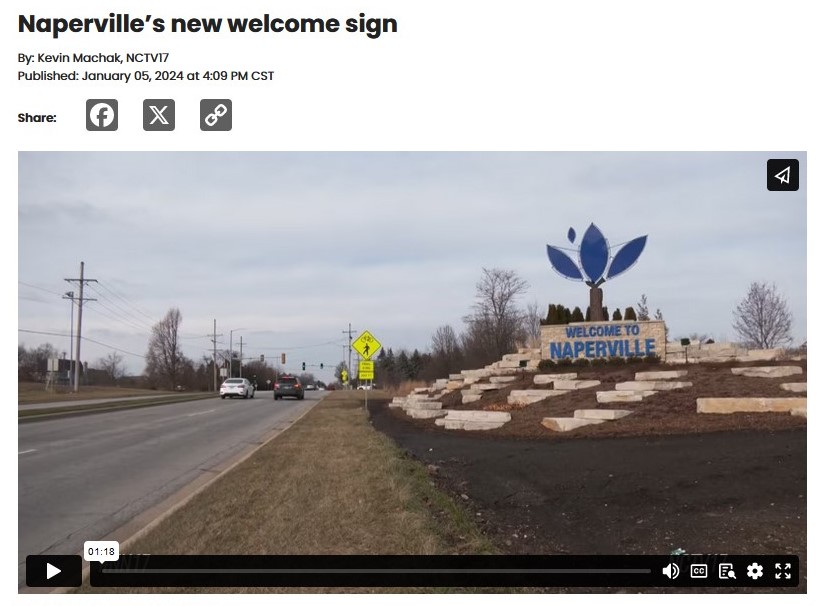
A freshly-completed “Welcome to Naperville” sign sits along the entry route, just next to the trails among DuPage River Park and just across from DuPage River Sports Complex.

The design stems from the city of Naperville’s official logo of 50 years, which depicts a tree with water running underneath. Surrounding the sign are limestone slabs.  The city plans to add fresh vegetation to the area in the spring.

The new greeting, which costs $100,000, is just one of a number of beautification projects that have been planned for since 2021 and officially budget-approved for since the fall of 2022.  At that time, the city council approved of $250,000 for the Department of Public Works to make multiple improvements throughout the city…

Second, the 2023 budget:

Keeping the current economic climate, our mission, and strategic priorities in mind, the 2023 City of Naperville budget is recommended at $603.46 million, an overall increase of 11.6% from the $540.58 million 2022 budget. Additional capital expenses are the primary driver behind this increased investment in our organization and community. It is worth noting that the 2023 budget leverages existing revenue streams and fiscal policies. No new taxes, fees, or other revenues are recommended to support the 2023 budget proposal.

From my math, this means the sign cost less than one-tenth of one percent of the city’s budget. Even building one of these on each other side of the city – north, east, west – would not take much money.

Is this an unnecessary expenditure? That is a different question. Signs are not necessarily cheap and they can be bland or strange. For example, see this recent one in Naperville for a new subdivision. This new one welcoming people to the suburb is unique with its 3D form and landscaping. Naperville has a history of spending money for parks and beautification: just look at the Riverwalk over time (and I would guess many would say this was a good investment). Additionally, Naperville is a unique suburb that sees itself as having a particular status.

If the goal is to continue to brand the community in a particular way, this sign stands out and is a small fraction of the budget.


Branding when the airport code is SUX

Sioux City, Iowa is working with its airport code:

Photo by Marina Hinic on Pexels.com

Sioux Gateway Airport, or SUX as it appears on tickets and bag tags, has been the butt of jokes in Iowa and beyond for decades.

After complaints and failed efforts to change the code, Sioux City decided to lean into its unfortunate designation and, more recently, has expanded it well beyond the airport. Area businesses are increasingly embracing the branding and SUX is popping up all over the place.

Poo SUX is a pooper scooper service for pets. RentSUX is a leasing company. Cleaning SUX is a commercial-cleaning firm. Radon SUX helps people mitigate radioactive gas from their homes. The Art SUX gallery is downtown. And the SUX Pride festival is held in June…

FLY SUX has been the centerpiece of this city’s airport marketing since 2007. Before that, the Federal Aviation Administration offered five alternatives—GWU, GYO, GYT, SGV and GAY—but airport trustees stuck with SUX, the Associated Press reported at the time…

Mike Collett, an assistant city manager who serves as the airport’s director, said SUX has become so common for people in the area that “everyone thinks of it as a positive statement.” When the city lobbies airlines to keep or expand their service, representatives often hand out T-shirts, caps and other SUX tchotchkes.

Cities and communities in the United States need to find ways to stand out. Whether they are trying to appeal to businesses, potential residents, or tourists, they try to provide a reason their particular community should be chosen when there are thousands of other options.

Here are my guesses at how Sioux City thinks it is presenting itself by leaning into this airport code (though the story makes clear that not everyone in the community does): it is a place that can have fun, they can turn difficult situations into good ones, and they are a little edgy. This puts them on the map, even if some might find the language distasteful.

Does this branding work? It is one thing if local grab hold of this and make it part of local life. It is another if this helps the city and area attract people.

Taking on the identity of the #1 pumpkin state

What is the state of Illinois known for? Lincoln and Chicago come to mind. But, what if Illinois is the leader in growing pumpkins in the United States – where does this fit?

Photo by James Wheeler on Pexels.com

But we can chant, “We’re No. 1!” with pride, as the pumpkin provider to the nation.

And despite a rough start to the season, Illinois is poised to retain the title, according to Raghela Scavuzzo, associate director of food systems development at the Illinois Farm Bureau…

She anticipates this year’s crop will weigh at least 650 million pounds. In 2021, 652 million pounds of the gourd were gathered, according to the Agriculture Department’s Census of Agriculture, more than the next five states combined…

There are two types of pumpkin businesses in Illinois; Those that make money off jack-o’-lanterns, and those that make pumpkin pie possible. Illinois really rules the latter — about 80% of the acreage is devoted to pumpkins for processing.

In a world of place-based marketing and branding, I could imagine a number of different campaigns to highlight this unique feature of Illinois. Lincoln with a pumpkin? Signs welcoming visitors to Illinois include a pumpkin added for the fall season? Pumpkin patches and fall farms covered with all sorts of iconic Illinois images or places?

Beyond marketing, it would be interesting to know how much pumpkins contribute socially and economically to the state. Is the pumpkin growing related to declines in growing other crops? How many jobs does pumpkin growing entail? How does growing pumpkins and selling them compare to other options?

Too bad Charles Schulz, creator of Linus and the Great Pumpkin, was from Minnesota…are there Illinois natives who have creatively invoked pumpkins in works?

Selling suburbs where the daytime population swells

I recently heard a radio advertisement for the suburb of Schaumburg, Illinois. The pitch included this fact: the suburb has a daytime population of 150,000 people.

According to the Census Bureau, the population of Schaumburg is over 76,000 people.

Photo by Ingo Joseph on Pexels.com

A suburb that almost doubles in population during the day is not the typical image of suburbs in the United States. Yet, it is one part of the increasingly complex suburbia where some communities are the stereotypical bedroom suburbs and others are office and retail centers.

Schaumburg was an “edge city” as identified by Joel Garreau in 1991. These suburbs have lots of retail and office space and more workers than residents.

Why advertise the number of people in Schaumburg during the day even if they are not there overnight? The daily population presents a business opportunity. What might all those workers, shoppers, and visitors be interested in? Perhaps they need food or a particular good or certain services. In a region with over nine million residents, being able to reach 150,000 each day could be attractive.

(On the other hand, do residents of Schaumburg want more businesses or office space? The suburb is not a small one in terms of population. Is the brand residents want to promote? See previous posts on advertisements for Schaumburg here and here.)

Suburb of Elk Grove Village now turns to NASCAR race car ad

Elk Grove Village has sponsored a college football bowl game. Now, it is sponsoring a NASCAR car:

Photo by Pixabay on Pexels.com

The Northwest suburban municipality — of Makers Wanted Bahamas Bowl fame — has inked a two-year marketing partnership with the Roush Fenway Keselowski Racing team that will enable it to affix its business marketing tagline, logo and brand to the No. 6 Ford Mustang stock car during the NASCAR Chicago Street race events next year.

The announcement was made during the ninth Made in Elk Grove Manufacturing & Technology Expo at the high school. The daylong exhibition, awards and networking event highlights businesses within the village’s sprawling industrial park — which the village has sought to promote through several unconventional marketing sponsorships. The town sponsored the college football bowl game in 2018 and 2019, plus three USA Olympic teams last year.

“Elk Grove Village is home to the largest industrial park in North America. We’re surrounded by incredible transportation options and our town works hard to make this a destination for businesses,” Johnson said in a statement. “Partnering with RFK for a marquee race allows us to reach a huge audience with a partner that shares a passion in American business and manufacturing.”

Suburbs continue to market themselves in order to stand out from the hundreds of other suburban communities with which they might be competing. Lots of suburbs could say they have industrial space, nearby transportation options, and are business friendly. Fewer might be able to say they have “the largest industrial park,” sit near O’Hare Airport, within such a busy region for railroad traffic, and right next to major highways, and offer exactly what Elk Grove Village can offer businesses. This branding effort will help highlight these distinctive features.

But, the big question is whether this broader exposure translates into increased business and development activity in the community. Will those watching Brad Keselowski zoom around a track visit makerswanted.org in large numbers or relocate their firms to the suburb? Is it enough that the suburb might have an increased status but no change in activity?

Two communities and two different approaches in advertising to baseball viewers

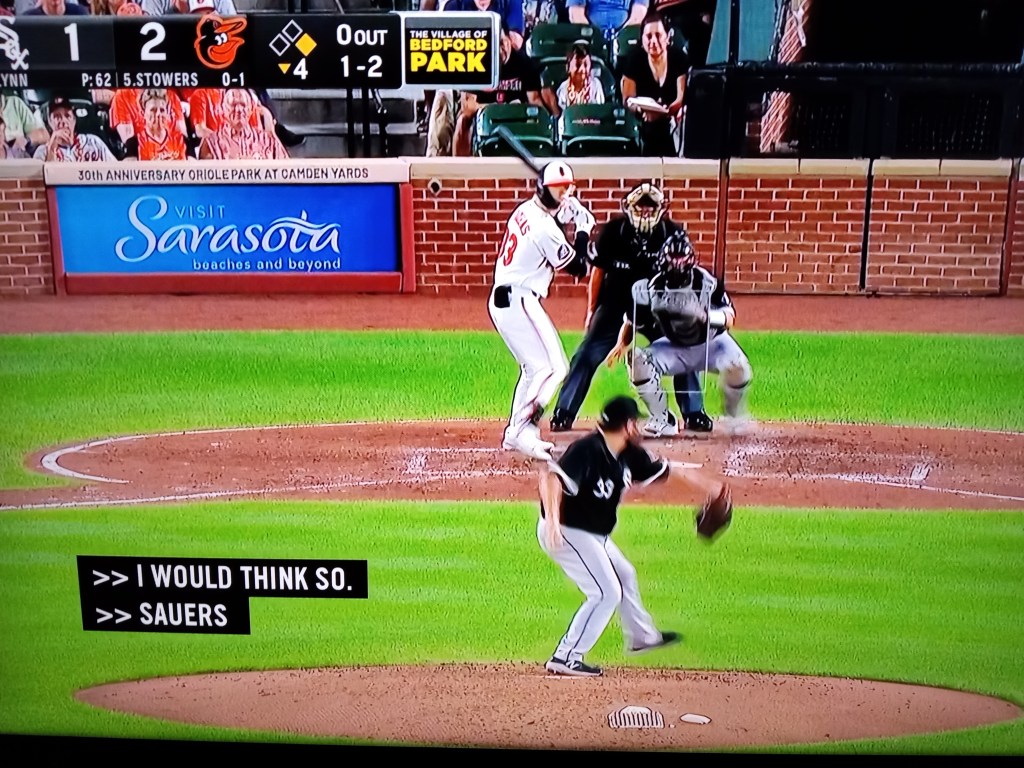
What is the most effective way for a community to reach viewers of a baseball game? Here are two contrasting approaches on last night’s White Sox broadcast:

The Village of Bedford Park is not unknown to media consumers in the Chicago region; they advertise the advantages they provide for businesses, including plenty of water. The suburb has less than 1,000 residents but wants your business.

In this ad, there is little communicated about the Village outside of its name. Name recognition has some value; the Chicago area has hundreds of suburbs and knowing this small suburb could be consequential.

Contrast this approach with that of Sarasota. A bigger community of over 50,000 residents, the suburb emphasizes “beaches and beyond.” This could be aimed at tourists, visitors who bring in money to hotels, property owners, restaurants, stores, and more, or people who might want to relocate to a land of beaches.

This approach is more common when communities advertise. Including the name, a tagline or motto, and some sort of image – here Sarasota in a particular script and with a flowing tee – aims for name recognition and some knowledge about the community.

Are either of these approaches effective for baseball fans watching the game? Do they decide to take their business to Bedford Park or visit Sarasota? Many communities now advertise and engage in branding in similar ways but it would still be interesting to hear officials in both of these communities discuss the merits and return on investment of these marketing approaches.

Differentiating a suburb by declaring it a “trailblazing pro-life city”?

Suburbs compete with other communities. They engage in decisions and branding that might given them a particular status and/or an edge. Does this fit a possible decision in Alvin, Texas?

Photo by Trace Hudson on Pexels.com

Elected officials in the city of Alvin are considering an all-out ban on abortion that would declare the Houston-area suburb a “sanctuary city for the unborn,” even with the procedure virtually banned by a new state law. 

One of the leaders behind this measure said he aimed to make Alvin, a city of about 26,000 residents in northeastern Brazoria County, a “trailblazing” pro-life city. 

City Council Member Joel Castro said he believes the measure is necessary to enforce the statewide ban. He referenced other small Texas cities, including Lubbock in west Texas, that have implemented similar ordinances. 

The ACLU has pushed back on cities that have implemented similar ordinances in the past, arguing they are unconstitutional and that “cities cannot punish pro-abortion organizations for carrying out their important work.” Abby Ledoux, spokesperson for the Planned Parenthood Federation of America, said the ordinance feels “extremely cruel” and just adds more restrictive layers to the statewide ban, ultimately endangering women in an area where access to abortion care is already limited. 

On one hand, there is the aspect of leaders and residents believing this is the right stance. Numerous communities have developed statements, regulations, and ordinances intended to pursue what they think is right.

But, I wonder if this is also connected to branding. Could a community serve its residents and seek to attract residents, businesses, and others based on taking a particular stand? At the least, the suburb of Alvin might be known by more people from taking a stand and others might factor the community’s stance into a decision about staying there or moving there.

This reminds me of the work of scholar Thomas Vicino in Suburban Crossroads: The Fight for Local Control of Immigration Policy. This book highlights the efforts of three communities to develop and enact their own policies amid concerns about federal immigration policies. The context here is a bit different – Texas has new laws regarding abortion, federal law is clear – but the idea is the same: local governments take it on themselves to address a controversial issue that they feel is important.

If Schaumburg is advertising business opportunities and a central location, this means…

I heard again a radio ad recently from the suburb of Schaumburg extolling the benefits for businesses, including a central location, if they relocate there. I thought about this in January 2021 and I wonder now if this ad hints at three patterns:

Photo by Nicholas Githiri on Pexels.com
  1. Schaumburg is an edge city with a lot of office and retail space. The suburb grew rapidly between 1960 and 1980, going from under 1,000 residents to over 50,000 residents. It is home to Woodfield Mall and numerous sizable office buildings. It is featured in Joel Garreau’s book Edge City. If Schaumburg has a lot of vacant space and is struggling to find businesses to sell goods and services or to set up operations, what hope is there for other suburbs that do not have these concentrations that were successful in the past? Brick and mortar operations are declining and COVID-19 has encouraged working from home and this has particular effects on communities highly dependent on both.
  2. This may be less about the troubles of Schaumburg and more about the game that suburbs have to play today. Suburbs market themselves and attempt to differentiate themselves from other suburban communities. The Chicago area has a number of these, including Elk Grove Village hoping to attract makers and Bedford Park touting its industrial space and resources. It is less clear how successful these efforts are but more communities seem to think they need a media presence.
  3. Is there something preferable in advertising a place on the radio? Are people listening in the car more likely to be mobile and/or move? Communities have other options but I do not how attractive they might be. Television is a very broad audience. Targeted Internet or social media ads could be worthwhile if particular categories could be identified. Print may only work in certain outlets. Would billboards catch people’s attention? This may be an emerging branding landscape for which I have not yet found an overview.

If these trends continue, I can imagine a media landscape where ads for suburbs and cities play back to back or near each other, directly juxtaposing their different perceived advantages and trying to chase the elusive businesses and residents who might move.

Selling Schaumburg, Illinois

Schaumburg, Illinois, nearly 30 miles northwest of downtown Chicago, is a prototypical edge city. Home to Woodfield Mall, hundreds of thousands of square feet of office space, and over 70,000 residents plus located at the convergence of I-290, I-90, and IL-390, journalist Joel Garreau mentioned Schaumburg in his 1991 book Edge City: Life on the New Frontier. When I heard Schaumburg advertising on the radio, I wondered: is this an aggressive or a desperate move in these particular times? Where does Schaumburg fit among other Chicago suburbs also trying to get their name out there (examples here and here)? A few thoughts on this.

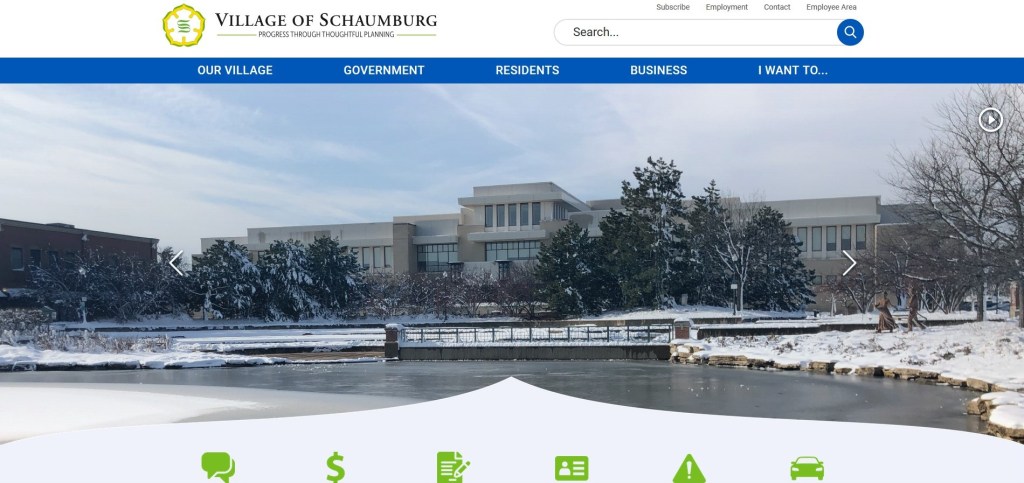
https://www.villageofschaumburg.com/

-Woodfield Shopping Mall is one of the largest in the United States. Even with numerous shopping malls struggling plus the problems of brick and mortar retailers, Woodfield will probably survive due to its size, location, and status. It may need to transform significantly – can it still support hundreds of stores? – but it is likely in good shape compared to numerous other Chicago area malls that are exploring new paths (other examples here, here, and here).

-Office space may be hard to fill. Schaumburg is not in a city; other suburban office parks have become less desirable in recent years with firms looking to appeal to young workers. Add the complications of COVID-19 when more workers are not going to the office. At the same time, many workers going to Schaumburg are doing so via car and they may be coming from relatively well-off suburban areas.

Growth is important to American communities. Like many edge cities, Schaumburg experienced explosive growth early in its history: it had 986 residents in 1960, in 1980 had over 53,000 residents, and peaked in 2000 at over 75,000 residents. Where does it go from here? Population loss and/or the loss of businesses would not be a good image for the community as it tries to chart a bright future.

Compared to other Chicago suburbs, Schaumburg is likely in good shape. At the same time, the growth and status of the past and present does not have to continue amid new social pressures and internal decisions. If Schaumburg is advertising in order to attract businesses, perhaps this hints at broader issues across suburbs: can they all succeed in what may be a challenging several year period?