Avoiding the weather with walking that weaves in and out of buildings

In the last two decades, I have had occasions to give walking tours of places. This can require weaving in and our of buildings in order to get out of inclement weather. Whether trying to get out the rain or snow or cold weather, a walk that combines moving outside and inside can be very helpful.

Photo by Vlada Karpovich on Pexels.com

The problem is this: most places are not set up for this. The typical American building is oriented toward the street. You go into the building from a sidewalk or a parking lot and then you exit the same way. It can be difficult to find a pathway across buildings when there is not an easy pathway between them nor multiple entrances and exits to use.

College campuses offer a few more possibilities. These buildings are sometimes oriented toward a street but they are sometimes oriented toward a quad or a path. They often have multiple entry points. And visitors to a campus might be interested to see the interiors of certain buildings; what do classrooms look like? What is in social spaces for students? Where are different important offices and services located?

I found my own paths through campuses and the suburb in which I live. There are ways to take advantage of buildings, awnings, overhangs, and public spaces. It does not always work – I was recently caught in a torrential downpour where my umbrella did little good – but there are options if one is looking.

(Of course, there are cities and places that do offer interior walkways. Take downtown Minneapolis with a series of above ground walkways between buildings or the Pedway in Chicago. In places with consistently unpleasant weather, there need to be consistent options. Shopping malls are all about this as well; lots of walking possibilities once you drive to the mall.)
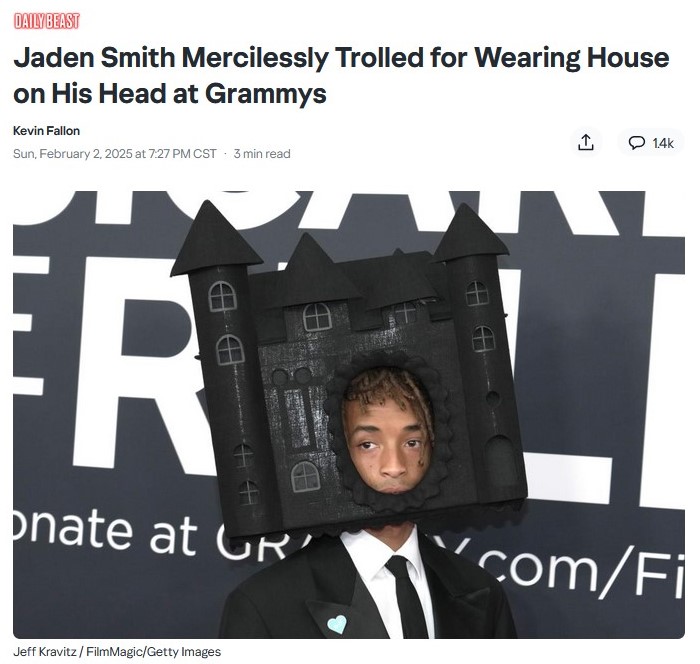

When choosing to wear a house on your head

One person showed up to the Grammys this past weekend wearing a building:

Jaden Smith, the son of Will and Jada Pinkett-Smith, turned heads when he walked the red carpet ahead of 2025’s Grammy Awards—even if he could barely turn his own.

The younger Smith arrived with a diorama of a castle enveloping his head, with his face poking out of a circular hole. The headpiece was created by designer ABODI, which is apparently called “Vampire Castle.” (Vanity Fair pointed me to ADOBI’s site, which lists the so-called “wearable” piece for €4,500, which amounts to roughly $4,602.80. A bargain!)

On its Instagram account, the brand wrote, “The artistic headpiece combines the mysterious elegance of ABODI Transylvania with a bold, modern design inspired by Transylvanian history and the vampire legends of the Bathori.”

This is a unique fashion choice in at least two ways. First, the decision to wear a building on one’s head. Second, by the choice of building to wear.

The only time I have seen something close to this is at a few graduations where a few students put buildings on top of their mortarboard graduation cap. Some of these students were architecture students and this provided a platform for them to display a particular structure.

If people had to wear a building, what would they choose? How about a basic ranch house or a McMansion? Perhaps certain landmarks would be popular, like the Eiffel Tower or the Burj Khalifa. I do not see the trend catching on soon but one might want to be prepared to have an answer.

COVID-19 measures live on in “ghost architecture”

How many signs in public and private spaces can you find providing guidance regarding COVID-19?

Photo by Jack Sparrow on Pexels.com

Beginning in 2020, COVID signage and equipment were everywhere. Stickers indicated how to stand six feet apart. Arrows on the grocery-store floor directed shopping-cart traffic. Plastic barriers enforced distancing. Masks required signs dotted store windows, before they were eventually replaced by softer pronouncements such as masks recommended and masks welcome. Such messages—some more helpful than others—became an unavoidable part of navigating pandemic life.

Four years later, the coronavirus has not disappeared—but the health measures are gone, and so is most daily concern about the pandemic. Yet much of this COVID signage remains, impossible to miss even if the messages are ignored or outdated. In New York, where I live, notices linger in the doorways of apartment buildings and stores. A colleague in Woburn, Massachusetts, sent me a photo of a sign reminding park-goers to gather in groups of 10 or less; another, in Washington, D.C., showed me stickers on the floors of a bookstore and pier bearing faded reminders to stay six feet apart. “These are artifacts from another moment that none of us want to return to,” Eric Klinenberg, a sociologist at NYU and the author of 2020: One City, Seven People, and the Year Everything Changed, told me. All these fliers, signs, and stickers make up the “ghost architecture” of the pandemic, and they are still haunting America today…

The contradiction inherent in ghost architecture is that it both calls to mind the pandemic and reflects a widespread indifference to it. Maybe people don’t bother to take the signs down because they assume that nobody will follow them anyway, Fessler said. Avoidance and apathy are keeping them in place, and there’s not much reason to think that will change. At this rate, COVID’s ghost signage may follow the same trajectory as the defunct Cold War–era nuclear-fallout-shelter signs that lingered on New York City buildings for more than half a century, at once misleading observers and reminding them that the nuclear threat, though diminished, is still present.

I have noticed these leftover signs as well. I recently spotted a retail shop with a sign saying that people without masks were not allowed inside.

There are numerous ways to pass along a message in a large complex society and signs are one way to do so. But, this assumes people will read the signs and then act on them. I have read a little about road signs and how too many signs can make for clutter and less attentive drivers. Is the same true for public health warnings in every public space? How well did people follow these directives? How many people follow the hand washing signs when they are posted in many restrooms (with specific warnings for employees)?

Another way to address this would be to redesign spaces so that there are fewer opportunities to be within such proximity to others or to limit the possible problems of proximity. However, many of our public and private spaces are pretty open. A bank lobby has lots of open space. Grocery stores have rows but these do not go up to the ceiling and checkout areas are right next to each other. Entertainment spaces, like movie theaters and stadiums, put people in proximity to others. And so on. It would be very difficult to address all of these and try to retain some sense of public interaction and space.

What you see when you drive in American cities: buildings

Continuing a short series on what I observed of cities in recent driving journeys, I noticed many buildings. This included residences, businesses, office buildings, schools, skyscrapers in the bigger cities, and more. Some are newer, some are older.

Photo by Joey Kyber on Pexels.com

Driving by at a fast speed, it is easier to observe a sizable building. A really tall structure might be visible for miles. A long structure means a driver has a few seconds to see the building while driving by. Small buildings go by really quickly. The single-family home, an American favorite, is hard to see well at high speeds.

The scale between vehicles, buildings, and roadways can be interesting. Highways might be above the ground, at ground level, or below ground. Because of the highway speed, they are not at the same spatial scale as local roadways. Buildings can tower over a roadway, making it difficult to see over or around them.

The view from the highway does not always present the best side of buildings. In denser areas, the back side of buildings tend to face the highway as their primary orientation is toward a local street. However, some buildings, including suburban office buildings, are set back a bit more from highways and offer different views. Driving down major roads (not highways) in cities can often present a range of structures within a short amount of space. In a land where land uses can be rather uniform in places, the variety of urban structures can make for a fun sight.

While this is not new, I was reminded on these recent drives that many American buildings have hard or cold exteriors. This means a lot of brick, stone, metal, or glass. These materials might be durable or fit a particular style, but this does not mean the buildings necessarily look inviting or warm.

What companies could embody the slogan “Delivering the American Dream”?

I recently saw on the side of a truck the slogan for a company: “Delivering the American Dream.” Before I say which firm uses this, some thoughts on what kinds of companies this could fit:

Photo by Tima Miroshnichenko on Pexels.com

-Take the first part of the slogan: “delivering.” Could this fit a major delivery company? Imagine this as the slogan of UPS or FedEx; would it fit as they delivery so many different items to people?

-The second part of the slogan references “the American Dream.” This could refer to housing and the suburbs. (And I did spot this slogan in the suburbs.) Could a house be delivered or could it refer to some essential parts of homes (furniture, appliances, etc.)?

-The whole phrase suggests the American Dream can be delivered. This is a big promise. As noted above, the Dream can be symbolized by tangible objects but it is also an important ideology encompassing multiple factors.

Time for the reveal: this is the slogan of 84 Lumber. Here is part of the company’s history on their website:

Founded in 1956 and headquartered in Eighty Four, Pennsylvania, 84 Lumber Company is the nation’s largest privately held supplier of building materials, manufactured components, and industry-leading services for single- and multi-family residences and commercial buildings.

The company operates 310 facilities which includes stores, component manufacturing plants, custom door shops and engineered wood product centers in 35 states. 84 Lumber also offers turnkey installation services for a variety of products, including framing, insulation, siding, windows, roofing, decking and drywall.

In the early days, founder Joe Hardy, in conjunction with his two brothers, Norman and Bob Hardy, and family friends Ed Ryan and Jack Kunkle, pooled together $84,000 in funds to purchase land and buildings for a new “cash and carry” lumberyard. The idea was that customers would pay by cash or check and if merchandise was unable to be “carried” out, an additional charge was implemented to have the item personally delivered…

Since then, 84 Lumber experienced exceptional growth, powered by Maggie’s vision to expand, and evolve the business. With tenacious leadership, and the 84 Lumber team’s true passion for their company, a new 84 Lumber emerged from tough economic times to become the powerhouse it is today. Now, 84 Lumber is a certified national women’s business enterprise and has held a spot on the Inc. 5000 list of America’s fastest growing companies for several years in a row. The company hit $7.9B in sales in 2021, and increased to $8.78B in 2022.

The slogan does indeed refer to the single-family home and other buildings. They deliver some of the essential components of structures that many Americans use without any knowledge of where the materials came from.

If any company could live up to this slogan, this seems to be a good fit. While other companies could make a good claim with other goods and services, a close connection to single-family home construction connects closely to the American Dream.

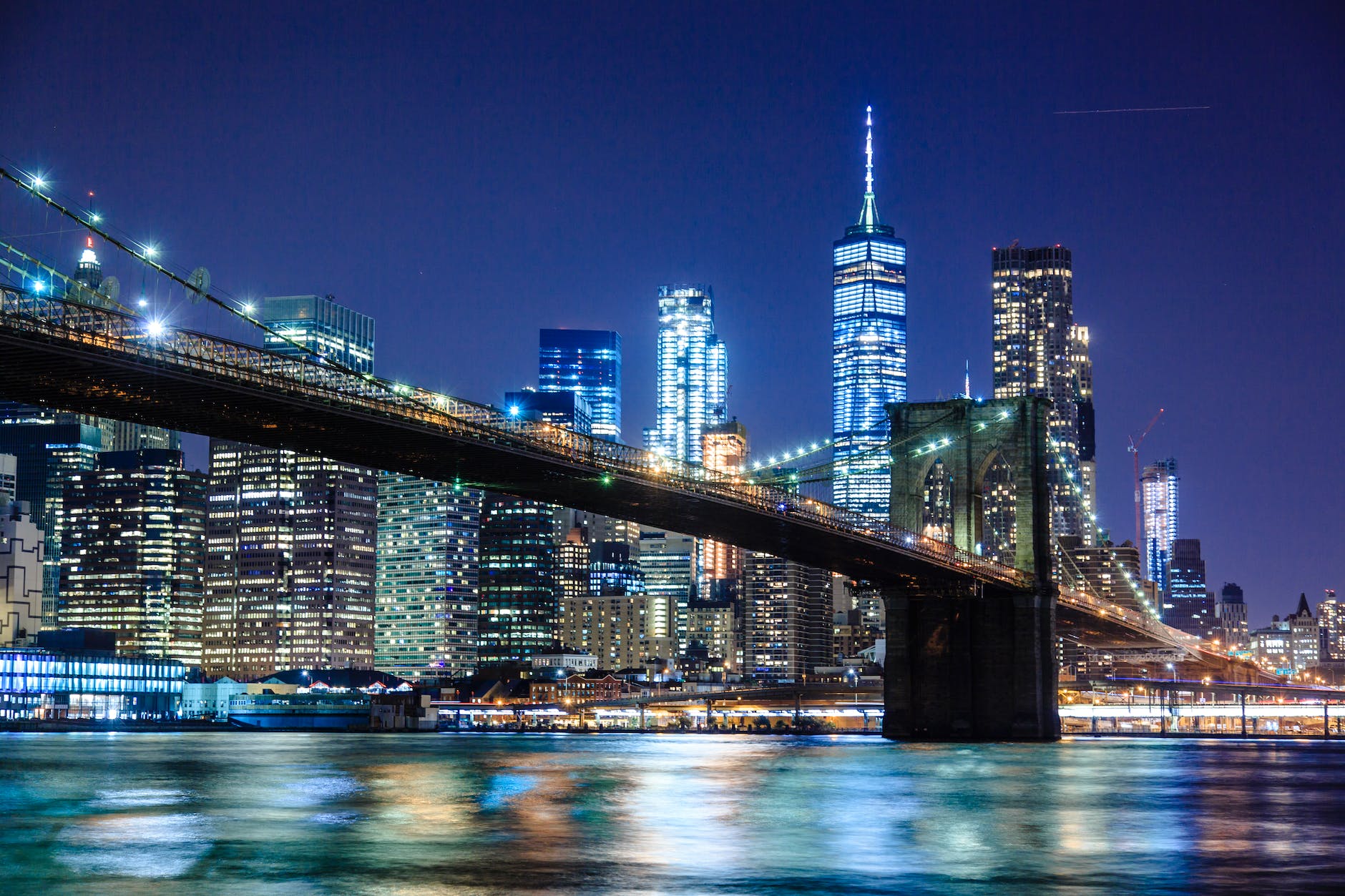
How much all the buildings in New York City weigh

New York City has a lot of buildings in its 300+ square miles. All those structures weigh a lot:

Photo by Michau0142 Ludwiczak on Pexels.com

New geological research warns that the weight of New York City’s skyscrapers is actually causing the Big Apple — whose more than 1 million buildings weigh nearly 1.7 trillion pounds — to sink lower into its surrounding bodies of water.

Given the innovations that helped give rise to all of these buildings, can we expect innovative solutions to the consequences of all that weight? One approach would be to create barriers between the surrounding waters and the habitable areas. However, that does not fully address the weight and the ground under the buildings. Are there ways to prop up large structures?

Bringing a physical place to the brain in a mind palace

I heard about the idea of a mind palace years ago but this recent description reminded me of the interesting idea of putting a physical place into one’s brain:

Photo by EKATERINA BOLOVTSOVA on Pexels.com

The most popular technique to improve memory is the method of loci, also known as the mind palace (or memory palace). This ancient Greco-Roman technique can help you improve your memory in ways you never thought possible.

Greek and Roman orators memorized lengthy speeches by building structures (such as a palace) inside their imagination. They would then strategically place each word or idea they needed to remember in a specific location inside their mind palace. They could then later mentally retrace their steps and recall the details when they needed them.

This practice might then lead to physical changes in the brain structure:

Using MRI scans, researchers could see that mnemonic training elicited changes within the brain’s network. They also saw discernable differences in connectivity patterns that weren’t present in participants without training.

This reminds me of the idea of “distributed cognition” where humans use external devices to record information. Think of a notepad or a voice memo on a phone. The information is moved from the brain in acknowledgment that we cannot remember everything.

While the mind palace does not put the information outside the brain, it imports a device in which to record the information. It encodes it in the abstract concept of a building. Humans know what it is like to walk through buildings and/or follow directions to a desired goal. The conceptualized building is not real but it holds the information within the brain in a way that makes it easier to recall.

Physical structures do not just exist in a material reality, subject to construction, erosion, and other forces. They can live in our minds in ways that mean not just the information stored in them stays but also likely the buildings themselves live on there.

Proposed buildings that could go on for miles

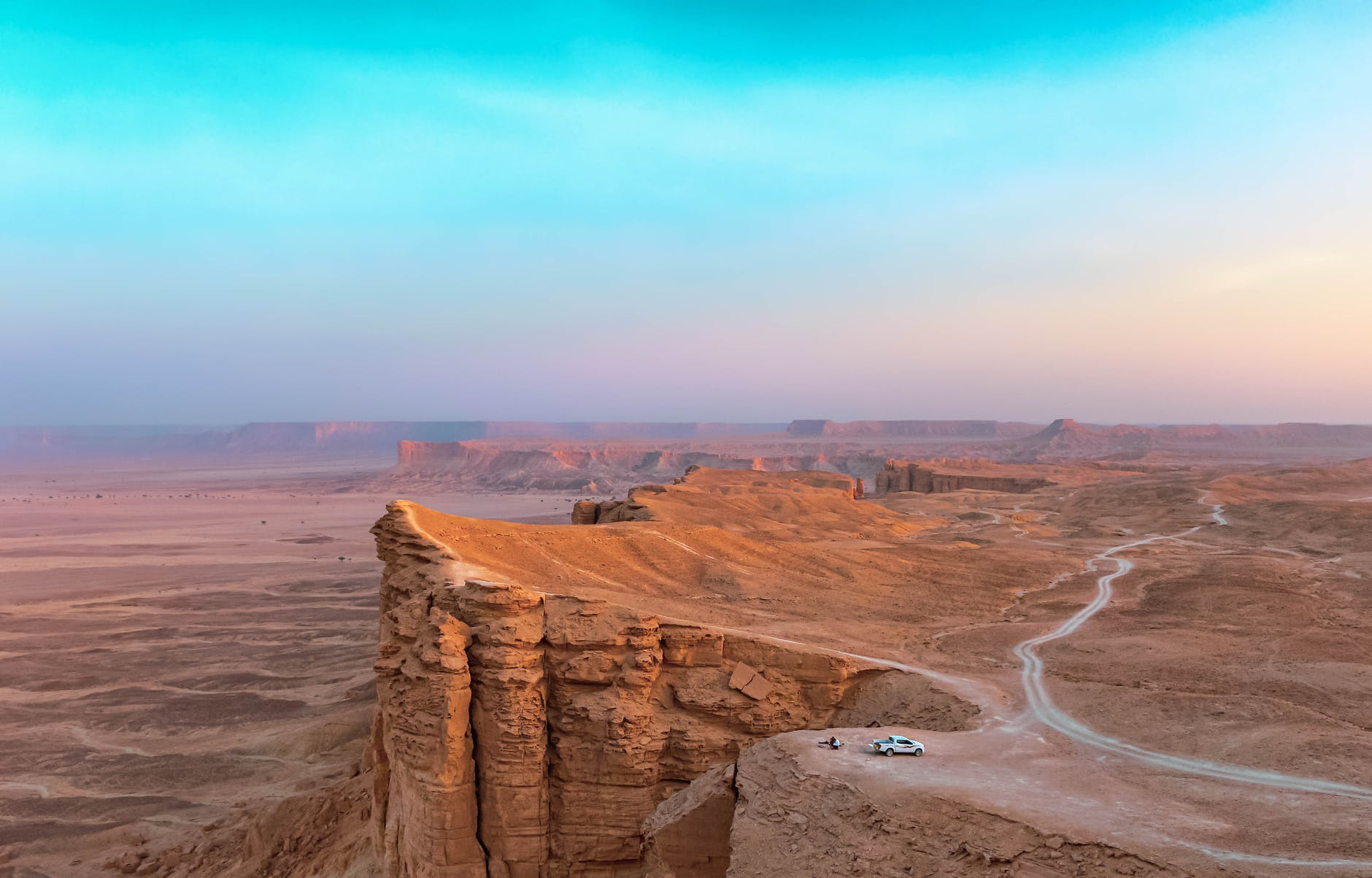
A proposed new city in Saudi Arabia may include the world’s largest buildings:

Photo by Mohammed Ajwad on Pexels.com

NEOM, the brainchild of Saudi Crown Prince and de facto ruler Mohammed bin Salman, aims to build twin skyscrapers about 500 meters (1,640 feet) tall that stretch horizontally for dozens of miles, the people said.

The skyscrapers would house a mix of residential, retail and office space running from the Red Sea coast into the desert, the people said, asking not to be identified as the information is private. The plan is a shift from the concept announced last year of building a string of developments linked by underground hyper-speed rail, into a long continuous structure, the people said.

Designers were instructed to work on a half mile-long prototype, current and former NEOM employees said. If it goes forward in full, each structure would be larger than the world’s current biggest buildings, most of which are factories or malls rather than residential communities.

Imagine a building that stretches on for miles. As one follows it with their eye, it just keeps going and going. A building that goes past the horizon.

How does one get around within such a building? Moving walkways? Segways? An interior mass transit system? Or, exit the building and use a vehicle out there?

I could imagine a fairly self-contained community inside such a building. Going outside might not be very necessary except for going to a different city. What an American suburbanite might desire to be within a ten minute drive just happens to all be in the same structure.

Since this is in the planning stages, it could be years for the development to arise and stretch out to the point where the buildings are the largest and/or longest in the world.

Discovering the “unaccounted” time at work and then designing work spaces around that

I have considered the design of offices and work places before (here and here as two examples) but have not seen this particular issue described: when researchers found that workers had “unaccounted” time in the office, this led to changing the workplace and new problems.

Photo by Cadeau Maestro on Pexels.com

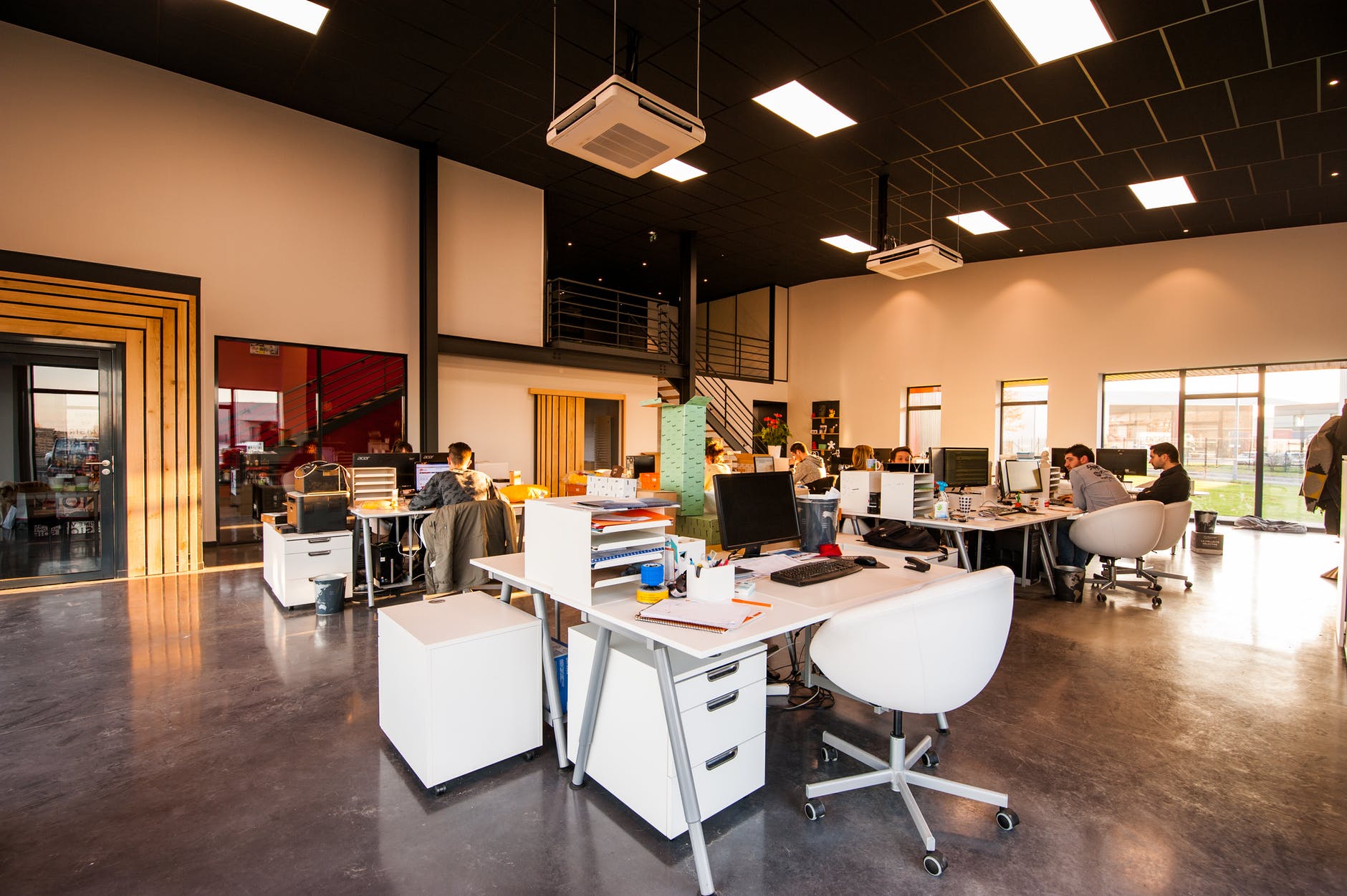
Wilkinson, who designed Google’s 500,000-square-foot Googleplex campus in Mountain View, California, says he had his first epiphany about the office in 1995. While reviewing old studies and surveys about worker habits, he came upon a study that measured how office workers spent their time between 9 am and 5 pm. He was immediately struck by just how much “unaccounted” time workers were spending away from their desks—that is, not in meetings or any other explicit work function. But Wilkinson found it hard to believe that all of these workers were taking multi-hour bathroom breaks or simply leaving the office together. They were still in the office; they were just hanging out in hallways, chatting in foyers, clustering around someone else’s desk as the occupant tells a story.

“It blew my mind,” he told us. “And it made our team realize that the planning of the office was fundamentally flawed.” His realization was straightforward: Office design had long revolved around the placement of desks and offices, with the spaces in between those areas treated as corridors and aisles. But that “overemphasis on the desk,” as Wilkinson recalled, “had worked to the detriment of working life, trapping us in this rigid formality.”

And so he set out to liberate it, shifting the focus of his designs to work that took place away from the desk. In practice, this meant designing bleachers and nooks in places that were once poorly lit corridors, and spacing out desk clusters to incentivize more movement among teams. A kinetic office environment, the idea went, could increase spontaneous encounters, which would then spark creativity. The design also allowed for private areas—many with comfy couches and plush ottomans to replicate a family room feel—to do deep work, away from the noisy bullpen of desks.

This led to tech campuses like that of Facebook, Apple, and Google. What could go wrong?

The danger Wilkinson is describing is, of course, exactly what happened. The new campus design had a profound impact on company culture. Some of that impact was undeniably positive: He created work spaces where people genuinely want to be. But that desire becomes a gravitational pull, tethering the worker to the office for longer and longer, and warping previous perceptions of social norms.

Two thoughts strike me from reading this book excerpt:

  1. The idea of “unaccounted” time. How much of human daily activity is not directly related to productivity or a particular task? How much of that unaccounted time has long-term benefits such as stronger relationships and closer community? Part of the full human experience is having unaccounted time. On the other hand, it is not a surprise that if that unaccounted time occurred on company time, corporations and organizations would want to maximize it. (See this recent post about time, space, and calendars pushed into predictable patterns.)
  2. Humans have the ability to shape buildings and other physical settings to encourage particular behaviors. Offices are not just empty receptacles into which workers are placed willy-nilly. Religious buildings shape worship and communal experiences. Land use policies encourage more private spaces or more public spaces and these choices have consequences. This is simply part of our daily lives where we shape and are shaped by the spaces we are in.

Most of the American built environment is not designed

Sarah Williams Goldhagen argues in Welcome to Your World that despite what we know about the importance of the built environment, few American environments are designed:

Photo by Pixabay on Pexels.com

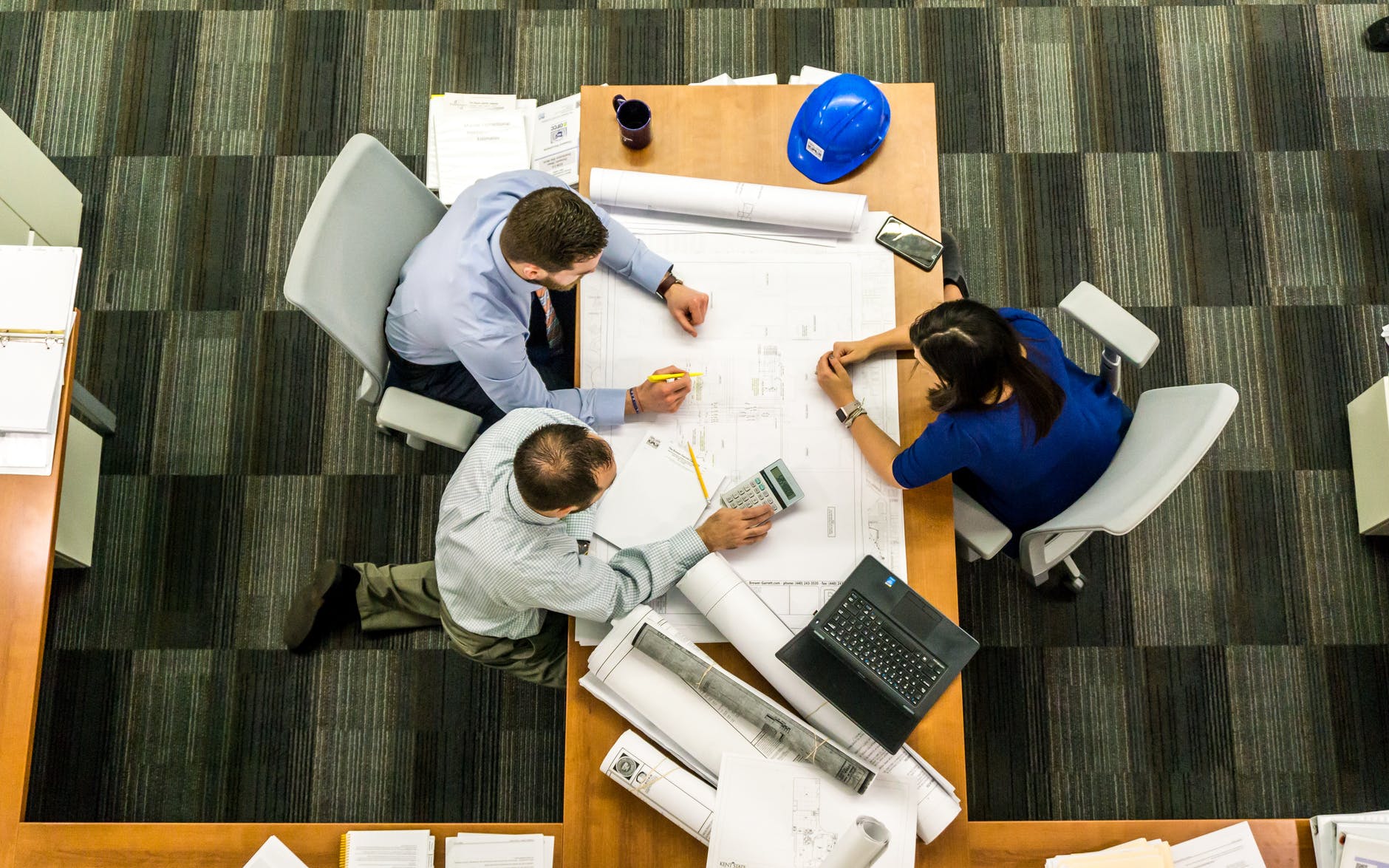
Most of what we see from our windows or in our surroundings has been constructed, but it was not really designed in any but a rudimentary sense of the word. In the United States, 85 percent of new construction – whether it is a new bridge, an urban park, a housing development, or a school addition – is realized at the hands of construction firms collaborating with real estate developers or other private clients. Many of these buildings bypass designers (a catchall term for professionals involved in designing the built environment, including architects, landscape architects, interior architects, urban designers, city planners, civil engineers, and other sorts of civil servants) completely, or employ them only cursorily, to review and stamp their approval on drawings… (xxi)

Why is this the case?

In the United States and in most other parts of the world today, many people believe that engaging a highly trained design professional is an unnecessary expense. True, wealthy individuals and corporations with plenty of assets do buy design to add beauty or prestige, and public and private institutions aspiring to serve as cultural stewards hire trained, informed professionals for complex structures such as skyscrapers. But this is not the norm.

The reason aside from financial considerations is that most projects in the built environment are commissioned on the basis of and judged by two complementary standards. Safety first: building codes and legislation and inspectors enforce standards that ensure that our bridges and buildings and parks and cityscapes will withstand gravity and wind, will weather the vicissitudes of climate and the ravages of time, and that their smaller features, such as electrical systems and stairways ,will not shock or trip people up. Function next: people expect projects to serve an institution’s or private individual’s daily needs both effectively and efficiently, which often means with as little expenditure of resources – space, time, money – as possible. (xxii)

In other words, design and beauty and their effects on people and their interactions are not considered as much as they should be. An emphasis on safety, initial cost, and function shortchanges what the built environment could offer in the long run. Thus, Americans often get uninspiring buildings and places.

This reminds me of three similar arguments:

  1. James Howard Kunstler makes a similar argument about the American suburbs. Why would people care about such places that offer so little in terms of the built environment?
  2. Sociologist Eric Klinenberg argues that public buildings and spaces could offer much to enhance community life if they were built with design and people in mind. For example, schools and libraries could be true gathering places that bring people together.
  3. Architect Sarah Susanka argues Americans do not need bigger homes but rather homes that are designed for them and that will enhance their life. Instead, the homes that Americans get – not designed by architects – are lifeless boxes.

Given the social forces at work leading to this, it would take substantial effort to have Americans value and employ better built environments.