Legally Sociable

Pleasant Musings on Sociology, McMansions and Housing, Suburbs and Cities, and Miscellaneous Errata.

Menu

Skip to content
  • Home
  • About
  • Sanctifying Suburbia
  • Building Faith and Religious Buildings
  • Published Books and Articles
  • Defining a McMansion
  • Why Americans Love Suburbs
  • Learning About a Suburb
  • Suburban Homes on TV
  • The Future of Suburbs
  • Religion in the US suburbs
  • Contact

Tag Archives: civic engagement

The example of megachurches and creating “a society of joiners”

Posted on December 11, 2024 by legallysociable

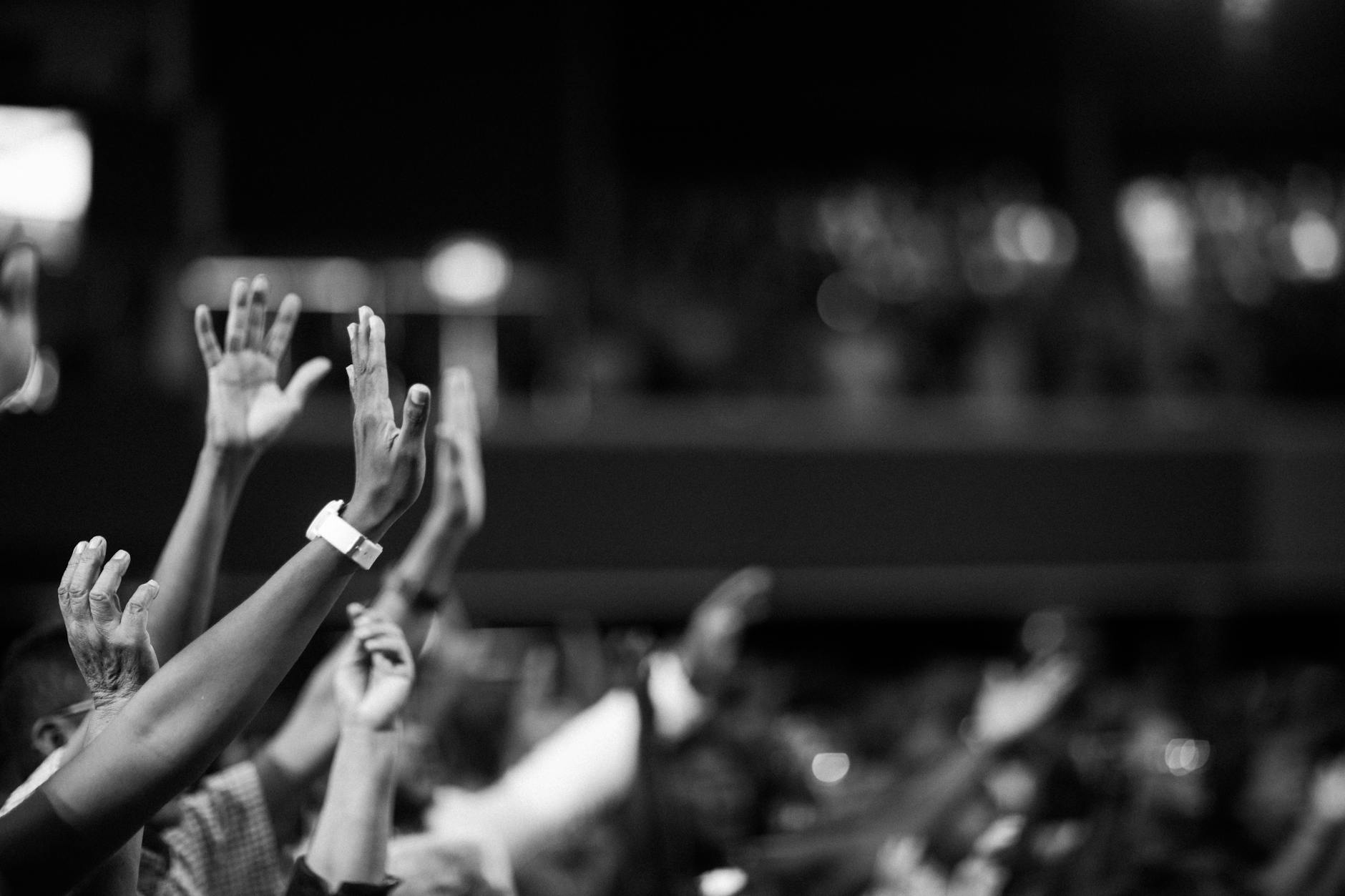
If Americans need help in participating in civil society, Barack Obama suggests perhaps they can learn from megachurches:

Photo by Luis Quintero on Pexels.com

Which is why this may need to start by just looking for opportunities for people to once again become a part of a society of joiners. Create more organizations from elementary school all the way through adulthood, that bring people together to do something. I’ll give you an example: at a time when organized religion all over America is struggling and in some denominations collapsing, mega churches are actually growing in leaps and bounds. In some cases, really quickly. And while I’m sure there are many reasons for this, one of the reasons is that mega churches understand that belonging precedes belief. If you show up at one of these churches, they don’t start off peppering you with questions about whether you’ve accepted Jesus Christ as your Lord and Savior. They don’t quiz you on the Bible. They invite you in, introduce you around, give you something to eat, tell you all about the activities and groups you can be a part of from the young adult social club to the ballroom dance group to the men’s choir which for those of you not familiar that’s where they put folks whose voices aren’t quite good enough to be in the main choir. But who are allowed to perform maybe once every fourth Sunday. The point is,

Megachurches — I’m sorry, brother? Are you in — you know what I’m saying is true. (Laughter).

The point is megachurches are built around ‘let’s get you if here, doing stuff, meeting people, and showing you how you can participate and be active.’ It is about agency and relationships, it is not about theology or handouts. And they’re trying to create a big tent where lots of different people can feel comfortable. Once that happens, then they can have a deeper conversation about faith in a way that folks aren’t spooked by. What megachurches are doing is also a good argument for localism. Lots of us obsess about our press, social media, obsesses with what’s happening in Washington and I understand that because it can be crazy.

A lot of our best work will happen from the bottom up instead of the top-down. If we’re going to get better at pluralism, it’s going to happen in the neighborhoods, in the communities where we spend our time, and in the schools where our kids develop the skills and learn how to negotiate and work together across differences. Now, at this point you may be thinking, “All that sounds pretty good, but pluralism depends on everyone following a certain set of rules, that’s what you say, Obama.

Megachurches as we often think of them today emerged in an era when civic engagement declined. Even as Bowling Alone provided a persuasive argument about less involvement in civic groups, megachurches grew across the United States. But, there are all sorts of questions one might pose to the argument made above:

  1. Are megachurches effective in getting attendees to participate in programs or activities? Does the low barrier of entry to visit lead to increased or deeper participation?
  2. Is there something uniquely religious about megachurches or are they just another kind of organization that others could mimic? In other words, what other models of moving people toward civic action exist alongside megachurches?
  3. Do megachurches bring people together? It is one thing to attend a congregation; it is another to go beyond what people might be willing to do outside church or cross particular boundaries? Are megachurches effective at doing this compared to other kinds of congregations or kinds of organizations?

Or perhaps megachurches work well as an example here because (1) they are known and (2) they are successful (i.e., they are growing).

.

Share this:

  • Click to share on X (Opens in new window) X
  • Click to share on Facebook (Opens in new window) Facebook
Like Loading...
Posted in Religion, Sociology / Tagged Bowling Alone, civic engagement, megachurches, President Obama / Leave a comment

What do atheist churches do?

Posted on January 12, 2024 by legallysociable

A sociologist of religion describes what she found when studying “secular congregations”:

Photo by Quang Vuong on Pexels.com

Many features of atheist churches in the U.S. are directly borrowed from religious organizations. At Sunday Assembly, where I spent three years doing research, services include collective singing, reading inspirational texts, silent reflection and collecting donations. They center around a central lecture given by a member of the congregation or a member of the larger local community. I attended one service where an astronomer gave a talk about the New Horizons spacecraft’s mission to Pluto. At another service, a member of a local community garden organization talked about building community through her community garden program.

Atheist church organizers I met told me that they intentionally borrow the structure of a church because they see it as a good model for building effective rituals and communities. More generally, the structure of a “congregation” is popular and familiar to most attendees.

However, there are key differences. Sunday Assembly has no hierarchical structure, and there is no pastor or minister, meaning that decisions are made by the community. Attendees share duties for running the services and finding speakers and readings.

The other key difference is the complete lack of reference to the supernatural. Lectures and rituals I have encountered at atheist church services are centered around affirming atheistic beliefs, celebrating science, cultivating experiences of awe and wonder for nature, and creating communities of support.

Communities and rituals are pretty important to human beings. So are religious beliefs and practices.

I wonder how much the decline of civic organizations and engagement also contributes to these kinds of congregations. Yes, there is a decline in religiosity – but there is also less engagement with civic groups and community life.

Additionally, will the same sorts of issues that religious congregations face – disagreements and fracturing, abuses of power, difficulties acquiring resources – be ones that secular congregations encounter?

Share this:

  • Click to share on X (Opens in new window) X
  • Click to share on Facebook (Opens in new window) Facebook
Like Loading...
Posted in Religion, Sociology / Tagged atheists, civic engagement, community, congregations, religiosity / Leave a comment

If “the global town square” is dead and Americans do not have real town squares, where can Americans turn to talk or express their opinions?

Posted on October 19, 2023 by legallysociable

A perceived decline of X/Twitter as a “global town square” has consequences for where or how Americans can gather and deliberate (or just share what they want to say):

Photo by Lisa Fotios on Pexels.com

If you’re in your 30s or your 40s, and you’ve already built your clout and you’ve made your place in the world and you’re now being told you’re going to have to go start over somewhere else, you probably find that idea profoundly exhausting. But go talk to a 13-year-old. Are they exhausted by the idea that they’ll have to be online? No. They’re thrilled. Ask an 8-year-old what he wants to be when he grows up; he’s going to tell you he wants to be a YouTuber. Don’t sit here and tell me that the social web is over. The social web is being reborn, and I’m sorry that that makes you tired.

The global town square is dead. Long live 45 different global town squares.

Yes, and no one is brave enough to write that maybe it’s a good thing that now there are 16 different places to post. Weren’t we all supposed to be upset that there were these monolithic platforms and that we were all governed by their rules? We had no recourse if a content moderation decision went against us. Weren’t we supposed to be upset about the concentration of power? Well, now we have what we asked for. There is no longer a concentration of power in social networks. And so, instead of saying social networks have no future, I think the more interesting question to ask is: What is the future of these platforms that are being born?

The idea here is that the social media realm is fracturing into a lot of other smaller spheres. This has happened before in other media forms; television went through a time in the late 1990s and early 2000s where the number of channels and content expanded and audiences fractured or in print when texts were rare and controlled and then exploded with the printing press.

The bigger issue might be that it is not like American society has a baseline town square where people could gather and talk if social media fractures. Go back to newspapers? The nightly TV news? The water cooler in an era of work from home? In terms of urban planning, most American communities do not have town squares or civic plazas and if there are central spaces, relatively few people gather there. Civic engagement and participation in voluntary associations has declined. American communities often lack third places, settings between home and work where people might regularly interact.

Something or some setting will likely arise for Americans to share their opinions if social media fails to play this role. But, whether it is a long-term space that hosts robust discussion as opposed to simply sharing thoughts is another matter.

Share this:

  • Click to share on X (Opens in new window) X
  • Click to share on Facebook (Opens in new window) Facebook
Like Loading...
Posted in Gadgets and Technology, Sociology / Tagged civic engagement, social media, town square, Twitter / Leave a comment

Fast food locations as the great American gathering places

Posted on June 26, 2019 by legallysociable

In a society built around cars, is it surprising that McDonald’s might emerge as a consistent gathering place?

For America’s graying cohort, often sectioned off by age at places like senior centers, the dining room of a fast-food restaurant is a godsend. It’s a ready-made community center for intergenerational mingling. The cost of admission is low—the prices beckon those on fixed incomes—and crucially, the distance from home is often short. And that’s just one demographic.

In spite of the plastic seats, the harsh lighting, and in many cities, the semi-enforced time limits for diners, people of all sorts can sit and stay and stay and stay—at birthday parties, first dates, father-daughter breakfasts, Bible-study groups, teen hangs, and Shabbat dinners. Or at supervised visitations and meet-ups for recovering addicts. For those who crave the solace of a place to call home that is not home, a fast-food dining room offers it, with a side of fries…

In the days following the 2014 shooting, the Ferguson McDonald’s had served as a safe harbor for cops on coffee breaks, for reporters needing tables and internet to write and file their dispatches, and for demonstrators escaping clashes with police. “When a protester blasted with tear gas comes moaning through the door,” Matt Pearce of the Los Angeles Times reported at the time, “there are bottles of soothing McDonald’s milk to pour over his or her eyes.” One worker had been a classmate of Michael Brown and knew his regular order: a McChicken, medium fries, medium drink. (Similarly, the Burger King and McDonald’s near New York City’s Zuccotti Park doubled as unexpected safe spaces for the mostly white demonstrators during the months-long Occupy Wall Street protests in 2011 to gather, organize, and snack.)…

Fast-food restaurants are more than just culturally pluralistic social hubs for unremarkable meals, meaningful rituals, and uncommon encounters. And they are more than just community centers of first and last resort. They’re also places where people can set about building connections and performing the work of whatever their interpretation of repairing the world might be.

Does this mean that fast food restaurants are the problem or they are a symptom of major social issues? The last paragraph of the story cannot help but suggest McDonald’s is problematic in many ways yet the rest of the piece suggests it fills a void.

The civic realm is an interesting place for Americans in recent decades. Personal media use on a daily basis keeps going up. Participation in a number of civic groups has declined. Voter turnout has declined. Church attendance has declined for many religious groups. Trust in public institutions is down. The rise of the automobile roughly 100 years ago means many Americans spend time each day alone in their vehicle. Single-family homes allow people to retreat to their private homes (large from a comparative perspective). Political discourse is rarely civil or productive. The best third places in many communities are private operations involving food (think Starbucks, fast food, local restaurants) with the occasional space that can bring people together. Since McDonald’s are cheap, omnipresent, and stable, why can’t they serve as effective third places given the dearth of other options?

If McDonald’s are not a preferred option, it would be interesting to see a movement dedicated to creating non-profit third places for all residents in many communities. Many current options cater to particular groups of people or have particular goals in mind. Offering an attractive and inclusive third place would take quite a bit of work as would reminding people that this is something they would enjoy participating in.

Share this:

  • Click to share on X (Opens in new window) X
  • Click to share on Facebook (Opens in new window) Facebook
Like Loading...
Posted in Sociology / Tagged civic engagement, fast food, McDonalds, restaurants, third place / 8 Comments

Low turnout continues in local elections, Chicago as just one example

Posted on February 27, 2019 by legallysociable

The primary for Chicago mayor concluded yesterday and one of the leading stories is the low turnout among the electorate.

There are multiple ways to interpret this data and I would guess some would suggest Chicagoans are not interested in affecting their own fate or argue fourteen mayoral candidates was simply too many. But, here is what I would not want to get lost in the shuffle: voter turnout is low in many American local elections. This is true in some of the biggest cities as well as in small towns and suburbs. And this is in a country that claims to like local government and the ability of residents and community members to be closer to elected officials. While the federal government is large and far away, municipal officials have to address local issues and connect with the needs of their neighbors.

Given the larger decline in participation in civic activity in the United States plus lower confidence in institutions and lower levels of trust,  perhaps low voter turnout is not surprising. Yet, one way to counter polarization, divides, and inaction would be for community members and neighbors to participate more in local politics where the distance between themselves and elected and appointed officials is much lower. Of course, such activity is not a guarantee of good outcomes. For example, people can be protectionist at the local level (see examples of NIMBY across locales here, here, and here) just as well as at the national level. At the same time, there are enough stories out there where cities, suburbs, and small towns still do come together to tackle important issues they face. Think of Elwood, Illinois which tried a development plan to bring in jobs and revenue that did not turn out as they had planned.

If local government is a feature of civic life many Americans like, higher rates of participation in voting and serving could help ensure its long term viability.

Share this:

  • Click to share on X (Opens in new window) X
  • Click to share on Facebook (Opens in new window) Facebook
Like Loading...
Posted in Politics, Sociology / Tagged Chicago, civic engagement, elections, local government, voting / 4 Comments

Accomplishing civic project is “90 percent sociology”

Posted on June 18, 2016 by legallysociable

One local leader in Lakeland, Florida suggested bringing high-speed Internet to the whole county requires sociology:

The key to giving everyone in Polk County access to affordable high-speed Internet has less to do with bandwidth and more to do with community leaders banding together to achieve that goal.

“It’s 10 percent technology and 90 percent sociology,” said Don Selvage, Lakeland city commissioner. “The success or failure of introducing broadband to our citizens rests directly on the shoulders of policymakers in government, corporate executives in the private sector, and grassroots efforts from civic leaders.”

In other words, cooperation and social interaction is required in order to bring about a benefit to all residents. I think he is using the discipline as shorthand for people getting along and compromising.

On the flip side, does this mean that when things are not accomplished in the civic realm it is the result of bad sociology?

Share this:

  • Click to share on X (Opens in new window) X
  • Click to share on Facebook (Opens in new window) Facebook
Like Loading...
Posted in Sociology / Tagged civic engagement, local government, sociology / Leave a comment

The cul-de-sac’s ability to foster community

Posted on October 19, 2013 by legallysociable

A new study suggests the bulb cul-de-sac helps foster cohesion more than other street designs:

In sociologist’s terms, Hochschild ultimately concluded that people who live in traditional bulb cul-de-sacs have the highest levels of attitudinal and behavioral cohesion (covering both how they feel about their neighbors and how much they actually interact with them). People who live on your average residential through-street have the lowest levels (in between the two are “dead-end” cul-de-sacs that lack that traditional, circular social space)…

In his latest research, Hochschild visited 110 homes in demographically comparable Connecticut communities, a third of them located on bulb cul-de-sacs, a third on dead-end cul-de-sacs and a third on through streets. In each case, he tried to interview sets of four adjacent households (as in the diagram above) to home in on how people relate to their immediate neighbors. He asked each household about 150 questions about how they rate their relationship with their neighbors, how often they help each other and socialize together. His results controlled for differences in income, the number of children in a household, and the length of time a family lived on the block…

Hochschild theorizes that there’s something more than self-selection going on here. Hardly any of the people he talked to said they moved to a cul-de-sac in search of (or even anticipating) its neighborliness. Rather, the design of the street itself seemed to facilitate it. If you want to throw a block party on a through-street, you need a permit. If you want to do the same on a cul-de-sac, the street is already effectively blocked off. In a cul-de-sac, Hochschild found, it’s much easier to privatize public space, either by turning the street into an extension of the driveway, or by landscaping the rights-of-way as if they were a private lawn.

Cul-de-sacs create a kind of natural panoptican around children at play. They also give rise to what Hochschild calls “geographically common problems” to be solved, like fallen trees or unplowed snow blocking every family’s exit.

Would evidence from a study like this convince people who don’t like cul-de-sacs that they have some merit? How exactly do you weigh the benefits of community versus the downsides of cul-de-sacs?

Another issue critics might have of cul-de-sacs, even with Hochschild’s findings: they may be good for building internal solidarity with the nearby families – who probably tend to be like you since they live in similar kinds of housing – but that doesn’t necessarily lead to broader social ties and civic engagement. Is a more cohesive cul-de-sac then more likely to engage others outside the cul-de-sac? Or does the time spent building cohesion limit the group’s reach? Such a study could also push those who critique the loss of community in suburbs or amongst sprawl to be more specific with what they envision for community. New Urbanists talk about community all the time but what exactly does that mean? Is it characterized by knowing your neighbors, interacting regularly in public spaces, participating in local politics, all of the above, or something else? Community can exist on multiple levels and it strikes me the cul-de-sac community is an extension of the American household to the similar, nearest neighbors but possibly not much further.

Share this:

  • Click to share on X (Opens in new window) X
  • Click to share on Facebook (Opens in new window) Facebook
Like Loading...
Posted in Sociology / Tagged civic engagement, community, cul-de-sacs, neighborhoods, New Urbanists, sprawl, suburbs, urban planning / Leave a comment

Politicizing the American coffee shop at Starbucks

Posted on October 13, 2013 by legallysociable

Starbucks has jumped into the political fray over the government shutdown with encouragement to sign a petition, wear badges, and follow a hashtag:

Because what’s most interesting about the “Come Together” campaign is what it aims to achieve from a systemic and meta-political point of view: It’s attempting to politicize previously un-politicized places. The coffee shop. The corner Starbucks. That zone of friends and family and familiar strangers, that place of light roasts and light jazz and assorted pleasantries.

This isn’t the first time, of course, that Starbucks has put its, er, cup-acious reach to work for political messaging. Last December, CEO Howard Shultz asked employees in Washington, D.C. stores to hand-write “Come Together” on cups—the better to encourage bipartisanship. Last month, Shultz penned an open letter asking gun-rights activists to stop bringing guns into Starbucks stores. (“Pro-gun activists have used our stores as a political stage for media events misleadingly called “Starbucks Appreciation Days” that disingenuously portray Starbucks as a champion of ‘open carry.’ To be clear: we do not want these events in our stores.”) And earlier this week, the store offered a promotion—of itself and of, more explicitly, “civility”: “If you come into Starbucks and buy someone else their favorite beverage, we’ll give you a free tall brewed coffee.”

This is what some political theorists refer to as “sub-politics”: politics that play out on a level below traditional political institutions. And Starbucks’ efforts suggest not just a recognition that a store can double as a political platform; they also echo, for better or for worse, what coffee shops were, hundreds of years ago: bustling intellectual marketplaces. Places that were about more than coffee and baked goods and anodyne exchanges—places that were, in fact, about debate, political and otherwise. Places that used their ability to bring people together to join them together in conversation.

I wonder how sociologists who tend to like and promote “third places” – spots between home and work where citizens can form relationships and discuss civic and political matters – would view these attempts by Starbucks. It is not that coffee shops and other such places shouldn’t host political discussions but rather that a large corporation is leading the political charge, not the people. How exactly does this work: can Starbucks sell more coffee/other goods through its activism/patriotism versus how can Starbucks not alienate some consumers (or they have to stick to more bland, bipartisan messages)? There is potential here for a long-term mixing of sacred American values in interesting ways: promoting the public good may be very good for business.

Two other side notes:

1. Is Starbucks really the American coffee shop? It is probably the most recognizable coffee shop brand…

2. Try to imagine other major corporations making such a push. McDonald’s? Coca-Cola? Disney?

Share this:

  • Click to share on X (Opens in new window) X
  • Click to share on Facebook (Opens in new window) Facebook
Like Loading...
Posted in Business and Economy, Politics, Sociology / Tagged civic engagement, corporations, Starbucks, third places / Leave a comment

Discussing the picture-perfect suburb full of volunteerism and community spirit

Posted on March 12, 2012 by legallysociable

Many communities may say they have community spirit but Wyoming, Ohio may just have more:

In Wyoming, it seems, the homes are a little bit bigger, the students are a little bit smarter and now even the water tastes better.

This city of 8,428 people, which rests on 2.87 square miles of land in the Mill Creek valley, is lovely and charming. The people are affluent and well-educated and happy to tell you how great Wyoming is…

After providing some details about the mostly volunteer fire department, groups in the town that help the community, and the general civic engagement of the residents, a sociologist offers an explanation:

“In sociology, it’s what is called a virtuous cycle. The more people volunteer the more people volunteer,” said Jeff Timberlake, associate professor of sociology at the University of Cincinnati.

Timberlake said for good things and for bad, a momentum can happen. When people organize in a way to help their community, it becomes easier for the next person to join.

“It is never just a fluke, when there is something sustained like this. It happens on purpose.”…

“Once a place has a tradition of volunteering, or a tradition of anything, really, it becomes ingrained,” Timberlake said.

That, he says, is a powerful social force. People want to belong, he said. And if you are the only person not helping your community, you can feel left out. That, he says, is a powerful social force.

“Soon enough, people ask themselves, ‘What does it mean to live here?’ ” Timberlake said. “In a place like Wyoming, it sounds like they know the answer.”

Another way we might describe this is to suggest that volunteerism is built into the character of the community. As Timberlake suggests, this character doesn’t simply happen: residents and local groups continually have to engage in the community. This community spirit could disappear rather quickly if the community, or enough residents, chose this. Then, you might be left with a more common split of community duties: 80% do little and 20% or less do most of the heavily lifting. By sustaining a culture where volunteerism and engagement is expected, the character of this community can continue.

It is not uncommon for community leaders to suggest that their community is active and engaged. I’m always a little skeptical when I hear this for two reasons:

(1) It makes the community look better so there is some self-interest here. What politician or leader wants to openly admit that people in their community don’t care? Even in the suburbs, a place where critics say few people know their neighbors or want to get involved in larger issues beyond their homes, it is a badge of honor to say that this particular suburb is a real community. There is also often an implicit comparison here between communities: with a leader saying that their town is really marked by volunteerism and a community spirit, the implication is often that other surrounding towns don’t offer the same.

(2) Few people have objective measures of community spirit or volunteerism. I wonder if leaders tend to think about what range of people are involved in the community: is it the same people all the time or are there different faces? Even then, could anyone say with certainty what percent of the adults in the community are truly engaged? Or even better, could you compare one town’s community spirit to the next town’s? There are ways you could get at this (perhaps start with Census data and look at the percentage of residents who have lived in the community more than five years) but I would guess few communities have this kind of evidence to back up their claims.

I don’t doubt that some communities have higher levels of engagement than others but getting at this in all its complexity certainly would require more evidence and work.

Share this:

  • Click to share on X (Opens in new window) X
  • Click to share on Facebook (Opens in new window) Facebook
Like Loading...
Posted in Places, Sociology / Tagged character, civic engagement, communities, methodology, volunteers / Leave a comment

Seeing public libraries as the “third place” between home and work

Posted on March 10, 2012 by legallysociable

The new library director in Evanston, Illinois suggests that public libraries “should be the third most important places in people’s lives”:

Evanston’s new public library director says that the city’s library should be the third most important place for citizens, after work and home, or school and home.

“The public library should be the third most important place for engagement and public discourse, for people to research topics of interest,” said Karen Danczak Lyons, who was appointed as next director of the library during a recent library board meeting…

Like most government entities, the library is faced with budget challenges as it looks to balance the need for revenue with the desire to tread lightly on public pocketbooks. Though she has not taken an in-depth look at the library’s current and projected budgets, Lyons said her first responsibility is to determine how to fund the library’s stated priorities.“Foremost in my mind is serving all areas of the community,” she said. “Where we begin the discussion is to look at what you’re paying right now for your public library and where that funding level is compared to other services. Let’s talk about the role of the library in your life, whether it’s a fair return on the investment or whether you want more.”

This argument reminded me of Ray Oldenburg’s idea of a “third place” where citizens could interact with each other between the spheres of home and work. Could the library really be the center of “engagement and public discourse”? Even though I love reading and learning, I can honestly say I’ve never been to a lecture or discussion at my public library. That isn’t to say that the library doesn’t hold such events – they do – but the events are rare and don’t look interesting enough. (Odd note: our library has been promoting more video game days/friendly competitions for kids. I understand that the library is a safe place and that you want kids around books but are video game competitions really the way to get kids to read?)

I wonder how many residents see the library as a center of civic discussion and engagement (or want to see it as such). I would think another viewpoint is more common, particularly among middle to upper-class Americans: the library is more like a free (or really cheap) bookstore or movie rental place. Many Americans don’t read regularly; I’ve seen different statistics that suggest somewhere around 50% of American adults don’t read one book a year (see some other 2009 statistics about reading from the National Endowment for the Arts here and read the full report “Reading on the Rise” here). And libraries have made this shift along with patrons: they now offer a wide range of electronic services. I understand providing computers – not everyone has access to the Internet and this is a very important feature. But I don’t quite understand the DVD (and to a lesser extend CD) craze as many of these don’t promote discussion and learning about civic issues. In the end, perhaps this is the mindset: I’m paying for the library through my taxes and since I want to be entertained, the library should have what I want.

I do think we need more “third places” in our society but I think libraries have a long way to go before they are truly the third most important place for “engagement and public discourse.”

Share this:

  • Click to share on X (Opens in new window) X
  • Click to share on Facebook (Opens in new window) Facebook
Like Loading...
Posted in Places, Sociology / Tagged civic engagement, entertainment, library, reading, third places / 1 Comment

Post navigation

← Older posts

Recent Posts

  • Pushing back against the housing plans of the wealthy in suburban Palo Alto
  • McMansions as short-term rentals, fake images of downtown Chicago, and news about housing
  • 57+ years to build a highway ramp
  • Letters to editor share why they like the suburbs
  • How many data centers does the United States have, want, and need?
  • Analyzing what Americans value by examining lots of obituaries
  • The role of housing in the unsettled lives of American 30 to 45 year olds
  • McMansions are now just another established housing style in the United States
  • What it took for a successful suburban musician to push against their suburb’s push to go to college
  • Schwinn once an important Chicago company but the industry and the world changed

Categories

  • Business and Economy (700)
  • Colleges and Universities (257)
  • Entertainment (646)
  • Gadgets and Technology (699)
  • Legal (225)
  • McMansions (654)
  • My Research (15)
  • Places (1,470)
  • Politics (617)
  • Publications (20)
  • Quick Review (95)
  • Religion (324)
  • Sociology (8,027)
  • Sports (310)
  • Transportation (618)

Tags

affordable housing American culture American Dream architecture cars Chicago Chicago region cities COVID-19 data design development driving economic crisis Facebook homeownership housing housing market inequality infrastructure Internet local government McMansions media methodology Naperville New York City NIMBY race real estate redevelopment residential segregation single-family homes social class sprawl square feet suburbs traffic urban planning wealthy

Feeds

RSS Feed RSS - Posts

RSS Feed RSS - Comments

Follow LSociable on Twitter

My Tweets
Website Powered by WordPress.com.
Legally Sociable
Website Powered by WordPress.com.
  • Subscribe Subscribed
    • Legally Sociable
    • Join 674 other subscribers
    • Already have a WordPress.com account? Log in now.
    • Legally Sociable
    • Subscribe Subscribed
    • Sign up
    • Log in
    • Report this content
    • View site in Reader
    • Manage subscriptions
    • Collapse this bar
 

Loading Comments...
 

    %d