Remembering the frenzy and promise regarding Amazon HQ2

Amazon announced part of their HQ2 is coming along on schedule but the full project will soon go on pause:

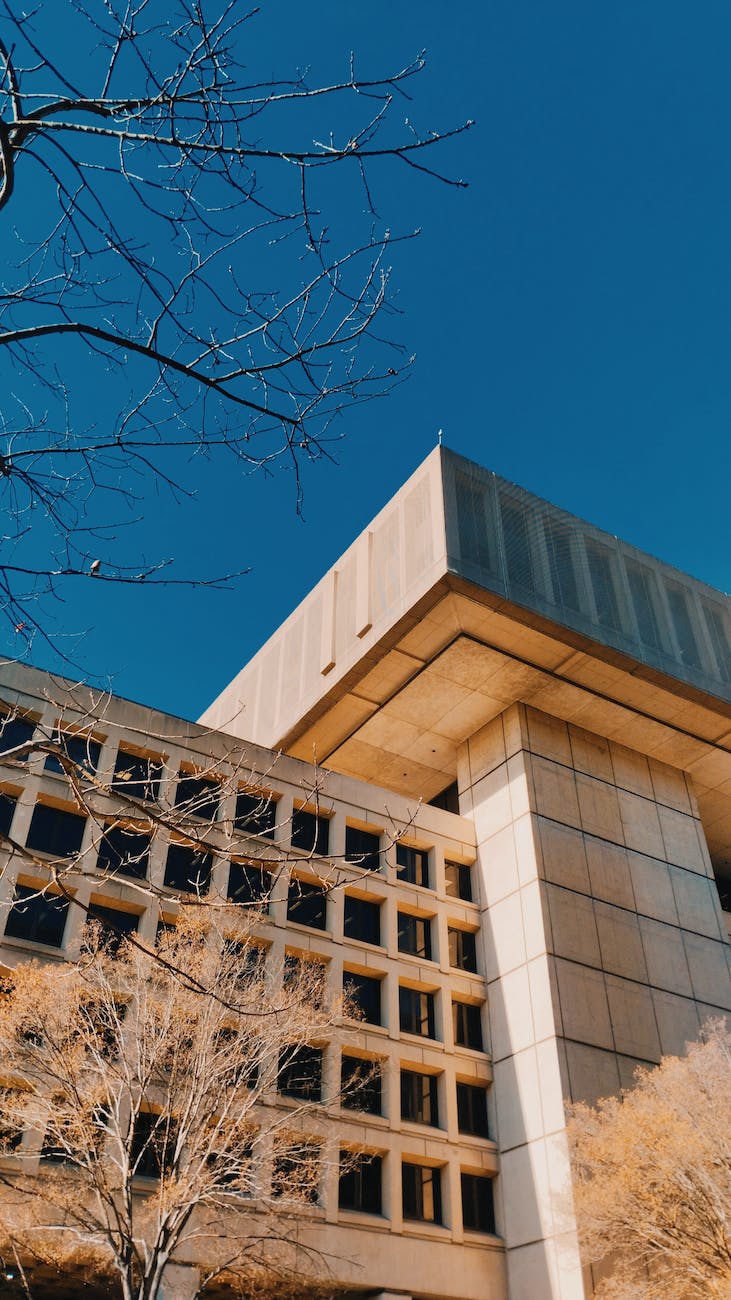
Photo by James Anthony on Pexels.com

John Schoettler, Amazon’s real estate head, said in a statement the company is pushing out the groundbreaking of PenPlace, the second phase of the sprawling northern Virginia campus. The first phase of the campus, known as Metropolitan Park, is expected to open on time this June and will be occupied by 8,000 employees.

The move comes as Amazon CEO Andy Jassy has taken steps to curtail expenses across the company in the face of slowing revenue and a gloomy economic outlook. That’s led to the company announcing the largest layoffs in its history, totaling more than 18,000 employees, while also reevaluating its real estate portfolio and sunsetting some projects…

PenPlace encompasses three 22-story office buildings, more than 100,000 square feet of retail space and a 350-foot-tall tower, called “The Helix.” The development is larger than Metropolitan Park, which sits south of PenPlace, and includes two additional, 22-story office towers, as well as a mixed-use site featuring retail, restaurants and green spaces.

Amazon selected Arlington as the site of HQ2, in addition to the Long Island City neighborhood of Queens, New York, as part of a closely watched, splashy search for a second headquarters that kicked off in 2017. The company announced in 2019 it would halt plans to build its new headquarters in New York after it faced pushback from local activists and city council leaders.

Numerous communities across the United States submitted proposals to host this second headquarters and the company sought tax breaks. The promise of the new headquarters involved at least these two big features: the status of Amazon in your community plus the thousands of jobs in a corporate headquarters.

With the changes in the world, will these promises pan out for Arlington, Virginia and the D.C. metro area? It sounds like at least 8,000 employees will be onsite. However, the headquarters may never be as big as once envisioned. Does Amazon have the same status in 2023 that it did in 2017? This include everything from its financial outlook to its recent layoffs to changes in the everyday Amazon experience for customers.

On the whole, I would guess local leaders will still pitch this as a big win. We got Amazon and all these jobs (and implying that others did not). The long-term effects might be less clear, particularly if tax breaks for Amazon and opportunity costs and the longer-term fortunes of the company are factored in.

Residential population in Chicago’s Loop has grown

A new population estimate in Chicago’s Loop suggests the number of residents increased in recent years:

The number of residents in the Loop — as the city’s central business district is known — grew by almost 9% since 2020, according to estimates from the Chicago Loop Alliance…

Population in the Loop, an area bounded by the Chicago River on the north and west sides, stands at 46,000, with the number of residents expected to grow another 17% by 2028, the group estimates. About 95% of residential properties are occupied, up from the pandemic low of 87%, and a rate that exceeds 2019 levels…

Most of the Loop’s population is 25 to 34 years old, with more than 80% living alone or with one person. Almost half don’t own a car and the majority cite the ability to walk to places, the central location and proximity to work as top reasons for living downtown…

The future of the Loop will also be more residential. Another 5,000 housing units are expected to be added by 2028, bringing the district’s total population to 54,000, according to the report. The estimates assume the global economy avoids a major recession, that the cost of building doesn’t become prohibitive and that city incentives to convert commercial blocks into homes move forward. Crime, rising property taxes and developments elsewhere are also threats to the forecast.

It will be interesting to see if and how this trend continues. Does this mean office space converted into residences? New development in the Loop where there are city-wide political battles on where development should be encouraged? Population growth in one part of the city while the population drops elsewhere?

Regardless of the larger context of what has happened in the Loop in the last few years, I am guessing this data point will be used to support development and civic plans.

Build it – the residential and commercial development around a suburban football stadium – and they will profit?

What if the new football stadium is less of a draw in the long run than the development right around the stadium? Here is one report about what has changed in Glendale, Arizona, home to today’s Super Bowl, where the stadium opened in 2006:

Photo by Pixabay on Pexels.com

Far out? The site of Sunday’s Super Bowl is about 13 miles northwest of downtown Phoenix. Arlington Heights is about 30 miles northwest of downtown Chicago.

The distance is less of an issue than it was when State Farm Stadium was built, said Kevin Phelps, Glendale’s city manager. Some projections show that two out of three newcomers to the Phoenix area will live in the West Valley…

The last time Glendale hosted a Super Bowl, it had about 800 hotel rooms near the stadium. By next year, that number will be 3,000. The city has found that most people spend money on dinner and shopping within two miles of their hotel. But a new development has to deliver.

“You have to have a ‘there’ there,” Phelps said. “I don’t care how good your advertising is. If we told everyone to come to Glendale and they got here and there was an ice cream shop and a Denny’s and that’s all there is, you’d never get them back again.”

Just having a superb stadium experience is not enough. The stadium can anchor a larger entertainment district where people come for a variety of events, enjoy food and other experiences, and are willing to spend a few nights or a long day. The real activity and money is in the year-round potential of the property that at the center has a recognizable stadium but also has enough to attract people when there is not a big game.

Still, the more important question is this: who benefits from the new development? Does the suburb of Glendale? Do its residents? Or, does this primarily enrich the team owners who see the value of their franchise increase?

State of Illinois has grant money to help develop megasites of 200+ acres, including suburban locations

A new grant from the state of Illinois makes money available to develop “megasites”:

Photo by Jahoo Clouseau on Pexels.com

Gov. J.B. Pritzker on Monday announced the creation of a $40 million grant program to help businesses find and build on large development-ready areas known as “megasites” across the state, including several in the suburbs.

Megasites are large swaths of land intended for businesses such as factories, warehouses and distribution centers. Pritzker said developing these sites will help make Illinois more competitive, especially as sectors including clean energy and manufacturing are rapidly expanding in the U.S…

Intersect Illinois, an independent economic development nonprofit working with the state on the program, lists among 151 megasites two in Hoffman Estates, one in West Chicago, four in Lake County and five in the Fox Valley. Several more are in South and Southwest suburbs, and more than two dozen are southwest of Joliet around Minooka, Channahon and Morris…

The program is open to private entities, nonprofits and local governments, and the application portal is open through April 6. Those receiving the grant must match each dollar granted by the state with other private or local funding.

This is a good example of how governments and private interests work together in the United States to develop land. The state government provides money in concert with more local funding in order to help spur development. Without the government money, the development may not happen.

This money is marked to help with large projects. Is the assumption that it is difficult to entice companies to such sites in Illinois or that local governments do not have enough resources to address needs for properties this large?

If these properties are not developed as megasites (versus being developed in parts), how much is lost?

This will be worth checking on in a decade or two to see what exactly emerges on these megasites.

Three responses to whether suburbanites can successfully steward land and nature

In unveiling a proposed development on a 700+ acre parcel in Lake County, one of the family members who currently own the land said this:

Photo by u00dcnsal Demirbau015f on Pexels.com

“We are committed to providing long-term stewardship that will allow future generations to enjoy the amenities and natural beauty of this ground-breaking residential community”

Is it possible for this to happen in the suburbs? Here are three possible answers:

  1. Suburbanites cannot steward land and natural beauty. By virtue of being suburbia, the land is used poorly, roads and houses are put everywhere, habitats and ecosystems are disturbed, and the land and nature become just echoes of what they once were.
  2. On the opposite end of the spectrum: humans have tended land and nature for millennia. Suburbia can enhance land and nature for human use. Suburbia can even be beautiful if careful attention is paid to ensuring open space, lawns, parks, gardens, trees, and natural features.
  3. A somewhere in the middle position: suburbia can treat land and nature better or worse, depending on decisions about development and how everyday life looks when completed. There are features of suburban nature that are laughable – such as so-called “nature band-aids” in sprawling parking lots – and others that are more admirable – plots of natural plants, preserved trees, and Forest Preserves (to name a few).

I have heard/read all three positions. If the development goes forward as planned or in a similar format, future residents and visitors might find it difficult to envision what was there in a less-developed state. On the other hand, they might see a version of suburban nature that residents and the community see as helpful and worth preserving in the land of single-family homes and driving.

How the discussion might go regarding 700+ empty acres in the middle of suburbia

A new large plot of land may soon be available in the middle of Lake County, Illinois. What should go there? Here is an early idea:

The family that owns the Chicago Blackhawks wants to turn more than 700 acres of farmland it owns near Mundelein into a housing, commercial and industrial development, village officials confirmed.

If the Wirtz family’s vision becomes reality, the land would be annexed into Mundelein and become the largest development by acreage in Lake County, Village Administrator Eric Guenther said.

“This is a big deal,” Guenther said. “(It) could prove to be a very extraordinary development for Mundelein, the Wirtz family and Lake County as a whole.”…

Guenther declined to detail the family’s specific plans for the land. They will be unveiled to the public at the village board’s Dec. 12 meeting.

Given what I have seen regarding suburban development, here are some of the steps to come and the common responses from involved actors:

  1. The landowners will bring a plan to the municipality that maximizes or at least includes a lot of profit through developing the land.
  2. The Village of Mundelein will receive the proposal and work on it through elected and appointed officials plus professional staff.
  3. There will be public hearings regarding the property and proposed plans.
  4. Community residents will chime in with a variety of concerns, including regarding traffic and noise. The local school district and other actors will wonder how new development will affect local services and amenities. The village will want to consider the tax base on how the tax revenues add up from such a property. Some actor(s) will propose keeping the property or part of it as green space.
  5. There will be some negotiations between the developers and the community. This could go relatively quick or slowly, depending on the changes asked for and the vision of the developers. They could happen behind the scenes or be more visible to the public.
  6. Roughly 1-2 years from now a plan will be in place and development can start.

Each of these steps could proceed differently with the potential for plans to move more quickly or more slowly. There is no guarantee that the proposed project will go forward.

However, given the size of this parcel, there will be a lot of interest from everyone about what happens with this land and how this might affect Mundelein – whether it is the community’s character, revenues, or land use – for decades to comes.

Casinos in the Chicago suburbs did little to improve downtowns

The Chicago Tribune Editorial Board suggests casinos that opened several decades ago in multiple suburban downtowns did not help revive the areas:

Photo by Pixabay on Pexels.com

Remarkably, Aurora was on board, with city officials calling the new plan “one of the most significant developments in the history of Aurora,” which is exactly what they said when the riverboats came to downtown and were compared by the then-mayor to the coming of the railroads. Penn Entertainment also announced a similar plan for the casino in downtown Joliet, which it also owns.

Better, it said, for the casinos to be near the expressway for easier access. But what about the promises made to downtown Aurora and Joliet?…

Illinois casinos, it seems, have become like NFL franchises, supremely skilled at lobbying and dangling the promise of revenue to cash-strapped cities but on their own ever-changing terms.

Was the Hollywood Casino good for downtown Aurora? It’s debatable. The charming riverwalk got finished and area landscaping improved. The Paramount Theatre came back to life, but on its own merits. And on a recent Sunday night, those new restaurants in downtown Aurora were either closed or mostly empty. The action, it felt, had shifted elsewhere.

Numerous suburban downtowns have struggled for decades as activity moved outward to new neighborhoods and communities plus shopping malls and strip malls. Thus, when an opportunity presents itself, like a casino, many communities would be interested. A new attraction or business or development could help attract visitors, residents, and firms while bringing in new revenues.

Except building thriving downtowns in the suburbs is complicated. The suburban communities highlighted in this editorial are unique industrial suburbs outside of Chicago. Firms and jobs left. Suburban sprawl continued. The riverfront is still there. Other suburban downtowns thrived like Naperville or Arlington Heights, both of which are different kinds of suburbs.

While this is a tale about specific developments, it sounds like a generic development pattern: developer and/or company comes in with grand plans, community agrees to help make it happen, the developed property enriches the property owners, and if another location emerges where more money can be made, the development might move.

As the casino moves from downtown Aurora, what plans does the large suburb have to grow its downtown? What is the new attraction or set of steps to keep the downtown going?

Naperville supports affordable housing for households making $100,000-$125,000

Naperville is close to final approval for a new development on its southwest side that would include some affordable housing:

Photo by Pixabay on Pexels.com

The Naperville City Council this week gave the go-ahead for a developer to pursue an annexation agreement that would absorb the Naperville Polo Club into the city and open the door for the land to be transformed into a residential subdivision.

Mayor Steve Chirico and council members expressed support for the plan that would bring 252 single-family homes and 149 townhouses to 110 acres off 119th Street just east of Route 59. But they requested project tweaks mostly focusing on traffic flow and congestion…

Pulte plans to build four different home styles at differing price points, including a percentage of affordable housing dedicated to households earning $100,000 to $125,000 a year.

This is a follow-up to a recent post where I wondered about this being labeled as affordable housing. I would like to hear more from elected officials and city employees about how they see this serving the affordable housing needs of Naperville and the surrounding rea. Who exactly do they hope moves into such affordable housing? Why not offer cheaper housing? What does Pulte think of constructing affordable housing? There is a lot more that could be explored here but I suspect the involved parties will be happy to claim they helped provide “affordable housing” in a wealthy suburb.

One front in zoning and development battles: school districts do not necessarily want more students

The words of a suburban school district superintendent regarding a possible Bears stadium and adjacent development highlight one of the current fronts in battles over development:

Photo by CDC on Pexels.com

Palatine Township Elementary District 15 Superintendent Laurie Heinz said that if the special taxing mechanism is implemented — where property taxes above a certain level would be diverted away from schools, as well as other taxing bodies, and into the Bears’ proposed mixed-use project — the district would need financial assistance to add classroom space to schools in nearby Rolling Meadows, or potentially even build a new school within the 326-acre site…

The Bears’ preliminary site plan suggests a significant residential component, from higher-density, multifamily properties of four to eight stories closer to the Metra train station, to lower-density townhouses and multifamily units of two to four stories further south and east through the site.

Heinz said the housing could generate hundreds or even thousands of students.

“We want a seat at the table,” Heinz said at a recent community meeting. “We’re going to fight against it all being TIF’ed because we will need money.

The superintendent is saying that the school district will need money to serve the influx of students that would come through new residential units. Other school districts, residents, or leaders have gone further when considering other suburban projects: they do not necessarily want school students to live in new residential units. Fewer school-age children would save money for school districts and communities in the long run due to not having to provide educational services.

In some ways, this is an odd stance for suburban leaders and residents to take. Much of the suburban sprawl in the United States involved providing spaces and success for children. Property values and a sense of community status are often tied to the performance of local school districts.

But, this focus on children comes with costs. Particularly for mature suburbs, they can struggle to fund schools or residents and leaders push back against the costs of schooling compared to other preferred priorities (such as taxes not going up).

For this particular project, who will adjust: the city not provide a TIF? The developer change the residential units in ways that appeal to certain kinds of residents and not others? The school district finding ways to fit this into particular confines? Stay tuned.

Can a successful suburb have a thriving downtown and a stadium-driven mixed-use district?

With the Chicago Bears considering building in Arlington Heights, one village trustee expressed concerns that a sizable project would compete with the suburb’s successful downtown:

Photo by Philipp Silbernagl on Pexels.com

But, he said, “I’m going to tell you right now I’m not a fan of the site plan. And I hope this doesn’t blow up and ruin things for you in any way because I’m just one person sitting up here. But I have to be true to myself and true to my thoughts.”

Tinaglia, who founded his Tinaglia Architects firm in Arlington Heights in 1991, blasted the mixed-use transit-oriented development aspect of the Bears’ proposal, arguing the plans for restaurants, stores, offices, hotels, homes and more on 206 acres of the 326-acre property would detract from what is in downtown Arlington Heights.

“For a community that doesn’t have a downtown — that doesn’t have what Arlington Heights already has — that community would die to have this,” Tinaglia said. But he said he didn’t believe Arlington Heights’ current business owners could survive the competition from the kind of development being proposed.

Just how many entertainment centers can exist in the suburbs, let alone in one community?

Many suburbs would like to have a thriving downtown. Arlington Heights has one. It boosts the status of the community with its older buildings, current businesses bringing in residents and visitors, and possibly residents living downtown and also visiting local businesses and restaurants. Not all suburbs have downtowns; some never had them due to consisting of multiple suburban subdivisions joined together while others may have had a downtown that is now struggling or non-existent. The suburban downtown has had numerous challenges over the years – strip malls, shopping malls, driving and parking, big box stores, and more – so having a successful one is not something a suburb would lightly give up.

On the other hand, not every suburb has an opportunity to be home to a major sports stadium and all of the development around it. This is a new opportunity that could be worth a lot in terms of business activity and tax revenue, population growth, and status tied to being the home of an important football franchise.

It will be interesting to see if there is a compromise to be had here where both a downtown and a new mixed-use development coexist. Do they have to be in competition or can they serve different audiences?