Manhattan congestion pricing plan delayed to persuade suburban swing voters?

New York City was set to roll out congestion pricing for Manhattan but one writer suggests it was delayed to influence suburban voters:

Photo by Malcolm Garret on Pexels.com

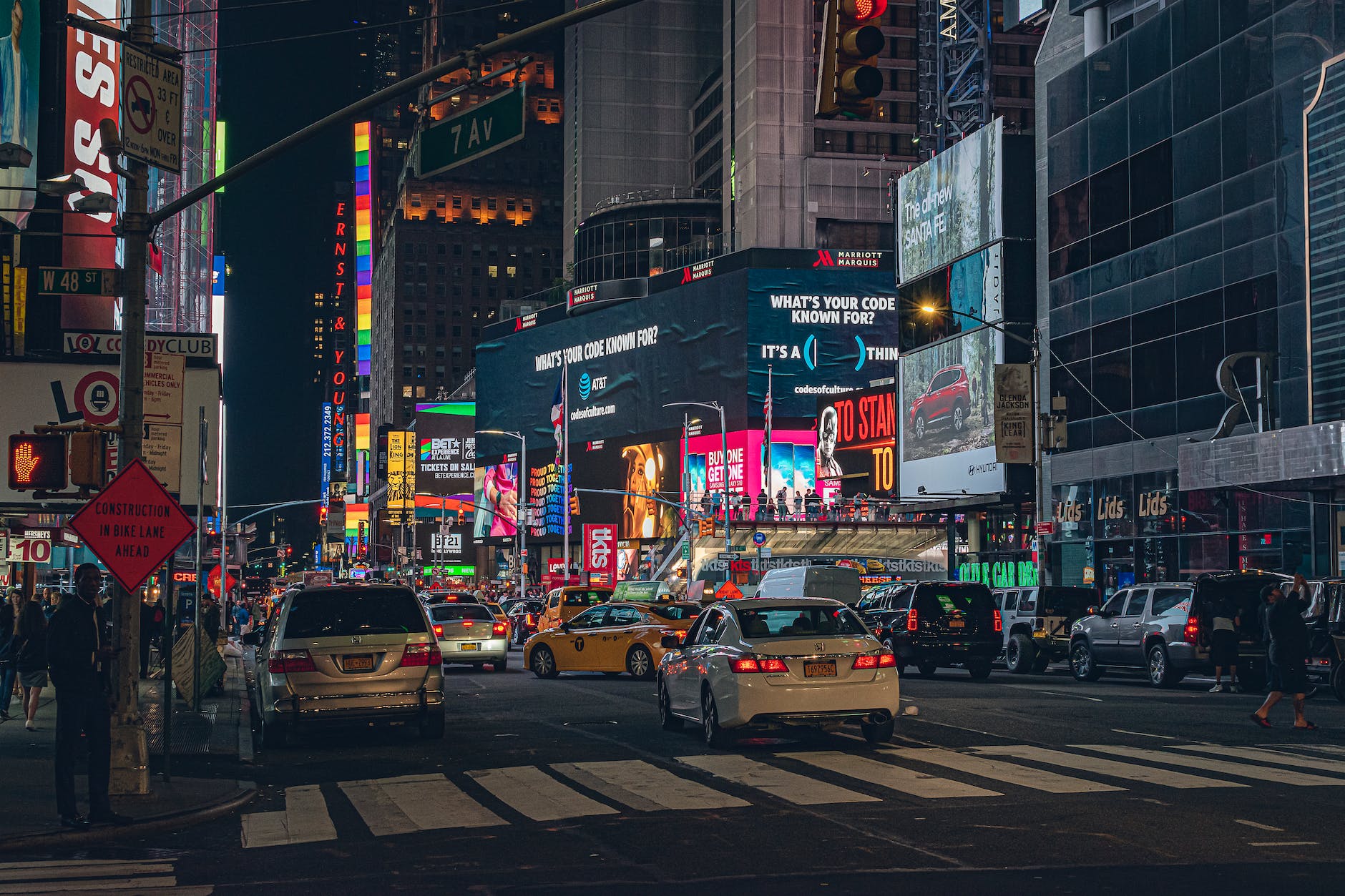
Hochul was just touting the benefits of congestion pricing two weeks ago, but she appears to no longer see things that way. According to a Tuesday night Politico report, House Minority Leader Hakeem Jeffries started raising his concerns with Hochul, claiming that if the plan were to go into effect during this election year, the ensuing buzz could make it harder for New York Democrats to win back the House of Representatives. The proposed $15 fee for drivers heading into lower and midtown Manhattan—whether from the outer boroughs or from the broader tri-state region—remains unpopular with the types of wealthy, swingy suburban voters national Democrats need on their side. And considering how badly New York Dems botched the 2022 midterms, losing House seats that could have cut into Republicans’ narrow majority in the chamber, Jeffries would like to do anything he can to regain those seats—including mollifying the New Yorkers who own cars only because they make it easier to flee to the Hamptons. Hochul herself says her decision is based on concern that congestion pricing might deter people from heading into Manhattan at a time when the city is still recovering from COVID-era business losses.

As politicians and political parties consider the 2024 elections, they are likely focusing a lot of attention on pockets of suburbanites who can be swayed to go different ways with their votes. This has been important for a number of election cycles now with a country that is majority suburban and more predictable voting results in big cities and more rural areas. Thus, the national parties fight over middle suburbia.

In this particular case, I would be interested in seeing more numbers. How many suburbanites are affected by the congestion tax? How many suburbanites might change their votes based on this issue? Is the fate of the US House in the hands of a congestion tax?

More broadly, how often does traffic and congestion decide local, state, or national elections? People generally do not like traffic or congestion but also may not like new or higher taxes or resist impediments to drive when or where they want.
Famous NYC church sells air rights to help keep building going

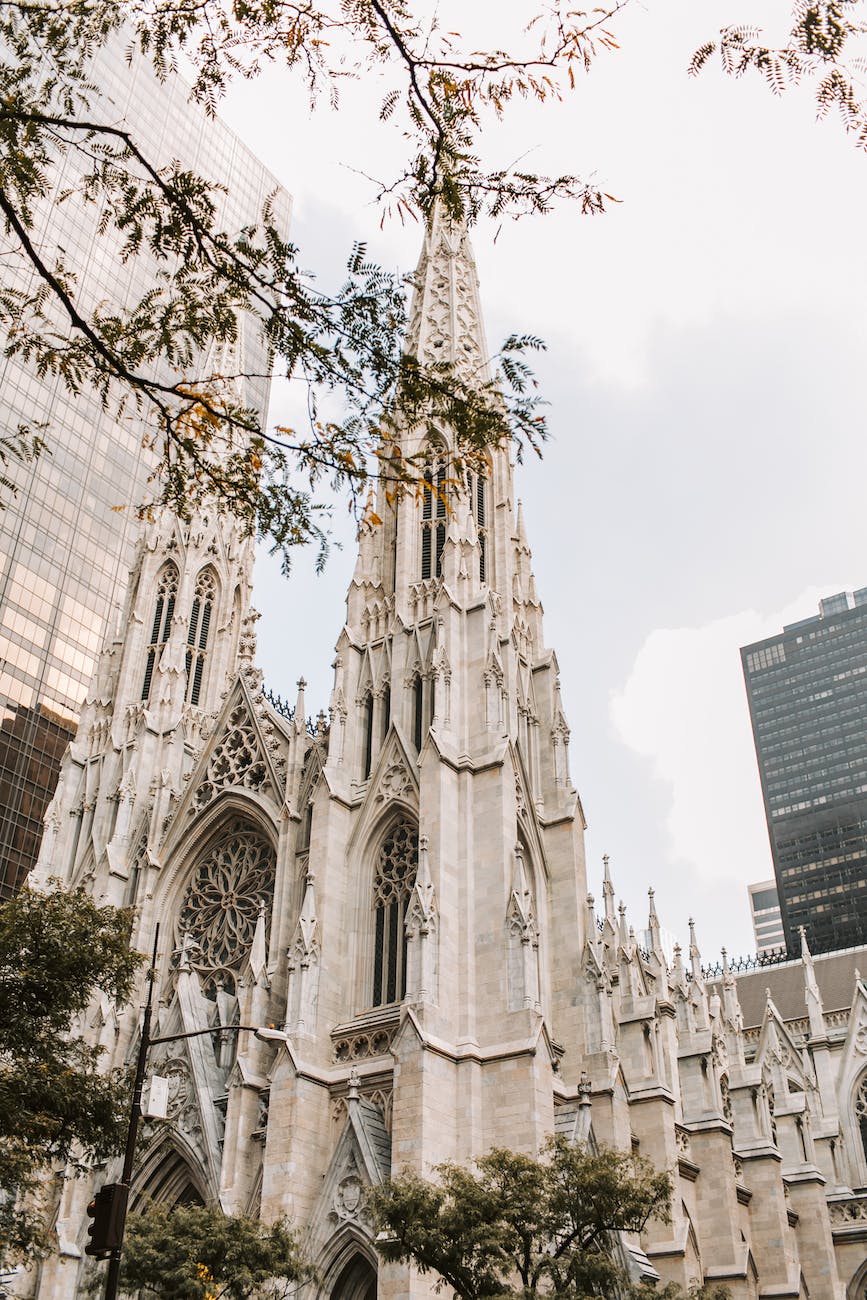
This is not an unknown story in New York City: a congregation sells part of its property or air rights to help fund its operations. This time it is St. Patrick’s Cathedral:

Photo by Vlada Karpovich on Pexels.com

Citadel’s Ken Griffin and Steve Roth’s Vornado Realty Trust agreed to buy up to 525,000 square feet of air rights from the Roman Catholic Archdiocese of New York to facilitate the development of 350 Park Avenue, PincusCo reported

The per square foot basis of the deal is arguably more important than the total purchase price, because that hasn’t been determined. Under the agreement, the developers can buy up to 525,000 square feet of air rights, but could also buy as little as 315,000 square feet. That means the purchase price ranges from $98.4 million all the way up to $164 million…

Representatives of Griffin, Vornado and Rudin did not respond to a request for comment from The Real Deal. A spokesperson for the Archdiocese of New York said that it is the church’s “hope that the money will go to the continued upkeep of the Cathedral.”…

Griffin’s Citadel is working to develop a 51-story tower at 350 Park Avenue, designed by Norman Foster. Griffin’s firm is redeveloping properties master leased from Vornado and Rudin. Citadel would occupy roughly 54 percent of the 1.7-million-square-foot property, which would stand 1,350 feet tall.

I remember at least a few of these stories while examining zoning conflict in the New York City. For a congregation with an older building and perhaps an aging congregation, allowing others to make use of their property in different ways could help pay the bills. Here, one of the wealthiest people in the United States wants to build a skyscraper, the church has the air rights, and the money paid to the church can help the Cathedral into the future.

This reminds me of some of the reasons many churches left Chicago’s Loop by the early twentieth century. Land prices were high, people had moved out of the central business district, and they could relocate to quieter, more residential streets. That left very few congregations in the downtown.

And even though this point was passed long ago, the contrast of a 51-story skyscraper near a landmark church is interesting to consider. No longer is religious activity at the center of big cities. Is this a physical manifestation that shows America’s leading religion is business?

Moving forward with a congestion tax for entering Manhattan

A state board recommends vehicles entering Manhattan south of 60th Street pay the first congestion tax in the United States:

Photo by Udayaditya Barua on Pexels.com

Under the plan, passenger car drivers entering Manhattan south of 60th Street during daytime hours would be charged $15 electronically, while the fee for small trucks would be $24 and large trucks would be charged $36.

Cities such as London and Stockholm have similar programs in place, but New York City is poised to become the first in the U.S.

Revenue from the tolls, projected to be roughly $1 billion annually, would be used to finance borrowing to upgrade the city’s mass transit systems…

Officials say that in addition to funding needed transit improvements, congestion pricing will result in improved air quality and reduced traffic…

“The Traffic Mobility Review Board’s recommended credit structure is wholly inadequate, especially the total lack of toll credits for the George Washington Bridge, which will lead to toll shopping, increased congestion in underserved communities, and excessive tolling at New Jersey crossings into Manhattan,” Murphy, who filed a federal lawsuit over congestion pricing in July, said in a statement.

In the US city with the highest rate of mass transit usage, this makes some sense. The roadways are crowded. Mass transit systems need money. At least some of the vehicles entering the city can afford the fee.

At the same time, Americans like to drive free. Cars and driving are an essential part of American life, whether cruising down a highway or delivering many goods via truck. Many will not be happy to pay extra to drive down taxpayer roads into parts of the city when it used to be free.

If this goes forward in Manhattan, how soon until it comes to other American cities? Those places may have fewer alternatives to driving but the revenue – and other benefits – might be hard for other places to pass up.

Removing a mound and landmark to supply 1800s development

The landscape of the Chicago region has a limited range of elevation. One of the natural mounds and an early landmark disappeared at the hand of a local company for local building:

Photo by Photo Collections on Pexels.com

Long ago, a mound jutted up from the flood plain flatlands surrounding the Des Plaines River in what is now a mostly industrial area on the southwest side of Joliet.

It was a significant feature and guidepost for travelers plying the Illinois waterway in the earliest days of recorded history, and a mainstay on maps for decades. Some speculated it was a creation of the mound building civilization that had populated these lands for centuries, best known for its world class city at Cahokia.

Subsequent digging didn’t turn up valuable artifacts, but instead revealed valuable gravel and sand deposited during the ice age, and a short-lived company made quick work of Mount Joliet, dispersing its innards for use in roadways and other projects as the modern development of the region began in earnest in the second half of the 1800s…

Another feature used by centuries of travelers in the area has survived to the present day. In fact, besides giving river navigators a guide point, Mount Joliet may have been one of the landmarks as well along the Great Sauk Trail, an ancient roadway connecting the Mississippi River to what is now the Detroit area.

According to another source:

The mound was destroyed when it’s clay contents were mined to make sewer tiles by the Drain Tile Manufactory of the Joliet Mound Company in the 19th century.

White European settlers to northeast Illinois altered the landscape when they moved into the region in the 1830s. They altered waterways, cleared trees and forests, drained swamps, dug up prairie, made plowable farmland, laid railroad lines, and created plats for sale and development. It does not sound like this mound was in the way of anything; rather, it offered raw material for objects helpful to new development.

I am grateful for maps and other efforts that show what metropolitan regions looked like before white European settlers and then prior to all of the urbanization and suburbanization of the 1800s onward. For example, I have seen multiple versions of this for Manhattan and New York City, discussing and showing streams, hills, and habitats that are hard to imagine in such a large city. Likewise, maps and narratives of the Chicago region highlight a verdant area at the southwest edge of Lake Michigan – that just happened to be an easy portage point to connect the Great Lakes and the Mississippi. Today, it is hard to imagine significant hills or mounds in a region where the flat grid predominates.

Complicated urban repairs: 20 years to repair 11 blocks of Park Ave above and below ground

Manhattan is dense, above ground and below ground. Hence, the city is planning for a 20 year project to to a portion of Park Avenue:

Photo by Vlad Cheu021ban on Pexels.com

The good news is the city finally has plans to restore 11 blocks of Park Avenue north of Grand Central to a semblance of its former glory, Bloomberg reports, expanding the median from a useless 20 feet to a potentially-rejuvenating 48 feet. That redesigned street could include bike paths, walking paths, and generally more space for things other than cars or pretty things for people in cars to look at as they drive by.

The bad news is many if not most of the people currently living and working in New York will not be around to enjoy it once it’s done. It will take 20 years to redesign these 11 blocks, according to the city’s Department of Transportation. Yes, you read that right. The project to redesign 11 blocks of a Manhattan street will not be completed until 2042.

But there is no mistake, according to both DOT and Kaye Dyja, Powers’s spokesperson. As Dyja explained, “The reason the construction is going to take a long time is because they’re improving the underground railroads leading to Grand Central, as well as redoing the ‘train sheds.’ This entails that they’re digging up the ground, so the construction will have to take place in stages which will end up taking many years to complete.”

The project Dyja is referring to is a massive $2 billion renovation of the Metro North infrastructure underneath Park Avenue from Grand Central to 57th Street. Park Avenue is a bridge over those tracks, and like many of the U.S.’s bridges, this one is falling apart, too. The project will involve ripping up sidewalks and the median of Park Avenue a couple blocks at a time, going section by section, down the stretch of Park Avenue. It is expected to cause more or less permanent disruption to the Midtown East area, to varying degrees, over the next two decades. 

As a kid, I remember reading books with cross-sections of underground Manhattan. Seeing all of that infrastructure needed for modern urban life – pilings for skyscrapers, subways, water pipes and sewers, etc. – was fascinating.

The flip side of that is the work it takes to make significant changes to such a system. It takes time (and money) to work around what is there and complete the work.

The time is one factor but I wonder about how the budgets will work over a 20 year period. Large American infrastructure projects can have a tendency to stretch in terms of time and budget as the work is underway.

I would love to say I will check in on this in twenty years but that is a long commitment…

USPS address change data for COVID-19 sheds light on urban migration

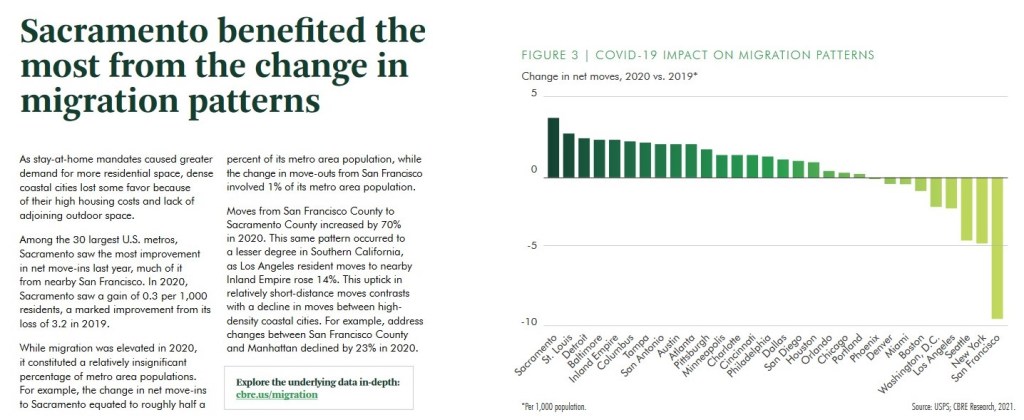
Hard data has been hard to come by regarding people leaving cities during COVID-19. Did 500,000 flee Manhattan? Did San Francisco empty out? Here is data from the CBRE report:

In this comparison of 2020 and 2019 migration data, several big cities fared the worst: San Francisco, New York, Seattle, Los Angeles, and Washington, D.C. Sacramento did well because of spillover effects from the Bay Area.

In terms of actual numbers for cities, here is a summary of the same data for New York City:

By analysing US Postal Service address changes over the last 12 months, the study reveals the greatest out-migration of people is, as expected, from Manhattan, with nine of the 10 zip codes with the largest outflows of residents in the city located in the borough…

In terms of hard numbers, the four zip codes in Manhattan from the Hudson to the East River between 42nd Street and 59th Street lost more than 12,000 residents in 2020. In 2019 that figure was less than 3,000…

The streets may have felt even emptier than the data implies, as the study only looked at permanent address changes – the total number of those who left the city for significant portions of the pandemic is likely much higher. Many more people temporarily left to stay with family or at seasonal rentals…

Talk of an exodus from New York may be a little exaggerated as 41 per cent of Manhattan residents who moved in 2020 stayed in the borough, presumably taking advantage of cheaper rents to upgrade their living space. Prior to Covid, this figure was just below 50 per cent.

The last part quoted above is important: the number of permanent address changes was smaller than it may have appeared. Plenty of people left Manhattan and other urban locations but they did not necessarily give up on their property and may return when COVID-19 fades away. Similarly, the impact on suburbs that took in new residents during COVID-19 may then also see population shifts after COVID-19 as people return to urban neighborhoods.

What it means if a 20% rent price drop in Manhattan may be enough to reverse the market

With rents in Manhattan and San Francisco declining, how much will prices drop before demand increases? Perhaps 20% in Manhattan:

Photo by Pixabay on Pexels.com

A big drop in rental prices appears to be luring new, younger renters back to the city, even as office workers and wealthy New Yorkers remain in the suburbs and more rural resort towns. New leases in Manhattan increased 33% in October, making it the best October in 12 years, according to a report from Douglas Elliman and Miller Samuel.

The typical rent paid for apartments including discounts, or the median net effective rent, fell 19% from a year ago to $2,868 — a record decline. Smaller apartments, which cater to younger renters, fell the most. The price of studio apartments was down 21%, and one-bedroom apartment prices dropped 19%.

“I think we’re at a tipping point where the consumer starts coming back to the city,” said Jonathan Miller, CEO of Miller Samuel. “Sellers are slowly recalibrating what the values are, and the lower pricing is beginning to bring more people in.”…

And with the average rental price for a one-bedroom apartment still over $3,200 — more than twice the national average — Manhattan is still far from affordable for many young renters. Still, experts say the October increases could begin a long, slow recovery for the nation’s largest real estate market.

Manhattan is an important real estate market. It is part of the leading city in the United States and one of the most important global cities in the world. Housing is desirable there for multiple reasons.

But, Manhattan’s prices are unusual. There is a limited amount of land. Few other places in the United States have a similar local economy and cultural scene. Prices will remain high because they have been high for a while. There is a lot of capital tied up in buildings and land.

Thus, it is hard to know what to do with an article like this in regards to housing. The suggestion is a 20% price drop may be enough to attract new renters who are interested in Manhattan and have the resources to move in. Most people, and perhaps even most residents of the New York City region, do not have the interest or the resources. At the least, this is a reminder that real estate is a very local affair.

But, at the same time, housing is a city-wide, region-wide, and a national concern. The Manhattan market has unique traits but many people face housing challenges, particularly during COVID-19. Manhattan may be a bellwether or it could be more of a curiosity of how a small slice of people think about housing. The bigger question from a story like this could be: have housing costs dropped elsewhere in the United States? Since few markets are like Manhattan, perhaps not. How does this affect people? What are the long-term housing price prospects across different kinds of markets and for more typical residents?

When bricks and mortar stores can’t make it even in Manhattan

Heart of one of the world’s leading global cities, Manhattan has its own struggles with keeping brick and mortar retailers in operation:

That’s right: On a nine-block stretch of what’s arguably the world’s most famous avenue, steps south of the bustling Time Warner Center and the planned new Nordstrom department store, lies a shopping wasteland.

Yes, there are bank branches, restaurants, fast-food outlets, theaters, Duane Reades, a vitamin shop and a few tourist-targeted “discount” stores. But mainly there are oodles of empty spaces covered with signs touting SUPERB CORNER RETAIL OPPORTUNITY.

The same crisis blights the rest of Manhattan. The people invested in storefront retailing — real-estate developers, landlords and retail companies themselves — tell us not to worry. It’s a “transitional” situation that will right itself over time. Authoritative-sounding surveys by real-estate and retail companies claim that Manhattan’s overall vacancy is only just 10 percent.

But they are all wrong. Bricks-and-mortar retail is shrinking so swiftly and on such a wide scale, it’s going to require big changes in how we plan our new buildings and our cities — although nobody wants to admit it.

This is an interesting argument to make: even with all of the tourists, wealth, and attention bestowed upon the borough, retail is disappearing from Manhattan. And if shopping disappears, with shopping being one of the favorite leisure activities of Americans, might this negatively affect the business and social life of a Manhattan used to ultra-busy sidewalks?

On the other hand, Manhattan may not be the best example. The median household income in Manhattan is not as high as one might expect, there is not much of a middle class, and the cost of living is high. Add in that Manhattan does have a lot of tourists, workers that arrive for the day and leave at night, and concentrations of residents in different parts of the island. The sheer density of people might suggest that retailers should be able to make it in Manhattan but it is a complicated place.

More broadly, what will tourist locations of the future look like if even more shopping is done online? For decades, the international tourist destination includes significant amounts of shopping. What would fill that space?

More (pricey) senior housing units in the (expensive) city

Several developers are constructing luxury senior housing in Manhattan and trying to tap a new market:

Senior housing has traditionally been suburban-focused because land is so much cheaper outside cities, and developers hadn’t seen a big enough market to justify paying more, and charging more, for urban locations near transportation and nightlife, Knott said. The aging members of the massive baby-boom generation helped change their minds. Now, he said, many living in cities have the means to pay a premium to remain in familiar environments.

And many will need special care. In New York state alone, about 460,000 residents aged 65 and older are expected to be living with Alzheimer’s-related dementia in 2025, some 18 percent more than there are today, according to the Alzheimer’s Association.

To serve the wealthiest of them, senior-housing developers are taking cues from their tony-apartment building counterparts and putting extra emphasis on finishes and flourishes, to make their facilities look like the places residents left behind…

It is, of course, a rather small group of any age or mental ability that can handle the monthly rents these kinds of places will command. They’ll start at $12,000 at the complex that Maplewood Senior Living and Omega Healthcare Investors Inc. are putting up on Second Avenue and 93rd Street. Some will top more than $20,000 at the building Welltower Inc. and Hines are about to break ground for on the corner of 56th Street and Lexington Avenue.

The top 10% ages as well.

If this catches on, will it make it even harder to construct senior housing for average Americans (those who lived as adults around the median household income)?

I had a somewhat radical thought: many community leaders suggest that their residents should be able to age in their community, if they so desire. Would it be possible to set aside plots of land to be used for senior housing? The community would not necessarily have to designate what kind of housing is placed there but setting aside or zoning certain land might take away some of the market-rate pressure for land. Communities and developers regularly do this for other important uses such as parks or schools. Why not get out ahead of the aging population and make a tangible contribution to allowing senior residents to stay?

Could bad traffic in Manhattan lead to fewer cars on the road?

One way to reduce traffic might be to make it so unpleasant that people stop driving so much:

City officials have intentionally ground Midtown to a halt with the hidden purpose of making drivers so miserable that they leave their cars at home and turn to mass transit or bicycles, high-level sources told The Post.

Today’s gridlock is the result of an effort by the Bloomberg and de Blasio administrations over more than a decade of redesigning streets and ramping up police efforts, the sources said…

The goal of the jammed traffic is to shift as many drivers as possible to public transit or bicycles.

An added benefit was supposed to be safer streets, but city officials have said that while 45,000 fewer cars and trucks now come into Midtown daily than in 2010, pedestrian deaths are on the uptick this year.

The city denies such efforts with the mayor’s spokesperson saying, “The notion that we want or are somehow ‘engineering’ traffic congestion is absurd.” But, there is little argument that the city has tried now for over a decade to introduce additional transit options beyond people driving cars.

The real question we should ask is whether such efforts can reduce congestion. Even though the public may not like it or believe it, there is some evidence from road diets and closing highways (in places like San Francisco or Seoul) that traffic is not static: limiting roads can affect the choices people make regarding how to get around. In other words, build more highway lanes and more people will drive.

Perhaps Manhattan itself is simply too crowded for the transportation options Americans currently have. Even the sidewalks are supposedly overrun. Could this be remedied with a new, innovative regional transit plan that would work on ways to get people in and out of Manhattan more efficiently? Would affordable housing help so fewer people have to make long commutes to Manhattan?