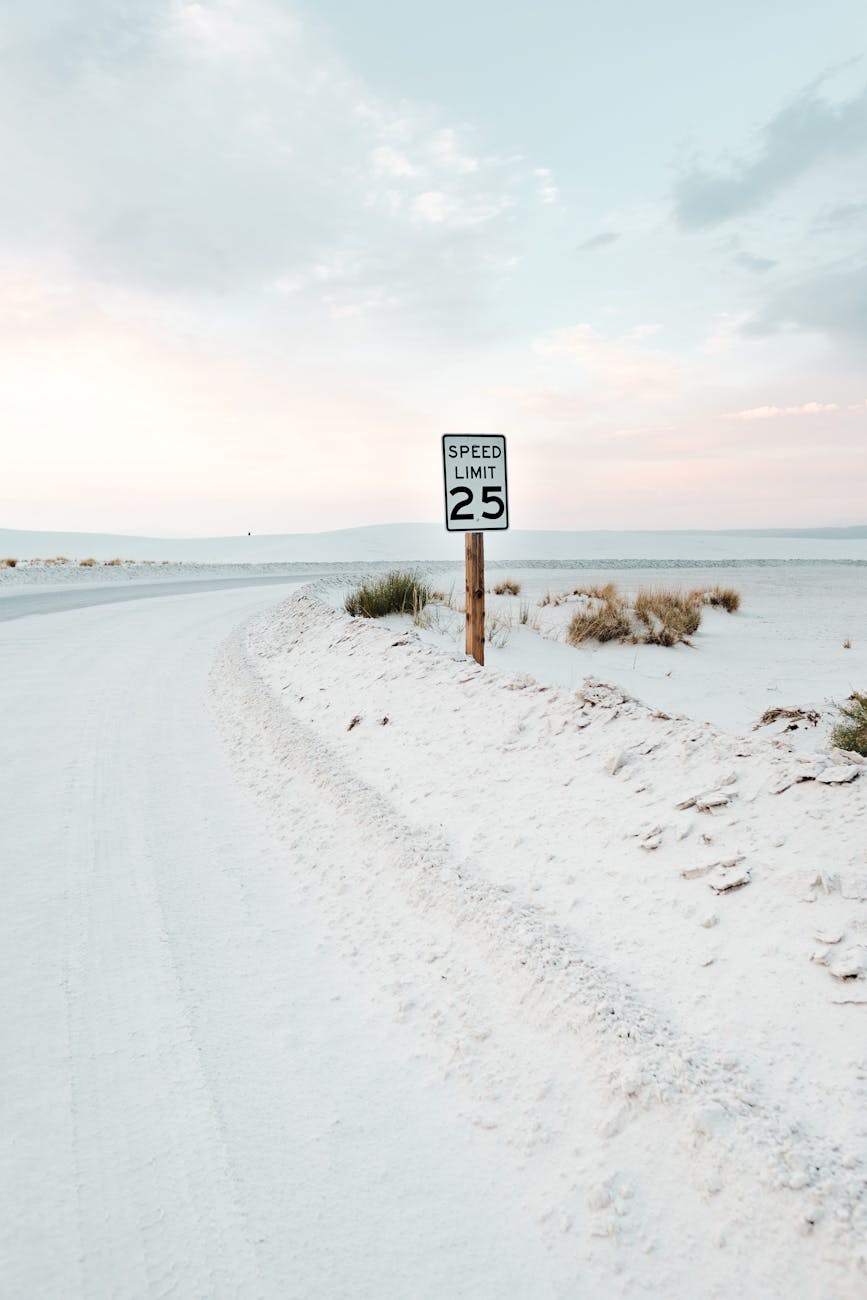
The 28-21 vote against lowering the speed limit followed a spirited and emotional debate that pitted traffic safety advocates, many of them on the North Side, against African-American alderpersons concerned about uneven enforcement and a surge in pretextual traffic stops targeting Black drivers.
West Side Ald. Jason Ervin (28th), Mayor Brandon Johnson’s handpicked Budget Committee chair, led the charge against the lower speed limit.
Ervin said he “understands the logic that, if you go slow,” there will be fewer traffic fatalities and serious injuries. But when Johnson’s 2025 budget is balanced, in part, by installing more speed cameras, he is concerned about an avalanche of speeding tickets that struggling Chicagoans cannot afford to pay…
Wednesday’s vote was a bitter and emotional disappointment to Ald. Daniel La Spata (1st), an avid cyclist who represents Bucktown, Wicker Park, West Town and Logan Square, where several fatal accidents have occurred…
La Spata has estimated the lower speed limit could save the lives of more than 300 Chicagoans over the next decade.
The summary of the discussion hints at the meaning of speed limits. Are they about safety and discouraging higher speeds? A good number of American roads are built to be wide and straight such that the design itself can help drivers feel comfortable in going faster. And since many drivers go above whatever speed limit is posted, is a lower limit necessary to reign in the higher speeds?
Or are they about police enforcement? Are they about collecting revenue? Whether administered via law enforcement personnel or a speed camera, there is a legal process at work. In a society where driving is often required, the enforcement element matters.
Trying to think outside the box a bit, couldn’t the Council meet in the middle and settle for a 28 mph speed limit? Do all speed limits need to be in 5 or 10 mph increments?
This likely will be an ongoing discussion given the amount of driving in Chicago, interest in biking and pedestrian options in the city, and concerns about police activity.
The kid’s book series involving boy detective Encyclopedia Brown includes this description of the town of Idaville, the setting for the stories and home to Leroy Brown and his family:
Idaville was like most seaside towns. It had lovely beaches, three movie theaters, and two delicatessens. It had churches, a synagogue, and four banks
But, read enough of these cases and it all adds up to something: Idaville is not like most seaside towns as it has a lot of crime. Enough crime to fill 29 books with numerous cases in each. Crimes ranging from small violations to larger issues. Lots of different kinds of criminals.
This is not an unusual perspective on crime. Television shows often have a similar message, particularly if they are long-running: crime is happening all of the time. This has the potential to change how viewers understand crime and locations. If you see a particular place associated with criminal activity over and over, how much of an impact does this have?
Some of the other phrases in the intro to the cases provide further clues at how crime is perceived in Idaville and in these cases: “the forces of law and order were in control” and “the town’s war on crime.” Is this the normal experience of small towns or just how we often present mysteries and the work of police?
In recently watching the 2021 film version of West Side Story, this stanza from “Gee, Officer Krupke” stood out.
Yes, Officer Krupke you’re really a slob This boy don’t need a doctor just a good honest job Society’s played him a terrible trick And sociologically he’s sick
The whole song plays with this idea: the Jets are not responsible for their actions as they have been failed by their families and society. Elsewhere in the song, they are said to have a “social disease.” Sure, you could penalize an individual offender – with the police, analysts, social workers, and the courts involved in the song – but that would fail to reckon with the sizable social problems at hand. Of course, the song is meant to invoke laughs.
How much is an individual an individual given their social surroundings? This is one of the questions I raise early on in an Introduction to Sociology class. In the United States, the emphasis is typically on the individual: they make their own choices, develop their own identity, and are responsible for their own actions. Sociology pushes back on that individualistic emphasis by analyzing the social facts and forces that shape and outlive individuals. And West Side Story has its own ideas about individuals and society with its retelling of Romeo and Juliet.
It is not an exaggeration to say that police power in the United States is built around the unique conditions created by car culture, in which virtually everyone is breaking the law all the time—with occasionally severe consequences. In her book Policing the Open Road, the legal scholar Sarah Seo points out that mass car ownership prompted a wholesale reinterpretation of the Fourth Amendment, which protects us against search and seizure. Or it did, until we all started driving everywhere.
Police often abuse this authority to perform “pretextual stops” hoping to find guns or drugs, knowing that trivial traffic violations give them the power to search citizens at will. Officers have at times undertaken this constitutional sleight of hand with explicit federal endorsement, deputized as foot soldiers in the war on drugs. In one of the most notorious examples, police in Arizona used traffic stops to enforce federal immigration law.
For Black drivers, pretextual traffic stops—per Jay-Z, “doing 55 in a 54”—are a routine occurrence and the foremost symbol of racial profiling in this country. For many police departments, these violations are used to fill government coffers and prompt devastating cycles of fines, debt, suspended driver’s licenses, and jail time. Black drivers are 20 percent more likely to be stopped, according to a study last year, and almost twice as likely to be searched.
While the article is about speeding, there are numerous additional areas where police work intersects with driving: stops for all sorts of reasons (as noted above), dealing with crashes or road conditions, escorting important people, and police driving the same roads as everyone else in order to address an issue at a particular location.
In many parts of the United States, it would be hard to imagine police without a vehicle or not interacting with vehicles regularly. Even the community policing idea where police spend lots of time in the same community and at the pedestrian level may still require using a vehicle to travel back and forth or to address particular issues they encounter. The sight of police on foot, horse, or bicycle in certain settings may be unusual to many who are used to the cars and flashing lights.
The same kind of methods proposed to limit traffic fatalities (also discussed in this article) or to promote the use of other modes of transportation could also have the effect of reducing the need for police to patrol or drive on roadways. But, reducing the American dependence on or love for driving is a sizable task.
Since 1990, arrest rates have trended downward nationwide. In suburbs, though, they have been leveling off or actually increasing since 2015, says Leah Pope, a senior research fellow at the Vera Institute of Justice, a nonprofit that aims to address the causes of mass incarceration and the loss of public trust in law enforcement. Arrest rates have declined faster in cities than suburbs.
This largely comes from a drop in “Part II” crimes, she says, which covers “less serious” offenses such as vandalism, drunkenness, disorderly conduct, loitering, and more. More serious, “Part I” crimes—including murder, rape, and robbery—have been declining as well, but arrests for Part II crimes have seen a sharper drop in cities than suburbs. These are arrests for crimes that many don’t think should necessitate an arrest anyway, Vera Institute research associate Frankie Wunschel notes: They could be citations, or warnings, or simply decriminalized, in the way that marijuana has been decriminalized, but not legalized, in some states.
Some suburbs are seeing their jail populations grow, too. According to 2015 data, nearly 9 in 10 large urban counties saw their jail populations decline. Between 2014 and 2015, the jail population in the country’s 61 large urban counties fell by more than 18,000 people total—equivalent to emptying Los Angeles County jails. The jail population grew, though, in 40% of suburban, small, and midsize counties.
Racial disparities also play a role in arrests for Part II crimes. Narcotic drug laws fall under these “less serious” crimes, and in 2015, more than one in four people arrested for drug law violations were Black, although drug use rates do not differ substantially by race. “There are huge racial disparities in arrests, and those racial disparities are more prevalent in suburban areas than they are in urban areas,” Pope says.
There are long-standing perceptions about the safety of suburbs as well as presumption that suburban police act better. But, this data and analysis suggests this can differ dramatically across suburban communities and suburban populations. At the least, this is a reminder of the complex suburbia of today: discussions of a monolithic suburbia simply do not line up with suburban realities. Going further, crime and policing can differ across suburbs, just as it can across urban neighborhoods or cities.
From this analysis, I wonder how the variation in crime and police activity across suburbs compares to the variation between wealthier urban neighborhoods versus those urban neighborhoods not as well off.
1. According to sociologists and other scholars who have studied American suburbs over the last century, an overriding concern in suburbs is to protect families and let children flourish. The assumption is that suburban life – with its lower density, single-family homes, more space, better schools, lower crime – will benefit children in the long run.
2. At the same time, suburbs are also based on exclusion. For decades, only white people – and certain ones at that – were allowed in many suburbs. While this is officially off-limits today, it can be accomplished in other ways such as through exclusionary zoning, drawing school district boundaries, and through police.
4. Many suburbs offer limited social services. The expectation is that residents will have the resources to provide for themselves or that corporations and local charities will provide.
Adolescents, parents, teachers, coaches and officials, he concludes, are able in this suburban setting to recognize teens’ need for ongoing sources of trust, empathy, and identity in a multitude of social settings, allowing them to become what Singer terms ‘relationally modern’ individuals better equipped to deal with the trials and tribulations of modern life
From the beginning, the story of the United States of America is a violent one. From violence against indigenous people to slavery to armed rebellion to colonial conquests to the Civil War to vigilante violence to violence-enforced residential segregation military intervention around the Western Hemisphere and then the globe to police brutality to gun violence to celebrating the military to assassinations.
Take vigilante violence as an example. I read Sundown Towns: A Hidden Dimension of American Racismat the recommendation of a colleague and having read multiple works by sociologist James Loewen. He argues that a significant number of Northern towns and cities had informal sundown laws that prohibited minorities from being in the community after dark with violence implied if the norms were not followed.
Or, take the last in the list as an example. The book that really brought this to my attention as a student was Philip Agee’s Inside the Company: CIA Diary. This led me to read a lot about the Church Committee’s work in 1975-1976 as well as assassinations in the United States and ones in which the United States played a role abroad. In several papers, I worked with the idea of assassinations, discovered databases of political violence in countries around the world that political scientists have collected for decades, and found that the political violence rates in the United States are high.
All together, the United States is awash in violence. It is part of American history, it is regularly promoted, and it is often excused or justified. Thinking about some of the examples I noted above, I found out about these through reading and research because these stories are widely taught, known, or experienced by significant segments of the population. Yet, violence is antithetical to numerous aspects of American society and ideals, including the religious beliefs of many Americans, particularly when harnessed alongside other destructive ideologies such as white supremacy or colonialism.
I like how Harris-Perry flips this objection: looking at the broad sweep of American history, from its days of more overt racism to more covert racism today, why don’t we assume that racism plays a role in everyday life in this society? Can we really assume, as many seem to do, that the issues with race ended at some point, either in the Civil Rights legislation of the 1960s or in the election of minority politicians or the ending of segregationist society in the South? With plenty of indicators of racial disparity today, from online comments from young adults to incarceration rates to homeownership to wealth to residential segregation, perhaps we should we see racism as a default feature of American society until proven otherwise.
I would argue the story is not any different in 2020. The disparities are still present, police actions repeat themselves, and there are predictable disagreements about what it all means (with the calls to choose between opposing police violence and “law and order”).
Despite there being far fewer vehicles on the road due to COVID-19 stay-at-home orders, state highway safety officials across the country are seeing a severe spike in speeding. Many states have reported alarming speed increases, with some noting a significant surge in vehicles clocked at 100 mph or more.
Being a safe driver should always be a priority, but during the coronavirus pandemic, traffic safety experts at the Governors Highway Safety Association (GHSA) say it is more important than ever. “While COVID-19 is clearly our national priority, our traffic safety laws cannot be ignored,” said GHSA Executive Director Jonathan Adkins. “Law enforcement officials have the same mission as health care providers — to save lives. If you must drive, buckle up, follow the posted speed limit and look out for pedestrians and bicyclists. Emergency rooms in many areas of the country are at capacity, and the last thing they need is additional strain from traffic crash victims.”
During the past month, pedestrian and bicycle traffic are reported to have increased exponentially, while motor vehicle traffic is down. Adkins noted that GHSA is encouraged to see so many communities across the country making roadways more accessible to pedestrians and bicyclists. To keep roads safe for everyone, traffic safety officials nationwide are pleading with motorists to slow down and respect traffic safety laws…
In many metropolitan regions, traffic is pretty constant throughout the day. COVID-19 has reduced the number of daily work trips plus some of the other reasons for cars and trucks on the road.
With more open road, perhaps it is “natural” for drivers to feel they can go faster. I am reminded of the argument by New Urbanists that narrower roads lined with parked cars and trees close to the street push drivers to slow down. The illusion is that with fewer potential obstacles on the road, a driver can be safe even while going faster. Of course, going faster reduces the time drivers have to correct and avoid things in their path.
It would be interesting to note how much local police forces are responding to speeders now. Is it worth stopping them if there is a risk of transmitting COVID-19? Are police resources needed more elsewhere? At this point, what other options do officials have in reducing speeds on less crowded roads?
But State’s Attorney Joe McMahon said prosecutors in some ways are busier than ever with new types of evidence, such as surveillance from Wifi-enabled doorbells, police body cameras and home and business surveillance, compared to several years ago.
“We’re now seeing video come in from Ring doorbells,” McMahon said this week during his monthly media briefing. “We’re now getting actual video, audio and digital information that must be reviewed and analyzed and ultimately stored.”
In recent months, video from doorbell cameras helped police arrest a burglary suspect, and data from a Ring doorbell was used to confirm the identity of a suspect in a Sleepy Hollow home invasion, attempted murder and sex assault. Both court cases are pending.
McMahon said reviewing body camera video from multiple officers responding to a violent crime or even a DUI arrest has increased the workload for prosecutors compared to several years ago.
If there is demonstrable proof that crime rates are going down or more crimes are solved because of this additional evidence, I would guess the public would provide more funds – likely through taxes – to help go through all of the evidence. But, if the evidence does not lead to much or it somehow slips through the cracks or is hacked, it might be very hard to find the public resources.
This also seems ripe for algorithms/machine learning tools to help county and municipal officials scan quickly through all these video feeds. All of this could be very expensive to do in the short-term but could help handle the increasing video streams of the future.


 Legally Sociable