From railroad easement to tax deduction during railroad merger to Millennium Park

Where did the land for Chicago’s Millennium Park come from?

In 1993, I went to work with Forrest Claypool in the Chicago Park District. I was responsible for the lakefront district. It always made no sense to me that there was this muddy, ugly hole right off Michigan Avenue. It also made no sense that if the Illinois Central Railroad owned that land, they would use it as a surface parking lot. You would think they would do something else with it. The other thing that stood out was that there was one track on the eastern edge with a single boxcar on it. It was just an eyesore. For a century, city and parks groups would try to buy the land, and the railroad would never sell it…

I did a title search. I just wanted to get to the bottom of it. I was sort of a zealot about the use of public land. I found out that the railroad didn’t own the land after all. It was always the city’s land. What the railroad had was an easement. So they could use the land for rail purposes, but they couldn’t build a building. They had no air rights. And to maintain the fiction of rail purposes, they kept the single track and the single boxcar. The railroad was happy to make some ancillary revenue as a parking operation. At this point, Forrest and I advised the mayor of what we had found. And [in 1996] the park district and the city Law Department together sued the railroad.

Without Randy Mehrberg’s discovery, none of this happens. Daley was in action mode almost immediately. As in: “Let’s go through the legal process here to get this thing done.” It was not until this sort of virgin land in the middle of the city became available that he saw that this was the chance.

The railroad was not terribly happy or receptive. But a funny thing happened: The Illinois Central was in the process of being sold to the Canadian National Railway. And I suggested to the railroad that instead of litigating with us, they make a donation to the city of all of their title and interest rights from Randolph Street to McCormick Place. They would get a nice tax deduction, and it would enhance their merger, because the purchase price was based on a multiple of earnings, and a large tax deduction would improve their earnings. We were able to negotiate that.

The area around the Chicago River and the lakefront was a shipping area with railroads converging and boats coming in and out. Yet, it sounds like it took a while to figure out what to do with all this space once transportation activity moved elsewhere. It is not as if Chicago stopped being a transportation center; the action shifted and this area eventually became a park.

Having been in Millennium Park many times, I do not recall seeing any documentation of the previous history of the land. If it is not marked, why not tell some of the story of railroads and other lakefront uses in the past to what the park is today? I am in favor of more resources for residents and visitors to learn and visualize what used to be where they are standing or looking. (Some of this could come from virtual reality or augmented reality devices but we are not there yet.)
Suburbs needing to revival older industrial parks

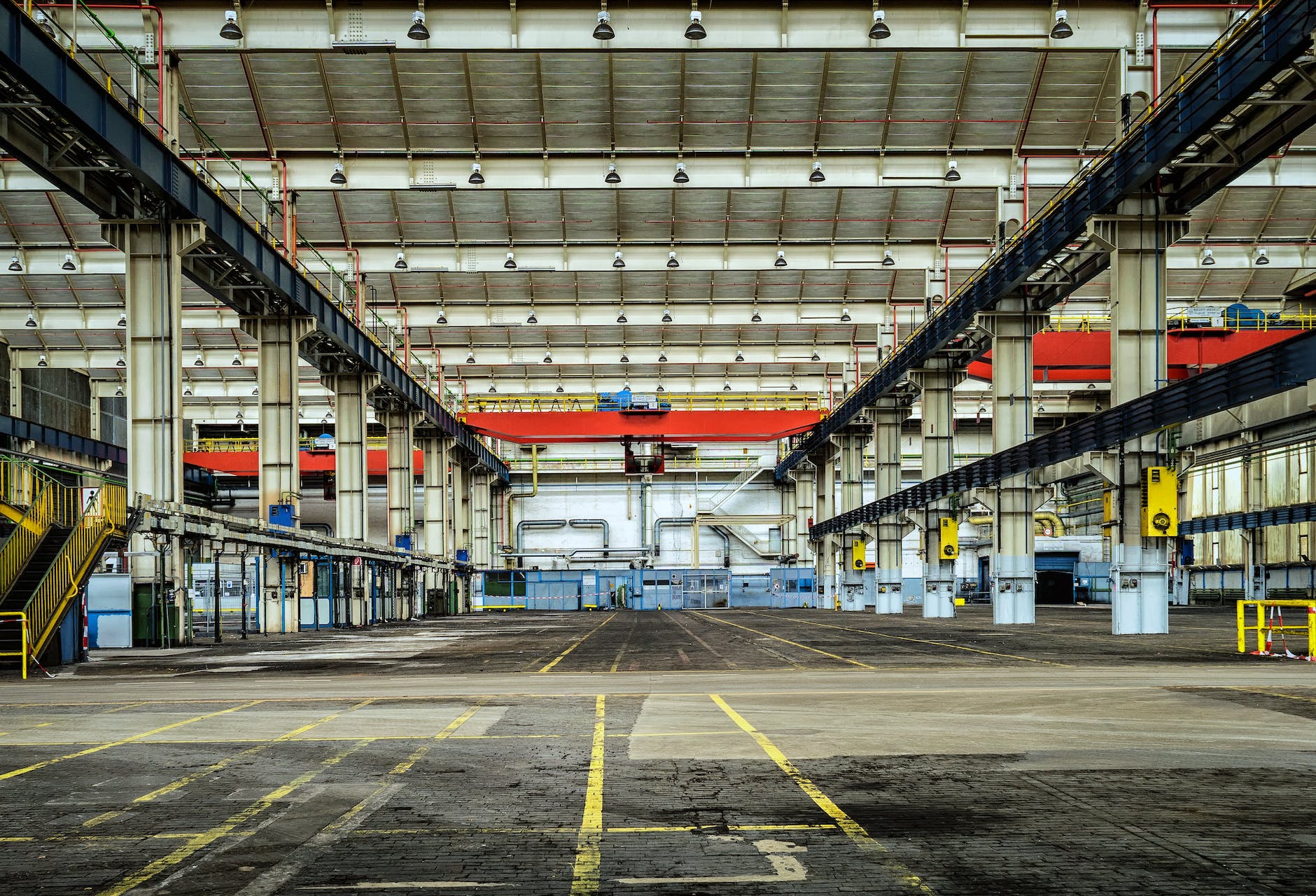
What can a suburb do to breathe new life into a decades-old industrial park? Here are some ideas:

Photo by Pixabay on Pexels.com

Schaumburg officials hope a tax increment financing (TIF) district can provide the public resources needed to attract new investment in the village’s nearly 60-year-old, 573-acre Centex industrial park…

Neighboring Elk Grove Village’s 6-square-mile industrial park — the largest in the nation — wouldn’t be as successful without the kind of public-private partnership Schaumburg officials have in mind for Centex, Elk Grove Mayor Craig Johnson said.

Through a combination of location, modern infrastructure and a supportive local government, demand for some areas of the park has driven land prices there to $2 million an acre, Johnson added…

While Elk Grove’s industrial park includes the additional electricity capacity for such uses as data centers, Schaumburg is aiming to simply create a better environment for the type of manufacturing businesses that use the Centex industrial park today. But even those businesses have different needs than they did decades ago, Johnson said, such as higher ceilings and larger loading docks…

Johnson also noted that TIF funding allowed his village to acquire properties within its industrial park, package them into larger parcels and then sell them to businesses in need of more space.

Two thoughts come to mind:

  1. Many parts of the suburbs are no longer new. A sixty year old industrial park was created in the postwar era. The properties and the land use overall may not fit with what is in demand in 2024. At what point is it cheaper or easier to build new somewhere else? (I am thinking of what can happen with big box stores.)
  2. This exemplifies the kind of public-private partnership that is fairly common with development in the United States even as a lot of rhetoric suggests the U.S. takes a free market approach. There may be business competition but in the examples above, local governments are helping to create conditions or acting as middle men to get to the development they would prefer to see.

Another angle to this: what might suburbs do in the next few decades to set up industrial, commercial, and residential development for the next 50 years? At that point, even postwar suburbia will be roughly a century old.

How much sales tax revenue a mid-sized suburban shopping mall might generate

After the purchase of a local shopping mall by a suburban community, a news article highlights how much sales tax money the mall once brought into the suburb:

Bloomingdale officials faced a similar scenario with Stratford Square, which once brought in $20 million a year in sales tax, but now is mostly empty. The village bought the mall this year for almost $9 million after filing for condemnation against the owner, Namdar Realty Group, as the property fell into disuse.

According to the FY 24 budget of the Village of Bloomingdale, they had $41 million in tax revenue. If the mall once brought in $20 million in sales tax revenue, that is a big change for a suburban community. Because the mall has declined over time, they have had time to adjust to the decreasing sales tax revenue. Still, that is a large amount.

What are the odds that the new land uses generate that amount of money? Given the state of retailers and brick and mortar establishments, this might be difficult. And there appears to be less demand for suburban office space. A mixed use setting, popular in suburban redevelopments (one example not too far away), could sustain some business and office activity. Residential development could provide more housing options but also require some different city services.

This reminds me of the long-term process redevelopment can often be. From the peak of the shopping mall to what the new development might look like, decades could pass. In the meantime, the community has changed and social and economic life has changed.

When you can build a suburban warehouse where an office building used to stand

With less demand for suburban office buildings, the void is being filled with warehouses. One example from the northern suburbs of Chicago:

Photo by Pixabay on Pexels.com

The old Allstate campus was a traditional suburban office environment with lush landscaping, reflecting ponds and thousands of workers. That property now is called the Logistics Campus, a massive industrial development underway in Glenview…

“The ability to put modern industrial in the middle of an established community — it’s unique in the sense that there will be very few other sites of this size that can replicate what we’re doing,” said Neal Driscoll, Dermody’s Midwest region partner.

Development of big-box industrial space in the Chicago region set a record in 2023 with construction of 70 buildings totaling nearly 33 million square feet, according to a recent report by commercial real estate company Colliers International.

The shift to warehouses in the suburbs has been going on for a while. What I noticed in this story was this thought: the unique opportunity to put warehouses (“modern industrial”) in “an established community.” Translation: many upscale suburbs would not chose to put in warehouses. They might generate noise and traffic. They do not provide many white-collar jobs. They are not attractive buildings.

But, empty office parks are also not desirable. Suburban offices or headquarters for Fortune 500 companies are attractive: quality jobs, status, most likely a glass building. No one working in these buildings and companies leaving these spaces leads to issues.

Thus, warehouses might now be found in communities that would not necessarily select them if they had such options. A set of warehouses might be preferable to vacant office buildings or unwanted office buildings. Figuring out the best land use or zoning in a suburb can be less about the most ideal use of land but rather about the possible alternatives at that moment.

Seeing teardowns and infill homes throughout DuPage County

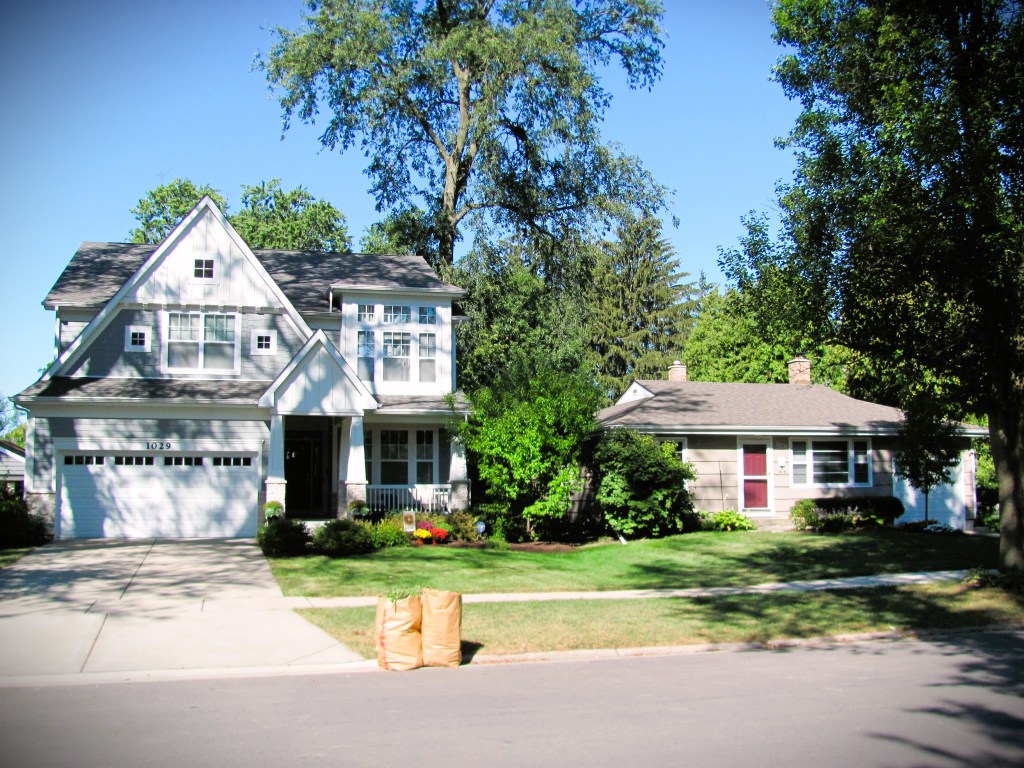
While working on a project, I noticed something while driving through a number of DuPage County communities: there are teardown homes everywhere. They are not just limited to desirable downtowns; they are spread throughout numerous residential neighborhoods. They are often easy to spot: much larger than adjacent homes and with a particular architectural style with stone or fake stone bases, lots of roof peaks, and plentiful garage space. Some could be categorized as teardown McMansions. (Some of these homes might be infill homes where homes were constructed on empty land.)

These teardowns follow some of the patterns I found in over 300 teardowns in Naperville. The architecture and design is similar. The homes are often located next to older homes, often from the postwar era, from the twentieth century.

One difference is that these teardowns are spread throughout communities. In Naperville, teardowns tended to cluster near the desirable downtown area. In some of the communities I drove through, teardowns and/or infill homes are all over the place. Some of these communities do not have downtowns like Naperville and have housing stocks of different ages. It was not unusual to see a teardown suddenly in a neighborhood on the edge of a community when in Naperville the teardowns tend to cluster in particular neighborhoods.

In a county that is largely built out and with suburbs now 50-170+ years old, there will be more opportunities for property owners, builders, and developers to tear down old homes and construct new ones. My sense is that while communities may have regulations about what can be rebuilt, the general atmosphere is in favor of these new homes as long as there is interest and resources to make it happen.

A shopping mall left for walkers, a few stores, and future plans

I recently visited a nearly empty shopping mall in a nearby suburb. The suburb just recently bought more of the property in the hopes of redeveloping the mall into something more productive for the community. On this visit, here is part of what I saw in the mall:

On this winter day, there were at least a few people walking laps around the mall. Others sat in the empty food court. Security walked around.

The directory was about 5-6 years old. At that point, the mall still had a lot of retailers.

In the background of the image, you can see the Sears sign. Almost all of the anchor stores are long gone. Most storefronts are empty. The movie theater is shuttered.

The decline of this mall did not happen immediately. Combine online shopping, lots of shopping options in the Chicago region, and COVID-19 and you get a nearly empty mall. And it will take years to redevelop the property and incorporate the new elements into the community.

What used to be in suburban downtowns: banks, grocery stores, churches, and more

I recently read about redevelopment plans in part of a suburban downtown in the Chicago area: a shift from banks to other land uses. Here is what would be built in the future:

Photo by John Guccione http://www.advergroup.com on Pexels.com

Hundreds of apartments, a 600-vehicle parking garage and new retail and entertainment space are among an array of possibilities for the redevelopment of a key area of downtown Mundelein known as the “Bank Triangle.”

Suburban downtowns served different purposes in the past. They were economic and social centers in the midst of less developed suburban territories. Businesses located there sold more everyday goods including food and clothing. Banks and churches were there.

Now, suburban downtowns want mixed-use properties that match up downtown residents with restaurants, particular kinds of retailers, and entertainment and cultural options. These land uses bring in residents and money. They are perceived to be vibrant land uses. The other land uses have moved elsewhere or have downsized; banks have consolidated and have fewer branches, retailers are in strip malls and shopping malls, and more people moved to sprawling subdivisions further removed from downtowns.

This shift highlights a new version of suburban downtowns. They are now places to live and go to, not necessarily centers of community life. They have particular land uses and not others. And these will likely to continue to change in the future.

Suburbs buying vacant malls to try to simplify redevelopment process

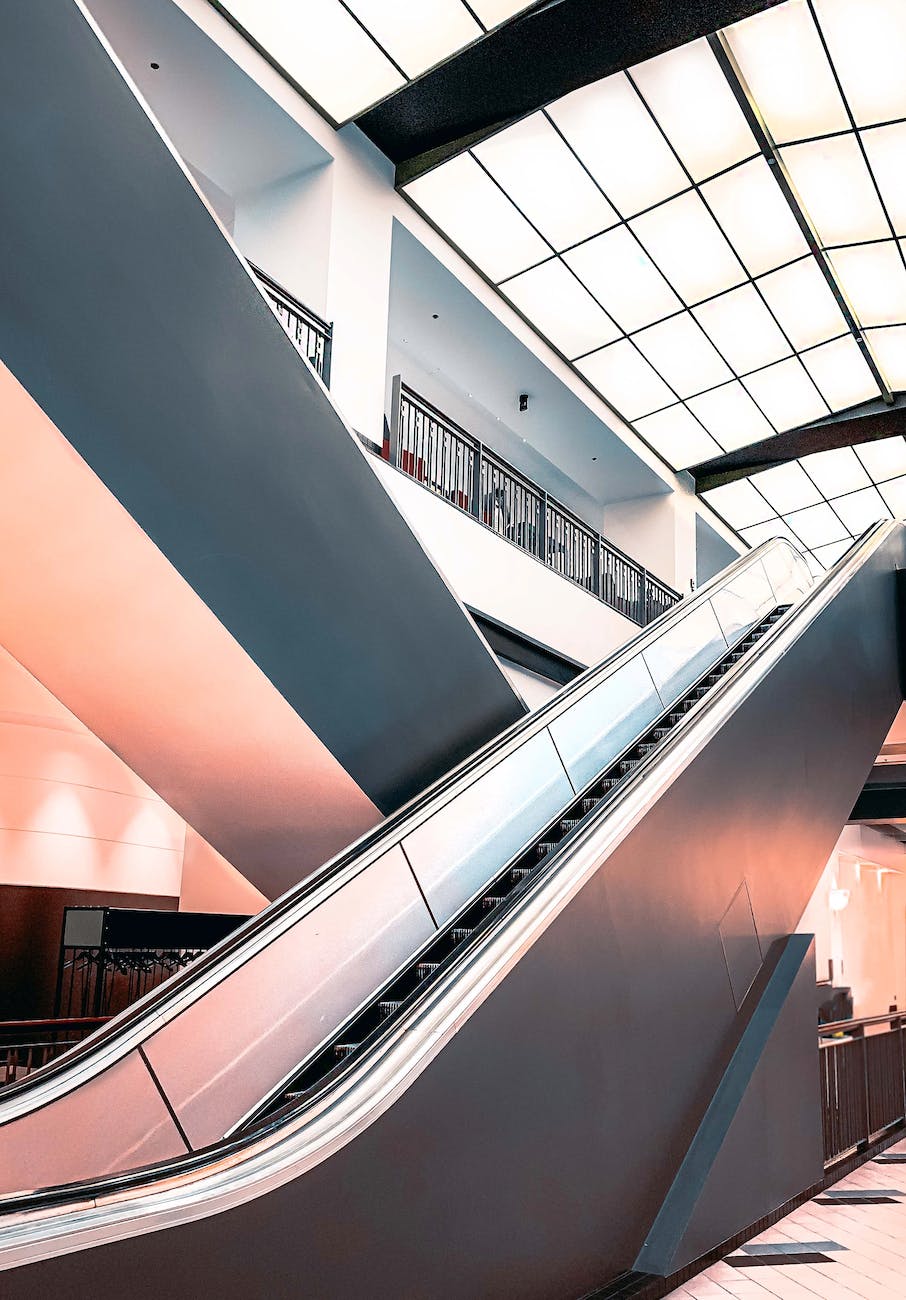
Two Chicago suburbs are purchasing mostly empty malls with the goal of redeveloping the properties:

Photo by Pixabay on Pexels.com

West Dundee and Bloomingdale officials have similar visions for the mall properties in their towns.

West Dundee sees a mixed-use development with residential, office, retail and entertainment. Bloomingdale’s consultants have drawn up conceptual plans showing residential, commercial and recreational development in place of the mall’s former retail buildings and parking lots.

Typically, villages stay out of the real estate business and leave redevelopment of retail centers to developers. But for West Dundee and Bloomingdale, taking ownership of their malls and clearing some obstacles, such as multiple property owners or restrictive covenants, were deemed essential for future redevelopment.

“Almost uniformly, every developer with whom we spoke stated that the site has too many complications ­— too many owners, too many covenants, too many uncertainties,” Nelson said last year. “The village’s aim is to bring simplicity to the process so reliable developers with established track records will be interested in partnering to reformat the area. Without municipal intervention, that simply won’t happen.”

Two thoughts come to mind:

  1. It is not too surprising that suburban communities want to guide the redevelopment. Suburban residents and suburban community leaders are often picky about what they might want to replace a shopping mall. By purchasing the property, the suburb can choose the developer and the zoning while also setting a vision.
  2. I wonder if this is an instance where a large property owner – the owners of these malls – can afford to sit on these properties for a while to see if there will be a bigger financial return later. I remember reading in the past about parking lots in downtown areas; they are not flashing and they are not the preferred land use but the company who owns that lot can wait until there is significant demand for the property and then make a lot of money on selling the parking lot. Compared to these suburbs, the property owners may be less interested in moving quickly on a redevelopment plan. (This could also apply to recent conversations about suburban office parks and downtown office buildings: even vacant buildings might not need to be sold or redeveloped if an owner can afford to hang on to them.)

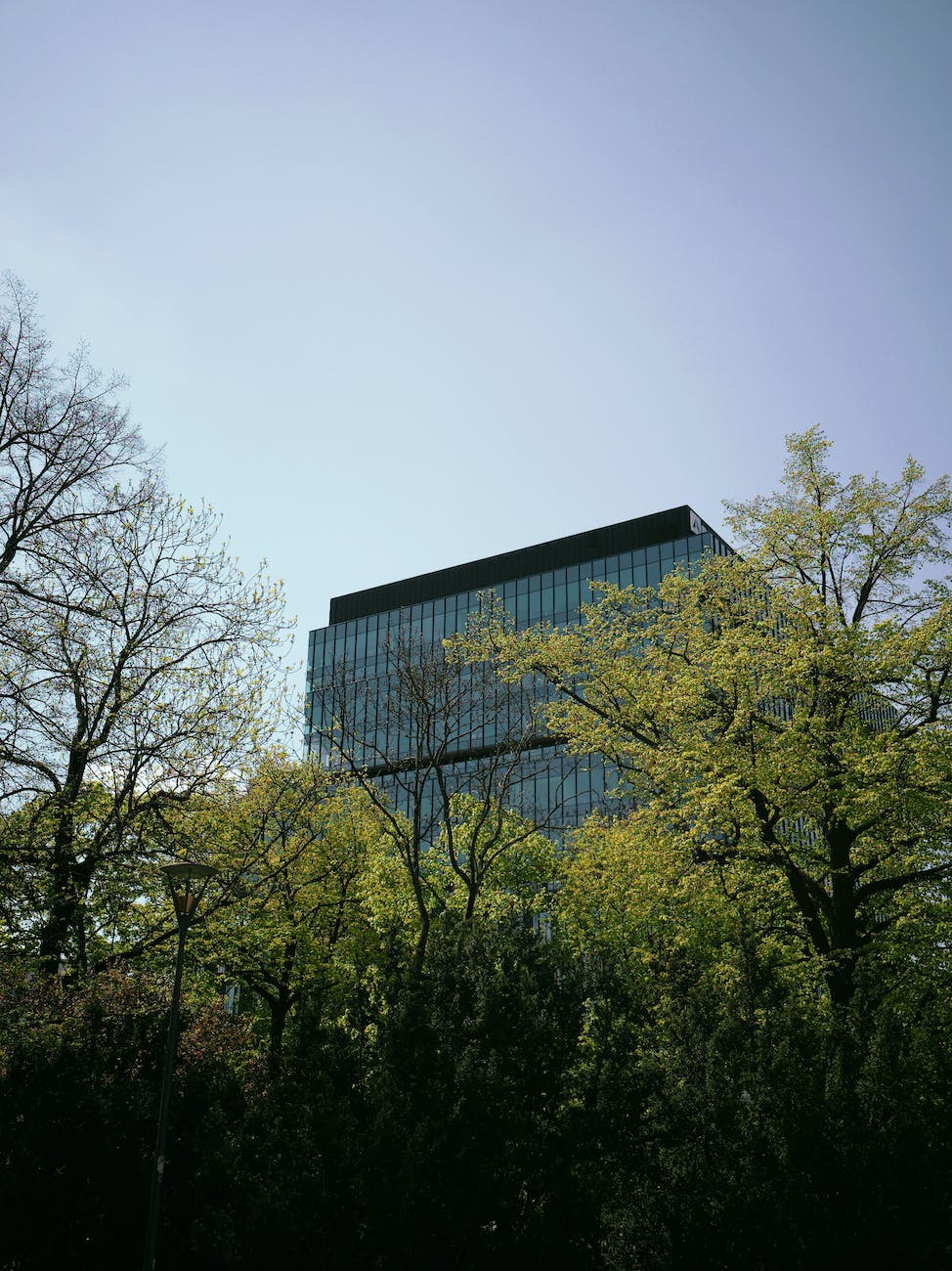
What will nearby suburban residents accept for redeveloped office parks?

Suburban residents often do not like the idea that a nearby office park will soon be a warehouse or logistics center. But, what will they accept?

Photo by Egor Komarov on Pexels.com

If I had to guess, I would go with open space or park space. Suburbanites would like this for multiple reasons: little noise and traffic, increased recreational opportunities, this limits future development on the location, and improved property values. Suburban homeowners do not want properties next to them to have more intensive land uses; they would prefer less activity.

At the same time, this puts communities and these suburbanites in a predicament. These office parks served particular purposes. They brought in tax revenues. They provided jobs. They provided status (particular if a big name company occupied the offices). Empty buildings are an eyesore and wasted opportunity. Warehouse and logistic parks would bring in money and jobs. Parks and open space do not generate their own revenues.

Before resisting everything that could replace suburban office parks, the suburban neighbors might want to consider what they would be willing to accept. Are there land uses that could aid the community and preserve some semblance of residential suburban life? Is there any room for compromise?

“Zombie malls” cost communities while others profit

A number of American communities have “zombie malls,” shopping centers that continue to exist even if communities wish they would disappear.

Photo by Aldiyar Seitkassymov on Pexels.com

There are hundreds of zombie malls throughout the U.S. like the Berkshire
Mall, more dead than alive. The older, low-end ones have
lost at least half and, in some cases, more than 70% of their value
since
the industry’s peak in late 2016, according to real-estate research firm Green
Street…

That’s when Namdar Realty and Mason like to swoop in. The New York-based
real-estate partners are among the most prolific purchasers of U.S. malls. They
make money by buying malls cheap and keeping them going, even as town officials
beg them to pull the plug.

Bare said the community would be better served if the Berkshire Mall was
turned into something more valuable. Ideally, a mixed-use property with housing
and medical offices or educational space, and maybe some retail and
restaurants…

Malls typically sit on large parcels of prime real estate—which often
include nearby buildings such as restaurants as well as large parking lots—that
can be subdivided and sold in parts, sometimes at a value exceeding the
purchase price of the mall. The partners keep the malls open, but cut costs by
appealing their property-tax bills and reducing expenses such as staffing and
maintenance. 

All the while, they continue to collect rent from the mall’s remaining
retailers. When national retailers move out, Namdar Realty and Mason try to
replace them with nontraditional tenants such as call centers, local small
businesses, doctors’ offices and bounce-house venues.

asdf

Here are some of the reasons communities do not like malls surviving in this
state:

-They are not generating the kinds of tax revenues they did as a thriving
mall.

-The land could be generating more revenue if used in different ways.
Communities want to replace the tax revenues of the malls with other revenues.
(And this is a reason housing might not be too appealing to some leaders.)

-A mall in bad repair and/or is partly to mostly empty is an eyesore.
Gleaming and busy malls are a source of pride; struggling or dying malls are
the opposite.

-Outside mall owners may not always be perceived as having the best
interests of the community in mind. Imagine how locals might interpret their
actions: someone is trying to profit off our struggles. They are impeding our
progress just to make money for outsiders.

-Even if malls can be demolished or repurposed, it can be a hard path to
putting new and worthwhile in its place. These outsiders are slowing the
process or making it impossible to move on.

Even zombie malls will meet their fate eventually, either as unprofitable
ventures that are sold and redone or as places that continue to generate
profits. And if they can keep making money, are they really zombies?