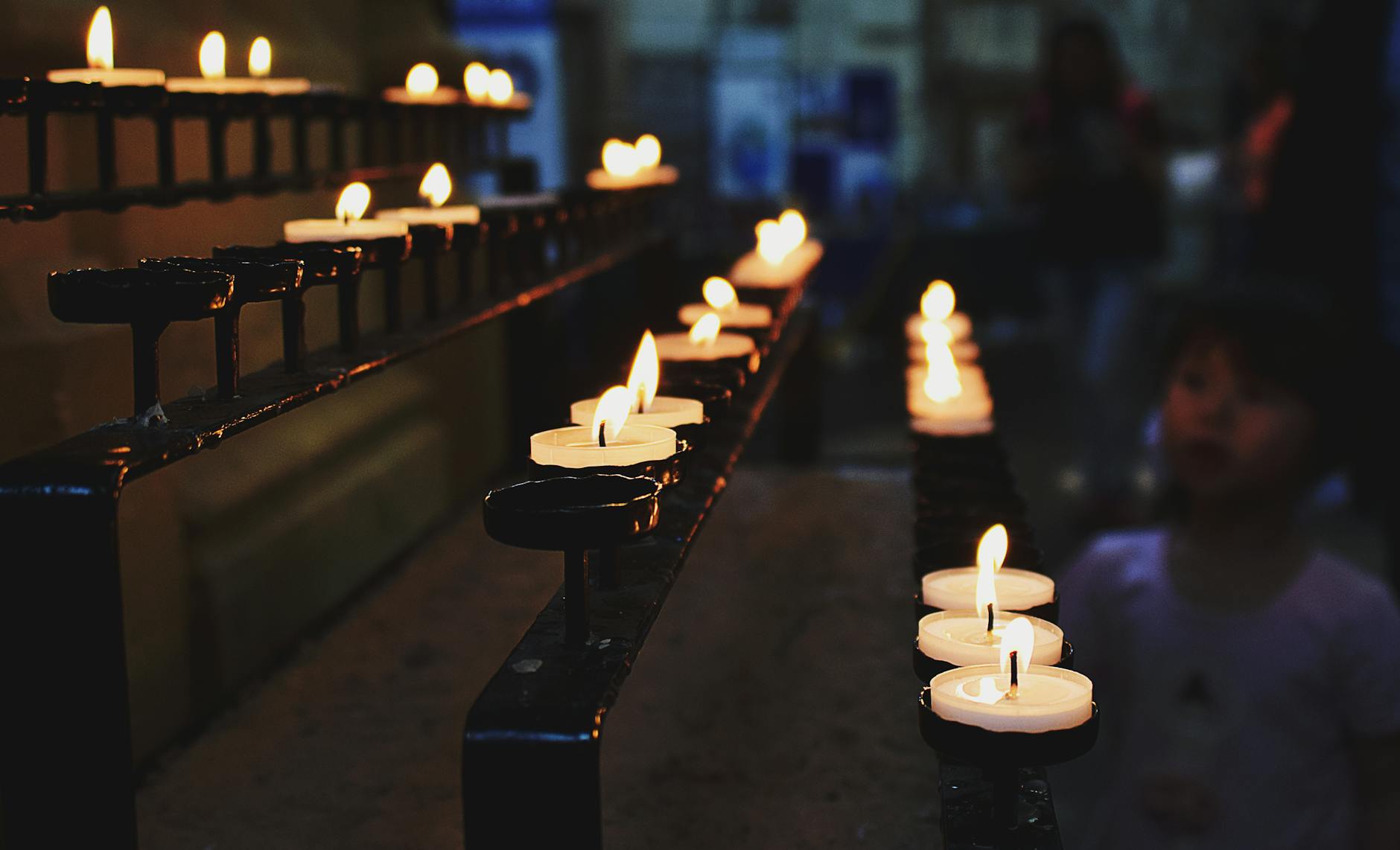
Religion in the American suburbs: religious practices interacting with a suburban lifestyle

What does religious practice, activity, and belonging look like in the American suburbs? Is it different than religiosity in other settings, particularly urban and rural settings? This can be hard to parse out. Because more Americans live in suburbs than other settings and because of the pervasive features of American religion, it can be difficult to know how different religious faith in the suburbs is from religious activity in the United States as a whole. But, here are three consistent ideas from scholars and pundits regarding what marks suburban religiosity.

Photo by Tima Miroshnichenko on Pexels.com

First, suburban religiosity is an individualized faith occasionally set within larger religious communities and traditions. If “Sheilaism” from Habits of the Heart was true generally of American religion in the 1980s, it could easily be placed in suburbia. Suburban residents, often with some means, make decisions for themselves about what to believe and practice. They have numerous options to explore, ranging from highly individualistic practices unique only to them to being part of large religious organizations with broad reach and influence. This individualistic approach has consequences; religious faith may be centered in nuclear families or religious small groups or disconnected from larger neighborhood or regional concerns.

Second, megachurches are often in suburbs. They are not exclusive to suburbs. But, the megachurch that we think of now begins to emerge in the postwar, suburban-dominated decades. These congregations are often in easy to access locations (near major roadways), offer high energy experiences, and draw people from near and far. The majority of American religious congregations are smaller with a median congregation under 100 people but suburban megachurches, think of a Willow Creek or Saddleback, have exerted outsized influence.

Third, religious congregations and practice have adapted to suburban lifestyles and patterns. This was a concern of critics in the postwar era: how could relatively wealthy suburbanites in comfortable settings practice their faith? Could religious faith challenge their lifestyles? It may be the concern of new residents in the suburbs today who wonder how their faith mixes with American life in the suburbs. Even with the amount of religious activity in the suburbs, can traditional religious practices, beliefs, and belonging in different traditions survive an encounter with American suburbs and their particular emphases? Given the amount of religious activity in suburbs, the answer appears to be yes – religion has survived – but it is probably not the same after interacting with suburbia.

How do we know these features of religiosity in the suburbs? The final post will look at sources for exploring this subject.

Religion in the American suburbs: numerous religious buildings and buildings used by religious groups

Imagine a stereotypical suburban downtown in the United States. It has two story brick buildings with storefronts on the first floor. There are some offices and places to eat. A few people walk around while cars drive past parked vehicles. There may be train tracks and a station marking the ability to commute to the big city. Not far from such a streetscape are often church buildings of various denominations and traditions.

Photo by Jatuphon Buraphon on Pexels.com

Not all suburbs have downtowns. Many of the postwar suburbs are agglomerations of subdivisions, commercial areas, and industrial parks. But, religious buildings are there too. Go to a major intersection involving a highway; is there a megachurch nearby? Are there congregations meeting in former big box stores and in strip malls? There may not be an obvious walkable center to these suburbs but there are still plenty of congregations.

Religious buildings dot the suburban landscape. They may not be the most desirable land use with congregations not paying property taxes for their property and the opportunity costs of how valuable land might instead by used. Neighbors and local leaders may object to constructing a new religious building or a religious group altering an existing building. However, numerous residents attend these congregations. A number of these congregations and buildings are fixtures and centers in their communities. These congregations host services and can provide services to and space for the community.

These buildings range in size and architecture. Some of this depends on religious traditions. Some traditions have a particular approach to a building. Other traditions have more flexibility. People of faith in the suburbs may meet in a traditional-looking church – even as a member of a faith that is not Christian – or in a school, a movie theater, a mall, an office building, or a home. These approaches might be guided by financial resources or by concerns that certain styles may inhibit people from joining their community.

Thus, the American suburbs can include large Hindu temples, mosques and Islamic community centers, megachurches, and traditional religious buildings large and small. They can meet in old and new structures. They can move between locations as their congregations grows or shrinks, acquires resources or has difficulty finding resources.

Religion in the American suburbs: a diverse religious landscape

In the postwar era, Will Herberg described American religion as primarily involving Protestants, Catholics, and Jews. The same was assumed to be true in the suburbs. With suburban populations growing, Protestants, Catholics, and Jews moved in and added to existing congregations and founded many new ones.

Photo by Zac Frith on Pexels.com

These groups also had to adjust to suburban life. Practicing faith in the suburban context looked different than in urban neighborhoods or rural areas. Critics within these traditions suggested the suburban version of their faith had serious deficiencies. Supporters of the suburban faith highlighted new possibilities and energy.

With changes to the population in the United States, including changes prompted by the Immigration and Nationality Act of 1965, the suburban religious landscape changed. Today, there are still plenty of Protestant, Catholic, and Jewish congregations in the suburbs but they are located near the congregations of Muslim, Buddhist, Hindu, Orthodox, Sikh, and other religious traditions. Increasing racial, ethnic, and class diversity in the suburbs goes alongside religious change. The complex suburbia of today includes a complex religious landscape.

Add to that the growing number of residents of the United States who do not identify with a religious tradition or faith. The suburban landscape may include religious activity throughout the week but it also is full of residents with no religious affiliation or other understandings of religion and spirituality.

This is easy to see in many suburban areas. Pick a populous county outside a major city – whether Washington, D.C. or New York City or Chicago or Los Angeles – and you can find religious and non-religious activity all over the place. The suburban landscape may be dominated by single-family homes and roads but there are plenty of congregations in a variety of traditions. It is visible when driving down major roads. You can see it in county-level counts of religious congregations.

This means any quick description of suburban religion is hard to do given the number of practices, beliefs, and belonging present in American communities. One way to see this diverse religious landscape is in the religious buildings of the suburbs – this is the subject of the next post.

Religion in the American suburbs: a unique context with a particular history

Both religion in the United States and the American suburbs are unique phenomena. Put them together over multiple time periods and you have a particular combination with varied expressions across contexts.

Photo by Chris F on Pexels.com

From the beginning of the American suburbs, congregations gathered and individuals practiced religious faith. By the decades after World War Two, when postwar suburban life centered on single-family homes and driving took off, American religious activity may have peaked. The growing number of suburbanites worshiped in suburban congregations old and new as suburban communities expanded.

The American suburbs continued to grow even as religious activity subsided. The 1960s were the first time more Americans lived in suburbs than either in cities or rural areas. By 2000, a majority of Americans lived in suburbs. The changes in American religion at the end of the twentieth century and the start of the next century, such as a emergence of evangelicalism and the increase in those claiming no religious affiliation, interacted with suburban life.

The following posts will detail some of the specific features of suburban religion. Before getting to those traits, I want to highlight three broader patterns in these intertwined phenomena:

  1. The rise of suburbs and their populations paired with the relatively decline in urban populations contributed to a perception that suburbs are more religious and cities are more secular. Reality is more complex than this as American cities and urban neighborhood can contain lots of religious activity and diversity while suburban areas might not be.
  2. Both religion and suburbia influenced each other. It is not just a one-way street where growing sprawl changed religious patterns. Did changing religious patterns also legitimate and support sprawl? Could the American suburbs have occurred as they did without support of religious groups and adherents?
  3. The religious landscape in the suburbs is not flat or always trending in one direction. It is varied and dynamic with forces internal and external to religion and place shaping patterns.

The next post will detail the diverse religious landscape now found in the American suburbs.

We need solutions to continued low turnout – less than 20% – in Illinois elections

The primary elections earlier this week in Illinois excited few voters:

Photo by Tara Winstead on Pexels.com

Though thousands of properly postmarked mail-in ballots are still being tallied through April 2, state election officials believe it will be hard to crack 20%.

Unofficial results from the 20 most populated voting jurisdictions in Illinois — which represent more than 81% of all voters in the state — show less than 17% voter turnout combined.

Turnout tallies in the suburbs remain below 20% as well, with Lake County currently showing only 11.7% of registered voters cast a ballot.

Why so few voters?

“Most of the races were completely uncontested, with just one contested county board race on the Democratic side,” said Lake County Clerk Anthony Vega. “That lack of motivation could have resulted in voters not coming out.”

With that lack of choice, combined with the fact that Democratic President Joe Biden and former Republican President Donald Trump had all but secured their nominations ahead of Tuesday’s vote, low turnout was inevitable, experts said.

These are plausible reasons. Yet, I have heard little about significant solutions. Such options could come from multiple angles: local officials, voters, advocacy groups, the state government, employers, civic organizations, etc. Illinois may face serious problems in numerous areas but this strikes me as one that affects numerous others and is foundational for the supposed American system of government.

The one feature of this I think about is the ways that the suburbs grew, in part, because Americans like being closer to local government. Compared to big cities, states, and the federal government, a suburban resident can more easily interact with local officials and local government activity. But, if people do not even want to vote for those local measures – and there is a suggestion in this article that local referendums might have pushed voter turnout up a few percentage points – then this interest in or connection to local government may be severed.

Who suburban leaders say affordable housing is for – another example

Federal money will help in constructing a new affordable housing apartment building in suburban Glen Ellyn. Who might live there?

Photo by Bidvine on Pexels.com

Chicago-based nonprofit Full Circle Communities is seeking to build an apartment complex with up to 42 units. The developer would set aside no less than 30% of the units as permanent supportive housing for people with disabilities under the terms of an agreement to purchase a portion of the village-owned property.

U.S. Rep. Delia Ramirez requested federal dollars for demolition and site remediation work to make room for the proposed affordable housing project. Ramirez, whose 3rd Congressional District runs from Chicago’s Northwest Side into DuPage County, announced the funding at a news conference with Glen Ellyn Village President Mark Senak and other elected officials last week.

Affordable housing allows “senior members of our communities to stay close to their families so that grandparents can see their grandchildren,” Senak said, echoing remarks he made at a village board meeting last month.

“It gives adults with developmental disabilities the opportunity to remain in the community where they went to school, where they grew up, where their families live, where their friends live, and where many of them work,” Senak said.

This follows a common pattern among west suburban leaders in recent years. Affordable housing is for (1) seniors who want to stay in their community and (2) adults with developmental disabilities who want to stay in their community. These are indeed groups with housing needs.

Would more communities be open to affordable housing for people who do not have much money? The two examples above suggest affordable housing is for people already in the community who want to stay. Is there interest in housing for workers with lower wages?

My study of suburbs suggests that in wealthier suburban areas there is less interest in affordable housing that is open to any residents who might qualify. Americans generally do not like the idea of government money for public housing, with some exceptions. This is probably even more true in suburbs where a primary focus is on single-family housing.

The (declining) number of farms in the United States

A long-term trend continues as the number of farms in the United States drops again:

Photo by DESPIERRES Cu00e9cile on Pexels.com

Between 2017 and 2022, the number of farms in the U.S. declined by 141,733 or 7%, according to USDA’s 2022 Census of Agriculture, released on Feb. 13. Acres operated by farm operations during the same timeframe declined by 20.1 million (2.2%), a loss equivalent to an area about the size of Maine. Only 1.88% of acres operated and 1% of farm operations were classified under a non-family corporate farm structure…

In addition to Ag Census data, USDA releases survey-based estimates on farm numbers once every year. Using this annual survey data dating back to 1950, the trend of fewer operations farming fewer acres becomes even more obvious. Since 1950, the number of farm operations has declined by 3.75 million (66%) and the number of acres farmed declined by 323 million (27%) – slightly less than twice the size of Texas. Technological advancements that have increased productivity, such as feed conversion ratios in livestock and yield per acre in crops, have allowed farmers and ranchers to produce more with less even as the U.S. population more than doubled, going from 159 million in 1950 to 340 million in 2023, and the global population more than tripled (2.5 billion to 8 billion) during the same period.

Add to this the drop in the number of people involved in farming or agricultural work over the last century. This all adds up to more and more people living in urban areas, particularly in suburbs where over half of the American population lives.

Even with all of this, the United States produces more food in the long run. Efficiency and innovation mean more can come from the same amount of land. This frees up people and resources for other activities.

The numbers cited above also mean there are still a lot of farms in the United States. The country may no longer be anchored in small towns and family farms – if is ever was – but many continue on with food produced for the country and world.

Workers cottages and a growing suburban dream in the Chicago region

What kinds of homes did early suburbanites in the Chicago area live in? Some lived in workers cottages:

Photo by Steve Johnson on Pexels.com

Thanks to a plentiful supply of lumber from old growth pine forests in Wisconsin and Michigan, as well as new milling processes such as kiln drying that gave precut wood precise standardized measurements, a new form of structure started appearing. Workers cottages were more affordable than elaborate, but they came with the promise of a better standard of living for working class families.

A century and a half after they started being built in earnest, an effort is afoot to celebrate and preserve the cottages, houses that have continued to offer utility and accessibility for generations…

The lecture was arranged by the nonprofit Chicago Workers Cottage Initiative, a group organized to celebrate and promote the houses, built mostly from the 1880s to the 1910s, that they say “represent the origins of the ‘American Dream’ of homeownership and the investment and pride of Chicago’s new immigrants.”…

“Some of these cottages were really spartan four-room houses,” Bigott said. “They cost like $600 on a $200 lot. It was a simple frame building, with two bedrooms, a living room, a kitchen.”…

It was a model that worked, and its backbone was the workers cottage. Elaine Lewinnek, a professor of American Studies at California State University, Fullerton, argues in her 2014 book “The Working Man’s Reward: Chicago’s Early Suburbs and the Roots of American Sprawl” that the idea of house ownership as “the working man’s reward” was one of Chicago’s most impactful exports, setting the scene for suburbs everywhere.

The suburbs have a longstanding reputation that they are full of people of wealth who are able to purchase a home and afford a suburban lifestyle. Imagine neighborhoods of McMansions, rampant consumerism, and newer vehicles.

This may be largely true and yet it is not entirely true. The homes described above could house the working class in suburban settings. This is not the only area where this occurred; historian Becky Nicolaides described working class houses in the Los Angeles suburbs.

And the housing today in the suburbs can also be varied. Postwar housing also had some variety from larger homes to smaller ranches. Wealthy suburban communities in the Chicago region today sit not far from neighborhoods with more modest housing.

If this article looks back at what was over 100+ years ago, what housing today will be viewed as housing for the working person in the suburbs in 2100?

Five reasons the United States is so suburban

I was recently asked about the history of the development of suburbs in the United States. Here was my brief answer regarding important factors in that history (not exhaustive, not ranked in a particular order):

Photo by Kaveh Saidi on Pexels.com
  1. The importance of single-family homes and private property that started in the mid-1850s with the idea of a little cottage in the woods.
  2. Anti-urban and pro-small town sentiments among Americans. These particularly developed as American cities start growing rapidly in the 1800s. Suburbs offer access to cities and their amenities while retaining some qualities of smaller towns like less distance between residents and local government.
  3. Race, class, and gender. This includes: white flight of residents, businesses, religious congregations, etc. from cities to suburbs; the idea of a suburban middle-class who should live a particular lifestyle in the suburbs; and expectations about nuclear family life in the suburbs.
  4. Government policy that consistently promoted suburban life including changes to mortgages in the first half of the twentieth century and largely funding the federal interstate system (while also putting less money into public housing, public transportation, etc.).
  5. The role of transportation technologies enabling faster travel from further distances (railroad, streetcars, automobiles). This gave rise to commuting, further separation of work and home, and suburban lives oriented around driving everywhere.

These factors are not new to this blog or the scholarship on suburbs. However, limiting the number of factors to five does make it interesting in terms of thinking through important factors. (See a related post: Why Americans Love Suburbs – seven reasons.)

“Communities,”cities and towns,” and “urban, suburban, and rural” in SOTU speech

How did President Joe Biden describe where Americans live? Here are some patterns from his State of the Union speech last night:

Photo by freestocks.org on Pexels.com
  1. Communities was used five times. This phrase covers a lot of potential places. Here are two uses: “Thanks to our Bipartisan Infrastructure Law, 46,000 new projects have been announced across your communities—modernizing our roads and bridges, ports and airports, and public transit systems.”; “Taking historic action on environmental justice for fence-line communities smothered by the legacy of pollution.”
  2. Cities and towns was used twice. This presumably refers to both places with more residents and those with fewer. Here are several uses: “It doesn’t make the news but in thousands of cities and towns the American people are writing the greatest comeback story never told.”; “Help cities and towns invest in more community police officers, more mental health workers, and more community violence intervention.”
  3. Urban, suburban, rural was used once (and mentioned communities): “Providing affordable high speed internet for every American no matter where you live. Urban, suburban, and rural communities—in red states and blue.”

These uses are likely trying to cover as many different places in the United States at once. I imagine few Americans would not fit into one of these places described. A community could refer to municipalities, geographies, and other social groups that would use this term to describe themselves. Cities and towns covers bigger and smaller places. Urban, suburban, rural is a common set of categories that refers to different places and ways of life.

Are these the most effective terms to use when talking to a broad audience of people in the United States? When people hear these terms, do they recognize their own communities?