Addiction treatment center sign goes up but lawsuit with suburb continues

The saga of Haymarket Center attempting to open an addiction treatment facility in the suburbs of DuPage County continues:

Photo by EKATERINA BOLOVTSOVA on Pexels.com

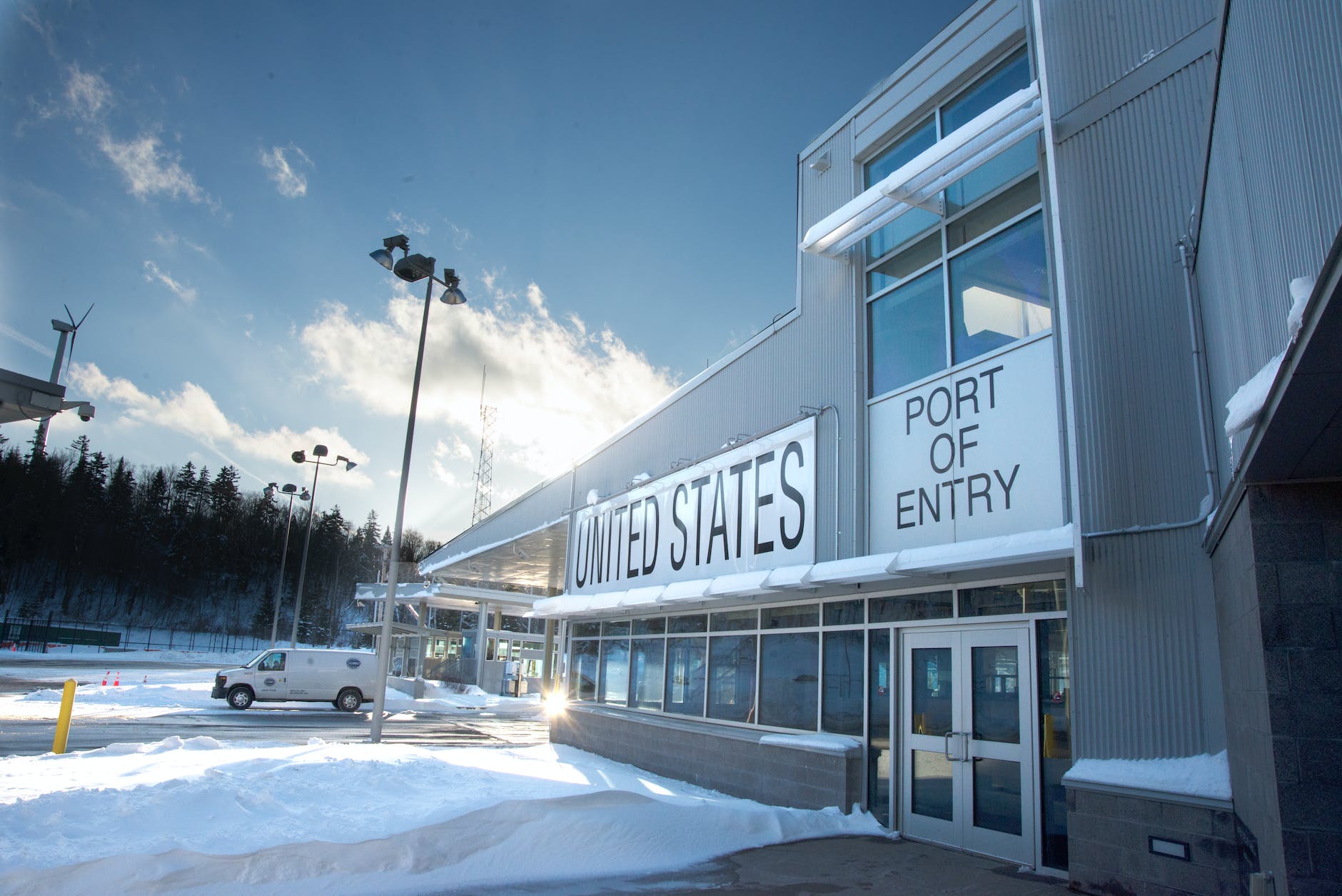
Although the lawsuit remains unresolved, Haymarket has installed a new sign with its logo of a deep-rooted tree in the center of the east side of the building, facing I-290. Haymarket, one of the largest addiction treatment providers in the region, owns the property…

After two years and more than 35 public hearings, Itasca trustees in November 2021 unanimously voted against the project. The subsequent lawsuit alleged officials violated the Fair Housing Act and other laws prohibiting discrimination against people with disabilities, including patients in treatment for substance use and mental health disorders.

Village officials, however, are adamant that Itasca, a town of less than 10,000, lacks the infrastructure to support a treatment center that would serve more than 4,700 patients a year…

The lawsuit argues that Itasca violated the Americans with Disabilities Act and other anti-discrimination laws when it required that Haymarket submit a zoning application as a planned development rather than as a health care facility. As a result, Haymarket was held to a “higher and more onerous standard than would have been required had it been allowed to apply for a special use as a health care facility.”

This is a case I have followed as I think about undesirable land uses within suburban areas. (See earlier posts here, here, and here on this particular case and a recent post on undesirable land uses in suburbs.) I would guess many suburbanites would see such treatment centers are needed within a reasonable drive of themselves – from the article: “Last year, 150 people died from overdoses in DuPage, compared to 137 in 2021” – but few want it in their community.

As the lawsuit unfolds, is the suburb losing out by having an empty building? Suburbs also do not like vacant structures.

And if Haymarket loses, where do they go next to try to open a facility? Do they try a new strategy to sweeten the pot for a community?

The sorting of suburban residents either far or near to undesirable land uses

Ongoing concerns from residents about a possible second waste transfer station in the suburb of West Chicago highlights the issue of which suburbanites live further from or closer to undesirable land uses:

Photo by zydeaosika on Pexels.com

West Chicago is home to the county’s only garbage-transfer station — an in-between location before waste is hauled to a landfill. Earlier this year, city officials gave the green light to add a second facility that would be run by trash hauler LRS and bring 650 tons of solid waste a day and air pollution from hundreds of large garbage and semi-trailer trucks weekly to the city of 25,000…

On Thursday, lawyers for Alcántar-Garcia will argue to state officials that the trash facility should be blocked. 

The Illinois Pollution Control Board has the final say in the matter, and a panel of Gov. J.B. Pritzker’s appointees will be asked to decide whether the city of West Chicago met all the criteria to determine that the new garbage site will not harm the health of nearby residents. That final decision is expected early next year. 

West Chicago is around half Latino, and that raises questions for Alcántar-Garcia’s legal team as to why it is the only DuPage County community targeted for two of these waste sites. Other municipalities, including those that are largely white and affluent, would benefit. 

Perhaps a thought experiment might shed some light on this problem. Imagine a metropolitan region where land uses were randomly distributed. The land uses suburbanites tend not to like, those that generate noise, traffic, and are perceived to threaten property values are randomly placed. Airports, garbage facilities, apartments, drug treatment facilities, railroad tracks, warehouses, and more are spread out. What would happen?

Assuming this is a blank landscape beyond these land uses, where would development pop up? Those with resources and influence might just happen to live and congregate in places away from those land uses. If locations are at least in part determined by the ability to purchase and develop land, those with more resources can better compete for desirable land. And those with fewer options might live closer to those less desirable land uses.

Of course, we do not have random metropolitan landscapes or centralized bodies that could make wise choices about where less desirable but necessary land uses should go. Instead, we have ongoing patterns by race, social class, and durable local history that help guide land uses to certain locations and not others.

My interpretation of what Americans mean when they say “renting is throwing away money”

I recently read through some social media discussion of this particular phrase: “renting is throwing away money.” As someone who studies suburbs and housing, what do people mean in the United States with this phrase? Here are a few dimensions of this and some historical and social context:

Photo by Kindel Media on Pexels.com
  1. In more recent decades, Americans have shifted to viewing homeownership more as a vehicle for investment and making money. Houses are not just places to live; people expect them to appreciate in value and provide profits over the years. (And in some places, homes have quintupled in value over several decades.) Renters do not get to share in this built equity while the landlord could cash out both in monthly payments and a sale down the road. If homeownership is primarily about buying a property to see it appreciate, then renters are missing out on this opportunity.
  2. However, homeownership in the United States is not just about making money. Homeownership signals something involving status, social class, and a commitment to a community. Homeowners have made it. Their ability to purchase a home is a signal of their industriousness and commitment to a community. They may raise a family there. Yes, they can sell the home down the road but they have bought into a particular place and put their money into a particular community. This is less about a personal return on investment and more of a marker of the homeowner and their ties to their neighbors and neighborhood.
  3. In contrast, renters are often treated differently than homeowners. They can be viewed as more transient and less interested in building up the local community. They may be assumed to be lower-income or less desirable residents for the community. Rentable units are a threat to community and single-family home property owners. (I have found this particularly true in wealthier suburban settings where opposition to apartments is often framed in terms of who might live there. More expensive apartments do not attract the same opposition even if residents still might be opposed to density, the height of the building, traffic, etc.)

Summing up: in an era with a hyperfocus on investment, homeownership can be viewed as a better long-term return on investment than renting. Additionally, Americans often view homeownership as more virtuous and more desirable for community life than renting. Put these together and there are long-standing concerns regarding renting and apartments.

“Suburban Screams” and the horror of the suburbs

A new television show debuting in a few weeks involves horror in the suburbs:

It is an evocative image: the pleasant suburban cul-de-sac has been replaced by a street and driveways shaped like a hand with blood flowing from the homes.

Here is a description of the show from the Peacock website:

Peacock has shared the official trailer for John Carpenter’s Suburban Screams, a six-episode horror anthology series from the mind of the legendary namesake director, writer, and producer, exploring true tales of terror in suburbia. 

Each episode will delve into the monstrous evil that lurks beneath the surface of friendly suburbia through the lens of one frightful tale. In addition to firsthand accounts, the episodes will include cinematic reenactments, personal archives, and historic town press coverage.

Many cultural products in the last one hundred or so years have endeavored to tell the dark truths of suburbia. Behind the smiling nuclear family or the facade of the new suburban single-family home are less desirable practices and relationships. These stories suggest the suburbs put on a particular face but they are actually something else.

Placing horror in the middle of the suburbs builds on this. Not only might viewers or readers want to learn about the dirtier parts of suburbia; they might want scares and terror.

“Terror” is not typically a term used to describe the suburbs nor is the idea of “monstrous evil.” But that both are “lurking beneath the surface of friendly suburbia” continues an ongoing narrative that the suburbs are not what they seem.

Turning empty big box stores into pickleball facilities

More suburbs could empty big box stores turned into indoor pickleball facilities:

Photo by Anna Tarazevich on Pexels.com

The Picklr, which has seven corporate-owned facilities, is accelerating its franchising and plans 80 facilities in 11 states including Illinois as the first wave of a major expansion…

The company plans to repurpose vacant big-box retail spaces in Mundelein, Naperville and Villa Park with openings anticipated in December.

Nine courts are planned in Naperville with eight each in Mundelein and Villa Park as the first entries in the Midwest.

The 80 planned facilities are being pursued by 13 new franchisees in the first part of the expansion. More than 300 locations across the U.S. are envisioned, according to Schubiger…

Among them are Sure Shot Pickleball, which debuted Sunday with 11 courts in Naperville, and Pickle Haus, a pickleball-themed restaurant set to open in November with 12 courts in Algonquin. In Vernon Hills, final approval is expected today for PickleMall Inc. to renovate the former Toys R Us a

Large vacant buildings, particularly big box stores, are a problem for suburban communities. When they are empty, they are not bringing in sales tax revenues. Empty storefronts give the impression that there is a lack of interest and activity in the community. It can be hard to find new tenants for existing properties when building a new structure is a cheap option.

Bringing in pickleball could help address these problems. The building is kept up. It can bring people in and out of the building. Pickleball is on the rise and can bring new energy to an older structure. New revenues might be generated.

Is a pickleball facility on par with the large-scale retail efforts that generated lots of tax revenues? Maybe not but the alternative of empty big box stores is not desirable.

Suburban aesthetic regulations for homes and solar panels on the roof

One wealthy Chicago suburb does not allow solar panels on the roofs of houses due to concerns about their appearance:

Photo by Kindel Media on Pexels.com

In an attempt to stay true to its motto — “A Unique Village in a Natural Setting” — Kildeer is one of the few Illinois municipalities that bans roof-mounted solar panels from residential buildings.

The reason? Village leaders think they’re ugly…

Residents may install only the generally pricier version of solar energy collection: integrated solar roofs, which are made of solar shingles that blend into a home’s appearance…

Restrictions on solar-power equipment to certain materials and designs is not unusual for the village, said Chief Village Officer Michael Talbett. The municipality already restricts building materials based on quality and aesthetic concerns, he said. For instance, the village does not permit vinyl siding on its homes…

Golf, a small Cook County community just north of Morton Grove, has a moratorium in place on solar development while it finds “the best fit” for its community, village administrator Michelle Shapiro said.

It sounds like property values are the primary concern here. If certain materials are used on a house in a neighborhood or community with more expensive houses, some fear a threat to values and neighborhood continuity. Americans like to talk about the rights of individual property owners but also are very willing at times to regulate property owners to counter perceived threats and interactions with neighbors (think HOAs, local regulations, etc.)

Do solar panels on the roof mar a house or do they indicate a certain class status? Or, as the article indicates, there are higher-end solar panel options that would satisfy those with aesthetic concerns.

Are the suburbs connected to the popularity of 1950s housewife fashion?

If the style of the 1950s is back, what does this mean about how people see the suburbs?

Photo by Wendy Wei on Pexels.com

A new generation of women is discovering the midcentury look, albeit for wildly varying reasons. Perhaps most divisively, there’s the “trad wife” movement, an online community of traditional women whose retro fashion reflects their religious, conservative and even sometimes far-right values. Then there are women who profess “vintage style, not vintage values,” combining hourglass silhouettes with a progressive worldview. And then there are those women and designers who just happen to appreciate the bygone charm of a swirly skirt…

The contemporary interpretations of 1950s fashion run the gamut from a sprinkle of yesteryear—winged eyeliner, a Grace Kelly headscarf, cat-eye sunglasses—to full-on June Cleaver dress-up. Fans of the look share makeup tutorials and life philosophies on TikTok. On

Pinterest, the somewhat disturbing tag “Stepford wife” includes images of Nicole Kidman in the spooky 2004 remake alongside black-and-white photos of women vacuuming. On Etsy, a gateway to the style, vintage hounds source period pieces, as well as replicas from purveyors like “Hearts and Found” and “Son de Flor.”

The 1950s housewife look isn’t limited to online rabbit roles and vintage shops. It’s also bleeding into high-end runway fashion. Prada has long made ladylike pieces like full skirts, capri pants and fitted sweaters cornerstones of its line, and Dior’s fall 2023 collection played up the house’s heritage of hourglass shapes.

Missing from this discussion is any explicit mention of the suburbs. The suburban lifestyle of the 1950s was a particular one. Even as it suggested middle-class success, it was not home to all nor offered equality. The country was relatively prosperous. The examples of fashion images from the era hint at the suburbs, whether it is Leave it to Beaver or I Love Lucy (two shows part of a study I published on TV shows set in the suburbs) or The Stepford Wives or Barbie (who has a dreamhouse).

Is this fashion trend connected to a feeling of nostalgia about or wrestling with the suburbs? The suburbs are not typically thought of as incubators of high fashion or culture yet, given their important part in American history and as the most common place where Americans live, there may be some connections here. I remember a political poll in 2016 getting at this longing among supports of Donald Trump. There are plenty of American narratives about a golden era of suburbia and also numerous critiques of those narratives.

The suburbs have an ongoing legacy that plays out in all sorts of contemporary issues and conversations. That it should be part of fashion should not be a surprise, even if it may not appear obvious to start.

Rents up in the suburbs

Recent data suggests rents are up significantly in the suburbs and often faster than rents in cities:

Photo by Karolina Grabowska on Pexels.com

Rents in suburbs climbed 26% through this past July since March 2020, 8 percentage points higher than the gain in urban cores, according to a report from rentals website Apartment List. Suburban-rent growth was greater than its urban counterpart in 28 of the 33 metro areas studied, the company said…

The widest rent gap was in Portland, Ore., which lost nearly 3% of its population between 2020 and 2022. Rents in Portland’s suburbs are up 23% since 2020, compared with about 2% in the center city.

Moves to the suburbs have continued despite a historically difficult for-sale housing market. The number of existing-home sales in July shrunk to its lowest level for that month since 2010, and prospective buyers continue to struggle with 7% mortgage interest rates and sale prices that remain near records.

Rents for single-family homes, meanwhile, continue to grow in most parts of the country. House rents in the Chicago, Boston and Orlando, Fla., metro areas each rose more than 5% in June compared with a year earlier, according to data firm CoreLogic. Green Street, a real-estate research firm, predicts single-family-home rental landlords will post the highest returns of all real-estate owners this year.

Though apartment asking rents are declining slightly in 2023, on average that drop has been felt less in suburbs, Apartment List said. Rents in suburban towns around Charlotte, N.C., and St. Louis, for example, are still growing, while in adjacent urban cores, growth in rents now runs negative, when measured annually.

Traditionally, the suburbs are places with single-family homes. Renters can be viewed with suspicion.

Yet, social and economic conditions have pushed toward more rental units. There are fewer starter homes. Some people want flexibility rather than locking into higher interest rates and economic uncertainty. Single-family homes can be rented out and are not just occupied by homeowners. Denser suburban downtowns and population nodes can include more rental units.

Whether this persists long-term will be interesting to see. Will people shift from renting to owning when conditions are more favorable? Are more suburban communities open to rental units rather than focusing development efforts on single-family homes?

Call them “logistics centers” rather than warehouses and I do not think suburbanites will like trading suburban HQs for them

With reduced demand for large suburban office buildings and headquarters, properties around the Chicago region are turning into logistic centers:

Photo by Pixabay on Pexels.com

Catalyzed by the pandemic, the demise of corporate campuses has created a development explosion, as dormant office space is transformed into industrial use for the digital age. Data centers provide the infrastructure for online commerce, while logistics centers deliver the goods to your doorstep.

The warehouse facilities also deliver tax revenue for municipalities, construction jobs and depending on the use, some permanent jobs as well. But the economy-boosting days of 5,000 employees descending on a community may be a thing of the past…

Chicago has the most transportation, distribution and logistics firms in the U.S., and Illinois ranks No. 4 among states with 20,500 companies employing more than 331,000 people, generating nearly $39 billion in annual economic output, according to Intersect Illinois.

In October, with many of its 5,400 Chicago-area employees working remotely, Allstate sold its north suburban corporate campus along the Tri-State Tollway for $232 million to Dermody Properties. The Nevada-based developer is turning the 232-acre property, which was annexed by Glenview, into a 10-building, 3.2 million-square-foot logistics park…

The project, which is expected to cost more than $500 million including land acquisition, will be one of the largest urban logistics developments in the U.S., bringing a projected 1,900 jobs, a new streetscape and vastly different traffic patterns than the former insurance headquarters.

It is best to state this at the outset: empty properties are not desirable in suburbs. Even if something is paying the property taxes, empty properties decrease the status of a community and do not bring in additional benefits like jobs and tax revenues.

That said, many communities and suburbanites would see the trade from a prestigious headquarters or office park to warehouses as a big downgrade. They will not be fooled by calling them “logistics centers.” Gone are white-collar jobs and a Fortune 500 company. In are trucks, traffic, and blue-collar jobs. Gone are steel and glass buildings that signify progress and higher status. In are preformed panels and boxy structures. Residents like having goods delivered to them quickly but they do not necessarily want to see the fulfillment and delivery process happen next door.

The truth is that not every community will attract developers who want to build a large mixed-use development. Or, waiting for a developer who has an attractive idea and does not want too much public money might take a long time. Some communities will move faster than others to turn vacant structures into working properties. Others will resist and be able to turn down these options.

But, the spread of warehouses in suburban areas to even middle- and upper-class suburbs means changes for these communities. Once marked by pristine offices serving as status symbols, some of these communities will now be home to logistics centers sending out goods far and wide.

Why might suburban residents oppose the sale of park district land to a church? Here are some reasons

I have studied opposition to religious groups using buildings and land (article one, article two). One plan in the Chicago suburbs to sell park district land to a religious group has led to issues as nearby residents have filed a legal complaint in county court. Their concerns? From an online petition:

Photo by cottonbro studio on Pexels.com

1.  Allow Area N to remain a wetland and preserve the open space in line with the South Barrington park district’s overall mission.

2.  If Area N will be sold for a development, access should not be granted through Acadia Drive.   Acadia Drive is within a residential community that has no sidewalks and permitting access to the development through the residential community, without sidewalks (the Woods of South Barrington), presents a nuisance and would be grossly negligent on behalf of the Village and the South Barrington park district.  There is a walking trail (that is accessed from Acadia Drive or feeds residents onto Acadia Drive) where the access would be granted and children and residents are outside after school, on weekend and holidays.  These are all peak worship times.  The school also presents this same safety issues at the end of the school day where children who live in the residential community are walking home from being dropped off by the school bus.  The residential community should remain residential and not be subject to increased development traffic.  As repeatedly noted, this is a significant safety concern.  The safety of our children and residents should be top priority for the Village and the South Barrington park district.  

3.  Further we request access not be granted on Bartlett road at all to preserve the surrounding residential communities from the same safety concerns.

Additionally, some of those signing the petition offered reasons they do not want this particular church in their community.

While this is about a particular piece of land and a particular religious group working within a particular suburban community, these reasons are fairly standard from what I have seen in my research. They have concerns about losing open space/natural space and park land. They are worried about traffic in residential neighborhoods. They do not want a group that multiple commenters call a cult in their community.

This will work its way through the legal system and local government bodies. Suburbanites who do not want certain land uses nearby can be quite persistent in their efforts to make sure proposals they do not like reach a certain outcome. Whether they can guarantee the outcome they want is another matter.