Connecting urban planning and coping with COVID-19

McMansions might provide a lot of space for sheltering in space but an urban planner in Australia says neighborhoods of McMansions did not do as well during COVID-19:

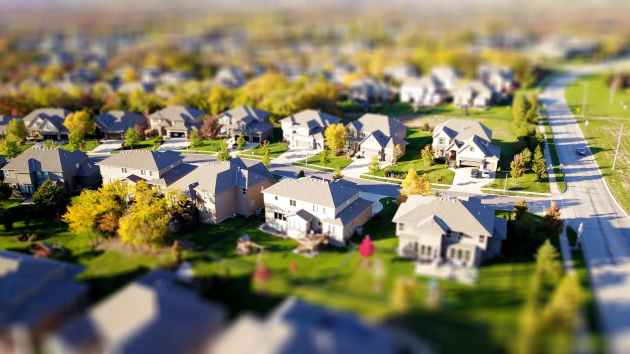
bird s eye view of town

Photo by Pok Rie on Pexels.com

McMansion-dwellers in suburbs far from jobs and services and uninviting to pedestrians fared badly during shutdowns, says a prominent Perth urban planner; meanwhile, residents in self-sufficient neighbourhoods with compact homes were much better equipped…

“Those in low-density neighbourhoods find it easier to stay at home, but they are forced to leave regularly in their cars for essential services and goods,” he said…

“For just $80,000, a home owner can build a 40-square-metre micro-workspace or granny flat that could assist a business to start up, or house essential workers – nurses, teachers or police – who often cannot afford to live in a McMansion,” he said…

Communities needed well-connected, shaded, pedestrian-friendly streets, front porches facilitating casual social exchanges while allowing social distancing, and walkable town centres with offices, restaurants, beach facilities and apartments.

It is interesting to compare this assessment to discussions in the United States. In places like New York City and San Francisco, journalists have reported on the move of wealthier residents away from density and to the suburbs. In these narratives, suburban homes and communities provide larger residences and more distance from others.

Yet, in the argument above, it sounds like the urban planner is arguing for New Urbanist-style suburbs as the middle ground: walkable places that offer some density and local community are better for dealing with COVID-19 that either really dense places or isolated suburban communities.

This might depend on what the highest priority is during COVID-19. If the goal is avoiding other people, public places, and mass transit all together so as not to catch the coronavirus, then neighborhoods of suburban McMansions could make sense. People today can have all sorts of goods delivered. And if suburban life is about moral minimalism, McMansions allow everyone lots of space. If the goal is to balance interacting with people and society alongside practicing social distancing, traditionally-designed suburbs could make more sense. Isolation takes a toll on people, COVID-19 or not.

Arguments like the one above are common among some urban planners, architects, and urbanists: neighborhoods full of suburban tract homes do not provide for community life and social interaction, depend on cars and limit opportunities for other forms of transportation, and waste resources. Whether COVID-19 helps advance this perspective remains to be seen.
 

Suburban police and promoting a better future for youth

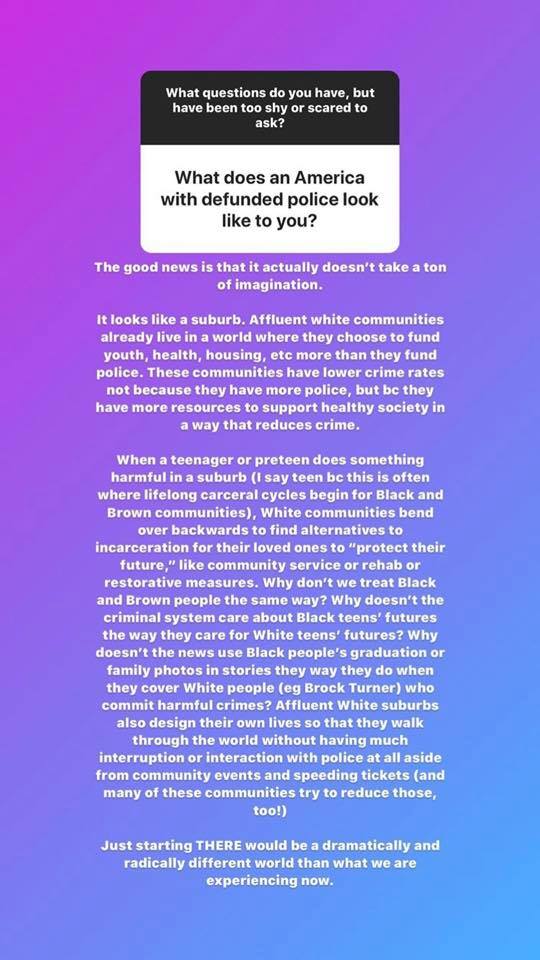
On Instagram, Congresswomen Alexandria Ocasio-Cortez connected defunding the police to what suburbs do instead:

AOCPoliceandSuburbs

A few thoughts:

1. According to sociologists and other scholars who have studied American suburbs over the last century, an overriding concern in suburbs is to protect families and let children flourish. The assumption is that suburban life – with its lower density, single-family homes, more space, better schools, lower crime – will benefit children in the long run.

2. At the same time, suburbs are also based on exclusion. For decades, only white people – and certain ones at that – were allowed in many suburbs. While this is officially off-limits today, it can be accomplished in other ways such as through exclusionary zoning, drawing school district boundaries, and through police.

3. Police can and have reinforced the race and class based exclusion in suburbs. This could range from sundown towns to watching fire bombings in Cicero, Illinois to harassing motorists, residents, and protestors in Ferguson, Missouri. Wealthier suburban residents generally do not want to involve the police in their conflicts but they can and do at times.

4. Many suburbs offer limited social services. The expectation is that residents will have the resources to provide for themselves or that corporations and local charities will provide.

5. Many suburbs like having their own police department. This allows them to retain local control, important for #2 and #3 above.

6. For an academic study of how this works in wealthier suburbia, I recommend America’s Safest City: Delinquency and Modernity in Suburbia. From the book description:

Adolescents, parents, teachers, coaches and officials, he concludes, are able in this suburban setting to recognize teens’ need for ongoing sources of trust, empathy, and identity in a multitude of social settings, allowing them to become what Singer terms ‘relationally modern’ individuals better equipped to deal with the trials and tribulations of modern life

More on the wealthy leaving cities, San Francisco edition

The flight of some out of New York City amid COVID-19 has attracted attention. This may also be happening in San Francisco:

city skyline during golden hour

Photo by Kehn Hermano on Pexels.com

Amid the depths of a global pandemic and financial downturn, the demand for real estate is unexpectedly rocketing in wealthy regions outside San Francisco, reports Bloomberg. Agents say that demand is soaring in affluent areas around the Bay Area such as Napa, Marin and further afield in Carmel, as people who have the means look to get away from the city. Meanwhile, the market in San Francisco and Alameda County is still well below where it was last year.

Elsewhere, Lake Tahoe has also seen a surge in real estate interest. The prospect of living out of the city on an alpine lake while maintaining a career is appealing for a new generation of young buyers, as many tech companies have signaled that remote work may be the new norm for a long time…

Meanwhile, the rental market in San Francisco has dropped significantly, with rates for one-bedroom apartments in the city dropping by 9.2% since June 2019, and hitting a three-year low.

However, buying a new home in an isolated haven in a nearby bucolic county is not an option for lower-income San Francisco residents, and some believe the trend is only exacerbating the wealth divide.

And, as noted in the final paragraph of the story, it is hard to know whether this is a long-term trend. But, this is one of the advantage of wealth and resources: residential options during times when many others are limited in where they can live. And this is not just limited to where they can live; it includes being able to travel back and forth easily, owning or renting multiple properties at the same time, and having all the resources for working from home.

More broadly, the evidence cited above is interesting in that people moving out of the city are not said to be moving very far. They are still within a drive of San Francisco/the Bay Area/Silicon Valley. Are people in the Bay Area more willing to stay close by or do they have to due to work (a need for at least some in the tech industry to be at meetings, see people and products, etc.)? Does this differ from New York City where many of those moving ended up in the suburbs while others left the metro region all together? Staying in driving distance changes the moving experience.

I am also imagining the possibility of a more significant migration than some wealthy people heading for the suburbs or other cool metro areas. What if Facebook said they want to get out of the petri dish of Silicon Valley, be a different kind of tech company that really wants to connect people, and picks up for Omaha or St. Louis or another smaller big city in the middle of the country? Clusters of organizations have particular synergies and efficiencies but if more workers are going to be at home, is there still the same need to locate near everyone else?

Related earlier post: the evidence for this happening in Washington D.C. may not be as strong.

Addressing race without addressing residential segregation?

Residential segregation is a long-standing problem in American society. Through legal and illegal means, formal and informal practices, whites often sought and still seek to keep others, particularly blacks, out of their communities and neighborhoods. While residential segregation has lessened in recent years, it is still persistent and numerous communities disadvantaged decades ago are still struggling because of this.

The ability of people of different races and ethnicities to live near each other is not just about proximity to work and access to jobs (though this is helpful too); there are numerous consequences.

-local schools

-access to local governments, and social services

-interaction with neighbors and people in the community

-political representation at higher levels such as state officials or Congress

-nearby cultural opportunities

-health as well as recreational opportunities

-could provide more options for housing and building wealth

-the chance to address local or community problems together

And the list could go on.

As one example, more minorities living in the American suburbs does not necessarily a guarantee them a better life. When many suburbs were built on and operate on the logic of exclusion, suburban residential segregation subverts the idea of the suburban single-family home representing the American Dream.

Tackling residential segregation is a difficult task. Whiter, wealthier communities are not likely to be on board (see how this plays out with affordable housing conversations). Addressing housing at a national level is hard. But, that does not mean it is not worth addressing.

When protests make it to the wealthier suburbs, this means…

With protests spreading across the United States, including wealthy suburbs like Naperville, Illinois and Dunwoody, Georgia, this could hint at several forces at play:

NapervilleCorner

-Americans dislike or disapprove of blatant injustice. (Whether that extends to making significant changes or sacrifices is another story. The suburbs are built in part on race and exclusion.)

-The population composition of suburbs has changed in recent decades. As William Frey of Brookings Institution details in Diversity Explosion, minority populations have grown across suburbs.

-The image of primarily conservative voters in wealthy suburbs may not be as valid as it was in the past. The outcome of the 2020 election depends in part on suburban voters with suburbanites closer to big cities leaning toward Democrats and suburbanites on the metropolitan edges leaning toward Republicans. And appealing to suburban women are important for candidates.

-Certain upscale suburban locations have become important sites for attracting attention because of their status. For example, Occupy Naperville occurred in 2012 and Naperville attracts other protestors as the largest community in DuPage County, its walkable downtown with lively stores, restaurants, and recreational options, and its status.


Leaving the big city for the suburbs – and then pulling up the drawbridge

In yet another article about the possibility of people leaving cities for suburbsthis time in The Washington Post – the narrative ends with this:

ancient architecture black white black and white

Photo by Francesco Ungaro on Pexels.com

Those who study cities say they will remain in the long term and that many jobs will come back. People such as Bailey, who moved away from the Bay Area, are banking on that. He declined to name the town where he moved for fear more people will relocate there, driving up prices.

“I like keeping the local culture and the area is relatively affordable now,” he said. “I’d rather not see the same price inflation that happened in the Bay happen to smaller communities as well.”

On one hand, this could reflect housing market realities in some of the priciest markets in the country. Prices are so high in New York, San Francisco, Seattle, and a few other places that finding reasonably priced housing is something people want to protect. If more people can work remotely, certain places could become more attractive and experience an influx of residents.

On the other hand, is this similar logic to the exclusion in suburbia practiced for decades? This exclusion tended to be along race and class lines; suburbanites wanted to be around those like them and keep others out. When they moved into new subdivisions or what used to be small towns, they later use NIMBY logic to limit opportunities for others. What was an opportunity for them could not become an opportunity for others.

Those with resources and connections will likely have advantages in a race for more attractive or affordable locales. Some will be able to pay more for the privilege of leaving the city. Those moving to the suburbs may simply contribute to ongoing patterns of residential segregation across metropolitan regions, whether they officially live in a city or suburb.

Moral minimalism and addressing social issues

In the 1989 study The Moral Order of a Suburb, sociologist M. P. Baumgartner argued that suburban order rested on what she called “moral minimalism”:

A kind of moral minimalism pervades the suburbs, in which people prefer the least extreme reactions to offenses and are reluctant to exercise any social control against one another at all. (3)

In a later description of moral minimalism, she writes:

Moral minimalism entails a considerable degree of indifference to the wrongdoing of others…If people in such places cannot be bothered to take action against those who offend them or to engage in conflicts, neither can they be bothered to help those in need. (131)

Most residents do not want to involve third parties when conflict arises (unless it involves strangers) – it would be better to do nothing at all.

The pervasive moral minimalism found in the suburbs contrasts sharply with claims that American society is particularly violent or litigious. However true such characterizations may be for other settings, they do not reflect suburban reality. Residents of suburbs like Hampton rarely aggress against one another physically, and for them, law remains primarily a theoretical option for handling grievances that arise in their everyday lives. They are happy to have police at as their champions in preventing and resolving trouble that unknown persons might cause, but beyond this, they have very little use for law. When problems occur, most people do not seriously consider recourse to legal officials, and, in fact, they generally act as if law did not exist at all. In this sense, suburbia is a king of limited anarchy. (127)

In conclusion:

suburbia is a model of social order. The order is not born, however, of conditions widely perceived to generate social harmony. It does not arise from intimacy and connectedness, but rather from some of the very things more often presumed to bring about conflict and violence – transiency, fragmentation, isolation, atomization, and indifference among people. The suburbs lack social cohesion but they are free of strife. They are, so to speak, disorganized and orderly at the same time. (134)

All of this does not lend itself to addressing social issues or community problems. If people are used to leaving each other alone and avoiding conflict, what happens when legitimate structural issues arise? Or, what happens when others make the case that addressing a structural issue is necessary or helpful? Or, if there is need, how do people used to moral minimalism respond? Convincing suburbanites to move on from moral minimalism, particularly when it seems to “work” in wealthier, whiter communities where people have the resources and agency to generally do what they want (having a single-family home, a good life for their kids, etc.), is a difficult task.

Of the urban residents fleeing for suburbs, how many of them are living in dreaded McMansions?

McMansions have attracted the criticism of many (examples here and here). However, what if some of the wealthy urban dwellers fleeing COVID-19 hotspots end up in a suburban McMansion?

Wealthy New Yorkers, who once looked down on anyone quitting the vibrant city for a McMansion and manicured lawn, are doing exactly that.

Egads! The horror! Even worse, what if those urbanites in suburban McMansions decide to stay for a while and come to enjoy parts of their new suburban lives?

high angle shot of suburban neighborhood

Photo by David McBee on Pexels.com

It is easy here to connect the critiques of McMansions to the broader concerns about suburbs expressed by numerous critics since the early twentieth century. McMansions have multiple issues of their own but suburbs are connected to conformity, ticky-tacky houses, provincialness, middle-class lifestyles, unnecessary consumption, and more. For some urbanites, the suburbs represent the opposite of dynamic, diverse, cosmopolitan, and engaging cities or urban neighborhoods.

Another way to think about this is to consider how much of city life city-dwellers pre-COVID-19 might bring to suburbs. Are the suburbs such a totalizing place that any vestiges of life in New York City disappear? And vice versa: if these residents end up back in New York City, will they bring suburban expectations and values to the city? How many McMansions are there in s the numerous single-family home neighborhoods in many American cities?

The same writer thinks the move to the suburbs is relatively short-lived as the city has many advantages:

The old trade-offs involved in moving to the exurbs or suburbs aren’t going to disappear overnight. France’s Gilets Jaunes stormed Paris precisely to protest the decaying quality of life outside cities. The typical U.S. city resident lives near almost three times as many jobs as a typical suburbanite, according to the Brookings Institution. Those jobs pay better, too, with average wages per worker in urban areas some 46% higher than lower-density suburbs. So it’s likely that making the move will mean trading subway rides for car commutes. And when journeys get longer, there’s generally less inclination to travel to enjoy the fun stuff — the so-called “friction of distance.”

And make no mistake, the fun stuff will be around as long as cities can keep attracting people, money and ideas. In the 1980s and 1990s, metropolises like London and New York reversed decades of decline by focusing on services such as finance and leisure rather than factories. While it’s true that excessive property speculation turned them into playgrounds for the rich, threatening their draw as diverse and creative melting pots, things could change for the better. The next reinvention, according to urbanism expert Laurent Chalard, will be about making cities less dense and more livable: More cycling, fewer cars, bigger homes. Outside the city, life may end up less green and less convenient.

Given the long-term preferences many Americans have for suburban life, this may continue to be a hard sell.

The budget gap facing Chicago area suburbs due to COVID-19

An online forum with House leaders provided details on how suburban budgets in the Chicago area are affected by COVID-19:

Not only are sales taxes plunging but costs of preventing the respiratory disease are mounting, suburban leaders explained to House Majority Leader Steny Hoyer at an online forum hosted by U.S. Rep. Sean Casten Monday.

Glen Ellyn expects a 20% to 25% reduction in revenue over the next three to six months in the general fund, half of which goes to the police department, Village President Diane McGinley said…

Algonquin Village President John Schmitt said not only is the village shelling out for items like face masks but so far there’s been a 26% reduction in sales taxes revenues…

He noted Hanover Park is facing about $242,000 in COVID-19 expenses and a drop of almost $5.6 million in taxes.

If a retailer or business cannot open or sell at the same level as prior to the pandemic, this affects all sorts of outcomes. As noted above, communities have limited numbers of ways to fill this budget gap. They can look to governments above them – states, the federal government – but that puts their fate in the hands of others and that money may not come quickly or in sufficient amounts. In the short-term, this likely means putting off projects. Longer-term, it could mean some hard decisions about services and local amenities that suburbanites enjoy or think are essential.

The tax revenues might just be the tip of the iceberg; if retailers have to close (already an issue from urban shopping districts to shopping malls), this puts pressure on landlords as well as on communities to fill vacant space (already an issue in suburban communities whether filling big box locations or office parks) both to generate revenue and avoid the appearance of economic loss or blight. Local jobs are affected.

It will be interesting to see if these budget issues widen the gap between suburbs with a lot and those with less. There is already a bifurcated suburban landscape: some communities really struggling and some with a lot of resources, amenities, and status (and many somewhere in between). Those who have more can likely weather this storm better than the suburbs already struggling.

Data from Washington, D.C. does not suggest people are fleeing for the suburbs

A new analysis from Brookings Institution suggests real estate sales are down in both Washington, D.C. and its suburbs during COVID-19:

In the Washington, D.C. metro area, there’s no sign so far that residents in the urban core are more anxious to sell their condos and rowhouses than suburbanites are to ditch their McMansions. Home sales for the entire metro area dropped in March 2020, very similar to the pattern in the District. (Washington, D.C. accounts for less than 15% of the metro area’s population and home sales.)

Breaking out the year-over-year change in home sales for each local jurisdiction in the metro area shows similar patterns in the urban core (darkest gray), inner suburbs (medium gray), and exurban jurisdictions (light gray).

4

Other items of note:

  1. Prices have not dropped (similar to elsewhere).
  2. As I noted a few posts ago:

In the U.S., large cities have been hit earliest—and hardest—by the coronavirus pandemic, spawning a cottage industry of speculation over whether city-dwellers will flee to low-density suburbs.

Without seeing the data from a lot of major metropolitan areas in the United States, it is hard at this point to conclude much of anything. Perhaps New York City is an outlier where people want to go to the suburbs to escape all of its density. Are transportation patterns in Washington D.C. where a majority of residents drive daily more like Los Angeles than New York City?

Analysis from Moody Analytics suggested Washington D.C. is one of the metro areas more likely to rebound from COVID-19. Would such a recovery help the city and region move toward being the true second city in the United States?

Maybe Washington D.C. is another outlier in all of the possible data. That leads to another question that often comes up when talking about urban theory: what is the modal American city, particularly in the time of COVID-19?