Finding “the perfect day” from American Time Use Survey data

A recent study looking at how Americans spend their time led to this model for the perfect day:

Photo by Cliford Mervil on Pexels.com

That’s Best Day Ever = 6 hours with family + 2 hours with friends + 1.5 hours of extra socialising + 2 hours of exercise + 1 hour of eating and drinking with less than 6 hours of work, indulging in only 1 hour of screen time, and a 15-minute commute.

That sounds like a busy day. Imagine this list of activities were given to a random sample of Americans: how many would see it as perfect or close to that? Or is this list more of a collection of things Americans tend to like but not everyone would see as a great combination?

So imagine instead a company or destination that promises to put together perfect days for different types. A day for the book-reading introvert. A day for the 8 on the Enneagram. A day for the hard-charging athlete. A day for the ENTJ. A day for the aspiring social influencer. And so on.

Or imagine a movie that featured numerous people in different settings living out their perfect days. Perhaps such a movie would need more drama but the contrast between the different perfect days could be interesting to see.

What would happen if all social media was gone in a day?

The temporary loss of TikTok in the United States a few days ago was a sort of natural experiment and it did make me wonder: what if social media was gone tomorrow?

Photo by cottonbro studio on Pexels.com

Numerous areas of life would be affected. Here are just a few:

  1. People and companies making money. Whether through ads or selling things or streaming, money flows through social media.
  2. How people use their time. What would people do instead? Watch more TV (this was a primary activity before social media existed)? Talk to the people around them? Go outside?
  3. Where people get information, whether about people they know or the news or the standard information people today are supposed to know (ranging from viral videos to celebrity updates to conflict on the other side of the world).
  4. Connections to people. The easy access to people through posts and profiles and social media interactions would be gone. Could the connections happen through other mediums?
  5. A whole set of rituals, norms, and discussions would be lost. They could not be accessed or scrolled through. All that time managing images and interactions goes away.

Even with all these changes (which would take some time to get used to), this question might be most important: would life be better?

Will in About a Boy with his “units of time” and all of our lives lived in 15-minute increments

In the movie version of About a Boy, the adult character Will describes his life as lived in “units of time”:

Photo by Jordan Benton on Pexels.com

The important thing in island living is to be your own activities director.
I find the key is to think of a day as units of time, each unit consisting of no more than 30 minutes.
Full hours can be a little bit intimidating and most activities take about half an hour.
Taking a bath: One unit.
Watching Countdown:
Okay.
One unit.
Web-based research:
Two units.
Exercising: Three units.
Having my hair carefully disheveled: Four units.
It’s amazing how the day fills up.

In the movie, this looks somewhat depressing. Perhaps it is a coping mechanism. Will claims he is fine living alone but the story involves him finding value in relationships with several people who would not expect to have relationships with.

But what if all of us live in small increments of time that add up to weeks, months, years, decades. From the end of a recent article on declining social engagement in American life:

When Epley and his lab asked Chicagoans to overcome their preference for solitude and talk with strangers on a train, the experiment probably didn’t change anyone’s life. All it did was marginally improve the experience of one 15-minute block of time. But life is just a long set of 15-minute blocks, one after another. The way we spend our minutes is the way we spend our decades. “No amount of research that I’ve done has changed my life more than this,” Epley told me. “It’s not that I’m never lonely. It’s that my moment-to-moment experience of life is better, because I’ve learned to take the dead space of life and make friends in it.”

What if life is a series of 15-minute blocks where our choices with those blocks can add up to profoundly different outcomes? In the example above, start socializing each day in one 15-minute increment and see what it can lead to. This is the narrative in numerous self-improvement and habit books: build small new routines and change your life.

Keeping track of every 15 minutes in life would be laborious and could turn someone into a clock watcher rather than an active participant in life. Yet, time use does indeed add up and broad changes in time use – such as watching more television – can have big impacts.

The problem of summer (and many other) days: too many fun things to do

As summer winds down and school starts up again, I am reminded of something I experience every summer and throughout much of the year: there are more fun things to do each day than I am able to do. Here is an incomplete list of activities I want more time for each day:

Photo by Tran on Pexels.com

-Reading

-Watching interesting TV shows and movies

-Seeing more of family and friends

-Playing board games

-Enjoying the outdoors

-Playing and listening to music

-Advancing writing/research projects

I do not often feel bad about not being able to do all this. Rather, I am excited to get to the next day(s) and to continue these activities. I cannot keep up with everything I want to do but with steady progress there is much to enjoy.

(As a side note, the conversations in recent years about a glut of content in television and online hint at a bigger glut: life offers a lot of possible experiences. For example, I read regularly but there is not enough time to get to everything I want to read, should read, and need to read to keep up with my field and interests.)

Another downside of the information age: dealing with endless spam

People today have access to so much information, including spam:

Photo by Moose Photos on Pexels.com

The average American received roughly 42 spam texts just in the month of March, according to new data from RoboKiller, an app that blocks spam calls and texts…

There were more spam calls last month than in any of the previous six months, per YouMail’s Robocall Index

Spam emails rose by 30% from 2020 to 2021, according to a January report from the Washington Post…

There was an unprecedented increase in social media scams last year, according to data from the Federal Trade Commission. Many scams were related to bogus cryptocurrency investments.

As the article notes, it keeps going in part because the spammers are successful enough. Yet, it would be worth also seeing the bigger picture: how much time and mental effort is expended fighting off spam efforts? Even if the majority of people relatively quickly discard the emails and texts or even just glance quickly at them and then ignore them, what does this all add up to?

The glut of information we all face, some positive and some negative, requires time and mental space. Just to push it aside requires a choice. We may think it does not affect us – I have heard many people say the equivalent of “advertising does not affect me” – but it does.

Could we envision a future world where we only get the firehose of information that we truly want and discard all the rest? Imagine the echo chambers or media bubbles possible today plus the technical means or financial means to only get all that we want to handle? I am not sure how advertising or alternative viewpoints might fit into all of this but I would guess there would be at least a few people willing to pay a lot to achieve this state.

Discovering the “unaccounted” time at work and then designing work spaces around that

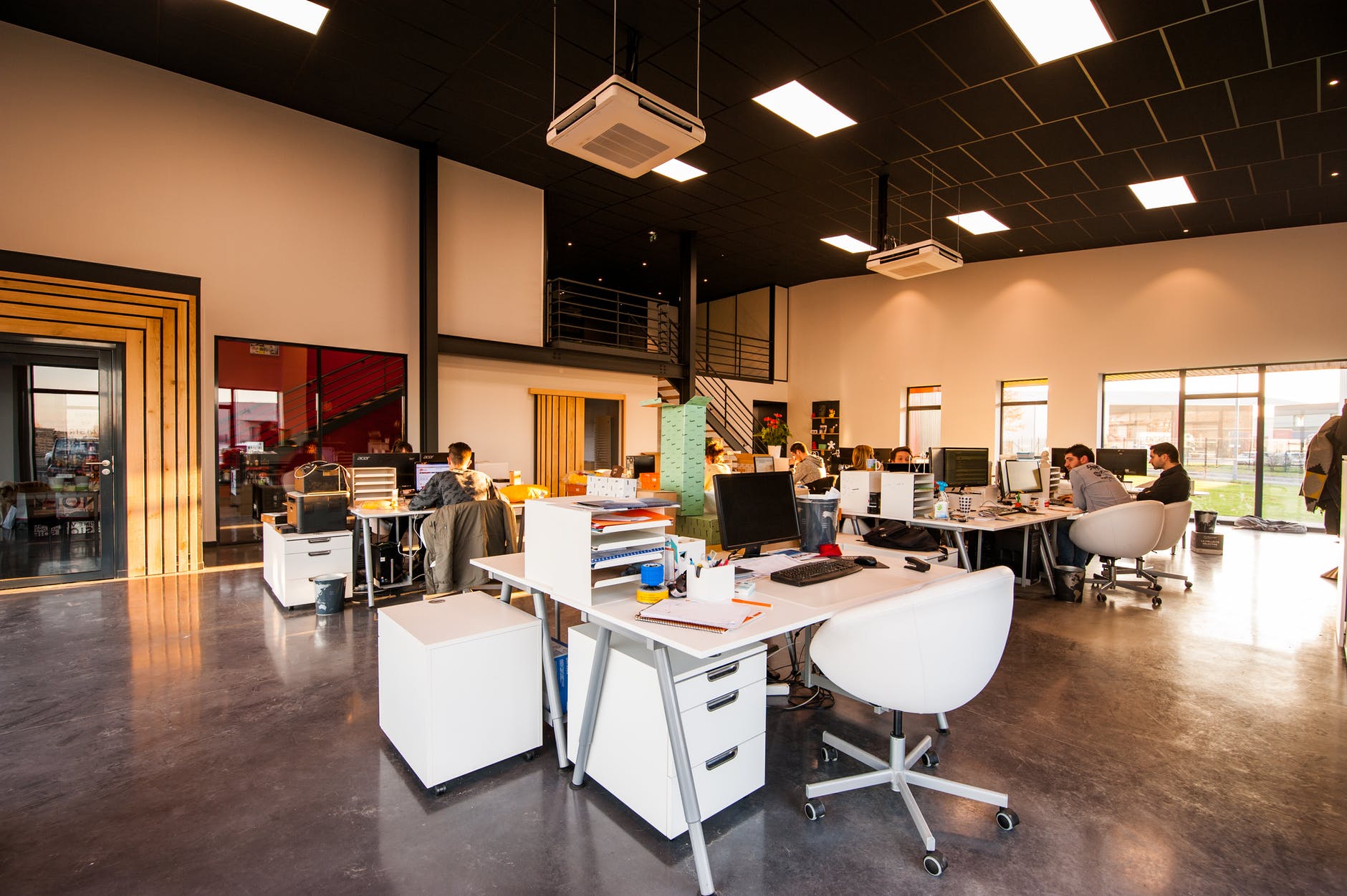
I have considered the design of offices and work places before (here and here as two examples) but have not seen this particular issue described: when researchers found that workers had “unaccounted” time in the office, this led to changing the workplace and new problems.

Photo by Cadeau Maestro on Pexels.com

Wilkinson, who designed Google’s 500,000-square-foot Googleplex campus in Mountain View, California, says he had his first epiphany about the office in 1995. While reviewing old studies and surveys about worker habits, he came upon a study that measured how office workers spent their time between 9 am and 5 pm. He was immediately struck by just how much “unaccounted” time workers were spending away from their desks—that is, not in meetings or any other explicit work function. But Wilkinson found it hard to believe that all of these workers were taking multi-hour bathroom breaks or simply leaving the office together. They were still in the office; they were just hanging out in hallways, chatting in foyers, clustering around someone else’s desk as the occupant tells a story.

“It blew my mind,” he told us. “And it made our team realize that the planning of the office was fundamentally flawed.” His realization was straightforward: Office design had long revolved around the placement of desks and offices, with the spaces in between those areas treated as corridors and aisles. But that “overemphasis on the desk,” as Wilkinson recalled, “had worked to the detriment of working life, trapping us in this rigid formality.”

And so he set out to liberate it, shifting the focus of his designs to work that took place away from the desk. In practice, this meant designing bleachers and nooks in places that were once poorly lit corridors, and spacing out desk clusters to incentivize more movement among teams. A kinetic office environment, the idea went, could increase spontaneous encounters, which would then spark creativity. The design also allowed for private areas—many with comfy couches and plush ottomans to replicate a family room feel—to do deep work, away from the noisy bullpen of desks.

This led to tech campuses like that of Facebook, Apple, and Google. What could go wrong?

The danger Wilkinson is describing is, of course, exactly what happened. The new campus design had a profound impact on company culture. Some of that impact was undeniably positive: He created work spaces where people genuinely want to be. But that desire becomes a gravitational pull, tethering the worker to the office for longer and longer, and warping previous perceptions of social norms.

Two thoughts strike me from reading this book excerpt:

  1. The idea of “unaccounted” time. How much of human daily activity is not directly related to productivity or a particular task? How much of that unaccounted time has long-term benefits such as stronger relationships and closer community? Part of the full human experience is having unaccounted time. On the other hand, it is not a surprise that if that unaccounted time occurred on company time, corporations and organizations would want to maximize it. (See this recent post about time, space, and calendars pushed into predictable patterns.)
  2. Humans have the ability to shape buildings and other physical settings to encourage particular behaviors. Offices are not just empty receptacles into which workers are placed willy-nilly. Religious buildings shape worship and communal experiences. Land use policies encourage more private spaces or more public spaces and these choices have consequences. This is simply part of our daily lives where we shape and are shaped by the spaces we are in.

Connecting urbanization and the strong commitment to a seven day week

A historian with a new book on the creation of a seven day week suggests urbanization in the modern helped make this happen:

Photo by Julia M Cameron on Pexels.com

If you were to single out one factor, I would say urbanization. This really is a social phenomenon: It’s about people wanting to be able to make schedules with others, especially strangers, either in a consumer context or socially. When most people lived on farms or in small villages, they didn’t need to coordinate many activities with folks whom they didn’t see regularly.

It’s become much more important to know what day of the week it is. Today, a lot varies between one day of the week and the next—entertainment schedules, violin lessons, custody arrangements, or any of the millions of things that we attach to the seven-day cycle.

This would go along with the creation of time zones which similarly attempted to standardize time for the benefit of all the people who were now interacting and traveling. I wonder if this is also related somehow to the earlier adoption of clocks in cities in the Middle Ages. With more people gathered in a single community, having a common time and calendar could be useful for organizing activity.

More broadly, the shift to cities had significant impacts beyond geography and physical locations. The change to city life, specifically big city life, prompted new ways of understanding the world plus new methods for organizing people and knowledge. How people related to each other changed. How government operated changed. Daily activities and the meaning of those changed.

This is why I often start my Urban Sociology course with highlighting how some of the first sociologists in Europe – Marx, Durkheim, Weber, and a few others – noted and commented on urban life. Could you have the capitalism described by Marx without big city life? Durkheim contrasted organic and mechanical solidarity. Weber defined cities as market centers. And so on. The big city as the center of social, economic, political, and religious life had numerous implications for society.

Reconsidering social media and Internet use after an online-filled COVID-19

The Internet and social media were critical tools for many during COVID-19 with uses ranging from connecting with family and friends to work to activism to going to school. As COVID-19 winds down, does this mean we should reconsider how much time we spend with these technologies? Here is one conclusion:

Photo by Andrey Grushnikov on Pexels.com

Two years ago, I was deleting and undeleting my Instagram account, begging every expert I could find to tell me exactly how to live healthily with the internet in my pocket. In 2021, to do the same would seem a little silly. Netflix’s subscriber growth may be slowing, and Tinder videochats may soon fall out of favor, but it’s hard to imagine that a Great Offlining is really in the cards. Instead, we could be heading for a Great Rebalancing, where we reconfigure how we do our work and how we organize our time on the internet. We’ve grown more aware of how we rely on one another—online as well as off—and of the tools we have or could build for responding to a crisis. The biggest tech companies’ accrual of power remains one of the most serious problems of my lifetime, but I no longer talk about the internet itself as if it were an external and malignant force, now that I’ve lived in such intimate contact with it for so long.

I’m sure I’ll change my mind about everything I’ve just said, but sometimes you just need to time-stamp the moment. Going back through my essays from 2019, I was struck by how easily I had misremembered what the cultural conversation was about back then. Jenny Odell never argued that people should go offline completely. Rather, she told me that deleting your apps or throwing your phone in the ocean would represent a failure to recognize that “we actually really need something like social media.” The desire to go online is human, and “there’s nothing wrong with that part.” We just have to keep reminding ourselves why we’re doing it.

I think it is always a good idea to ask this question about many things with which we spend this time: how important is this to me? Is my time use what I want or did I just fall into this pattern? For better or worse, sometimes it takes a drastic change or crisis to ask this question. It is one thing to use a computer for work or browse social media, another to be on Zoom for hours because you cannot be in the office or go to school. If COVID-19 offers people the opportunity to step back and think again about what they want to do with their time, that would be good.

And I would hope that many would say they do not need social media or the Internet as much as they did in the past year. There are many worthwhile things to do, ranging from movement and exercise, reading, pursuing a non-work project or hobby, playing a game, interacting with the people around you, among other options.

More broadly, it is relatively easy to slip into particular time patterns during the day that may or may not be desired. The average American watches 4+ hours of television a day; is that planned and/or desired or does it just happen? Do people take the time they want to eat or not? Is work more time-consuming that people want? If you add up all of these hours across days, weeks, months, and years, it can be shocking to see how much is spent on certain activities. If people have priorities in what they want to do in life, it should be evident in their time use.

(On the other hand, I do not think it is that useful to micromanage your time to the level some have. I recently read about someone famous who scheduled their day in five minute increments in order to make sure things got done. There is a level of attention and time needed to do this that I would not find worthwhile.)

American men have 30 minutes of more leisure time a day and use half of it to watch TV

Sociologist Liana Sayer tracks the leisure time of Americans by gender, finds a half hour gap between men and women (5 hours and 30 minutes versus 4 hours and 59 minutes), and looks at how men spend that extra time:

What are men doing with that extra half hour? Some of it is spent socializing, exercising, and simply relaxing, among other things. But “about half of the gap is from TV,” says Liana Sayer, a sociologist at the University of Maryland and the director of the school’s Time Use Laboratory…

Sayer, in a 2016 paper, called American time use “stubbornly gendered”: On average, women continue to devote more time each day to chores and looking after children than men do. Further, the average American woman spends 28 more minutes a day than the average American man on “personal care”—a time-use category that encompasses activities such as showering, getting dressed, and applying makeup…

Sayer laid out two possible theories. The first: “The idea is that men are able to watch more television, perhaps because they enjoy it, and the reason men are able to exercise greater preference in their time use choices is because they have [more] power than women,” she has written

The second theory has to do with the ranks of men who have become more socially isolated, whether because they’re out of work, less involved in family life, or both. Women, in addition to working more than they used to, tend to have stronger networks of friends and are more likely to raise children as single parents—which together could make women more socially connected than men. Thus, as Sayer has written, “men may devote a greater share and more time to television because this type of leisure does not require social integration.”

Television continues to have an outsized pull on the leisure time of Americans. This could change over time and the options for leisure seem to have exploded in recent decades, but even younger Americans seem drawn to television, just in through different means such as watching on phones or computers. I wonder for how many Americans television is the default leisure activity when they have no other other or limited leisure options.

I’m sure others have explored this but these time use findings would be interesting to connect to what it means to be a man in the United States: you watch a certain amount of television. Does it matter more what men watch (sports, action shows, etc.) or how much they watch? What cultural expectations do they pick up regarding how much television to watch and how exactly is this passed down?


The state of reading books in America in 2016

Pew Research has recently put out several reports on book reading in America. First, the broad overview:

Yet even as the number of ways people spend their time has expanded, a Pew Research Center survey finds that the share of Americans who have read a book in the last 12 months (73%) has remained largely unchanged since 2012…

Americans read an average (mean) of 12 books per year, while the typical (median) American has read 4 books in the last 12 months.

Second, those who do read still do so in print most of the time:

Readers today can access books in several common digital formats, but print books remain substantially more popular than either e-books or audio books. Roughly two-thirds of Americans (65%) have read a print book in the last year, which is identical to the share of Americans who reported doing so in 2012 (although down slightly from the 71% who reported reading a print book in 2011).

By contrast, 28% of Americans have read an e-book – and 14% have listened to an audio book – in the last year. In addition to being less popular than print books overall, the share of Americans who read e-books or listen to audio books has remained fairly stable in recent years…

Nearly four-in-ten Americans read print books exclusively; just 6% are digital-only book readers.

Third, on why people read:

Among all American adults:

  • 84% ever read to research specific topics of interest (29% do so nearly every day).
  • 82% read to keep up with current events (47% nearly every day).
  • 80% read for pleasure (35% nearly every day).
  • 57% read for work or school (31% do so nearly every day).

Fourth, who isn’t reading:

Several demographic traits correlate with non-book reading, Pew Research Center surveys have found. For instance, adults with a high school degree or less are about three times as likely as college graduates (40% vs. 13%) to report not reading books in any format in the past year. A 2015 Pew Research Center survey shows that these less-educated adults are also the least likely to own smartphones or tablets, two devices that have seen a substantial increase in usage for reading e-books since 2011. (College-educated adults are more likely to own these devices and use them to read e-books.)

Adults with an annual household income of less than $30,000 are about twice as likely as the most affluent adults to be non-book readers (33% vs. 17%). Hispanic adults are also about twice as likely as whites (40% vs. 23%) to report not having read a book in the past 12 months.

Older Americans are a bit more likely than their younger counterparts not to have read a book. Some 29% of adults ages 50 and older have not read a book in the past year, compared with 23% of adults under 50. In addition, men are less likely than women to have read a book, as are adults in rural areas compared with those in urban areas.

Fifth, the book reading trends haven’t changed too much in recent years:

The share of Americans who report not reading any books in the past 12 months is largely unchanged since 2012, but is slightly higher than in 2011, when the Center first began conducting surveys of book-reading habits. That year, 19% of adults reported not reading any books.

While Internet use (with the included possibilities of streaming audio and video) is taking up more and more time in daily life, it may take quite a while for reading books to becoming an activity for a small minority. And how could is disappear completely from certain settings such as schools and colleges?