The percentage of realtors under age 30 went up 400% (*from 1% to 4%)

Some younger adults are moving into certain careers they feel offer them opportunities in an uncertain world. This includes becoming a realtor.

Photo by Alena Darmel on Pexels.com

Some Zoomers like Marmo are ditching four-year degrees in favor of work that unchains them from a desk, puts money in their bank accounts sooner, and — they hope — will survive the artificial intelligence boom that is already starting to change once-hot professions like software engineering, consulting, and marketing. Some are turning to blue collar work like HVAC servicing and wind turbine installation. Others are trying to start their own ventures via influencing and side hustles. And some see the lure in the licensed white-collar job, including working in real estate or insurance.

That shift in licensed jobs is slow, but growing. The share of Realtors younger than 30 grew from 1% to 4% in 2024, according to NAR’s member profile, and sits at 3% in 2025. Among insurance agents, the median age of an insurance principal who owns 20% or more of their agency is 55, with 22% of principals over the age of 66, according to a 2024 study of agencies conducted by the Big “I,” an association for independent insurance agents. Many are likely eying retirement, which could open up a huge amount of demand for young people to take up the trade.

Several Gen Zers I spoke to for this story told me they find appeal in working in real estate because there’s no ceiling on what they can earn. Rather than invest tens or hundreds of thousands of dollars in a four-year degree, they can spend a few weeks or months training to receive licenses and start working in fields where their hustle correlates to their payday…

Because it’s still something of a rarity to see a baby-faced real estate agent or teenager selling life insurance, the young people in licensure jobs I spoke to say that succeeding means not just learning the trade but competing against ageist stereotypes. The median age of a first-time home buyer has risen to an all-time-high of 38, according to NAR. That’s up from an average age of 33 a decade ago, according to a Zillow analysis. The idea of having a newly minted, 18-year-old real estate agent guide you through the biggest financial decision of your life is jarring. Katie Kenny, a 24-year-old Realtor in Chicago’s suburbs, says people meet her and are surprised, as they “expect the real estate agent to be like double my age,” she tells me. “They’re like, ‘oh, you’re young.’ And then when I open my mouth and start talking, they’re actually surprised because I do know a lot more, and I sound a lot more mature than what a normal 24-year-old would sound like.”

This article, like many articles, is trying to get a handle on a possible trend: younger people are pursuing different fields due to the world around them. There are numerous ways to report on this phenomena. This article uses a mix of statistics and interviews, considering broader patterns and hearing people describe their choices.

In the headline to the post, I highlight one way to report the data cited above. 400% growth in young realtors! 400% of anything sounds like a lot of change. A 100% increase or decrease would be noteworthy so 400% must mean a lot.

Another way to do this would be to take the approach above: the percentage of young realtors increased from 1% to 4%. This is not a big jump as both are small percentages. The odds of having a realtor under 30 years old is still 1 in 25.

Both of these options are factually correct. I would argue the second option is a better representation of the full context. Change happened but it is small change. If the same trend continues for 5 to 10 years, then there might be big change to report. Imagine the 30% of realtors under age 30 or 50%.

Someone will continue to track this data. It makes for interesting stories: “In an age of AI, college debt, and global crisis, more young adults in the United States are choosing to be realtors.” How big of a story it becomes partly depends on how it is told.

Few Americans think “it is a good time to buy a house”

Since 1978, Gallup has asked Americans whether they think “it is a good time to buy a house.” The percentages of Americans agreeing with this in 2022 and 2023 are the lowest figures recorded:

Photo by Andrea Piacquadio on Pexels.com

Twenty-one percent of U.S. adults believe it is a good time to buy a house, down nine percentage points from the prior low recorded last year. The 2022 and 2023 readings are the only times that less than half of Americans have perceived the housing market as being good for buyers in Gallup’s trend since 1978…

Gallup first asked Americans about their perceptions of the housing market in 1978, when 53% thought it was a good time to buy a house. Thirteen years later, when the question was asked again, 67% held that view. The record high of 81% was recorded in 2003, at a time of growing homeownership rates and housing prices…

Opinions of the housing market are bleak and generally similar among all major subgroups, including by region, urbanicity, homeownership status, income, education and party identification. Subgroups in these categories range from 18% to 24% thinking it is a good time to buy a house.

Americans tend to like homeownership. Thus, this data could be interest if it goes toward the direction toward less interest in buying homes and less support for policies that privilege homeownership. If enough Americans are this pessimistic, perhaps they do not think they can pursue owning a home. Perhaps they want policies that provide help for renting or other housing options. Perhaps their inability to purchase a home at younger ages means they will not be able to catch up later.

However, I suspect the pessimism of 2022 and 2023 is tied to current conditions more than it signals a large shift in how Americans think about homeownership. The Gallup data suggests support went down a bit in the mid-2010s and then dropped off in the last two years. It might take another year or two to see if (1) housing conditions improve and (2) support rises. Of course, housing conditions may not improve much and a longer-term run of pessimism could lead to bigger changes.

The bigger question might be this: how many years of negative perceptions about owning a home will it take for patterns to change long-term?

“Journalism is sociology on fast forward”

Listening to 670 The Score at 12:14 PM today, I heard Leila Rehimi say this about journalism:

Photo by brotiN biswaS on Pexels.com

Journalism is sociology on fast forward.

I can see the logic in this as journalists and sociologists are interested in finding out what is happening in society. They are interested in trends, institutions, patterns, people in different roles and with different levels of access to power and resources, and narratives.

There are also significant differences in the two fields. One is hinted at in the quote above: different timelines. A typical sociology project from idea to publication in some form could takes 4-6 (a rough average). Journalists usually work on shorter timelines and have stronger pressures to generate content more quickly.

Related to this timing issue is the difference in methods for understanding and analyzing data and evidence. Sociologists use a large number of quantitative and qualitative methods, follow the scientific method, and take longer periods of time to analyze and write up conclusions. Sociologists see themselves more as social scientists, not just describers of social realities.

I am sure there are plenty of sociologists and journalists with thoughts on this. It would be interesting to see where they see convergence and divergence between the two fields.

McMansions as the fad of 2001

If we had to pick a year when McMansions were the key fad, would 2001 be it?

2001: McMansions

McMansions, shorthand for the oversized homes developed en-masse in the suburbs, were seen as status symbols by some and architectural abominations by others. By 2008, the crash of the housing market left many of these multi-bedroom behemoths empty or foreclosed upon.

The list of fads has McMansions in the right era. From the article I published in 2012 on defining a McMansion, the term and kind of home arose in the early 1990s and the term was more widely known and used by the early 2000s. By my count of mentions of McMansion in the New York Times and Dallas Morning News, the use of the term roughly peaked in 2005 and 2006.

So why 2001 – a very specific year – on this list of fads by years? It could be that surrounding years had more time-limited fads listed. Right before McMansions come Furbys, Latin pop, and Heelys and right after come beyblades, flash mobs, and wristbands for a cause. McMansions had to fit somewhere in a roughly ten year stretch and perhaps 2001 had the biggest opening.

Or, McMansions represented a different era in 2001 before September 11th of that year. A growing suburbia, SUVs and big homes, entering a new millennium. Enough homeowners had money to spend on big homes with a lot of square feet and a facade to impress the neighbors. The housing bubble crash came a few years later but perhaps McMansions had already peaked years before.

Looking at the full list of fads, the McMansion is the biggest item in the list in terms of price and size. When history is written (and rewritten), it will be interesting to see where McMansions fit into the late 1990s and early 2000s narratives as well as the broader sweep of housing.

McMansions and Beanie Babies

A new documentary suggests the Beanie Baby craze began among big houses in Naperville:

Photo by Kayley Dlugos on Pexels.co

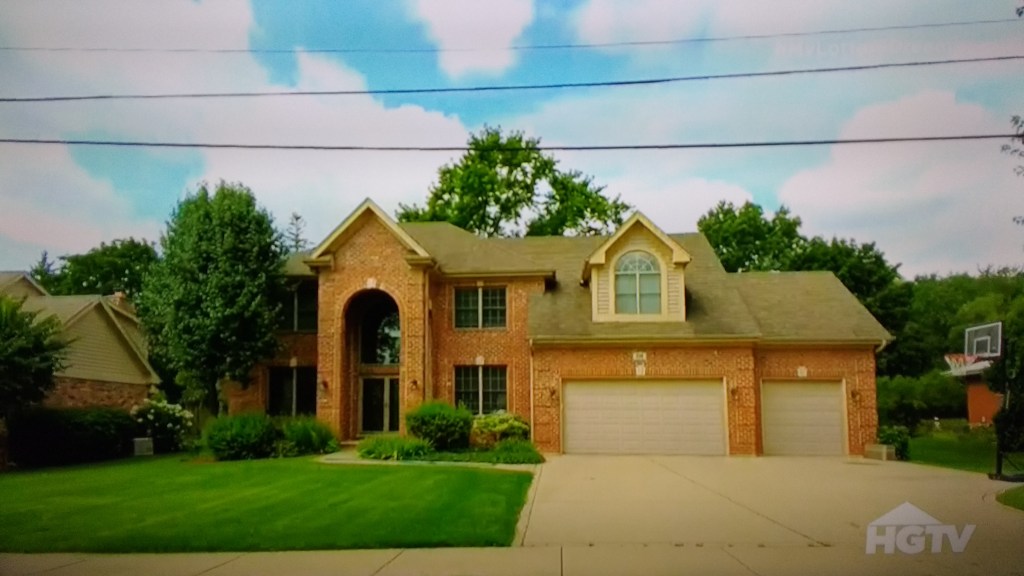
The Gist: It all started with a few white ladies in Naperville, Illinois – because of course it did. In the mid-1990s in the culs-de-sac of the affluent suburban Midwest, where triple-wide driveways flank brick McMansions, Joni, Becky and Mary Beth decided they liked cute little hand-sized stuffies produced by modestly sized toy company Ty Inc., and wanted to collect them all. An inauspicious beginning, yes, but one that would find Ty founder, future billionaire and eventual criminal tax evader H. Ty Warner ignoring how Mary Beth helped stir nationwide consumer frenzies for his products, and suing her for copyright infringement. So this story has its heroes and villains, a couple who fall somewhere in-between, and a nation of millions who caused a subsequent consumer demand for plastic totes so they can shove their hundreds of worthless Beanie Babies beneath the basement steps. (The real winner here? Probably Rubbermaid.)

Based on this short snippet, I am thinking of several possible connections between McMansions and Beanie Babies:

  1. These homes offer lots of space for storing and displaying the toys. All those bonus rooms and square footage mean the owners can have hundreds, no, thousands, of Beanie Babies.
  2. The people who can afford McMansions can afford a lot of Beanie Babies.
  3. Related to #2, those who live in McMansions, homes often criticized for their architecture and design, want to own lots of toys that became a fad.
  4. Perhaps the simplest explanation: roughly 50% of Americans lived in the suburbs by the 1990s, most McMansions are in the suburbs, Naperville’s population was booming at this time, and Ty Warner is from the Chicago area…meaning all of these spaces happened to collide in this toy boom.

Collect better data on whether Chicagoans are leaving the city

Even as there are claims 500,000 New Yorkers have left the city, a new article suggests “some” Chicago residents are leaving. The evidence:

Incidents of widespread looting and soaring homicide figures in Chicago have made national news during an already tumultuous year. As a result, some say residents in affluent neighborhoods downtown, and on the North Side, no longer feel safe in the city’s epicenter and are looking to move away. Aldermen say they see their constituents leaving the city, and it’s a concern echoed by some real estate agents and the head of a sizable property management firm.

It’s still too soon to get an accurate measure of an actual shift in population, and such a change could be driven by a number of factors — from restless residents looking for more spacious homes in the suburbs due to COVID-19, to remote work allowing more employees to live anywhere they please…

The day after looting broke out two weeks ago, a Tribune columnist strolled through Gold Coast and Streeterville. Residents of the swanky Near North Side told him they’d be moving “as soon as we can get out.” Others expressed fear of returning downtown in the future.

Rafael Murillo, a licensed real estate broker at Compass whose primary market is downtown high-rises, said he has seen a trend of city dwellers looking to move to the suburbs sooner than initially planned, due in part to the recent unrest in the city.

Three pieces of data I see i this story: aldermen reporting on actions in their districts; journalists talking to some people; and comments from people in the real estate industry. This is not that different than what is being said in New York City (plus information from moving companies).

The caveat that leads the second paragraph above – we do not have an accurate measure yet – may be correct but then it is difficult to square with the rest of the story that suggests “some” people are leaving. What we want to know is the size of this trend. Is this a trickle of people in a city that has been losing people or a recent flood? And if the numbers are larger, what exactly are the motivations of people for leaving (being pushed over the edge, fear, housing values, etc.)?

Someone could find some more certain data. Work with the local utilities to look at usage (or nonusage in units)? Traffic counts? Post office address changes? Triangulate with more data sources? If this is indeed a trend, it is an important one to highlight, explain, and discuss. But, without better data, it is hard to know what to make of it.

Following (or not) the latest fashionable way to revive urban spaces

Blair Kamin dismisses a proposal to create a High Line like park along LaSalle Street in the Loop in part by appealing to history:

In 1979, as America’s downtowns struggled to meet the challenge of suburban shopping malls, the flavor of the month was the transit mall. Make cities more like suburbs, the thinking went, and they’ll be able to compete. So Chicago cut the number of traffic lanes on State Street from six to two— for buses only — and outfitted the ultrawide sidewalks with trees, flowers and bubble-topped bus shelters…

A recently issued study of the central Loop by commercial real estate brokers Cushman & Wakefield floats the idea of inserting a High Line-inspired elevated walkway through the heart of LaSalle Street. But unlike the High Line or Chicago’s 606 trail, which exude authenticity because they’re built on age-old elevated rail lines, the LaSalle Street walkway would be entirely new — more wanna-be cool than the real thing…

The pathway would combat the perception that LaSalle is a stuffy, “old school” street lined by intimidating temples of finance, the study claims. “With thoughtful modification,” it goes on, “LaSalle Street can become the live-work-play nucleus of the Central Loop.”

Kamin summarizes his proposed strategy:

In short, the way to confront the central Loop’s looming vacancies is to build carefully on existing strengths, rather than reach desperately for a hideous quick fix that would destroy one of the city’s great urban spaces.

A few thoughts in response:

1. Kamin cites two previous fashions – transit malls, linear parks – and cautions against following them. But, certainly there are other fashions from the urban era after World War Two that could be mentioned including: large urban renewal projects (often clearing what were said to be “blighted” or slum areas), removing above ground urban highways (see the Big Dig, San Francisco), mixed-income developments (such as on the site of the former Cabrini-Green high rises), transit-oriented development, waterfront parks, and more. Are all of these just fashions? How would one know? Certainly, it would be difficult for every major city to simply copy a successful change from another city and expect it to work in the same way in a new context. But, when is following the urban fashion advisable?

2. How often does urban development occur gradually and in familiar ways versus more immediate changes or disruptions? My sense is that most cities and neighborhoods experience much more of the first where change slowly accumulates over years and even decades. The buildings along LaSalle Street have changed as has the streetscape. But, the second might be easy to spot if a big change occurs or something happens that causes residents and leaders to notice how much might change. Gentrification could be a good example: communities and neighborhoods experience change over time but one of the concerns about gentrification is about the speed at which new kinds of change is occurring and what this means for long-time residents.

3. As places change, it could be interesting to examine how much places at the edge of change benefit from being the first or in the beginning wave. Take the High Line: a unique project that has brought much attention to New York City and the specific neighborhoods in which the park runs. As cities look to copy the idea, does each replication lose some value? Or, is there a tipping point where too many similar parks saturate the market (and perhaps this would influence tourists differently than residents)? I could also see where other cities might benefit from letting other places try things out and then try to correct the issues. If the High Line leads to more upscale development and inequality, later cities pursuing similar projects can address these issues early on.

Sociology = studying facts and interpretations of those facts

David Brooks hits on a lesson I teach in my Social Research class: studying sociology involves both looking for empirical patterns (facts) and the interpretations of patterns, real or not (meanings). Here is how Brooks puts it:

An event is really two things. It’s the event itself and then it’s the process by which we make meaning of the event. As Aldous Huxley put it, “Experience is not what happens to you, it’s what you do with what happens to you.”

In my class, this discussion comes about through reading the 2002 piece by Roth and Mehta titled “The Rashomon Effect: Combining Positivist and Interpretivist Approaches in the Analysis of Contested Events.” The authors argue research needs to look at what actually happened (the school shootings under study here) as well as how people in the community understood what happened (which may or may not have aligned with what actually happened but had important consequences for local social life). Both aspects might be interesting to study on their own – here is a phenomenon or here is what people make of this – but together researchers can get a full human experience where facts and meanings interact.

Brooks writes this in the context of the media. A good example of how this would be applied is the matter of journalists looking to spot trends. There are new empirical patterns to spot and point out. New social phenomena develop often (and figuring out where they come from can be a whole different complex matter). At the same time, we want to know what these trends mean. If psychologist Jean Twenge says there are troubling patterns as the result of smartphone use among teenagers and young adults, we can examine the empirical data – is smartphone use connected to other outcomes? – and what we think about all of this – is it good that this might be connected to increased loneliness?

More broadly, Brooks is hinting at the realm of sociology of culture where culture can be defined as patterns of meaning-making. The ways in which societies, groups, and individuals make meaning of their own actions and the social world around them is very important.

Win the suburbs, win 2020; patterns in news stories that make this argument

More than a year away from the 2020 presidential election, one narrative is firmly established: the path to victory runs through suburban voters. One such story:

Westerville is perhaps best known locally as the place the former Ohio state governor and Republican presidential candidate John Kasich calls home. But it – and suburbs like it – is also, Democrats say, “ground zero” in the battle for the White House in 2020…

In 2018, Democrats won the House majority in a “suburban revolt” led by women and powered by a disgust of Donald Trump’s race-based attacks, hardline policy agenda and chaotic leadership style. From the heartland of Ronald Reagan conservatism in Orange county, California, to a coastal South Carolina district that had not elected a Democrat to the seat in 40 years, Democrats swept once reliably Republican suburban strongholds…

“There is no way Democrats win without doing really well in suburbs,” said Lanae Erickson, a senior vice-president at Third Way, a centrist Democratic thinktank…

“There are short-term political gains for Democrats in winning over suburban voters but that doesn’t necessarily lead to progressive policies,” she said. In her research, Geismer found that many suburban Democrats supported a national liberal agenda while opposing measures that challenged economic inequality in their own neighborhoods.

Four quick thoughts on such news reports:

1. They often emphasize the changing nature of suburbs. This is true: the suburbs are becoming more racially, ethnically, and economically diverse. At the same time, this does not mean this is happening evenly across suburbs.

2. They often use a representative suburb as a case study to try to illustrate broader trends in the suburbs. Here, it is Westerville, Ohio, home to the Tuesday night Democratic debate. Can one suburb illustrate the broader trends in all suburbs? Maybe.

3. They stress that the swing voters are in the suburbs since city residents are more likely to vote for Democrats while rural residents are more likely to vote for Republicans. It will be interesting to see how Democratic candidates continue to tour through urban areas; will they spend more time in denser population areas or branch out to middle suburbs that straddle the line between solid Republican bases further away from the city and solid Democratic bases closer to the city?

4. Even with the claim that the suburbs are key to the next election, this often sheds little light on long-term trends. As an exception, the last paragraph in the quotation above stands out: suburban voters may turn one way nationally but this does not necessarily translate into more local political action or preferences.

Slight drop in millennial population in American big cities

The population of big cities may depend on millennials: will they flock to urban locations or leave for the suburbs? New data suggests slightly more of them are headed out of cities:

Cities with more than a half million people collectively lost almost 27,000 residents age 25 to 39 in 2018, according to a Wall Street Journal analysis of the figures. It was the fourth consecutive year that big cities saw this population of young adults shrink. New York, Chicago, Houston, San Francisco, Las Vegas, Washington and Portland, Ore., were among those that lost large numbers of residents in this age group…

The 2018 drop was driven by a fall in the number of urban residents between 35 and 39 years old. While the number of adults younger than that rose in big cities, those gains have tapered off in recent years.

Separate Census figures show the majority of people in these age groups who leave cities move to nearby suburbs or the suburbs of other metro areas.

City officials say that high housing costs and poor schools are main reasons that people are leaving. Although millennials—the cohort born between 1981 and 1996—are marrying and having children at lower rates than previous generations, those who do are following in their footsteps and often settling down in suburbs.

MillennialsCities2019Data

An interesting update: millennials as a whole are leaving cities but younger millennials are still going to cities while the oldest ones are leaving. Does this mean that the argument that young urbanites will still leave for the suburbs when they form families and have kids?

Maybe, maybe not. It would be helpful to know more:

1. How does the older millennial move out of cities compare to previous generations? Are they leaving cities at similar rates or not?

2. Is there significant variation (a) within cities over 500,000 people and (b) within smaller big cities (of which there are many)? The first point could get at some patterns related to housing prices. The second could get at a broader picture of urban patterns by not focusing just on the largest cities.

3. The true numbers to know (which are unknowable right now): what will the numbers be in the future? The chart above suggests some shifts even in the last decade. Which pattern will win out over time (or will the numbers be relatively flat, which they are for a number of the years discussed above)?