Ever since the pandemic, many landlords, mayors, and bosses have been going through what one might call “the five stages of office grief.” First, in 2020, there was denial that working from home would have any lasting impact. Then, in 2021, there was anger at employees who wouldn’t return, followed by bargaining on the exact number of days people would spend at the office. By 2022, depression had set in, and cities seemed ready to accept the need for radical change. Now, however, the country’s economic rebound provides new ammunition for those who wish to slide back into denial.
Our cities will be better served by embracing the transition to a world that is less centered around offices. That will require diversifying their economic base, streamlining the construction and conversion of new housing and mixed-use neighborhoods, enhancing public services, and doubling down on what makes urban life attractive in its own right—not just as an employment destination. And the effort must start with the recognition that, in good times and bad, the relationship between economic activity and office demand has changed forever.
Even as there are good reasons to have districts of business offices, having fewer offices overall means offices might be better served being more spread out throughout a city and region or having more mixed-use neighborhoods. Americans have long separated land uses but fewer offices presents an opportunity to bring other land use into what once were separate business areas.
This might be a more radical idea but what could be possible if some of those office buildings were not there in the future? Could there be other land uses – not just renovated buildings – that future city residents and property owners would desire?
And could fewer offices mean fewer roads or less emphasis on vehicle traffic? If commuting is not happening at the same rate, what could be possible?
Planning in the United States tends to emphasize driving. This shows up in many ways over many decades and in many places.
Perhaps the store and the apartment are part of separate developments constructed at separate times. Building them at the same time may have presented an opportunity to provide a linking walkway.
Could it be a question of who would pay for the walkway and who would pay to maintain it?
Has there been local public support for a walkway? Debate at local government meetings? Has the question been raised repeatedly?
Americans tend to at the official levels and in individual choices promote driving. Many developments in the United States, particularly in suburbia, rely on driving. It can require working against the grain to promote other modes of transportation, including walking.
“For lack of a better description, [developers] really understood and pitched California City as an alternative and potentially competing city with Los Angeles,” Shannon Starkey told SFGATE. Starkey is an associate professor of architecture at University of San Diego and has spent years researching the city.
Piecemeal development was responsible for Los Angeles’ traffic problems, California City’s developers thought. They believed that LA, which appeared to be pressing against its population ceiling, was unprepared for California’s postwar population boom. New communities would need to pick up the slack. California City was designed to fit the bill: a sprawling, self-sufficient city in the desert. In the original plan, Starkey said, the city was projected to hold 400,000 people…
The town was incorporated in 1965 with a population that hovered around 600. According to Gorden, who moved to California City early in the decade, nearly everybody gathered in the newly built elementary school, which hadn’t yet opened, for a big dance. Mendelsohn and California’s lieutenant governor took turns sharing remarks. The mood in the 1960s, Gorden said, was one of “absolute expectations.”…
Grievances over false advertising culminated in a civil penalty issued against Great Western by the Federal Trade Commission. The FTC found Great Western responsible for deceptive sales practices, requiring the company to refund $4 million to over 14,000 of its customers. (Great Western Cities also had developments in Colorado and New Mexico.) At the time, it was the largest refund ever issued by the commission.
Shortly afterward, the Hunt brothers, who were heirs of an oil tycoon, acquired the company through a hostile takeover. According to Efford-Floyd, the Hunts only bought the company to drain its accounts, which they did as fast and as hard as they could…
Perhaps part of the reason that the city’s population never exploded is that it never developed an economic base of its own. “For many years, this was considered a bedroom community,” Jim Creighton, who serves on California City’s City Council, told SFGATE.
This would not quite be a ghost town as people do live there. However, it is an example of another common feature of the American landscape: a developer once had big plans but they did not pan out. Here, the eventual development did not match the grand vision. Elsewhere, other development might have eventually landed on top of what had once been planned. Either way, the community did not reach the lofty goals once set.
Should there be a name for such places? We would have to account for the scale of the plans. The ambitions here of a big city with hundreds of thousands of residents is different than a big subdivision that never quite got off the ground. We retell the stories of some of the planned communities that did happen, such as Levittown, New York or Columbia, Maryland or River Forest, Illinois. How many other places did not make it in the same way?
CMAP suggests merging Metra, Pace and the CTA into one mega-agency, or giving more authority to the Regional Transportation Authority over budgeting, fares, planning and capital projects.
The process of setting up governance for either could result in turf wars between the agencies along with Chicago and the rest of the region…
But figuring out membership on a super-agency board “is a tough one,” he noted. “Put yourself in the shoes of the mayor of Chicago. Do you want to give up control of the CTA to a super agency he’s not going to control?”…
Villivalam acknowledged, “We’re going to have a robust conversation; it might be tough at times.”
“At the end of the day, though, we need to take a regional perspective. The average commuter is not interested in whether it’s CTA, Metra, Pace, or RTA, they’re interested in having a public transit option that gives them an opportunity to get from Point A to Point B.”
The last quote is instructive: a regional group could better address needs and budgets across a sprawling region with over 9 million residents and lots of transportation systems. If the overriding goal is to help people choose high quality mass transit, a centralized group could help.
But, as also noted above, this would cut across decades of practice within the Chicago region. Each agency has its own history, budget, and priorities. They do not necessarily get along with each other. Political leaders have connections to and oversight with different boards.
Even if the Illinois legislature decided to follow this recommendation, how long would it functionally take for an all-inclusive agency to operate effectively?
I will guess that this will not happen. Perhaps the different agencies and leaders will be encouraged to work together more closely. Perhaps they can partner more. But, putting them all together is a difficult task with fallout for many involved.
The Bay Area exodus may be mostly a myth, but the trend of people moving inland, leaving coastal metros in search of more space at better prices, is growing. There are more people moving to Sacramento from the Bay Area than anywhere else in the country, according to Redfin data. People moving from the Bay Area to Sacramento isn’t a new phenomenon, but COVID-19 sped up a process that experts say was inevitable, and it could have long-lasting effects on the state…
They’re far from the only ones who have made the move, and all the new transplants are having a significant impact on Sacramento’s population, which grew 26% between 2000 and 2019, according to census data. The Bay Area’s grew just 14.6% during the same period. A recent study conducted through a collaboration between the University of Southern California, Occidental College, and UC Davis suggests increased migration could even be creating a “megaregion,” breaking down barriers that traditionally separated the coastal cities of the Bay Area from the inland region around Sacramento.
The “megaregion” and the resulting demographic shifts will have an outsized impact on traffic and infrastructure, creating new needs for California’s future. While the study showed there was a small dip in the proportion of people commuting to the Bay Area from Sacramento County, the percentage of people “supercommuting” — defined as a commute of more than 50 miles — had grown from 17% in 2008 to 20% in 2018. That percentage grew in every Central Valley county studied and is likely to continue as high-wage earners with jobs centered in the coastal metros seek larger homes inland…
The issues are not limited to Sacramento and the surrounding suburbs, according to Rodnyansky, and his research suggests the megaregion could stretch all the way to Fresno. Past Sacramento, people are also spreading out to surrounding El Dorado and Amador counties, where they will likely face challenges they’re not prepared for, like managing their land for increasing wildfire risk.
Three thoughts come to mind:
Is there anyone these days seriously opposed to megaregions? I could see some concerns rising about distinct identities of particular cities and communities or addressing increasingly complex problems in a growing region. Yet, having a larger region means a larger economy, a bigger population, and an increased status.
It would be interesting to hear more about communities in between these areas. What is it like to live between Oakland and Sacramento that might feel a pull one direction or another?
Now is the time to be planning ahead to the issues an expanding region brings. Can the infrastructure handle this? How should disputes between communities and major actors be resolved? Are there new population and business nodes that will develop? (Is there a point where development should not continue? This is not the kind of question that tends to be asked in the United States when growth is good.)
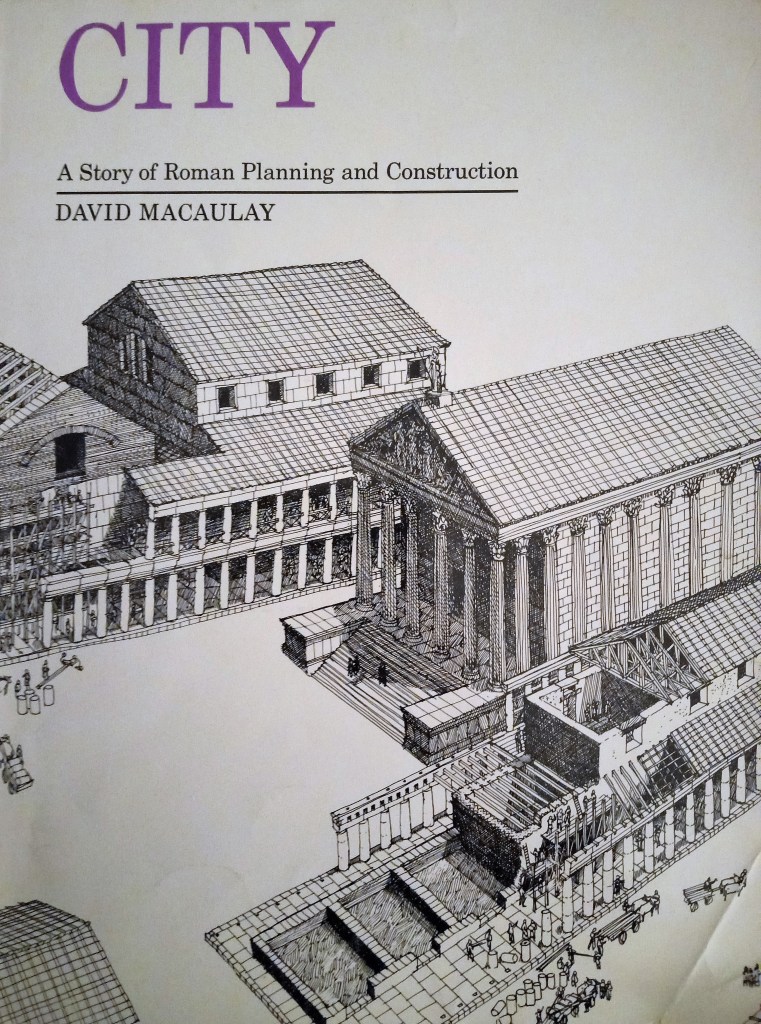
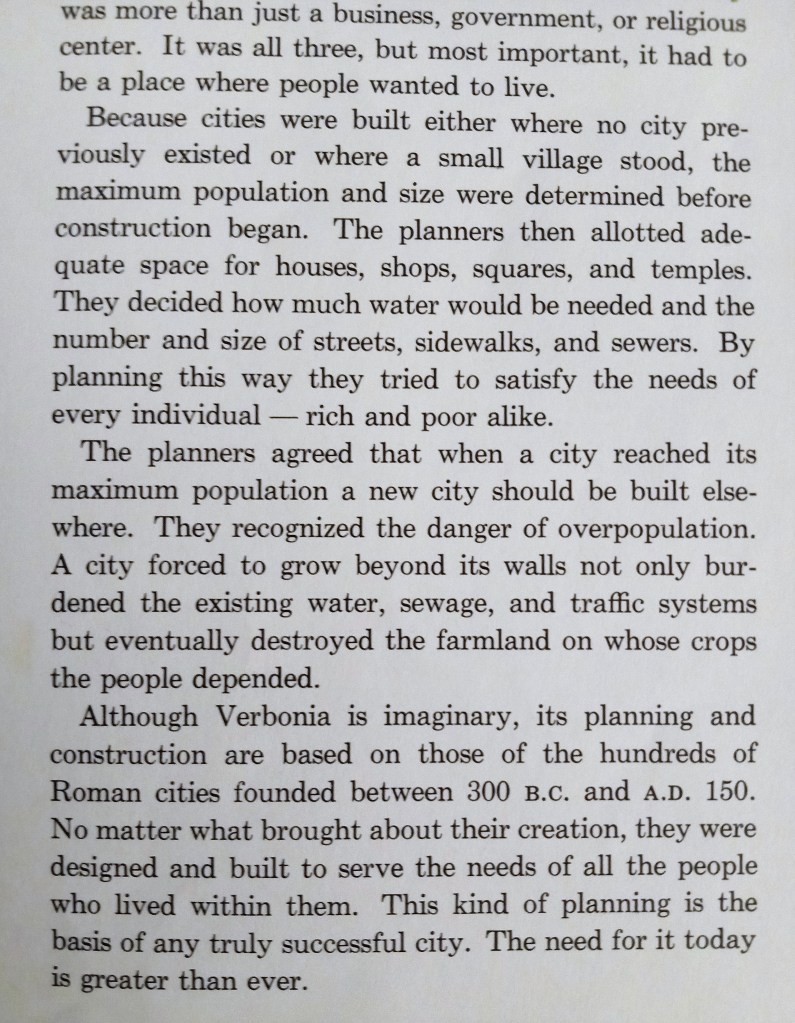
What if each of the thousands of American suburban communities had a maximum population? I had the idea after rereading David Macaulay’s City:
What could the benefits be for American suburbs? As described here, the problems that come with more residents than resources would not occur. Suburbs could be a similar size. Each suburb could have facilities for residents to access and infrastructure they need.
I am under no illusions that most Americans would want a population cap for suburbs or any other community. And simply capping the population does not address all the issues communities and their residents face. But, it is interesting to consider what good might come from planning ahead for meeting needs in communities with a maximum population.
Gen Zers point to many reasons they are turning their backs on cars: anxiety, finances, environmental concern.Many members of Gen Z say they haven’t gotten licensed because they’re afraid of getting into accidents — or of driving itself. Madison Morgan, a 23-year-old from Kennewick, Wash., had multiple high school classmates pass away in driving accidents. Those memories loomed over her whenever she was behind the wheel…
Others point to driving’s high cost. Car insurance has skyrocketed in price in recent years, increasing nearly 14 percent between 2022 and 2023. (The average American now spends around 3 percent of their yearly income on car insurance.) Used and new car prices have also soared in the last few years, thanks to a combination of supply chain disruptions and high inflation…
E-scooters, e-bikes and ride-sharing also provideGen Zers optionsthat weren’t available to earlier generations. (Half of ride-sharing users are between the ages of 18 and 29, according to a poll from 2019.) And Gen Zers have the ability to do things online — hang out with friends, take classes, play games — which used to be available only in person…
But, he added, data has shown that U.S. car culture isn’t as strong as it once was. “Up through the baby boom generation, every generation drove more than the last,” Dutzik said. Forecasters expected that trend to continue, with driving continuing to skyrocket well into the 2030s. “But what we saw with millennials, I think very clearly, is that trend stopped,” Dutzik said.
Is less need for driving causing this or is driving viewed as less enjoyable and even reprehensible (climate change concerns)?
While per capita driving has plateaued, have other driving activities increased driving and traffic? For example, the number of deliveries from Amazon and similar companies did not exist in the same way nor did ride-sharing. Younger adults are driving less than older Americans but the world today depends on driving more than ever?
The last paragraph of the article emphasizes how planning could change based on less interest for driving. It would be interesting to see how planners and others work with both populations – younger Americans who do not drive as much and older Americans who drive a lot – to reach possible solutions.
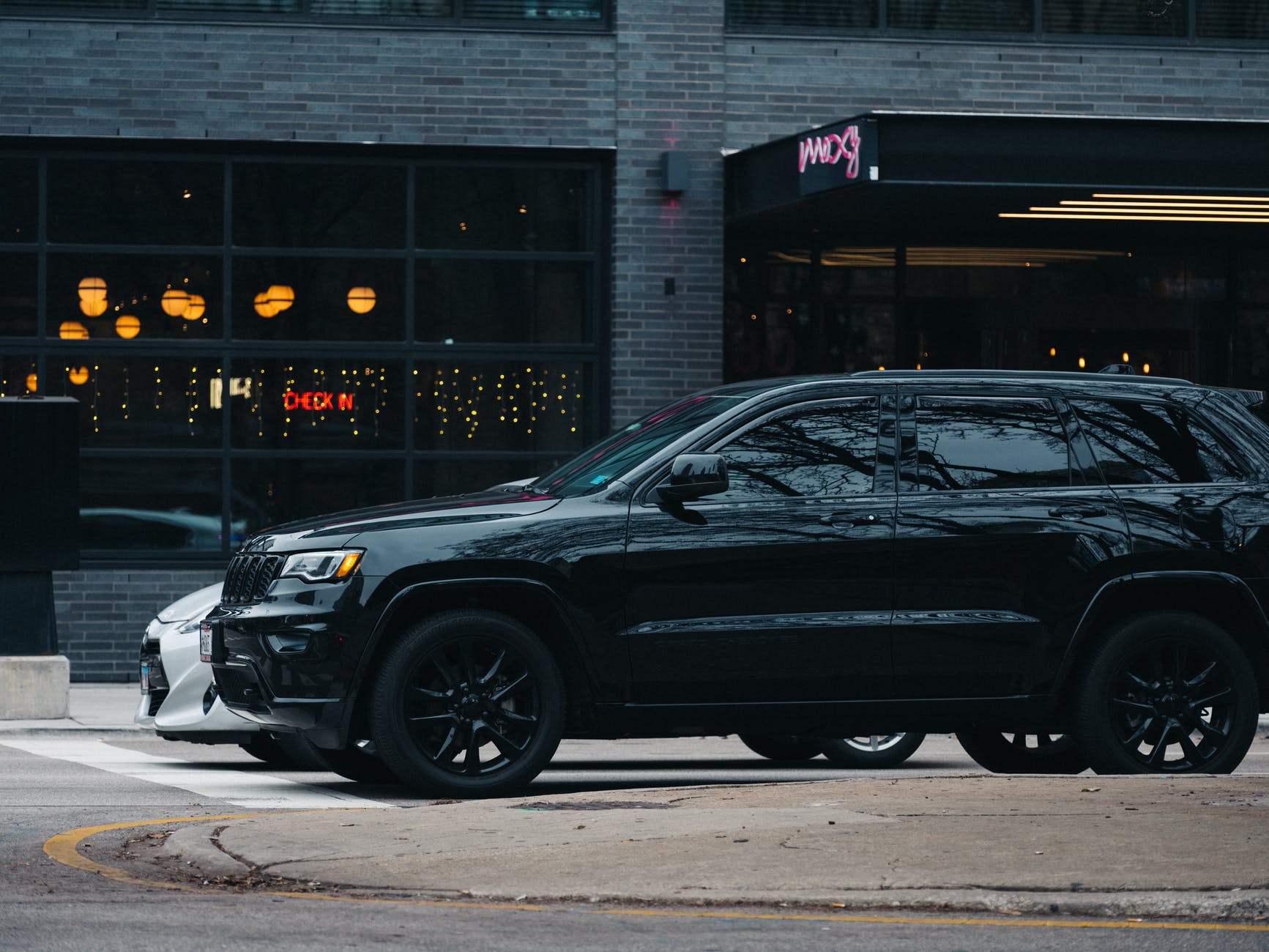
It is not an exaggeration to say that police power in the United States is built around the unique conditions created by car culture, in which virtually everyone is breaking the law all the time—with occasionally severe consequences. In her book Policing the Open Road, the legal scholar Sarah Seo points out that mass car ownership prompted a wholesale reinterpretation of the Fourth Amendment, which protects us against search and seizure. Or it did, until we all started driving everywhere.
Police often abuse this authority to perform “pretextual stops” hoping to find guns or drugs, knowing that trivial traffic violations give them the power to search citizens at will. Officers have at times undertaken this constitutional sleight of hand with explicit federal endorsement, deputized as foot soldiers in the war on drugs. In one of the most notorious examples, police in Arizona used traffic stops to enforce federal immigration law.
For Black drivers, pretextual traffic stops—per Jay-Z, “doing 55 in a 54”—are a routine occurrence and the foremost symbol of racial profiling in this country. For many police departments, these violations are used to fill government coffers and prompt devastating cycles of fines, debt, suspended driver’s licenses, and jail time. Black drivers are 20 percent more likely to be stopped, according to a study last year, and almost twice as likely to be searched.
While the article is about speeding, there are numerous additional areas where police work intersects with driving: stops for all sorts of reasons (as noted above), dealing with crashes or road conditions, escorting important people, and police driving the same roads as everyone else in order to address an issue at a particular location.
In many parts of the United States, it would be hard to imagine police without a vehicle or not interacting with vehicles regularly. Even the community policing idea where police spend lots of time in the same community and at the pedestrian level may still require using a vehicle to travel back and forth or to address particular issues they encounter. The sight of police on foot, horse, or bicycle in certain settings may be unusual to many who are used to the cars and flashing lights.
The same kind of methods proposed to limit traffic fatalities (also discussed in this article) or to promote the use of other modes of transportation could also have the effect of reducing the need for police to patrol or drive on roadways. But, reducing the American dependence on or love for driving is a sizable task.
A foundational idea in American life is that single-family homes should be located near other single-family homes and away from other land uses, including denser residential units. While this might sometimes be sidelined to the more areas of planning and zoning, I would argue this is much bigger than just allocating physical space: it interacts with significant social, political, and cultural forces and has sizable effects on daily life. I will first describe how we got here before highlighting two examples I saw this week and then noting several important outcomes.
This historical legacy and ongoing reality plays out consistently in certain areas. Two examples I ran across in just the last few days:
Affordable housing in the suburbs. Can denser housing that is cheaper be anywhere near single-family homes? This particular project in the Chicago suburbs drew typical complains from nearby homeowners; noise, traffic, change in character for the neighborhood. The developer came back with changes to try to fit in better with the nearby homes but there are still concerns. This makes sense given the American logic of homes and space but this logic is not organic or inherent to the housing itself; it is created.
Why do apartments have to be located on busier streets in American communities? This may have negative effects on the apartment residents and serves to maintain the distance between denser housing and single-family homes. Again, this makes sense given the established American logic but it is possible – and indeed done elsewhere – that you can have quieter residential streets lined with apartments.
Why does this all matter? This separation of housing serves to continue race/ethnicity and class divides, contributing to residential segregation. This changes social patterns as people in different neighborhoods may be less likely to interact, utilize the same civic (such as schools) and private services, and engage politically. Ultimately, it can both shape and be shaped cleavages in society. Location helps determine life chances and Americans start with the premise that homes should be separate.
“What I expect if I’m paying property taxes and the like is, within a 10-minute drive in my community I should be able to have access to most of what I need. Most, not everything. And that’s what we have here,” he said. “We got what we were looking for in terms of space to raise our family and more of a neighborhood feel.”
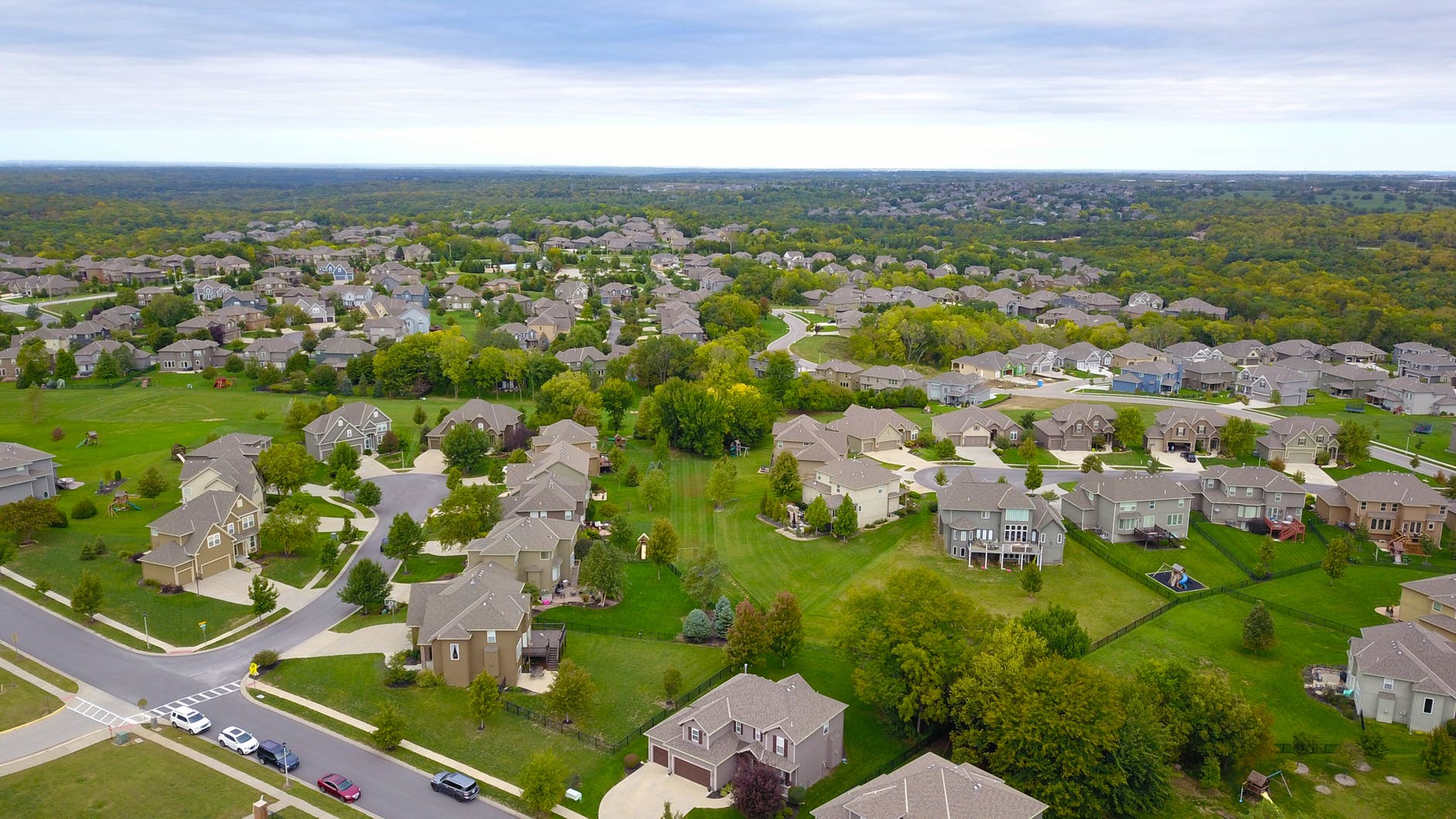
In their principles for communities, New Urbanists advocate for higher densities than present in many suburban locations, they emphasize walkability in that residents can access daily needs within a 15 minute walk, and they array residences around commercial and civic land uses. Whether in denser suburban downtowns or redeveloped mixed-use properties or “surban” locations, there is a different feel to these suburban locations. These communities do not need to be cities in terms of their population and density but they present a distinct difference from the low-density suburban sprawl found in many American locations.
In practice, the quote above highlights how some of the goals of New Urbanism are carried out in American suburbs. Americans want both private housing, typically in the form of single-family homes, and amenities within 10 minute drive. These amenities likely include schools, parks, grocery stores, and other shopping opportunities. Additionally, these homes should be in a neighborhood that offers safety and opportunities for children.
This is not what New Urbanists want. This current arrangement depends on driving and planning based around driving. A ten minute drive encourages lower densities as Americans can get roughly a few miles within that time span. Walking in service of accomplishing daily tasks is often not possible and walks become about exercise or getting out of the private house.
Nudging Americans to reorient their lives from a 10 minute drive to a 10 minute walk in suburban settings is a difficult task. While there are pockets where neighborhoods with a New Urbanist lifestyle operate, it is not the norm and driving is expected.






 Legally Sociable