Chicago slowly losing population and a few suburban counties barely gaining people

The population of Chicago has declined slightly in recent years. New figures suggest that the population in four surrounding counties have increased slightly.
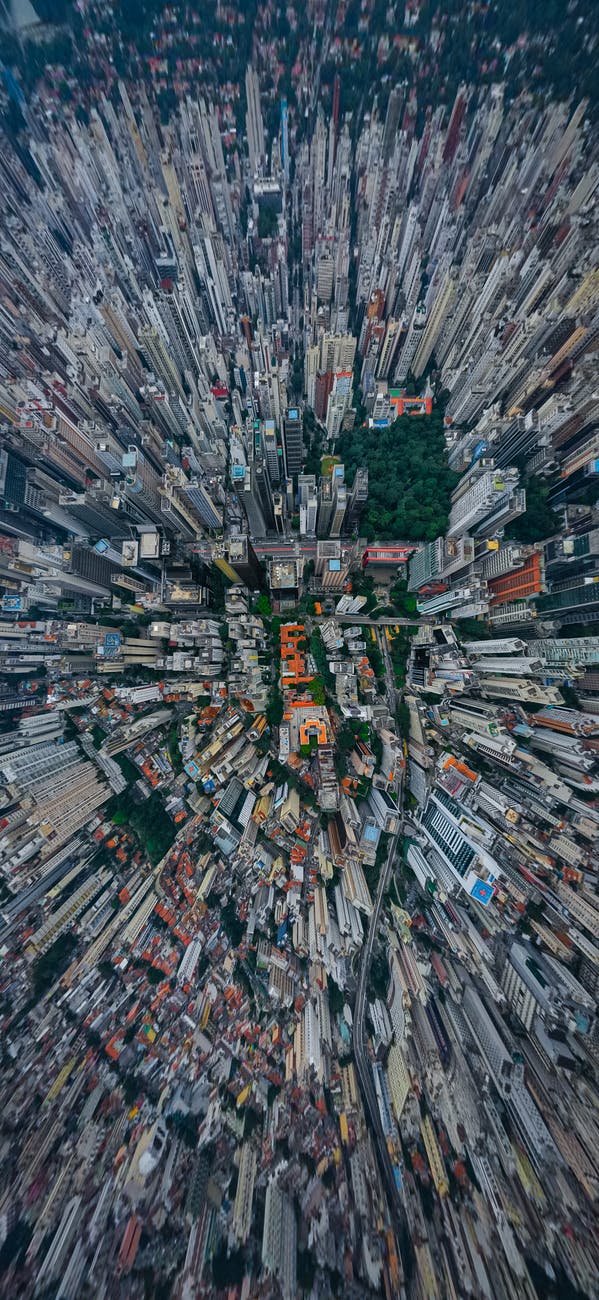
Photo by sergio souza on Pexels.com

The study showed the Chicago region as a whole was estimated to have lost 4,279 people between 2010 and 2019, a 0.05% decrease. The region, with a population of nearly 8.5 million, includes Cook and the five collar counties plus Kendall County.

Over the same time period, DuPage County grew by 2,575 people, or 0.28%. Will County grew by 7,207, or 1.06%, and Kane County grew by 9,502 people, or 1.82%.

Kendall County saw the highest rate of increase of any Illinois county, growing by 6.65%, or 7,860 people…

Growth in Kane, DuPage, Kendall and Will is likely tied to people already in the region moving farther into the suburbs, he said, and to better job growth in the Chicago area than elsewhere in the state.

If one was just reading headlines, this sounds like a big contrast: Chicago is losing residents and suburban counties are gaining them.

The actual estimates present a more complicated story about recent years. Chicago has barely lost any residents. The suburban counties have barely gained any residents. The region as a whole is relatively stagnant regarding population. The state of Illinois has lost a lot of residents but not necessarily from the Chicago region.

Even though this is not a story of massive population loss in recent years in the Chicago region, stagnant populations are usually not regarded as positive. For American communities, growth is good. And populations are not stagnant or declining everywhere; people in Illinois and other locations with population issues can see that other parts of the country are booming. In particular, Sunbelt metropolitan areas are growing at rapid rates.

This is not a new position for the Chicago region. For decades, the city and suburbs have considered the effects of a decline in Chicago’s population (and a rebound for a while) and a growing metropolitan region. Yet, other places are growing faster. Chicagoland is not in the same category as some other Rust Belt metropolitan areas but it is not exactly the attractive location that some other places are.
Limited solutions to ensuring more long green light stretches of suburban driving

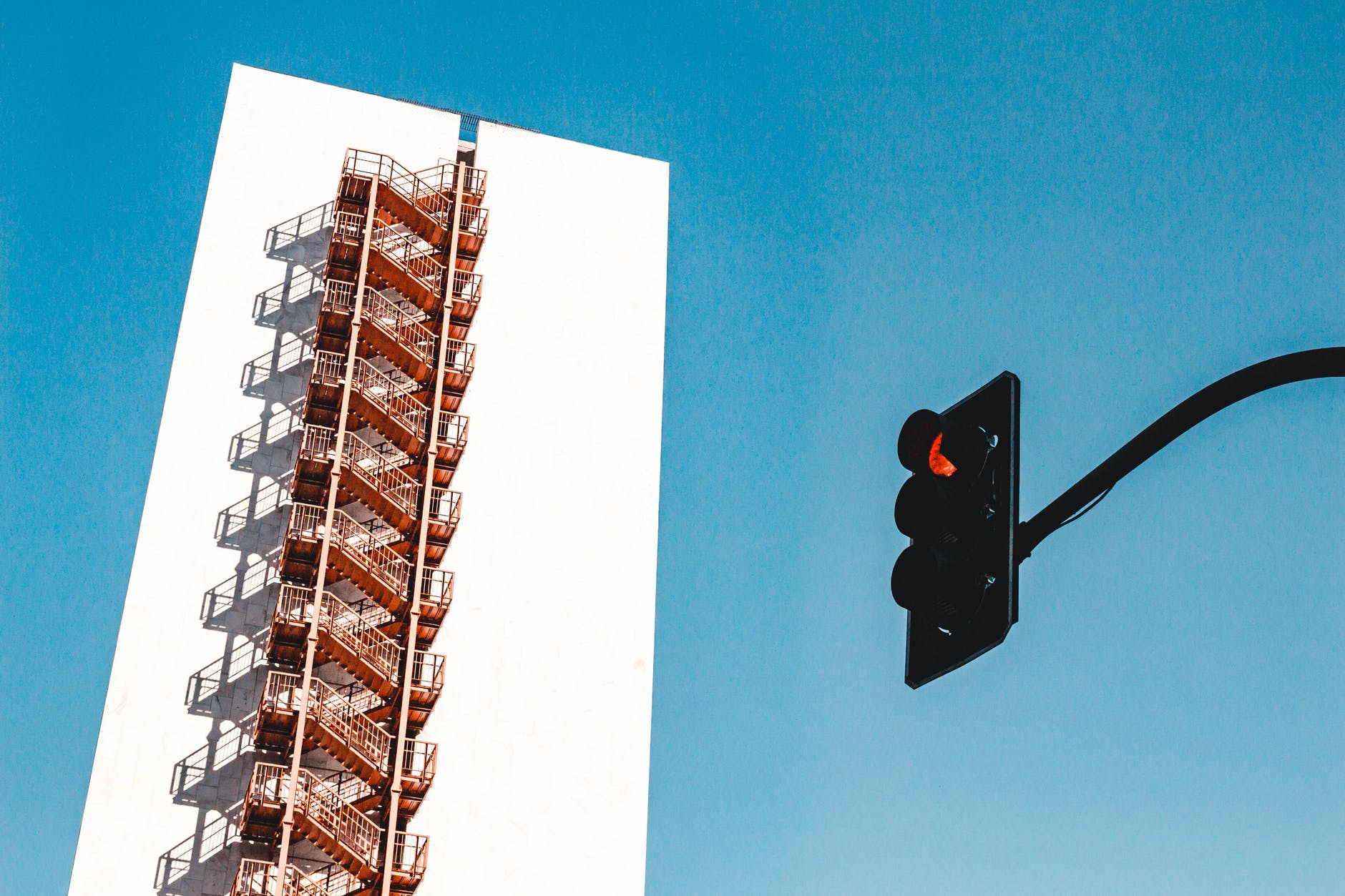
After occasionally finding stretches of hitting all green lights on major suburban roadways, I wanted to consider how these experiences might become more common. Is it possible? Here are some strategies alongside my sense of whether these would help.

Photo by C. Cagnin on Pexels.com
  1. Synchronizing traffic lights. Los Angeles did this a few years ago to help traffic flow. As a kid, I recall sitting in the car in Chicago and hearing tell of how Clark Street on Chicago’s North Side was set up this way: follow the speed limit and a driver should hit multiple greens in a row. This could be harder to accomplish across a range of municipalities and the various traffic volumes intersecting with the main road. Additionally, this might not help much if there is just too much traffic on the road.
  2. Providing more lanes, more driving options. Americans tend to like this strategy: more lanes, more roads equals more space for vehicles, right? Research suggests otherwise: if you add road capacity, drivers will tend to fill that up. Americans like driving in the suburbs and this is not a long-term solution. In fact, road diets may be more helpful: reduce capacity and it pushes drivers toward other options. Furthermore, expanding roads in an already developed suburban area can get quite expensive and may be controversial.
  3. Encouraging more mass transit use, more walking and bicycling, and less driving. If there are simply too many cars, limiting trips would help ensure smoother driving experiences. All of these options are tough sells in the suburbs. It is hard to provide mass transit in a decentralized landscape and wealthier residents are unlikely to use it. Residential neighborhoods might be set up for biking and walking but connecting to other uses – grocery stores, schools, businesses – is often not possible or is dangerous.
  4. Having more employees work from home. This may be temporary due to COVID-19 but could be a long-term solution for traffic and congestion issues. Of course, there may be more people living in the suburbs due to COVID-19.

This suggests that there may be some short-term solutions but the bigger issue would take more time and effort: American suburbs are built around driving.

The magic of 10+ minutes of green lights on a major suburban road

I occasionally drive on major local suburban roadways. Think four lanes, direct north/south or east/west routes, speed limits of 35-45 mph, and lined with strip malls, fast food restaurants, gas stations, big box stores, and various other uses. Because of all of the traffic that wants to get on and off the road and because there are regulations about how to do this safely, such roads have regular traffic lights.

In the suburban road logic, these motorways are necessary to move larger volumes of traffic. Off these major roads are endless residential streets lined with single-family homes or small multi-family housing units. Traffic could cut through some of these neighborhoods but they have lower speed limits, narrower streets, and plenty of stop signs.

Occasionally, by finding the right time of day or the right position within the flow of traffic or finding the communities that have timed their traffic lights well, you can drive down such roads for ten-plus minutes without hitting a red light. It is smooth sailing. It is a slower but local highway. You can improve your gas mileage.

But, this is rare. During busier times, there may be too much traffic to get through each light. Late at night, the side streets might have sensors that turn their direction to green when just one car arrives. The drive becomes a series of stops and starts. Up to 40 mph, stop again, back up to 35 mpg, stop again.

Thus, when in the middle of a magical moment without stoplights impeding your path, enjoy it. Hear a few songs in a row while moving. Look at the communities as you go by. Marvel at the ground that can be covered when moving at the speed limit for more than a few minutes. Soon you will be back at a traffic light, waiting to get started again.

Homes as investments in continually increasing national median home values

The national median house value kept going up through November 2020:

Photo by Karolina Grabowska on Pexels.com

Despite a global pandemic and an economic downturn, U.S. home prices pushed new boundaries last year: The national median sale price for existing homes hit $310,800 in November, marking 105 straight months of year-over-year gains, according to data from the National Association of Realtors.

This could reinforce the now common viewpoint that homes are investments. Increasing median values for over eight suggests reinforces the idea that homes generally go up in value. Except for big economic crises – think the burst housing bubble of the late 2000s – houses accrue value over time. Even COVID-19 could not derail this.

This is often viewed as a good thing. Homeowners like that their homes are increasing in value because they can make more money when they sell. Communities take this as a marker of status. Realtors and others in the housing industry benefit. No one wants a drop in housing values across the board. (Of course, this is the median so the values can differ a lot by location.)

The commodification changes how owners, developers, and communities think about houses. They are not just the private spaces to escape the outside world – an established idea in the American Dream – but goods to profit from. An increasing value must be good and steps in other areas should be taken to protect home values.

This has numerous effects. It encourages Americans to invest resources in buying housing when that money could be put to use elsewhere. It contributes to single-use zoning where homes are protected from any other possible uses. It can exacerbate the inequality gap between those who can buy homes and those who cannot or between those with homes in places where the values keep going up versus those with homes in places with stagnant values.

Atlanta McMansions in the early 2000s

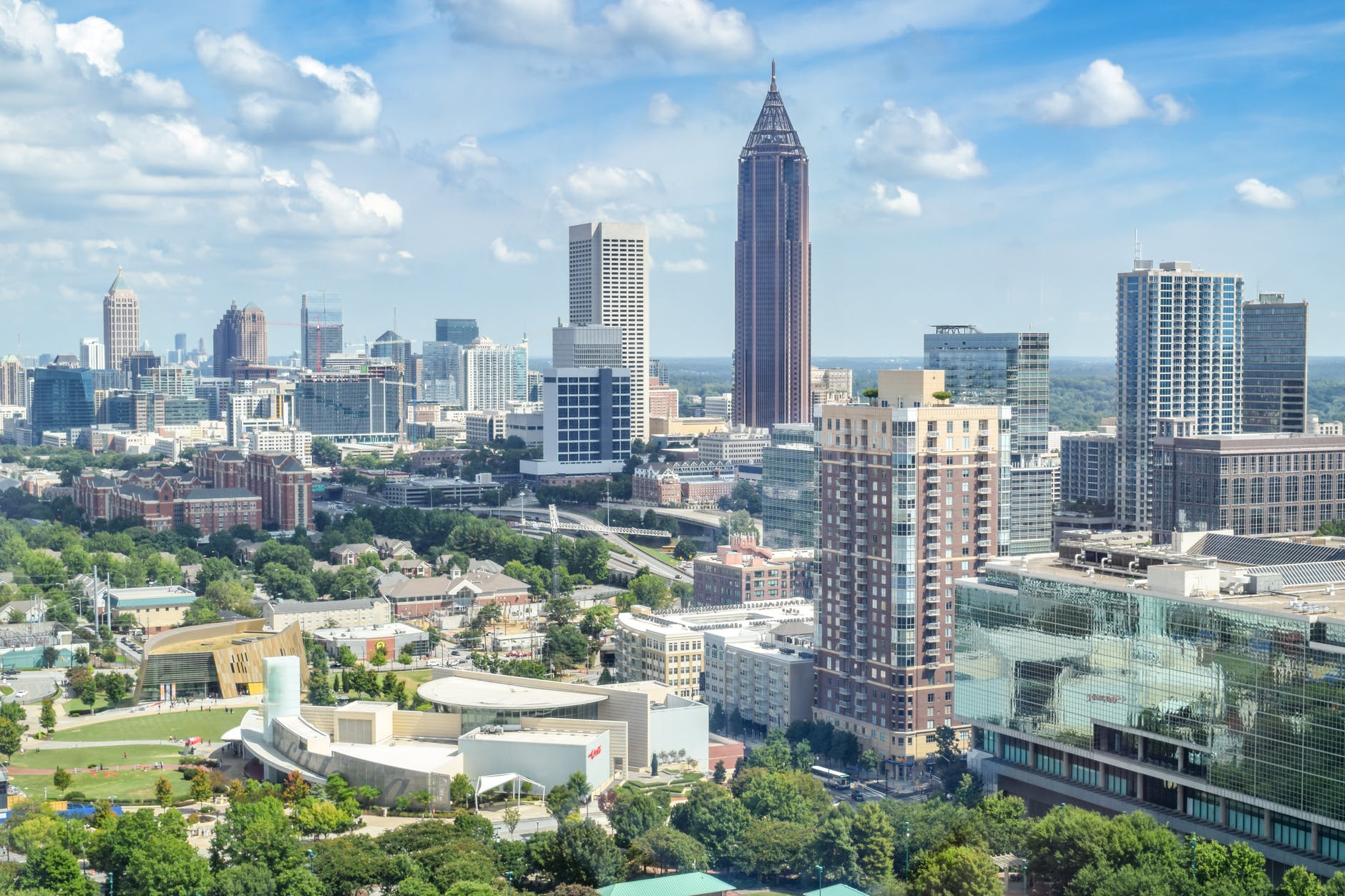
Atlanta highlights their work in the 2000s and includes an excerpt about McMansions:

Photo by Nate Hovee on Pexels.com

“When suburbanites come intown, they want to bring the suburbs with them. The day of the urban pioneer is gone,” says attorney Lee Meadows. The heart-pine floors, plaster walls, and black-and-white tile bathrooms of compact 1920s Craftsman bungalows can’t compete with the wired-for-plasma-TV mantel and Carrera marble–accented master bath of that “Neo-Craftsman” on Oakdale. (August 2007)

This is a short description but this seems to capture the McMansion era well:

-Bringing particular expectations about homes to cities and suburbs, whether they fit or not.

-Preferring new larger homes with features over historic homes.

-Particular features of these new homes included flat screens mounted over the mantel, marble in the bathrooms, and aping established architectural styles.

All that might be missing is the spread of McMansions in Sunbelt regions and the size of these homes, especially on certain smaller lots.

Of course, this comes before the housing bubble burst and more hardened opposition to McMansions. These homes are still constructed today in cities and suburbs but the thrill of McMansions has diminished. In other words, the “irrational exuberance” of McMansions is gone except perhaps in particular locations and for certain builders and buyers. For this reason, and perhaps many others, 2007 seems very far away.

Evidence that some have done well during COVID-19, many others have struggled

Socioeconomic data released recently highlights the ongoing bifurcated effects of COVID-19. Start with increasing levels of inequality as the wealthiest did well:

Photo by Karolina Grabowska on Pexels.com

According to a report by Thomson Reuters Foundation, billionaires including Amazon’s Jeff Bezos and Tesla founder Elon Musk have seen their wealth soar during the COVID-19 pandemic while the world’s poor face years of hardship, charity Oxfam said on Monday as it demanded steps to tackle inequality…

It could take more than a decade to reduce the number of people living in poverty back to pre-crisis levels, Oxfam said. Meanwhile, the collective wealth of the world’s billionaires rose $3.9 trillion between March and December 2020 to reach $11.95 trillion, the report calculated. The 10 richest men saw their net worth increase by $540 billion in the same period, Oxfam said.

The poverty rate in the United States had its highest annual increase with some groups more affected than others:

Economists Bruce Meyer, from the University of Chicago, and James Sullivan of the University of Notre Dame found that the poverty rate increased by 2.4 percentage points during the latter half of 2020 as the U.S. continued to suffer the economic impacts from Covid-19.

That percentage-point rise is nearly double the largest annual increase in poverty since the 1960s. This means an additional 8 million people nationwide are now considered poor. Moreover, the poverty rate for Black Americans is estimated to have jumped by 5.4 percentage points, or by 2.4 million individuals.

The impact of jobs lost globally during COVID-19 go far beyond the economic crisis of the late 2000s:

Four times as many jobs were lost last year due to the coronavirus pandemic as during the worst part of the global financial crisis in 2009, a U.N. report said Monday.

The International Labor Organization estimated that the restrictions on businesses and public life destroyed 8.8% of all work hours around the world last year. That is equivalent to 255 million full-time jobs – quadruple the impact of the financial crisis over a decade ago…

The drop in work translates to a loss of $3.7 trillion in income globally — what Ryder called an “extraordinary figure” — with women and young people taking the biggest hits.

And this is on top of the differential health impact of COVID-19.

It will both take some time to fully assess the effects of COVID-19 and then some time to interpret and act on the findings. As data and studies are released, as various parts of society reckon with the fallout, and people respond, themes and narratives will develop as to what happened and what it means.

Getting back to “normal” or pre-COVID conditions will surely be a goal. Yet, if COVID-19 did significantly alter economic and social conditions, will returning to “normal” be acceptable or will there be calls for a bigger response? It is not as if inequality was a non-issue before COVID-19.

All of this highlights that even with all the advances of the modern world, it is a struggle to keep up with the rapid social change and think about the future. This hints at the problems of complex systems and the ongoing human experience of living through difficult experiences.

Finding housing in former strip malls and big box stores in California

In a state with a need for cheaper housing, some in California are looking to commercial properties along main roads:

Photo by Priti Singh on Pexels.com

Joe DiStefano sees boulevards like El Camino Real as more than just spots for takeout or an oil change. He sees a “perfect storm of opportunity.” Cofounder and CEO of UrbanFootprint, a software company that builds urban planning tools, DiStefano has done numerous studies on the housing potential hiding in California’s commercial strips. According to UrbanFootprint’s analysis of El Camino Real, this lone corridor could theoretically accommodate more than 300,000 new units if the road was upzoned to allow residential development and its parking lots and big-box stores became low-rise apartment complexes…

Converting underutilized retail and office space into apartments is not a novel idea, but it’s gaining fresh attention from California lawmakers, especially as pandemic-fueled e-commerce and remote work trends continue to empty brick-and-mortar stores and business parks across the state. In December, California State Senator Anna Caballero, who represents the Central and Salinas valleys and cities such as Merced, helped introduce Senate Bill 6, which would fast-track the creation of walkable infill development and make it easier to turn land zoned for commercial uses into housing. Another member of the state’s legislature, Assemblymember Richard Bloom, has a similar proposal to encourage commercial-to-residential conversions, Assembly Bill 115. (California has a bicameral legislature.) And Senator Anthony Portantino introduced AB15, which would incentivize turning vacant big box sites into workforce housing…

But more than 40% of commercial zones in California’s 50 largest metros prohibit residential development, according to a recent report from the Terner Center for Housing Innovation at Berkeley. “Residential Redevelopment of Commercially Zoned Land in California” highlights the growing potential of such rezoning proposals. “It’s a perfect infill option,” says David Garcia, a co-author and policy director at the Terner Center. While legislation like these proposed bills hasn’t been passed in other states, he believes they address a universal problem. “You’re really plugging in gaps left by shifts in the commercial marketplace, by Covid and the shift to e-commerce.”

There are three main types of projects ripe for this kind of reuse, Garcia says: commercial strips in more urban areas, often along existing transit lines; former big box retailers in more suburban areas; and vacant land in the exurban landscape that’s been reserved for future development. Researchers found there was actually more acreage of available commercial space per person in more suburban/outlier areas, an opportunity that, if paired with increased investment in transit, could quickly bring more density and valuable walkable development to fast-growing and diversifying suburban centers, some of which have already done a relatively good job of building new housing. “Instead of thinking about a bill like this as another state mandate cities need to adhere to, it should be looked at as a tool for doing the good planning they need to do anyways,” Garcia says. 

This might be hard sell before COVID-19 but the severe issues for retailers and businesses may make a lot of properties available.

Even with these issues, I wonder how many communities would quickly give up commercial properties to be rezoned for residential use. Many communities rely on commercial properties along major roads for sales tax revenue. If commercial property disappears from the local zoning map, how would a community make up those revenues?

Of course, providing possibly cheaper housing could be desirable to residents, even if it comes at the expense of commercial properties. And new residential units might even revive some local commercial activity.

If this is enabled at the state level, it would be interesting to see how quickly communities and developers would move. Vacant property is not desirable for any municipality. Would this move more quickly in certain kinds of communities compared to others?

The architectural view of Chicago’s Plan for Transformation for public housing

In an interview for Chicago, former architecture critic of the Chicago Tribune Blair Kamin responded to a question about how public housing in Chicago has turned out:

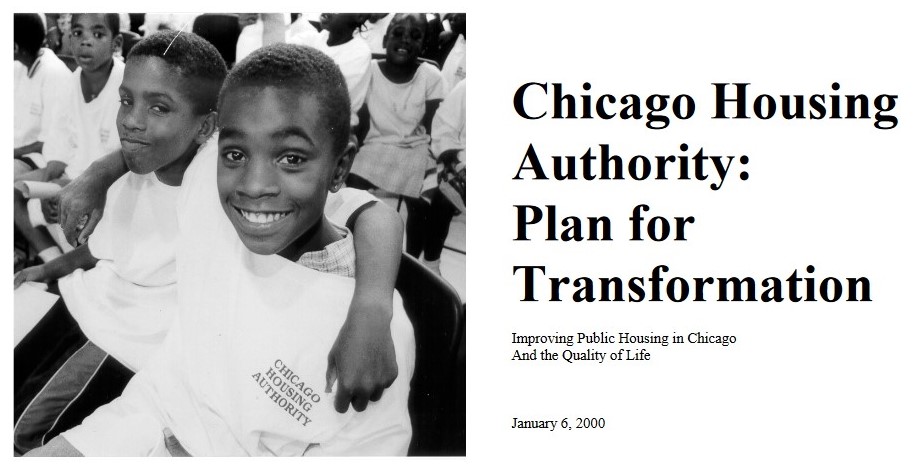
Cover of the 2000 report on the Plan for Transformation.

Overall, though, I would say the Plan for Transformation has been a disappointment. It took far too long. It built too little housing. The overall aim of integrating very poor people into their communities and the city at large has not been fully achieved. The continued segregation of Chicago by race and class continues. I guess you could say that the series helped set the agenda or some of the reforms that occurred, but I’m sure not satisfied with the outcome.

For low-income housing to succeed, it doesn’t need to be an architectural showplace. It just needs to do the basics, right. It needs to provide shelter, it needs to provide community, it needs to provide integration into the broader society, so [that] people can climb the ladder, economically and socially, if they want to. It doesn’t need to win a design award, although good design certainly can be a part of its success.

I do think it’s really important to say that design is not deterministic. In other words, better buildings will not make better people. Design is part of the equation of integrating the very poor into the city. But it can’t do it all by itself. It’s naive to think that. It needs to be combined with social service programs, and other things – schools, families that are supportive – in order for it to succeed. Design can open the door to success, but it cannot achieve that on its own.

And the corollary is true, too. You can’t blame bad design for the failures completely. You can’t completely blame bad design for the failures of high-rise public housing. The failure has had to do as much withe federal policy that was well intentioned, but foolish. Concentrating lots of very poor people and a vast high rise development, like the Robert Taylor Homes or Stateway Gardens, was an invitation to disaster. In a way, it doesn’t matter how the buildings are designed. The design simply accentuated the social problem these high concentrations of poverty.

Kamin highlights multiple important elements at play: how much replacement housing was actually created, the larger social issues still very present in Chicago (“segregation…by race and class”), and the role of design. I’ll comment briefly on each.

First, this was one of the fears of public housing residents as the Plan for Tranformation was getting underway: if high-rises are torn down, will they be replaced and by what? The Plan for Transformation has not delivered on the number of units promised. The issue of the high-rises may have been addressed but the issues simply morphed into different issues.

Second, is the issue really public housing or is it ongoing inequality in Chicago? As luxury buildings keep going up, conditions in many Chicago neighborhoods have not improved. Public housing has never been particularly popular in the United States but neither has actually acknowledging and addressing the deeper issues of why some city residents might have a need for public housing or why affordable housing is in short supply.

Third, considering the full set of forces at work in a particular context – design, social forces and processes, relationships, power dynamics, the organizations and institutions involved – is very important. If segregation by race and class is present in Chicago, certain institutional actors have particular vested interests, and the design all need to be considered, how might this change constructing buildings in the first place?

With all this said, I hope conversations about public housing and affordable housing in Chicago are not solely relegated to discussions of past decisions and poor outcomes.

Naming modern phenomena “traditional,” evangelical tradition

To label something today as traditional is to reference the past, to perhaps suggest an unchanging connection between the modern manifestation and what something was (or what we think it was) before. Historian Kristen Kobes Du Mex highlights how evangelicals claim to be traditional:

Photo by Patricia McCarty on Pexels.com

“America needs a tidal wave of the old-time religion,” inveighed 1920s evangelist Billy Sunday, self-proclaimed preacher of that “old-time religion.” In 1963, when an Episcopal clergyman accused Billy Graham of “putting the church back 50 years,” Graham responded: “I’m afraid I have failed. I had hoped to put the church back 2,000 years,” suggesting that evangelicalism was a return to a pristine, ancient Christianity.

As historian Timothy Gloege explains, however, early-20th-century evangelicals called their movement “old-time religion” even as they pioneered a new, consumer-oriented faith. Frequently sidestepping traditional denominational structures, evangelicals have excelled at using modern promotional techniques to deliver their message through celebrity spokespeople and an elaborate Christian media empire — think of ubiquitous televangelist Joel Osteen. Prioritizing an individual’s personal relationship with God and plain reading of the scriptures, they also created new standards of orthodoxy, including the “inerrancy” of the Bible. These innovations were often sold as “traditional” Christianity, but they developed the faith beyond what even Reformation innovators could have imagined.

This reminds me of a discussion in a grad school class involving the sociology of religion. In a discussion of different religious traditions and where they might fit in a current understanding of liberal or conservative, the professor jumped in at one point and noted that even the groups that claim orthodoxy or tradition tend to have moved over time from earlier practices and beliefs.

So, perhaps being “traditional” exists on a continuum with some versions closer to tradition and others further away? This might even be less of a changing of something and more of a shift in emphases. Think of the hundreds of Christian denominations in the United States who would highlight different aspects of faith as being more important or the major Christian traditions – Catholicism, Orthodoxy, Protestantism, etc. – and how they might each claim to retain traditional elements of Christianity.

It would be worth noting what groups claim tradition more strongly, how they make these arguments, and for what reasons. Did evangelicals at the turn of the twentieth-century claim “old-time religion” and tradition in order to distinguish themselves from other religious changes? For various religious groups that have called fellow adherents back to the fundamentals of their faith, why do so at that particular moment? In a competitive religious marketplace in the United States, promoting tradition could appeal in particular ways – and not others.

“Unprecedented volume of public participation” regarding development plans for Naperville mosque

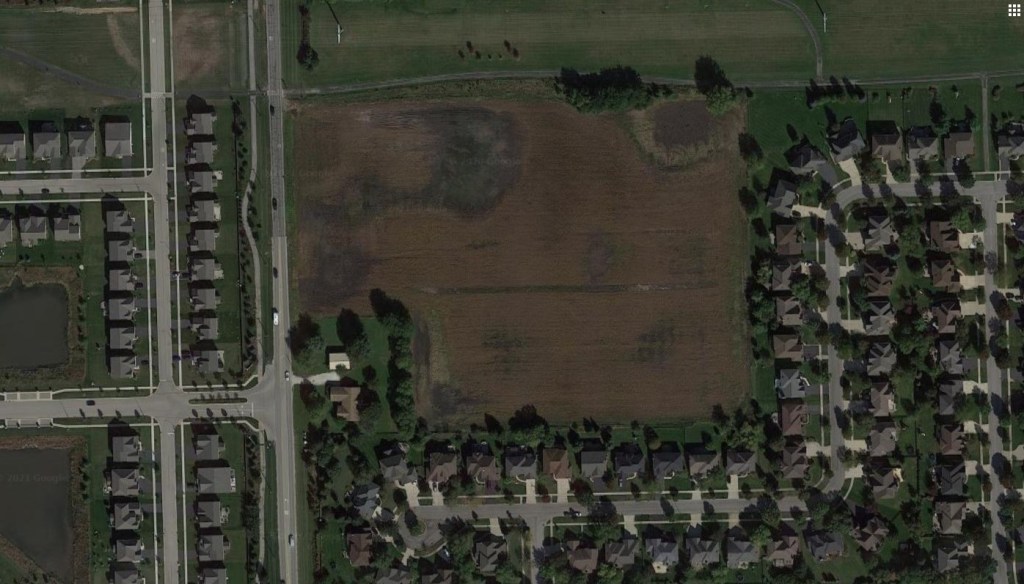
Updating a case I wrote about in a 2019 article, further plans for a property owned by the Islamic Center of Naperville on the suburb’s southwest side have drawn a lot of public comments:

Google Maps

The Islamic Center of Naperville, or ICN, is seeking zoning variances so members can develop a mosque, school, multipurpose hall, gymnasium and worship-area expansion in five phases over the next 40 years…

Naperville city planner Gabrielle Mattingly said the city received “an unprecedented volume of public participation” for the hearing, including nearly 2,000 names in support or opposition, 770 written comments and 160 people who signed up to speak…

The commission was able to spend 20 minutes at their meeting this week scrolling through the 1,610 signatures favoring ICN’s plans and the 305 in opposition…

ICN’s development plans show the first phase, expected to start this year, includes constructing a two-story mosque with 26,219 square feet of space to provide space for 692 worshippers, said Len Monson, the attorney representing ICN. It also will include space for offices, conference rooms, storage, multipurpose spaces and washrooms.

One interesting aspect of this proposal is that it lays out several stages that progressively increase the size of the mosque over the next forty years. Building in stages could make sense for a lot of religious groups: they could wait and see how many people are attending and it could help spread out the need for financial resources.

When the Islamic Center of Naperville requested in 2011 that Naperville annex this land with the goal of eventually constructing a facility on the property, neighbors expressed concerns. The City Council unanimously approved the request but the reactions in Naperville occurred around the same time as several other mosque proposals in DuPage County encountered opposition.

Additionally, this property is surrounded on all sides by residences. I have found in my research that locations near homes tends to increase concerns raised by community members. In Naperville and numerous other communities in the United States, residents used to nearby open spaces or agricultural land can hope the land always stays in that form rather than become home to a new building or development.

It is hard to know from this article how many of the public comments are in support of the proposed changes and how many are opposed. Even if the number of supporters is large or a majority, that would still suggest a sizable number of people with concerns.