Suburban ministry accepts notorious convicted murderer as resident

Suburbanites do not want to be associated with crime, particularly notorious ones. So a recent action by a Christian ministry in Aurora is notable:

Wayside Cross Ministries of Aurora officials said Monday that by accepting “Ripper Crew” murderer Thomas Kokoraleis as a resident, the organization is doing what God commands everyone to do: Show kindness and mercy to all, even enemies, the ungrateful and the wicked.

“We are mandated by our Lord Jesus Christ to love our neighbors. According to Luke 16, anyone in a genuine need is a neighbor,” Executive Director James Lukose said in a news release that Wayside Cross also posted on its website, waysidecross.org

Kokoraleis, 58, was released from prison Friday after serving half his 70-year sentence. He is not on parole, and is free to live where he wants, as long as he informs police…

Kokoraleis was one of four men suspected of killing as many as 17 women in Chicago and the suburbs in the early 1980s. His younger brother, Andrew, was one of them and was executed in 1999.

The Chicago Tribune wrote an editorial several days ago on Kokoraleis’s release:

A judge chose to sentence him to life in prison. But his conviction was struck down over legal errors, and the case was resolved with the defendant pleading guilty and being sentenced to 70 years. Thanks to the rules in effect back then, which allowed him to cut his time in half through good behavior, Kokoraleis was released Friday at age 58. He is expected to live at a Christian-oriented facility in the Wheaton area…

We won’t relitigate Thomas Kokoraleis’ case or his guilt. But we feel no hesitation in saying that life behind bars should have been the certain sentence for what he did. There is something profoundly exasperating about seeing someone who took part in such wanton slaughter being allowed to walk free among civilized people.

I wonder if this will cause any furor long-term in Aurora and the surrounding area. UPDATE APRIL 2, 2019 – The mayor of Aurora is not happy about this.

“In light of the unspeakable nature of the crimes committed by the Ripper Crew, I would hope that Wayside would reconsider the decision that brought Kokoraleis to Aurora — particularly given the Ministries’ close proximity to parks, churches and day care centers,” Irvin said in a statement Monday evening. “I absolutely disagree with Wayside Cross Ministries’ decision to allow Kokoraleis to reside at their facility in Aurora.”

Presumably, there are plenty of nearby residents with possible competing loyalties in this particular case: they would claim Christian faith and also be at least hesitant about living near such a murderer. There would be few suburban cases at this level that could push suburbanites to consider balancing justice and forgiveness – and both suburban and American history suggest they would almost always settle on the side of justice and keeping the issue as far away from their homes and community as possible.

I hope there will be a follow-up either way, whether Kokoraleis lives quietly or falls into trouble again.

Fighting discrimination in online housing ads

The Department of Housing and Urban Development and the ACLU are going after discriminatory online housing listings:

The U.S. Department of Housing and Urban Development filed charges against social media giant Facebook on Thursday, alleging that its advertising platform violates the Fair Housing Act by allowing lenders and realtors to target Facebook users on the basis of race, gender, religion, familial status, disability, and national origin.

“Facebook is discriminating against people based upon who they are and where they live,” said HUD Secretary Ben Carson in a statement. “Using a computer to limit a person’s housing choices can be just as discriminatory as slamming a door in someone’s face.”

According to Axios, HUD and Facebook were close to a settlement. Citing anonymous sources, the Axios report says the decision to file charges could be motivated by a desire to appear on the offensive on housing discrimination prior to Carson’s meetings with lawmakers on Capitol Hill next week.

The charges are somewhat surprising as Facebook just settled five similar cases with the American Civil Liberties Union (ACLU) last week. Under the settlement, the company agreed to create a separate advertising portal for real estate listings where advertisers’ options for targeting are limited. Facebook also settled a housing discrimination case with the state of Washington last summer.

The features that make online advertising so attractive – the ability to target particular consumers rather than addressing larger populations – do not work so well in the real estate field where housing is supposed to be available to all.

This reminds me of the conclusion of American Apartheid where the sociologists suggest the necessary rules are in place to combat housing issues but the political will is lacking. If the online realm is now indeed where a lot of housing is rented or sold, then discrimination in online listings needs to be addressed when it does occur.

Add these online occurrences to the ongoing findings of audit tests suggesting differential treatment and there is likely plenty of housing discrimination still to battle. While the 1968 Housing Act banned discrimination on the basis of “refusal to sell or rent a dwelling to any person because of his race, color, religion, or national origin,” many American communities – including the suburbs on the basis of race and class – are what they are today because of exclusion.

McMansion literary tales: a proposed teardown leads to local dysfunction

The McMansion continues to feature in literary works. A new book from a Washington D.C. area author uses a proposed teardown McMansion to highlight suburban issues:

Coincidence or not, Langsdorf’s success comes after leaving her longtime suburban existence. Following her 2012 divorce, Langsdorf moved to Adams Morgan in the District and devoted herself to writing while teaching yoga on the side. And yet, the book takes her back to that former life: “White Elephant” seems to channel all of the frustrations she felt juggling her identities as a mother and creator in a stifling suburb. The novel follows the residents of the fictional enclave of Willard Park — inspired, in part, by Langsdorf’s hometown of Kensington, Md. — where an interloper’s plans to build a McMansion amid the cozy bungalows leads to angry town halls, scandalous romantic dalliances and shady high jinks.

Like Langsdorf, two of the main characters in her ensemble are mothers grappling with their identities beyond being wives and mothers. Allison Miller, who has lived (mostly) happily in Willard Park for more than a decade, wonders what to do with her photography — more than a hobby, less than a career. Her new next-door neighbor, Kaye Cox, can’t figure out who to be, caught between her role as a fixture in her husband’s behemoth of a house and her own interest in interior decoration. These women and their author are well-acquainted with the eternal dilemma for parents, the pull between caregiving duties and other interests, professional and personal…

Almost every neighborhood in the D.C. region has experienced a version of the changes in “White Elephant.” Even Adams Morgan: The Line hotel, for example, occupies a building that was once a church. Langsdorf laughs about some of the struggles she’s seen in her own building, hastening to add that her fellow co-op residents are all great neighbors.

The residents of Willard Park come to realize that houses matter less than their inhabitants — and that the suburbs aren’t for everyone. Langsdorf understands this, too; in her current existence she feels more herself. “My life is much more vibrant,” she says. “I love being able to walk everywhere, and I do have more time to write.”

That a proposed McMansion could lead to “dalliances” and “high jinks” is intriguing to consider…the angry public meetings are much easier to verify.

While it would not have been possible to discuss McMansions before the 1980s since the term did not exist, it sounds like this new work draws on several common suburban critiques featured in novels, films, television shows, and other cultural products. Suburban residents, particularly women and mothers, feel trapped by suburban expectations and a landscape that does not easily lead to human connection or diverse experiences. They then look for ways to break free of the suburban mold and explore different outlets.

These works tend to emphasize those that feel “the suburbs aren’t for everyone.” At the same time, many Americans live in the suburbs by choice and I assume a good number of suburbanites feel their existence is at least okay. Is it because cultural works need crises to overcome (the hero on their journey must overcome something) or are the suburbs are a unique target because they are so common in the United States (over 50% of residents live there) and so reviled?

The growing influence of mascots: a short history of Benny the Bull

In addition to providing fun and distracting from what may be poor play by the team, sports mascots are important brand symbols. The symbolic nature of their existence and their importance in developing and sustaining a brand is highlighted in this summary of Benny the Bull’s life:

Benny accompanied Richard M. Daley to China. Benny has been sued and Benny has been ejected from games. Benny has topped the Forbes list of the most popular sports mascots and Benny has been arrested at the Taste of Chicago. Off the court, the people who played Benny didn’t get health insurance from the Bulls until the Jordan era (or a 401K plan for even longer). One owned a deli in Skokie, another was an evangelical Christian…

I know who Benny has been since he was born; seven people (and countless understudies) have slipped into Benny’s shoes since he debuted Oct. 17, 1969. I know the name and job title of the person playing Benny right now but agreed not to reveal it, because, well — for the sake of the children. The Bulls want to retain some mystery with Benny, so we will honor that — to a degree. As Benny developed as a brand, the Bulls have treated him increasingly as Disney treats Mickey: No one plays Benny! No one is inside Benny! Benny is Benny! That is, a cottage industry, and like any mascot, the face of a franchise. Players come and go, but only Benny remains….

As the Jordan era waned and the business of the Bulls rolled on, Benny gained new relevance. He acquired an entourage — including Lil’ Benny, Mini Benny, and, notoriously, Da Bull, Benny’s angrier brother. Bring up Da Bull to the Bulls today and they look at you as if you asked for a loan: The Chicago man who played Da Bull was arrested in 2004, near the United Center, for selling 6 ounces of marijuana (and later received probation)…

And so this summer Benny — who is being inducted into the new Mascot Hall of Fame in Indiana and getting a new van for appearances — also will be busy. The Bulls say he gets a work-life balance; and he is paid well (low six figures, whisper some close to the job). But the job itself never ends. Asked if he can relate to workaholic Benny, Landey Patton, the first Benny, said he couldn’t dribble, never mind dunk. He said, “It’s all razzmatazz and dancing now. And so corporate, you know? When I was Benny, families could afford tickets. And what are Bulls tickets now — $10?

Four quick thoughts:

1. This relatively recent emphasis on mascots mirrors big shift in sports in recent decades: it is big business and big entertainment, in addition to being about winning games. The mascot can be an important part of the show that needs to go well to help enhance what are booming values of teams. The most recent valuation by Forbes suggests the Bulls are worth $2.9 billion and Benny is part of a well-oiled machine.

2. The article hints at this but I have to think much of this is about attracting kids and hoping they become lifelong fans (and customers).

3. Sports run on certain schedules, usually emphasizing the games, but mascots help the teams and sports stay in the public consciousness all year round. These are now year-round activities, even if the games stretch from late October to early June.

4. I have not attended many Bulls games over the years but I have always been partial to the Benny the Bull blimp who had plenty of airspace to navigate when the team moved to the more expansive United Center in the mid-1990s.

One truck accident can impact a large area

Traffic patterns in a metropolitan region can be disrupted by what happens to just one vehicle. See this Washington, D.C. example involving a tanker truck:

A tanker truck overturned on the Inner Loop on the American Legion Bridge Thursday afternoon, closing the road and snarling traffic all over the D.C. area for hours.

Complicating the situation: That truck is loaded with 8,500 gallons of fuel, requiring a cleanup that will continue into the night. As of 8:45 p.m., about a quarter of the gasoline had been offloaded…

WTOP Traffic reporter Bob Marbourg stressed how tough it is to predict when lanes will reopen….

The accident occurred around 1:50 p.m., according to Corinne Geller of the Virginia State Police. Another vehicle struck the tanker as it overturned.

The same trucks that are essential to societal functioning can cause big problems. It sounds like there were some special circumstances in this case: the particular cargo of this truck – a flammable liquid – plus the location of the accident on a bridge within a region with a major river flowing through it with the accident occurring before evening rush hour. Change some of these variables – a less problematic cargo or a different location or an accident at 9 PM – and the problem would be less.

At the same time, it may be depressing for drivers that just one accident could cause such a ripple effect. Traffic flow throughout a vast region can be a complex enterprise with hundreds of thousands of vehicles of different kinds traveling on different kinds of roads. Accidents are bound to occur as are other possible events that could impede traffic flow (construction, police activity, weather, etc.). With so many moving parts, it may not take all that much for traffic to slow down and then that delay to ripple through time and geography.

Are there ways to build more resilient road systems? What could be done to prevent such occurrences? Having multiple road options could help though duplicating highway destinations can be difficult. Limiting what kinds of vehicles are on certain roads could cut down on more rare accidents (like this one). Having response teams that can quickly respond to and clear accidents helps. Autonomous vehicles might be an answer in the long run. Thinking more broadly, relying more on transportation options like trains that move more people at a time could the stress on roads.

All of this may not be terribly relevant to the driver sitting in traffic because of this truck crash. Yet, thinking about how to minimize such incidents in the future could have large payoffs in terms of recovered time and energy.


Communities, inertia, and change from a sociological point of view

After recently reading Market Cities, People Cities and hearing a talk by one of the authors plus having several conversations with people about how sociologists think about how communities and organizations develop and change, I wanted to outline how cities and suburbs change over time. Here is how I would describe it:

  1. A community or organization is founded. Relatively small in size at the start, it takes on characteristics and activities of its founder(s). These initial traits can have effects down the road but are not necessarily deterministic of where the community will end up. Inertia and founding energy carry the social collective along.
  2. Two major categories of social phenomena can lead to change. One option is outside social forces or pressure. Examples for communities could include broader shifts (such as new residents moving there from elsewhere, changes in government policies or funding, large-scale economic shifts, or changing cultural norms in the broader society) as well as more local changes (such as requests for new development, budget issues, a critical mass of new residents in the community, changes brought by local elections). A second option is internal decisions made to go a different direction (or reaffirm the existing inertia/path). These decisions are often a reaction to outside forces but they can also spring up from internal discussions and thinking. Examples of this could include requests for new developments, budget issues, and a critical mass of new residents.
  3. A period of inertia then follows until another major period of decision/reaction to outside forces takes place.
  4. The community or organization then goes on until it doesn’t.

To sum up: communities tend to follow a particular path of development and community life until something happens externally and/or internally that often allows space to have a discussion about a different vision. This “something happens” could be the result of external forces or internal forces or decisions. Emerson and Smiley rely more on steps toward developing a social movement while my own suburban work suggested “character moments” could lead to new paths. This collection of founding characteristics plus key moments then comprises the unique character of a community or organization that can differentiate it from an organization of community of the same broader kind.

Police violence leading to joint suburban and urban activism

Responses to recent acquittal of a police officer in a shooting of a black man in the suburb of East Pittsburgh illustrates how concern crosses community lines in a metropolitan region:

East Pittsburgh is a small municipality that sits just outside of the city of Pittsburgh. It disbanded its police department in January, largely because of the Rose killing. And while Rashid’s clap-backers are technically correct about the differences between the police departments involved, the spirit of his tweet is still sound. For African Americans in greater Pittsburgh, there is little safety afforded to them when approached by police, whether in cities or suburbs. This is a concern for African Americans in almost every urban setting in the nation, but especially so in suburbs.

For Rose’s case, distinguishing between East Pittsburgh police and Pittsburgh police isn’t entirely clarifying in these moments. The fault line is not between Pittsburgh and its suburbs; it’s between the criminalization of blackness and the exoneration of whiteness. In that regard, the city of Pittsburgh could help bridge that divide if it recognizes that it shares this common problem with its smaller municipal neighbors…

It is true, as some have been quick to point out, that Pittsburgh police have more training than the police programs in surrounding smaller municipalities. Much of that training was imposed on Pittsburgh police after the federal government found a pattern of corruption and brutality throughout the department in the 1990s. Pittsburgh was the first major city entered into a consent decree with the U.S. Department of Justice to reform its police department. Meanwhile, there is no uniform police trainings across the state to ensure that small suburban departments are skilled on par with officers from larger city departments. But this is besides the point: What, to the victim of police violence, does it matter what jurisdiction’s name is on the clothes of the officer who shot him?…

In the event of police violence against people of color, the fate of cities and their suburbs are intertwined. Many of the high-profile police killings of black people of the past few years have actually happened in suburbs. But the neighboring major cities in those instances have felt the impacts regardless. The cries of the oppressed do not recognize municipal boundaries.

In work I have read about metropolitanization and addressing regional issues, policing is rarely discussed. The largest issue is usually economic: how to ensure that the wealth of the region, often limited to certain neighborhoods or suburbs and linked to numerous issues like housing and school funding, can be spread throughout a region to help all residents.

Americans tend to like to have a police force for their own community. Regional policing or ceding police authority to an outside group – like a county sheriff – would strike many as undesirable and only an option if the community could not pay for their own police force. There is something about having even a small local police force that looks out for local residents and answers to those same residents that many suburbanites find reassuring. (Making that link to local suburban control and race and exclusion would be interesting.)

It would be helpful to know if there is a metropolitan region that tackles the issue of police violence and disproportionate responses to minority residents well. Are there regions where police from various departments train together on this issue? Can such an effort help all departments, big and small?

Surprise! The best suburbs in America are wealthy, educated, and in regions with reasonable costs of living

The Niche 2019 Best Places to Live falls into some of the same patterns of similar lists of highlighting already well-off communities with a high quality of life. Part of the reason is the methodology:

Niche2019BestPlacestoLive

If this is what Niche and Money and other want to look for in terms of data and how it is weighted, they are going to consistently churn out lists of similar kinds of communities. The “best” suburbs and small towns in certain regions, those with higher housing prices, will find it hard to make the list. A certain amount of diversity is acceptable but not too much and it is related to social class. In other words, these are lists that might be intended for middle to upper-class suburbanites who are looking for safe, quiet, and enriching places to live.

So, perhaps instead of calling these the “Best Places to Live,” how about: “Aspirational Places for Middle- to Upper-Class Families?” Or, how about more lists that address hidden gems, communities that wouldn’t make a list like this due to one factor or another but are still great places? Or, how about ones that weight certain factors a lot higher, like “The Best Diverse Suburbs” or “The Best Suburbs for Housing Opportunities.”

Ultimately, these lists tend to reinforce cultural narratives about the places in which Americans most want to live and where the American Dream can be found. No doubt these magazines and sites need to sell copy – there are Americans who want to move to these top suburbs. But, there are also hundreds of other great places to live in the United States that do not always fit the longstanding suburban mold of mostly white, wealthy, educated, and quiet.

Selling and buying a home with iBuyers

Tech actors now in the real estate business continue to try to shake up the process:

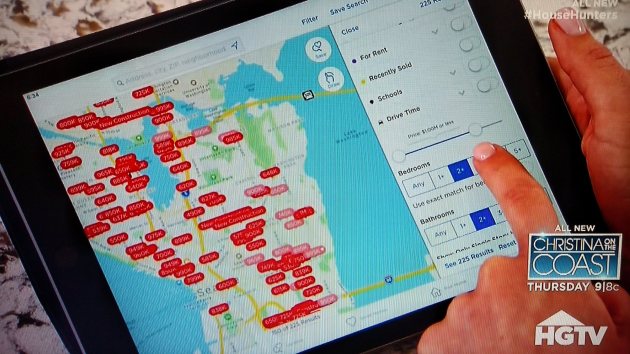
They work like this: These companies, dubbed “iBuyers,” make cash offers for your current home at an algorithmically determined “fair market price,” allowing you to take the money, buy your next home, and move out at whatever date works best for you. The transaction closes in a matter of days.

The companies then clean and fix up your old house and sell it on the open market, collecting a fee from the seller. And because the price at which iBuyers buy the house is usually not the maximum the house would fetch if it was sold traditionally, they likely make a small gain on the sale price…

Perhaps the most striking evidence of iBuyers’ influence on the real estate industry came from Keller Williams CEO Gary Keller in January. When discussing the company’s intent to launch an iBuyer program later this year, Keller told Inman “I feel like I have no choice now.”

After posting $1.33 billion in revenue in 2018, Zillow announced a three- to five-year revenue target of a whopping $22 billion, $20 billion of which was projected to come from buying and selling homes.

It will be interesting to see how much iBuyers are co-opted or acquired by traditional real estate actors or whether they will stand on their own. And will this lower costs for consumers and/or give them advantages or will it consolidate power and knowledge into different hands?

Does all of this threaten to keep moving real estate toward a commodity? This appears to be the road we are already on with the shift from thinking about American homes as places to live and anchors in a community to seeing them primarily as investments and critical parts of retirement portfolios. Imagine doing more and more of this without seeing the homes in question and with lenders and middlemen who have little knowledge of the particularities of a neighborhood or community. Algorithms can do a lot – and possibly even reveal patterns humans tied up in local details have a hard time seeing – but they may have a hard time imparting the aesthetic and lived experience of homes and locations.

Going further, iff more people are moving toward less civic engagement, more engagement with screens, and social ties primarily chosen based on family, friends, and interests (some evidence to back all of these up), perhaps it may not really matter exactly where people live as long as it is relatively close to what they want. Why would you need to visit a place or pick a specific home or neighborhood if those local ties and interactions matter little?

Could giga-mansions relieve the negative attention directed toward McMansions?

The term McMansion is likely to stick around (even if is used poorly at times) but more interest may be shifting to the giga-mansion.  A Motley Fools podcast provides some information:

First we had mansions. Then we had mega-mansions. And McMansions. Now we have giga-mansions. Yes, it’s a growing trend of massive houses usually built in the LA area on spec. They are massive, expensive, and outrageously ostentatious. Let’s see if you two can answer some trivia around some of the most expensive pieces of residential real estate on the market…

The One will be America’s largest house on the market at 100,000 square feet. It will be the most expensive private residence when it comes to market. It boasts four swimming pools, a nightclub, a room where the walls and ceiling are filled with jellyfish. It will have a 30-car gallery. Because of this price you don’t call it a garage. Of the 20 bedrooms, how many are in a separate building just for your staff?…

Let’s move on and talk about the house called Billionaire. It’s 38,000 square feet. It was America’s most-expensive house on the market when it was listed for $250 million in 2017. The property is in the exclusive Los Angeles suburb of Bel Air. It has 12 bedrooms, 21 bathrooms, three kitchens, a 40-feet James Bond-themed cinema, six bars, two fully stocked champagne cellars, and the helicopter from what 1980s television series? Rick knows this. He can’t wait to say it…

Southwick: A $1 billion lot. Now we’re going to go to The Manor. The largest home in LA was actually built in 1988 by the TV show producer Aaron Spelling and his wife Candy. The 56,000 square foot, 14-bedroom, 27-bath home originally was built for $12 million. They sold it all in a cash deal for $85 million in 2011 to the 23-year-old daughter of someone wealthy. Don’t worry about it. She renovated much of the house, since it had some very quirky spaces, including a flower-cutting room, a humidity-controlled silver storage room, a barber shop, and three rooms for doing what common birthday and Christmas activity?

One of the major critiques of McMansions involves their symbolic nature: they are associated with sprawl, wealth, and conspicuous consumption. All of these appear to be in play with the examples from the Los Angeles area cited above: a region known for cars and highways, entertainment celebrities and executives along with other wealthy people, and a constant need to stand out from the rest of the area.

But, McMansions have key differences from this supersized homes. They are generally smaller – roughly 3,000-10,000 square feet – and more often found in “typical” neighborhoods. They are often mass-produced. They are often criticized for their architecture while megahomes take more flak for their size. Perhaps most importantly, McMansions are within the reach of more Americans. Depending on the housing market, an upper-middle class household can acquire a McMansion but these giga-mansions are only for the wealthiest.

If the ultimate concern behind critiques of McMansions is their unnecessary size and flaunting of wealth, then the spread of giga-mansion might relieve some of the pressure. Granted, there will always be more McMansions but it is easy to focus on these outsized homes and their owners. Why criticize the top 10-20% of American homeowners for their McMansion choices when the giga-mansions of tomorrow constructed and owned by the top 0.1% of homeowners are so ridiculous and unnecessary?