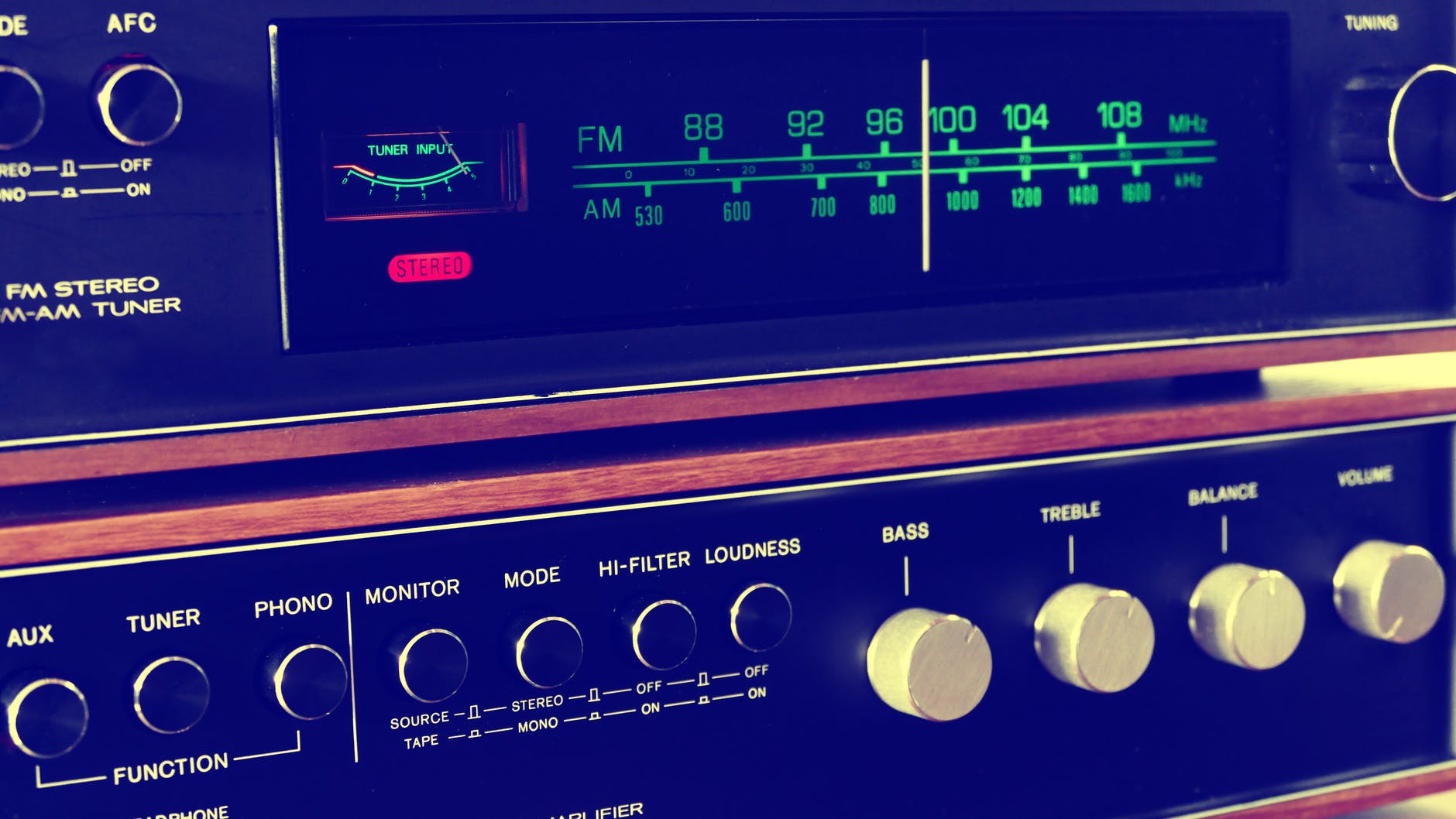
The death of Rush Limbaugh yesterday provides a reminder of the power of mass media. Limbaugh was popular and he had a devoted set of listeners. My own experience in radio plus ongoing listening makes me wonder why radio has a special ability to connect with an audience compared to other mediums. Here are some of pieces that might be involved:
-Daily mass media can connect more than more episodic mass media. Many radio shows take place at the same time each weekday. People know where it is and when to listen. Some television shows have this but many other regular cultural products occur less frequently (think television shows that used to be weekly for part of the year or now released a season at a time on streaming platforms). Daily newspapers and columnists can also do some of this.
-The radio involves a voice but no images. It is a different interaction than with television or the Internet and social media. Listening only can require a certain amount of attention to focus and at the same time allows for the possibility of doing many other things while listening.
-Talk radio in particular provides an opportunity for broadcasters to share a persona or their personality. And they often get to do this over an extended amount of time. The show might have particular content – sports talk, political talk, religious talk, etc. – but the people behind the mic might be more important than the actual topics. Today, podcasts offer some of this as does social media.
-Radios are relatively cheap, portable, and available. At least for some decades, you could take a radio almost everywhere. No Internet connection needed (though there are some features of listening to the radio via Internet). And do not underestimate the ability to listen to the radio while driving; many other forms of mass media cannot be consumed in vehicles and Americans like driving.
Of course, the era of giants in talk radio may only be a thing of the past with fewer listeners and so many other options for consumers of media. Yet, these different platforms may appeal to different people in different ways. Radio was effective for decades – and it is worth noting how much of its early development including networks, sitcoms, and detective shows became part of television – and will likely continue in some form for quite a while.
The rise of online real estate sites and apps. These have been around for years but between Zillow.com, Redfin.com. Realtor.com, Trulia.com, and more, potential sellers and buyers have a lot of easily accessible platforms. These options are now ubiquitous: people can search at any time from any location for any length of time. And now that some online listings have video tours and/or 3D models, viewers can get a good sense of what a property is like without ever getting near it.
COVID-19 adds much to existing patterns. With some people interested in moving out of cities and health risks making it more difficult to see homes, online viewing may be the primary option.
The SNL spoof targeted a particular age group – people in their late-30s – who might be in the middle of a housing dilemma. By this age, those interested in settling down somewhere may or may not have the resources (think school loans, unstable employment during COVID-19 and the last economic crisis in the late 2000s) to buy in the places they want. But, the browsing is free and all sorts of homes in all sorts of locations are available.
Americans also like to consume and compare their social status or possessions to others. With homes occupying such an important part of American mythology, these larger patterns carry over to these sectors. Browsing homes online allows for window shopping and comparisons on one of the most expensive investments. And homes are not just dwellings; they offer windows into lifestyles and neighborhoods.
Put all of these together and you get an SNL reflection on how home searching and purchasing happens today.
First, the performance of “Amazing Grace” after Joe Biden’s inauguration speech. This is a religious song regularly heard in many churches and congregations. On the song’s origins (with information on the song from Wikipedia):
Newton and Cowper attempted to present a poem or hymn for each prayer meeting. The lyrics to “Amazing Grace” were written in late 1772 and probably used in a prayer meeting for the first time on 1 January 1773. A collection of the poems Newton and Cowper had written for use in services at Olney was bound and published anonymously in 1779 under the title Olney Hymns. Newton contributed 280 of the 348 texts in Olney Hymns; “1 Chronicles 17:16–17, Faith’s Review and Expectation” was the title of the poem with the first line “Amazing grace! (how sweet the sound)”.
The song really took off in the United States and was adopted by a number of Christian denominations. But, this popularity extended beyond explicitly religious settings:
Following the appropriation of the hymn in secular music, “Amazing Grace” became such an icon in American culture that it has been used for a variety of secular purposes and marketing campaigns, placing it in danger of becoming a cliché. It has been mass-produced on souvenirs, lent its name to a Superman villain, appeared on The Simpsons to demonstrate the redemption of a murderous character named Sideshow Bob, incorporated into Hare Krishna chants and adapted for Wicca ceremonies. It can also be sung to the theme from The Mickey Mouse Club, as Garrison Keillor has observed. The hymn has been employed in several films, including Alice’s Restaurant, Invasion of the Body Snatchers, Coal Miner’s Daughter, and Silkwood. It is referenced in the 2006 film Amazing Grace, which highlights Newton’s influence on the leading British abolitionist William Wilberforce, and in the film biography of Newton, Newton’s Grace. The 1982 science fiction film Star Trek II: The Wrath of Khan used “Amazing Grace” amid a context of Christian symbolism, to memorialise Mr. Spock following his death, but more practically, because the song has become “instantly recognizable to many in the audience as music that sounds appropriate for a funeral” according to a Star Trek scholar. Since 1954, when an organ instrumental of “New Britain” became a best-seller, “Amazing Grace” has been associated with funerals and memorial services. The hymn has become a song that inspires hope in the wake of tragedy, becoming a sort of “spiritual national anthem” according to authors Mary Rourke and Emily Gwathmey. For example, President Barack Obama recited and later sang the hymn at the memorial service for Clementa Pinckney, who was one of the nine victims of the Charleston church shooting in 2015…
Due to its immense popularity and iconic nature, the meaning behind the words of “Amazing Grace” has become as individual as the singer or listener. Bruce Hindmarsh suggests that the secular popularity of “Amazing Grace” is due to the absence of any mention of God in the lyrics until the fourth verse (by Excell’s version, the fourth verse begins “When we’ve been there ten thousand years”), and that the song represents the ability of humanity to transform itself instead of a transformation taking place at the hands of God. “Grace”, however, had a clearer meaning to John Newton, as he used the word to represent God or the power of God.
The transformative power of the song was investigated by journalist Bill Moyers in a documentary released in 1990. Moyers was inspired to focus on the song’s power after watching a performance at Lincoln Center, where the audience consisted of Christians and non-Christians, and he noticed that it had an equal impact on everybody in attendance, unifying them. James Basker also acknowledged this force when he explained why he chose “Amazing Grace” to represent a collection of anti-slavery poetry: “there is a transformative power that is applicable … : the transformation of sin and sorrow into grace, of suffering into beauty, of alienation into empathy and connection, of the unspeakable into imaginative literature.”
A song so popular that it could be preformed in public and enjoyed by both Christian and non-Christian audiences.
The brief program included two songs: Amazing Grace and Hallelujah.
This quiet, devastating and hopeful memorial reminded me of the remarkable and wholly improbable journey of this song, Hallelujah, into something like a canonical song of memorial or pathos in American culture. That this should be so is actually quite odd, not least because it is not at all clear what the song, in its totality, is even about. And a number of things the song is quite clearly about … well, they are not what you’d expect in a song now treated as appropriate, uplifting and fitting for all occasions and audiences.
Mainstream or memorial versions commonly expurgate the song’s erotic imagery. But it can’t all be ironed out. This energy, rumbling rough under the simplified lyrics, gives a power and ballast even to the more sanitized versions. In any case the mixing and matching of lyrics is possible because Leonard Cohen wrote numerous different lyrics for the song. You can mix and match them and create your own version.
This song first recorded in 1984 made its way through a few singers, became widely known in the kids’ movie Shrek, has been covered by numerous artists, and was rewritten to be a Christian Christmas song.
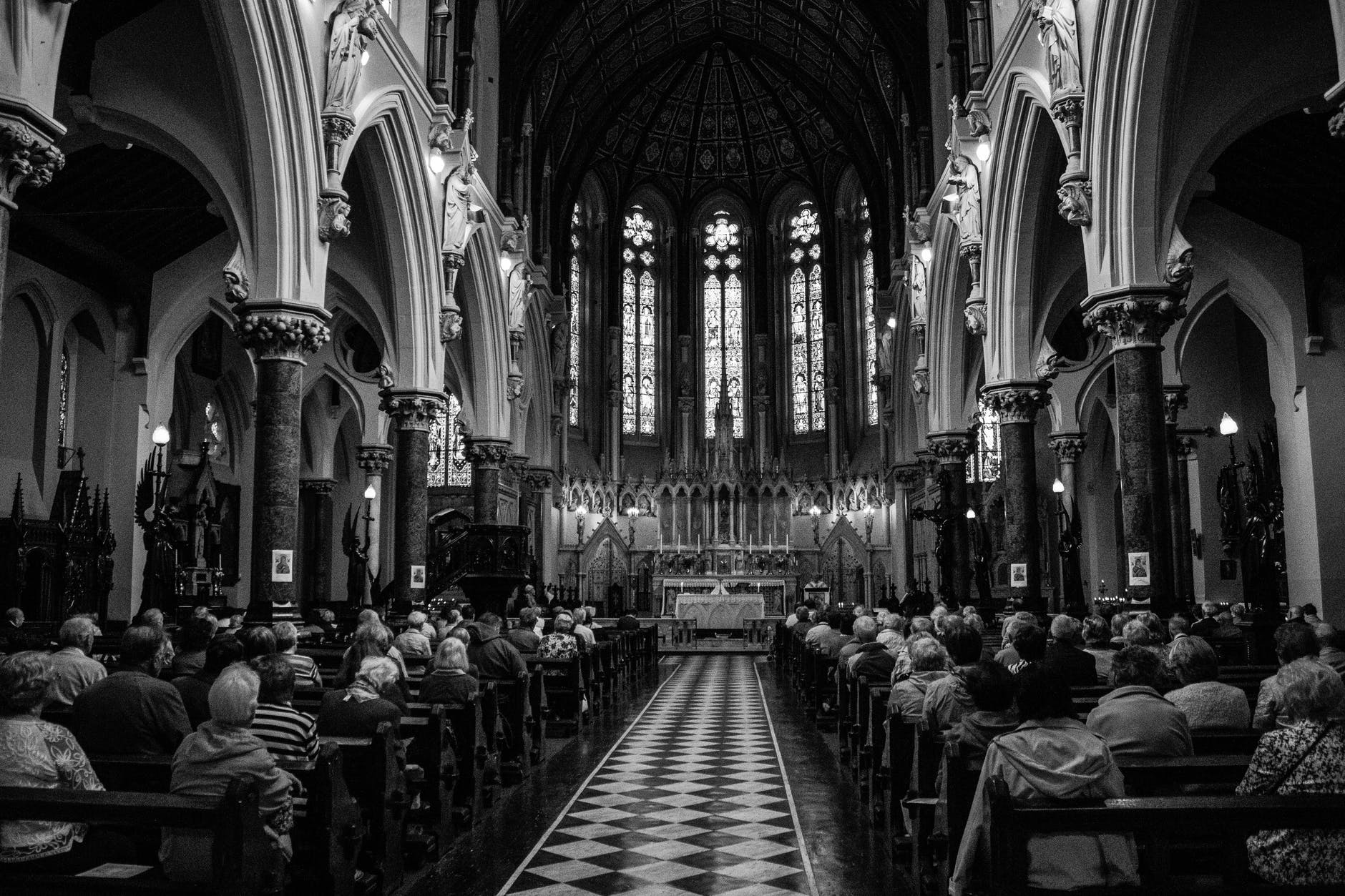
Could these two songs help prompt a spiritual experience for listeners and performers? Music does not have to be explicitly or exclusively religious to help bring people together. Could they be heard in houses of worship, on the radio, and in political settings? Christians have a history of adopting popular music and words and plenty of church songs have entered the public consciousness. Do they address universal themes as well as hint at specific religious details? Such songs could help Americans and others link what may at times seem to be disparate realms while leaving enough room for interpretation and use that it can mean different things to different people.
With “WandaVision,” Feige said that he had wanted to honor the complexity of the title characters and Wanda’s reality-warping abilities but also to leaven the story with tributes to sitcom history…
The series finds Wanda and Vision — now somehow alive — residing in suburban bliss, not entirely sure of why they are cycling through various eras of television history and encountering veteran Marvel performers like Kat Dennings (as her “Thor” character, Darcy Lewis) and Randall Park (reprising his “Ant-Man and the Wasp” role of Jimmy Woo) as well as new additions to the roster, like Teyonah Parris (as Monica Rambeau) and Kathryn Hahn (playing a perplexingly nosy neighbor named Agnes)…
“You enter a sitcom episode with the understanding it’s going to make you feel good and it’s all going to be OK at the end,” said Schaeffer, who also worked on “Captain Marvel” and “Black Widow.”
What “WandaVision” adds to this formula, she said, is an element of “creepiness — the idea of shattering that safety in a calculated way.”
The suburban sitcoms of the 1950s are often portrayed as providing a common image: the white nuclear family living happily in a single-family home. The episodes revolve around relatively minor issues that are resolved at the end of the show.
By the 1960s, there were some twists to this theme. Lynn Spigel writes of new television characters who provide an edge to the typical suburban image. Think Samantha on Bewitched who with her magic powers and odd relatives provides a new angle to the suburban sitcom.
In the late 1990s, more shows looked to push the suburban sitcom in even further – and often darker – directions. Take The Sopranos: from the outside, the family has the look of a successful suburban family living in a large McMansion in an upscale community. But, of course, the secret is that the gains are ill-gotten and the attempts to find happiness in this suburban lifestyle never coalesce.
Indeed, this darker approach to the suburban sitcom has an extended history in other mediums as well with novels, films, and other narratives suggesting something similar: the suburbs are not what they seem. These products offer a critique of the the suburbs where the American Dream is not what it seems, where all the suburban striving does not amount to much or falls apart spectacularly.
While I have not seen WandaVision, the narrative arc may then fall into familiar territory: the suburban household with a twist or dark secret is already an established genre. These may be new characters in the suburbs and it may be an expansion of the Marvel Universe but it remains to be seen how much new suburban ground it really treads.
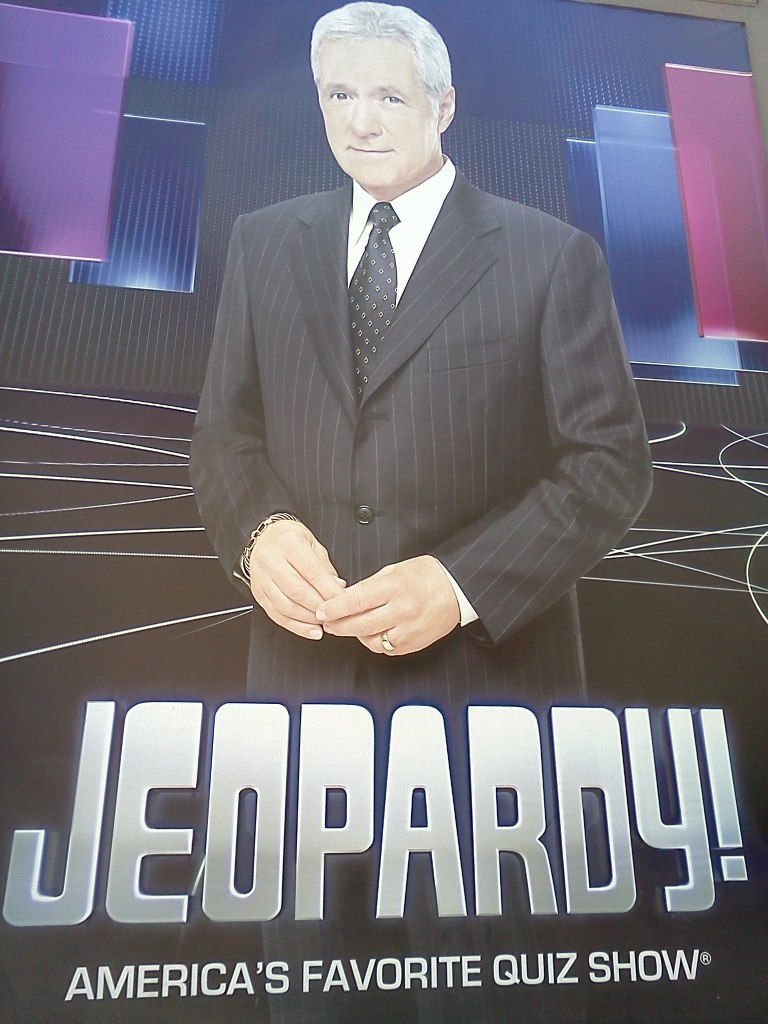
On Friday, Alex Trebek’s last “Jeopardy!” episode will air, closing his remarkable run on the show. For future anthropologists, the beloved host’s historical contribution may not be his status as trivia icon, but rather his friendly role in the show’s awkward small-talk sessions. The real test of a contestant’s mettle on “Jeopardy!” often begins after the first commercial break, when competitors put down their buzzers and tell Trebek about themselves. Described as “the oddest 2 minutes of television” by Chad Mosher, the creator of a “Jeopardy!” stories Twitter account, the anecdotes can be captivatingly bland: what does the contestant who likes telling “dad jokes” have in common with the one who was once at an “incredibly cold football game” or the other who tried to jump-start a car, only to make the cables melt? Through their narratives, these contestants are engaged in what the sociologist Harvey Sacks called “doing ‘being ordinary.’ ” The verb “doing,” in this curious formulation, suggests the work that being ordinary takes, and points to the effort involved in constructing an agreeable and innocuous social façade.
Sacks was a “conversation analyst” and a university lecturer in California until his untimely death from a car crash in 1975. With sources ranging from Nathalie Sarraute’s writing to tape-recorded telephone chats, he set out to scrutinize the everyday stories that people tell and came to see that what is even more interesting are the non-stories we most often relate. Even when we describe supposedly exciting experiences like a recent date or a sunset, we go out of our way, Sacks noticed, to report only the commonness of what occurs. In his view, we are all constantly scanning situations for ways to affirm our normalcy: “What you look for is to see how any scene you are in can be made an ordinary scene,” because this is what society rewards.
Sacks asks us to imagine if, instead of being ordinary, we were to come home from work and describe “what the grass looked like along the freeway; that there were four noticeable shades of green, some of which just appeared yesterday because of the rain.” In this case, Sacks warned, “there may well be some tightening up on the part of your recipient.” If you were to make such unorthodox reportage a habit, you might lose friends, and people might find you strange or pretentious: “That is to say, you might want to check out the costs of venturing into making your life an epic.” Sacks argued that banal speech, far from unworthy of study, offered insight into the hidden structures of the social contract…
Though the interview segments offer a reprieve from the competition’s intensity, they extend the show’s question-and-answer format and also its performative pressures. When they don’t go off the rails, what they stage is the nail-biting feat of transforming a situation of extreme social pressure into forgettable television filler. There is probably no better theorist of the coup of seeming ordinary than the sociologist Erving Goffman, whose own studies of everyday talk referenced Sacks’s. Goffman is known for his dramaturgical analysis of social interaction in “The Presentation of Self in Everyday Life,” but as important as the theatrical analogy was to Goffman’s sociology, so was his view of conversation as a “game.” In his essay “Radio Talk,” Goffman argued that the seemingly benign small talk that fills our airwaves is actually composed of a series of calculated moves and countermoves in which the slightest stumble can result in an embarrassing loss of face. He maintained that mediatized interviews mimic the bouts of informal bandying that make up our everyday lives: “Catching in this way at what broadcasters do, and do not do, before a microphone catches at what we do, and do not do, before our friends. These little momentary changes in footing bespeak a trivial game, but our conversational life is spent playing it.” Bear this game in mind during your next Zoom meeting.
We all have these moments where we are asked to describe ourselves or share something interesting about ourselves. This happens in social media profiles, when we meet new people or groups in social interactions, and when we interview for jobs. Who are you? What makes you stand out (or not)?
We have fallbacks for this. Two quick examples. In many conversations with adults, the conversation either starts with or quickly gets to the jobs or occupation of each person. “What do you do?” is not a question about how you prefer to fill your time but rather a loaded question about what job you have. Then, that information is quickly judged with the listener(s) deciding what kind of value the occupation imparts, what it might mean about a person’s personality and experiences, and so on. An interesting answer can lead to a lot of conversation while an answer perceived as less interesting can pause a conversation.
Social media profiles have some common patterns. Think of the quick bio required for Twitter. What do you list first? Which five details are most important to communicate about you or your account? In some religious circles, this starts fairly regularly with some combination of these: husband or wife | father or mother to # children (or names) | Christian (or God follower or something similar). In contrast, it would be gauche to list your net worth here or that you have been married multiple times or an annoying habit you have. If people do try to be “out of the ordinary” or “quirky” in their descriptions, there are certain ways to do that too.
The first time I remember running into this myself was during middle school. Before a competition, I was asked to describe myself. This flustered me: what does one say when I preferred to read and follow sports? I eventually said something about doing well in school and was told I could think of something better. I do not remember what I came up with. I could do better now but I would also be following the scripts referenced above.
Jeopardy! has the extra element of having bright contestants. There are people who have knowledge, education. How does one fit into the ordinary when they are already on the show as a reward for knowing things?
As the article notes, these short interactions on one game show hint at the importance of small talk and the introductions in conversations. Small talk may seem banal and introductions can be moved past. Yet, our lives are full of these small snippets that help us form impressions of people and society – even if we are just watching game show contestants on television.
To go back to the beginning, how does Gill conclude her study of poetry and the suburbs? Here is the final paragraph:
Postwar suburbia has been understood and depicted as a place where little of significance can be said, where there is a profound absence of meaning, where communication is stylized, superficial, muted almost into silence. Yet as the poems discussed in this study indicate, suburbia is replete with meaning. Its poetry is bold, innovative, and engaging – both formally and thematically – in its evocation of this space and time. Indeed, the suburbs we know are known to us, in part, because of the ways in which poetry has constituted and mediated them. In turn, this poetry shows the signs of its own discursive, spatial, and historical contexts. As Doreen Massey has argued, “Social space is not an empty arena within which we conduct our lives; rather it is something we construct and which others construct about us” (49). For Roger Silverstone, suburbia is a “geographical, an architectural and a social space,” but it should also be understood as “an idea and ideology, as form and content of texts and images and as product of a multitude of social and cultural practices” (ix). Poetry, as this book has demonstrated, plays a vital – if until now overlooked – role in these processes. It offers a startling lens through which to view suburban landscape and architecture and to understand the nuances of the suburban everyday, and it demands of us that we read it with acuity and sensitivity. In its diversity and frequent ambiguity, poetry breaks the stranglehold of polarized thinking or, what Robert Beuka calls, “our continued cultural reliance on a restrictive binary system in defining the suburban milieu” (10). The Poetics of the American Suburbs has argued that the poetry of this time and place is critical, interrogative, evocative, expansive, and suggestive in turn. Most importantly, it is a poetry that is often skilful, occasionally luminous, always intriguing. The song it sings is sometimes familiar, sometimes subtle, sometimes discordant. As I hope this book has demosntrated, it deserves a hearing, and rewards attentive listening. (Gills 2013: 181)
This is a good description of what Gills does throughout the book, analyzing both popular and more literary poetry, showing how the constraints and possibilities of poetry help lead to insights about the suburbs, and how poetry reacted to and was shaped by suburbia. I recommend the book for those interested in studying the interaction of cultural works and the suburbs.
As I reviewed this academic work, it led to a few more thoughts on patterns within the work:
One idea that emerges from a number of these texts: understanding the suburbs requires analyzing what they mean and how narratives about them develop. Cultural narratives are influential and these cultural works contribute to an ongoing conversation about what the suburbs are and how they are to be regarded. For sociologists, both the facts about the suburbs – how did they arise, how are they changing, what social forces affect life there – and the interpretation of the suburbs – what are the processes of meaning-making around them – matter.
The academic literature addresses both works that praise or celebrate suburbia and works that critique suburbia. There are many works in this latter category, particularly in more recent years.
This is truly an interdisciplinary endeavor with scholars across a number of disciplines – Communications, English, Geography, Sociology, History, and more – contributing. These different perspectives help illuminate varied aspects of the cultural works and what they mean.
Related to #2, much of the work I have seen in this employs close readings or case studies of particular works or collections of works. There is less work that takes a quantitative approach to such cultural works.
In sum, I am grateful for all of this good academic work. It has helped me think more comprehensively about the suburbs and be more aware of how cultural works contribute to and/or challenge my and our perceptions of the suburbs. I am sure the academic conversation – and the public conversation about suburbs as well – will continue as suburbs change, new cultural works are produced, and the larger social context evolves.
Parts One, Two, and Three of this series have summarized academic work on how poetry, novels, and screens (television and film) have engaged and depicted suburbs. What about popular music? While I have not comprehensively looked for academic sources regarding music in the ways I have for the other cultural mediums, I do not know of as much work in this area. At the same time, this does not mean music has not addressed the suburbs.
Starting with a broad view, the rise of mass suburbia coincides with the spread of pop and rock music in the twentieth century. Rock music arose amid the development of teenagerdom as a life stage (now in suburbs that privileged children and family life), as music that borrowed from blues music (now heard in largely white suburbs and from many white performers), and broadcast through mass media like radio and television (now in many suburban homes).
Here are some of my own ideas on this connection between suburbs and music:
-Another aspect of this possible connection is how music is produced and consumed in the suburbs. The reputation of suburbs is that they are not exactly hotspots of culture, notwithstanding the occasional community that serves as an entertainment center. Music is occasionally performed in restaurants, bars, and festivals (with a heavy emphasis around here on rock/pop cover bands at community festivals). The stereotypical garage band of teenagers working out their music would benefit from the surfeit of suburban garages. Compared to the music ecosystem in larger cities including performance spaces of various sizes, the presence of music labels, and the mixing of musical groups and settings, the suburbs may not be the liveliest music scene.
-The connection between poetry about the suburbs and music about the suburbs would be worth exploring further. If singer/songwriters or popular artists are writing for the masses, how do their words and products compare? Furthermore, the role of music in all those television shows and films about suburbs could be worth considering. Is there a stereotypical “suburban soundtrack”?
-Certain genres of music have connections to particular places. Country, as its name implies, is connected to more rural areas and the South. Hip-hop and rap music emerged from urban settings. Is there a genre or type of music closely connected to suburbs? Middle-of-the-road (MOR) pop music?
Tomorrow, I will sum up this series on cultural works and the suburbs.
At the same time, the study of other cultural products or works about the suburbs is alive and well. Today, I will profile several academic studies involving novels and the suburbs. Poetry and novels might be very different forms of writing yet there is some overlap in themes. Additionally, writing and reading a novel might be more similar to poetry than other forms of cultural products – like television and film – which I will address tomorrow. (On Thursday, I will address a fourth category of works – music – that some commonalities with poetry.)
Two scholarly books, in particular, are great introductions to examining novels about the suburbs. In the 2001 book White Diaspora: The Suburb and the Twentieth Century American Novel, Catherine Jurca looks at how such works discuss the homelessness of suburbanites even as they have succeeded by acquiring the suburban single-family house and the representation of suburbanites as a whole – “empty white people” – as a sociological fact. In the Introduction, Jurca puts these two narrative strands together:
this study examines the tendency in twentieth-century literary treatments of the American suburb to convert the rights and privileges of living there into spiritual, cultural, and political problems of displacement, in which being white and middle class is imagined to have as much or more to do with subjugation as with social dominance.
For the authors and filmmakers I discuss, the suburbs present a reflection of both the values and the anxieties of dominant U.S. culture. Their various gazes into the heterotropic “mirror” of suburbia reveal a landscape both energized and compromised by manifold cultural aspirations and fears.
These two books cover a lot of literary ground: there are a number of novels that explicitly address suburban life. Additionally, their analytical lenses help shed light on important themes and patterns. There are lived suburban experiences and then there are narratives about suburban life. Both are important and influence each other – both facts and interpretation matter for a full understanding of suburban life.
More broadly, novels are important. Long, important books are signs of culture and sophistication. I am thinking of sociologist Wendy Griswold’s work on the development of a reading culture that requires a number of elements to come into place for producers to create novels and a reading public to consume them. Perhaps it is not surprising that a number of novels and the suburbs converged given the significant social change of suburbanization as well as the development of the American literary scene. For novels and fictional works to coalesce around certain themes involving suburbia matters.
Tomorrow, several of the important scholarly works I have drawn on that analyze television and film representations of the suburbs.
“Who sings the song of suburbia? Where is its poet?” In his conclusion he answers his own question firmly and in the negative: “There is no official school or philosophy of suburban culture; just as there is not poet, artist, or sculptor to present its voice, its face, or the dimensions of its imagination” (206, 208). (Gill 2013:1)
Before I go on to read the entirety of Gill’s text, these are provocative questions about who speaks for the suburbs and whether there is a specific suburban culture. I will offer a few thoughts on these questions today and then in subsequent posts highlight several scholars whose work I appreciate in helping to answer these questions regarding cultural products and suburbs.
The question of who speaks for the suburbs is a fascinating one. Particularly in the postwar era, the suburbs are often discussed as a mass of largely white residents flocking to new subdivisions. Is there anything interesting about this mass? Later academic works help explain important variations across suburbia – like Andrew Wiese’s Places of Their Ownor My Blue Heaven by Becky Nicolaides – but it was relatively rare to even get in-depth studies of suburban life – such as The Levittowners by Herbert Gans or The Moral Order of the Suburbs by M. P. Baumgartner – as it was happening. This mass was critiqued from numerous sides for its conformity, consumerism, and exclusion, among other issues.
There is indeed a specific suburban culture. The particular way of life connected to the American suburbs involves single-family homes, an emphasis on family life, driving, exclusion, middle-class expectations and lifestyles, a preference for local government, and proximity to nature. See my seven posts on Why Americans Love Suburbs. But, I suspect this is not the target of Nicholson’s question. What great cultural works have come out of the suburbs or what ideas and works have been created with a suburban ethos? A typical look at this might instead emphasize the consuming nature of suburbs where suburbanites take in culture from elsewhere rather than focusing on what is produced in suburban settings. And if culture is produced in the suburbs, is it worth considering or is it tacky and low-brow?
Tomorrow, I will continue the discussion of academic work that examines cultural products and suburbs by focusing on works that I have drawn on in my own research on this topic.
I first took up the instrument in middle school and played regularly through college in band, marching band, and pep band. Even with this familiarity, miming playing a song was difficult. I did not know what key it was in. I could move my fingers to the music and go up or down when needed but this does not mean I was close to the right notes. As a musician, it felt strange. (Yes, if I had a little more time I could have figured out the key of the song and transposed for the saxophone.)
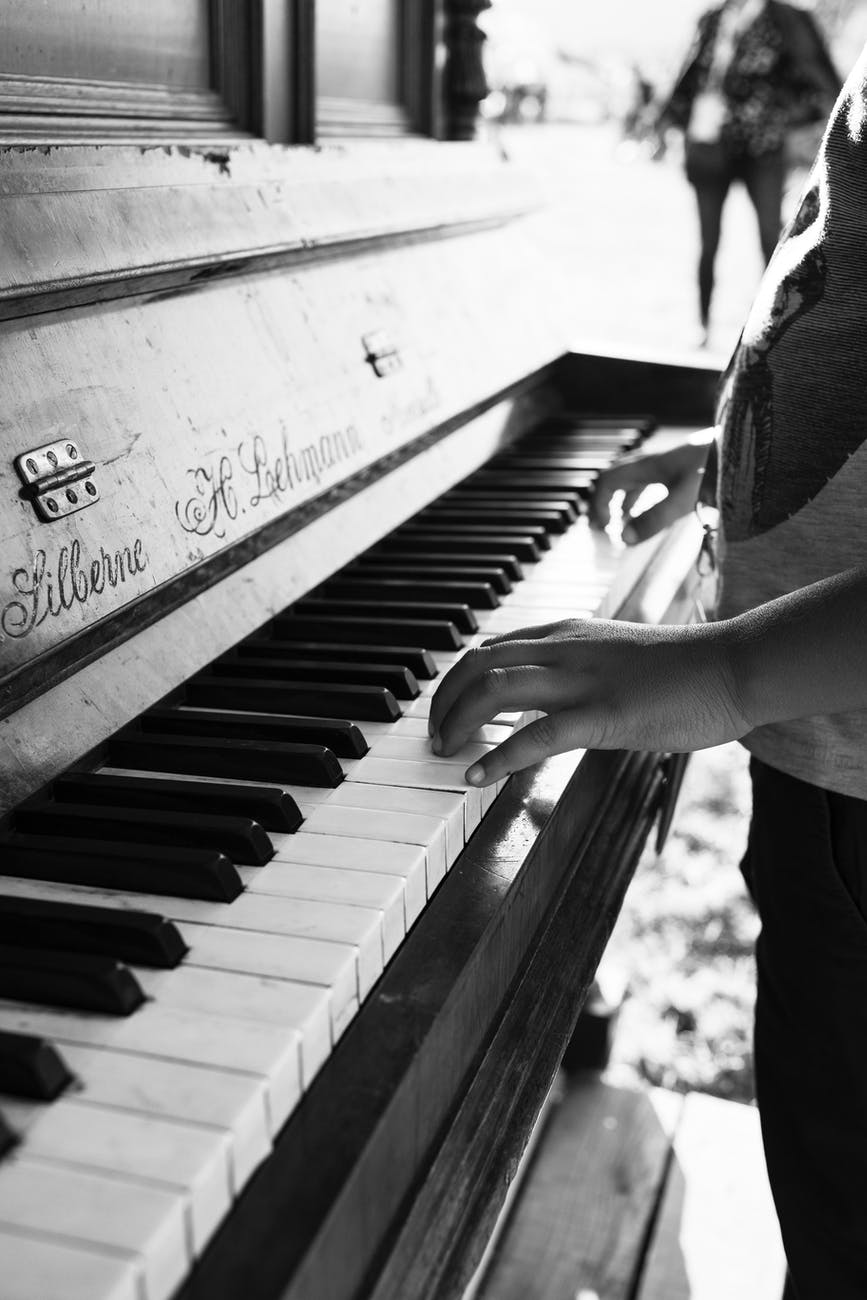
I have thought about this numerous times before with television shows and movies when they depict people playing instruments. Since I play piano and can strum a few guitar chords, these performances especially catch my attention. For piano, they often show separate shots of playing the keys and the person sitting at the piano with their hands hidden. For guitar, you can sometimes see which chords are being played or see the strumming patterns. But, this too can be hidden or obscured.
All of this reminds me that musicians like the Beatles sometimes had to mime playing their instruments on television because of particular rules. In these situations, I assume professional musicians with all of their training could play without sound. In music (and much of the rest of life), practice makes perfect, even if it is not a full performance.
Perhaps the normal viewer does not think about this much. This may matter more in films where music is at the heart of the story but if you do not watch too closely or the shots do not really show much, any issues may not be noticeable. The music generally sounds fine, regardless of what the musicians on screen is depicted as doing. And if people want to see musicians play, there are many fine music videos and recorded performances available for viewing. Still, this ended any dreams I might harbor of adding saxophone to numerous lip syncing videos – I will need to leave that to the professional musicians and cinematographers.





 Legally Sociable