Considering the environmental and material costs of Internet music

A new book considers what it takes to record, produce, sell, and consume music in today’s world:

Photo by Vlad Bagacian on Pexels.com

Listening to music on the Internet feels clean, efficient, environmentally virtuous. Instead of accumulating heaps of vinyl or plastic, we unpocket our sleek devices and pluck tunes from the ether. Music has, it seems, been freed from the grubby realm of things. Kyle Devine, in his recent book, “Decomposed: The Political Ecology of Music,” thoroughly dismantles that seductive illusion. Like everything we do on the Internet, streaming and downloading music requires a steady surge of energy. Devine writes, “The environmental cost of music is now greater than at any time during recorded music’s previous eras.” He supports that claim with a chart of his own devising, using data culled from various sources, which suggests that, in 2016, streaming and downloading music generated around a hundred and ninety-four million kilograms of greenhouse-gas emissions—some forty million more than the emissions associated with all music formats in 2000. Given the unprecedented reliance on streaming media during the coronavirus pandemic, the figure for 2020 will probably be even greater.

The ostensibly frictionless nature of online listening has other hidden or overlooked costs. Exploitative regimes of labor enable the production of smartphone and computer components. Conditions at Foxconn factories in China have long been notorious; recent reports suggest that the brutally abused Uighur minority has been pressed into the production of Apple devices. Child laborers are involved in the mining of cobalt, which is used in iPhone batteries. Spotify, the dominant streaming service, needs huge quantities of energy to power its servers. No less problematic are the streaming services’ own exploitative practices, including their notoriously stingy royalty payments to working musicians. Not long ago, Daniel Ek, Spotify’s C.E.O., announced, “The artists today that are making it realize that it’s about creating a continuous engagement with their fans.” In other words, to make a living as a musician, you need to claw desperately for attention at every waking hour…

Devine holds out hope for a shift in consciousness, similar to the one that has taken place in our relationship with food. When we listen to music, we may ask ourselves: Under what conditions was a particular recording made? How equitable is the process by which it has reached us? Who is being paid? How are they being treated? And—most pressing—how much music do we really need? Perhaps, if we have less of it, it may matter to us more.

A full consideration of the ethics of music production and sales could raise a number of concerns. In addition to the environmental issues, how about how musical acts are treated? Who profits from streaming? How many people in the music industry come out in the end as better people?

In a non-COVID-19 world, it seems like an answer would be to support local live music. Even though live shows take up space and energy, if the musicians do not have to travel far, the audience is taking it all in without any recording and equipment for listening on their own standing in the way, and there is a positive collective spirit, this might be the ideal. This shifts the attention away from music as a commodity – I can own or stream a tremendous amount of music – versus music as an experience. Alas, this might be hard to do even without a pandemic given propensities toward large tours (particularly the mega-tours of the most famous acts) and lots of travel.

Thinking beyond music, this line of argument highlights how many of the direct outcomes or effects of consumption or actions are even further removed for people when information, products, and experiences are put through the Internet. If I am streaming, I may know the data comes from somewhere. But, how many people have seen a data center, let alone have some idea of what is involved?
Sundown towns receiving attention through show “Lovecraft Country”

A new HBO show highlights the little-known but widespread phenomena of sundown towns in Northern states:

“The first thing you need to know about sundown towns, and what Lovecraft Country gets right, is it’s not a Southern phenomenon,” Loewen tells Yahoo Life. “They’re all over the place.”

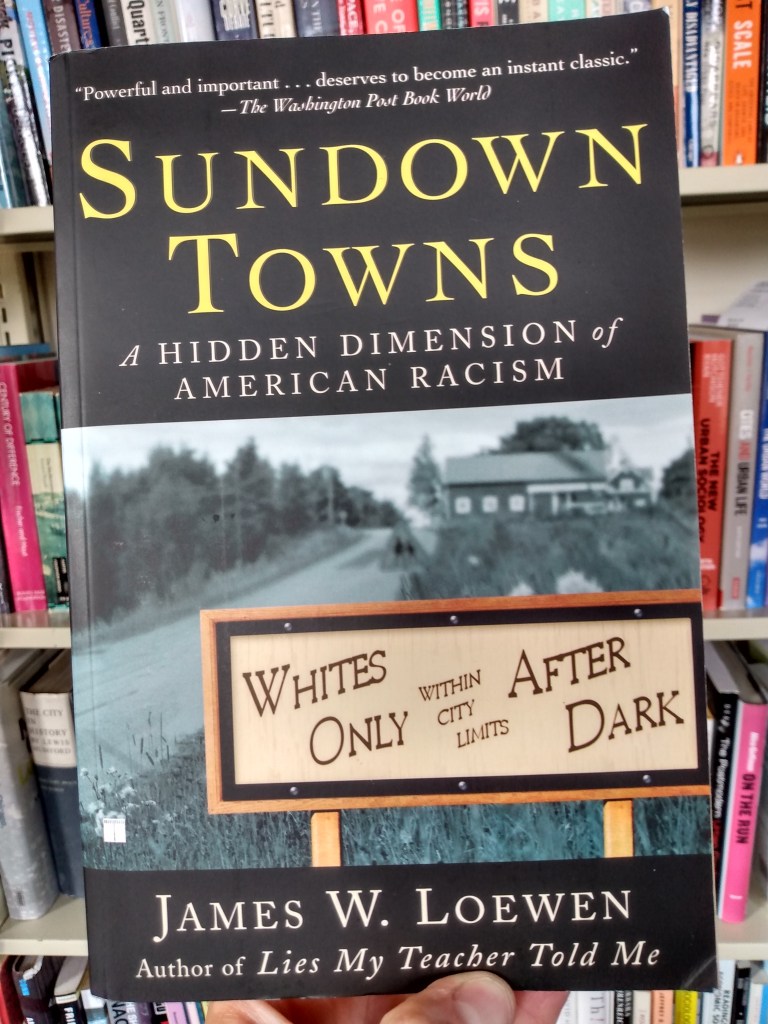
In his book, he writes, “Between 1890 and 1960, thousands of towns across the United States drove out their black populations or took steps to forbid African-Americans from living in them, creating ‘sundown towns,’” explaining that these towns “are (or were) all white by design,” and adding that, at least in part, “these facts remained hidden because of our cultural tendency to connect extreme racism with the South.”

In 2019, Heather O’Connell published a paper in the journal Sociology of Race and Ethnicity called “Historical Shadows: The Links between Sundown Towns and Contemporary Black-White Inequality.” In it, she wrote that “sundown towns are a key, yet often invisible, piece of our history that reshaped dramatically the social and demographic landscape of the United States,” and argued that these towns are “(primarily) a thing of the past.” But just last month, author Morgan Jerkins wrote regarding sundown towns, “With the rise of hangings of Black men across the nation this summer, I’m not so sure anymore.”…

Loewen says that although Black people are beginning to live in areas that were once sundown towns, they still suffer from the residual effects of such violent segregation, which he calls “second-generation sundown towns.” He notes that some of their key characteristics are “an overwhelmingly white police force that engages in [Driving While Black] policing and an overwhelmingly white teaching staff,” and names Ferguson, Mo., where Black teenager Michael Brown was killed in 2014, as one of these.

Loewen found most of these communities did not have formal signs or regulations that told non-whites that had to be out of town after dark. As I noted in a recent post, making certain forms of discrimination illegal does not necessarily lead to whites wanting to live near other people or even come into contact with others as there are other means of keeping people out.

The article above also hints at how places today understand or enact these past sundown policies. My research on suburban communities suggests a past sundown status could be unknown. This makes sense: some communities would not want to broadcast this today and local histories tend to emphasize positive moments in a community’s history. Perhaps more local residents will work to make these histories known. Even if better-off suburbs today have goals and/or means to keep certain people out, it would not be said so brazenly as that might threaten their status.

More broadly, Loewen’s work focuses on portions of Americans history regularly ignored or intentionally covered up. With his work on textbooks, monuments, and sundown towns, Loewen was ahead of his time in pointing out how Americans do not cover issues of race as well as other ignoble parts of the past.

When a pie chart works for analyzing the lyrics of a song, Hey Jude edition

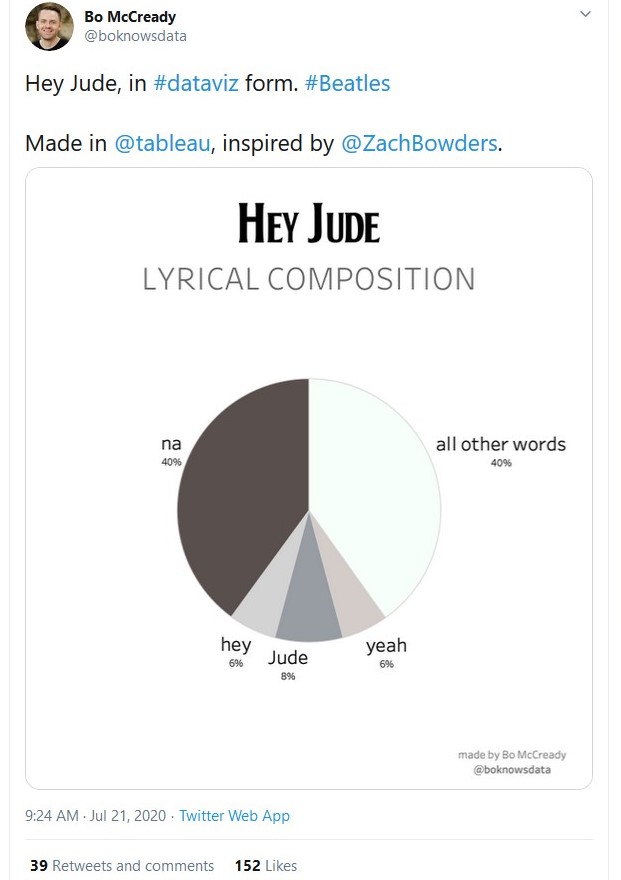
Earlier this week, a data visualization expert presented a pie chart for the lyrics of The Beatles’ hit “Hey Jude”:

HeyJudeLyricsPieChart

Pie charts are very effective when you want to show the readers that a large percentage of what you are examining is made of one or two categories. In contrast, too many categories or not a clear larger category can render a pie chart less useful. In this case, the word/lyrics “na” makes up 40% of the song “Hey Jude.” In contrast, the words in the song’s title – “hey” and “Jude” – comprise 14% of the song and “all other words” – the song has three verses (the fourth one repeats the first verse) and two bridges – account for 40%.

This should lead to questions about what made this song such a hit. Singing “na” over and over again leads to a number one hit and a song played countless time on radio? The lyrics Paul McCartney wrote out in the studio sold for over $900,000 though there are no written “na”s on that piece of paper. Of course, the song was written and performed by the Beatles, a musical and sociological phenomena if there ever was one, and the song is a hopeful as Paul aimed to reassure John Lennon’s son Julian. Could the song stand on its own as a 3 minute single (and these first minutes contain few “na”s)? These words are still hopeful and the way the Beatles stack instruments and harmonies from a relatively quiet first verse through the second bridge is interesting. Yet, the “na”s at the end make the song unique, not just for the number of them (roughly minutes before fading out) but the spirit in which they are offered (big sound plus Paul improvising over the top).

Thus, the pie graph above does a good job. It points out the lyrical peculiarities of this hit song and hints at deeper questions about the Beatles, music, and what makes songs and cultural products popular.

Considering what we know about the broad sweep of suburban TV shows

An Atlas Obscura piece on Levittown begins with a summary of suburbs on television:

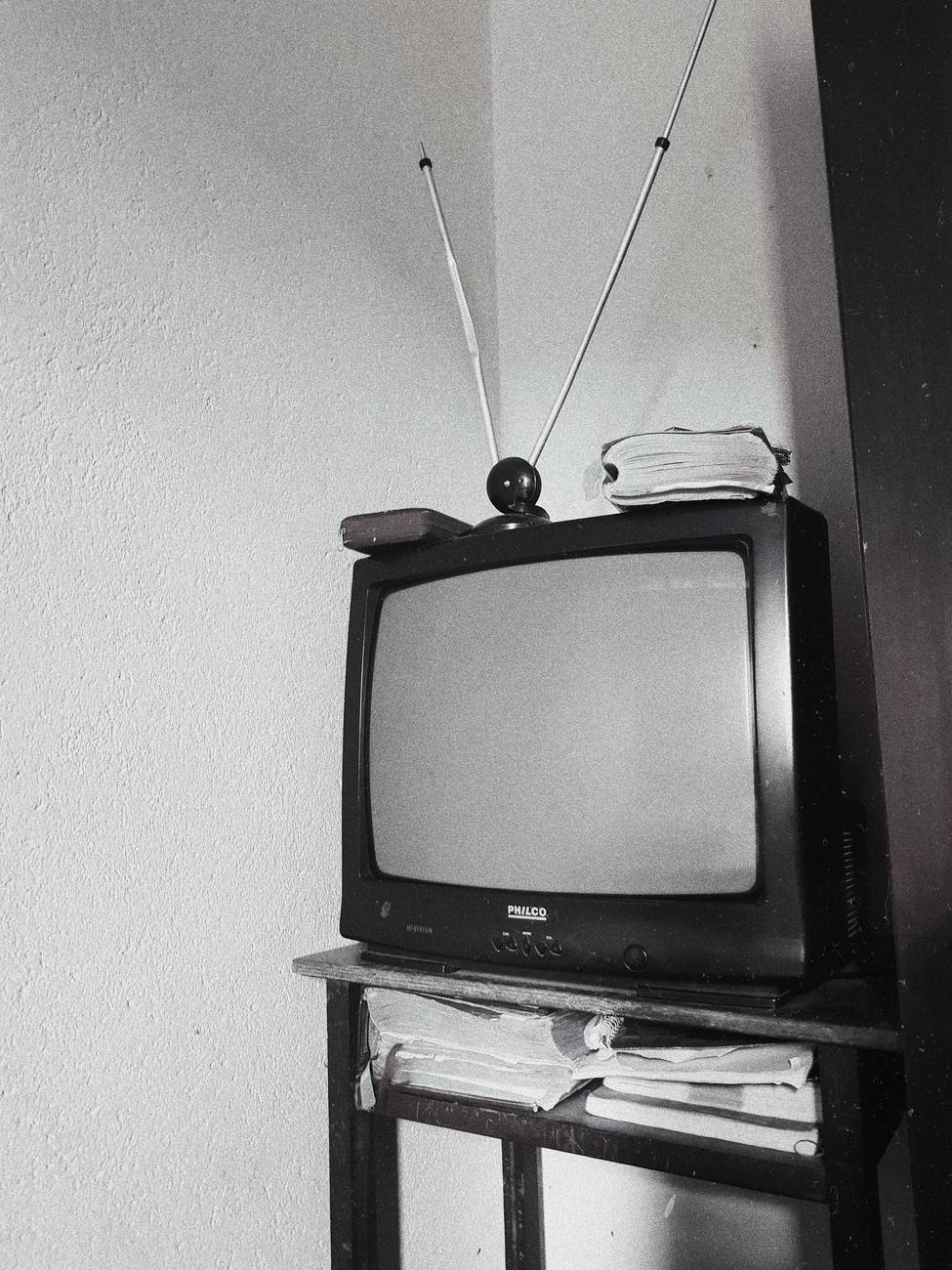
gray scale photo analogue of television

Photo by Andre Moura on Pexels.com

From the air, the homes fan out like intricate beadwork. For decades, America’s suburbs have been a popular setting for television shows, from Leave It To Beaver* to Desperate Housewives, chronicling entertaining trivialities against the backdrop of meticulously shorn lawns, the drifting smoke of barbecues, the infrastructure of cars and roads: a pleasantly domestic—but fraught—version of the American dream.

There is no doubt about the claim in the second sentence: “America’s suburbs have been a popular setting for television shows.” Today, television viewers can still find new suburban sitcoms that play with the 1950s formula (actually begun in radio) of a happy nuclear family with plenty of resources working through entertaining yet relatively low-level issues. And as noted at the end (and developed by numerous scholars – I would recommend starting with the work of Lynn Spigel), the television image of suburbs was too pleasant and reinforced a well-off white image of the suburbs.

At the same time, I have published two articles on television in the suburbs and they contribute to a more complicated story of suburbs on television. In my article “From I Love Lucy in Connecticut to Desperate Housewives’ Wisteria Lane: Suburban TV Shows, 1950-2007,” I find that suburban-set shows never dominated the most popular American TV shows. Although such shows might be familiar, common, and live on in memories connected to a different era, they are not the only places Americans see on television. Take as one example the Brady Bunch: it may have been watched for millions in syndication, it may have particularly influenced younger viewers, and it had an iconic house but it never was a Top 30 television show. The suburban TV show is well-known but how influential they are is debatable.

Similarly, more recent suburban TV shows have truly tweaked the format. Lynn Spigel points out that twists to the typical format started early on while more recent shows feature suburban lifestyles from a different point of view (thinking of Black-ish, Fresh Off the Boat, and American Housewife off the top of my head). I wrote “A McMansion for the Suburban Mob Family: The Unfulfilling Single-Family Home of The Sopranos” and considered this critically-acclaimed and popular show set in suburban New Jersey. It has a similar set-up to 1950s suburban shows – the successful white nuclear family living in a big suburban house – but ultimately suggests all of this is an illusion as Tony Soprano’s mob dealings undergird and undercut the family’s attempts to live a normal suburban life. The Sopranos is not the only show to do this; others feature other family structures, deviant behavior, and alternative routes into and out of the suburban dream.

At this point, have television shows covered all of the stories of American suburbs? No. Is there still a typical format? Yes. Have creators played around with the typical format to present other stories? Yes.. Do Americans want to watch suburban TV shows? Yes and no.

Wait, is that an Ace Hardware in a Walgreens or CVS building?

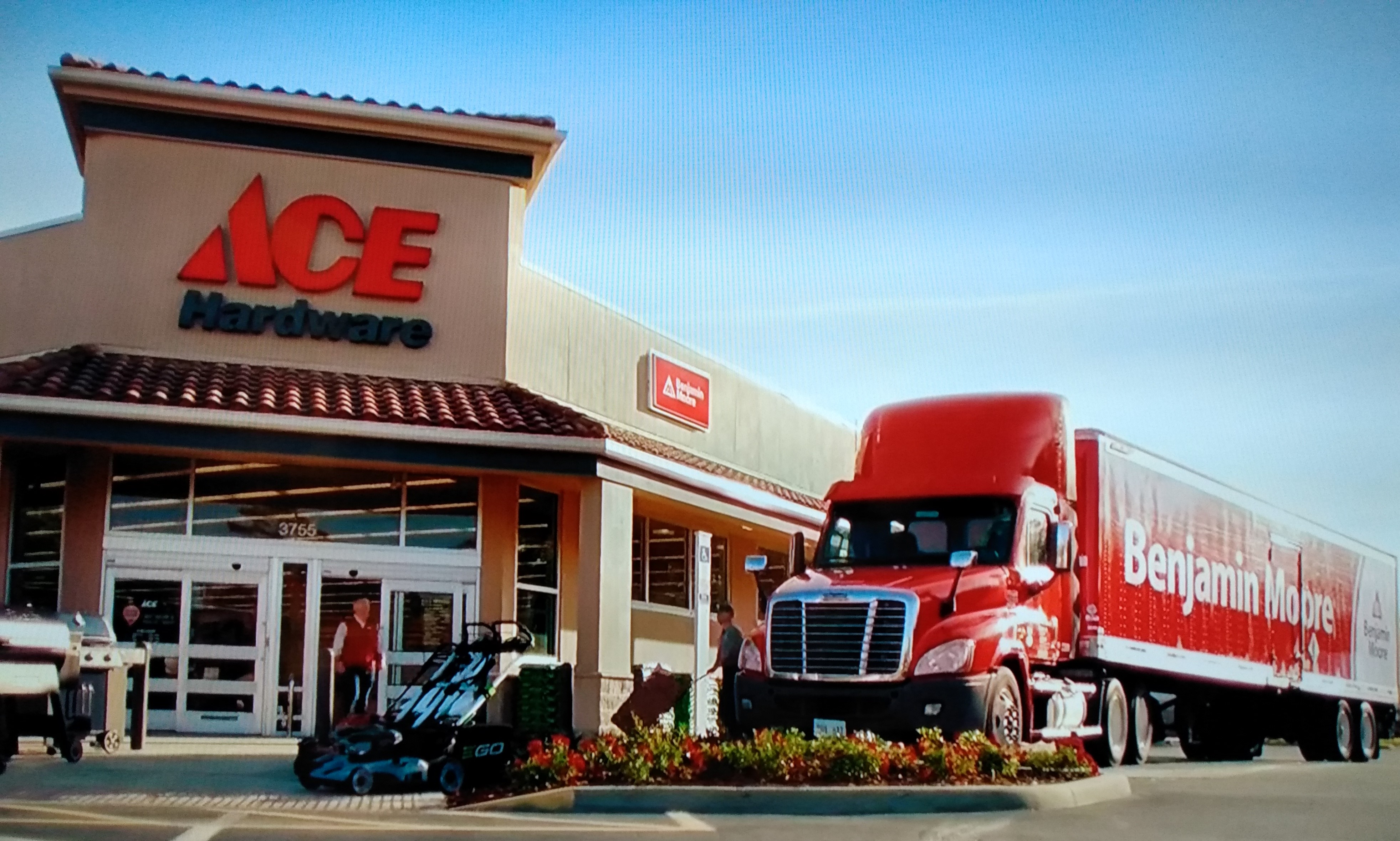
I recently saw a commercial for Ace Hardware touting that they sell Benjamin Moore paint. But, the image of the their building stopped me from paying attention to paint:

AceBuildingJul20

This does not look like any Ace Hardware building I have seen before. Instead, it looks like it used to be either a Walgreens or CVS. The building structure says chain drugstore: dual automatic doors at the front, the angled entryway, the high windows on the sides. The few glimpses of the inside in the commercial look similar to a drugstore (even if it is hard to imagine paint at the front of a Walgreens.)

Did Ace take over a former drug store building and then use it in the commercial? Or, is this a backlot creation? I found a Florida Ace commercial that features the same structure in the beginning.

Brands have a whole set of items that go with them: a logo, a jingle, a slogan, colors, and buildings. The buildings might get less attention – they are not in radio commercials, they do not often feature in print ads, and videos may or may not included interior and exterior shots – but they matter for the brand and the experience. I imagine many American consumers could drive by empty malls, strip malls, and shopping areas and identify the stores that used to be in the building without any signs or lettering present. Many of them have a similar look across the United States, even if they occasionally try to “fit in” with local styles, meet local guidelines, or embody more uniqueness.

Seinfeld on the suburbs (and city)

I have watched a few episodes of Comedians in Cars Getting Coffee. I recently saw the opening episode of Season 4 where Jerry Seinfeld talks with Sarah Jessica Parker that included Seinfeld discussing the suburbs:

I grew up in the suburbs, didn’t like it — always wanted to live in the city. Now, I want to live in the suburbs.

This could be the story of many Americans. Jerry Seinfeld was born in 1954, the era of a postwar population boom and mass suburbia. Millions grew up in new and expanding suburbs organized around single-family homes and driving. At some point, Seinfeld was drawn to the city where I’m guessing comedy and entertainment possibilities beckoned. His iconic television show Seinfeld revolved around quirky New York characters doing city things. Yet, whether he was in the suburbs or cities, he wanted to be elsewhere.

Seinfeld’s line in the episode is enhanced both three features of the episode: the 1976 Ford Squire station wagon Parker owns and loves, the discussion Parker and Seinfeld have about their growing up in the suburbs (with Parker just outside the suburban Baby Boomers but sounding like she had some similar experiences), and they drive out of Manhattan to the suburbs.

This could simply be the case of the grass is always greener on the other side. Seinfeld and Parker seem caught up in some nostalgia about simpler times. Or, it might hint at a larger conundrum in American life for many residents: is the suburban or urban life preferable? The big city offers cultural opportunities, jobs, unique communities, and often an urban identity. The suburbs offer private space, perceived safety and opportunities for kids, the American Dream.

There may even be places that offer some of both. New York City, Chicago, Los Angeles, and numerous other major cities offer urban residential neighborhoods that have single-family homes where urbanites can escape to private dwellings and still be close to the urban excitement. Or, there are some suburbs, often inner-ring suburbs, with denser residences and downtowns, that feel more lively than the stereotypical suburban bedroom community.

This also gets to the crux of Seinfeld as a show. While it was massively popular and helped lead to a run of popular television shows on network television in the 1990s, Seinfeld’s quote above makes me wonder: is it a critique of cities or is it a celebration of them? Just as the characters turn out in the series to now be nice people, how does New York City fare in the end? The individual characters are not happy or content people; is this because of their personalities (the types that would never be happy anywhere) or is it provoked by the setting? Jerry lives in the city but the city always presents problems, from people who get in their way to unusual settings.

Even though these might just be television shows and personal memories, how these are later interpreted – positive sentiments regarding the suburbs or city? – can later influence whether Americans pursue a suburban or urban future.

Americans watching more TV during COVID-19

Nielsen reported in 2018 that Americans consume on average over 11 hours of media a day, with over four hours a day of television viewing. Several sources suggest people are watching more TV than ever during COVID-19.

From Comcast:

The average household is putting in an extra workday’s worth of viewing each week – watching 8+ hours more per week than they were in early March, going from approximately 57 hours a week per household to 66 hours…

Since the start of COVID, these distinctions have blurred and weekdays are seeing viewing levels and trends akin to the weekend. As a matter of fact, in the past two weeks, Monday has become a more popular day to watch television than Saturday.

From the Washington Post:

Explosive demand for TV content led almost 16 million people to sign up for Netflix — more than double what the company predicted before the Covid-19 outbreak. The extended time at home also has been a chance for consumers to take new apps out for a spin, including Disney+, Apple TV+, Quibi and Comcast Corp.’s Peacock. Disney+ has added 28 million subscribers since December. Meanwhile, as the recession causes consumers to tighten their budgets, pricey cable-TV bills will be on the chopping block. Already last quarter, the big four pay-TV providers saw an exodus of nearly 2 million customers, with AT&T Inc.’s DirecTV accounting for almost half of those cancellations.

The desire to save money is boosting interest in free streaming-video services, such as Pluto TV and Tubi, that are funded by advertisers. Pluto TV’s growth proved to be the biggest bright spot in ViacomCBS Inc.’s quarterly results, as the cancellation of the NCAA March Madness tournament crushed traditional network ad sales

From the Denver Post:

Ever since city and state stay-at-home orders abruptly arrived with social distancing in mid-March, Denverites’ TV-viewing plus internet-connected device TV usage (as Nielsen calls it) has jumped up to 20% over comparable periods in the previous weeks.

Local TV stations also have become many viewers’ go-to source for information about the coronavirus and COVID-19,  reversing a trend that saw sharp declines in local news viewership in recent years. In the top 25 markets, local news experienced a 7% viewership lift between early February and the week of March 9. Among people 25-54, the spike was more than 10%, and 20% for people aged 2-17, Nielsen reported.

In total, the biggest weekly viewing increase across the country — when compared with the same period last year — occurred the week of April 6, Nielsen data showed.

Several thoughts on this:

  1. This all makes sense: people are home more and television is one of the top non-work activities for Americans. Even in the age of Internet, social media, and smartphones, television is a force to be reckoned with.
  2. This adds up to a lot of television on a daily and cumulative basis. For those worried about its effects, when people have more time, they still turn to television.
  3. This is not necessarily all good news for television networks and content creators. Advertising revenues are tough to find and cord-cutting, connected to unemployment and economic uncertainty, is up.
  4. It will be interesting to see what happens with long-term viewing patterns. COVID-19 restrictions could last a while in some places and fear about going out in public could continue even longer. Does this mean TV viewing will be up for a while? If so, is there a way for content creators, advertisers, and others to capitalize on the opportunities? Or, imagine a public campaign that pushes other activities beyond sitting in front of a television or smartphone screen (unlikely, I admit)?

The most McMansiony residence on Modern Family

Adding to earlier posts on the details of the three primary residences on Modern Family and the way the show was successful even with three McMansions, this post considers which home is the most McMansiony.

https://www.housebeautiful.com/design-inspiration/house-tours/a23472261/abc-modern-family-house-design/

To make this decision, I am working with the four traits of McMansions I developed: size, relative size, poor architecture/design, and a symbol for other American problems.

The Pritchett House: this is the biggest home at over 6,000 square feet. The relative size is hard to judge since the neighboring homes are almost never seen (I cannot recall seeing them). The home is built in a modern style with big windows and some strange angles. There is a good-sized pool in the backyard. With its size and design, the home could definitely be considered for the wealthy and Jay Pritchett is a successful business owner.

The Pritchett=Tucker home is in a more Mediterranean style (title roof, stucco, balcony, some arched windows and an arched doorway). There is a round turret in the middle with the doorway. Cam and Mitchell have the least space (since they only occupy the first floor on the show). Again, we do not have much of a sense of the surrounding neighborhood since other homes are rarely shown. This is easy to select as the least McMansiony home, at least as presented on the show as a oe story dwelling.

The Dunphy home is nearly 3,000 square feet and built to look like a traditional home with its white picket fence, covered entryway, and front entrance that leads to a hallway as well as a staircase to the bedrooms upstairs. The home seems to fit in of what we see of the neighborhood; we see more of the Dunphy neighborhood than any of the other homes. Phil and Claire are portrayed as typical parents who with three kids are just trying to help their kids be successful and keep their sanity at the same time.

Based on my definition and what we see on the show, I think the home of Jay and Gloria Pritchett best fits the bill of a McMansion. It is large. All that space for a family of four. (When the whole family gathers there, it looks like they all fit easily.) It is the most expensive of the homes. It has newer features plus a pool. The architecture is unique though not necessarily garish – this could depend on one’s view of more modernist homes. As the patriarch with his second family, Jay clearly has plenty of resources (and there are other hints of this on the show as well).

Perhaps a more interesting question is whether the Dunphy home is really a McMansion. It is a larger than average home. It costs quite a bit, though this is due more to its metropolitan market and its location. The home does not look garish on the outside; the proportions may be off, the entryway covering is large, and there are multiple gables but it does not scream ostentatious. Furthermore, the show does not portray the family as evil or overly-wealthy McMansion owners; they are a typical sitcom family. Given all of this, I am on the fence about calling this home a McMansion even as a majority of Americans could not live in such a home in that real estate market.

More on the McMansions on Modern Family

Following up on yesterday’s post, here are some more details on the main residences featured on Modern Family and which one I think qualifies as the most McMansion-y. (This post draws on “Stalking from Los Angeles: Houses from Modern Family” – denoted as SfLA below, House Beautiful – denoted as HB below, and the Modern Family Wiki – denoted as Wiki below.)

  • Phil and Claire Dunphy’s house.

“Phil is the only one working in the Dunphy family and as a realtor he’s doing very well. The Dunphy house is worth almost $1.8 million, according to Zillow.com.” (SfLA)

“Phil and Claire’s house is a little more traditional, almost as if it’s ripped directly from an early 2000’s catalog. And that was exactly the goal: The space is supposed to be very comfortable and lived in, with a vibe that’s “Pottery Barn meets Restoration Hardware,” production designer Richard Berg told Architectural Digest back in 2012.” (HB)

“It is a detached, suburban home with two living rooms, kitchen/dining room, 2 bathrooms, 4 bedrooms, and a garage. Outside it has both a front and back garden with a trampoline.” (Wiki)

  • Jay and Gloria Pritchett’s house.

“According to Zillow.com Gloria and Jay’s house in Brentwood is currently worth more than $8 million. This 6,359 square foot (590 square meters) single family home has 5 bedrooms, 6 bathrooms and a pool.” (SfLA)

“Fun fact: That exterior is an actual, two-story house in Los Angeles’s Brentwood neighborhood, though most of the filming is done on a soundstage. The Modern Family production team had built “80 percent” of the set before finding the perfect house to serve as its exterior, so they had to go back and change its windows and layout to match, Berg said.” (HB)

“It seems to be the largest and grandest house of the three families, as Jay earns a lot of money from his job. Contains 2 floors, a living room, 1 kitchen, 3 bedrooms, 1 bathroom, and a garage…Outside there’s a front garden and a huge pool that is first seen in “The Incident“, and is frequently seen ever since…The real house is located in Brentwood, 15 minutes away from the house used for Mitch and Cam. There is a whole extra wing of the house that is not show in the shots of the house for the show.” (Wiki)

  • Mitch Prichett and Cam Tucker’s house.

“Cameron’s and Mitchell’s house is very near to the Dunphys (well, for L.A., of course). Their house has 4 bedrooms and 2 bathrooms. Its worth: $1.3 million (source: Zillow.com).” (SfLA)

“Mitchell and Cameron’s apartment, with its villa style and ivy snaking up the walls, definitely caught people’s attention. It’s a little more romantic, and even though their home would mean settling for less square footage (they live in the ground-floor apartment of the two-story, technically), their interiors tend to be a little more upscale and collected over time. “We saw the couple as being new to the parenthood plateau and fresh off the plane from years of travel and singledom,” Berg told the magazine.” (HB)

“Unlike The Dunphy House or The Pritchett House, it only has one floor, the upstairs is open for rental, revealed in Slow Down Your Neighbors. Their floor contains a living room, 1 kitchen, 1 bathroom, 2 bedrooms, and a garage. It is revealed in “Mistery Date“, that Lily’s bedroom was previously Mitchell’s home office, but they had to give it up for her room. Outside it has both a front and back garden..” (Wiki)

In summary:

The homes are all large and expensive, located near each other west of downtown Los Angeles, are meant to reflect the characters that live there, and have recognizable exteriors that are then recreated on sets where the interior scenes are shot.

Tomorrow, I will compare how the features of each home match up traits of McMansions. In other words, which Modern Family dwelling is the most McMansion-y?

Modern Family a successful TV show for taking place in McMansions

McMansions do not have a positive reputation yet they can serve as the primary setting for popular television shows. For example, Modern Family had a successful run and featured three large homes:

The path of the mockumentary series arcs from a trailer park in Nova Scotia to a McMansion in Los Angeles. In 2001, the Canadian cult comedy Trailer Park Boys inaugurated a soon-to-be-ubiquitous style of show: deliberately messy, handheld camera work paired with confessional interviews and presenting scripted fiction in the style of candid reportage. In 2020, the ABC megahit Modern Family wound down after 11 seasons and 22 increasingly aggravating Emmy wins. Between those two events lies the rise and fall of a genre that was not reality TV, but came up alongside it and echoed its conventions.

Since the rest of the article is more about mockumentaries as a genre than about the residences of main characters in such shows, I will go on the McMansion tangent regarding Modern Family. Here is what is unique about the McMansions on the show:

1. The McMansions are not objects of derision or mockery. The genre may lend itself to this but Modern Family sought to end episodes and story lines with feel-good family togetherness. The characters were portrayed as goofy or quirky suburbanites who otherwise lived normal lives. The McMansion is the center of family life and good things result for the family that lives there. (Compare this to many recent portrayals of troubled families that live in McMansions – see examples here and here. Or, consider the McMansion on The Sopranos.)

2. The homes are all clearly large and their architecture is unique in different ways: Cam and Mitchell’s home has a turret (and supposedly has an upstairs apartment), Jay and Gloria’s home is more modernist, and Phil and Claire’s home tried for a traditional look. In other words, the show displays the variety of McMansions.

3. These are not just large homes; they are expensive homes in an expensive housing market. The Dunphy home went on the market several ago with a price tag over $2 million. The homes are portrayed as normal yet the houses are not within the reach of many viewers.

4. There is little doubt that Modern Family was successful: 11 seasons? 22 Emmys? A long life in syndication? And it happened even with the consistent presence of McMansions, homes critics would say symbolize all sorts of large American problems. Did the show work in spite of the homes? Was it all just one big wink and nod about the characters and their homes?