Leaning into “Everywhere else is Cleveland”

A recent ad from the New Orleans Police Department tried to set their city apart from other cities, namely, Cleveland:

Photo by DAVID Mercado on Pexels.com

The NOPD posted the commercial—”Everywhere Else Is Cleveland”—to its social media accounts at 9 a.m. Wednesday…

“Everywhere Else Is Cleveland”—which features women, people of color and members of the local LGBTQ community—was commissioned by the foundation as part of a broader recruitment push to help fortify the city’s shrinking police force. To broaden their applicant pool, the department recently relaxed restrictions around past marijuana use, credit scores and physical appearance—including tattoos, facial hair and nail polish.

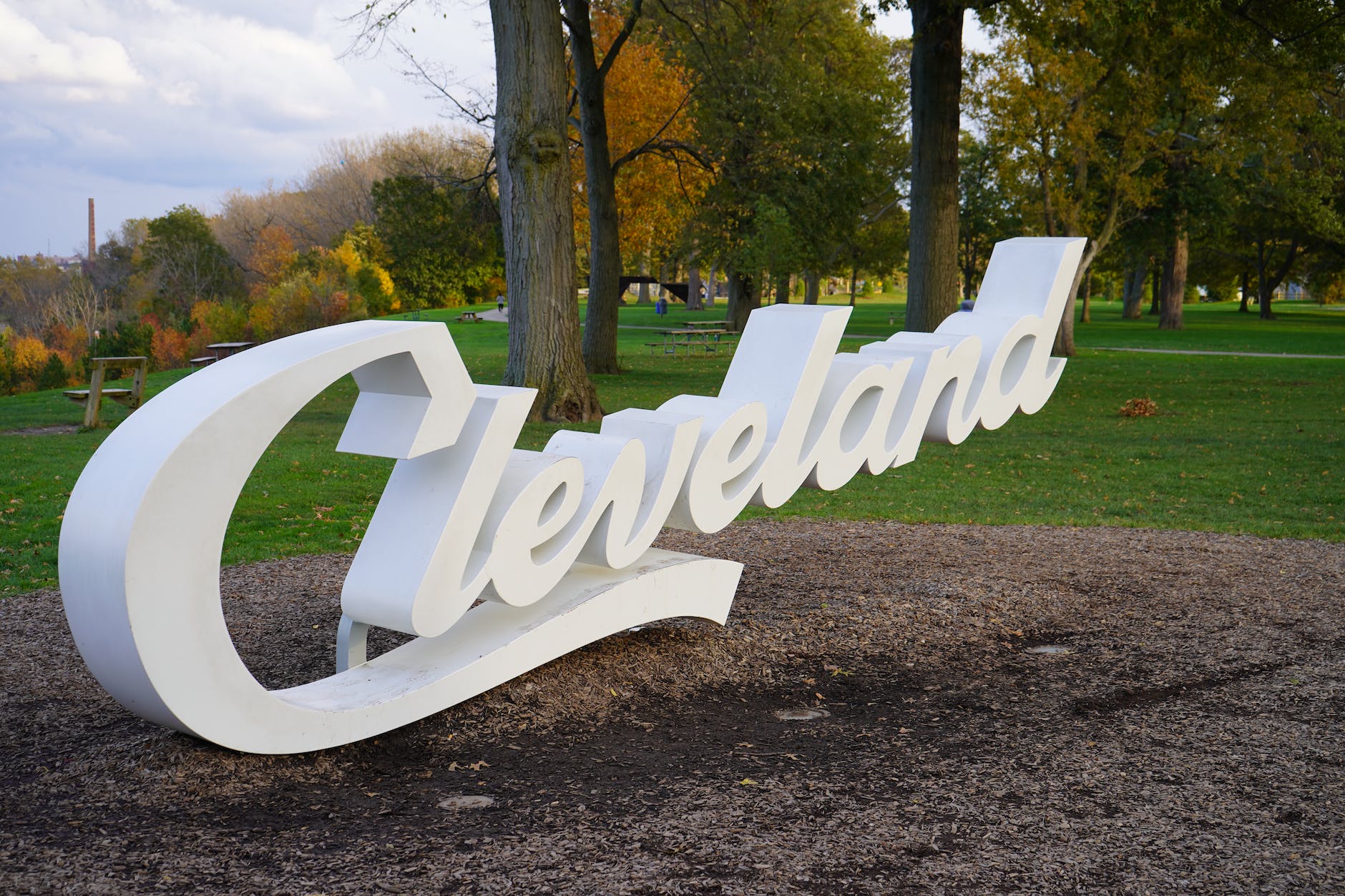
The commercial’s title is a play on the famous Tennessee Williams quote: “America has only three cities: New York, San Francisco, and New Orleans. Everywhere else is Cleveland.”

See an earlier post about this quote.

This quote referenced above hints at a larger issue for those who study American cities. When is it helpful to lump cities together as similar enough or helpful to put them in different categories because they have unique traits? All big cities share some common characteristics but they are also different in certain ways. Is size, the time of settlement or rapid population growth, density, political system, cultural opportunities, or something else the factor we should use to analyze cities?

The quote above suggests there are four categories of cities: three that stand on their own then a much larger category represented by Cleveland. Cleveland is the stand-in here for all nondescript cities compared to three American cities that have unique personalities and settings. The ad suggests New Orleans is a very different kind of place.

Is this objectively true? As far as I know, there is no New Orleans School of urban thought, but this does not mean there should not be. Urban sociologists and theorists tend to squabble more about the biggest cities and whether New York, Chicago, or Los Angeles are the best models for understanding urban processes.
Monterey Park, California: the first American community with over 50% residents with Asian ancestry

Scholars who study ethnoburbs note the importance of Monterey Park, California. Here is one reason why:

Monterey Park, about seven miles east of downtown Los Angeles, has a population of about 60,000 people, about 65 percent of whom are Asian American and 27 percent are Hispanic or Latino, according to government data. In the 1990s, it claimed to have become the first city in the continental United States to have a majority of residents with Asian ancestry.

More communities near Monterey Park have joined this group and there are additional communities throughout the United States that are majority-minority suburbs. As the suburbs continue to become more diverse, more communities will become ethnoburbs though which racial and ethnic groups are present can differ.

Trying to get federal workers back in the office in Washington, D.C.

As big downtowns across the United States grapple with more employees working from home, Washington, D.C. is particularly hit hard:

Photo by Pixabay on Pexels.com

At the swearing-in this month for her third term as the District of Columbia’s mayor, Muriel Bowser delivered a surprising inaugural-address ultimatum of sorts to the federal government: Get your employees back to in-person work — or else vacate your lifeless downtown office buildings so we can fill the city with people again…

There are days when downtowns in other American towns can almost look like they did before 2020. In the 9-to-5 core of Washington, though, there’s no mistaking the 2023 reality with the pre-Covid world. Streets are noticeably emptier and businesses scarcer. Crime has ticked up. The city’s remarkable quarter-century run of population growth and economic dynamism and robust tax revenues seems in danger…

According to census data, Washington has the highest work-from-home rate in the country. Week-to-week numbers from the security firm Kastle Systems back this up: The company, whose key fobs are used in office buildings around the country (including the one that houses POLITICO), compiles real-time occupancy data based on card swipes in its 10 largest markets. D.C. is perennially dead last…

To people who depend on commuters’ lunch-hour spending or transit fees, the change is less welcome. According to John Falcicchio, the city’s economic-development boss and Bowser’s chief of staff, the federal government’s 200,000 D.C. jobs represent roughly a quarter of the total employment base; the government also occupies a third of Washington office space — not just the cabinet departments whose ornate headquarters dot Federal Triangle, but plenty of the faceless privately held buildings in the canyons around Farragut Square, too.

On one hand, Washington D.C. is in a unique situation. One employer, the federal government, is responsible for a sizable portion of the local workforce.

On the other hand, this is an issue facing many downtowns. Can asking companies to have workers return or applying threats be successful? Or, is it better to try to offer amenities and encouragements so workers want to return? As a third option, is it time to transition from the decades-long emphasis on commercial downtown space to residences and other uses?

This could be an inflection point for a number of downtowns or it could end up being a version of the same old approach. However, it would not surprise me if the conversation between local politicians and business leaders heats up around this issue.

The ongoing process of reparations and housing in Evanston

Evanston, Illinois initiated a reparations program several years ago that would provide money for some Black homeowners. The process of funding, assessing applications, and providing monies is underway, even if it is slow-going:

But outside that ballroom, the program is failing to meet many of its initial promises. So far, the city has only spent $400,000 of the $10 million promised in 2019. Out of hundreds of Black residents who applied, 16 have received money. Another 106 are on a waiting list, with hundreds more behind them. At least five people have died before their promised reparations could be dispersed, the program’s leaders acknowledge.

City officials say these early stumbles don’t diminish their ambitions for the program, which is aimed at addressing decades of housing discrimination rather than slavery. And it’s just a starting point, they say…

The program quickly ran into problems. Instead of the three marijuana dispensaries the city was expecting, only one opened, bringing in a trickle of the tax money initially forecast. A year after the reparations effort launched, few were receiving housing vouchers…

Acknowledging the program’s slow start, the council voted in December to set aside an additional $10 million over ten years, this time from a tax on real estate sales over $1.5 million.

The fate of programs or initiatives can depend on the decisions made – and this article suggests there is ongoing discussion about whether this is the best path to pursue – as well as how they are carried out. A good or helpful decision that then gets bogged down by processes, bureaucracy, and funding is one that may be limited or worse in the end.

The portions cited above plus additional comments in the article also address the funding side of this. Can local governments effectively address the issue of reparations? Depending on the size of the community, budgets, money sources, and more, some communities will have more resources to draw on. What are the advantages to local efforts addressing housing and reparations compared to broader funding sources at higher levels of government that are also removed from the particular circumstances in individual communities?

The marketing pitch in Chicago’s motto “Urbs in Horto”

Chicago’s official motto helped sell the city in the mid-1800s:

But as European descendants forcibly settled the region, and began turning land over to agriculture and then urbanization, the trees that remained were sparse holdovers from pre-settlement times. Many of the new trees they planted were non-native species for landscaping purposes, while animals distributed invasive tree species.

So the idea that Chicago was a “City in a Garden” when the motto Urbs in Horto was adopted by the city government in the 1830s is a bit of a misnomer, said Julia Bachrach, former historian for the Chicago Park District.

Bachrach said the 1830s brought a flurry of land speculation in the Chicago area, which city officials encouraged by enticing East Coast developers to buy up stretches of land. But first they had to convince developers the land was valuable.

“It was a bit of a PR move to call this marshy, windswept, ‘smelly onion’ city the ‘City in a Garden’,” Bachrach explained.

As this article goes on to describe in more detail, many of the trees, parks, and boulevards came later to Chicago. And many of the things Chicago later became known for – including “the city of broad shoulders,” skyscrapers, meatpacking, and divides – have few clear links to gardens and trees.

I recall reading Ann Durkin Keating’s Rising Up From Indian Country and being surprised by the presence of sand dunes along the shores of Lake Michigan in the early days of white settlement. As a kid reading and hearing about Chicago, the story always seemed to go the other way: filling in land along the lake with refuse from the great fire, reversing the flow of the Chicago River, and building a booming metropolis over whatever was there before. Chicago conquered nature to become what it was and then thought of parks, trees, gardens, and a lakefront. That it could feature nature in particular ways was a product of this mechanical and human progress.

Bonus facts: the motto is featured at the bottom of Chicago’s seal and is represented by one of the points of the fourth star on the Chicago flag.

A round earth and seeing the Chicago skyline from Indiana (or from other angles)

Standing on a beach in Indiana and seeing the Chicago skyline is a unique sight. Does it demonstrate that the earth is flat or round?

Photo by Pixabay on Pexels.com

“If the earth was really a globe, the Chicago skyline from Indiana would be hidden by 1,473 ft. of Earth Curve,” reads the text included in one such Nov. 6 Instagram post (direct link, archive link). The post, which garnered more than 2,000 likes in one week, includes an image of the Chicago skyline taken from across Lake Michigan at the Indiana Dunes State Park.

But the claim is false.

Scientists say the photo actually proves that the Earth is indeed curved. While the buildings in the Chicago skyline are visible in the photo, parts of the buildings are obscured by the curve in the Earth. A simple trigonometric equation confirms that the buildings of the Chicago skyline are indeed visible from the Indiana Dunes State Park, where the image was taken…

“The image actually demonstrates that the Earth is round,” Oran said. “(The bottom) parts of the buildings are actually obscured because the Earth is curved.”

Oran noted the lower halves of the buildings are not visible in the photo. According to Oran’s calculations, roughly 500 feet of the bottom of the Willis Tower, the tallest building in Chicago, would not be visible based on the distance the picture was taken from.

While the flat earther phenomenon is interesting in itself, I am more interested here in how this is based on a unique view of the Chicago skyline. I know that seeing it from a different perspective can be disorienting or reveal new angles. Growing up, I mostly saw the skyline from the west coming into the city. In graduate school, I often saw the skyline from the south and southeast arriving from a different direction. I rarely see it from the north because I have little reason to come from that direction. And the view can be very different from an airplane depending on the approach or takeoff of a particular trip and the flight patterns for the day.

Would any of those views push me to conclude the earth is flat? No, but I have definitely noticed different buildings, different ways the sun or dark frames places, and how the city seems to be a different place when approaching from different directions.

Casinos in the Chicago suburbs did little to improve downtowns

The Chicago Tribune Editorial Board suggests casinos that opened several decades ago in multiple suburban downtowns did not help revive the areas:

Photo by Pixabay on Pexels.com

Remarkably, Aurora was on board, with city officials calling the new plan “one of the most significant developments in the history of Aurora,” which is exactly what they said when the riverboats came to downtown and were compared by the then-mayor to the coming of the railroads. Penn Entertainment also announced a similar plan for the casino in downtown Joliet, which it also owns.

Better, it said, for the casinos to be near the expressway for easier access. But what about the promises made to downtown Aurora and Joliet?…

Illinois casinos, it seems, have become like NFL franchises, supremely skilled at lobbying and dangling the promise of revenue to cash-strapped cities but on their own ever-changing terms.

Was the Hollywood Casino good for downtown Aurora? It’s debatable. The charming riverwalk got finished and area landscaping improved. The Paramount Theatre came back to life, but on its own merits. And on a recent Sunday night, those new restaurants in downtown Aurora were either closed or mostly empty. The action, it felt, had shifted elsewhere.

Numerous suburban downtowns have struggled for decades as activity moved outward to new neighborhoods and communities plus shopping malls and strip malls. Thus, when an opportunity presents itself, like a casino, many communities would be interested. A new attraction or business or development could help attract visitors, residents, and firms while bringing in new revenues.

Except building thriving downtowns in the suburbs is complicated. The suburban communities highlighted in this editorial are unique industrial suburbs outside of Chicago. Firms and jobs left. Suburban sprawl continued. The riverfront is still there. Other suburban downtowns thrived like Naperville or Arlington Heights, both of which are different kinds of suburbs.

While this is a tale about specific developments, it sounds like a generic development pattern: developer and/or company comes in with grand plans, community agrees to help make it happen, the developed property enriches the property owners, and if another location emerges where more money can be made, the development might move.

As the casino moves from downtown Aurora, what plans does the large suburb have to grow its downtown? What is the new attraction or set of steps to keep the downtown going?

Bringing large cities to the Metaverse

Meta may not have done well in this past week’s news cycle but at least one global city is headed to the Metaverse:

Photo by Bradley Hook on Pexels.com

This month, Seoul plans to launch the first stage of Metaverse Seoul, an ambitious five-year plan to code a digital re-creation of the South Korean capital. When it’s finished, residents will be able to explore historical sites, tour museums, attend virtual events, and even stop by City Hall to hack away at red tape without leaving their couches. Given Governor Jared Polis’ love of all things high-tech—including collecting state taxes in cryptocurrencies—it’s only a matter of time until Colorado follows suit, starting with our own capital city. Which is why we came up with some of Metaverse Denver’s most important points of interest.

There are a lot of possibilities here in addition to what Seoul is pursuing. Should a city aim for a brick for brick recreation? A hint or flavor of the offline city? A new kind of experience? An online site meant for tourists and/or those considering relocating? A place to try out new ideas? A gathering place for current residents?

One quick reminder as cities and communities consider this: the online and offline realms are not separate. What ends up in the Metaverse at the behest of cities will be connected to the offline city and vice versa.

Suburb of Elk Grove Village now turns to NASCAR race car ad

Elk Grove Village has sponsored a college football bowl game. Now, it is sponsoring a NASCAR car:

Photo by Pixabay on Pexels.com

The Northwest suburban municipality — of Makers Wanted Bahamas Bowl fame — has inked a two-year marketing partnership with the Roush Fenway Keselowski Racing team that will enable it to affix its business marketing tagline, logo and brand to the No. 6 Ford Mustang stock car during the NASCAR Chicago Street race events next year.

The announcement was made during the ninth Made in Elk Grove Manufacturing & Technology Expo at the high school. The daylong exhibition, awards and networking event highlights businesses within the village’s sprawling industrial park — which the village has sought to promote through several unconventional marketing sponsorships. The town sponsored the college football bowl game in 2018 and 2019, plus three USA Olympic teams last year.

“Elk Grove Village is home to the largest industrial park in North America. We’re surrounded by incredible transportation options and our town works hard to make this a destination for businesses,” Johnson said in a statement. “Partnering with RFK for a marquee race allows us to reach a huge audience with a partner that shares a passion in American business and manufacturing.”

Suburbs continue to market themselves in order to stand out from the hundreds of other suburban communities with which they might be competing. Lots of suburbs could say they have industrial space, nearby transportation options, and are business friendly. Fewer might be able to say they have “the largest industrial park,” sit near O’Hare Airport, within such a busy region for railroad traffic, and right next to major highways, and offer exactly what Elk Grove Village can offer businesses. This branding effort will help highlight these distinctive features.

But, the big question is whether this broader exposure translates into increased business and development activity in the community. Will those watching Brad Keselowski zoom around a track visit makerswanted.org in large numbers or relocate their firms to the suburb? Is it enough that the suburb might have an increased status but no change in activity?

Like Wakanda, drop the suburbs so cities and rural areas are closer

Why do we need suburbs between city and rural life? Perhaps the fictional Wakanda offers an answer:

Photo by Pixabay on Pexels.com

“One of the things I love about Wakanda, if you notice, if you watch ‘Black Panther’ carefully, there’s the city, the city’s got all this mass transit and all this housing parks and all this stuff,” explained Chakrabarti, who wrote a book called “A Country of Cities: A Manifesto for an Urban America.” “And the moment you leave the city, you’re in farmland. And there’s this connection between rural life and urban life.”

He added: “I just think that is a really interesting paradigm to think about people, either living in super dense circumstances or really living in true rural hinterland and doing the things that we need everyone to do in farmland, which is grow our food and all of that stuff. And it would mean you would use a lot less land on this planet at the end of the day.”…

Whether major American cities ever transform from where we are today — heavily suburbanized and car-dependent — remains to be seen. But all we have to do is look to Wakanda for an idea of how our cities of the future could work.

I would argue that the American suburbs are popular, in part, because they appear to offer both features of city and rural life. Suburbanites like access to housing, jobs, and cultural amenities but they also want smaller communities and proximity to nature. With cars, they can on their own schedule access these features.

I remember the first time I saw in person this cleaner break between a city and rural areas. I had a chance to spend several days in Tokyo while in college. On one day, we took a train out of the city. As we moved at a high speed away from the city center, we suddenly moved from the denser city to fields. The same break could be seen from the air when flying in and out of the city.

This is not typically the case in the United States where suburbs might stretch for dozens of miles from the city limits before finally dwindling out. Moving more people into denser locations would indeed free up land or freezing development in metropolitan regions within an established boundary would do the same.