With different apps and platforms offering year-end summaries, who offers one of these for academics? Alongside my listening, watching, and reading, I want to see a count of emails sent, meetings attended, assignments graded, class sessions prepped, and more.
The one platform that could do that for me would be Microsoft products, specifically Outlook or Microsoft 365. Outlook offers insights into my time through the calendar and email activity, could report on who I sent the most emails to (and who received them from me), and could look at the text of the calendar and emails to figure out what I was working on.
Expand this to Microsoft 365 and even more data is available. What did I type into Word? What did I track in Excel? What did I present through Powerpoint? What conversations and groups was I part of in Teams?
I suppose I could do this work myself. At various points I have tried to track my time and activity. This work can be helpful, particularly when filling year-end reports or updating my CV. But there is also a lot to keep track of and I have not found that knowing the contents of every or nearly every minute is useful. I do not need everything quantified; seeing general patterns can help me keep address my top priorities.
Is this what AI will offer in the near future? Could it make a to-do list for each day anticipating what I need to do based on previous activity? Or will it take work to manage the manager?
(Other contenders for helping prepare my 2025 year in academics wrapped: Google Photos, our learning management software, my library records, my key card.)
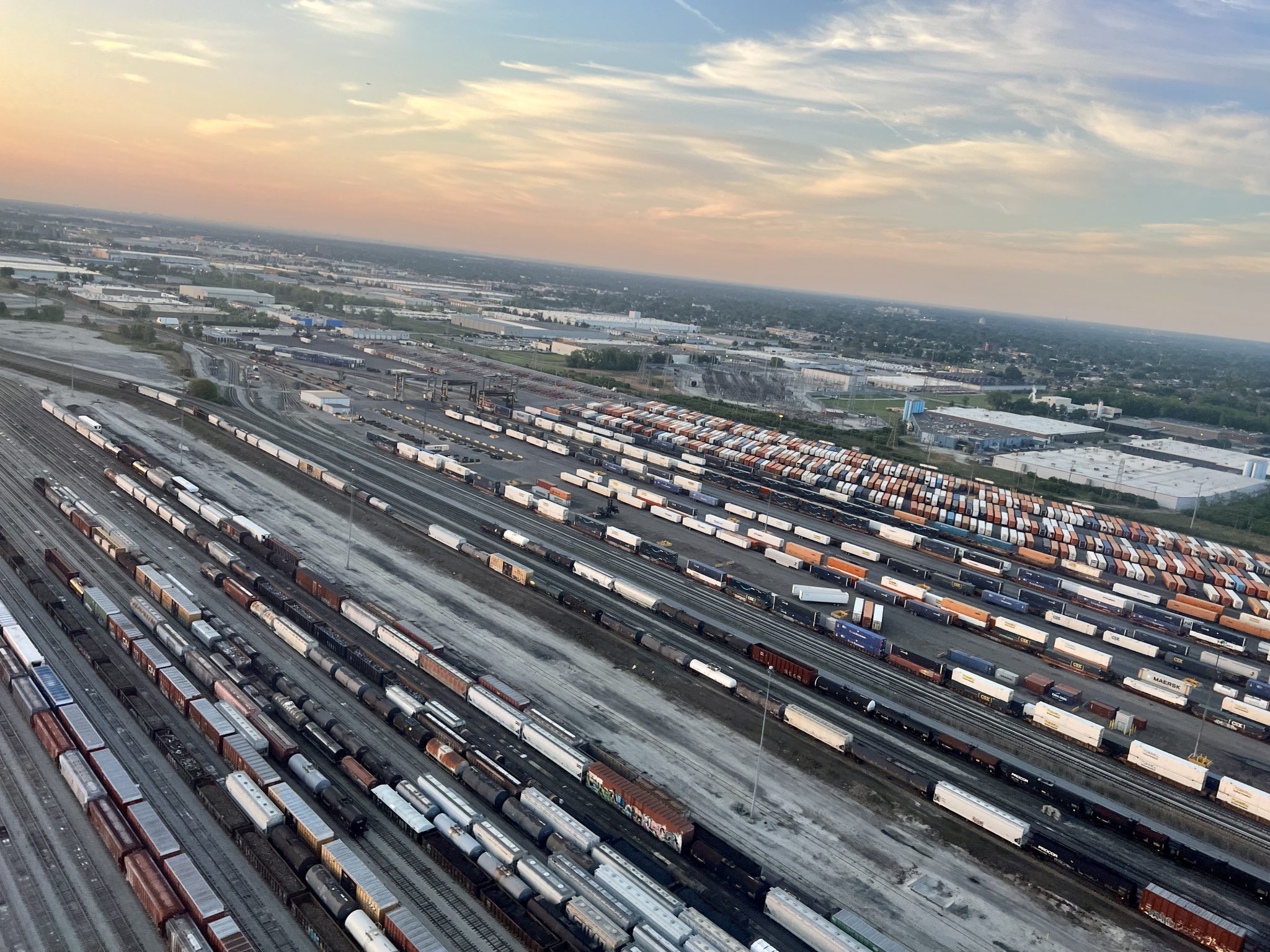
To make money on its proposed cross-country railroad, Union Pacific plans to double the number of trains on a 2-mile stretch of track on Chicago’s West Side where workers still throw switches by hand and trains crawl across century-old bridges at less than 15 miles per hour.
The railroad plans to add 12 trains per day on these dilapidated tracks, which run along Rockwell Avenue through North Lawndale and West Town.
After reaching Lake Street on the north, the additional trains will turn west and run 13 miles to a Union Pacific rail yard in Melrose Park.
They’ll have to thread their way through 58 passenger trains and up to 24 freight trains, which, according to Metra and Chicago Metropolitan Agency for Planning data, are running on these same tracks each weekday now.
The railroad importance and bottleneck that is Chicago is on display here. A lot of freight traffic flows to and through the region. A proposed merger of two major railroads means there could be more trains. Can a short stretch of track handle more freight traffic when it already has freight and passenger traffic? Will a railroad merger mean that Metra can no longer use these tracks? Are there any alternate options?
If one could start over in planning the Chicago region and knew what was needed today, how differently would the railroad network be set up? Chicago has a hub and spoke model of passenger lines funneling people into the heart of the city. Freight trains also travel along these lines plus along numerous other lines that bisect and ring the region. Where would the rail yards and intermodal facilities be? Would the lines be put in different places? Could there be designated railroad districts or railroad corridors?
However this merger business ends, I hope the railroad companies, communities, and regional actors can get together and figure out what would serve the Chicago region best in terms of railroad lines and activity.
This was the vision that former CEO Howard Schultz had long chased: bringing Italian-style coffeehouses to the U.S. and transforming them into a ubiquitous “third place” for Americans. The concept of a third place is simple: If the home is the first place, and work is the second place, a third place would serve as an anchor of community life and social interaction, a spot where anyone could see familiar faces and meet new people in a comfortable, unpretentious setting…
But as the company grew, marketing its locations as a tableau in which to “stay awhile” ultimately meant there was a finite number of people they could sell coffee to per day. As it became clear people were willing to pop in for a $9 handcrafted drink and leave, Starbucks turned away from the original vision, instead hoping to bump profits by enticing a larger number of customers who wanted their coffees to go. The store rolled out mobile ordering, pickup-only store formats with no seating, and an ever-growing rewards program that offered a disappearing carousel of coupons and freebies, all in an effort to expand the number of sales that it could theoretically make in a day…
Starbucks is largely credited with pioneering the world of mobile ordering and building an ecosystem of rewards that keeps the consumer loyal to the brand. “That definitely took off, and then the third place dwindled away during the pandemic,” said Ari Felhandler, a financial analyst who specializes in the food and beverage industry at the firm Morningstar…
And now, Starbucks is staring down the barrel of an increasingly crowded market. Longtime competitors like Dunkin’ Donuts, Peet’s Coffee, and Panera Bread all started their rewards programs after Starbucks launched its app, creating more camps for customers to pledge their loyalty to. There are also the rising coffee newcomers, like San Francisco’s Blue Bottle Coffee and private equity–backed Blank Street Coffee, which also offer a large menu of specialty espresso drinks at their locations alongside their own membership programs and sleek storefronts. Other major corporations including Capital One have also made a bid to become the preferred third place; they boast arching windows at their locations, which combine your local bank with a coffee shop, and have half-off deals on all food and drink for cardholders. (The company has even partnered with California’s Verve Coffee Roasters for its espresso beans.)
Starbucks is all over the place. Its locations offer predictability and standardization. It is McDonaldized coffee and a McDonaldized experience for the early 21st century.
Starbucks’ best claim to being a third place might be that alternatives are lacking for Americans. Should they gather in fast food restaurants? Bars? A range of coffee drinks and food items appeals to a broad set of people. There are many locations. The brand still has some cachet.
What if Americans don’t really want third places? A third place is intended to be a setting for people to talk and interact outside of work and home. People want what Starbucks sells but they often want it for their car trip or to consume elsewhere. Who has time to sit and drink a coffee and talk to another person? Who wants to do this?
Perhaps we should instead hope for places where people want to spend time with their phones. They can take an interesting selfie. They can catch up with social media activity. The seating and the lighting is good for looking at a screen. Their interactions with others are mediated through screens. As people do this, they can drink a coffee. Our smartphones can be our companions on the go.
My reading of A Christmas Carolthis year included noting this description of Scrooge’s travels with the Ghost of Christmas Present to observe the Cratchit family:
"There are some upon this earth of yours," returned the Spirit, "who lay
claim to know us, and who do their deeds of passion, pride, ill-will,
hatred, envy, bigotry, and selfishness in our name, who are as strange
to us, and all our kith and kin, as if they had never lived. Remember
that, and charge their doings on themselves, not us."

Scrooge promised that he would; and they went on, invisible, as they
had been before, into the suburbs of the town. It was a remarkable
quality of the Ghost (which Scrooge had observed at the baker's), that,
notwithstanding his gigantic size, he could accommodate himself to any
place with ease; and that he stood beneath a low roof quite as
gracefully and like a supernatural creature as it was possible he could
have done in any lofty hall.

And perhaps it was the pleasure the good Spirit had in showing off this
power of his, or else it was his own kind, generous, hearty nature, and
his sympathy with all poor men, that led him straight to Scrooge's
clerk's; for there he went, and took Scrooge with him, holding to his
robe; and, on the threshold of the door, the Spirit smiled, and stopped
to bless Bob Cratchit's dwelling with the sprinklings of his torch.
Think of that! Bob had but fifteen "Bob" a week himself; he pocketed on
Saturdays but fifteen copies of his Christian name; and yet the Ghost of
Christmas Present blessed his four-roomed house!
Cratchit is the underpaid clerk who works in the city with a wealthy employer but lives in a small home (with four rooms) outside the city. A domestic scene follows as the family gathers around the modest table and food.
Scrooge, in contrast, lives and works in the city. He is about work and wealth. He looks out for himself and has little time for others, whether his employee or his former business partner.
London at the time of the writing of A Christmas Carol had nearly two million residents and had a lot of industrial activity. It had some suburbs – Clapham, for example was several miles from the center of the city and was inhabited by William Wilberforce and his associates – but it was a dense and growing city. The Cratchit family may not have been able to afford to live in London or they needed enough room for their family.
If A Christmas Carol helped create Christmas in the United States since its publishing, might it also have fit with Americans’ liking for suburbs for cities? Even as the tale involves redemption for Scrooge, he lives in the city while the typical and kind family in the story lives in a suburban home. And we know how much Americans like their suburban single-family homes.
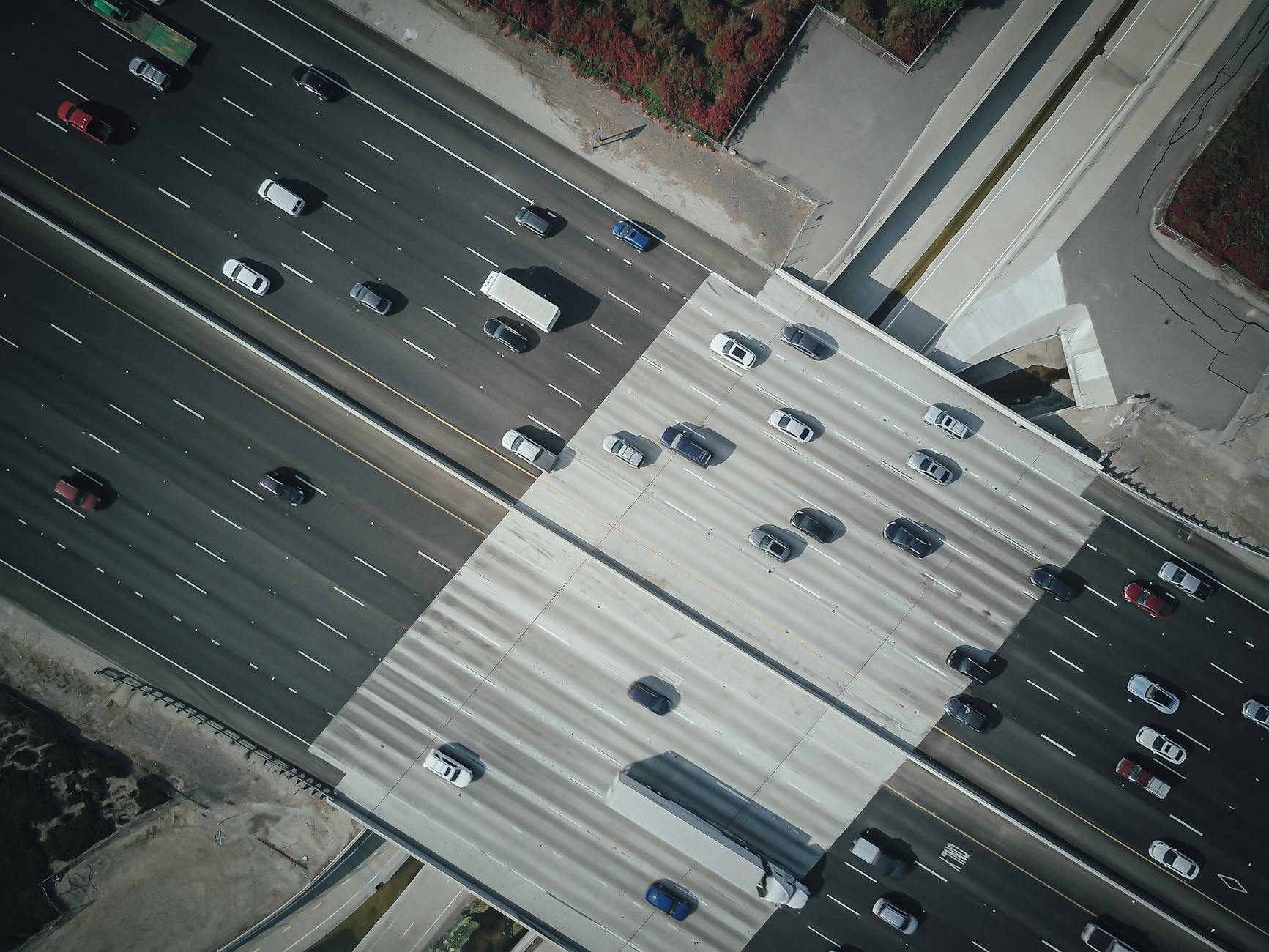
Photo by Willian Justen de Vasconcellos on Pexels.com
“You see a whole swath of the country that people on the coasts don’t,” says Clott, whose fascination with 41 dates back to his boyhood in Northwest Indiana…
Once Clott reached Miami, he’d taken a journey through a country he never would have seen on an interstate highway.
“You see regular people,” he says. “You don’t just see tourists. Even though you’re less than five minutes away from an interstate, you see a different America.”
The interstates have a life of their own. High speeds and limited impediments. Certain amenities available at rest areas and exits.
Many interstates trace paths from earlier highways that also sought to connect major population centers. These highways had sections of faster speeds and no stops but they also tended to go through communities and had stops there.
Is seeing “regular people” and “a different America” because of the different routes of these earlier highways or the different driving pace or the different attractions? One way to interpret the statements above is that these old highways are not the typical routes so drivers will see different things. Perhaps they see what is less glamorous or could see more day to day activity than tourist activity. As noted later in the article, US 41 will still help see Chicago but see different parts than you might via the interstate or common tourist routes.
Would these older highways be considered the back roads of the United States? In many communities, they are necessary daily roads for people and goods. They may not be scenic roadways in many places. They may not be meandering two lane roads. But they do offer an alternative to where the mass of drivers are.
(I have driven on US 41 in Michigan, Wisconsin, Illinois, Indiana, and Florida. While it has its points that are more highway-like with higher speeds and fewer lights, there are also plenty of moments of going right through communities.)
The proposed legislation would apply to people who buy three or more homes within a radius of 500 feet, roughly the length of a city block. Any construction project expected to last more than 180 days would need a detailed daily schedule of construction work to prove it can be conducted without double-parking vehicles or blocking driveways or bike lanes.
After finishing one construction project, homeowners would need to wait three years to begin another unless a major emergency occurred. Homes could not be vacant for more than six months in any given year.
The proposal relies on neighbors for enforcement, leaving it up to another homeowner or tenant living within 500 feet to file a lawsuit.
The proposal would place new restrictions on private security guards across Palo Alto, not just those serving wealthy homeowners. All security vehicles would have to be marked and permitted by the city. Security guards would have to identify themselves to the public when asked. They would be prohibited from harassing or intimidating passers-by on public property…
The full Palo Alto City Council is likely to take up Mr. Stone’s proposal in January or February. Mr. Stone said he is confident that a majority of the seven-member council, which has taken a keen interest in housing affordability, would support the general framework but could send it to a committee or city staff member for refinement. It could take six months or longer to reach a final vote, he said.
Three things strike me about this proposal:
It is clearly aimed at particular residents. Not just people with some wealth, who might be found across American suburban communities, but people who are truly wealthy and can afford this kind of construction and property ownership and all that goes with it.
Communities often deal with these concerns at the zoning level. How big can a structure or house be? Are the guidelines in particular areas or in regards to property lines? The proposal above seems to deal with other matters that come along with regular approval of megahouses and properties.
The regulations are about property but local conversations often have to do with local character and community life. Do such homes (and people) fit in the community? Who can live in a place where such properties are common? Who is Palo Alto for? Suburbs often implicitly or explicitly have these discussions while considering development.
Now that this proposal is out there, how do wealthier residents respond and what will the final local regulations be?
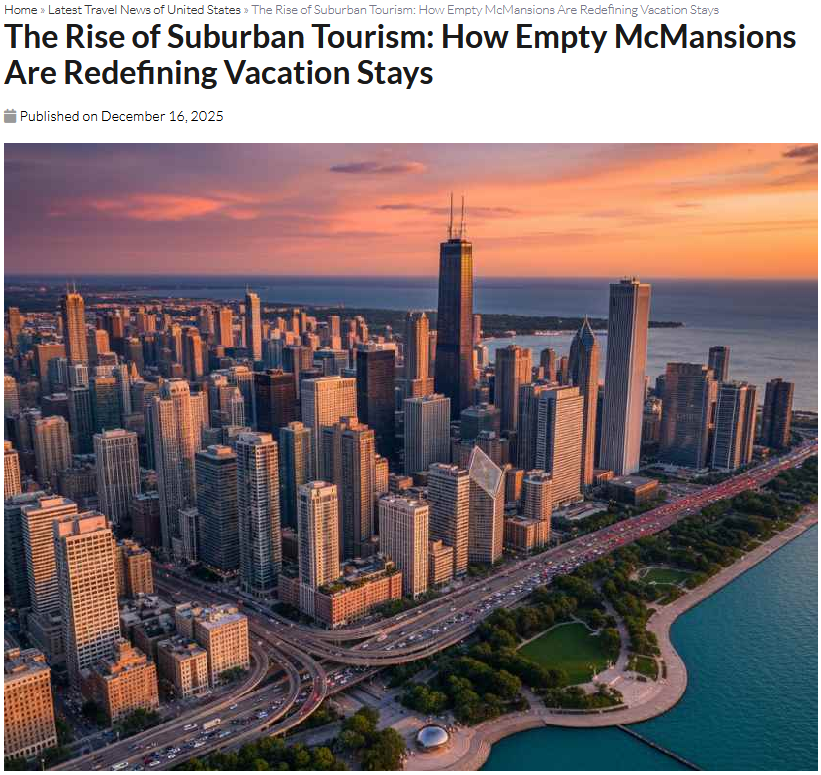
I am familiar with the Chicago skyline and lakefront. This image is…interesting. It has elements of the Chicago lakefront. A big body of water. Some iconic buildings. The Bean. Jean Baptiste Pointe du Sable Lake Shore Drive and parks along the water.
But it is also clearly wrong. The buildings are not where they should be. The lakefront is not in the right pattern. The Bean is not located on a pedestal next to the water. The local highway does not empty onto the lakefront road in that manner. And so on.
So is the McMansion story true? The summary/conclusion:
Empty McMansions in the suburbs of the United States are reshaping tourism patterns, with many tourists now seeking more dynamic urban destinations. However, these empty homes also present new opportunities for suburban areas to adjust and offer new experiences for visitors. Through creative uses of space, a focus on sustainable tourism, and rebranding efforts, suburban regions can continue to evolve as attractive destinations for a new generation of travelers.
Are more McMansions being rented out? Is this changing tourism patterns in metropolitan regions? is there any evidence of this happening? There is little in the story to provide evidence for the argument.
I will keep my eyes open for similar news but the fake image of Chicago does not inspire confidence.
The tollway collaborated with Cook County on a broader North Avenue interchange project. Along with the ramp, it includes realigning County Farm Road and rebuilding and reconfiguring North Avenue, Lake Street, Northwest Avenue and I-290 Frontage Road.
“I’m surprised (the ramp) was never built originally when they built the tollway seeing as North Avenue is so busy,” Sherwin said.
A major hotel was built in Northlake near the Tri-State in 1968 “on the promise that they were going to get the ramp. The ramp didn’t come (and) the hotel went bust,” Sherwin recounted, adding the site is currently home to Concorde Place seniors residence.
“Here we are 57 years later; we finally got the ramp open.”
The best time for a lot of infrastructure improvements is in the past, before there is significant need now. This particular interchange has always had a weird convergence of roadways. Perhaps a ramp built decades ago could have made traffic flow better.
But this is easy to say in the present. What stopped the ramp from being constructed in the past? Money is often an issue; who will pay for the road improvement? Or the possible money needed to be spent elsewhere on bigger issues. Maybe the issue was land. Highway interchanges can be limited by the space they have. It is easier to construct interchanges when there is plenty of room for ramps and land is cheap.
And what happens if the ramp is a success and more and more people use it? Building more lanes and road capacity can lead to more use. Those who got on and off the highway elsewhere or who used alternate roads may now choose this improved interchange. The new interchange will alter the dynamic traffic conditions…hopefully for the better.
But having lived in a suburban setting for 30-plus years, I don’t recognize any of those assumptions. My neighborhood, on the fringe of a city of 560,000, is multicultural, interconnected and solar-friendly. Everyone knows each other and finds ways to help with any need. We can walk to grocers, restaurants and other basic services. Many neighborhood groups meet regularly to play poker, discuss books or just go to lunch.
Ours is a planned community, but houses were built by different builders at different times. Thus no “little boxes made of ticky-tacky” all in a row. Just opening up areas to be developed without good planning produces the negative view of suburbs. It doesn’t have to be that way — suburban living can be as good as it gets…
Forty years later, we realize that’s not going to happen. Daily life is simply easier here. For food shopping and medical care, there are abundant choices with abundant free parking. The logistics of taking our two toddlers to preschool programs was much simpler than my struggles navigating strollers on buses or in the subway. Connections with our community have been literally lifesaving, and the scale of life is small enough that local officials are responsive. When we moved here and our garbage wasn’t collected one day, a neighbor told us to call the town’s highway department. A supervisor came by, and rang our bell to apologize. The post office took checks; the clerk remarked with a smile, “We know where you live.”…
I love the old custom architecture and charm of my city friends’ homes. But it sure is nice to be able to just go to Home Depot and buy a door or window that fits instead of needing custom everything. All that special old brick and special old stained glass comes with a hefty dose of special pain in the you-know-what.
While the writers do not exactly go through the seven reasons why Americans love suburbs, there are some patterns in this small selection of letters: the suburbs are not necessarily what outsiders might think, life in the suburbs can be pretty good, and there are certain conveniences to suburban life.
Another observation one letter writer hinted at: people are shaped by their environments. Making a major move from one place to another can require a lot of work and change. People have some flexibility and they can also get very used to where they are. With millions of Americans having grown up in the suburbs and millions living there now, the suburbs are known, if not preferred by some.
This also reminds me of an ongoing question I have about places: how exactly do people learn about their own community and communities that are not their own? People have only so much time and ability to see or hear about other places. How does a suburbanite find out what it is like living in a big city or a rural area and all the different possibilities in either of those? There are common narratives and assumptions made about all of these places they might be hard to dispel without direct experiences in other settings.
How do they know how many data centers are in the country? Their explanation:
Our data originates from multiple sources, primarily:
Operators: Data center operators and service providers use Data Center Map as a marketing tool, to promote their data centers, networks and services to potential clients. They have direct access to add and update listings.
External sources: We monitor multiple external databases, to identify missing or changed listings. They are automatically queued for manual review.
Manual sourcing: We manually identify operators that we are missing and manually add them to our database.
End-users: End-users send us tips and requests, about missing or outdated listings, that we manually handle…
As there are no regulatory requirements to register data centers in a central database, there are no complete resources available. All databases are based on voluntary data submissions and/or collecting data from providers or other sources.
How many data centers are needed for the United States? From what I have read, data centers are under construction in order to meet the current and future needs of AI technology. The future needs might be hard to forecast. Within a few years, what newer tech and AI products will be considered essential?
How many data centers are wanted? I am thinking of two possible scenarios. First, tech companies might want a certain number of data centers to meet needs and have extra capacity. But, they can only build so many and they can meet needs and maybe only a little more.. Second, communities and residents may not want some of these data centers. While this opposition often occurs community by community, this could add up to limit the number of data centers throughout the country.
It will be interesting to see where this number ends up. And if the number keeps going up, how many people living around them or driving by them will know and/or care they are there?