Can a movie that says something about suburbia be set in a place that is only sort of a suburb?

The name of the new movie Holland refers to the community in west Michigan. Numerous reviews note that the film says something about the suburbs. A few examples: first, from Variety:

Through it all, Macfadyen seems suspiciously good-natured, which merely encourages us to guess what he might be hiding. The “Succession” star brings a disconcerting Kevin Spacey-like energy to his performance, which reinforces the connection some might detect between “Holland” and 1999’s “American Beauty” — another movie about the toxic black mold that thrives just beneath the veneer of suburban perfection.

Second, from Roger-Ebert.com.

Kidman does her best to be the MVP of “Holland,” imbuing Nancy with just enough Midwestern nicety to make her memorable. Nancy is the kind of woman who wants to be a perfect wife and mother but also wants some mystery in her life and responds to the attraction of the handsome new teacher at her school. She’s a suburban shark, always swimming to a nearly impossible objective of keeping her pristine reputation in the community, holding her family together, and having a fling with Dave. While she doesn’t make any bad choices, there’s a version of “Holland” that lets Kidman loose, turning the temperature up on this character’s emotions in a manner that Cave feels tentative to do.

Third, from Mashable.com:

Watching Kidman play a happy homemaker in a pretty suburban town might swiftly recall Frank Oz’s underrated 2004 comedy remake of The Stepford Wives, which Kidman starred in.

You get the idea: the setting and the plot add up o a film that seems to say something about the American suburbs. This is familiar ground in American movies (as well as novels, TV shows, songs, and other cultural works)

But is Holland, Michigan a suburb? Here is what Wikipedia says:

The city spans the Ottawa/Allegan county line, with 9.08 sq mi (23.52 km2) in Ottawa and the remaining 8.13 sq mi (21.06 km2) in Allegan. Holland is the largest city in both Ottawa and Allegan counties. The Ottawa County portion is part of the Grand Rapids metropolitan area, while the Allegan County portion anchors the Holland micropolitan statistical area, which is coextensive with Allegan County. The city is part of the larger Grand Rapids–Wyoming combined statistical area.

Since metropolitan areas have boundaries based on counties, it seems that part of the city is part of the suburbs of Grand Rapids, a city of nearly 200,000 people and a metropolitan area of over 1 million people. But a good portion of the city, home to over 37,000 residents, is also its own smaller urban area.

Do the people of Holland see themselves as suburbanites? How many commute to Grand Rapids and other parts of the region? Are there cultural and historical ties to Grand Rapids?

None of this may matter for putting together a film. Filming scenes in downtown Holland or within neighborhoods in the community may look suburban. How many people watching really want to have authentic places that match what is being described? (For example, once I have seen a few studio backlots, it is hard to unsee them.) If the movie is about the suburbs, who is to say it isn’t?

Illinois considering testing “road usage charge”

If more vehicles now require less gas, Illinois is considering making up the funding lost through the gas tax through another means:

Photo by Cu00e9sar Baciero on Pexels.com

Legislation proposed by state Sen. Ram Villivalam, D-Chicago, takes aim at that problem by creating a pilot program to explore the viability of establishing a “road usage charge,” essentially a tax on miles driven…

Under the current tax structure, vehicles that don’t rely on gasoline, such as electric vehicles, do not pay the gas tax that helps maintain state infrastructure, said Marc Poulos, executive director of Operating Engineers Local 150, which strongly supports the proposed legislation…

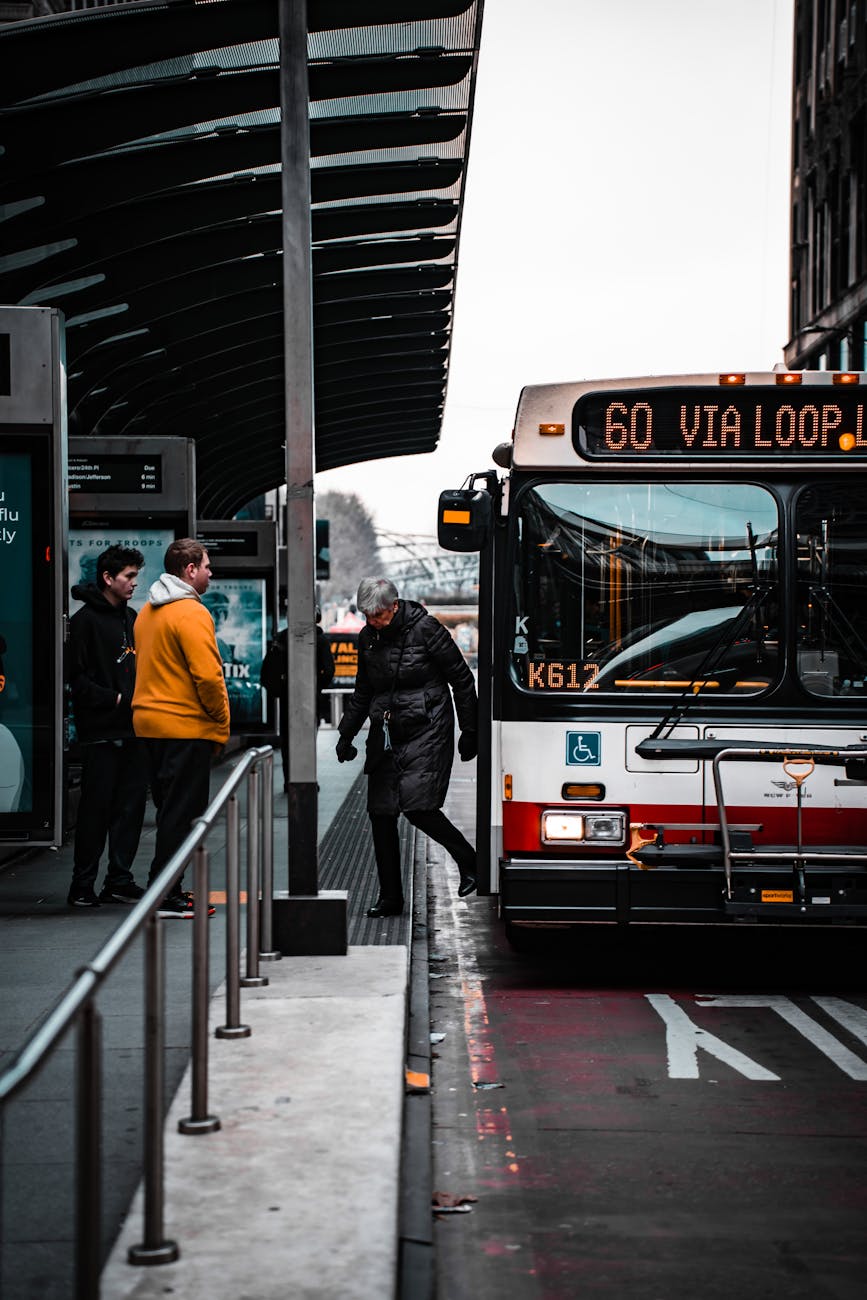
On Illinois toll roads , drivers pay approximately seven cents per mile, according to Poulos. With a mileage-based system, drivers could expect to pay three to four cents per mile. That would come on top of any tolls already being paid, similar to the gas tax.

Participants in the pilot would report their car’s fuel efficiency and mileage to the Illinois Department of Transportation. Roughly 1,000 motorists could sign up for the program with the Illinois Secretary of State’s office, Poulos said.

As the article goes on to note, more states and municipalities are looking for ways to recover revenues that come through the gas tax.

Given the current economic situation – many Americans feeling anxious about higher prices and less certain about their economic future – how might people in Illinois and elsewhere respond to these proposals? Americans generally like to drive and generally do not like the idea of new taxes. But if they are paying less at the pump, would they be willing to pay for driving through a different method?

More broadly, how much would Americans be willing to pay for driving? At what point do the costs of energy to drive (gas or electric) or the price of vehicles or tolls and congestion taxes push them too far? Or at what price do they switch to alternative forms of transportation or no transportation (making fewer trips)?

US population growth driven by immigration

A new analysis suggest immigration fueled recent population growth in the United States:

Photo by Czapp u00c1rpu00e1d on Pexels.com

Immigration was the sole driver of the United States’ population growth in a single year for the first time since records began, a new study released Wednesday said…

The U.S. immigrant population grew by 1.6 million between 2022 and 2023 to 47.8 million, according to the MPI analysis, with immigrants now representing a 14.3 percent share of the overall population—the highest ever.

Three quick thoughts:

  1. Population growth is good in the United States. To have flat population growth or decline in population would be viewed with concern. This is a perception issue.
  2. The country has never experienced a decline in population between decennial censuses. It did not have growth under 7% in any decade (just over this during the 1930s and 2010s).
  3. How many systems and sectors in the country would be harmed if population growth and/or immigration slowed or stopped? What would keep going and what would not?

The McMansion size of human pride

A recent Ash Wednesday poem starts with the imposition of ashes and then mentions a McMansion in this line:

Photo by Ralph on Pexels.com

That burned down the McMansion of my hubris

I would guess this references one of the traits of McMansions: their size. A super-sized house is analogous to the level of pride humans can construct. Their pride puffs them up in their own eyes. They impress themselves, just as a McMansion through its size and dubious architecture, tries to do in impressing neighbors and people passing by.

But the idea of the poem then is that the McMansion of hubris is demolished by the ash-delivered reminder that “Remember that you are dust, and to dust you shall return.” Large amounts of pride and large McMansions too will be brought low. McMansions might live on longer than many humans but they too will not last forever.

What suburban leaders need from denser developments in their downtowns

One suburban political candidate describes what the community hopes for when they build residences in the downtown:

Photo by Pixabay on Pexels.com

 “We need for people to be in it. We need for them to, do as our plan: get out of the building, walk around town, eat in the restaurants, drink in the coffee shops, drink in the bars, that kind of thing.”

Once a development is built, it takes time for the suburb to consider the impact on the community. If suburbs are going to pursue more density in their downtowns, which can often contrast with lower density homes throughout the rest of the community, they want certain things from the high-density development. They want those residents to patronize downtown businesses and restaurants. They want money to flow within the downtown. They want a particular downtown atmosphere where people are out and about (and not too noisy).

What happens if this does not come to fruition? What if the new development does not fill up quickly or if the residents do not spend much time downtown? Perhaps the municipality will seek a critical mass of downtown development to be able to provide enough downtown residents. Or perhaps they will seek the right mix of downtown attractions with certain kinds of shops and eateries.

And how much development will a suburb seek in its downtown? It might depend on whether it is “successful” in the eyes of the community.

Office buildings empty, residential property taxes go up

What happens when the office buildings in Chicago’s Loop have more vacancies? Residents end up paying more in property taxes:

Photo by Burak The Weekender on Pexels.com

The pandemic left the heart of the Loop with vacant offices and stores as workers and customers stayed home, and more people began working remotely. Then, citing the impact of that lost business, the owners of those vacant offices won huge tax breaks from Cook County officials.

The amount of property taxes didn’t get smaller because those taxpayers were now paying less. The taxes were still needed to pay for government services and salaries. So others have had to pay more to make up for that shortfall.

On top of that shift, City Hall and other government agencies have been asking property owners to pay more taxes overall, with total property taxes in Chicago rising from $6.8 billion five years ago to $8.3 billion last year.

That’s a 22% increase in taxes citywide in those five years.

This is one reason municipal officials like thriving commercial and industrial sectors: they contribute to the property tax base of a community. When these properties are worth less, someone else has to pick up the slack. Homeowners do not like rapidly increasing property taxes, if they like property taxes at all.

For residential property owners, the issue is compounded for some because the value of residences has jumped in recent years. With limited new supply and consistent demand for good housing, property values have gone up. Homeowners like this – until property taxes also increase because their home values have increased.

Will residential property owners put up with this and, even if they do not like it, what recourse do they have? Does this mean cities and communities need to put on a full-court press to get office buildings filled or converted?

Mapping Carnegie Libraries

The Carnegie Corporation of New York has a map of the libraries Andrew Carnegie funded around the turn of the twentieth century:

I have not studied this beyond the map but I am intrigued that the map seems to show a lot of libraries between roughly western Pennsylvania through Nebraska. The Midwest has a lot of libraries, except for Missouri which seems to have fewer. There are some pockets of libraries elsewhere; northern California, the Northeast. But Indiana, Illinois, Ohio, Minnesota, and other midwestern states have a lot of libraries.

Why the Midwest? A few ideas come to mind:

  1. Its population is growing rapdily at this time. (Population growth in the South and West would come later and the East Coast already had established communities.)
  2. Did Carnegie’s life in Pittsburgh connect him to life in other midwestern locales or familiarize him with midwestern values?
  3. These communities valued civic institutions, like libraries.

If someone had come along in the 1960s and wanted to help fund civic buildings, how much different would the map look?

I found “giant white houses” in my study of suburban teardowns

What caused the construction of numerous “giant white houses” across the United States?

Photo by Sindre Fs on Pexels.com

Giant White Houses are white, with jet-black accents: the shutters, the gutters, the rooves. They are giant—Hulk houses—swollen to the very limits of the legally allowed property setback, and unnaturally tall. They feature a mishmash of architectural features, combining, say, the peaked roof of a farmhouse with squared-off sections reminiscent of city townhomes. They mix horizontal siding, vertical paneling, and painted brick willy-nilly…

After speaking to realtors, architects, critics, and the guy who built the house next door, I’ve learned that the answer is more complicated than I’d imagined. It has to do with Chip and Joanna Gaines, Zillow, the housing crunch, the slim margins of the spec-home industry, and the evolution of minimalism. It has to do, most of all, with what a certain class of homebuyer even believes a house to be—whether they realize it or not.

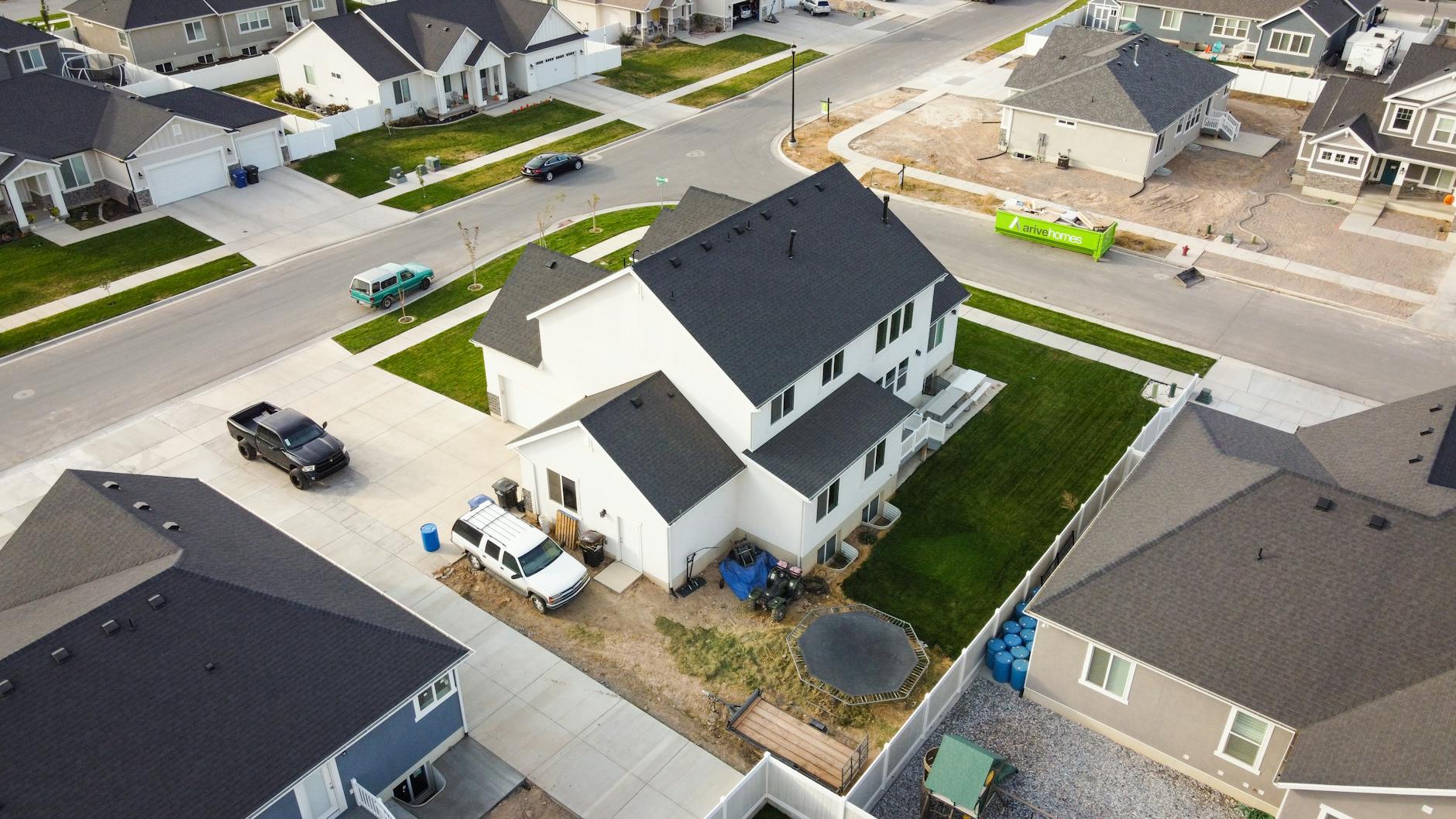
I found at least a few of these houses among the 349 teardowns I examined in suburban Naperville, Illinois. I did not classify them as such but they were among the many homes with prominent triangular gables (and usually multiple ones on the front facade). They sometimes had porches. The primarily white exterior is unique compared to teardowns that mix brick, stone, siding (vertical or horizontal), and shingles.

At least in Naperville, these homes emerged in a particular context: a wealthy built-out suburb that was in demand, numerous older and smaller single-family homes located near the vibrant suburban downtown, and local regulations that allowed relatively large teardowns.

How many years until this particular style is no longer built in large numbers and is perceived to be from a particular era? This happens with different residential home styles. This was not the predominant style in the teardowns I looked at between 2008-2017. Does this have an even shorter shelf life if it is linked to the reach of Chip and Joanna Gaines (and perhaps is more prominent in communities where people watch HGTV)?

How many suburban communities will allow chickens?

Given the price of eggs, is this a moment when more suburban communities will allow residents to have chickens?

Photo by Anna Chip on Pexels.com

Americans like suburbs for multiple reasons. Some of these reasons might appear to support homeowners having chickens while others might seem to oppose it. A quick breakdown:

-Closer to nature: suburbanites keeping chickens feel they are closer to the land and to animals. Suburbs with chickens can feel more like rural areas.

-Middle-class aspirations: suburbanites pay a lot of attention to what yards should look like. For example, lush green grass is a preferred option in many places. Chickens can disturb this aesthetic. Or keeping chickens might be considered something that contributes to a lower status for a neighborhood or a community. At the same time, middle-class residents can tout the financial benefits of keeping chickens instead of paying for eggs.

-Single-family homes and the rights of property owners: suburbanites take property rights seriously. If you own your home, shouldn’t you have freedom to do with it what you want? However, many Americans live in HOAs that have particular standards or suburbanites live in communities where particular standards are maintained (such as the maximum length of the lawn). Is the ability to live a quiet suburban life with higher property values hampered if a neighbor has chickens?

Suburbanites could make arguments for chickens and against them out of the same common suburban values. This could mean that all of these debates are then local and depend on the context of the community. How many community members are in favor? How does the community view itself and do chickens fit into that vision? Do the current economic conditions push residents and leaders in one direction?

Why American elevators are the size they are

Here is the story of how the size of American elevators came to be:

Photo by Kelly on Pexels.com

Two decades ago, the fire marshal in Glendale, Arizona, was concerned that the elevators in a new stadium wouldn’t be large enough to accommodate a 7-foot stretcher held flat. Tilting a stretcher to make it fit in the cab, the marshal worried, might jeopardize the treatment of a patient with a back injury. Maybe our elevators should be bigger, he thought.

The marshal put this idea to the International Code Council, the organization that governs the construction of American buildings. After minor feedback and minimal research (the marshal measured three stretchers in the Phoenix area), the suggestion was incorporated into the ICC’s model code. Based on one man’s hunch, most of the country’s new elevators grew by several square feet overnight. The medical benefits were not quantified, and the cost impact was reported as “none.”

It is one of the many small rules that have divorced our national building standards from the rest of the world. According to research by the building policy wonk Stephen Smith, who recounted this story in a report last year, changes like these are one reason it now costs three times as much to install an elevator in the U.S. than in Switzerland or South Korea.

Someone – individual or group – have to come up with the standards and then another organization implements them and advocates for them in the future. If this particular standard seems odd to people, what would stop others from proposing a different standard and working to get that implemented? How exactly is such a decision adjudicated?

I imagine most elevator users would not think about this when stepping into or stepping out of a larger elevator. It may seem spacious. They may notice when the elevator can hold a lot of people and/or items (suitcases or household goods on moving day). Would anyone lay down in the elevator and realize they can fit?

Implementing a new standard today would take a while to work through the system as new elevators start showing up. Thirty years from now, someone could look back and mention the day when the standard changed (and perhaps give the reasons why it changed). Until then, we have a certain elevator size that can accommodate a seven foot stretcher.