Learning about American housing through The Sims

Playing The Sims may just offer a few lessons about housing in the United States:

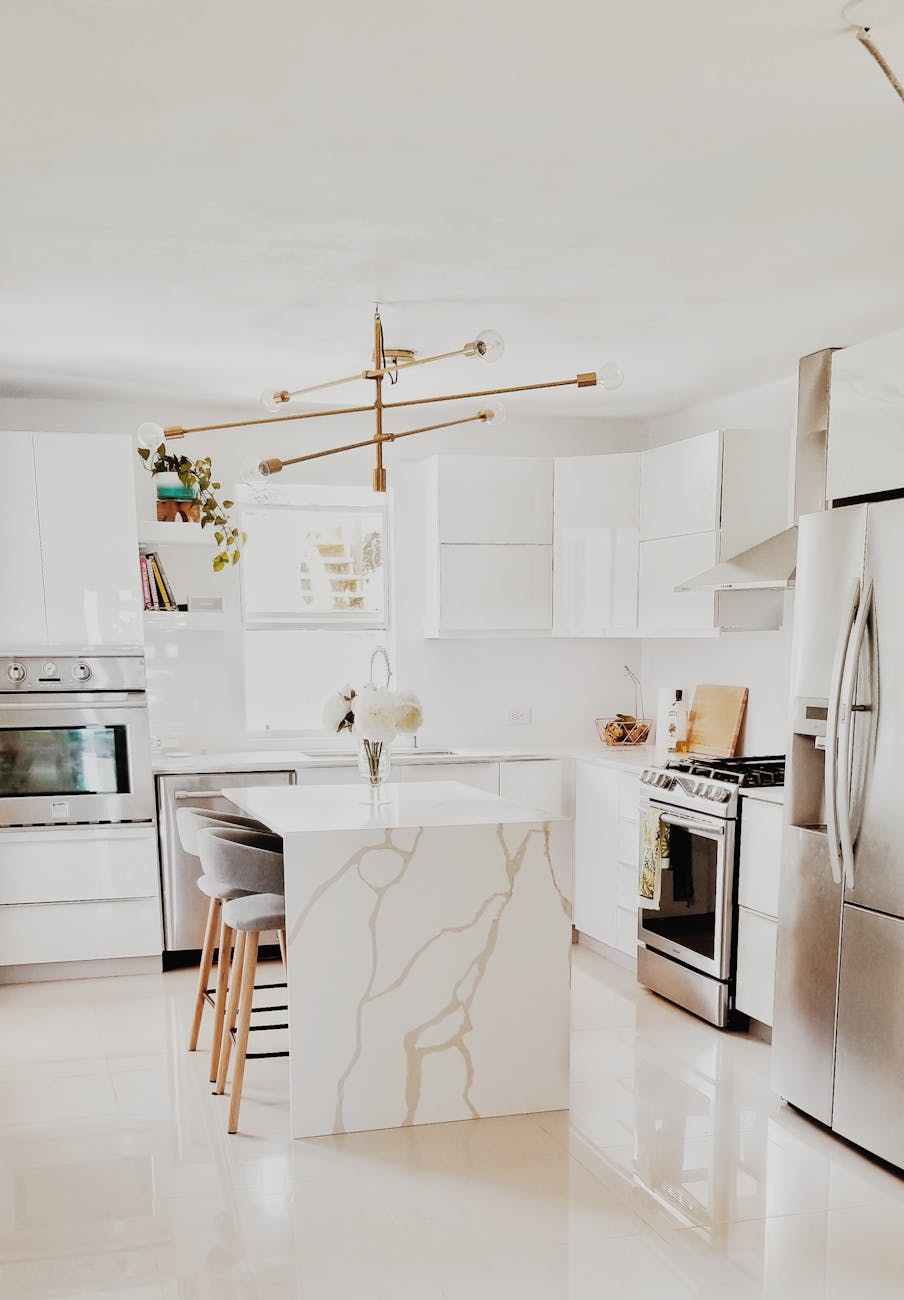
Photo by Monstera Production on Pexels.com

The Sims felt like a trial run for adulthood, exploring how you’d make use of your future autonomy. Much of this validated the importance of personal space: how to lay out a room, how to choose a sofa that balanced aesthetics and comfort, how to make a house a home…

The official trailer for The Sims 4: For Rent emphasizes the potential of “multiunit life,” promising “ample opportunity … [for] eavesdropping, snooping, or even breaking and entering”—a description that instantly evoked memories of my worst roommates…

Inevitably, a lot has changed. The peaceful suburb I remembered from childhood has been replaced by elaborate “worlds” that I can (effortfully, via a loading screen) switch between to grow my property portfolios. The Sims 4 is more immersive and finely drawn, visually, than the original was, but it’s also more involved: It took me a whole afternoon to create my first Sim and set her up in her “hovel.”…

But soon my frustration (as Edith) with Jazz’s requests started to outweigh my commitment to being the Only Good Landlord. Every notification from the rental instantly provoked my impatience. Not the damn tenant again! The slow, clunky transition within the game between Edith’s home and the rental only added to my frustration and my creeping sense of Jazz as a burden. Why did this guy need so much of Edith’s energy?

With For Rent, The Sims has perhaps moved too far toward reflecting brutal reality, forcing players to choose between being on one side or the other of an often fractious and all-too-familiar power imbalance. As a child, I was drawn to The Sims as a role-play for adulthood, a world of expansive promise and possibility; playing For Rent, I was reminded, depressingly, of how the game is rigged.

The Sims is a game, a product intended to provide enjoyment for players. Can one gamify the rental experience in the United States?

More broadly, The Sims puts a home – owned or rented – at the center of the experience. The United States has a long history of celebrating the single-family home. Renting may be common in some places but it can also be treated with suspicion in other places. Players of the game can make their own choices but they are limited by what is possible in the game as well as what is possible in our society.

Anyone able to offer an analysis of housing, landlords, and properties in general across the Will Wright creations? Simcity offered a particular take as did SimTower – has this changed noticeably over the years? Are there any video games that do a different or better job of portraying property and renting?

Food insecurity in the suburban land of plenty

If the suburbs are supposedly the realization of the American Dream, why are at least a few suburban residents short on food?

Photo by Lukas on Pexels.com

Visits to suburban food pantries have surged over the past two years, exceeding previous record highs set during the pandemic.

Schaumburg Township’s pantry experienced 33.3% increase in client visits between the fiscal year that ended in February 2023 and the one that ended in February 2024, from 9,809 visits to 13,079…

The Greater Chicago Food Depository, which supplies more than 800 food pantries in Cook County, has seen similar growth in most suburban areas, Communications Director Man-Yee Lee said.

Such numbers hint at the growth of complex suburbia where more suburban residents experience poverty or have lower incomes. Schaumburg Township overall might have a relatively high household median income – $83,909 in the 2020 Census – but that obscures that there are many households with less. With higher housing costs and food prices, the need for food goes up.

I would be interested in hearing more about coordinated efforts to address food insecurity in suburbs. I am sure there are a good number of food pantries, whether provided by local government bodies, local congregations, or other groups. But, this can provide a hodge podge of opportunities that are available at different times and places. Are there regional efforts to address food issues? Is this an issue that might be reduced significantly with higher-paying jobs? Would more affordable housing make it easier to obtain food?

What the millions of Americans might remember about the suburbs in which they grew up

What will the tens of millions of those raised in the American suburbs remember about those places? Here is one example:

Photo by Nout Gons on Pexels.com

I haven’t lived in Ypsilanti since I was 17, decamping first to a college campus north of Chicago, then to Chicago proper, then to Washington, D.C., where I’ve lived for more than 10 years. Yet at the risk of being one of the “apologists for the ubiquitous highway crud” whom Kunstler derides in his book, I must say that even after all this time, I feel at home in a strip mall. It is familiar; it is my heritage. At least once a year, the winds blow in from the Midwest, and I cannot rest until I make a pilgrimage to an Olive Garden. If home is “nowhere,” and nowhere has spread almost everywhere, then many places can remind you of home…

Of course, people do crave specificity in the places they’re from, even in suburbia. I think the particular passion people have for those slightly more regional chains—Californians and In-N-Out Burger, southerners and Waffle Houseis evidence of that. No one wants to feel like they’re from nowhere. But life happens where you are, and if where you are is a strip mall by a highway on-ramp, well, you work with what you’ve got…

Is Taco Bell a gaudy restaurant that serves cheap sodium bombs that all taste basically the same and bear only a passing resemblance to actual Mexican cuisine? Definitely. But I’ll always love it, not just because I think it’s delicious but because that’s where my high-school friends and I would go to pick up sacks of 99-cent bean burritos to bring back for dinner when drama rehearsal was scheduled to run late. So Taco Bell bean burritos, to me, taste like staying at school until 9 p.m. and trying to do homework on the side of the stage between scenes, like the intense friendships of a ragtag group of teens figuring out who they are by pretending to be other people…

The feeling that your past is coherently tied to your present and your future is called “self-continuity,” and Routledge’s research shows that nostalgia facilitates it. So feeling nostalgic for the landscapes of suburbia doesn’t necessarily mean I think that’s the best way to design a community—it’s just part of my story. My soft spot for Olive Garden’s huge portions of mediocre fettuccine alfredo is just the vessel for the things I actually value: the feeling of belonging to a place and its people, the comforts of accumulated memories that adhere to spaces.

The memories referenced here primarily deal with common experiences and corporate chains. The suburbs do have plenty of these.

But, I also assume plenty of suburbanites would remember other things that are a little more place specific. Their home and possibly a yard. A specific school. A park. Perhaps also a McDonald’s or an Olive Garden or a TJ Maxx but a specific one or two they went to regularly. The same relationships that overlapped with chains also operated in specific places.

On one hand, the suburbs share common features. Structured around single-family homes and driving, the suburban lifestyle is a particular one. On the other hand, cities and rural areas also share common characteristics. Whether the suburbs are more conformist, patterned, dull, wasteful, and/or nowhere places compared to other places is up for interpretation and debate. James Howard Kunstler has argued this for years as have many other critics of the suburbs. Yet, plenty of Americans claim to like suburbs and the lifestyle there. (And policies and ideologies have supported suburban life for decades.)

What is more clear that at least a few generations of Americans have now been shaped by growing up in the suburbs. As adults, they have choices about whether to stay in suburbs or what kind of suburbs they might want to live in. Some have chosen other settings and many have continued to live in suburbs. How they remember these choices and experiences can differ.

Want goods delivered quickly? There are numerous local impacts

An overview of warehouse construction in southwest Chicago and southwest suburbs highlights a current conundrum in American life: people want cheap goods delivered quickly to their home or business. But, making this happen has consequences for neighborhoods and communities. Here is how the article ends:

Photo by Craig Adderley on Pexels.com

Whatever the outcome, Archer Heights and Joliet already illustrate one of the stark lessons of Chicago’s warehouse boom — that Americans can’t expect to enjoy the benefits of rapid, ever-growing freight shipments without paying for the necessary infrastructure and without encountering increasingly sophisticated demands from the towns being smothered by trucks.

Some of the listed negative consequences of all this trucking and shipping: traffic, noise, air pollution, extra stress on roads, and industrial neighbors for residents.

The primary positive consequences for a community: money from the land use and local jobs. The indirect consequence for many inside and outside the community: goods get to them faster.

Is it worth it? Would it work better to have giant shipping and trucking zones outside metropolitan areas where the pollution and noise and traffic could be minimized for nearby communities? This would require both foresight and resources. It reminds me of airports that are now surrounded by development or other major necessary infrastructure that is now folded into metropolitan landscapes.

Could one city or region figure this out? Imagine a special trucking and train zone outside of the metro region. The transportation actors get some tax breaks to locate there. The revenues from the land use are shared throughout the metropolitan region. Some current facilities are relocated to the new area.

Trucking may be essential to the American economy but it does not necessarily have to conflict with goals local residents and leaders have for their communities. It would require acting creatively and quickly to move shipping facilities away from people.

Exurbs, suburbs, and the Trump campaign

Can Donald Trump attract enough exurban and suburban voters?

Photo by Pixabay on Pexels.com

But a POLITICO analysis shows there’s also a significant bloc of voters who did not want Trump in more exurban, red-leaning counties — the kinds of places that were skeptical of Trump in the 2016 GOP primary and, while largely voting for him in the 2016 and 2020 general elections, have remained somewhat resistant to his takeover of the Republican Party…

They’re farther away from urban areas. They’re less densely populated, and they have fewer voters with college degrees. These places — which include North Carolina’s Republican-leaning exurbs, and conservative but less Trump-inclined counties several hours north of Michigan’s major cities — still vote predominantly for Republicans, both at the presidential and local levels. In 2016, when both parties held contested primaries, the Republican voters in these counties backed candidates like Sen. Marco Rubio (R-Fla.) over Trump, and in the general election they voted for Trump at lower rates than the deep-red rural areas.

Republicans are banking on the fact that partisanship usually wins out. This is far from the first contentious primary to leave bruised egos and hurt feelings, and usually the vast majority of voters come home to their party’s presidential nominee eventually. By Election Day, voters tend to return to their partisan camps.

The middle to outer suburbs have been a primary battleground in recent election cycles. Voters in big cities and suburbs close to big cities tend to vote Democratic and voters in rural areas and exurbs tend to vote Republican.

The analysis above seems to hinge on whether exurban voters are enthusiastic for Trump or not. Perhaps the more interesting question is whether some exburban areas are becoming more suburban. As suburban populations grow and more educated and wealthier voters move in, does this shift voting away from Republicans? Particularly in the South and West, metropolitan regions continue to expand and this could change voting patterns.

Religion in the American suburbs: data sources and recommended readings

To explore religion and the American suburbs further, I briefly discuss available data sources and recommended readings. These are not meant to be exhaustive but rather to be starting points. There is much to consider and the particular variations of suburban faith in specific settings means there is much to discover.

Photo by Emily on Pexels.com

First, two sources of data I have found valuable. The 2020 U.S. Religion Census sought religious congregations by county throughout the United States. Available at theARDA.com, anyone can look up congregations in a county. So, if you know a suburban county (and these are critical to defining metropolitan areas), you can get a sense of the number of religious congregations and adherents across places.

The second source is more local. Within a neighborhood or community, a resident should be able to research local congregations and religious activity. Such work could include: visiting local religious congregations; talking to members of religious communities, clergy, and community members about religious activity; seeking out records of congregations at a local historical or genealogical society; examining old printed Yellow Pages and searching social media and websites for congregations; and reading local histories. Doing one of these or some of these can reveal a lot about religious groups.

In terms of existing research, here are twelve books that I have found very valuable and have cited multiple times in work I have done. These works highlight different religious traditions and suburban settings:

Cavillo, Jonathan. 2020. The Saints of Santa Ana: Faith and Ethnicity in a Mexican Majority City. New York: Oxford University Press.

Diamond, Etan. 2000. And I Will Dwell in Their Midst: Orthodox Jews in Suburbia. Chapel Hill: University of North Carolina Press.

Diamond, Etan. 2003. Souls of the City: Religion and the Search for Community in Postwar America. Bloomington: Indiana University Press.

Dochuk, Darren. 2011. From Bible Belt to Sunbelt: Plain-folk Religion, Grassroots Politics, and the Rise of Evangelical Conservatism. New York: W. W. Norton.

Eiesland, Nancy L. 2000. A Particular Place: Urban Restructuring and Religious Ecology in a Southern Exurb. New Brunswick: Rutgers University Press.

Howe, Justine. 2018. Suburban Islam. New York: Oxford University Press.

Hudnut-Beumler, James David. 1994. Looking for God in the Suburbs: The Religion of the American Dream in its Critics, 1945-1965. New Brunswick, NJ: Rutgers University Press.

McGirr, Lisa. 2001. Suburban Warriors: The Origins of the New American Right. Princeton, NJ: Princeton University Press.

Mulder, Mark T. 2015. Shades of White Flight: Evangelical Congregations and Urban Departure. New Brunswick, NJ: Rutgers University Press.

Mulder, Mark T. and Gerardo Martí. 2020. The Glass Church: Robert H. Schuller, the Crystal Cathedral, and the Strain of Megachurch Ministry. New Brunswick, NJ: Rutgers University Press.

Numrich, Paul D. and Elfriede Wedam. 2015. Religion and Community in the New Urban America. New York: Oxford University Press.

Wilford, Justin G. 2012. Sacred Subdivisions: The Postsuburban Transformation of American  Evangelicalism. New York: New York University Press.

My own published work explores some of these areas – find these works listed here. I look forward to more reading and research in this area and continuing to learn from the work of others.

Religion in the American suburbs: religious practices interacting with a suburban lifestyle

What does religious practice, activity, and belonging look like in the American suburbs? Is it different than religiosity in other settings, particularly urban and rural settings? This can be hard to parse out. Because more Americans live in suburbs than other settings and because of the pervasive features of American religion, it can be difficult to know how different religious faith in the suburbs is from religious activity in the United States as a whole. But, here are three consistent ideas from scholars and pundits regarding what marks suburban religiosity.

Photo by Tima Miroshnichenko on Pexels.com

First, suburban religiosity is an individualized faith occasionally set within larger religious communities and traditions. If “Sheilaism” from Habits of the Heart was true generally of American religion in the 1980s, it could easily be placed in suburbia. Suburban residents, often with some means, make decisions for themselves about what to believe and practice. They have numerous options to explore, ranging from highly individualistic practices unique only to them to being part of large religious organizations with broad reach and influence. This individualistic approach has consequences; religious faith may be centered in nuclear families or religious small groups or disconnected from larger neighborhood or regional concerns.

Second, megachurches are often in suburbs. They are not exclusive to suburbs. But, the megachurch that we think of now begins to emerge in the postwar, suburban-dominated decades. These congregations are often in easy to access locations (near major roadways), offer high energy experiences, and draw people from near and far. The majority of American religious congregations are smaller with a median congregation under 100 people but suburban megachurches, think of a Willow Creek or Saddleback, have exerted outsized influence.

Third, religious congregations and practice have adapted to suburban lifestyles and patterns. This was a concern of critics in the postwar era: how could relatively wealthy suburbanites in comfortable settings practice their faith? Could religious faith challenge their lifestyles? It may be the concern of new residents in the suburbs today who wonder how their faith mixes with American life in the suburbs. Even with the amount of religious activity in the suburbs, can traditional religious practices, beliefs, and belonging in different traditions survive an encounter with American suburbs and their particular emphases? Given the amount of religious activity in suburbs, the answer appears to be yes – religion has survived – but it is probably not the same after interacting with suburbia.

How do we know these features of religiosity in the suburbs? The final post will look at sources for exploring this subject.

Religion in the American suburbs: numerous religious buildings and buildings used by religious groups

Imagine a stereotypical suburban downtown in the United States. It has two story brick buildings with storefronts on the first floor. There are some offices and places to eat. A few people walk around while cars drive past parked vehicles. There may be train tracks and a station marking the ability to commute to the big city. Not far from such a streetscape are often church buildings of various denominations and traditions.

Photo by Jatuphon Buraphon on Pexels.com

Not all suburbs have downtowns. Many of the postwar suburbs are agglomerations of subdivisions, commercial areas, and industrial parks. But, religious buildings are there too. Go to a major intersection involving a highway; is there a megachurch nearby? Are there congregations meeting in former big box stores and in strip malls? There may not be an obvious walkable center to these suburbs but there are still plenty of congregations.

Religious buildings dot the suburban landscape. They may not be the most desirable land use with congregations not paying property taxes for their property and the opportunity costs of how valuable land might instead by used. Neighbors and local leaders may object to constructing a new religious building or a religious group altering an existing building. However, numerous residents attend these congregations. A number of these congregations and buildings are fixtures and centers in their communities. These congregations host services and can provide services to and space for the community.

These buildings range in size and architecture. Some of this depends on religious traditions. Some traditions have a particular approach to a building. Other traditions have more flexibility. People of faith in the suburbs may meet in a traditional-looking church – even as a member of a faith that is not Christian – or in a school, a movie theater, a mall, an office building, or a home. These approaches might be guided by financial resources or by concerns that certain styles may inhibit people from joining their community.

Thus, the American suburbs can include large Hindu temples, mosques and Islamic community centers, megachurches, and traditional religious buildings large and small. They can meet in old and new structures. They can move between locations as their congregations grows or shrinks, acquires resources or has difficulty finding resources.

Religion in the American suburbs: a diverse religious landscape

In the postwar era, Will Herberg described American religion as primarily involving Protestants, Catholics, and Jews. The same was assumed to be true in the suburbs. With suburban populations growing, Protestants, Catholics, and Jews moved in and added to existing congregations and founded many new ones.

Photo by Zac Frith on Pexels.com

These groups also had to adjust to suburban life. Practicing faith in the suburban context looked different than in urban neighborhoods or rural areas. Critics within these traditions suggested the suburban version of their faith had serious deficiencies. Supporters of the suburban faith highlighted new possibilities and energy.

With changes to the population in the United States, including changes prompted by the Immigration and Nationality Act of 1965, the suburban religious landscape changed. Today, there are still plenty of Protestant, Catholic, and Jewish congregations in the suburbs but they are located near the congregations of Muslim, Buddhist, Hindu, Orthodox, Sikh, and other religious traditions. Increasing racial, ethnic, and class diversity in the suburbs goes alongside religious change. The complex suburbia of today includes a complex religious landscape.

Add to that the growing number of residents of the United States who do not identify with a religious tradition or faith. The suburban landscape may include religious activity throughout the week but it also is full of residents with no religious affiliation or other understandings of religion and spirituality.

This is easy to see in many suburban areas. Pick a populous county outside a major city – whether Washington, D.C. or New York City or Chicago or Los Angeles – and you can find religious and non-religious activity all over the place. The suburban landscape may be dominated by single-family homes and roads but there are plenty of congregations in a variety of traditions. It is visible when driving down major roads. You can see it in county-level counts of religious congregations.

This means any quick description of suburban religion is hard to do given the number of practices, beliefs, and belonging present in American communities. One way to see this diverse religious landscape is in the religious buildings of the suburbs – this is the subject of the next post.

Religion in the American suburbs: a unique context with a particular history

Both religion in the United States and the American suburbs are unique phenomena. Put them together over multiple time periods and you have a particular combination with varied expressions across contexts.

Photo by Chris F on Pexels.com

From the beginning of the American suburbs, congregations gathered and individuals practiced religious faith. By the decades after World War Two, when postwar suburban life centered on single-family homes and driving took off, American religious activity may have peaked. The growing number of suburbanites worshiped in suburban congregations old and new as suburban communities expanded.

The American suburbs continued to grow even as religious activity subsided. The 1960s were the first time more Americans lived in suburbs than either in cities or rural areas. By 2000, a majority of Americans lived in suburbs. The changes in American religion at the end of the twentieth century and the start of the next century, such as a emergence of evangelicalism and the increase in those claiming no religious affiliation, interacted with suburban life.

The following posts will detail some of the specific features of suburban religion. Before getting to those traits, I want to highlight three broader patterns in these intertwined phenomena:

  1. The rise of suburbs and their populations paired with the relatively decline in urban populations contributed to a perception that suburbs are more religious and cities are more secular. Reality is more complex than this as American cities and urban neighborhood can contain lots of religious activity and diversity while suburban areas might not be.
  2. Both religion and suburbia influenced each other. It is not just a one-way street where growing sprawl changed religious patterns. Did changing religious patterns also legitimate and support sprawl? Could the American suburbs have occurred as they did without support of religious groups and adherents?
  3. The religious landscape in the suburbs is not flat or always trending in one direction. It is varied and dynamic with forces internal and external to religion and place shaping patterns.

The next post will detail the diverse religious landscape now found in the American suburbs.