The suburbs are not having a “surprise revival” as they never went away

A summary of several recent patterns involving the American suburbs starts with this:
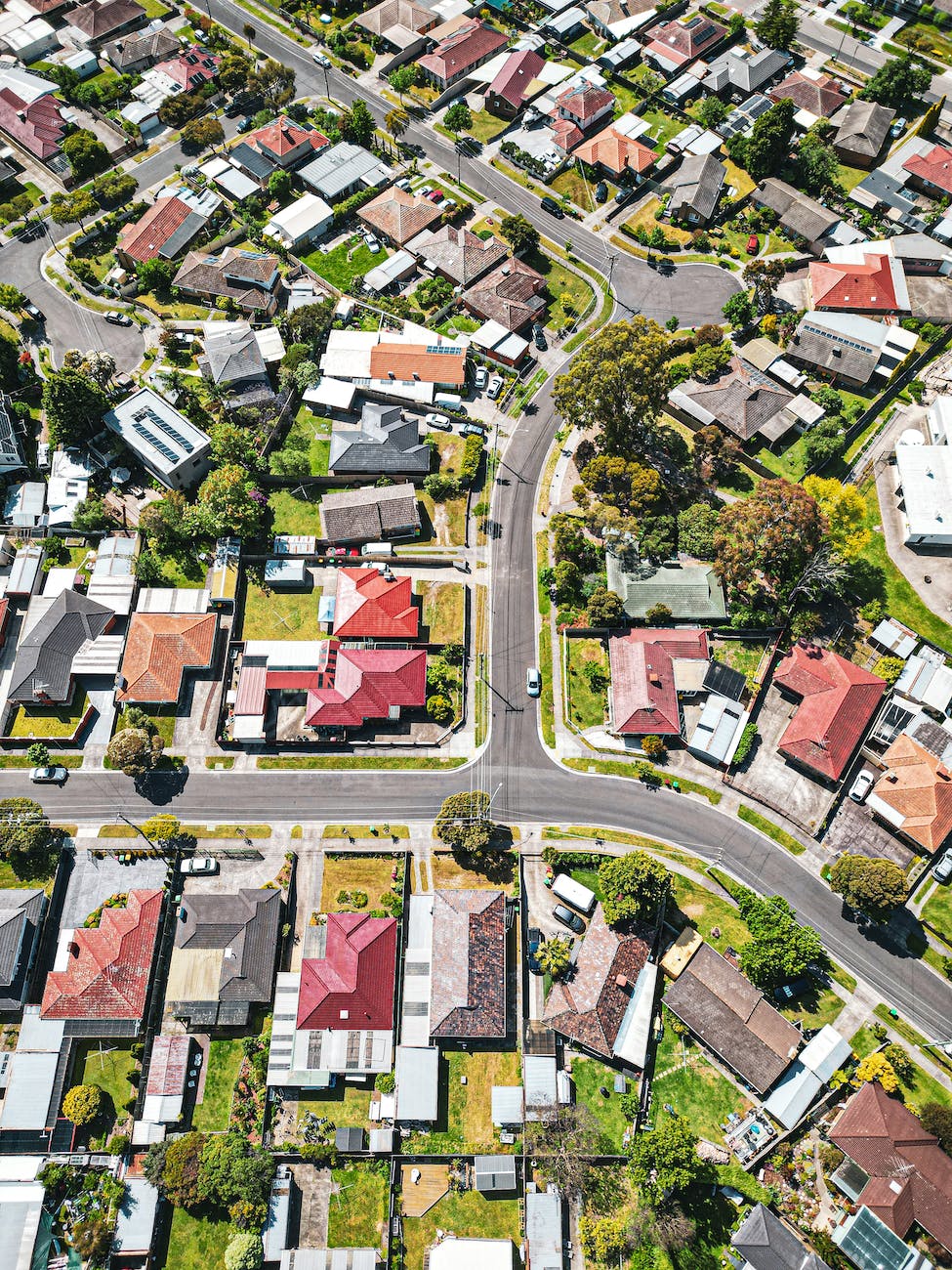
Photo by Geometric Photography on Pexels.com

American suburbia— once marked by dying malls and empty office parks — is thriving.

But, given the already-existing love in the United States for the suburbs, are the suburbs back?

Take one of the pieces of evidence cited. A recent survey suggests a good portion of millennials want to settle in the suburbs:

For eight years now, as millennials have entered their thirties and forties, also known as “homebuying age,” Bank of America has surveyed over 1,000 members of the generation once a year for its Home Work series. And for 2023’s edition, it finds a “suburban nation” alive and well. Older millennials (age 31–41) are almost three times as likely to move into a house than an apartment, the survey found, and they’ve got a hunger for the Costco dog, so to speak. 

Migration patterns during the pandemic have clearly established that most homebuyers have wanted to flee big cities, with some “zoomtowns” such as Boise benefiting in particular. But the survey reveals something even more drastic. In a section called “suburban nation,” BofA reveals that 43% to 45% of millennials—of every age—expect to buy a house in the suburbs…

The interest is pervasive across the generation, and maybe means that the suburb is in for a new and better revival. And a 2021 study from Pew Research Center found that one in five adults preferred city life, compared to one quarter of adults in 2018, those who favored the suburbs increased post COVID-19 as well. One of suburbia’s worst qualities or stereotypes was its pervasive whiteness, now with the surge in interest the suburbs are starting to grow to reflect the diversity of the country at large. Big suburbs are actually now more racially diverse than the nation, according to a Brookings analysis

I take this less of millennials now really want to go to the suburbs and more of millennials are following the patterns of previous generations of Americans. What exactly the suburbs are today is different – they are more complex – but they are still structured around single-family homes, family life, and attaining the American Dream.

All places go through some fluctuations in conditions and appeal. It will take longer than just a few years to doom the suburbs as Americans have now devoted decades to celebrating and pursuing them.
Who owns a neighborhood? Or, who can make decisions to alter it?

A discussion of recent housing changes in Arlington, Virginia, an increasingly whiter and wealthier community, included this summary:

Photo by Jonathan Meyer on Pexels.com

Perhaps the opponents are beginning to accept that their community is not, has never been, exclusively their own domain.

Who owns a neighborhood? In many American communities, the people who live there might feel this way. They expect to provide input and exercise some oversight of what happens in their neighborhood. They want to exercise control over their own properties and those around them.

But, they do not do this on their own. They interact with other property owners and also engage with local governments. These local governments typically represent a broader community and have regulations about what can and cannot be done in neighborhoods.

In this particular case, the residents are single-family home owners and they have money and status. Thus, they really expect to be able to control their surroundings and they have means to back up their interests. Zoning in the United States often privileges protecting single-family homes.

In the end, however, local government has the task of considering the broader interests of a community. These may or may not align with the interests of a neighborhood. The neighborhood residents can respond by not voting for these local government officials and it is relatively easy in a smaller community to express discontent with local officials. But, action may already be underway that cannot be changed.

Or, here is another way to address the same questions: if every neighborhood will change over time, who gets to street this change and/or benefit from this change? Those with means and vested interests will have their own perspective and goals while a broader community might have another point of view.

The ideal American lawn as “ecologically unproductive”

A description of a homesteader property in North Carolina explains why the lawn had to go:

Photo by Tina Nord on Pexels.com

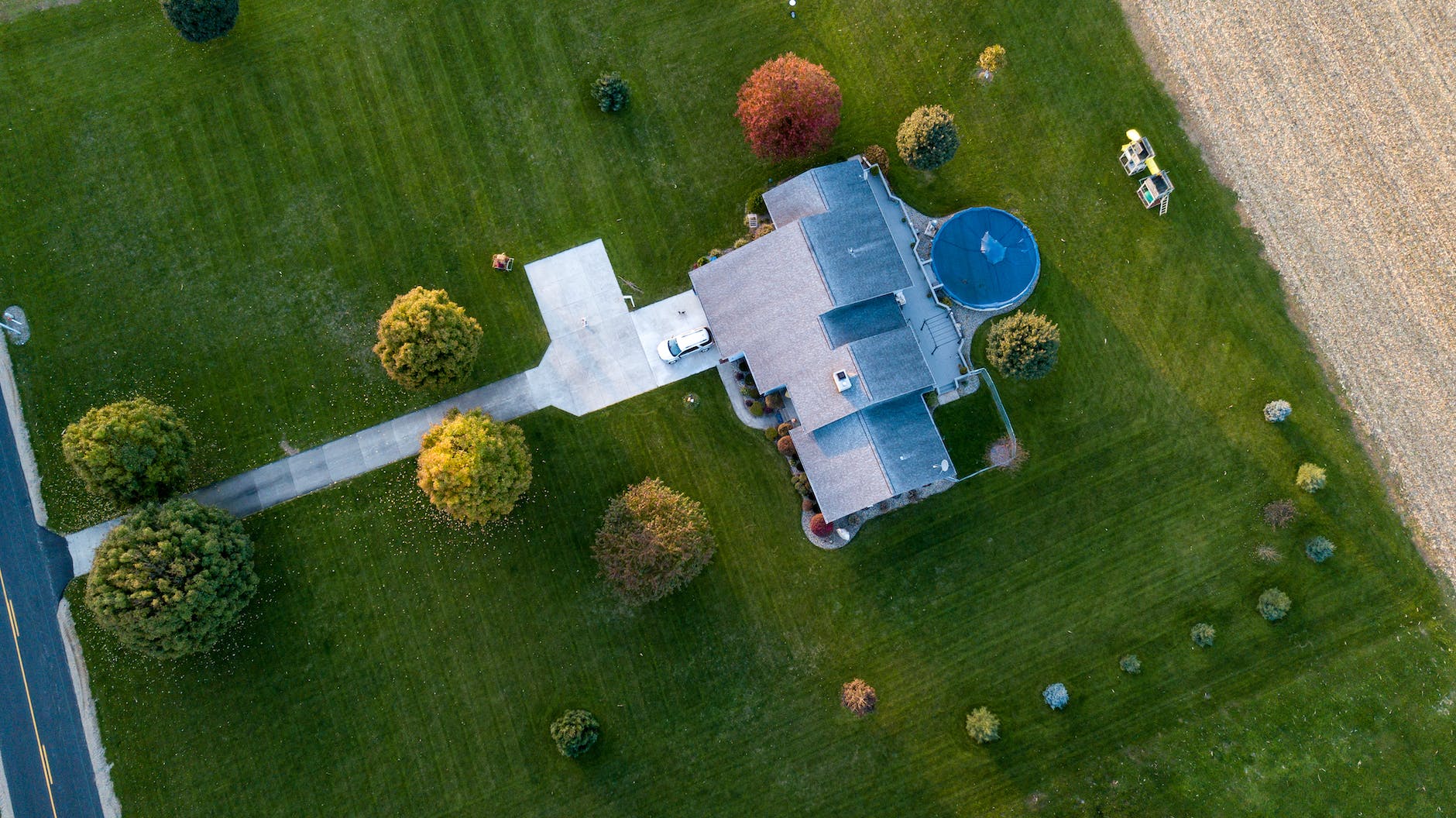
When they bought the house, it was surrounded by a picturesque, but ecologically unproductive, lawn of green grass. Building out a homestead that uses available space for growing food almost always means disrupting the lawn, and McClelland and O’Neill dispatched theirs quickly.

The American lawn is often a symbol of social class. But, what if it not just an ornament or a testament to money and effort but is instead a clear suggestion that the property owners do not need to use their land for other uses? What if a green and well-kept lawn is not about presenting a particular verdant image but rather shows that the owner is so wealthy that they acquire their food – and other things they might acquire from the land – elsewhere?

American lawns could be devoted to native plants or covered in stones. They could also be used to grow food. Imagine even half of the lawn space in the United States used to grow food. How much could be produced? Could this help people eat healthier? Could being involved in gardening have positive individual and social outcomes?

Yet, the green lawn says, “I am not needed for food. I am here to look pretty.” Perhaps it is even a form of conspicuous consumption; it broadcasts that the owner can waste the lawn on green grass.

COVID-19, rents, and increases in household formation

A new paper suggests an increase in household formation during COVID-19 has helped keep rent prices high:

Photo by SHVETS production on Pexels.com

In this case, Ozimek and his coauthor, Eric Carlson, used heaps of 2021 census data to illustrate how housing markets in large cities were caught between two powerful, competing forces. The first was outbound migration, which led to weaker housing demand in city centers. Previous work by Stanford researchers Arjun Ramani and Nicholas Bloom found there was a “donut effect” earlier on in the pandemic, in which housing demand fell in dense urban areas as people moved to the surrounding residential areas and suburbs. Between July 2021 and June 2022, New York City lost a net 194,000 residents to migration, while Los Angeles lost 109,000, Chicago lost 88,000, and San Francisco shed about 20,000, an analysis of census data by John Burns Research and Consulting found. In the case of New York City, EIG’s latest analysis of data from the US Postal Service confirmed there hadn’t been a subsequent surge in people moving back to the city.

Instead, the sudden flight to the burbs was counteracted, Ozimek and Carlson said, by an equally startling surge in household formation. A household refers to any group of people living together in one unit — a family of five in a suburban home counts as one household, as does a group of three roommates living in an urban apartment. If those three roommates move out and each gets a one-bedroom unit, the net effect is two additional households. Before the pandemic, US household formation was on the decline. Between 2010 and 2020, the increase in the number of households was the lowest on record, an analysis by Pew Research Center found. Slow population growth and an increase in the number of adults living with their parents, perhaps as a result of the economy’s choppy recovery, meant there were fewer people striking out on their own. That changed shortly after the pandemic hit — household formation jumped by 2.5% nationally in 2021, more than double the fastest rate since the Great Recession.

This surge in household formation caused an increase in the “extensive margin of demand” — essentially, the total number of housing units that a given population desires. But EIG’s latest paper goes one step further, saying there was also an increase in the “intensive margin,” or the size and quality of units that people demand. Put another way, remote work led to an increase in the number of people wanting not only places of their own but also bigger homes. A couple might seek to upgrade from a one-bedroom to a two-bed, or they might look for a one-bedroom with more square footage. This desire to trade up is evident in the rent payments of people who shifted to remote work: Becoming a remote-work household in 2021 was associated with a 20% increase in rent payments, or about a $500 increase each month, the EIG researchers found.

Of course, those effects weren’t felt equally everywhere. To return to the “donut” analogy, the hole in the center — the most densely populated, expensive part of a metropolitan area — was likely to lose population as a result of more people working remotely. But it was also more likely to see a greater increase in household formation.

The headline for the story suggests this is about people wanting to live alone but the summary of the paper suggests people adjusted to changing work and economic conditions by seeking out more space for themselves. Did people seek their own household to get away from others or to have more space for themselves and work? If money was no object, would American residents prioritize more space or living with people?

I wonder how this connects to longer-term patterns of more American living alone.

American sprawl consequential because of its scale

An environmental activist in New Jersey describes suburban sprawl in his state in ways that hint at its vast scale:

Photo by Seva Kruhlov on Pexels.com

The origins of this devil-may-care approach to development stretches back decades. “One of the things we’re going to look at is all that development in the 60s, 70s, and 80s, where we just sprawled out along the highways, built office complexes in the middle of nowhere, and built these five acre McMansions on farm fields. With all those policies, we’re going to have to reverse them at some point where we need to develop in a smarter, better way: places that are more walkable, fewer cars, more green space, less pavement. It’s not going to be easy because we, in some ways, have to fix the mistakes of the past, like on stormwater, where so many of our cities and towns are already paved, how do you go back and retrofit them? How do you break up these heat island effects in places like North Jersey? With planting trees, putting in more green space, green roofs, and stuff like that. That’ll take some money and it takes political will in New Jersey. I’ll just say that we have a flood of problems and a drought of action on some of these issues. We need to have the political will to make some of the tough choices and then make those kinds of investments. So far, we just keep kicking the can down the road.”

By the 1960s, Americans had a history of suburban homes stretching along railroad lines, streetcars lines, and roads. The ideal of the single-family home was well established. Plenty of people had fled cities. New transportation options provided speed and opened up new land for development.

But, the sprawl of the postwar era happened on a scale beyond these earlier efforts. Completely free of railroads and streetcars, potential homeowners could reach any property with a car. Large-scale builders could construct new subdivisions or communities in a relatively short amount of time. Metropolitan regions expanded out and small communities outside the city could grow very quickly. A whole lifestyle around homes, driving, and suburban day-to-day life for millions emerged.

Reversing these significant changes will require significant shifts in different directions plus time. Forget New Jersey; would Americans as a whole, particularly the majority of residents who live in suburbs, want to reverse these patterns or do they enjoy suburban life (or dislike the alternatives) so much that they would resist major changes? Either way, the consequences of sprawl will continue to affect society for decades to come.

Basketball “from suburbia to Serbia”

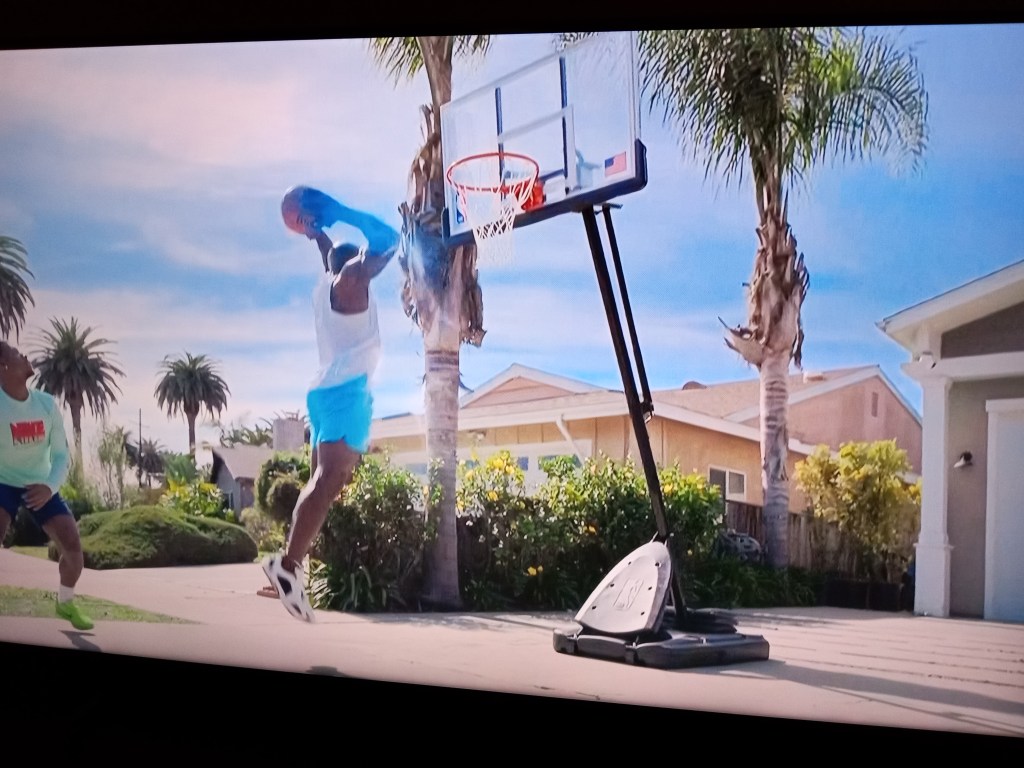
An NBA Playoffs commercial touting “playoff mode” includes the line “from suburbia to Serbia, it’s unbelievable” alongside this image of suburban basketball:

What stands out in this depiction of suburbia? A few things:

  1. Outdoor basketball with palm trees on a beautiful day of sunshine. Is this southern California? I assume this is a good spot to play basketball outdoors for most of the year. Not all places in the United States can claim this.
  2. This is a hoop in the driveway of a single-family home. The two players are not at the park playing basketball; they are playing in a private setting (though the street is presumably just out of view).
  3. How many players can dunk on the hoop set up in their driveway? It is hard to tell from the angle of the shot – the camera is just a foot or two off the ground – whether the hoop is at ten feet.

It does look like fun is being had with two guys playing hoops in the American suburbs…or a studio backlot made to look like one. While the line in the commercial tries to drive home the appeal of playoff basketball in two places with alliterative names, are the driveways of the American suburbs one of the key sites for basketball?

Fighting for suburban voters ahead of 2024, Carmel, IN edition

A mayoral race in a well-regarded suburb hints at suburban voting patterns for 2024?

Photo by Element5 Digital on Pexels.com

Tuesday’s electoral results show in miniature the national Republicans’ weakening grip on the suburbs. Come November, the race will also be a key post-midterms bellwether for both parties. Democrats made big gains in suburbs nationally in 2018 and 2020.

Nowhere else is that more apparent than Carmel. Slowly, this city has become more diverse and seen an influx of younger, more moderate voters who flock here for its award-winning school system, public art, affordability and culture (it’s home to a $126 million concert hall drawing national acts like the singer and songwriter Jason Isbell, and boasts more than 138 roundabouts, more than any other city in the U.S.). Students of the public school system speak 65 languages from 55 countries. Though many of its communities are gated, it’s not been walled-off from social change: Black Lives Matter marches snaked down the Monon Trail in Carmel amid $1 million townhouses and an upscale steakhouse in the summer of 2020…

Now, the Indiana Democratic Party is eyeing Carmel as a potential pickup this November. Mike Schmuhl, Pete Buttigieg’s former campaign manager and the state party chairman, is targeting this suburb in hopes of flipping it blue.

“The city has changed a lot,” Schmuhl said over lunch today at Fat Dan’s Chicago Deli in Carmel. “This used to be a rock-ribbed, Republican, conservative area but the Republican Party has changed a lot, too. So what you have up in Carmel is a lot of development, a lot of families, educated voters, hard working people, and the Democratic Party’s values appeal to those people.”

As someone who studies suburbs, four things I would note about Carmel that are relevant for this story:

  1. It is regularly named a Best Place to Live in Money’s list.
  2. It is right outside the combined Indianapolis-Marion County unigov arrangement. While that move was intended to help the city capture some suburban growth, Carmel sits right outs Marion County in neighboring Hamilton County.
  3. The population growth since 1960 has been astounding as it had just less than 1,500 residents in the 1960 Census. The suburb has had more than 25% population growth every decade since then and now has just under 100,000 residents.
  4. It has plenty of white-collar jobs due to corporate headquarters and offices.

Carmel exemplifies complex suburbia where larger suburbs can be more diverse, have more economic activity, and experience rapid growth and change. This can include changing political patterns at the state and national level but within communities where many do not vote in local elections.

The number of suburbs – or communities overall – that look like Carmel is small. At the same time, these larger suburbs have a higher status ad get more attention. As the political parties continue to fight over suburban voters, pundits will continue to look to growing and changing suburbs to see which ways the winds are blowing.

Secretariat as the sports figure with the most streets named after them

A few years ago, ESPN looked at how many American roads are named after athletes. Secretariat led the field:

Photo by Mu00eddia on Pexels.com

But perhaps nothing drives home the impact of Secretariat’s life more than looking at a map. Like, any map. We know because we’ve looked at them. All of them. In an effort to identify roads in the U.S. named for athletes, ESPN cross-referenced 2010 Census data with Google Maps. We were stunned to uncover 263 roads named after the horse — far more than for any other athlete, human or otherwise. “I’m not that surprised,” says Kate Chenery Tweedy, whose mother, Penny, raised and owned Secretariat. “Secretariat came along at a time of great crisis in this country — Watergate, the Vietnam War, Nixon’s impeachment. And unlike any other athlete ever has, he restored our sense that there is beauty and good in the world.”…

Born in Virginia. Won Triple Crown races in Kentucky, Maryland and New York. So it makes perfect sense that the states with the most Secretariat streets are … Florida and Texas?…

Road experts say there is little rhyme or reason to the way our streets get their names. It’s mostly just real estate developers who submit names to their town, there’s usually a relatively easy approval process, and voilà. Case in point: Somebody in Butte, Alaska, sure likes horse racing. You can take Sea Biscuit Lane to E. Man o’ War Drive, then hang a right onto E. Secretariat Drive — the most northerly road named for Secretariat. And if you wanted to ride Secretariat the 3,920 miles back to his burial site? At the record 37.8 mph he ran the Belmont in, he’d have gotten you there in a little over four days.

As someone who studies suburbs, here is my own theory for this naming pattern. Developers often want names for nicer subdivisions connected to tradition, certain lifestyles, and success. Why not reference both horse racing and one of the most successful horses ever? Horse racing requires money to participate and the audience for horse racing might fit particular demographics. Additionally, horse racing hints at nature. Secretariat is a well-known athlete. Such names will help establish their subdivision as an exciting place for people with means.

My own community has at least a few street names that connect to horse racing. This is not just a connection to racing in the abstract; our suburb has links to horse racing near these sites with a racetrack that was in existence in the early 1900s and another farm with wealthy owners who bred and raced horses in the second half of the twentieth century.

By linking single-family homes to horses and one of the most famous American athletes, how can a developer go wrong?

Chasing development: give big tax breaks to Foxconn, then to Microsoft…

American municipalities want growth and jobs. Hence, they give tax breaks to corporations to locate there. In southern Wisconsin, they first gave big money to Foxconn. When that fell through, now they are giving money to Microsoft:

Photo by Jonathan Borba on Pexels.com

Taiwan-based Foxconn Technology Group forged an agreement in 2017 with former Gov. Scott Walker to manufacture LCD screens in Mount Pleasant, investing $10 billion and employing 13,000, in return for billions in subsidies. But the company, a top manufacturer of Apple’s iPhones, downsized its plans and created few jobs, forcing government officials to find other users.

Data centers process and store huge volumes of computer data, forming the backbone of the internet. Although these facilities typically don’t create large numbers of permanent jobs, local leaders and tech experts say Microsoft’s arrival signals the Foxconn land, along with infrastructure improvements already complete, won’t go to waste…

Residents on the land promised to Foxconn were displaced from their homes, but the company, blaming “unanticipated market fluctuations,” canceled the mega-factory. In 2021, it signed a new deal with Gov. Tony Evers, who beat Walker after criticizing the original agreement. Instead of up to $3 billion in subsidies, Foxconn agreed to collect $80 million for creating 1,454 jobs and investing $676 million in a set of smaller facilities by 2026.

Microsoft’s agreement with Mount Pleasant and Racine County requires it to launch construction by 2026. The company can recover 42% of its property taxes, but no more than $5 million per year. The local governments can also repurchase the land at the same price if Microsoft fails to hit the deadline.

The logic for this is provided in the story. Attracting big companies and jobs is viewed as important. If growth does not come here, it will go to other communities who will benefit. The deal with Foxconn fell through but having some deal and a few jobs is better than nothing. Growth must continue as must the tax breaks.

Do they really have to continue in this fashion? The final paragraphs hint at one of the possible motivating factors for these companies locating in southern Wisconsin: they are just over the Illinois border and can service the Chicagoland region. If Chicago area municipalities will not compete with each other in these same ways, just go over the border and find plenteous tax breaks. Another motivating factor seems to be a fixation on big companies and tech companies. What community would not want to boost they have a Microsoft facility (even if it is just a data center)?

I hope some people keep following up this story and similar ones to find out what communities and residents actually get out of these tax break deals. How much is spent per job? How does the business growth help the community? What does a data center contribute to a community? Years down the road, who benefits the most from these deals?

The pedestrians’ school of defensive (and hopefully enjoyable) walking

Walking is good for you and can contribute to health and sociability. Walking can also be dangerous, particularly in the United States where life is optimized for those in cars and trucks. Given this context plus my own experiences walking, here are my rules for the pedestrian:

Photo by Uriel Mont on Pexels.com

-Always be aware of your surroundings. Do not walk distracted to the point where you do not know what is going on.

-Take in and enjoy what is going on around you involving people, buildings, nature, and more.

-Keep at the speed of other pedestrians around you. There are times to go slower (strolling areas, tourist areas) and times to go faster (going with rush hour traffic to the train station). Know the purpose of your walk and act accordingly.

-Do not stop suddenly in the middle of walking.

-Do not block the middle of a walking path.

-Anticipate the actions of others, particularly vehicles.

-Be clear and decisive in your movements. Do not make others guess at your intentions as a pedestrians.

-Make eye contact with drivers.

-If walking in a space shared with vehicles, walk against traffic and stay to the side.

In roughly two hundred years, humans have gone from primarily walking to traveling much faster speeds on a regular basis. Let us not completely lose our walking skills and enjoyment.