“We have a supply problem with housing,” Marc Norman, associate dean at the NYU Schack Institute of Real Estate, told Yahoo Finance Live (video above). “We’ll see the price declines, but I think the income gains that we are seeing lately are still not keeping up with the prices that we are seeing in the market — in most markets.”…
“We, for the last 20 years, have underbuilt the housing,” Norman said. “In 2008, we saw the sort of demand go down, but it never came back in terms of supply.”
After the 2008 real estate crash, residential construction activities in the private sector never recovered to the level of 2006. Although home building slowly increased year over year during the last decade, projects remained well below early 2000 levels, according to figures from the Census Bureau and. Department of Housing and Urban Development.
Several thoughts in response:
The United States has never fully recovered from the housing bubble in the late 2000s. The rise in housing values, homeownership, and lending activity led to a lot of trouble.
How much money has the real estate and development sector made since the late 2000s? How much money has been left on the table by not building (or not being able to build, as discussed in the article, due to zoning and other restrictions)?
How many older homes are retrofitted or renovated to meet current standards and tastes each year compared to how many new housing units are needed? Both routes could help provide housing.
But as European descendants forcibly settled the region, and began turning land over to agriculture and then urbanization, the trees that remained were sparse holdovers from pre-settlement times. Many of the new trees they planted were non-native species for landscaping purposes, while animals distributed invasive tree species.
So the idea that Chicago was a “City in a Garden” when the motto Urbs in Horto was adopted by the city government in the 1830s is a bit of a misnomer, said Julia Bachrach, former historian for the Chicago Park District.
Bachrach said the 1830s brought a flurry of land speculation in the Chicago area, which city officials encouraged by enticing East Coast developers to buy up stretches of land. But first they had to convince developers the land was valuable.
“It was a bit of a PR move to call this marshy, windswept, ‘smelly onion’ city the ‘City in a Garden’,” Bachrach explained.
As this article goes on to describe in more detail, many of the trees, parks, and boulevards came later to Chicago. And many of the things Chicago later became known for – including “the city of broad shoulders,” skyscrapers, meatpacking, and divides – have few clear links to gardens and trees.
I recall reading Ann Durkin Keating’s Rising Up From Indian Countryand being surprised by the presence of sand dunes along the shores of Lake Michigan in the early days of white settlement. As a kid reading and hearing about Chicago, the story always seemed to go the other way: filling in land along the lake with refuse from the great fire, reversing the flow of the Chicago River, and building a booming metropolis over whatever was there before. Chicago conquered nature to become what it was and then thought of parks, trees, gardens, and a lakefront. That it could feature nature in particular ways was a product of this mechanical and human progress.
Bonus facts: the motto is featured at the bottom of Chicago’s seal and is represented by one of the points of the fourth star on the Chicago flag.
Americans have been through a tough few years, but I am optimistic about our country’s economic prospects. Americans’ resilience has helped us recover from the economic crisis created by the COVID-19 pandemic, families are finally getting more breathing room, and my economic plan is making the United States a powerhouse for innovation and manufacturing once again.
In the list of economic accomplishments, I could find no mention of housing. None. Zero. There could be a few reasons for this:
There is little good news on the housing front.
The new about housing is less good or clear than the areas Biden cites.
Housing is not viewed as a winning political topic.
What could political leaders do to help deliver a Christmas housing present for Americans? How can they talk about jobs, incomes, taxes, and opportunities without mentioning one of the most basic pieces of the good life in the United States: a pleasant home or residence in a decent location?
I keep thinking about the car commercials that have run for years featuring people getting new cars, SUVs, or trucks as Christmas gifts (sometimes with a bow). This might be the ultimate in Christmas consumption: a true big ticket purchase on the biggest consumer day. At the same time, Americans like cars and driving and are willing to shell out for it. Americans also like single-family homes; could someone develop a Christmas housing share gift program? Or, “give a mortgage”?
Dear Prudence, My husband and I are moving to the city where one of my dearest friends lives. She really wants us to move to her neighborhood (“You can walk over for barbecues! Go on morning runs together!”). I love the idea of being close, except I hate her neighborhood. It’s a bunch of huge McMansions with things like fake turrets and nonsensical designs. I get why she and her husband chose it—there’s lots of space for their big family—but you couldn’t pay me to live there. On paper, though, it makes a lot of sense: It’s close to my work, in my price range, etc., so my friend doesn’t seem to catch on to my polite demurrals (“That might be a little too much house for us” or “We’re looking in a lot of neighborhoods.”) What can I tell her besides “your house is hideous”? —Hideous House
Unless she’s calling you every day and going through all the listings in her neighborhood, I think it’s fine to keep offering her polite-yet-accurate demurrals until you eventually find a house elsewhere. There’s a natural expiration date to this conversation, and that will be when you move into a house in a different neighborhood. In the meantime, you can stress how great it is that you two will finally be living in the same city. If you absolutely can’t stand her gentle but insistent questions, then pick a household feature or two you know her neighborhood can’t provide that are absolute necessities for you and tell her: “We’re looking for something with less than 2,000 square feet, and [your neighborhood] just doesn’t fit the bill. Tell me what you think of these two houses we’ve been looking at.”
The term McMansion is typically negative. The answer above suggests it is best not to call out the friend’s home as a McMansion. This might not go over well, even if the person picked the McMansion because they liked it. Instead, emphasize how your own interests are different and move on.
I have wondered about this very topic for years: it is one thing to dislike McMansions from afar or in the abstract. But, what happens if someone you know and/or like lives in a McMansion and likes it? Is having a McMansion a barrier to friendship or a deeper relationship? Should one who dislikes McMansions express this opinion and the ways that McMansions bring blight to the earth? How does it work to criticize McMansions strongly and then know that at least a few McMansions like them and purchase them? Are these sorts of differences part of the sorting of people into different communities and social spheres?
These dynamics play out regularly in many communities, whether they have subdivisions full of McMansions or teardown McMansions. How exactly they affect interpersonal and community interactions and relationships could be studied further.
The researchers identified 10,800 representatives across city halls, state houses, and federal offices in 2019 and cross-referenced their home addresses with tax records. They found that about 93% of US senators, congressional representatives, federal judges, city council members, state senators, state representatives and governors definitely or likely owned a home.
In another sample of 1,800 city-level officeholders, the discrepancy between voters and their electeds was stark: For the 190 municipalities researchers examined, citywide homeownership rates were around 50%, while 83% of mayors owned their residences…
Despite these high-profile exceptions — both young people of color, like Azeem — researchers found that in city after city, the broader homeownership trend held, even in costly cities like Miami and Boston, where renters dominate. “There aren’t really any cities where large numbers of renters have been elected to local, state or federal office,” Einstein said.
The paper describes two “bottlenecks” that could prevent renter representation: Either fewer renters run, or fewer voters are willing to elect them. By analyzing the housing status of city council candidates in California between 2017 and 2018, they found that the former is more likely…
Elected officials are even more out of step with their communities when it comes to where and how they live. Researchers found that the homes occupied by local, state and federal officials were worth an average of 50% more than their zip code’s median value. The higher the level of public office, the greater the ratio. Nearly 80% of officeholders who owned their houses lived in single-family homes, while only 67% of houses across the country are considered single family.
If you have a list of steps one needs to take to be a successful politician, add this one to early in the list: own a residence.
How exactly does wealth play into this? Does wealth lead to both homeownership and the possibility of running for office?
A possible follow-up study: do political candidates run markedly different campaigns given their homeownership status or do they generally play to the ideals of homeownership?
Church membership, church attendance and belief in God all declined during the pandemic years, survey data suggest, accelerating decadeslong trends away from organized worship.
At least one-fifth of Americans today embrace no religion at all. Researchers call them “nones.”
A similar share tell pollsters they do not believe in God, an all-time high.
The lone, striking countertrend is a steep rise in nondenominational Protestants, who attend churches outside the “mainline” denominations — the once-ubiquitous Baptists, Methodists and Lutherans.
The story is set up this way: religion is on the decline and the only phenomena standing out are megachurches. This is an interesting set of evidence to put together. Do religion and megachurches go together or cause each other? Here are just a few ways they might be related:
Religion is down and megachurches are up. (This is what the article suggests in the headline and later in the story.)
Religion is down and megachurches are a last gasp of religion.
Religion is down and megachurches helped contribute to this decline.
Religion is down. And megachurches are not related to this overall pattern.
Which of these options is most accurate? What is the causal link between overall American religiosity and the presence of sizable religious congregations?
At the core of American housing policy is a secret hiding in plain sight: Homeownership works for some because it cannot work for all. If we want to make housing affordable for everyone, then it needs to be cheap and widely available. And if we want that housing to act as a wealth-building vehicle, home values have to increase significantly over time. How do we ensure that housing is both appreciating in value for homeowners but cheap enough for all would-be homeowners to buy in? We can’t…
Fundamentally, the U.S. needs to shift away from understanding housing as an investment and toward treating it as consumption. No one expects their TV or their car to be a store of value, let alone to appreciate. Instead, Americans recognize that expensive purchases should reflect their particular desires and that the cost should be worth the use they get out of them…
I should be explicit here: Policy makers should completely abandon trying to preserve or improve property values and instead make their focus a housing market abundant with cheap and diverse housing types able to satisfy the needs of people at every income level and stage of life. As such, people would move between homes as their circumstances necessitate. Housing would stop being scarce and thus its attractiveness as an investment would diminish greatly, for both homeowners and larger entities. The government should encourage and aid low-wealth households to save through diversified index funds as it eliminates the tax benefits that pull people into homeownership regardless of the consequences…
If we are interested in helping low- and middle-income people live well, we need to fix renting. Some potential policies include increasing oversight of the rental market, providing tenants with a right to counsel in eviction court to reduce predatory filings, advancing rent-stabilization policies, public investment in rental-housing quality, and, most important, building tons of new housing so that power shifts in the rental market from landlords to tenants. Even if nothing changes and America’s love affair with homeownership continues, tens of millions of people will continue renting for the duration of their lives, and almost everyone will rent for at least part of their life. Financial security, reliable and reasonable housing payments, and freedom from exploitation should not be the domain of homeowners.
There is a lot to think about here. A few thoughts:
Is the entire goal of the American system to generate money through property and ownership? Owning land and property has been very important from the beginning not only for what land could be used for and the money that could be generated but also because of status and rights attached to owning land and homes.
Who is homeownership for? Consistently in American life, it is more available and profitable for wealthier white residents. Policies and ideals have promoted and perpetuated this.
Given #1 and #2, renting is not just a difference in how one pays for their dwelling. It is a difference in how a person is regarded and what is viewed as ideal. The current system may have vast disparities in homeownership and the wealth generated by it but renting or renters is disagreeable to a good portion of Americans.
Even if the goal remains to help adults in the United States attain homeownership, more could be done to address renting or obtaining a first property or addressing racial disparities in housing values. Ignoring renting means that it could limit people in the future from owning a home. Or, not having entry-level housing means people cannot easily move up. Or, help limit the disparities in housing values based on existing patterns. Promoting only homeownership is short-sighted.
“Moving to a boomtown at its earliest stages can be a great opportunity for entrepreneurs and investors, as there’s still plenty of room for growth. And for those who are looking for a job, there are usually plenty of opportunities available in rapidly growing cities,” says Edith Reads, senior editor at TradingPlatforms. “However, if a city has already reached its peak, it may be too late to get in on the action. In this case, it may be wiser to wait until the city’s growth slows down before making the move. This way, you can avoid getting caught in the midst of a housing or job crunch.”
In other words, a resident or business wants to get in on the earlier parts of the boom, not in the latter stages or after it is over. Why? A few reasons listed above:
There is money to be made. Whether owning a business or a home, an investment early on could pay off down the road. (For more on American homes as investments, see this earlier post.)
A growing community means numerous job opportunities.
Mess up your timing in moving to one of these boomtowns and these two opportunities are not as good.
Another thought that is not accounted for in this ranking: how does the community change because of the boom period? Is it just as an attractive place to live and work after the rapid population growth? How do the old-time residents view the change? If the community grows enough, it will not exactly be the same place. Ultimately, other boomtowns will reign in future years. Will the boomtown be a good place to be in a few decades?
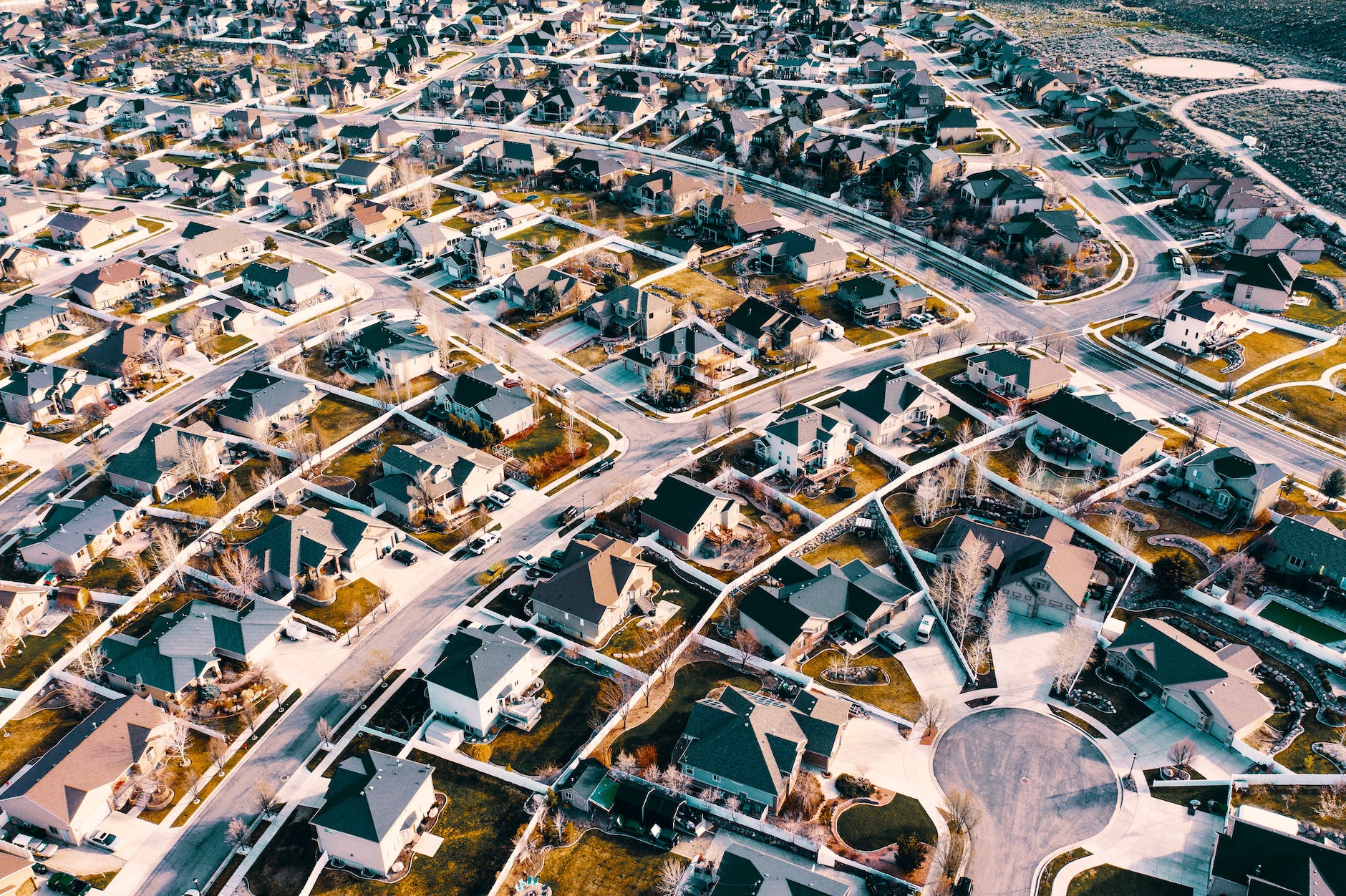
Developers began mass producing tracts of parklike suburban housing in the 1920s, and the trend burgeoned after WWII. All along, sociologists have found that parents move to the suburbs in large part for their children’s success. Those goals shaped the housing structure in these new developments, which featured single-family homes and activities centered on nuclear families of parents and children.
“Suburbia is so individualized, privatized, and family-oriented,” said Miller. “Relationships beyond those boundaries are seen as bonuses or good things to have, but not necessary.”
The arrangement of the American suburbs also narrows a person’s potential pool of friends. “When you’re making decisions based on schools, quality of life, and affordability, you end up preselecting your social relationships and possible friends,” Miller said.
In this milieu, Miller said, many Americans end up making friends based on two things: geographic proximity or shared interests. For example, one might find friends at grocery stores, local parks, or children’s activities like schools and sports. But even proximity and shared interests are not enough to push people into deeper friendships, as Langan has found.
Later in the article:
Miller sees this tension in his research on the suburbs, where—again—people prioritize family success over friendships. Over the past two decades, most books published on practicing faith in the suburbs have pushed against the societal current of surface-level and transactional relationships. “You should be forming relationships with people who have nothing to give you, nothing to offer you,” Miller said, summarizing a key theme in Dave Goetz’s 2006 book Death by Suburb: How to Keep the Suburbs from Killing Your Soul (HarperCollins, 2007). “That’s where you may truly meet God and meet people.”
Miller has seen some Wheaton students take these teachings to heart as they graduate. Some friend groups will decide to live together for one or two years post-graduation, focusing on relationships rather than careers. “That’s frowned on as delaying adulthood, but it poses a great question for Christians about what we value,” Miller said. “Is it about going out after graduation and finding the ‘best job’ and then finding people later? Or is it prioritizing relationships, friendships, and connections to a local church? I hope we would say that the latter are more meaningful in the long run.”
Build and idealize a suburban landscape around single-family homes, nuclear family life, exclusion, and driving and these are some of the patterns of social interaction that develop. I am sure there are numerous ways to address this; there are many researchers better suited to comment on that. Yet, it is helpful to know the underlying factors that contribute to difficulties to forming adult friendships at the start of the 21st century in the United States (in addition to oft-cited factors like social media).
Technically, one could do the same thing at a McDonald’s or another more casual fast food spot. But given that McDonald’s isn’t exactly relaxing, it may not be people’s first choice for a leisurely afternoon hang. Panera, on the other hand, is what’s known as a “third place,” a special type of social environment that blurs the lines of work and home.
This concept originates from sociologist Ray Oldenburg’s 1989 book The Great Good Place, wherein he separates daily life into three distinct spaces. The first is the home, the second is the workplace, and the third is any other environment where people can freely gather and exist in public without obligation. Starbucks, notably, is explicitly designed with the third place in mind. As Forbes first wrote in 2015, Panera has increasingly been chasing this idea as well, arranging their stores more like living room spaces and encouraging customers to stick around by offering free Wi-Fi. Particularly with its Unlimited Sips program, Panera has shaped itself to be a third place where people can hang around with a low barrier to entry—even more so than Starbucks, where two drinks would cost as much as a month’s worth at Panera, and there aren’t even free refills.
All of this helps explain what makes this Panera lemonade situation so compelling. If it were a 7-Eleven selling chaos in a cup, nobody would think twice. Instead, it’s this suburban-feeling sandwich retailer that has shaped itself as a simulacrum of the neighborhood cafe. And that’s weird—a Charged Lemonade would be a better fit for the X Games vibe of Taco Bell, a chain that already flavors everything with Mountain Dew and Doritos dust. Panera seems so innocent—until you remember that they’re essentially feeding you a loaf of sourdough with every meal. At Panera, the mayhem is merely disguised by the presence of words like Napa and brioche, and the dissonance of it all abounds.
Nevertheless, for Baus, who says in the video that she hates working from her home, Panera is the perfect environment for both work and leisure. “It’s close to my house and it’s actually quiet,” she said. “I kept going to coffee shops that had loud music and very limited seating. Plus, Panera has the Unlimited Sip Club, which is much cheaper than paying for a coworking space.” For all these reasons, she says, she’ll continue to work from Panera—and yes, continue to glug the lemonade. “I have started watering it down about 70/30, though, because I don’t need that much sugar or that much caffeine,” she said.
My first two thoughts are these:
Panera knows its audience.
This is an embodiment of America today.
Imagine this scene: a semi-busy fast causal restaurant on a December morning with light snow. People are scattered around the tables and seats, some talking quietly, some working on devices. They all have a drink in front of them. Some have coffee, others water, more have a lemonade in different hues. As they drink and work or socialize, the levels of the drinks go down and then are quickly refilled. Some people leave, replaced by others and eventually the lunch crowd raises the volume of the place.
What powers the activity in this third place? Whether in coffee or soda or a lemonade drink, it is caffeine. For a country that sleeps poorly, this is the answer in suburbia.









 Legally Sociable