Build a dorm where 94% of the bedrooms have no windows in order to encourage more activity in common areas

The construction of college dorms not not typically attract national attention but an unusual plan at the University of CaliforniaSanta Barbara and the architect who quit in protest did make the news:
Photo by Jou00e3o Jesus on Pexels.com

Billionaire Charlie Munger is bankrolling the design of a massive dormitory at the University of California, Santa Barbara. The $1.5 billion project comes with a major catch — 94% of the dorm’s single occupancy rooms are in the interior of the building, and have no windows.

A consulting architect on the university’s Design Review Committee quit in protest of the project, in a resignation letter obtained by CNN Business and reported by the Santa Barbara Independent…

Munger, the 97-year-old vice chairman of Warren Buffet’s Berkshire Hathaway, donated $200 million to UCSB to fund the dorms, with the caveat that his designs are followed. He wanted the dorm rooms to be tiny and windowless to encourage residents to spend more time outside in the common areas, meeting other students…

The rooms do have artificial windows, however, which Munger said resemble the Disney cruise ship’s artificial portholes where “starfish come in and wink at your children,” the Santa Barbara Independent reported.

The debate between Munger and the architect seems to come down to differing opinions on what the optimal residential experience is. Munger hopes that no windows would help students leave their rooms. The architect wants students to have access to natural light. Architecture often has ideas about how people in spaces should operate based on the physical surroundings. As my sociologist colleague Robert Brenneman and I argue in Building Faith, religious buildings are also built with specific experiences and behaviors in mind.

Three other factors connected to larger trends are interesting here:

  1. From what I have read, the demand for single-person rooms has increased at colleges. This provides students more private space. But, this may limit sociability and it could increase costs for everyone because more space is needed.
  2. I wonder what role smartphones play in all of this. Even with a window, smartphone use is pretty pervasive. Even with smartphone use, natural light and seeing the outside world has benefits.
  3. People with money and influence sometimes want to translate that status into physical buildings. If you have big money, you can help plan a significant building or attach your name to it. It would be interesting to see how long Munger’s name would continue to be attached to this particular building.

See an earlier post on spending a lot of time in windowless rooms.
Divine Programming and the last two seasons of a critically acclaimed TV show that takes religion seriously

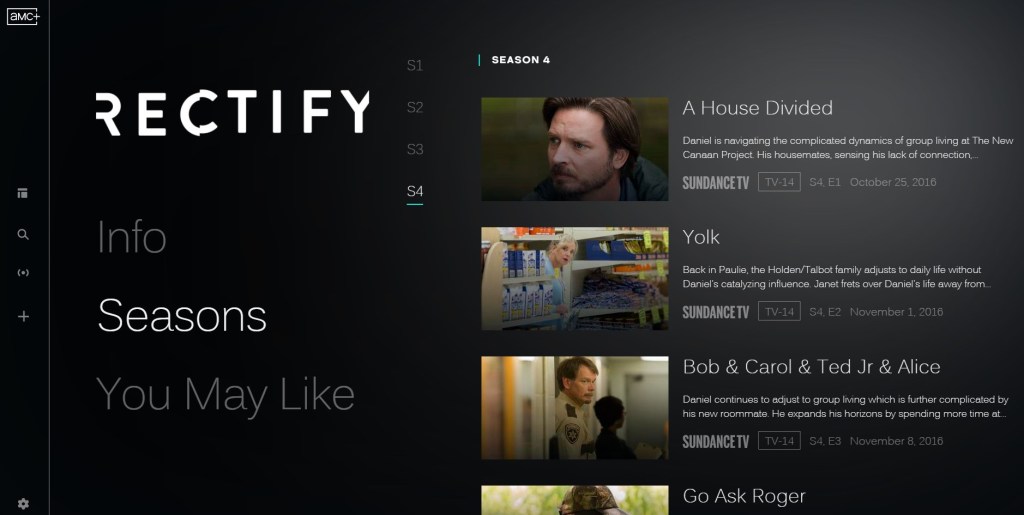
In September, I wrote about reading the academic study Divine Programming and watching seasons one and two of the TV show Rectify. I have now watched the final two seasons of the show, seasons three and four, and was interested to see the role religion played. Here are some thoughts.

  1. Religion is certainly not as important to the plot as it was in the first season. The number of times it is mentioned decreases. There is no presence of organized or institutional religion; it is all personal or individual.
  2. The primary religious character has a return to their faith in the final season. This does not mean everything turns out correctly for them or religion helps solve big issues. It appears that their privatized faith emerges again after going through some personal trials.
  3. The final episodes interact with the themes of hope and disappointment. Arguably, these themes run throughout the entire series; when Daniel is released from prison at the beginning, this does not necessarily lead to long-term consequences for the characters as they engage with what happened in the past and their current circumstances. These are themes that certainly fit with a religious theme. Why do bad things happen? Why are we disappointed? What gives us hope? In the end, the themes of hope and disappointment are left more to the individual characters and immediate family to address, not to religion.

Considering the full show, religion did matter in the narrative arc of the show but it was not a primary force, one that even a majority of the characters engaged with, and did not provide hope or disappointment in the end. Other forces and actors were more influential and the show, like many American narratives, puts a lot of hope in individuals and close relationships among family.

What can happen when residents move to be near a golf course and then the golf course shuts down and becomes overgrown

The icing on the cake may be the “spite fence” but the broader story is an interesting one to consider: residents want to be near a golf course but then the golf course is no more and becomes a problem.

Photo by Pixabay on Pexels.com

The Villages at West Neck was also Foster’s baby. He developed the community of 934 homes for ages 55 and older to complement the golf course. Its serene streets are lined with neatly manicured lawns and ranch houses…

About six months after the golf course closed, in the spring of 2020, W.C. Capital bought it in foreclosure. The company was organized in New Mexico, but it’s unknown who owns it. The sole member is a citizen of Florida, according to Attorney John McIntyre of Norfolk, the company’s registered agent. McIntyre declined to identify the owner.In the beginning, W.C. Capital sporadically mowed the golf course grounds, but it wasn’t as frequent as when the golf course was operating, Luckman said…

Residents rallied to try to save the golf course and formed an advisory committee. They reached out to a local, prominent developer to see if he would consider buying it. They tossed around the idea of the homeowners association stepping up, Luckman said. It would require millions of dollars just to restore it, let alone buy it.

Over the summer, the City of Virginia Beach sued W.C. Capital for not maintaining the golf course property. A bench trial is scheduled for April 2022, according to Deputy City Attorney Christopher Boynton.

In July, W.C. Capital met with Virginia Beach’s planning staff to propose developing senior living apartments on the golf course land. It would require a change in zoning; the land is zoned for preservation. At the urging of the staff, the company has held meetings with residents to garner feedback.

This is a classic issue that residents might face: they move to a neighborhood or community and then that same place changes. Here, a golf course is a sizable feature as it offers green space, relatively undeveloped land, higher property values, and opportunities to play golf for those interested. Filling the space left by a golf course is not necessarily easy for communities.

To some degree, all places change over time. People move in and out, outside conditions change, leaders make decisions. Few places can remain frozen in time.

And regardless of the change, it can be a difficult process for the property in transition and neighbors. The place is changing, developing a new character. Some people will leave in response, some will stay, others will fight the changes.

If indeed the property ends up becoming senior living apartments, in a decade or two the golf course may be a distant memory. The neighbors will move on. The new residents may only hear word of the former land use. The community will go on. But, the memories and experiences of that golf course may still linger among residents and the community even if its physical forms are long gone.

Who is affordable housing for? Biden Build Back Better edition

The Biden administration includes affordable housing as an important part of the Build Back Better initiative. Under the heading “The most significant effort to bring down costs and strengthen the middle class in generations,” here is how whitehouse.gov describes the affordable housing plans:

Photo by Kayley Dlugos on Pexels.com

Makes the single largest and most comprehensive investment in affordable housing in history.

The framework will enable the construction, rehabilitation, and improvement of more than 1 million affordable homes, boosting housing supply and reducing price pressures for renters and homeowners. It will address the capital needs of the public housing stock in big cities and rural communities all across America and ensure it is not only safe and habitable but healthier and more energy efficient as well. It will make a historic investment in rental assistance, expanding vouchers to hundreds of thousands of additional families. And, it includes one of the largest investments in down payment assistance in history, enabling hundreds of thousands of first-generation homebuyers to purchase their first home and build wealth. This legislation will create more equitable communities, through investing in community-led redevelopments projects in historically under-resourced neighborhoods and removing lead paint from hundreds of thousands of homes, as well as by incentivizing state and local zoning reforms that enable more families to reside in higher opportunity neighborhoods.

There is certainly a need for affordable housing throughout the United States as well as in specific places. What interests me at the moment here is the references to how this investment in affordable housing will benefit the middle class. The whole package is aimed at the middle class. The introduction states, “President Biden promised to rebuild the backbone of the country – the middle class – so that this time everyone comes along.”

On one hand, affordable housing is important to the middle class. For decades, homeownership has been a marker of being in the middle-class. The postwar suburban housing boom was driven in part by attainable mortgages. This middle-class homeownership is then often related to a number of middle-class goals. Since housing is such a big expense in many household budgets, having cheaper housing enables spending in other areas.

On the other hand, many people need housing assistance, not just the middle class. Middle class is a broad category and some in that group have plenty of resources (this is a little different in high housing cost areas). Housing is foundational need as good stable shelter is connected to a number of other positive outcomes. If this money is aimed at the middle class, will it go to educated young professionals or older downsizers (as it sometimes discussed in suburban communities)? Or, would it be more needed for those who work lower-wage wages or have fewer family and community resources to draw on?

Perhaps the devil is in the details and where exactly this money goes. Or, middle-class here is intentionally broad as many Americans like to think of themselves even if their circumstances suggest they are not and some Americans are averse to resources directed to narrower groups. Regardless, if the plan comes to fruition, it will be worth seeing whether these efforts can make a significant dent in the affordable housing needs in the United States.

Does Ben Simmons live in a McMansion or a mansion?

Basketball all-star Ben Simmons has his house on the market and one publication calls it, in the final paragraph, a McMansion:

Now his McMansion, replete with dedicated “Simmo the Savage” room, has popped up on the market for five big ones. It’s almost too perfect to believe.

Is his suburban home a McMansion? Here are more details about the house from the first two paragraphs of the story:

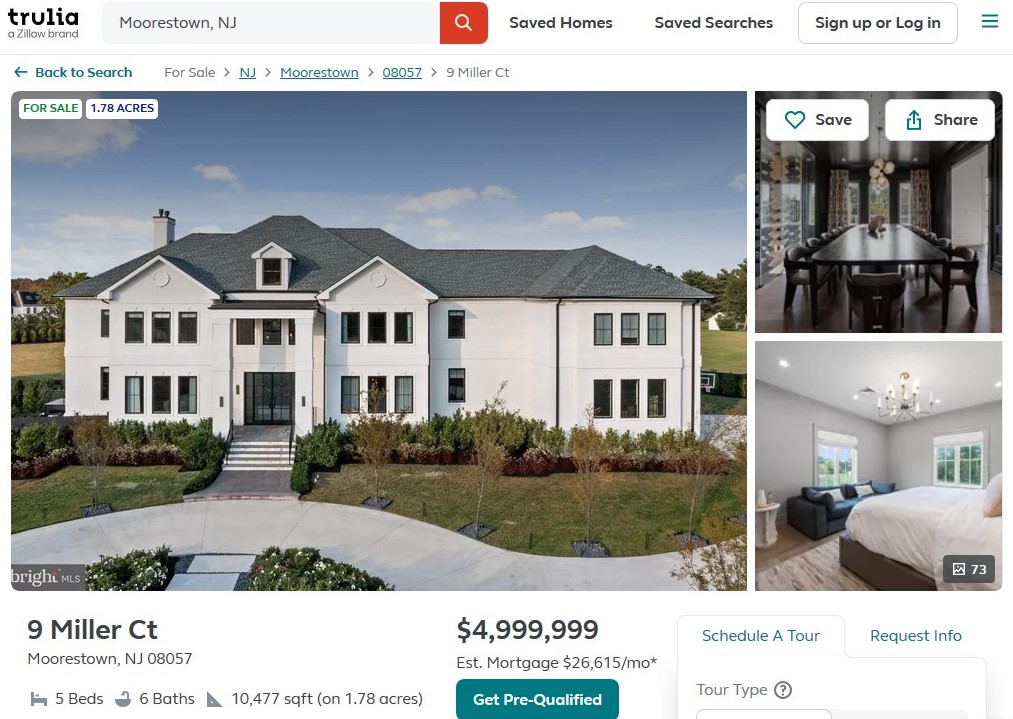
9 Miller Court, Moorestown, New Jersey. Five beds, six baths. 10,477 square feet of high-end appliances, Cambria quartz countertops, and floor-to-ceiling wine walls blooming from an awe-inspiring grand foyer with a spiral staircase climbing up from its center. All of this and more could be yours for just $4,999,999.

Now at this point, you may find yourself wondering: What sort of small-time CEO or TV actor would occupy such an extravagant abode in southwest New Jersey?

I have seen similar stories before: any big recently-built house of a wealthy person could be labeled a McMansion. And this one is owned by a star in the news! But, some of the details above do not line up with the idea of a McMansion:

  1. The size. This is a large house. I would put the upper cut-off for a McMansion more at like 8,000 or 10,000 square feet. This is not a run-of-the-mill large suburban home.
  2. The price. This is a $5 million home. This is out of the reach of even many wealthy people.
  3. The architecture is a bit strange – the facade mixes styles, features a two story entry, and has modern windows – but the interior finishes seem high-end, not necessarily mass-produced. The home overall does not appear gaudy.

While the home may not look like a traditional mansion or one associated with old money, I would argue it is not a McMansion. This is a big expensive home with a lot of finishes that puts it beyond the typical suburban McMansion.

Redfin – and America – selling an unattainable American Dream of homeownership?

The CEO of Redfin recounts how he has viewed who can and should be able to purchase homes:

Photo by PhotoMIX Company on Pexels.com

Rampant speculation and skyrocketing property values have left Kelman feeling almost nostalgic for those years leading up to 2008, which, in retrospect, were the last time the working poor could reasonably aspire to home ownership in America. “I used to read stories about strawberry pickers buying McMansions in central California, and everybody viewed that as just the absolute apex of insanity,” Kelman told me. “But reading Piketty five years later, is it so bad that the strawberry picker had a nice house?”

Conceding that the picker probably could not afford his McMansion, and that the loans that put him in it were untenable, Kelman nevertheless liked this gaudy permutation of the American Dream. More than that, he disliked the level of “elitist judgment” surrounding these types of homes, which he views as nothing more sinister than the market’s attempt to grapple with problems politicians are content to ignore. In Kelman’s view, the left is eager to help the poor rent homes but not own them, while the right tends to ignore their plight altogether. Meanwhile, rampant NIMBYism prevents the kind of building that might help bring home prices back down to earth.

It had put him in a mood to reflect somewhat darkly on the future of housing in America. “The original premise of my stint at Redfin was that we’re selling the American Dream and the idea that everyone can afford a house sooner or later if they work hard and play by the rules,” he said. “Recently, I’ve had this feeling that there are so many people who are never going to become Redfin customers — that maybe the product we’ve been selling just isn’t a middle-class product anymore but an affluent product.” In February, anticipating a future in which homeownership is out of reach for more and more people, Redfin spent $608 million to acquire RentPath and its portfolio of apartment-leasing sites.

The story as written suggests that Kelman originally subscribed to the idea that Americans who work hard and follow the rules would be able to purchase a home. This has been at least an implicit idea for decades, particularly in the postwar era. He did not like commentary that suggested some were less deserving to own homes or political positions that limited homeownership. But, after the housing bubble burst in the late 2000s, he realized homeownership was not available to all.

If this is correct, the Redfin pivot to apartment-leasing is an interesting choice. This could be a good business decision as rental housing is needed in many communities. At the same time, this does not necessarily line what up with what Kelman expressed. Apartments can provide housing but they do not provide the same kinds of opportunities as housing – such as building wealth – nor are apartment dwellers viewed the same way as homeowners. Americans continue to say that they would prefer to own a home.

Redfin and similar sites could play important roles in what homeownership looks like in the future. Exactly what influence they will have is less clear.

Communities moving to limit gas leaf blowers but leaving the leaves alone all together might be a hard sell

The movement to limit gas-powered leaf blowers appears to be picking up steam:

Photo by Pixabay on Pexels.com

More than 100 cities across the country have already passed regulations to ban or restrict gas-powered leaf blowers. For people committed to their manicured lawns, the good news is that powerful electric and battery-operated leaf blowers now exist, and they are quieter and greener and healthier than gasoline-powered blowers. Their market share is also growing rapidly; electric equipment now represents roughly 44 percent of lawn-care machinery sales.

But, would this movement extend to not doing anything about fallen leaves?

But the trouble with leaf blowers isn’t only their pollution-spewing health consequences. It’s also the damage they do to biodiversity. Fallen leaves provide protection for overwintering insects and the egg sacs of others. Leaf blowers, whether electric or gasoline-powered, dislodge the leaf litter that is so essential to insect life — the insect life that in turn is so essential to birds and other wildlife.

The ideal fertilizer and mulch can’t be found in your local garden center. They are available at no cost in the form of a tree’s own leaves. The best thing to do with fallen leaves is to mulch them with a lawn mower if your lawn consists of entirely of unvariegated turf grass (which it should not, given that turf grass requires immense amounts of water and poison to maintain). Our yard is a mixture of grasses and clovers and wildflowers, so we can safely let our leaves lie. If a high wind carries them away, it’s hard not to wail, “Wait! I was saving those!

And the leaves that fall across every inch of this wild half acre of suburbia are so much prettier than any unnaturally green lawn beaten into submission by stench-spewing machinery. All those golden sugar maple leaves hold onto the light, and for weeks it looks as though our whole yard is on fire, even in the rain. Who could be troubled by a blanket made of light? A blanket keeping all the little creatures safe from the cold?

A world without leaf blowers and/or all of the pieces of lawn equipment that sit within many suburban garages and sheds is hard to imagine. Suburbanites and lawn keepers in America can be very fastidious about what needs to be done: the lawn should be well-seeded, green, manicured, weed-free, and leaf-free. The lawn may even be “a window into your soul.” Simply leaving the leaves on the lawn…this would appear negligent, lazy, unkempt.

The argument above suggests the leaves are better for the lawn, creatures, and the environment more broadly. Perhaps this is the way to sell it: your lawn will be healthier if you leave the leaves. But, if the goal is a better relationship with nature, does this also mean other forms of lawn care should be undone as well? Once the leaves stay, what else about American lawn practices should be jettisoned?

The bigger question may not be about gas powered machines but about what a better suburban or single-family home relationship with nature might look like. Amid all of the sprawling land use and driving, how could the open space in individual lots better serve nature? Less emphasis on well-maintained grass could limit water use and provide more habitat space. Whether Americans could find this acceptable in appearance, for property values, and in connection to nature, is another matter.

Communities of 64 square foot tiny houses to combat homelessness

Several tiny house communities have sprung up in Los Angeles to provide housing. One observer suggests they have been successful thus far:

Photo by MART PRODUCTION on Pexels.com

Each tiny house is 64 square feet and comes with heat, air conditioning and built-in beds. Each resident is someone who was once a member of the unhoused community. Each village — and there are six in Los Angeles neighborhoods — is designed to help residents take a first step out of homelessness by giving them a home to live in for three to six months…

Over two months, I documented the scene at the Chandler village and at the Alexandria Park site in North Hollywood, with its palette of prefabricated homes painted in vivid colors to keep the location from having a sterile, institutionalized feeling. I observed a calming sense of order, an atmosphere of support and trust between the staff and residents…

All six villages are operated by the nonprofit Hope of the Valley Rescue Mission, which helps clients get back on their feet as they seek permanent housing. Village support includes a staff on call 24/7 and caseworkers to help with such basics as job applications or securing benefits. Hot meals are provided and residents have access to a communal laundry, showers and restrooms…

Yet every day, I saw the immeasurable worth of these tiny villages in helping to create something that’s often missing from stories about the unhoused: a narrative of positive progress.

This is the first report I have seen of tiny house communities for the unhoused in action. At least a few cities have considered this (see earlier posts here, here, and here). Such arrangements offer flexibility or opportunities that other kinds of housing could not. And, tiny houses still have a cool factor.

That said, how far can this go? As the piece notes, the costs were higher than anticipated. More communities needed. Presumably, the upfront money of tiny house communities would pay off down the road in improved lives and fewer services. Or, where exactly can such communities be located to avoid the NIMBYism of nearby residents yet still be decent places to live? Finally, what comes after tiny house community living, both for the current residents and the community?

One additional thought: will there eventually more tiny house communities like these for people who need housing or cheaper housing or will there be more tiny house communities for those with plenty of resources who want to live different kinds of lives? Both might be desirable and they would not necessarily be treated the same by those around them.

Lacking studio space with all of the TV and film production going on

With a lot of demand for new streaming content, production is moving to different places:

Photo by Ju00c9SHOOTS on Pexels.com

A show the size of The Wheel of Time has to hunt for a part of the world large enough to contain it—especially at a moment when the boom in streaming television has overwhelmed studios from Los Angeles to Atlanta to London to Prague. “We are, as a worldwide industry, quite close to capacity because of this demand for content by our friends at Amazon and all the other streamers,” David Brown, the producer of Wheel of Time, told me. Los Angeles is booked out, and too expensive, anyway. Ditto Atlanta, where Marvel Studios regularly shoots. Ditto London, a longtime production hub that is currently oversubscribed—and, once again, too expensive. So Brown thought: maybe Budapest.

Central and Eastern Europe have traditionally been accommodating places to make movies and television. The locations are suitably grand and variable and ancient; the local expertise, honed by decades of Hollywood productions coming and going, is high-level and relatively affordable. So Brown initially looked at Hungary. But, he said, “I spoke to friends in Budapest who’d worked there, and they just said, ‘You won’t get in.’ ” Then he tried Prague, and found that the waiting list for production space was just as long. So, after some consideration, Brown and his production partners decided to create their own studio from scratch. “You know, we are a big company,” Brown, who is exacting and English and who has worked on everything from The Phantom Menace to Outlander, said. “The show is hugely ambitious creatively. So how do we fill that? That’s why we’re in this building that is 350,000 square feet.”

And so Jordan Studios, where the Wheel of Time production is headquartered, ended up in a remote corner of Prague, in a giant pale-blue complex of industrial buildings that used to be the warehouse of a trucking company.

This caught my attention as I have been working in recent years on research involving the locations of television shows. When you look into television production, it takes place in a number of predictable locations. There are centers of production where all of the space, workers, and synergy is present. In the story above, these typical centers were booked and/or expensive. So, they moved to Prague and put together what they needed in a context where Hollywood production is known and possible.

At least for this particular show, the filming in and around Prague may not matter as much because it is a work of fiction. All sorts of landscapes, inside and outside buildings, could work. At the same time, for many other TV shows and films, they claim to be in a particular location. But, would someone watching know whether if it was filmed in that said location or somewhere else? Through the work of studio filming, editing, and implication, how many stories are filmed on location and how many are filmed elsewhere? The viewer may not know. The filming location might be all sorts of places.

All that to say, the geography of production can continue to change with changing conditions and new content. And would the viewer know any different?

“Halfheartedly” air a first episode at 1:30 AM on FXX to keep the TV rights

An overview of a potential blockbuster Amazon TV show includes this paragraph about how the television rights continued:

Photo by Anete Lusina on Pexels.com

At the time of Judkins’s pitch, the screen rights to The Wheel of Time were just coming out of a byzantine and uniquely Hollywood maze—the books had been optioned by two former tech guys, who in turn licensed the rights to Universal, which developed the series as a feature and then shelved it. Then the tech guys enlisted two new producers, Mike Weber and Ted Field. In time, they noticed an obscure provision in the contract, as Weber recalled. It turned out, he said, that “if you aired an episode of television, the rights will vest in perpetuity.” As in, any episode of television at all. And so one mysterious night in 2015—just before the rights to the books were scheduled to return to Jordan’s widow—an episode aired on FXX at 1:30 a.m., halfheartedly adapting the first book’s prologue and starring, for some reason, Billy Zane. The show, such as it was, aired only once and was never seen again. “That’s not the prettiest way to do it,” Weber admitted. “But it cleaned up the rights.” (McDougal Rigney, who released an unhappy statement about this gambit at the time, has since come back into the fold as a consulting producer.)

This is one way to hold on to the rights. It sounds like it all was legal via an “obscure provision.” It would be interesting to hear more about why the provision was in the contract (was it considered a deterrent since it required a television episode to be made?), what was in the 1:30 AM episode, and how all the involved actors responded.

And if The Wheel of Time becomes a megahit in the vein of Game of Thrones, this will look like a necessary and genius move.