The rise of SUV nation(s)

A look at the impact of increased SUV sales on the environment includes a short history of the rise of the vehicle category:

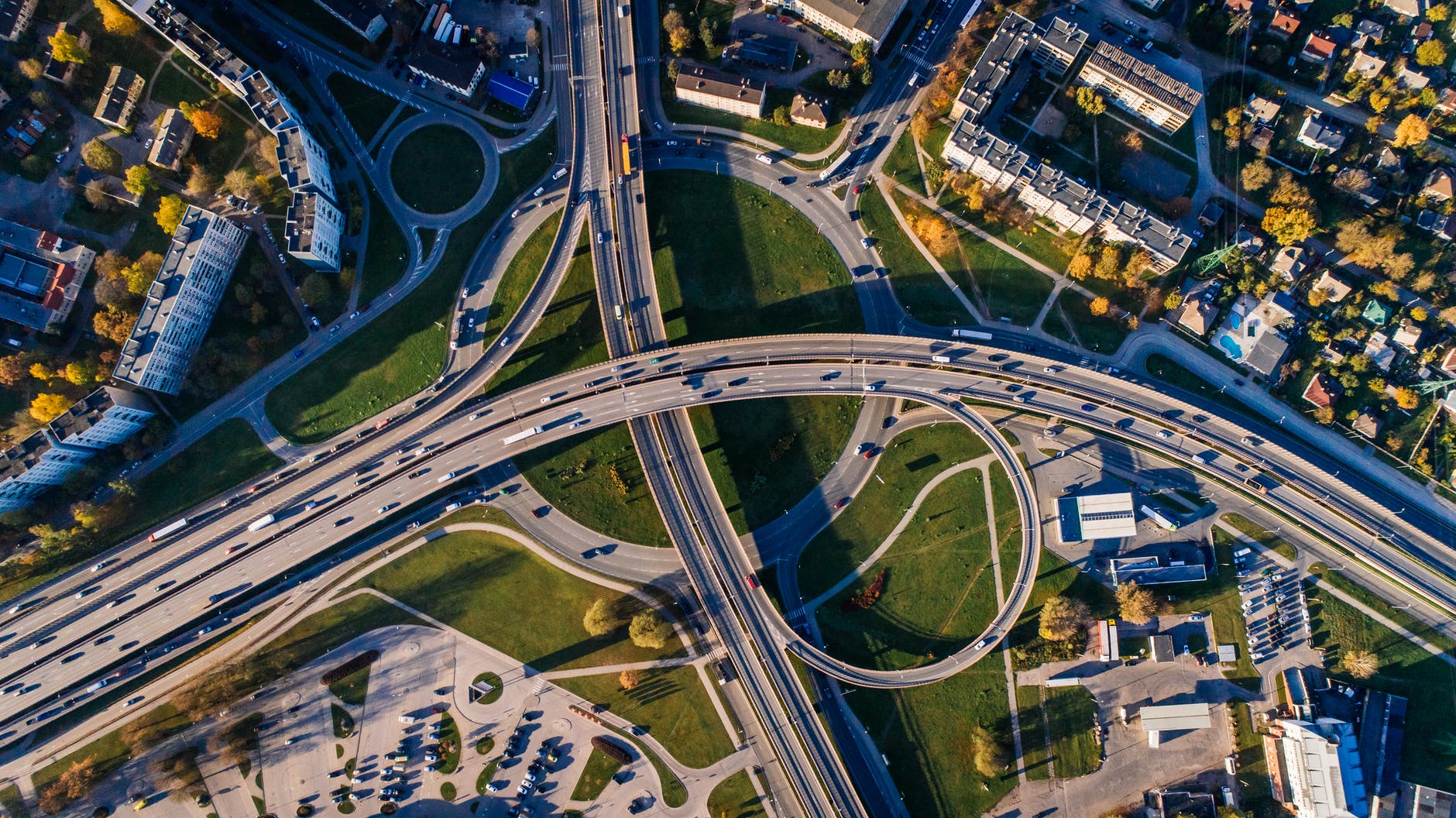
Photo by Ricardo Esquivel on Pexels.com

SUVs raced to a new milestone in 2019, surpassing 40 percent of all car sales worldwide for the first time. The world’s roads, parking lots, and garages now contain more than 200 million SUVs, eight times the number from a decade ago. SUVs’ share of car sales in the U.K. has tripled over the past 10 years; in Germany last year, 1 in 3 cars sold was an SUV…

This global phenomenon has its roots and impetus in the U.S., where in the 1980s the car industry carved out a new category called the “sport-utility vehicle”, a sort of mashup between a truck, a minivan, and the traditional American family car. After successfully lobbying lawmakers to class these vehicles as light trucks rather than cars, binding SUVs to less stringent fuel efficiency standards, the industry set aboutslotting them into almost every arena of American life…

The industry found that American drivers enjoy the lofty seating position of SUVs as well as the capacity and the comforting feel of security their bulk provides, even if half of all journeys taken in the U.S. are mundane trips of under 3 miles to run errands rather than high-octane adventures in the Rocky Mountains. For many Americans, SUVs invoke alluring qualities of fortitude and independence…

As Bloomberg’s Nat Bullard noted in a recent tweet: “We don’t buy cars here. We buy big cars built on truck bodies, and we buy trucks and drive them like cars.” The U.S. is now indisputably an SUV nation, a transformation that has had profound consequences for American cities as well as the global climate.

A few thoughts:

  1. This timeline roughly lines up with connection I have found in my years of studying McMansions: SUVs and McMansions can be viewed as related phenomena. They are both large and represent increases in size from typical earlier versions. The 1980s appears to be a key decade with a bigger economy, plenty of spending, and a growing emphasis on larger consumer goods. And those SUVs may need a three car McMansion garage to fit.
  2. There are hints here but there are also links to a suburban lifestyle that is largely structured around driving and short trips. Granted, just because Americans live in a sprawling landscape does not necessarily mean they need large vehicles to get around; they could use smaller cars. Yet, all that driving – even for relatively short distances – means Americans get lots of time to think about vehicles and what they want to have (and need to have to access many places).
  3. It is interesting to note that SUV sales and use are up in other countries as well. SUVs are often tied to American interests in driving and size; what explains increased sales in Germany and the UK? Car makers could be pushing these vehicles more and why are drivers more itnerested now than earlier?

Bipartisan white suburban support for fewer apartments, more homes

A political scientist shares research findings on how political views affect suburban support or opposition to different kinds of development:

Photo by SevenStorm JUHASZIMRUS on Pexels.com

As a political scientist who has studied local land-use regulations, I’m surprised to see a national political campaign in 2020 place such an emphasis on the issue—which hasn’t figured much in presidential races in half a century. The Trump campaign isn’t wrong to think that white suburban voters—the obvious target of the McCloskeys’ speech—would oppose apartment construction in their neighborhoods. In a nationally representative survey of metropolitan areas that I conducted last year, a substantial majority of homeowners revealed a strong preference for single-family development and opposition to apartments. They also overwhelmingly agreed that residents of a community should get a vote on what is built there…

And yet the history of exclusionary zoning reveals that it has long been a bipartisan activity. Obama’s Affirmatively Furthering Fair Housing rule was the first major action taken by any presidential administration to enforce the 1968 Fair Housing Act, which despite its lofty promises has not resulted in an integrated America. During the 1976 presidential campaign, Jimmy Carter assured voters that he was not “going to use the federal government’s authority deliberately to circumvent the natural inclination of people to live in ethnically homogenous neighborhoods.”

My survey data revealed no significant difference between white Republican and white Democratic homeowners in their opposition to high-density housing. I also found overwhelming agreement that apartment complexes would increase crime rates, decrease school quality, lower property values, and degrade the desirability of a neighborhood…

What this means is that Trump’s approach could conceivably appeal to white suburbanites more broadly, not just Republicans. And yet the evidence suggests that this is unlikely. Most white Democrats support the development of affordable and subsidized housing in the abstract and will feel comfortable rejecting Trump’s similarly abstract opposition to it. Where white Democrats oppose such development is when it arrives in their own backyards. But they do not need Trump to block it.

The Americans suburbs are based around single-family homes, exclusion, and local control (in addition to other factors). Opposition to apartments can be about both changes in aesthetics and character of a suburb and the kinds of people who are assumed to live in apartments.

But, as is hinted above, the real battleground over apartments and affordable housing and residential segregation really is about the local level. Federal or state guidelines could require certain things for municipalities. This is the first line of defense for those opposed to housing or any other development they do not desire. And these are abstract levels of government until local development pressure starts up. Even if such regulations passed, where exactly apartments might be located, in what scale and with what design, and how local residents and officials respond is the real pressure point.

If I am interpreting the last paragraph cited above correctly, white suburbanites in general will mobilize to oppose local development they do not want. This can have multiple effects: (1) it stops apartments and affordable housing from being built; (2) it can push such development into communities that are less able to mobilize or where there is already cheaper housing; and (3) it can create long-standing tensions between community members and prospective residents. In the long run, it means that some of the same patterns that suburbanites might criticize in big cities – uneven development, residential segregation – are replicated in suburbs.

Aiming “to bring spiritual richness to corporate America”

Spiritual consultants look to bring spiritual practices and approaches to the American workplace:

Photo by fauxels on Pexels.com

In simpler times, divinity schools sent their graduates out to lead congregations or conduct academic research. Now there is a more office-bound calling: the spiritual consultant. Those who have chosen this path have founded agencies — some for-profit, some not — with similar-sounding names: Sacred Design Lab, Ritual Design Lab, Ritualist. They blend the obscure language of the sacred with the also obscure language of management consulting to provide clients with a range of spiritually inflected services, from architecture to employee training to ritual design.

Their larger goal is to soften cruel capitalism, making space for the soul, and to encourage employees to ask if what they are doing is good in a higher sense. Having watched social justice get readily absorbed into corporate culture, they want to see if more American businesses are ready for faith…

Before the pandemic, these agencies got their footing helping companies with design — refining their products, physical spaces and branding. They also consulted on strategy, workflow and staff management. With digital workers stuck at home since March, a new opportunity has emerged. Employers are finding their workers atomized and agitated, and are looking for guidance to bring them back together. Now the sacred consultants are helping to usher in new rituals for shapeless workdays, and trying to give employees routines that are imbued with meaning…

The Sacred Design Lab trio use the language of faith and church to talk about their efforts. They talk about organized religion as a technology for delivering meaning.

Perhaps this is common elsewhere but this strikes me as uniquely American for multiple reasons:

-The interest in unbundling religion and spirituality from traditional religious practices

-Combining spirituality and work. Perhaps this hints the true religion in America is capitalism?

-Assuming there is a common religiosity that can work across a potentially diverse workforce. Kind of like civil religion, which attempts to unite religion and nationalism, but for the office.

-Religion being less about transcendence or encountering the divine and more about pragmatism: helping corporations succeed and individuals find or interact with their soul.

-The entrepreneurial nature of bringing religion to the workplace. This article profiles consultants and firms bringing it in. (It would be interesting to see how this interacts with more top-down approaches from CEOs or other corporate leaders who bring a strong faith or spiritual elements to their practices and aims.)

I will be curious to see (1) what kind of traction this approach gets – does it have staying power? What kinds of spirituality in the office catch on and which do not? – and (2) what the reaction might be among a range of firms and sectors – is this something limited to educated, managerial suites in particular locations?

Celebrating ordinary work in a hymn

I know wading into opinions of hymns, worship songs, and other church music can be thorny. But, here on Labor Day, I am reminded of verse 4 of the hymn “Earth and All Stars”:

The hymn presents different aspects of Creation and the fourth verse specifically addresses workers, particularly those devoted to building. There are not too many church songs I know of that address how work can be part of worship and devotion. Indeed, many songs could give the impression that Christian activity should primarily consist of sacred duties. Of course, there is a long history of Christians wrestling with work and how ordinary tasks contribute or connect to faith. Adding more music that highlights work, something that occupies many hours and engages the minds, bodies, and talents of many, could go a long way to connecting laboring and faith.

(As a musician and educator, I also notice verse three and five and the ways they connect these activities to religious expression. And in what other setting can you sing about “loud boiling test tubes”? At the same time, there is room in this song to celebrate other forms of work and labor.)

Trying to make a better Walmart parking lot experience

I have driven through many Walmart parking lots and while doing this, I often wonder how a better parking lot experience could help avoid regular issues. Here are some of the big concerns:

  1. There are often a lot of vehicles, people, and carts moving around. It is hard to keep track of all the activity.
  2. Depending on the traffic flow of the location, some of the traffic can be routed right in front of the store as vehicles turn in from a street or adjoining parking lot.
  3. At least a few cars always seem to be lingering right at the front doors or nearby, waiting for people.
  4. Carts are strewn throughout the parking lot; most are in corrals but there are often other ones on medians, in parking spots, and even several parking lots over. (Imagine if the Walmart lot had Costco sized shopping carts!)

A few solutions come to mind:

  1. Everyone needs to be very attentive. Having to pay close attention is not necessarily bad for drivers or pedestrians.
  2. It is better to have the majority of drivers enter the parking lot area from the back rather than from the sides and drive directly in front of the store.

I started thinking about this recently after realizing that I have been in multiple parking garages at Target locations but never at a Walmart. In these locations, there are advantages to having the parking further away from the store and/or having the store on a different level from the traffic flows.

Figuring this out could have multiple benefits including: drivers and pedestrians would feel safer, the parking lot experience could be less fraught and more pleasant, and fewer work hours might need to be devoted to the parking lot.

Perhaps this is just the price Americans are willing to pay for their love of driving and sprawl: complicated parking lots. This is not an issue exclusive to Walmart as many big box stores demonstrate similar patterns. But, since Walmart has so many locations and so many customers, solving issues there could be a big deal.

Local TV market ad celebrities, Bob Rohrman edition

For decades, American television viewers have been treated to (or subjected to, depending on one’s point of view) recurring characters in local television ads. In the Chicago region, Bob Rohrman was a mainstay:

Of all the Chicago auto dealers who ever graced the small screen as their own TV pitchman, few were as delightfully campy as Bob Rohrman.

Rohrman’s low-budget commercials radiated good humor and bad production, featuring his mustachioed and bespectacled face peering out from a variety of goofy costumes, a uniquely awkward delivery and flubbed lines that often devolved into a joyous cackle.

The spots were punctuated by a cheesy cartoon lion and the tag line: “There’s only one Bob ROHRRRR-man!”

Somehow it all worked, turning the Bob Rohrman Auto Group into one of the largest family-owned dealership groups in the Midwest, and its spokesman/founder into something of a Chicago celebrity.

In the era of cable and satellite television, streaming options, declining network television and local radio, and targeted commercials on particular platforms, we may be at the end of local advertising like this. All the advertising then becomes more corporate, slick, tied to national or multinational corporations. And we lose a few public characters who few people may have actually met but who many could recognize.

We purchased a vehicle from a Rohrman dealership several years ago. At no point, did I think about the commercials in that process. But, given the number of Rohrman commercials I have seen and heard over the years, who knows if it influenced me. (I can safely say that other auto pitchmen or dealers, including Max Madsen or the Webb boys, did not lead me to visit their lots.)

Losing a big tree in a suburban neighborhood

Recently, several big trees were cut down in our suburban neighborhood. These were taller, older trees in a neighborhood full of such trees along the main street and in backyards:

What such trees is perhaps obvious: shade, habitats for birds and other animals, a sense of stability and permanence, connection to nature, a boost to property values. And the problems they could provide also vex suburbanites: leaves, potential for falling down on houses and property, and the potential to become diseased or sick.

But, as we watched the trees cut down, chipped up, and hauled away, I was reminded of another feature of these trees: the ability they have to frame homes and streetscapes. I am reminded of a short passage in James Howard Kuntslter’s TED talk where he describes the purposes of trees in urban planning: to frame the streetscape, to provide shade, and to protect pedestrians from the vehicular traffic. A stereotypical image of American suburbs is the curving two-lane road with a canopy of branches and leaves overhead. But, this also sits aside familiar images of Levittown and other mass subdivisions where all the trees are gone and new saplings can barely fill any space.

Is the big suburban tree a luxury, a status symbol, an aesthetic choice, an intentional choice by a developer? No matter the reason, I hope many of the other large trees around us remain and enhance what would be a bleaker suburban landscape without them.

Research on the power and influence Democratic mayors do or do not have

Emily Badger sums up research looking at how much big cities are affected by having a mayor from a particular political party:

https://www.nytimes.com/2020/09/02/upshot/trump-democratic-cities.html

Numerous studies suggest that the partisanship of mayors has limited effect on much of anything: not just crime, but also tax policy, social policy and economic outcomes.

The researchers Justin de Benedictis-Kessner and Christopher Warshaw have found that Democratic mayors spend more than Republican mayors. “But the differences are pretty small,” said Mr. Warshaw, a political scientist at George Washington University. “They’re not enough to drive large differences in societal outcomes in things like crime rates.”

This is partly because mayors are constrained in their ability to execute ideological agendas. Cities can’t run deficits. States limit their authority to raise taxes and enact laws on many issues. And cities lack the power the federal government has to shape labor laws, or immigration policies that can affect their population growth…

Cities have been faced with problems far beyond their making. Deindustrialization and globalization wiped out many middle-class factory jobs, destabilizing neighborhoods of blue-collar workers. The federal policy of highway construction enabled both taxpayers and employers to leave cities. Federal housing policies dissuaded or prevented Black residents initially from joining them, cementing patterns of racial and economic segregation that persist to this day…

There are plenty of fair critiques of decisions that Democratic mayors do control — regarding charter schools, or how equitably they deploy city resources, or whether their zoning laws and school policies perpetuate segregation. And there is room to criticize the Democratic Party’s failure to devise a coherent federal urban policy.

Disentangling this from the current political moment and debate about running cities, a few themes from the article stuck out to me:

  1. One argument is that mayors are more interested in pragmatic day to day city processes than larger ideological concerns. Mayors themselves make this argument. If a mayor cannot help solve a particular local problem, they may not be in office for long, regardless of what party they align with.
  2. Cities are stuck between multiple bodies of government. A city may be nested within a county (and this is what might make city-county mergers appealing), a state, and then the federal system. On one hand, cities are essential to our modern society – they are economic engines, centers of culture, gathering places for residents and jobs, anchors of entire regions, etc. – but their city interests must be negotiated with other bodies of government above them. Putting it in more sociological terms, cities are between macro and micro social scales yet often are viewed as macro entities and have some capabilities at the macro level (I am thinking of conferences of mayors, transnational conversations between mayors and other mayors or heads of government, etc.)
  3. As a graph in the article shows, there are more Democratic big city mayors than Republican big city mayors and this has been true for decades. Do Republicans want to be mayors of big cities? Also noted in the story: Republican policies and appeals have been made to suburbanites and rural voters for decades, less so to urban residents.
  4. This is not a new political issue; the United States has a long-standing divide regarding cities that goes back to the founding of the country. For more on this as it played out in the twentieth century, I recommend the 2014 book Americans Against the City by historian Steven Conn.

The start of municipal budget issues due to COVID-19? The case of Chicago

COVID-19 has disrupted a lot of life in the United States and it will have consequences for municipal budgets. Here is how Chicago mayor Lori Lightfoot describes the fiscal impact:

Google Street View of Chicago City Hall, June 2018

Citing the “catastrophic collapse of our local and national economy” because of COVID-19 and damage to local businesses from civil unrest, Mayor Lori Lightfoot on Monday laid out a $1.2 billion shortfall for what she called Chicago’s “pandemic budget” in 2021…

The ongoing coronavirus crisis has also spiked the 2020 budget shortfall to nearly $800 million, Lightfoot said. She said that deficit would be filled using relief funds and other unspecified aid from the federal government, in addition to debt refinancing, and borrowing…

In laying out the 2021 shortfall, Lightfoot cited dire numbers — more than 900,000 Chicago-area residents filed for unemployment since the start of the pandemic, while personal services, hospitality and tourism industries “are still seeing a fraction of their typical revenues and some businesses have sadly closed with no hope of coming back.”…

The bad news has seemed inevitable for months, as tax receipts plummeted with large parts of the economy shut down and spending in Chicago by tourists and conventioneers cratered throughout the summer because of the pandemic.

Chicago has its own particular challenges but the COVID-19 shortfall is one that many communities in the United States, big and small, will experience. Local governments tend to want to diversify their tax base so that they are drawing tax revenues from multiple sources. COVID-19 interrupts or limits a number of these streams: money from visitors (who stay in hotels, visit sites, eat), sales tax revenues (derived from businesses from residents and visitors, who are affected by employment and travel opportunities), and property tax revenue (could be affected if people are moving in or out affecting demand plus whether residents and landlords are able to pay their bills). Furthermore, right now this is posed as an issue for the current budget; what is the effect for months or years down the road as cities and communities try to rebound and/or continue to battle COVID-19?

Closing these COVID-19 shortfalls will provide unique opportunities for politicians. This article suggests all options are on the table; yet, I am sure most, if not all of the politicians involved, have particular budget options they would not consider. Many municipal governments will hope there are extra resources available from above, perhaps from the county, state, and federal governments. Yet, all levels of government are likely to feel the impact of COVID-19. And with the current discord between the White House and big city leaders, it is hard to imagine what a palatable plan for the federal government and municipal governments to work together would look like. Could this/should this be a major issue on the November 2020 campaign trail as multiple levels of government look to address COVID effects?

Addressing COVID-19 and public noise issues at the same time with “library rules for America”

While Derek Thompson suggests less or no talking in public would help limit the spread of COVID-19, his solution would also address concerns people have about noise in public:

Photo by Inga Seliverstova on Pexels.com

Here’s one solution: Library rules for America. Every time you walked into a school, a medical clinic, a drug store, a barbershop, an office, an airplane, a train, or a government building, you should see a sign that read: Hush for Your Health; or Make Good Choices, Lower Your Voices!; or Keep Quiet and Carry On. “In terms of the science, I am convinced that something like this library rule would reduce all modes of viral transmission,” Jimenez told me.

Thompson also hints at a persistent noise issue:

If Americans imported Japan’s subway rules to our public life, we might be able to accelerate our return to a more muted form of normalcy. Several times in the past few weeks, I’ve heard people talking loudly on their cellphones in grocery stores and pharmacies, sometimes with their masks pushed aside from their mouths to improve the clarity of their diction. Such behavior displays a total failure to understand how the disease spreads.

These loud conversations in public, whether the user is on speakerphone or talking loudly to someone nearby, are an annoyance to many. Some noise in public is to be expected: vehicles go by, people are around, airplanes fly overhead, etc. But, having people around you who are carrying on loud, conversations can be frustrating.

On the user end, it can be easy to end up yelling into your phone without being aware of it. You get caught up in talking, there is noise around, the phone call audio quality may not be great, and you sound like a lunatic to passerby even though you think you are just having a normal conversation. Or, a regular social interaction could be fun or maddening, leading to increased volume.

I wonder if this solitude attributed to libraries would match what they aspire to be these days. When people need public spaces and resources, libraries can be gathering places. The days of hushed shelves of books may be gone and replaced by tool and gadget rentals, computer labs, meeting rooms, and interactive areas.

More broadly, Americans are known for their loud conversations and convivial spirit. The friendliness or public conversation plus the volume can rankle some. Asking Americans to act like they are in a library might be a lot to ask. Imagine: “If I want to talk loud in public, that is my right!” A quiet American soundscape, particularly in certain settings, might be jarring.

Perhaps the bigger question is how far Americans would go to slow or eliminate COVID-19. Is not having loud conversations in public too much to ask? Now, if COVID-19 and noise guidelines could speak to the loud playing of music…