Two advertisements, both featuring designer Leanne Ford, recently arrived on the same day in my mailbox. I did not expect that Crate & Barrel and Walmart would both feature the same person:
I wonder about a few things:
What is the overlap of consumers/audience between these two stores? Perhaps there is more overlap than I think.
While each advertisement features the same designer, there are noticeable differences. For Crate & Barrel, Ford is adding to the modernist style. For Walmart, she and her husband are providing tools to tackle home projects. The first is leaning more towards art, the second is leaning toward getting things done. Even how it is presented is clearly different.
Having some familiarity with both retailers, my sense is that both do not often use famous names to sell products. In contrast, a retailer like Target has tried this a number of times. Does this signal a new approach for both retailers? If so, it is interesting that both think Ford will help them appeal to potential customers.
Just thinking out loud about more consonant pairings: Walmart and Ikea? Target and Crate & Barrel?
I cannot help but think about Bourdieu in this context. The idea of home design has grown in recent decades in the United States and the concept and its purveyors – such as HGTV – are broadly available. Yet, how exactly this plays out in different class contexts can vary. Design for middle to upper-class residents means something different than design for lower to middle-class residents.
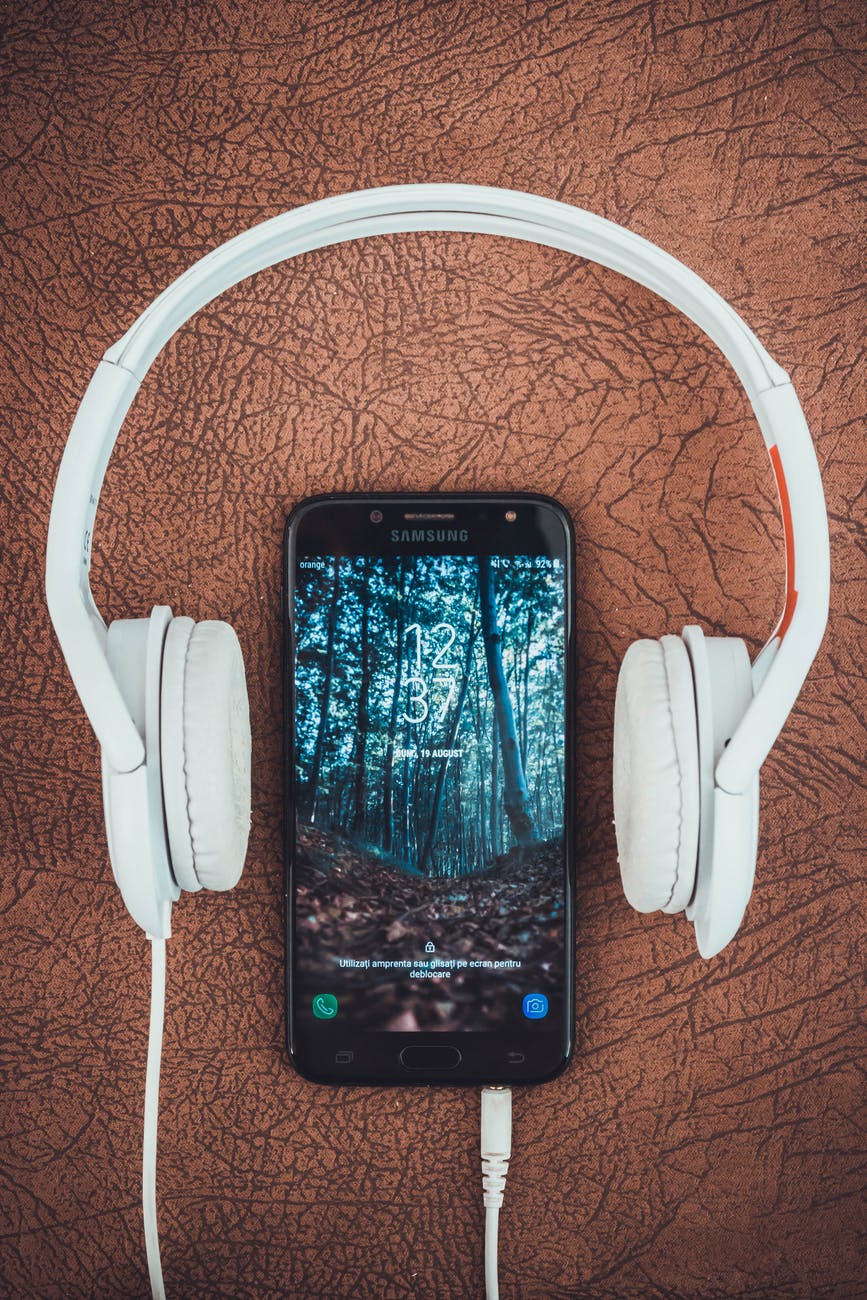
Listening to music on the Internet feels clean, efficient, environmentally virtuous. Instead of accumulating heaps of vinyl or plastic, we unpocket our sleek devices and pluck tunes from the ether. Music has, it seems, been freed from the grubby realm of things. Kyle Devine, in his recent book, “Decomposed: The Political Ecology of Music,” thoroughly dismantles that seductive illusion. Like everything we do on the Internet, streaming and downloading music requires a steady surge of energy. Devine writes, “The environmental cost of music is now greater than at any time during recorded music’s previous eras.” He supports that claim with a chart of his own devising, using data culled from various sources, which suggests that, in 2016, streaming and downloading music generated around a hundred and ninety-four million kilograms of greenhouse-gas emissions—some forty million more than the emissions associated with all music formats in 2000. Given the unprecedented reliance on streaming media during the coronavirus pandemic, the figure for 2020 will probably be even greater.
The ostensibly frictionless nature of online listening has other hidden or overlooked costs. Exploitative regimes of labor enable the production of smartphone and computer components. Conditions at Foxconn factories in China have long been notorious; recent reports suggest that the brutally abused Uighur minority has been pressed into the production of Apple devices. Child laborers are involved in the mining of cobalt, which is used in iPhone batteries. Spotify, the dominant streaming service, needs huge quantities of energy to power its servers. No less problematic are the streaming services’ own exploitative practices, including their notoriously stingy royalty payments to working musicians. Not long ago, Daniel Ek, Spotify’s C.E.O., announced, “The artists today that are making it realize that it’s about creating a continuous engagement with their fans.” In other words, to make a living as a musician, you need to claw desperately for attention at every waking hour…
Devine holds out hope for a shift in consciousness, similar to the one that has taken place in our relationship with food. When we listen to music, we may ask ourselves: Under what conditions was a particular recording made? How equitable is the process by which it has reached us? Who is being paid? How are they being treated? And—most pressing—how much music do we really need? Perhaps, if we have less of it, it may matter to us more.
A full consideration of the ethics of music production and sales could raise a number of concerns. In addition to the environmental issues, how about how musical acts are treated? Who profits from streaming? How many people in the music industry come out in the end as better people?
In a non-COVID-19 world, it seems like an answer would be to support local live music. Even though live shows take up space and energy, if the musicians do not have to travel far, the audience is taking it all in without any recording and equipment for listening on their own standing in the way, and there is a positive collective spirit, this might be the ideal. This shifts the attention away from music as a commodity – I can own or stream a tremendous amount of music – versus music as an experience. Alas, this might be hard to do even without a pandemic given propensities toward large tours (particularly the mega-tours of the most famous acts) and lots of travel.
Thinking beyond music, this line of argument highlights how many of the direct outcomes or effects of consumption or actions are even further removed for people when information, products, and experiences are put through the Internet. If I am streaming, I may know the data comes from somewhere. But, how many people have seen a data center, let alone have some idea of what is involved?
For decades, research has shown that houses in predominantly Black neighborhoods have been generally appraised at lower values than houses in majority-white neighborhoods. This is true even when comparing housing stocks that have the same characteristics (age, square footage, number of rooms, etc.) and neighborhoods of equal socioeconomic status.
The new study finds that the racial composition of a neighborhood was an even “stronger determinant” of a home’s appraised value in 2015 than it was in 1980, to Black homeowners’ increasing disadvantage. Analyzing reported home values, Howell and Korver-Glenn found that the race appraisal gap has doubled since 1980: The difference in average home appraisals between neighborhoods that are majority-white and those that are predominantly Black and Latina was $164,000 in 2015, up from about $86,000 in 1980.
Rather than explaining the racial inequity as a vestige of historic segregation, the study finds more culpability in a method used to calculate appraisals today, the “sales comparison approach,” which determines a home’s appraised value by looking at the prices of other similar homes that were recently sold from the same neighborhood. The real estate industry sees this as a race-neutral way of appraising homes so that it doesn’t run afoul of fair housing laws, and it is one of the key criteria used for determining property values. But what makes this method problematic, according to the study, is that it basically grandfathers in racist home pricing that existed before fair housing legislation.
In other words, if an appraiser is calculating the value of a home in a Black neighborhood by comparing it to houses recently sold around it, then chances are she is comparing it to other Black-owned houses that, because of the legacy of segregation, have handicapped values in the market compared to similar homes in white communities appraised at higher prices. The unfairly valued prices of homes in Black neighborhoods before the 1970s thus serves as the baseline for how homes are appraised and priced today. While the Fair Housing Act and Community Reinvestment Act forbade practices like redlining and denying mortgage loans based on race, they did nothing to readjust housing prices in segregated neighborhoods after they were passed.
In other words, past decisions and actions valued homes in white neighborhoods more than homes in black neighborhoods because of racism. Today, appraisals that typically compare homes in like neighborhoods perpetuate those different homes values. The system carries on these inequities even if no appraiser is intentionally racist; the way things are done continues the patterns set decades before.
There is another question here as well: what exactly are appraisals and housing values based on if they contingent on factors like race and not just on the characteristics of the home? Is there inherent value in a particular configuration of home traits – say a three bedroom, two bedroom home with a two car garage – or is the value completely dependent on what society says it is? I know the market is involved and the head of an international appraisal association is quoted later in the article cited above talking about supply and demand. But, if supply and demand says some homes are worth more because of the people who own them and the people in the neighborhood, this does not exactly sound like a desirable “free market.”
In 1630, John Winthrop, the first Puritan governor of Massachusetts Bay, declared that “we shall be as a city upon a hill.” When President Ronald Reagan used Winthrop’s words to describe America, he helped transform “A Model of Christian Charity” into a foundational text of American culture. In its own day, Winthrop’s sermon went unrecorded, unpublished, and almost entirely unnoticed. It was found and first published in 1838—at which point it continued to be ignored for another century…
Winthrop’s sermon is a communal statement of love—a “model of Christian charity,” exactly as it is called. The question behind his sermon is simple: What do we owe each other? And Winthrop’s answer is the same as Paul’s: whatever redemptive love requires…
The phrase “city on a hill” also has a fascinating and largely unknown 17th century context. The phrase comes from Jesus’ Sermon on the Mount (specifically Matthew 5:14), and in the 1600s, it was Roman Catholics, not Puritans, who loved it most. They used Matthew 5:14 to prove Protestantism false and Catholicism true. The Catholic Church, they said, was the only one visible church since the time of Christ (Jesus “set it on a hill”). Protestants, in contrast, described the true church as small or hidden, turning to Luke 12:32 and Revelation 12. When it came to Matthew 5:14, they had to reinterpret this verse to pry it from Catholic hands. Instead of the universal church being a “city on a hill,” Protestants like Winthrop claimed that “city on a hill” applied locally, to this place or that, wherever the true light of the gospel shone. Because the phrase did not refer to one universal church, it could be reapplied to individual congregations, towns, cities, and eventually—as we have come to see—a nation…
My book moves from the 1600s through the American Revolution and the making of the first national history textbooks in the 1800s to the claims and impact of the influential German sociologist Max Weber in the early 1900s. But for me, the most enjoyable chapters to write were on Perry Miller, a Harvard scholar who had a giant influence on the way we understand the Pilgrims and Puritans today. It was Perry Miller, an atheist, who above all made John Winthrop’s “city on a hill” sermon central to the American story. He did so not just to set the US apart from the USSR, but also to challenge American society, which he saw as having fallen from its Puritan origins. Just a few years before Miller died, the Harvard-educated John F. Kennedy became the first president to use Winthrop’s “city on a hill” sermon in a speech. When Reagan picked it up, it became famous—a linchpin in larger narratives of American exceptionalism.
Another example of how civil religion develops: several centuries after a sermon is given, it is picked up and interpreted by political leaders and others who want to tie several strands of social life together. Implied above is that another politician in another time period – say Grover Cleveland in the late 1800s – may not have been able to prompt the spread of this connection in American life. Ronald Reagan, who tried to be optimistic about American life, helps give the quote, which had some public airing because of John F. Kennedy, new life in a particular context.
The 17th century context of the meaning of a “city on a hill” is fascinating given what the phrase came to represent. If Winthrop meant to use the phrase in contrast to Catholic interpretations, the fact that the phrase came to represent a powerful America is a twist. The Protestant interpretation discussed above applied to a small context. When Americans use the phrase today, they tend to mean a powerful city on the hill, casting light on the countryside below or holding a fortified position or occupying the high ground. The American bastion of freedom and Christendom has replaced the prior holders of this title.
This phrase also gives more credence to cities than Americans have over the course of their history. Even with some important cities on a global stage, Americans are generally anti-urban and instead embrace suburban life. Updating the phrase, perhaps Americans would rather say “the suburban megachurch on the hill” or the “quiet yet stately suburb on the hill.”
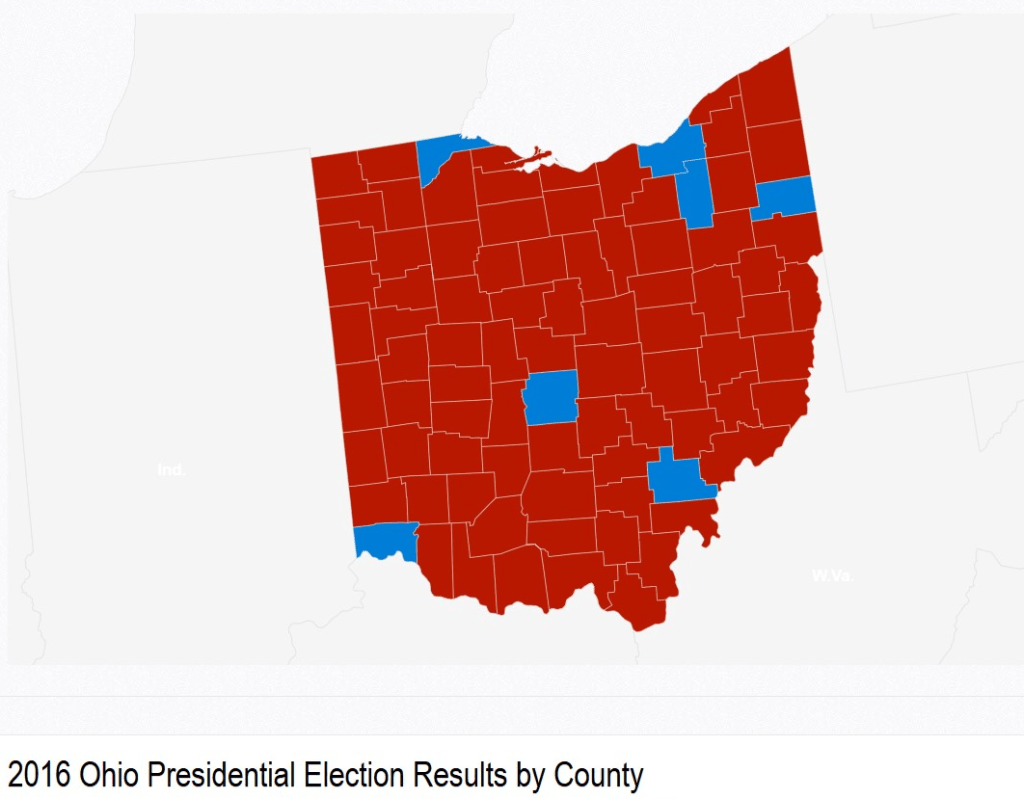
Trump’s chances for a second term rest heavily on being able to maintain the margins he won by in 2016, particularly in suburban areas. He plans to campaign outside Toledo on Monday, as liberal Supreme Court Justice Ruth Bader Ginsburg’s death stokes questions of whether the sudden court vacancy would energize more suburban voters who support abortion rights or social conservatives in small-town and rural areas who oppose them.
Republican lawmakers and strategists in Ohio say they are seeing research that shows a near-uniform drop in support from his 2016 totals across every suburban region of the state…
There is less debate in other states. Pennsylvania Republicans say across the longtime GOP stronghold of Chester County west of Philadelphia, for instance, Trump has slipped as far as he has in Ohio’s suburbs, though in more populous towns and in a state he carried by fewer than 45,000 votes…
A central question is whether Trump can, as his campaign predicts, spur even more support than in 2016 from rural voters in Pennsylvania, Michigan and Wisconsin.
These suburban locations in the Midwest are an interesting mix of prosperity and problems. They are located within Rust Belt states where changing economic conditions, particularly the loss of manufacturing jobs, have threatened what were once growing, prosperous states. On the other hand, many of these suburban voters are in relatively good position compared to others in their metropolitan region or their state.
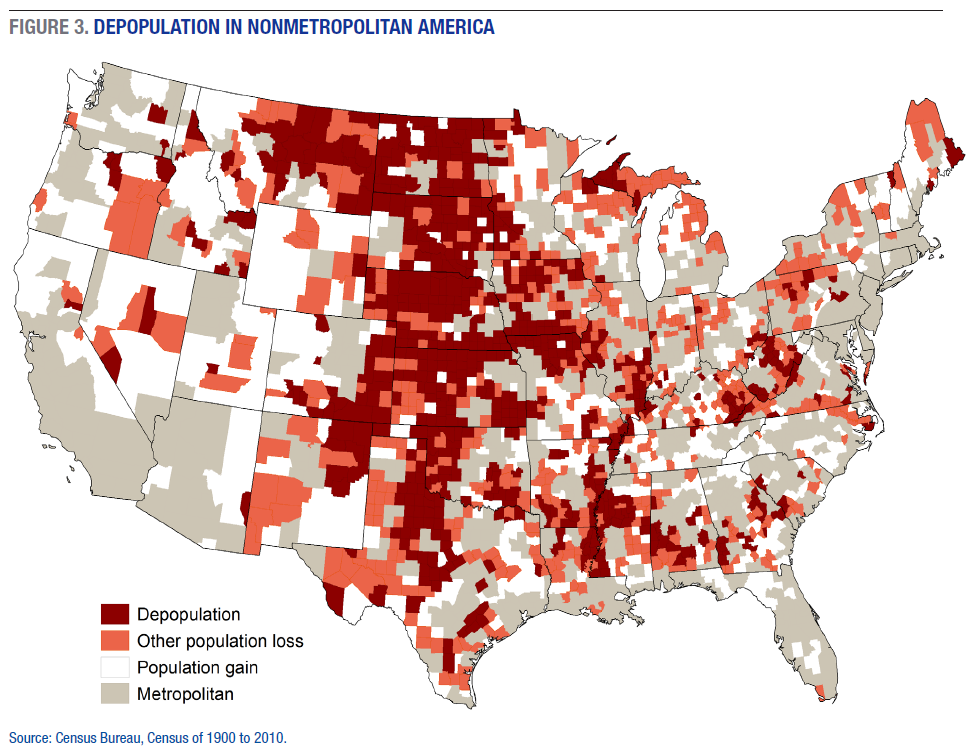
As Trump courts rural voters, population change in rural America is more complex than just saying the rural population is declining. See this 2019 research:
Our research provides clear evidence of depopulation across a broad swatch of rural America. Depopulation seemingly is now built into the demographic fabric of some parts of rural America—a result of chronic outmigration among young adults of reproductive age, along with population aging and high mortality rates. Yet, depopulation is far from universal. Many rural regions continue to grow, often rapidly, including exurban areas just beyond the metropolitan suburban fringe, and high-amenity recreational and retirement areas. These counties are likely to hold their own demographically in the future. The situation is much different for the depopulating rural counties caught in a downward spiral of population loss.
He then scrolled through building prototypes, developed in partnership with architect Korkut Onaran. For affluent families, Duany proposed a multigenerational alternative to McMansions, resembling the walled courtyard houses found in Latin America, Europe and Asia. These compounds’ walls protect against wind, rain and storm surge. Clusters of eight or so walled compounds would surround a central green that could be used for vegetable farms, exercise facilities or a small schoolhouse. Resilient adaptations such as backup generators, solar panels and water purification facilities would come standard. The goal, Duany said, was to design communities that could be “partially self-sufficient” in the weeks after a disaster.
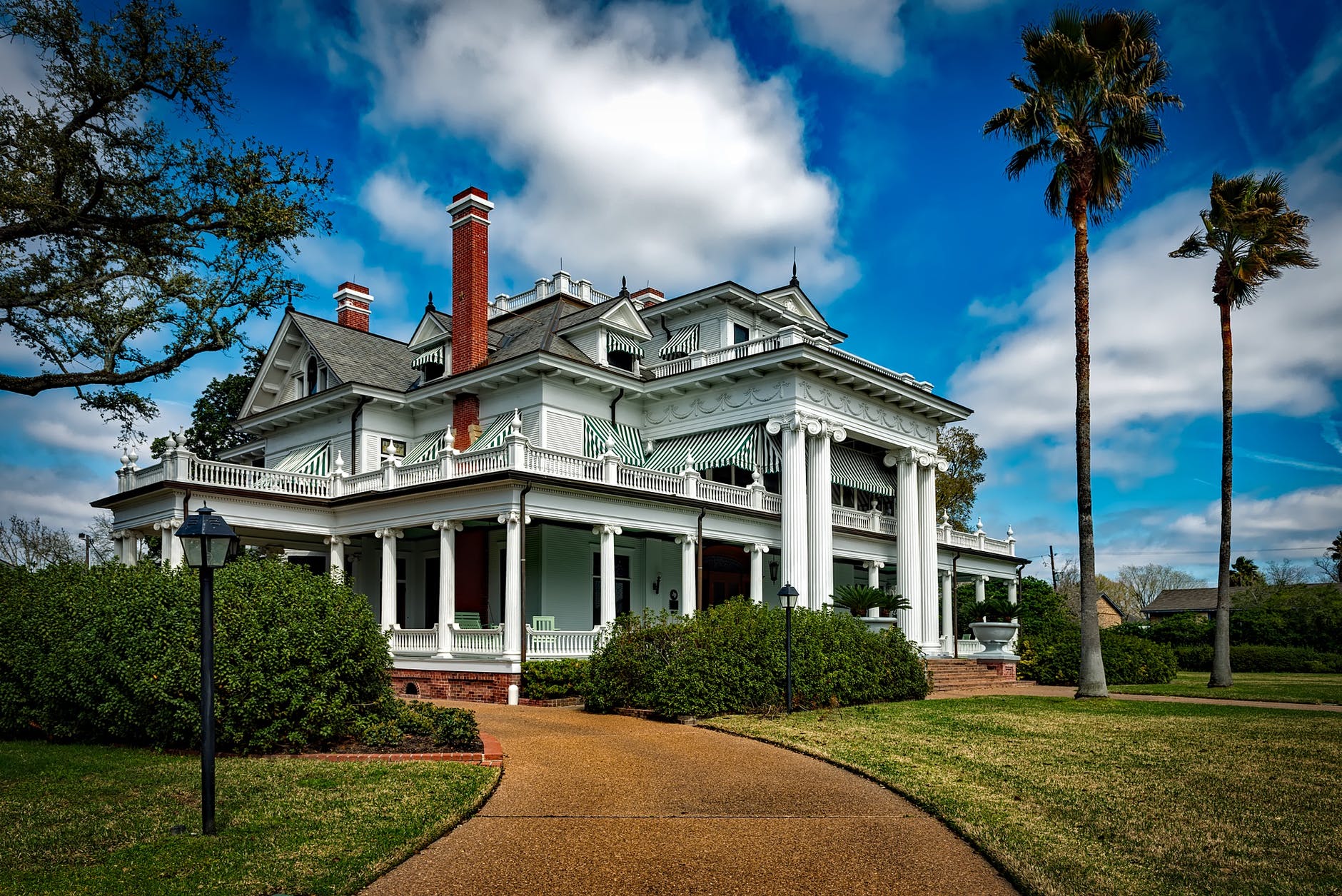
Here, the large home has several advantages compared to McMansions. First, it is designed by architects. McMansions are often said to be mass-produced by builders who want to maximize profits, not aesthetics (outside of an impressive – though often jumbled – facade). Second, the home can hold a multigenerational household. If a larger family inhabits the larger home, it is not just an empty McMansion that impresses people passing by; the space might actually be used. Third, the large home is part of a community intended to stand strong in the face of the effects of climate change. McMansions are criticized for their poor building construction – possibly limiting their ability to stand up to storms and other issues – and are often in sprawling areas.
An argument could be made that large houses in general should not be promoted. Even if you have the resources, who needs a home larger than 4,000 square feet, let alone the mega mansions of the truly wealthy? For example, the Not So Big House suggests smaller but customized homes would work better for residents. Tiny houses explicitly reject the bigger is better logic.
But, if bigger houses are still going to be built – perhaps some will say they need them for entertaining or large families or for particular uses that take up a lot of room – they could be done in a way that makes them less like McMansions and more like large versions of well-designed, built to last homes. Indeed, McMansions receive a lot of negative attention even as there are plenty of supersized homes – true mansions – that might also be worth rethinking.
I recently signed up for Informed Delivery with the United States Postal Service. In theory, this is a cool service as you can preview your mail and packages earlier in the day. Each morning, I get an email with scanned images of my coming mail.
Yet, my experience with it is not that fun. I get to see the pieces of mail I do not like – bills and junk mail – ahead of them arriving in my mailbox. Thus far, I have not seen an exciting piece of mail ahead of time. I can look forward to the latest politician who wants to send me a glossy flyer
This is not the fault of the USPS. I need to get involved in streams of more exciting mail. But, it also hints at what the mail is used for now: personal letters and cards can go via email, packages largely go through deliveries to doors rather than mailboxes, and what is left is largely less interesting.
The way that Austen recounts the history of Cabrini-Green helps highlight the community, social life, and humanity present at Cabrini-Green. He does this through tracing the lives of several residents and their families throughout the larger narrative about Cabrini-Green and public housing. Cabrini-Green became a symbol or abstraction for many Chicago area resident and for the country but these stories help humanize the place and those who lived there.
Public housing in the United States never had much of a chance. It was difficult to get implemented in the first place, decisions about design, locations, and maintenance were not always made with the best interests of the residents in mind, and the number of public housing units has declined in recent decades with former residents pushed out and a switch to voucher options. If this is the front line to a fight over a right to housing, it is hard to find much hope that the right will be established any time soon.
The Chicago Housing Authority did poorly including locating public housing units in already segregated areas, failing to maintain buildings, and not following through on the Plan for Transformation, For a government agency that was supposed to help people, its legacy is not a good one, even by Chicago standards.
Pairing this book with the 2011 documentary The Pruitt-Igoe Mythwould provide a good education on the topic of public housingfor the general public. Both have a compelling storyline/presentation based on particular housing projects and enough connections to scholarly conversations on the topics involved for people to dig deeper.
On Tuesday, Musk announced on Twitter that, after a full year in the making, The Boring Company’s first operational “loop tunnel” in Las Vegas is “almost done.”…
The Boring Company built a test tunnel in 2018 near its headquarters in Hawthorne, California. A year later, it landed a commercial contract in Las Vegas to build a loop tunnel system for public use. According to The Boring Company’s proposal, the final system will be able to shuttle passengers in self-driving Tesla cars between any two destinations in Sin City within minutes.
Construction of the initial twin tunnels near the Las Vegas Convention Center (LVCC) was complete in May. The system is expected to be ready for public use for the Consumer Electronics Show (CES) in January 2021. But the event has been moved online due to the coronavirus pandemic.
Last month, The Boring Company won a county approval to expand its LVCC transportation Loop to include an underground station at the new Resorts World hotel located at the north end of the Vegas Strip. Ultimately, the company aims to connect all major tourist destinations along the Strip, as well as two terminals of the nearby McCarran International Airport and downtown Vegas.
This location makes sense when tourism is in full swing in Las Vegas. While the airport is relatively close to the strip, it is not necessarily close time-wise and a quick, automated car ride could please a lot of visitors. It is also fun to imagine this in other cities. The tunnels bring to mind memories of playing the Lower Wacker track on Cruis’n USA. Chicago has some of this infrastructure already in place while other cities might be able to convert or expand existing tunnels.
How this could positively affect streetscapes is fascinating. Imagine major American cities with less traffic in their denser areas, more room for pedestrians, more space for properties to extend past the building. Cars would still be in use – just moved to a different plane – but the emphasis on vehicles would be reduced. More streets could be closed, the scale of social life could change (though the towering buildings in some districts would still loom), and the streets would be safer. (I imagine taxis and others might not be pleased to have the business moved underground.)
This is likely a long project to pursue in any city; making big changes underground in many locations is very difficult. It does keep cars around (just more out of sight) and both the money spent to put the system in place and the ongoing commitment to the system could continue to inhibit other options such as promoting mass transit.
We found that 44% of high-income New Yorkers say that they have considered relocating outside the city in the past four months, with cost of living cited as the biggest reason. More than half of high-income New Yorkers are working entirely from home, and nearly two-thirds believe that this will be the new normal for the city…
Of those considering leaving New York City, 30% say that the possibility of working remotely makes it more likely that they will move. Of New York City residents who earn $100,000 or more annually, 44% have considered moving out of the city in the past four months (see Figure 4). Looking ahead, 37% say that it is at least somewhat likely that they will not be living in the city within the next two years…
The cost of living, more than any other factor, contributes to the likelihood of leaving New York City (see Figure 5). A total of 69% of respondents cite cost of living as a reason to leave the city; that figure is even higher among black (77%) and Hispanic (79%) respondents. Other reasons cited by respondents considering leaving New York City include crime (47%), desire for a nonurban lifestyle (46%), and the ability to work from home (30%)…
Only 38% of New Yorkers surveyed said that the quality of life now was excellent or good, a drop by half, from 79% before the pandemic (see Figure 2). Most believe that the city has a long road to recovery: 69% say that it “will take longer than a year” for quality of life to return to normal.
If I am interpreting the data above correctly, it sounds like COVID-19 has brought some other issues to light. This includes:
(1) If I can work remotely, do I value city life enough to stay there even though I do not need to be close to work?
(2) If the city is not what it was – and it is not clear when it might return to normal – because of decreased social activity due to COVID, the cost of living may not be justifiable.
Ultimately, is it worth living in a global city – with all that comes with it for high earners including jobs, cultural amenities, and a high cost of living – when the positive features of this city are muted during a pandemic?







 Legally Sociable