Ordinances and zoning against dollar stores

With evidence that dollar stores provide poor quality food options and limited jobs, some communities have used certain tools to restrict their presence:

While some local governments continue to lure dollar stores to town with tax subsidies and incentives, others are doing the opposite. A dollar store NIMBY movement has been gaining traction.

In Chester, Vermont, for example, residents argued in 2012 that allowing dollar stores to come to town “will be the beginning of the end for what might best be described as Chester’s Vermontiness,” per the New York Times—a statement that itself perhaps signals the class and race associations dollar stores have come to embody. In Buhler, Kansas, the mayor saw what happened to surrounding grocery stores in neighboring Haven and rejected the dollar store chain, also citing a threat to the town’s character.

“It was about retaining the soul of the community,” he told The Guardian. “It was about, what kind of town do we want?”

More recent efforts have used zoning tweaks to limit dollar stores, whose small footprint usually lets them breeze past restrictions big-box stores cannot. In Mendocino County, California, dollar store foes passed legislation restricting chain store development writ large. And in April, the Tulsa City Council passed an ordinance that requires dollars stores to be built at least one mile away from each other in North Tulsa. It also tacks on incentives for healthy grocers and supermarkets providing healthy food to locate in that area. “I don’t think it’s an accident they proliferate in low socio-economic and African American communities,” Vanessa Hall-Harper, a city councillor who grew up in North Tulsa and shepherded the ordinance, told ILSR. Since then, Mesquite, Texas, has followed suit with a similar move.

Communities have fairly broad powers to encourage or limit the presence of certain kinds of development. If they do not desire the building or the opening of a dollar store, then they can limit or eliminate the possibilities for a dollar store in that community.

Of course, the dollar stores can respond with their own tactics. Here are a few I could imagine (drawing from similar cases involving other businesses):

  1. Building just outside the jurisdiction of the municipality.
  2. Working with a neighboring community who is willing to have them.
  3. Mounting a public campaign against the community to tout the advantages of their business.

While the third option might be more of a nuclear option, the first two mean that another municipality could benefit from sales tax and property tax revenues, the limited number of jobs, and easier access for nearby residents.
A vote against urban McMansions in 2018

One design and architecture writer takes aim at urban McMansions as a tired trend from 2018:

Allison Arieff (columnist, New York Times):

Urban McMansions. I gotta ask these folks—was it always your dream to live in the Apple store? And if you want to live in 10,000 square feet, maybe you should move to the suburbs?”

Arieff draws attention to three traits of McMansions which she sees as negative:

  1. Their large size. She pegs the size at 10,000 square feet though I would argue that once you are at 10,000 square feet and above, this is more of a mansion than a McMansion.
  2. Their poor or low quality architecture. The comparison here is to an Apple store, presumably a structure of a lot of glass and silver metal. This may be appropriate if you are selling trendy phones and tablets but perhaps not so much in a new residence.
  3. A connection to the suburbs. Whereas McMansions are expected to arise from empty fields, plopping a large McMansion in an urban neighborhood, particularly an older one, could be viewed more negatively. How exactly does a big and poorly-designed single-family home contribute to a vibrant and cosmopolitan city scene?

Together, these homes are an inappropriate size, do not look good, and are meant for a different kind of streetscape and lifestyle. For more, refer to my four traits that can define a McMansion.

Decades-long trend: complex suburbia

A 2018 review of what we learned about American suburbs ends with this:

It all added up to a portrait of suburbia as a landscape of dynamic cultural and structural change, not sleepy stasis.

I would suggest this is a change that has been happening for decades. Here are the first four features of a more complex suburbia that come to mind. They each go back quite a while:

  1. Different kinds of suburban communities. The prototypical suburban community looks like Riverside, Illinois or Levittown, New York, places primarily for commuters, consisting of single-family homes., and attracting middle to upper-class residents. These communities had a limited numbers of jobs and local businesses and men were expected to commute to the big city (via train or automobile). The problem with this view, common to find since any book on the history of the suburbs mentions these two bedroom suburbs, is that different kinds of suburbs have been around for at least a century. Different kinds of suburbs included: working-class suburbs, suburbs of non-white residents, industrial suburbs, and suburbs with various levels of density of housing and commercial or industrial property (including edge cities).
  2. The move of industry and jobs to the suburbs. Even as a good number of early suburbs were bedroom suburbs, the suburbs also proved attractive to industry because of cheap land, access to transportation, and the ability to pollute away from millions of residents in the big city. East St. Louis, Illinois or Gary, Indiana grew as industrial suburbs. After World War Two, the number of jobs grew in suburbs as businesses moved to the suburbs to be closer to workers (or perhaps closer to their CEOs) and suburban residents desired more goods and shopping options (shopping malls, big box stores, restaurants, etc.). By more recent years, the most common commute in the United States was suburb to suburb, not the supposedly typical suburb to big city commute.
  3. Changing suburban populations. While most early suburbs were white (notwithstanding the occasional community of non-white suburbanites who could not live in white suburbs), suburbs in recent decades have become home to an increasing number of non-white residents. Additionally, poorer residents have made their way to the suburbs in recent decades. These non-white and poorer populations may have hit a certain critical mass in recent years but the trends go back at least a few decades.
  4. Growing cultural and entertainment options in the suburbs. This trend is more recent than the first three but is still relatively common across metropolitan areas: suburbanites do not need to go into the big city for entertainment and cultural options. The suburbs feature a number of restaurants, museums, parks, music venues, festivals, and other options that make it easier for suburbanites to rarely need to go into the big city for a night out. Certain cultural options may still be richer in the big cities but more regular cultural options are now often found just a few suburbs over.

All of these suburban features may be coming together in new ways or presenting challenges to more suburbs that never thought they would change dramatically from their character at founding. Additionally, thinking about these intertwined suburban traits could help us move past seeing cities and suburbs in a strict dichotomy and instead view metropolitan regions as more cohesive wholes with similar interests and problems to address.

Every house should come with pictures of the land before houses were built

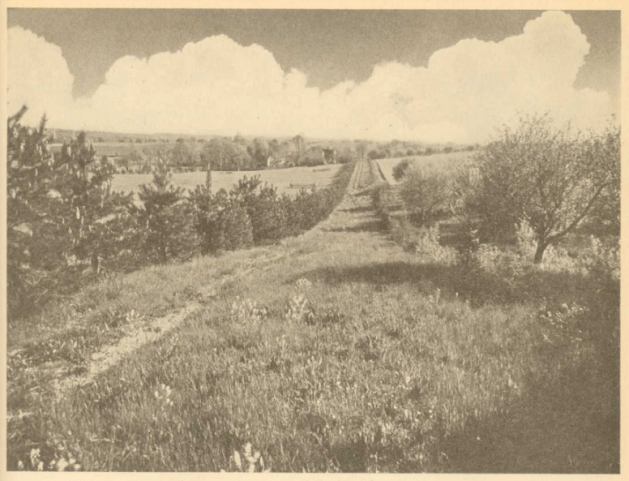
While recently working on a research project, I found 1930s pictures of the place where my in-laws live. Later the home to a master-planned suburban community, the picture presents quite an alternative vision:

SuburbanFields

Having such images could help give current suburbanites a better sense of what came before their home as well as some insight into how their home fits into an altered landscape. There would be some continuity between then and now – similar natural elements including wildlife, foliage, and topography – and notable differences such as the presence of modern roads and buildings.

Tracking down these images is often not easy. Many communities have historical societies or museums that keep such images. To see them, a community member or researcher would have to go ask for them. (And there is no guarantee they have pictures of every property; they are likely to have pictures of the more famous buildings in town.) Searching online can reveal some old maps and images of places but much of the material of local historical groups is not kept online.

Americans love It’s A Wonderful Life but did not heed its main lessons, Part Two

Americans like the movie It’s A Wonderful Life (see its ranking according to the American Film Institute). Yet, I am not sure that those same viewers and reviewers have taken the morals of the film to heart. Part Two today:

George spirals downward because of financial problems at the savings and loan. Additionally, he was not sure about a life running the family business (which he thought his brother Harry would do). In the end, he finds joy in his family and friends in the community. The local relationships, from the local girl he married to the people who utilized the savings and loan, provide him reasons to keep living.

Yet, since the film came out (1946), Americans have moved away from the close-knit relationships. This has happened in two noticeable ways. The shift to suburbs from both big cities and more rural areas led to different kinds of social ties. Suburbanites can be fairly transient and build relationships around avoiding open conflict (see The Moral Order of a Suburb) and through local institutions (like school districts rather than because of immediate geographic proximity.

Additionally, sociologists and others have suggested Americans have fewer close friendships. Even if our social media and online friends and followers have exploded, these are different kinds of relationships compared to close relationships with people with interact with regularly in-person. Furthermore, advice columnists regularly suggest seeing therapists or counselors, more impartial third-party professionals, to work out issues.

Clarence shows George that the lives of those who cares about would be markedly different if he was not around. The closing scene finds the townspeople rallying around George and a proclamation that he is rich because of his relationships. How many people today would hope for such an ending? (Granted, this is a film so how often such joyous community celebrations happened is unknown.)

Of course, the appeal of It’s A Wonderful Life may just be its nostalgia for an age that seems long gone. In an often harried and disconnected world, Americans may yearn for a (fictional?) world where the good guys win, local companies and residents help each other, people have rich friendships, and people live in small towns. But, if anything, our collective decisions since the release of the film have likely moved us further away from these realities.

Americans love It’s A Wonderful Life but did not heed its main lessons, Part One

Americans like the movie It’s A Wonderful Life (see its ranking according to the American Film Institute). Yet, I am not sure that those same viewers and reviewers have taken the morals of the film to heart. Specifically, I will discuss two key themes and how American society has trended away from the lessons of the story.

The main villain, Mr. Potter, runs a heartless bank. In contrast, George Bailey continues in the family business and operates the local savings & loan. George wants to help local residents get into a new single-family home (which look like they are part of a new suburban subdivision). George ends up being the hero as he is a compassionate local businessman while Mr. Potter is cruel.

But, hasn’t the large, impersonal, profit-driven bank won out in American society, particularly as it comes to providing funding for single-family homes? Even as the film was made (in 1947), significant changes in the mortgage industry were already underway to help provide more long-term mortgages and government support for private mortgages. As the decades passed, more and more local banks were bought by national and international banks. The savings and loans organizations disappeared, particularly toward the end of the 20th century. The housing bubble of the late 2000s largely involved huge financial institutions who had invested in mortgages. The situation is a far cry from the era depicted in the film.

The megabanks of today may be more impersonal than cruel but the idea is the same: they do not have as much interest in local communities as George Bailey and his family. George’s institution needs to make money and he seems to be doing okay with a home and job. but it also feels a responsibility toward local residents. Even if Americans say they like the idea of small businesses and local businesses that part of communities, haven’t they given over control or assented to a financial system dominated by large firms?

Suburb sponsors a college bowl game, gets nearly 20 mentions, 6 commercials, and a lot of visuals on the field

Elk Grove Village sponsored a college bowl game. The Daily Herald tracked how often the community was mentioned during the game broadcast:

The 3½-hour telecast included nearly 20 mentions of the formal bowl game name that uses Elk Grove’s “Makers Wanted” tagline, and six commercials promoting the business park…

11:33 a.m. The players take the field, sporting the bowl game logo on jerseys. The logo, featuring the “Makers Wanted” slogan nestled in between two palm trees, is on the 50-yard line, while separate “Makers Wanted Elk Grove Village Illinois” logos are on the 25-yard lines. Similar banners are on sidelines behind team benches. Smaller sideline signs feature “Makers Wanted” and Elk Grove-based Stern Pinball, which gave pinball machines to each team.

11:54 a.m. Elk Grove airs its first TV commercial, which it gets as part of the sponsorship deal. “Why would Elk Grove Village sponsor the Makers Wanted Bahamas Bowl?” the announcer asks. “Because we’re proud,” mentioning the new technology park under development and access to transportation. The TV spot invites businesses to learn more “about how we can help your company grow at makerswanted.org.”…

2:32 p.m. Coming back from a break, ESPN shows scenes from Elk Grove’s municipal complex and park district and the watch party at Real Time Sports bar. “Good on the Makers Wanted people and all our friends watching in Elk Grove Village,” Levy says. “Need a place to set up and start a business and start a life? That’s an excellent place to go.”

Add in all the times viewers saw logos on the field and in the stadium and it sounds like the suburb received plenty of air-time.

Two related thoughts:

  1. It is interesting to see how the community tried to present itself. The whole point was to sell the business space and atmosphere of the community but that does not happen by just showing empty land and warehouses. So, if you are trying to promote a friendly community that is full of successful businesses and entrepreneurs, what else do you show? Based on the account above, they showed a party and a pinball competition hosted by a local company. Could those events happen anywhere? Would local residents recognize this as their community in terms of a pervasive local character or did it just cherry-pick a few pieces of the suburb?
  2. Imagine a future where more communities sponsor sporting events or other major events. The average American has never heard of most other suburbs. The average Chicago area resident likely knows little about Elk Grove Village outside of its location near O’Hare Airport. This could be a way for relatively small and unknown places to become more known. At the same time, such campaigns are unlikely to have major transformative effects on suburbs.

Gautreaux remediation may end soon in Chicago

Filed in the 1960s, decided in the 1970s, and with remediation lasting decades, a case involving a class-action lawsuit charging racial discrimination in public housing in Chicago may end in 2024:

The Chicago Housing Authority and lawyers representing CHA residents have asked U.S. District Judge Marvin Aspen to approve the agreement creating a road map for the CHA to complete its obligations under the so-called Gautreaux litigation.

Under the plan, the nearly 53-year-old case would come to a close by July 2024, marking an end to a landmark chapter in the national civil rights movement.

The settlement agreement provides a detailed timeline for the CHA to complete all planned mixed-income units and strengthen its housing voucher program to better enable families to move to more affluent areas if they choose to do so…

The lawsuit changed the face of public housing by instituting “scattered site” projects built on a small scale and dispersed in neighborhoods throughout the city — a stark contrast to the high-rise buildings constructed in the 1950s and 1960s.

This important lawsuit and ruling has both had significant effects on how policymakers have addressed concentrated poverty (more emphasis on scattering poor residents) as well as likely had limited effects because of the limited number of poor residents who have had and taken advantage of new opportunities to live in wealthier communities.

What is also striking about this is that the era of large-scale public housing and its associations with concentrated poverty are likely over. Hopefully, this does not mean less attention is paid to residential segregation and affordable housing issues but it is easier for the general public to ignore problems that are less visible.

Former Cabrini-Green site home to the fastest growing American neighborhood of residents making over $200k

A new analysis of Census data suggests the former home to Cabrini-Green housing project high-rises is increasingly the home of wealthy residents:

Cook County, which includes the county seat of Chicago, is home to the No. 1 and No. 7 fastest-growing concentrations of $200,000-plus households. No. 1 is, ironically, the area around where the Cabrini-Green public housing projects once stood. Cabrini-Green was notorious for violent crime, poverty and de facto racial segregation until its demolition beginning in the 1990s at the behest of the Chicago Housing Authority.

Even back then, authorities fretted that redevelopment plans might displace low-income families. They were right to be worried. Two decades later, the area’s concentration of $200,000-plus households has skyrocketed from zero to 39 percent. For some of the longtime residents who remain, the neighborhood’s transformation has been isolating.

Latanya Palmer, 53, grew up in the Cabrini Rowhouses. While she moved into a nearby mixed-income development in 2005, the hypergentrification has occasionally made her feel like a stranger in her own home. That sentiment echoes across the country, as poor and working-class Americans are increasingly pushed aside by frenzied development and prohibitive living expenses…

The census tract in question includes the still-standing, albeit largely vacant row houses where Palmer grew up. But now there are luxury condominiums and apartments, too. They sport rooftop terraces and sparkling views of the city’s affluent Gold Coast and Lake Michigan beyond. A three-bedroom penthouse can cost around $2 million.

This should be no surprise: the proximity of the land to both downtown and Lincoln Park meant that it is was highly desirable for developers and residents. Compare the clamor for the Cabrini-Green land to land where the Robert Taylor Homes once stood.

I would suggest there is a bit of revisionist history above. The claim that “authorities fretted” about the possible displacement of public housing residents is overstated. If anything, the city and Chicago Housing Authority probably could not wait to remove the high-rises (and other ones in the city, including the Robert Taylor Homes). Progress on replacing the units has been slow and with limited effects. The Chicago Housing Authority continues to have long waiting lists for housing. And many of the neighborhoods where public housing high-rises once stood are still relatively poor, even as a construction boom is taking place in the Loop and desirable nearby neighborhoods. In other words, some foresaw the potential for the Cabrini-Green site to be a wealthy neighborhood – and this what the city desired.

For more on why some Cabrini-Green residents fought hard to not be pushed out of their high-rises, see my earlier paper: “The Struggle Over Redevelopment at Cabrini-Green, 1989-2004.”

Ads showing giving a new car as a Christmas gift

Given the American love of driving and American consumerism, is it a surprise to see lots of car commercials at Christmas suggesting people are gifting others new cars?

But traditionally December means steep discounts for cars, and with annual dealership goals and sales quotas knocking, people buy cars in December for a lot of reasons. More than 17 million new cars and trucks were sold last year; 1.6 million were sold in December. Some were gifts, some necessary purchases that conveniently doubled as gifts. Said Akshay Anand, executive analyst at Kelley Blue Book: “The thing that isn’t talked about much is that the big luxury manufacturers are all competing in December to claim they were the ‘luxury brand sales leader of the year.’ ” Which is partly why Lexus, BMW and Mercedes’ Christmas ads are so frequent.

At McGrath Lexus of Chicago, “it’s our busiest time of the year,” said Heather O’Malley, the sales manager for new cars. She said McGrath sells about 120 cars each December at its dealership on Division Street. Maybe five or six are Christmas gifts. “And I have done the whole surprise car-gift thing like in the ads. A husband takes his wife to breakfast and arranges for us to leave the car in the driveway with a big red bow when they return — I love doing that.”…

Cynthia Tenhouse, general manager of product and consumer marketing for Lexus, is aware of the years of grumblings: “There is a lot of cynicism out there — this is never meant to be realistic.” The goal was aspirational (the agency that makes the commercials is Los Angeles-based Team One, which specializes in premium brands like Haagen-Dazs and Ritz-Carlton). In the 1990s, when the “December to Remember” campaign began, “we just wanted to be a part of the holiday culture without having to do just another ‘car sales event.’ ” But they do recognize “we need to be sensitive to what is happening (in the world), and so every year we make small changes because of what is happening.” This year the message is, a Lexus delivers throughout the year — it’s not just a holiday gift anymore….

He’s president of the Car Bow Store outside Philadelphia, which bills itself as the largest manufacturer of oversized car bows in the country. (Yes, there are others.) The Lexus commercials, he says, are a boom for his business. He sells 25,000 giant bows a year, most during the holiday season, to both dealerships and car buyers. “It’s staggering how many people out there are actually giving cars as Christmas gifts.” That said, he never received a car as a gift, “and I don’t know anyone who ever has.”

The formula: people want to buy new cars at the end of the year because of discounts/new models available + lots of spending at Christmas + dealers and manufacturers looking to do well at the end of the year = opportunity to push big-ticket items like cars through advertisements.

While these ads may seem more obvious at Christmas, car commercials are all over the place at other times of the year too. I can’t think of a similar big-ticket item that receives so much ad space. Houses cost a lot more – and it is hard to sell individualized homes through a mass commercial. Smartphones are all over the ads too but even the most expensive models available to the public come nowhere near the price of a new car. All of those car commercials viewed over a lifetime must have some effect, even if it simply reinforces that cars in the abstract are desirable and we need them in society.

I would be interested to know what the effect of giving a new car as a gift is in the long run. It is a large item. It is a necessary item for many people in order to get to work and other places. Because a new car is both expensive yet necessary, does it feel like a gift longer or does it become mundane just as quickly because it is used regularly?