Honor a president…with a highway named after them

Chicago likes to honor famous people and politicians by affixing their names to roads so what would be a fitting honor for former president Barack Obama?

A few weeks ago, state Rep. Robert Martwick, D-Chicago, submitted a resolution to have the entirety of Interstate 294 named after President Obama. However, in the same week, state Rep. La Shawn Ford, D-Chicago, indicated that he was moving to submit legislation that would rename much of Interstate 55 that passes through Illinois as the “Barack Obama Expressway.” The moves in Springfield led to chatter in the press and elsewhere about how to honor President Obama and his legacy.

Perhaps because driving is so ingrained in American culture officials like to rename roads and highways. A highway seems so dull here: it will be a staple of morning traffic reports (“The Obama is clogged from 159th to Cicero”) and make it into countless digital and print atlases. I imagine it takes time for a name change to switch over into normal use: is I-55 the Southwest Highway, the original name, or I-55 (when it was adopted into the Federal Interstate System), or the Stevenson (to honor an Illinois governor and twice-failed presidential candidate. How many people who live in the area say they drive the Reagan?

But, there are plenty of other infrastructure options: how about O’Hare Airport (named after a World War II aviator), one of the most important airports in the American system? How about a branch of the L? Think how many people travel on and would see the Obama Line and perhaps some politicians would rather be known for promoting mass transit. Of course, if you didn’t like a politician (not the case here), you could attach their name to something less worthy like a sewage treatment plant or a viaduct.


McMansions as the base for futuristic enclaves

A new futuristic book written by an architect makes use of McMansions:

But what if the McMansion could be put in the service of urbanism instead? In his new book Atlas of Another America: An Architectural Fiction (Park Books, $49), the architect Keith Krumwiede, who teaches at the New Jersey Institute of Technology, envisions an alternative reality in which McMansions are used as building blocks to create small communities not unlike medieval villages or 19th-century communes. These “estates,” aggregated from real house plans used by big homebuilders such as Toll Brothers and Pulte, are set in Krumwiede’s fictional domain of Freedomland.

Across the Atlas’s richly colored pages, Krumwiede offers dozens of variations on the idea of the tract home as a module in a much larger dwelling. His estates have up to 200 bedrooms and 100 bathrooms each. Some are cruciform or X-shaped in plan; in others, the McMansions pinwheel around a fountain, lock together in tight Tetris-esque combinations, or link up delicately like daisy chains.

And the author discusses some of his thinking:

I think we do ourselves a disservice as architects dismissing all of these houses out of hand as aesthetically impoverished dreck, because they are really smart plans. That’s not to say that they have architectural values in a traditional sense. What I think they do effectively is they are able to deliver on the idea of every house being that individual’s palace…

I’ve had certain architects affiliated with the New Urbanist movement who’d say, “These individual estates are really great. You need to find a way to build these.” There are other friends, who see themselves more as avant-gardists, who are like, “How can you be mucking around with these shitty houses?” They see it as selling out.

These plans may make use of the physical structures known as McMansions but they certainly play with one of the object’s central features: a private space separate from neighbors. This is both a feature and a big: homeowners seem to want to get away from neighbors and society (with lots of interior space, sometimes a sizable lawn, and architectural features that impress but don’t necessarily expose the inside activity to outsiders) while critics suggest these home privilege private lives over robust community interaction (with sizable and prominent garages, plenty of interior space, and often imposing exteriors that discourage neighborly activity). Would a McMansion intentionally created as part of an enclave cease to be a McMansion?

Another idea: imagine you could move existing McMansions to create these new enclaves. It would be difficult to move large structures like these but then new McMansions don’t have to be constructed and it frees up other locations for new uses.

A push for Naperville to declare itself a “welcoming city”

The Naperville City Council has recently discussed declaring the suburb a “welcoming city”:

Some Naperville residents and city council members want the city to adopt a resolution that would declare Naperville a welcoming city to people of all backgrounds. The push comes amid an election that includes the first openly gay candidate for Naperville City council…

O’Meara is part of a couple women’s groups that are asking the city not to become a sanctuary city, but to name itself a welcoming city, she said. “We believe that becoming a welcoming city is something that you’ve already done over the years that people have been coming here,” O’Meara said. “It’s important that people moving into this town know that this town is going to support them in what they have to do going forward.”

Councilwoman Becky Anderson floated the idea of adopting such a resolution at an earlier City Council meeting after Naperville resident Anthony Castagnoli spoke during public comment period, asking the City to act in resistance to President Donald Trump’s actions…

“One of the things I would task us to think about as council members as we approach our next social service grant cycle is what could we be doing with the social service grant to make people feel more comfortable, or to aid those who are struggling in our community because of discrimination whether it’s through immigration or otherwise,” Boyd-Obarski said. “As we confront the country around us, if we really want to be welcoming, let’s think about ways that we can do that with our dollars as well as our voices.”

This could be viewed as interesting as a community that traditionally has been fairly conservative. As noted here, perhaps that is why being a sanctuary city is not on the table. At the same time, Naperville is home to a number of wealthier, well-educated residents and wants to continue to attract both high-end businesses and residents. One thing Naperville has done well over the last six decades as it has expanded from a small town to a giant suburb is created a high-quality of life, which today likely includes the values of tolerance and diversity (see Richard Florida’s work for an argument on why this is so important for today’s cities).

The people quoted from this article primarily cite Naperville’s welcoming attitude to gay residents. Have all minority residents had similar positive experiences? It wasn’t that long ago that Naperville was a sundown town or a place where black residents could not be shown housing. Or, in the last twenty years or so, the Islamic Center of Naperville has faced opposition over their locations.

Comparing the McMansions of Matt Ryan and Tom Brady

Relive some of the excitement of Super Bowl by comparing the McMansion of Matt Ryan in Duluth, Georgia versus Tom Brady’s homes:

I’d say Matty Ice picked himself the most conventional McMansion possible…

But what his house, or houses? I bet he has no taste…This house in Brookline, Massachussets? You’re kidding me. It’s kind of tasteful. Okay, it’s great, it’s perfect…What about the house in LA? I bet that’s hideous…You know what though, Tommy Boy? You are not McMansion material…

The winner here is Matt Ryan for keeping it real.

All those hours of coverage of the big game and you didn’t see important information like this. Both clearly have large homes but there are notable differences. This analysis suggests this comes down to personal taste but I think there are some other factors at work:

  1. Brady operates in different locations where expectations about large homes may be different. Compared to the Atlanta area, are there were fewer McMansions in Brookline (probably) or in the Los Angeles area (maybe not but there are also more legitimate mansions)?
  2. Brady operates in a different social circle than Ryan. With his model wife, Brady has to fit in with a range of famous people while Ryan is with the football crowd. Both have plenty of money but there is a difference in social class and taste a la Bourdieu.
  3. Both grew up in suburban areas: Ryan in Exton, Pennsylvania (outside Philadelphia) and Brady in San Mateo, California (Bay Area). This could influence both wanting to live in suburban areas now.
  4. Ryan is younger than Brady and perhaps he hasn’t had the time or experience to move to a more “mature” home.

Overall, I suspect many pro athletes have homes critics would call McMansions.

LA development guided by powerful people and relatively few voters

Some critics have charged that development in Los Angeles is influenced too much by powerful people. Yet, when voters had an opportunity this week to vote on increased regulation of development (Measure S), relatively few people turned out:

In the end, it failed by an overwhelming margin, garnering only 70,000 votes in a city of almost 4 million people. It’s a reassuring sign…

It’s hard to read too much into an election in which hardly anyone voted.

While it was a primary election (where turnout is typically low), this measure would have affected development throughout the city. Does this suggest residents aren’t that interested in development?

Maybe the voters save their attention for local development issues and LA has plenty:

Some of the same people who pushed for the passage of Measure S sued the city over an update to Hollywood’s community plan. In Granada Hills, neighbors are fighting a 440-unit apartment complex. That project conforms to that neighborhood’s newly rewritten community plan, but some residents say it’s too big.

Development can be tricky in that many residents might be very aware of what is happening next door or on the same block (particularly if it affects their property values or their children) but not have much knowledge or concern about matters in other parts of the city. In a big city like Los Angeles, residents may not be very familiar with the daily happenings of other locations. And, this is Los Angeles, famously the poster child for decentralization.

In other words, talking about development in the abstract might be a difficult sell, even in locations like this where housing prices are high for all.

UPDATE 3/9/17 9:08 PM: Here are more exact figures on how many LA residents decided the fate of this sweeping development regulation:

The Los Angeles Times reported late on Tuesday that just 11.4 percent of the electorate participated in the election, despite the fact that the mayor, half the city council, and several heavyweight ballot measures were all up for debate. In Tuesday’s election, apathy won.

Read further for an argument on why measures like this that are so broad should not be on primary ballots.

From I Love Lucy in Connecticut to Desperate Housewives’ Wisteria Lane: Suburban TV Shows, 1950-2007

In my study of suburbs, I have run across numerous scholarly sources that discuss the role television played in promoting American suburbs. A number of them suggest that the idealized image of nuclear family life taking place in the single-family home presented in shows in the 1950s and 1960s encouraged Americans to make the move to the suburbs. My recently published paper (published online in Sociological Focus, forthcoming in print) aimed to put these arguments in context: just how common were these suburban television shows? Did such shows reflect the millions of Americans who already moved to the suburbs or create demand for the suburban life?

The short answer: suburban-set TV shows were relatively rare among the top 30 ranked shows from 1950 to 2007. There certainly were some classic shows – ranging from Father Knows Best to Home Improvement – but many of the top 30 shows were set in cities. Here is my concluding paragraph:

Even though the United States has become a suburban nation, its most popular television shows from the second half of the 20th century and the early years of the 21st century did not match this demographic shift. The suburban sitcom or drama, satirized in films like Pleasantville or featuring anti-heroes in more recent television shows like The Sopranos, was a relatively rare figure in the top 30 television shows. The suburban show is a recognizable form with its emphasis on family life in a single-family home without much social strife, and new fall lineups continue to include variations on the genre, yet many popular American shows were set elsewhere. Thus, these longitudinal findings suggest popular television shows had a limited influence on pulling and/or pushing Americans to the suburbs. America may be suburban but its most popular television shows are not.

There is much more to explore here. The scholarship on the topic thus far has focused on particular key examples of suburban-set shows but has rarely considered the full scope of television or how exactly watching a show set in the suburbs would change people’s behaviors.

Automated jobs could reduce tax revenues

I don’t know how accurate these figures are but it is an interesting argument: people might worry about losing jobs to automation but what about losing tax revenues?

The United States is in danger of losing more than one-third of its tax base thanks to increasing automation in both manufacturing and service sectors. Self-driving vehicles, self-serve kiosks, increases in manufacturing and energy production efficiency, and declining retail numbers all contribute to what is likely going to be a significant problem in the coming decades…

Conservative estimates put future job losses at 20 million with some estimates going up to as high as 70 million. When someone loses their job, they stop paying taxes, while their employers stop paying payroll and other types of taxes at the same time. Compounding the issue is the fact that many people who lose their jobs start to depend on the economic support of the government, along with their families…

A growing population and dwindling jobs will result in much higher levels of unemployment in working-age adults than we see now. To top it off, the number of people on either side of the working-age spectrum (under-18, over-67) are growing substantially. Something has to give at some point, whether that means the advent of a basic income system or substantial corporate/capital taxes, the transitional period we are currently in cannot last forever.

Something to keep an eye on. I could imagine this causing particular problems at the local level as less federal and state money is available at the same time that residents may have a harder time paying property taxes and other local fees.

Creative writing at the suburban shopping mall

The Mall of America is offering a unique opportunity:

The Mall of America is taking applications for a summer writing residency, which makes now a good time to question whether our collective taste for absurd mash-ups has gone too far. Is this an attempt to out-quirk the Amtrak residency, where writers typed on trains? What’s next — a sculptors’ retreat in a Chevron station? A poetry workshop at Ikea?

Maybe, but think about it: The people-watching alone would make easy fodder. Look — there goes a man in a plaid shirt, walking past Foot Locker into Sephora. He emerges with a small bag. The story practically writes itself.

Submit your residency application by Friday, and you could be selected to commemorate the shopping destination’s 25th birthday by spending five days writing while “deeply immersed in the Mall atmosphere.” (Nights are spent in a hotel, not sleeping on a department store mattress as I’d hoped.)

I agree: the shopping mall could be part of all sorts of interesting stories. But, I do wonder how many of them would be positive in the hands of today’s writers. Too often, stories of suburban life follow a similar script: happy looking family or couple ends up spiraling downward as the facade falls away from their American Dream. Such scripts could involve the postwar suburban tract home, current McMansions, or the shopping mall, perhaps the symbol of suburban affluence, consumerism, and emptiness. What is the shopping mall but the poor facsimile of authentic Main Streets?

Maybe this would be an even more challenging task: do such a residency and craft a range of stories representing the experiecnes of all those mall visitors and employees.

Better software to reduce traffic

Adaptive traffic software has helped reduce congestion in Ann Arbor:

Ann Arbor’s adaptive traffic signal control system has been playing god for more than a decade, but fiddling engineers continue to tweak its inputs and algorithms. Now it reduces weekday travel times on affected corridors by 12 percent, and weekend travel time by 21 percent. A trip along one busy corridor that took under three minutes just 15 percent of the time in 2005 now comes in under that mark 70 percent of the time. That’s enough to convince Ann Arbor’s traffic engineers, who just announced they’ll extend this system to all its downtown traffic lights and its most trafficked corridors.

To combat congestion, each hopped-up signal uses pavement-embedded sensors or cameras to spot cars waiting at red lights. The signals send that information via fiber network to the Big Computer back at traffic management base, which compiles the data.

This stuff works on a macro and micro level: If there are four cars lined up to go one way through an intersection, and zero cars lined up to move perpendicular to them, the light might turn green for the four. But a network of connected lights—like in Ann Arbor—will analyze the entire grid, and figure out who to prioritize to get the most people to their destinations the fastest. Advanced traffic control systems can even predict delays and congestion build-up before they happen, based on the ebb and flow of commutes…

The system knows when to lay off the change. “People kind of freak out if the signal is really different from yesterday or different from what it was five years ago,” says Richard Wallace, who directs the Center for Automotive Research’s transportation systems analysis group. For the most part, the system looks to tweak light patterns, not reshape the whole shebang from one hour to the next.

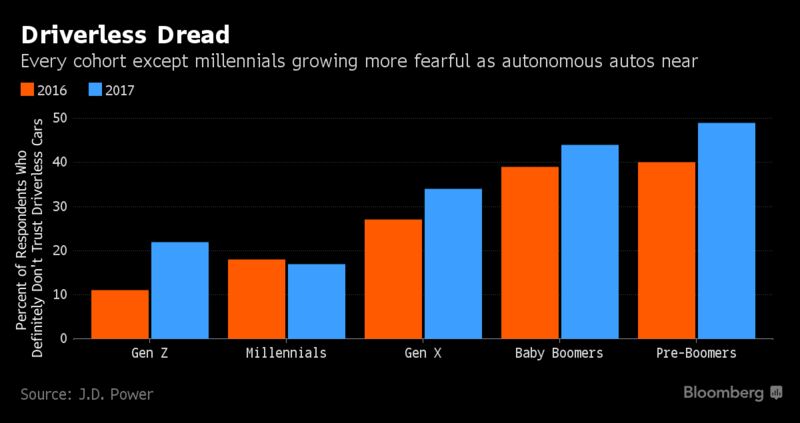
As we wait for the complete takeover by driverless cars, this could help ease our troubles. Small but consistent improvements like this could make a big difference to many commuters. Of course, it could also have the effect of encouraging more drivers who see that the commute is not so bad. Perhaps this is why the lights should be somewhat haphazard; it might unnerve a few of those drivers.

I assume there are some costs associated with putting in sensors and cameras as well as in developing the software and having employees to set up and run the system. How do these costs compare to the money saved in shorter driving trips? Or, what if this money had been put into opportunities like mass transit that would remove drivers from the roads?

Why Americans do or do not move

An article about the most and least mobile cities in the United States includes some discussion of what pushes people to move or to stay put:

“There are two main determining factors whether people move or not,” says Nathalie Williams, a sociology professor from the University of Washington. The good: “The better people feel their lives are going, the less likely they are to move elsewhere.”  The bad: Lousy economies can force people to head for greener pastures.

But of course, economic insecurity can also keep people in the same place.

After the housing bust in 2007, migration slowed down, because uncertainties about the job market had made people nervous about changing jobs and deciding to move on. They were less likely to upgrade to a bigger and nicer home. Plenty even found their homes deep underwater, and were unable to sell.

Now that the recession is over, mobility is finally picking up again, says Kenneth Johnson, a demographer at the University of New Hampshire. And jobs lure people, especially younger ones who haven’t put down deep roots, to new centers of employment.

The short explanation is that economic factors are influential. But, there may be three caveats to this: (1) movement can occur because of either a good or bad economy, (2) it may depend on people’s stage of life, and (3) perhaps there is more to this than economics. Regarding the first point, the article juxtaposes Detroit and Honolulu, the two cities that are least mobile. These are two very different places: one is doing well, the other is not. Later, it is noted that several of the most mobile places are college towns with populations that are more transient (this involves students but also others whose jobs in academia and related industries can lead them from college town to college town). Finally, the description of life in Honolulu cites some economic factors (low property taxes) but also includes a unique cultural setting that some enjoy.

In the end, I’m not sure this article does much to help explain why people move. They move less when economic times are good and bad. Certain places are more mobile because of institutions that encourage transience (colleges) while other places have quality of life traits that discourage moving. Does this mean the most mobile places are somewhere in the middle of these rankings? Or, is it all relative to what people in the region have experienced in recent years?