What happens when a place is no longer growing quickly, Florida edition

Populations and demand in housing markets can ebb and flow. What happens when a state known for growth for a while starts to lose its luster?

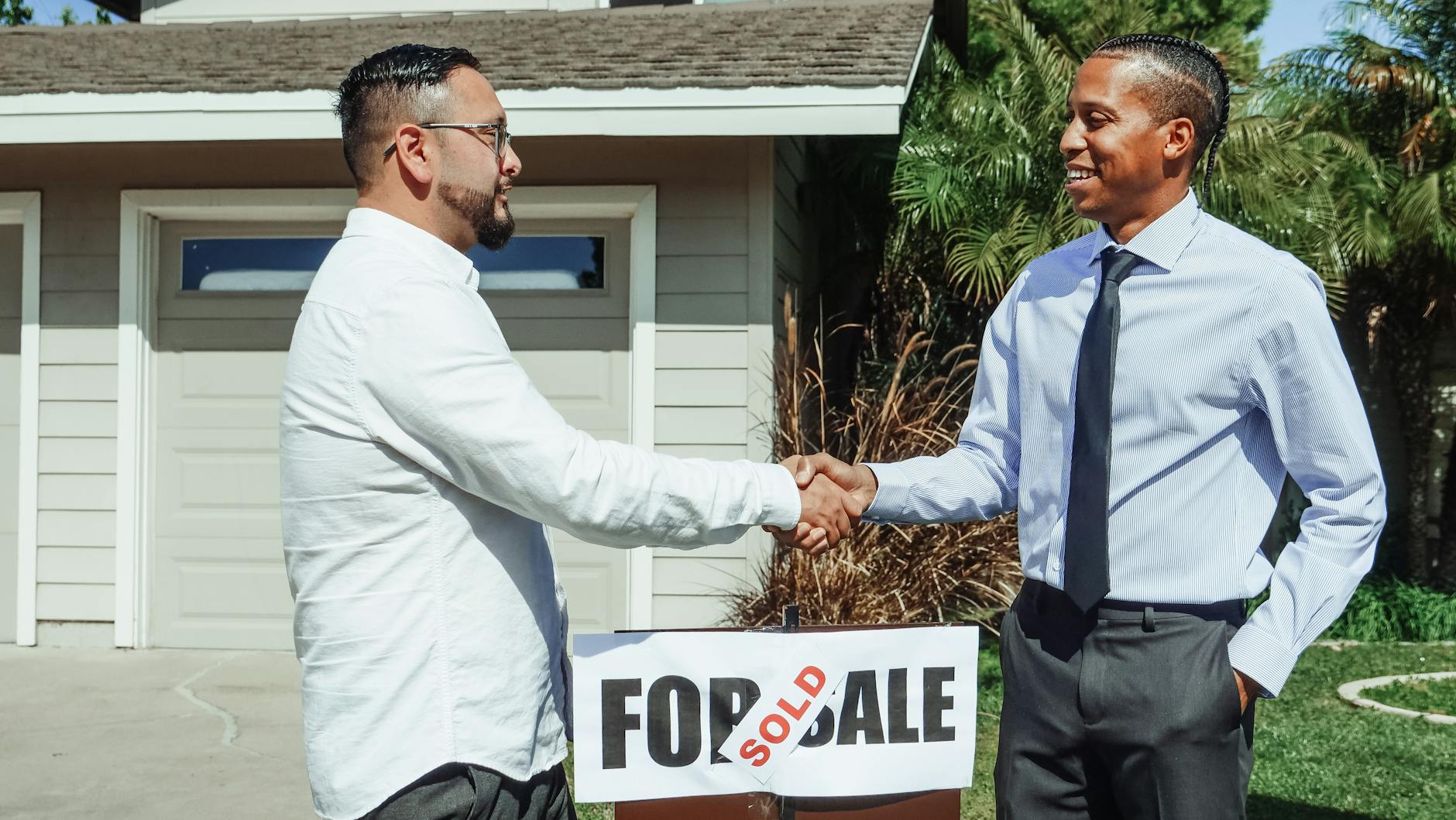
Photo by Del Adams on Pexels.com

Florida was one of the epicenters of the pandemic’s great migration, but while crowds of people are trying to settle into places like Orlando, Tampa, and Jacksonville, many Floridians want to dump their homes and get out.

The exodus is mainly being driven by higher housing costs, a higher cost of living, and souring attitudes toward the influx of people who moved to Florida in recent years. Those factors combined are making daily life in the state way more difficult, current and former Florida residents said.

While 730,000 people moved to Florida during 2021 and 2022, nearly half a million people left, according to US Census data.

The state, meanwhile, just lost its status as the most moved-to region this year, according to an analysis conducted by the Florida-based moving service PODS. South Florida, in particular, ranked among the regions people were most keen to move out of, the report said.

Waning enthusiasm for the state is evident in housing activity, which has fallen from its pandemic highs. The number of homes for sale in Florida has soared 42% compared to levels last year, according to Redfin.

In the United States, growth is good. A growing population is connected to an increasing status that hopefully just brings in more people and business.

But population booms do not last forever. A good number of American communities have had periods of rapid population growth, including many big cities and numerous suburbs, and then other periods of slow growth or even population loss.

From the evidence above, it sounds like Florida’s growth has slowed. It is another matter if the state starts losing residents. If that happens, dire descriptions can emerge such as it being a “failed” state.

If growth slows in Florida, what other states might take up the mantle of those with rapid growth? Can they have a sustained run of growth that brings prestige?

Improving a home’s interior design so it does not feel like a McMansion

Is a house a McMansion regardless of what it has inside? One recent discussion of interior design hints that it depends on what the inside looks like:

Photo by Max Vakhtbovycn on Pexels.com

Everyone loves a good feature in a house. Wainscotting adds texture to a boring room, stone on a fireplace makes a living room cozier, and a simple ceiling beam can elevate an entire room. These architectural flairs make a house feel more memorable. Without them, a space can feel like a developer rather than an architect created the design, building something of a McMansion. But while it’s important to add thoughtful features, HGTV’s Drew Scott points out that there can be too much of a good thing. While one of those accents can help make a house feel special, muddling them all together can make everything too busy.

Often, the features of McMansions are visible from the outside: a large size, a mish-mash of architectural styles, and/or a location in a suburban subdivision of similar mass-produced homes.

But could a McMansion be redeemed if the inside does not look like a McMansion? Or could a home be a McMansion if the outside does not look like it but the interior has McMansion features? Imagine a 2×2 table:

McMansion interiorNot McMansion interior
McMansion exterior
Not McMansion exterior

The “typical” McMansion is in the top left cell: the outside and inside shows McMansion traits. The mixed categories are what is at stake here with the emphasis on interior spaces. Have the right design element inside and it could push a home out of the McMansion category.

I am not sure how this works. Who gets to render the ultimate McMansion judgment? Since McMansion is a negative term, does any shade of McMansion-ness mean the home is a McMansion?

Wildfires approaching homes in sprawling suburbia

Wildfires threaten communities and homes fairly regularly in the United States. How often are these wildfires in suburban communities? Here is a current example outside of Los Angeles:

Photo by RDNE Stock project on Pexels.com

Driven by triple-digit heat, gusting winds and tinder-dry vegetation, the three fires burned at speeds firefighters have never witnessed, scorching over 110,000 acres (44,510 hectares) – an area twice the size of Seattle.

The Bridge Fire, California’s largest current wildfire, swept through communities in the San Gabriel Mountains less than 40 miles (65 km) northeast of central Los Angeles, where people priced out of the city have built homes…

Southeast of Los Angeles, the Airport Fire has destroyed homes in the Elsinore Mountains and injured at least 10 people…

“The Airport Fire remains a significant threat to Orange County and Riverside County communities,” emergency agencies said in a statement.

One way to think about this is that metropolitan areas keep spreading outward. This provides more space for fire to threaten and more interaction with space and land less developed.

A second way to address this is to consider how suburban development – housing, roads, land uses, etc. – can encourage or discourage wildfires starting and spreading. Do yards and the ways homes are built contribute to wildfires? Does the design of American suburbs as we know them help fires spread?

Could this also be addressed in terms of financial trade-offs? Some might move to further-flung suburbs or new subdivisions on the edges because housing prices are cheaper. But how much cheaper is it if there are increased threats of wildfires?

It is one thing for wildfires to be in places with few residents and another if they are regularly occurring in suburbs and close to population centers.

A more diverse suburbia and “liv[ing] together in difference”

This quote from the end of historian Becky Nicolaides’ new book The New Suburbia: How Diversity Remade Suburban Life in Los Angeles after 1945 is worth noting:

Photo by Myburgh Roux on Pexels.com

The new suburbia emerged as a crucial site where people of different backgrounds, races, classes, and identities coexisted as neighbors, where people were trying to figure out how to live together in difference.

Building on decades of ideology, policy, and patterns in social relations, the American suburbs that grew quickly immediately after World War Two were often single-family home communities with white and middle-class and above residents. But as suburbs changed, particularly in more recent decades, they have become a different landscape. They are more diverse in terms of race and ethnicity and social class. They include numerous immigrants. They can contain different kinds of housing. Suburbanites live in a variety of communities distributed across a metropolitan landscape. Los Angeles is a good place to see these changes in action but this has happened in numerous metropolitan areas across the United States. All of this has led to a more complex suburbia.

Given the quote above, I also wonder if suburbs then can end up being places where Americans do “figure out how to live in difference.” Suburban history is full of examples of exclusion by race and social class. Do suburbanites on a whole today work together to address issues they all care about? Are the suburbs as a whole welcoming places? Can local tensions be resolved effectively? What places and/or groups can help bridge differences in suburbs? Or are suburbs a patchwork of exclusion and different kinds of development that holds together under the place category of suburbs?

Papal visits and large crowds

Pope Francis visited East Timor earlier this week and many people came out to see him:

Photo by brokenadmiral_ on Pexels.com

opes are popular. So much so that nearly half the population of East Timor gathered Tuesday in a seaside park for Pope Francis’ final Mass in the small Southeast Asian country whose people are deeply Catholic…

East Timor, also known as Timor-Leste, has been overwhelmingly Catholic ever since Portuguese explorers first arrived in the early 1500s and some 97% of the population today is Catholic. They turned out in droves to welcome the first pope to visit them since their independence in 2002, on the same field where St. John Paul II prayed in 1989 during the nation’s fight to separate from Indonesia.

Here is how this crowd compares to other crowds for papal visits:

Other papal Masses have drawn millions of people in more populous countries, such as the Philippines, Brazil and Poland. But the estimated crowd of 600,000 people in East Timor was believed to represent the biggest turnout for a papal event ever in terms of the proportion of the population…

While the East Timor gathering stands out, experts caution against relying on crowd counts that cannot be independently verified. The Vatican communicates crowd estimates that come from local organizers — who have an interest in overestimating the popularity of the head of the Roman Catholic Church.

Crowd counting can be a tricky process. Does it get more difficult if it is a religious crowd as opposed to another kind of crowd?

More broadly, is the experience of a religious large crowd different? It is a unique experience to be crowds of hundreds of thousands of people or more. It does not happen often. The crowd can have a collective experience that is hard for individuals to have on their own. Such a crowd can help produce change or sentiment.

Seeing a steam locomotive roll through suburbs created by such vehicles

At least a few suburbs in the Chicago area and outside cities throughout the United States owe their founding to early railroad lines that provided quick access to the bi city and other points beyond. So when a large steam locomotive passed along the same suburban tracks in 2024, at least a few people took note:

With a shiny yellow-and-gray streamlined passenger train in tow, the Union Pacific “Big Boy” No. 4014 steam locomotive rolled through the western suburbs Monday morning to the delight of railroad enthusiasts and casual observers alike.

Roughly two hundred years ago, steam locomotives opened up all kinds of possibilities. One opportunity involved the possibility of larger and further-flung suburbs: a resident outside could travel quickly in and out of the big city. It no longer took a day or more to use horses or a carriage. No more need to travel a long distance over poor roads. Large amounts of freight could be shipped overland from the interior to big cities.

The early railroad lines tended to connect important cities and locations to each other. Along these lines, residents gathered near stations. Lots were developed. Businesses moved there. Churches opened. Houses were built. Communities grew. Regular train service emerged.

Eventually, these railroad lines were dwarfed in importance by cars, trucks, roads, and highways. Many of the lines still exist but more people drive. Much suburban development since World War Two has happened between railroad lines as cars offered access to more land.

Amid the regular clatter of passenger and freight trains through suburbia, an occasional steam locomotive with a loud whistle and billowing smoke provides a reminder of an older era. Yet, that older era helped give rise to the automobile dominated suburbia of today.

When American big cities devote much of their land to single-family homes

The big city in the United States is dense. It has tall buildings and busy streets. There are plenty of apartments and mixed-use structures. They look and feel different than suburbs, small towns, and rural areas.

Photo by Phu Nguyen on Pexels.com

But even American cities have lots of single-family homes. Chicago, for example, has a lot of land devoted to single-family homes:

More than 40% of the city is zoned for single-family housing…

This figure might even be higher in other cities, particularly sprawling ones.

What might this figure mean? Some thoughts:

  1. Denser populations can fit into less space. But the amount of space given to one kind of land use, homes in this case, still matters.
  2. These neighborhoods and residents are going to get at least some attention and representation. Their interests might converge and diverge in important ways from interests of other locations and residents in big cities.
  3. This fits with an American emphasis on single-family homes, even if these homes happen to be in cities.
  4. Suburbs are in between cities and more rural areas. Are city neighborhoods of single-family homes often in between denser populations and suburbs? Do these city places feel more like suburbs or like life in different densities in the big city?

Another way to think about this percentage: even the places that Americans tend not to associate with houses and the lives that go with them have lots. of single-family homes.

Do presidential elections affect the housing market?

With the upcoming November elections, some in the housing market are waiting to see what happens:

Photo by Guilherme Rossi on Pexels.com

Fall is traditionally a slower time for home sales, but this year, buyers seem extra wary. Uncertainty over the presidential election, questions over the direction of the U.S. economy, and confusion about new rules for home-buying brought on by the National Association of Realtors legal settlement have some buyers hitting the brakes on what could potentially be the biggest purchase they will ever make. Not to mention the possibility of a Federal Reserve interest-rate cut on the horizon.

Is the lack of activity really about the elections? A few other data points:

Goshorn explained that he often hears people say they “just want to see how the election goes” and are reluctant because they “don’t know what’s going to happen.” But he noted that evidence points to election cycles having little effect on the housing market. “Clearly, the numbers don’t lie: Nine out of 11 election cycles, existing-home sales have gone up. Seven out of 8 times, median home prices have gone up,” he said.

Some buyers say they’ll only buy a home “if their candidate wins,” Matthew Purdy, a Colorado-based real-estate agent, said in a Redfin blog post. “Others are waiting because they feel the economy and housing market are shaky, and hope it will improve after the election.”

Though presidents have little direct control over home prices, housing affordability is the issue that will influence younger voters’ candidate choice the most in the 2024 presidential election, according to a recent survey

Research is mixed on whether consumers actually pull back on spending money on big-ticket items in the leadup to a presidential election…

Even though some buyers have expressed hesitation to purchase homes due to the political climate, the data doesn’t back up the anecdotes, a study by housing consultancy group John Burns Research & Consulting found.

It sounds like there is little effect when considering historical patterns and studies.

But it is an interesting talking point amid other pressures in the housing market. Lots of people might want market conditions to be different. And there is a chance for candidates to respond to the concerns people have.

I know this is too much to ask but what if there was an upcoming debate or set of back and forths between the candidates regarding housing. The article briefly mentions that the candidates have made some statement about improvements for the housing market. Can we get more details and go beyond soundbites that attempt to appeal to parts of the electorate? How much do their plans differ? Where do they see room for improvement or have a vision for sustainable change? Because housing and where people can live is so important for so many other outcomes, a focused discussion or debate about housing could touch on all sorts of important topics.

One presidential candidate: “We should be doing everything we can to make it more affordable to buy a home, not less”

With high housing prices in the United States (see concerns about rents set by algorithm, record rents in New York City, etc.), one presidential candidate has said more about how they might address the issue. From a campaign ad for Kamala Harris:

Photo by Kindel Media on Pexels.com

We should be doing everything we can to make it more affordable to buy a home, not less.

I imagine at least a few listeners would find this appealing. Paying a mortgage or rent is often the biggest expense among households. Price in many places, particularly after the last few years, leave many feeling they cannot live where they want and/or financially uncertain.

The broad appeal to homeownership is one that political leaders in the United States have made for at least a century. See earlier quotes from Herbert Hoover, George W. Bush, and Barack Obama. Given how much Americans like single-family homes, why shouldn’t every politician consider promoting this?

The details are harder to work out and put into practice. In this particular campaign ad, Harris mentions fighting banks after the foreclosure crisis, addressing the issue of corporate landlords, and constructing 3 million new housing units. I am sure there are a host of opinions about whether these are the best options or doable options or enough options.

Could housing end up being one of the major policy issues of the 2024 elections? There is still time as the campaigns look for winning messages.

Who won with a massive tax break affecting a major corporation and a Chicago suburb?

This story is from 2020 but I found it interesting: what happened when the State of Illinois gave Sears large amounts of money to relocate to suburban Hoffman Estates? From ProPublica and the Daily Herald in 2020:

Photo by Airam Dato-on on Pexels.com

The deal cemented that day would permanently change Illinois, as politicians embraced the use of taxpayer funds to stop a growing exodus of jobs from the state. Since 1989, state and local officials have given $5.3 billion in government incentives to corporations, according to Good Jobs First, a non profit which compiles data on tax deals.

In Sears’ case, state and local officials awarded the company subsidies and tax deals worth more than $536 million over the past three decades — the largest package of governmental incentives ever given to a single company in Illinois.

The tax breaks and credits would transform Hoffman Estates, then a suburb of 45,000 that lay among cornfields 30 miles northwest of Chicago. Sears worked with state and local politicians to build a sprawling corporate headquarters, new roads, tollway interchanges and other infrastructure in the growing village.

Was it a “success”?

ProPublica and the Daily Herald wanted to know whether the investment paid off. Where has the deal succeeded? Where has it failed? What did Illinois and Hoffman Estates taxpayers get for the half billion dollars awarded to Sears?

The review of the Sears deal shows that 30 years of spending public money on private interests failed to deliver the economic bonanza envisioned by corporate, state and local officials.

Reading through the report, it seems that a few parties might claim victory decades later. Local officials attracted a major corporation and jobs. Illinois officials could claim they saved jobs and promoted economic development. And Sears got lots of money (even if the company’s long-term trajectory was not good).

Was it worth more $536 million? Could the money have been better invested elsewhere? Would the story be any different if Sears went to a different community or a different state and got similar amounts of money?

Offering these kinds of incentives is now common across American communities. It may have been Sears in the late 1980s but more recently it was Amazon and a possible second headquarters and Foxconn and Samsung and many others. If communities do not participate, they will “lose out” as other places claim a victory.

Do local residents win in the long run? How do the fates of the communities who got the spoils versus those who did not and/or those who did not compete? Is this the only way to play the game to lead to flourishing suburbs and metropolitan areas?