American minivan sales peaked in 2000

As the era of the McMansion and SUV emerged in the early 2000s, the minivan went into decline:

Photo by jacky xing on Pexels.com

Even so, minivan sales have been falling steadily since their peak in 2000, when about 1.3 million were sold in the United States. As of last year, that figure is down by about 80 percent.

What caused this decline? The same article suggests this:

However it evolves, the minivan will still be trammeled by its fundamental purpose. It is useful because it offers benefits for families, and it is uncool because family life is thought to be imprisoning. That logic cannot be overcome by mere design. In the end, the minivan dilemma has more to do with how Americans think than what we drive. Families, or at least vehicles expressly designed for them, turned out to be lamentable. We’d prefer to daydream about fording Yukon streams instead.

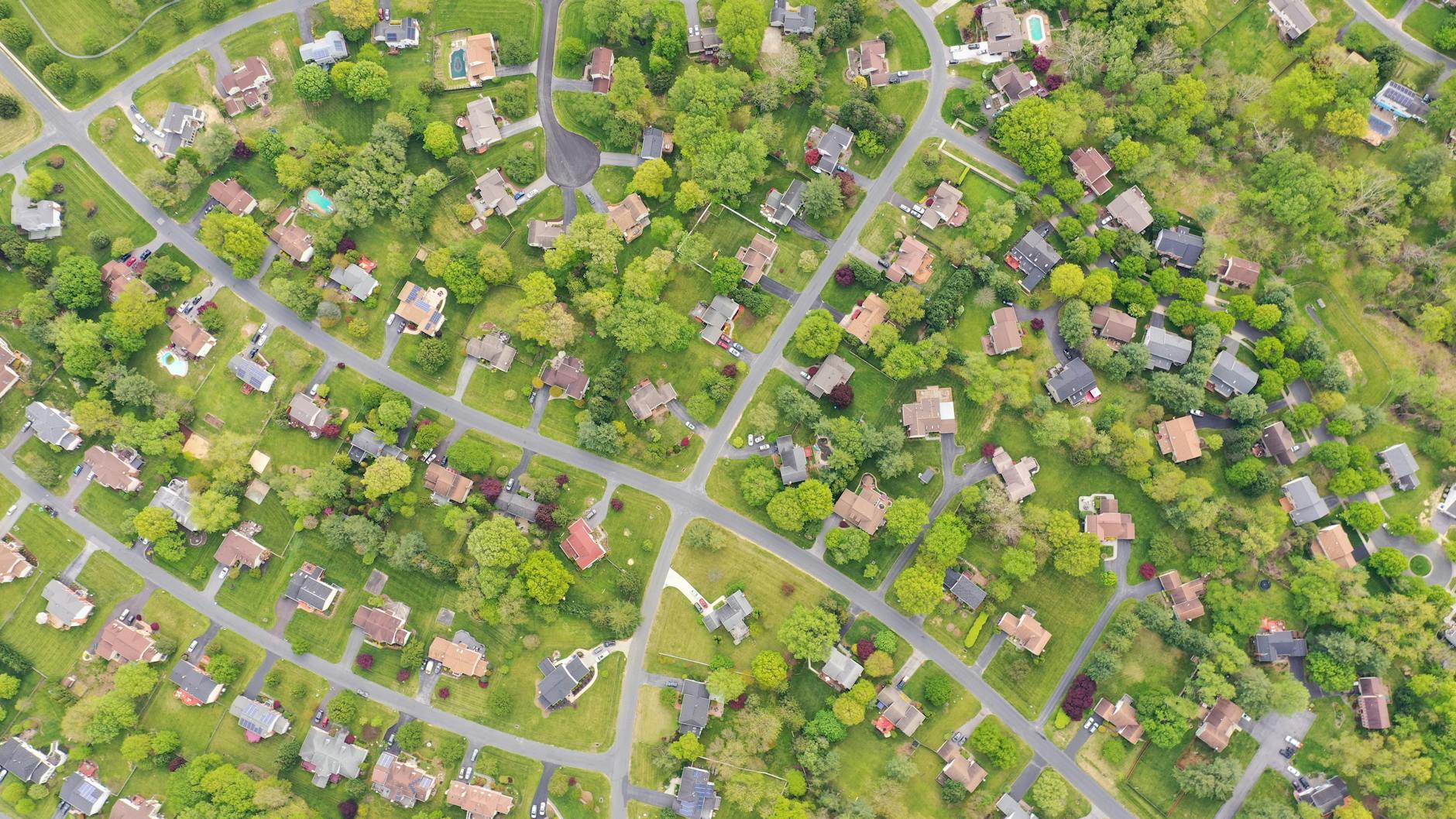
I am interested in some of the bigger connections that might be made around this same time (early 2000s). So family life in the suburbs – embodied by the minivan – became uncool? The 2000 Census was the first time 50% of Americans lived in suburbia. By this point, several generations of Americans had experienced or grew up in suburban settings. Is a choice of vehicles really pushing back against family life in the suburbs (even as plenty of Americans continue in these settings)?

Or another way to take the argument above is that individualism wins out over any symbols of family life. The iPhone and SUV somehow broadcast a consistent message of a cool or unique individual – regardless of how many people own the same model – while the minivan is saddled with family life. Did the long-term American yearning to be an individual doom the minivan (despite its peak in 2000)?

A third consideration: is this just a branding question? If so, other products have been revived so why not the minivan? Imagine a famous celebrity endorses the minivan and drives one around. Or a new brand emerges. Or problems arise with SUVs and the minivan is dependable. Or families become cool again. There may be limited interest in trying to revive the minivan but this could provide someone a marketing challenge.

The Wild West of parking lots with no traffic signs

Parking lots may appear to be safe and controlled traffic environments. Drivers are usually not traveling very fast. Drivers need to be attentive to carts, curbs, and people walking around. New drivers go to parking lots to build their skills.

Photo by Wendy Wei on Pexels.com

Yet parking lots can be the Wild West of driving situations. This is particularly true of lots where there are few or no traffic signs and markings. You have rows and arteries through the parking lot that have no stop signs or signs of where to go.

Last year, we had an incident in such a lot. Driving around the outside of the lot on a roadway separated by curbs from the parking rows, someone pulled out and into the side of the front of our vehicle. There was no stop sign at the end of the row or marking on a pavement. Anyone could be turning in and out of the rows. Presumably they should look to see if vehicles are coming toward them? Presumably everyone is supposed to yield (though there are no yield signs)?

I feel this in parking garages as well where there may be signs and markings but they can be hard to see in the lighting and a cramped environment. Vehicles come quickly around turns. Drivers are looking to back out and pull in.

Since parking is essential in American places due to the heavy reliance on driving, are there better solutions to lots with few signs? Is the primary goal of a parking lot to move vehicles quickly through the space? Is it to help customers or residents or visitors to safely make it to their destination? Is it to fit as many vehicles as possible in/

Trying to cut through a street grid on a diagonal to save time and distance

Street grids have benefits, including offering multiple routes should congestion arise at one intersection or certain routes are off-limits. But what if a driver or pedestrian wants to move quickly through the grid at a diagonal?

Photo by Pixabay on Pexels.com

Different communities may offer options for this. Perhaps there are alleys one can cut through. These back ways offer even more alternatives through the grid if the main streets are congested. Or there might be an occasional diagonal roadway that crosses at an angle to other roads. Depending on the way one is traveling, the diagonal route might be more direct.

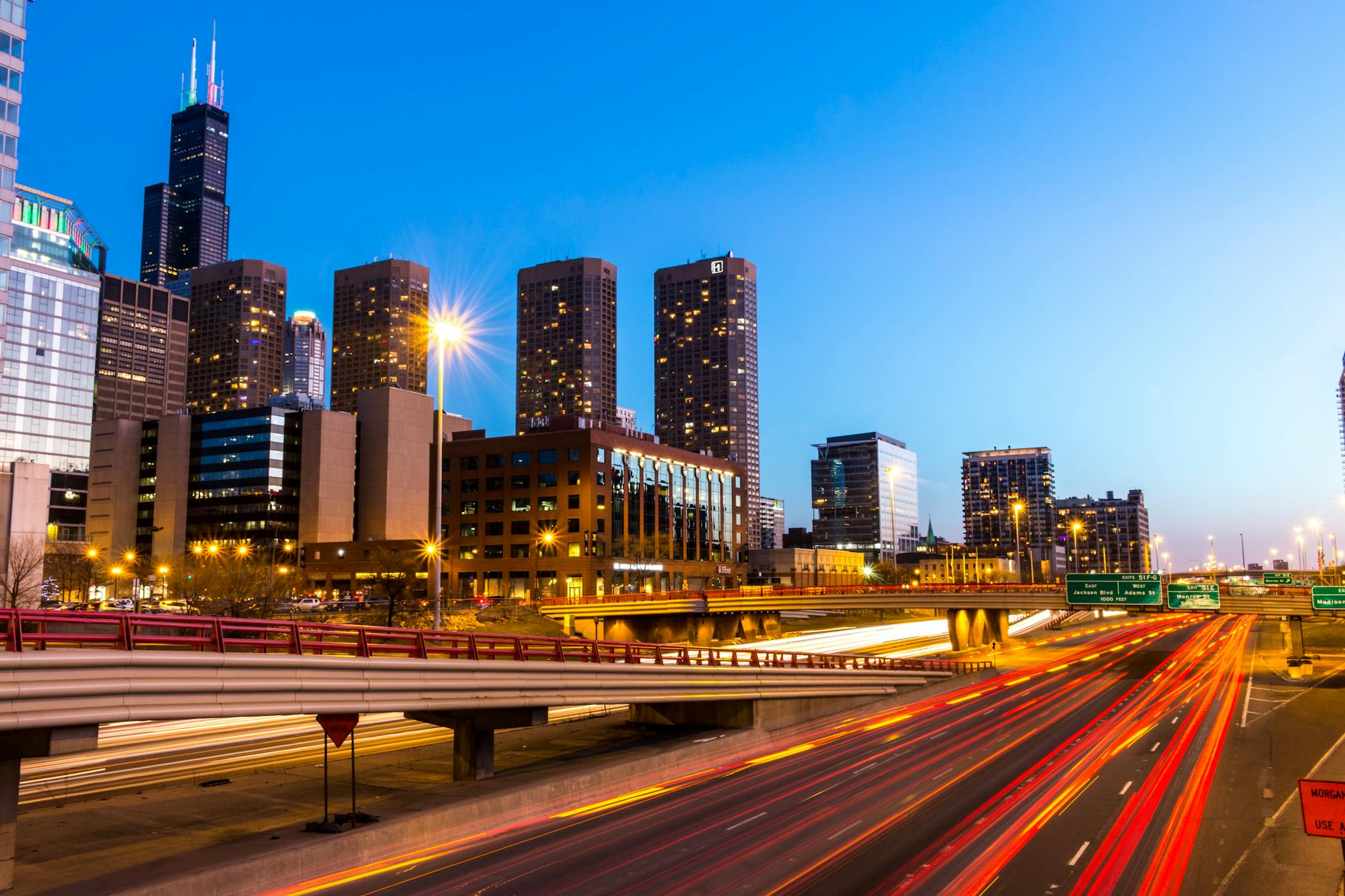
Chicago is a good example of having both options in numerous neighborhoods. The flat Midwestern city primarily has a road grid that stretches for miles. East-west and north-south streets can go a long way from one end of the city to the other (and beyond). At the same time, alleys and diagonal streets provide other travel options. The diagonal roadways can create some interesting intersections – these present travelers with different visuals and traffic patterns than they might be used to – but offer more direct routes at an angle to the grid. Numerous alleys take some pressure off the roads for garages, garbage, and other uses.

I imagine other places might offer different options. Any city offer an underground grid at a 45 degree angle to the ground-level grid? Or pedestrian skyways or tunnels that offer paths that cross the grid in different ways?

City residents and suburban residents going back and forth between those places

Hints regarding new driving patterns in metropolitan areas could be found in a Chicago Tribune editorial about downtown traffic during Mexican Independence Day weekend:

Photo by Chait Goli on Pexels.com

And they didn’t help you get from one neighborhood to another or back home from a night out to the suburbs…

Many businesses rely on suburbanites coming downtown for the weekend to eat or watch an artistic offering as the fall season kicks off.

Chicago is a big city so there are plenty of trips taking place solely within the city. Additionally, many big cities and people within are used to the idea that people from the suburbs travel into the city.

But these two short passages highlight a back and forth between both city and suburb. There are some traveling from city to suburbs, perhaps even for a night out (some suburbs are cool?). Others are traveling into the city to take advantage of particular opportunities offered in the city (or for work).

These newer patterns complicate efforts to address traffic. The predictable rush hours into the city in the morning and out of the city in the afternoon and evening have morphed into more traffic headed in all directions at more times. Traffic can be present around the clock, even without special events or celebrations.

Counting the hours spent talking about the possibility of merging Chicago area transit agencies

As conversations take place regarding possibly merging transit agencies in Chicagoland, I wondered if it would be possible to count all the hours of talking, making deals, and working out details. What would the number be? I imagine someone working to provide an accurate count or estimate might run into a few methodological issues:

Photo by Ricky Esquivel on Pexels.com

-Which conversations to count? Is this primarily about formal debate in the legislature or public hearings about the possibilities? Can media reports (whether TV, print, radio, others) count as time? Do digital conversations (texting, emails, in particular apps) count?

-How to count less formal conversations. If conversations take place behind the scenes as opposed to in public settings, can they be found or discovered? What kind of work is needed to track these down?

-Are people willing to talk about their talking? Some might be more willing, some less so. Or perhaps people would be more willing to talk after some major decision is made.

-Do we have some ballpark numbers of how many hours go into major decisions in governments or organizations? What is a “typical” range?

Given the scope of possible changes and the implications whether change occurs or not, the process and the time devoted to it could be worthy of study.

Suburban sounds near the start of fall

During the pandemic, some who were at home described the noises they heard from their residences that they may have missed in going to work regularly or being out more.

As summer winds down on the calendar and fall approaches, I noticed some different sounds in the suburbs. I described some of the suburban noises of summer back in 2018. Here are a few of the notable changes heading into a new season:

-Geese flying overhead regularly and standing around in fields and near water. The picture above includes geese honking and milling around in the early morning suburban mist on a soccer field set up for the fall season.

-Fewer lawnmowers at work and less yard work noise. It also has not rained much recently. The spring and summer hum of outdoor machines has lessened.

-The occasional sound of marching band practices and performances. We are more than a mile from a high school but we can hear the band at work (cannot hear cheering).

-No cicadas at this point of the year, particularly compared to earlier this summer in our area.

-Less noise from kids in the neighborhood during the day with school in session. Of course, people living near schools likely hear a lot more noise now during the middle of the day compared to the summer.

This is a particular suburban soundscape soon to change with leaves blowing around and crunching underfoot and later snow dampening outdoor noise.

Aiming for zero road deaths in Chicago

Bicycle fatalities are down in the last year in Chicago. Could this help lead to zero road deaths in the city?

Photo by Chait Goli on Pexels.com

It was the only bicyclist death so far this year, suggesting what some hope signals the beginning of a decline in such fatalities.

Some even contend the number of all traffic deaths in Chicago — cyclists, motorists and pedestrians — could be reduced to zero with the right improvements.

Others are more guardedly optimistic.

Before that August crash on the West Side, Chicago had gone 10 months without a cycling death. That was the longest such duration dating back to at least the beginning of 2019, the earliest year available from the city’s daily traffic crash data.

“Statistically, this drop appears too large just to be entirely good luck,” said Joseph Schwieterman, a transportation professor at DePaul University. “It’s not likely the fatalities will stay at this level, unfortunately, but this is encouraging.”

The rest of the article talks about methods that could be implemented to make roads in Chicago safer.

As I have read about similar efforts in recent years, reducing traffic deaths seems to go well with multiple other efforts:

  1. More sustainable cities with fewer cars on the road and other viable non-driving transit options.
  2. More inviting and lively streetscapes with less emphasis on motorized vehicles.
  3. Encouraging walking and biking, which are healthier options.

Safety alone may or may not be a compelling reason to change conditions but combine safety with other interests people have and perhaps there will be a steady shift away from only emphasizing driving.

What happens when a place is no longer growing quickly, Florida edition

Populations and demand in housing markets can ebb and flow. What happens when a state known for growth for a while starts to lose its luster?

Photo by Del Adams on Pexels.com

Florida was one of the epicenters of the pandemic’s great migration, but while crowds of people are trying to settle into places like Orlando, Tampa, and Jacksonville, many Floridians want to dump their homes and get out.

The exodus is mainly being driven by higher housing costs, a higher cost of living, and souring attitudes toward the influx of people who moved to Florida in recent years. Those factors combined are making daily life in the state way more difficult, current and former Florida residents said.

While 730,000 people moved to Florida during 2021 and 2022, nearly half a million people left, according to US Census data.

The state, meanwhile, just lost its status as the most moved-to region this year, according to an analysis conducted by the Florida-based moving service PODS. South Florida, in particular, ranked among the regions people were most keen to move out of, the report said.

Waning enthusiasm for the state is evident in housing activity, which has fallen from its pandemic highs. The number of homes for sale in Florida has soared 42% compared to levels last year, according to Redfin.

In the United States, growth is good. A growing population is connected to an increasing status that hopefully just brings in more people and business.

But population booms do not last forever. A good number of American communities have had periods of rapid population growth, including many big cities and numerous suburbs, and then other periods of slow growth or even population loss.

From the evidence above, it sounds like Florida’s growth has slowed. It is another matter if the state starts losing residents. If that happens, dire descriptions can emerge such as it being a “failed” state.

If growth slows in Florida, what other states might take up the mantle of those with rapid growth? Can they have a sustained run of growth that brings prestige?

Improving a home’s interior design so it does not feel like a McMansion

Is a house a McMansion regardless of what it has inside? One recent discussion of interior design hints that it depends on what the inside looks like:

Photo by Max Vakhtbovycn on Pexels.com

Everyone loves a good feature in a house. Wainscotting adds texture to a boring room, stone on a fireplace makes a living room cozier, and a simple ceiling beam can elevate an entire room. These architectural flairs make a house feel more memorable. Without them, a space can feel like a developer rather than an architect created the design, building something of a McMansion. But while it’s important to add thoughtful features, HGTV’s Drew Scott points out that there can be too much of a good thing. While one of those accents can help make a house feel special, muddling them all together can make everything too busy.

Often, the features of McMansions are visible from the outside: a large size, a mish-mash of architectural styles, and/or a location in a suburban subdivision of similar mass-produced homes.

But could a McMansion be redeemed if the inside does not look like a McMansion? Or could a home be a McMansion if the outside does not look like it but the interior has McMansion features? Imagine a 2×2 table:

McMansion interiorNot McMansion interior
McMansion exterior
Not McMansion exterior

The “typical” McMansion is in the top left cell: the outside and inside shows McMansion traits. The mixed categories are what is at stake here with the emphasis on interior spaces. Have the right design element inside and it could push a home out of the McMansion category.

I am not sure how this works. Who gets to render the ultimate McMansion judgment? Since McMansion is a negative term, does any shade of McMansion-ness mean the home is a McMansion?

Wildfires approaching homes in sprawling suburbia

Wildfires threaten communities and homes fairly regularly in the United States. How often are these wildfires in suburban communities? Here is a current example outside of Los Angeles:

Photo by RDNE Stock project on Pexels.com

Driven by triple-digit heat, gusting winds and tinder-dry vegetation, the three fires burned at speeds firefighters have never witnessed, scorching over 110,000 acres (44,510 hectares) – an area twice the size of Seattle.

The Bridge Fire, California’s largest current wildfire, swept through communities in the San Gabriel Mountains less than 40 miles (65 km) northeast of central Los Angeles, where people priced out of the city have built homes…

Southeast of Los Angeles, the Airport Fire has destroyed homes in the Elsinore Mountains and injured at least 10 people…

“The Airport Fire remains a significant threat to Orange County and Riverside County communities,” emergency agencies said in a statement.

One way to think about this is that metropolitan areas keep spreading outward. This provides more space for fire to threaten and more interaction with space and land less developed.

A second way to address this is to consider how suburban development – housing, roads, land uses, etc. – can encourage or discourage wildfires starting and spreading. Do yards and the ways homes are built contribute to wildfires? Does the design of American suburbs as we know them help fires spread?

Could this also be addressed in terms of financial trade-offs? Some might move to further-flung suburbs or new subdivisions on the edges because housing prices are cheaper. But how much cheaper is it if there are increased threats of wildfires?

It is one thing for wildfires to be in places with few residents and another if they are regularly occurring in suburbs and close to population centers.