Regulation coming for renting out suburban backyard swimming pools?

Suburbanites are renting out their pools through an app and their neighbors are not happy:

Photo by Pixabay on Pexels.com

The sounds of summer fun ripple up from ads for Swimply, an app that allows homeowners to rent out private pools to strangers looking to enjoy cool water under the hot sun. But that seasonal chorus has sharply divided suburban residents of Montgomery County as the local government considers formally regulating the short-term amenity rentals — potentially becoming the first in the nation to do so…

It is only mid-spring, but already dozens of pools in and around Maryland’s most populous county have been listed for rent on Swimply, which launched in 2020 as people sought alternatives to public pools that shut down because of the pandemic on the heels of the wild success of apps like Airbnb and Uber. Hosts set hourly rates anywhere between $25 to $100 an hour to access private backyard pools that bypass lines and crowds.

Unlike long-established home rental and ride sharing apps, newer apps that let people rent out their pools, home gyms and backyards have largely been unregulated across the United States so far. In fact, several jurisdictions, from the city of San Jose to towns across New Jersey to the state of Wisconsin, have tried over the past three years to ban the rentals or set up strict rules that require private pools to meet the same standards as a public pool…

A like-minded group of 36 county residents from Chevy Chase, Rockville, Montgomery Village, Kensington and Rosemary Hills, wrote a letter opposing the bill and asking the county instead to outlaw the amenity rentals altogether. The group argued that the rentals turn quiet residential neighborhoods into bustling business districts, without the infrastructure to support commercial activity. They raised dozens of concerns, largely over the added nuisance of strangers pouring into their neighborhoods because of the apps, congested roads, scarce parking, and noise and safety.

Should the property rights of homeowners reign supreme – they can do what they want with their property – or is this too much activity within residential neighborhoods where people expect quiet and do not want neighboring activities that they perceive will affect their property values?

If Montgomery County does not regulate this, someone will. I can imagine an alternative line of reasoning from a suburban government: this is a possible revenue stream.

Adding MENA to Illinois forms

An Illinois bill will make the state the first in the country to recognize MENA groups on forms:

Photo by Alex Green on Pexels.com

Illinois is on its way to becoming the first state to recognize Arab Americans when collecting public data.

This month, H.B. 3768 passed both houses of the General Assembly and is on its way to Gov. J.B. Pritzker’s desk. When signed into law, Arab Americans and minority groups from the Middle East will be recognized separately in state data.

Pritzker tweeted his support upon the bill’s passage in the House on May 18: “History made! With HB 3768 passage, our MENA or Middle Eastern and North African communities will now have their own category on state forms and surveys.”…

Illinois has one of the largest populations of Arab Americans in the nation. But on most registration forms, Arab American is not an option when selecting ethnicity, something groups such as Arab American Family Services, advocates and community leaders have sought to change for years.

It will be interesting to see if this helps move along the conversation at the national level where the MENA category was not added to the recent Census. I assume if enough states did this, it would then be easier to add it at the federal level to make sure there is data from all parts of the country.

The McMansion riches of ’80s TV versus the massive dwellings of today’s Succession

TV depictions of what constitutes a house for the wealthy can change over time:

Photo by Pixabay on Pexels.com

And if the “Succession” audience is smaller, the money is, pointedly, bigger. Rewatched in 2023, the idea of luxury in “Dallas” looks quaint, almost dowdy. The aesthetic is Texan country club; the Ewing homestead, the size of a decent suburban McMansion, is a toolshed next to the Manhattan aeries, Hamptons manors and Italian villas that the Roys flitter among.

Some of this is a matter of modern premium-cable budgets vs. the grind of old-school network-TV production, of course. But it also reflects the changed, distorting nature of modern riches. In 1980, American wealth inequality was still near its postwar lows. Since then, the wealth of the top .01 percent has grown at a rate roughly five times as much as that of the population overall. Today, the very rich are very, very, very richer.

The holdings of Waystar Royco — Hollywood studios, cruise lines, newspapers, amusement parks, a king-making right-wing news channel — make Ewing Oil look like a franchise gas station. We know only vaguely how Logan Roy built his empire, but it was enabled partly by the media-consolidation and antitrust deregulation, beginning in the “Dallas”/Reagan era, that allowed his real-life analogues like Rupert Murdoch to make their own piles.

American homes do broadcast messages about a resident’s status and wealth. McMansions are supposed to signal that the owner can afford a big home in a particular style (even if the imitation of traditional styles are odd).

On the other hand, mansions are even bigger, more extravagant, and can be of better build quality. Having multiple such dwellings extends far beyond the McMansion owner in the suburbs.

Another question: do the super wealthy make use of all that square footage and the features or are these part of a real estate investment? The McMansion owner is also hoping to get a return on their investment but the amount of money involved with extra-large properties is at another level.

Courtesy of Architectural Digest, see more about some of Succession’s dwellings here.

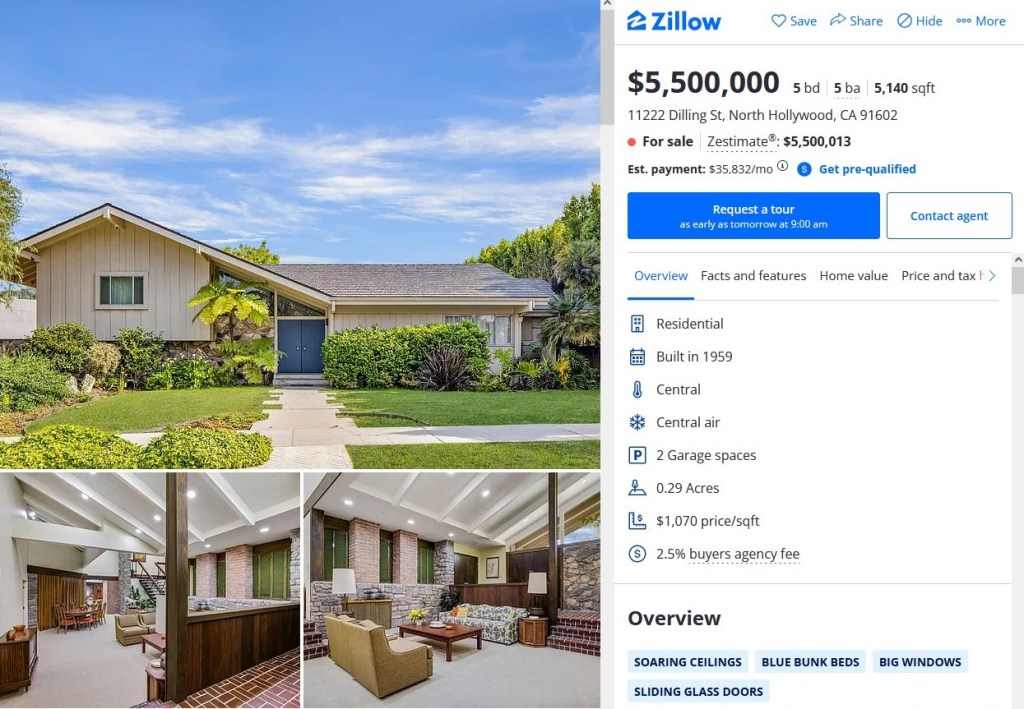
The Brady Bunch house as “the second most photographed home in America”

The house featured on the Brady Bunch is up for sale again. Apparently, many people have photographed the home:

The Brady Bunch only lasted five seasons, but its cultural footprint has endured. The ABC comedy — which followed a blended family of eight, their live-in maid and, at certain points, a dog — ran from 1969 through 1974 before inspiring TV movies, a satirical feature remake (and sequel) and countless pilgrimages to 11222 Dilling Street. It has been called the second most-photographed home in America, trailing only the White House, though there is little evidence to back up such claims. 

I am sure someone could try to quantify this. Scan through all of the pictures on the Internet including photo upload sites? Perhaps measure the number of visitors each year to different houses and estimate how many pictures they might take?

A better question to ask might be this particular house is so popular for pictures. It is tied to a popular TV show, it is accessible to the public who can see the home from the street, it is located within the second largest metropolitan area in the United States, and there are a lot of tourists in the area. Still, it is a home built in 1959 that looks rather unremarkable from the outside. This might be a story about (1) the power of TV in American culture and (2) the importance of TV in this particular era of suburbia and Baby Boomers.

I wonder if any other TV shows would be in a top 10 of photographed homes in the United States.

(See earlier posts about the Brady Bunch house: a 2018 post about HGTV owning the home and a 2012 post about comparing the exterior and interior of the homes.)

Trying to put back together urban neighborhood split decades ago by highways

New monies from the federal government are intended to help neighborhoods deeply affected by highway construction:

Photo by Pixabay on Pexels.com

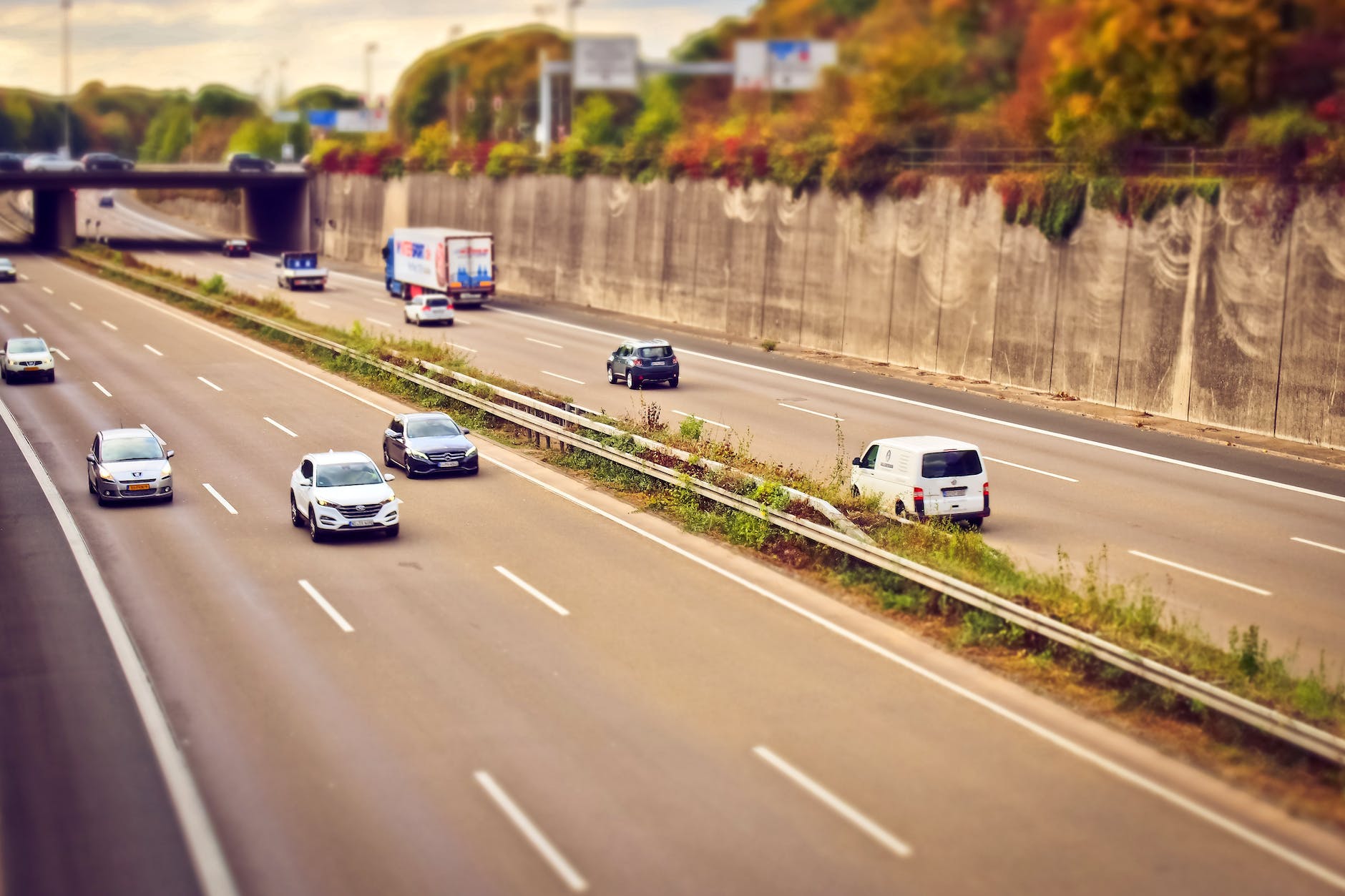
Kansas City officials are now looking to repair some of the damage caused by the highway and reconnect the neighborhoods that surround it. To date, the city has received $5 million in funding from the Biden administration to help develop plans for potential changes, such as building overpasses that could improve pedestrian safety and better connect people to mass transit.

The funding is an example of the administration’s efforts to address racial disparities resulting from how the United States built physical infrastructure in past decades. The Transportation Department has awarded funding to dozens of projects under the goal of reconnecting communities, including $185 million in grants as part of a pilot program created by the $1 trillion bipartisan infrastructure law.

But the project in Kansas City also shows just how difficult and expensive it can be to reverse long-ago decisions to build highways that slashed through communities of color and split up neighborhoods. Many of the projects funded by the Biden administration would leave highways intact but seek to lessen the damage they have caused to surrounding areas. And even taking out a roadway is just a first step to reinvigorating a neighborhood.

“Once you wreck a community, putting it back together is much more work than just removing an interstate,” said Beth Osborne, who served as an acting assistant secretary at the Transportation Department during the Obama administration and is now the director of Transportation for America, an advocacy group.

In the name of fast travel between outlying areas and the city, such highways removed people and buildings, disrupted economic corridors, and created barriers between neighborhoods.

From the examples provided in this article, it sounds like this money will be used to try to reestablish streetscapes. Wide highways made it difficult for pedestrians to walk between places. Businesses had to rely on vehicle traffic. Decades after the highways were constructed, there may be relatively little activity on roadways near the highways.

Simply creating better paths over a major highway could be helpful. Removing a highway can also help, as evidenced by at least a few projects in American cities. But, there is a lot that goes into a streetscape. It takes time and resources to recreate thriving neighborhoods with multiple factors at play. Even then, vibrant sidewalks and streetscapes are relatively hard to find in American communities given the other priorities Americans emphasize.

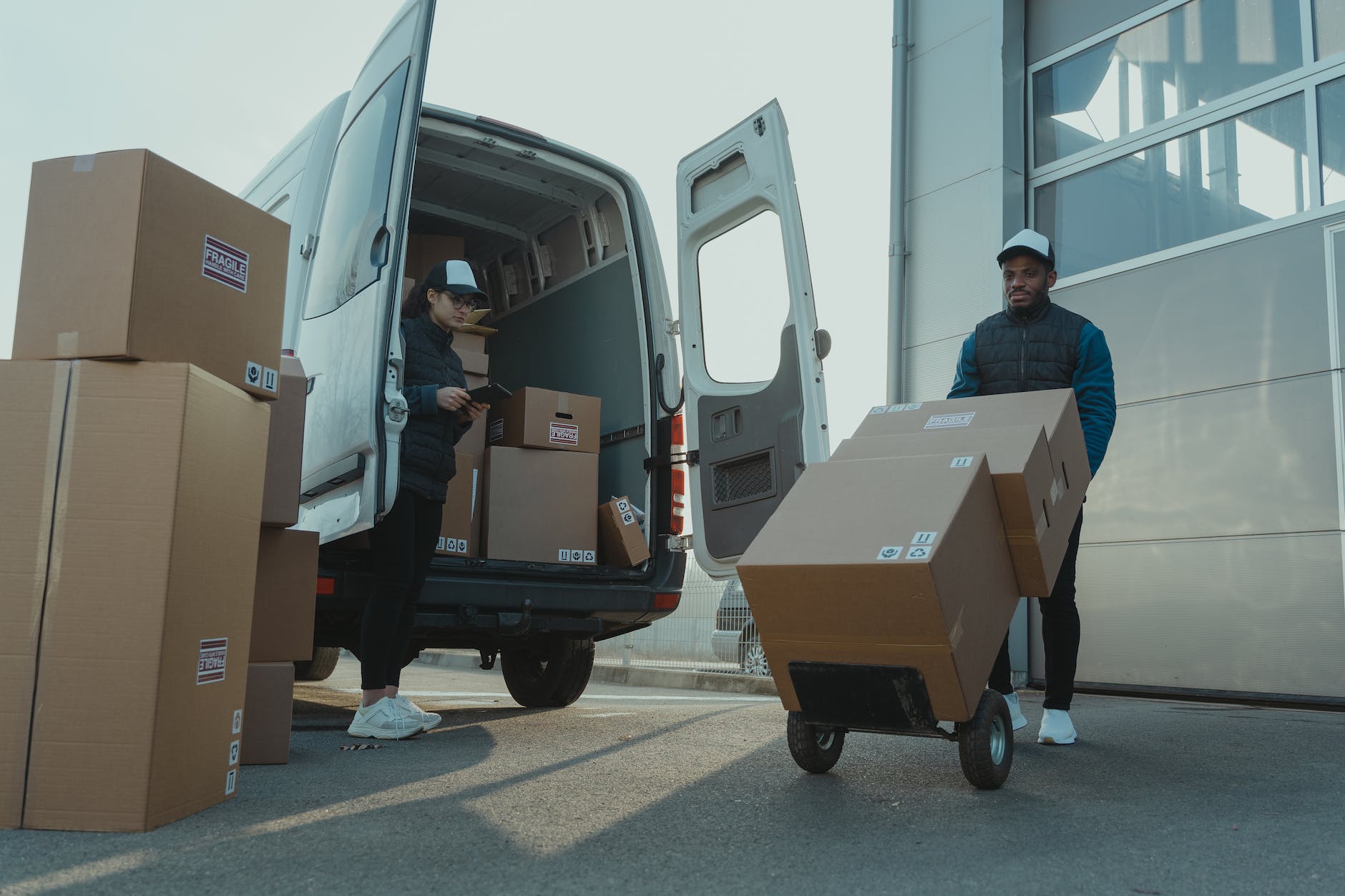
What companies could embody the slogan “Delivering the American Dream”?

I recently saw on the side of a truck the slogan for a company: “Delivering the American Dream.” Before I say which firm uses this, some thoughts on what kinds of companies this could fit:

Photo by Tima Miroshnichenko on Pexels.com

-Take the first part of the slogan: “delivering.” Could this fit a major delivery company? Imagine this as the slogan of UPS or FedEx; would it fit as they delivery so many different items to people?

-The second part of the slogan references “the American Dream.” This could refer to housing and the suburbs. (And I did spot this slogan in the suburbs.) Could a house be delivered or could it refer to some essential parts of homes (furniture, appliances, etc.)?

-The whole phrase suggests the American Dream can be delivered. This is a big promise. As noted above, the Dream can be symbolized by tangible objects but it is also an important ideology encompassing multiple factors.

Time for the reveal: this is the slogan of 84 Lumber. Here is part of the company’s history on their website:

Founded in 1956 and headquartered in Eighty Four, Pennsylvania, 84 Lumber Company is the nation’s largest privately held supplier of building materials, manufactured components, and industry-leading services for single- and multi-family residences and commercial buildings.

The company operates 310 facilities which includes stores, component manufacturing plants, custom door shops and engineered wood product centers in 35 states. 84 Lumber also offers turnkey installation services for a variety of products, including framing, insulation, siding, windows, roofing, decking and drywall.

In the early days, founder Joe Hardy, in conjunction with his two brothers, Norman and Bob Hardy, and family friends Ed Ryan and Jack Kunkle, pooled together $84,000 in funds to purchase land and buildings for a new “cash and carry” lumberyard. The idea was that customers would pay by cash or check and if merchandise was unable to be “carried” out, an additional charge was implemented to have the item personally delivered…

Since then, 84 Lumber experienced exceptional growth, powered by Maggie’s vision to expand, and evolve the business. With tenacious leadership, and the 84 Lumber team’s true passion for their company, a new 84 Lumber emerged from tough economic times to become the powerhouse it is today. Now, 84 Lumber is a certified national women’s business enterprise and has held a spot on the Inc. 5000 list of America’s fastest growing companies for several years in a row. The company hit $7.9B in sales in 2021, and increased to $8.78B in 2022.

The slogan does indeed refer to the single-family home and other buildings. They deliver some of the essential components of structures that many Americans use without any knowledge of where the materials came from.

If any company could live up to this slogan, this seems to be a good fit. While other companies could make a good claim with other goods and services, a close connection to single-family home construction connects closely to the American Dream.

Evangelicals and when the “postmodern” and “urban” came to the American suburbs

A reflection on pastor and author Tim Keller’s life includes this line involving distinctions between American places:

Photo by Zekai Zhu on Pexels.com

His insights hit a nerve at a time when evangelicals were realizing that “postmodern” and “urban” challenges—religious diversity, isolation, transience—were becoming common in rural and suburban contexts as well.

In the American context, suburbs often served as a refuge from perceived problems of the city. Religious diversity in cities involved all sorts of religious traditions as people flocked to cities in the late 1800s and early 1900s. Even with the number of people in cities, Americans often celebrated an ideal of families living in suburban single-family homes rather than feeling atomized in large cities. Whereas people moved in and out of cities and urban neighborhoods, Americans often perceived suburbs as built around family and children, neighbors, and community groups.

How might we evaluate these features separating places? It is hard to discuss religious diversity without addressing race and ethnicity. As suburbs often excluded people who were not white, religious diversity was limited. Suburbs are increasingly diverse in terms of race and ethnicity and social class. Regarding isolation, plenty of narratives have been shared and told where individuals found the suburbs to be isolating. Compared to suburbs, cities offer opportunities for exploration and finding a place among other similar people. The suburbs may have celebrated certain social relationships but they were also quite transient for decades in the postwar era as people took advantage of opportunities.

If the lines between cities, suburbs, and rural areas are now more blurred, are evangelicals better equipped to address a changing world? How might they address complex suburbia?

What could go wrong if a suburb buys up a vacant shopping mall to redevelop it?

The suburb of Bloomingdale, Illinois got fed up with the lack of redevelopment a formerly thriving shopping mall so they are buying up the property:

Photo by Aldiyar Seitkassymov on Pexels.com

Frustrated by years of inaction by the owners of Stratford Square Mall, Bloomingdale has spent more than $5.6 million to buy former department store buildings and open space near the mostly deserted shopping center.

Now the village is trying to use its powers of eminent domain to take over the core of the mall itself. Bloomingdale has filed a condemnation lawsuit aimed at acquiring the property. Village President Franco Coladipietro called it an “act of last resort.”…

Bloomingdale has been buying mall real estate to facilitate a full-scale redevelopment of Stratford Square. The village paid $2.4 million for the vacant Carson’s department store, $2.15 million for the former Burlington building and $1.1 million for a vacant parcel east of the mall, between townhouses to the north and medical offices to the south…

“You have the potential of a brighter future. I understand that there’s risk. We look at it as a calculated risk,” he said. “And we’ve done the due diligence prior to engaging in the purchase of the properties.”…

To that end, the village opened a line of credit, or short-term loan, to pay for the purchase of the Carson’s, Burlington and undeveloped properties. The village also filed condemnation lawsuits targeting Kohl’s and the vacant Sears store to “keep everything on the same track,” Coladipietro said.

If all turns out well, the suburb will be able to say in ten or twenty years that the former shopping mall property is an asset for the community with new, vibrant uses.

But, this could also turn out poorly. The suburb has borrowed money to buy property. They are in court. The developer has not successfully pursued redevelopment; will the village be able to do better? What happens when the bills come due and/or the community cannot agree about what the mall property should become and/or potential developers are still not interested in the property?

The Village President says this is a “calculated risk.” Indeed. Suburbs do not like dealing with significant vacant retail space and this mall is not the only one in the area facing these issues. I hope they have a manageable floor for the mall property if all does not go as planned.

Google Maps can show you the locations of some Chicago area ghost towns

A journalist details some of the ghost towns in the south suburbs of Chicago that pop up on Google Maps:

Photo by John-Mark Smith on Pexels.com

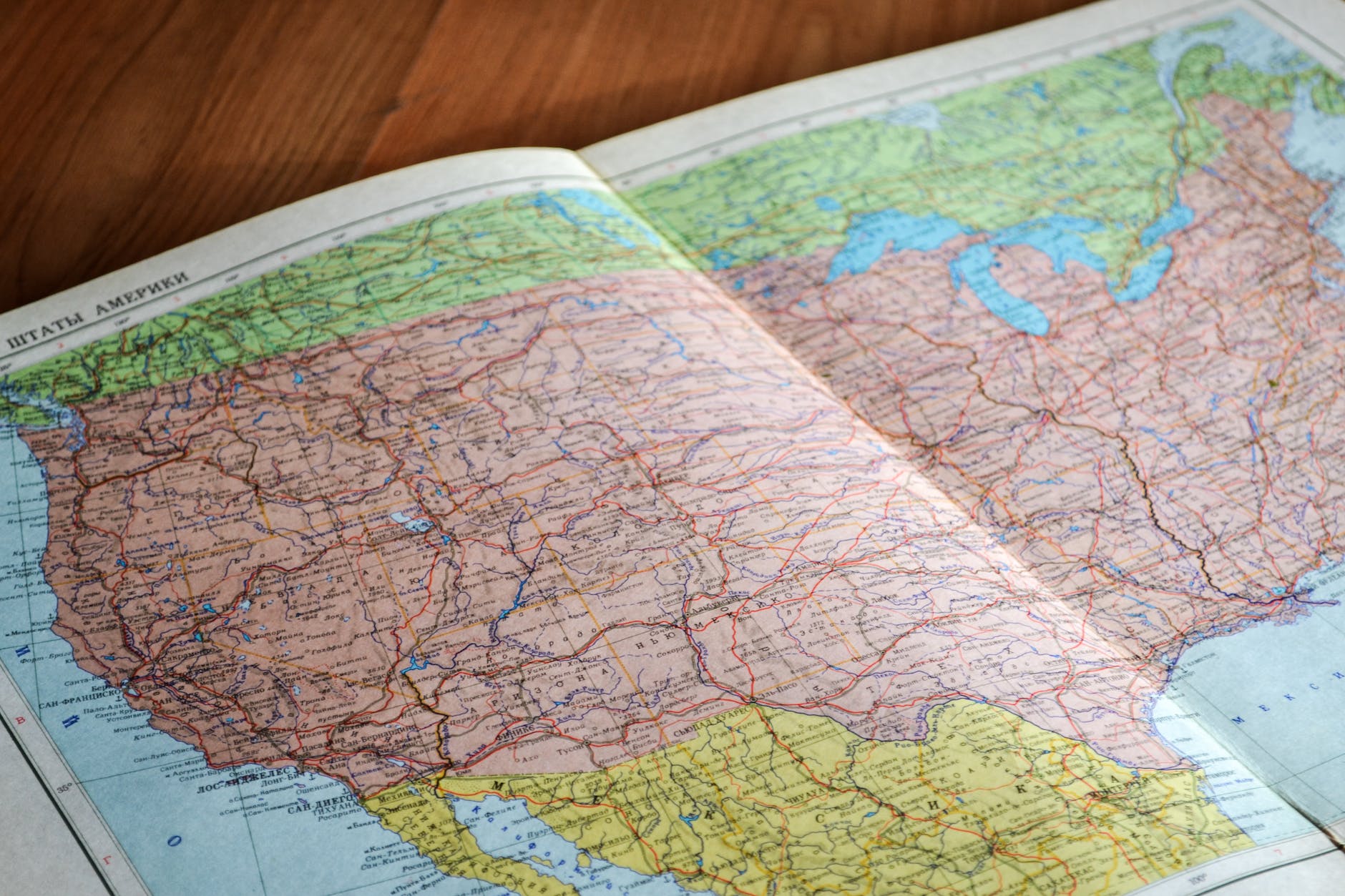
Perhaps kept alive by the unrealized optimism of their founders, places such as East Orland, Rexford, Alpine Heights and Goeselville are long gone, but still show up as potential destinations on internet atlases such as Google Maps…

But Google “Alpine, Illinois” and the algorithm will pinpoint the long-forgotten downtown area of Alpine Heights at 167th Street and 108th Avenue…

“It amuses me that Goeselville still shows up on maps,” Bettenhausen said. “I can’t explain why this happens, because it really was not much more than a post office.”

I assumed Google Maps and other online mapping options are drawing on modern cartographic information. Does this mean this information includes older communities that have not officially existed for decades or that Google Maps draws on historical information as well?

I could imagine an improved Google Maps that is able to show places as they existed in the past. There is a small version of this available right now with Google Street View. If you walk along a street, you can often pull up a previous version of the same view. This only goes back less than two decades but you can still observe changes.

Imagine Google Maps with pictures of former buildings, how roadways used to appear, and older names. You might be able to peel back the layers and look at a place in the 1990s or the 1950s or the 1910s. It would take a lot of work to find and put together all of these images but the ability to see how places are transformed would be fascinating.

Take these suburban ghost towns. Imagine being able to see an old post office or train station. You might then compare what is there today. To do this today, this might require searching for older images online or going to a local historical society to find images.

How much all the buildings in New York City weigh

New York City has a lot of buildings in its 300+ square miles. All those structures weigh a lot:

Photo by Michau0142 Ludwiczak on Pexels.com

New geological research warns that the weight of New York City’s skyscrapers is actually causing the Big Apple — whose more than 1 million buildings weigh nearly 1.7 trillion pounds — to sink lower into its surrounding bodies of water.

Given the innovations that helped give rise to all of these buildings, can we expect innovative solutions to the consequences of all that weight? One approach would be to create barriers between the surrounding waters and the habitable areas. However, that does not fully address the weight and the ground under the buildings. Are there ways to prop up large structures?